The Lost Explorer | Conrad Anker | Talks at Google
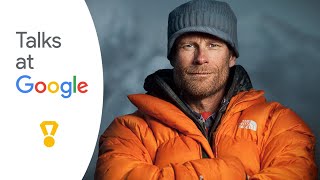
Conrad Anker’s Talks at Google lecture ("The Lost Explorer", March 28, 2007) weaves personal climbing memoir, historic exploration narratives, and conservation advocacy. He recounts Shackleton’s Endurance survival story and the 1924 Mallory–Irvine Everest mystery (and his role in the 1999 expedition that found Mallory’s body). He describes a National Geographic-led expedition documenting the Tibetan antelope (shiru) calving grounds, grassroots conservation outcomes, and vocational training for Nepali climbers. Anker closes by highlighting glacier retreat in the Himalayas, human pressures on fragile mountain ecosystems, and a call to consider future generations when addressing energy and environmental policy.
Chapters
For most of last century, the body of George Mallory lay undiscovered on that rock heat known by the Tibetans as Choma Lugma and by the Nepali people of Sagar Math. Until one day in May 1995, Conrad, climbing solo, searching for Mallory, came upon upon that body and has since written for National Geographic and been profiled in a book that we don't have today, unfortunately, or we have a few limited copies, but there's a substitute. A couple of years ago, National Geographic and George Schaller also asked Conrad to discover the unknown calving grounds of the Shiru, one of the world's most endangered animals, for its exceptionally fine fur. No one knew where the calving grounds were and he found it. He sits on three nonprofit boards, the Alex Lowe Charitable foundation that he helped to create, Conservation alliance, and the American Alpine Club. People often ask, what's there left to explore in the world? And I think he's going to try to talk to you about that today. Conrad Anker.
Thank you, Greg. I appreciate the introduction. And I'm going to the mic is on me because I always drift down here and then no one can hear me any longer with that. But it's a real honor to be here. Google is something that I work with every day and I go there with my children and we look up cool things. I'm from Central California. I live in Bozeman, Montana with my wife and three children. And I was introduced to the mountains by my mother and father. And the very top there is my head. That's my beginning of being in the mountains. And it was a wonderful experience. We'd go up there and we were a family of six and at the time we had plastic rain ponchos, blue jeans and waffle stompers. And this was the state of the art of climbing in outdoor gear. And it's what our family did. Every summer we'd go out in the high country for two weeks here in the Sierras with some burros and just sort of go fishing and exploring. And I really learned my love of the mountains there. I then took these skills and applied them to Yosemite, which is a great world heritage site that's within a few hour drive of all of us here in Mountain View in the Bay Area. And it's got this wonderful piece of rock seen here on the left, which is el capitan. It's 3,000ft, impeccable granite, fine weather. And it's really the place where Americans have been able to make their contribution to world history in climbing. That is big wall climbing. And that involves going up on a multi pitch rock climb that's so long that you end up having to stay the night on there. They tend to be steep and scary and difficult. Alpine climbing in the classic sense is finding taller peaks that are a little bit more cold in nature, frozen. So your winter climbing skills, things like that, get tied into it. But this is just a real paper thin overview of where I am and what I do and I love to be in the mountains and see what they are. But there's a couple stories that I'll be sharing with all of you today. Two of them are historical in nature and the first one is that of Sir Ernest Shackleton. And when he first set out to become a polar explorer, the South Pole had not been visited. He went down there starting in 1903-1907, failed on both those attempts, got close in 1907 with his team, turned them back and. And then the Pole was first reached in 1911 by Roald Amundsen, a Norwegian. That in itself is a wonderful story. 35 days later, Robert Falcon Scott made it to the Pole, utterly dejected to see an old tent with a Norwegian flag and inside the tent a letter for the King of Norway should they perish on the way back. But Shackleton wanted to do something more than just get to the South Pole, which had been made. So in 1914 he set out with the goal of walking across the continent. And that would be starting on the Atlantic Ocean side, then going clear over to the Pacific Ocean side. Both of them being dropped off with ships that would then set up depots for the equipment to be set in place so they would make it to the South Pole on time. It's a very ambitious goal. It was something that was never realized until the mid-1980s when humans were able to traverse the Antarctic continent. It's a fascinating story in that Shackleton set out to do something more than just get to the Pole, because at this point exploration is primarily for inspirational aspirational goals. Obviously at the South Pole there's no resources that one can have there. But what would drive humans to go there? It's because it was this sense of unknown. So Shackleton tried to make it a tusk tougher trip. His last outpost of humanity was South Georgia island, this very inhospitable place. That was a whaling station. At the turn of the century. The Norwegian whalers mentioned to Shackleton that the ice was as thick as they'd ever seen it. And to be careful, he took that bit of knowledge and Continued on, for he was on a very large group and he couldn't turn it right, Turn it back. 28 men all said and done in his group. And as they moved forward, their small ship, the Endurance, it was set fast by the ice and it moved around. It eventually crushed the poor ship. It was set fast in there. And Shackleton's goal went from getting to the South Pole and walking across the continent to keeping all of the 27 men under his charge alive and safe. And this was pretty much the beginning of one of the most fascinating stories of adventure and survival. The ship, the Endurance, was a wooden three masted barkentina with a small 40 horsepower coal engine on. It didn't do much, and they had on it quite a few dogs that they were going to use to drag them across the continent. Eventually, the pack ice moved around it, crushed the ship. It then sank to the bottom of the ocean. Shackleton offloaded all of his men onto three lifeboats and they began this odyssey of drifting around the Weddell Sea and eventually making landfall onto Elephant island, which is at the very tip of the Antarctic Peninsula, jutting out into the South Atlantic Ocean. And he realized the only way that he was going to be able to bring salvation to his men was to bring a rescue ship there, because it didn't seem like there was going to be this opportunity for whalers to come there. South Georgia, located at the center right of the picture of our Earth there. And what the mission that Shackleton set out to do was to sail 870 miles in a 24 foot open boat with five other men. They had three sextant readings in the whole course of it. And the circumpolar current, which runs clock rallies around Antarctica, is tremendously strong. Had they missed the island, they would have just gone afloat towards South Africa. And the chance for rescuing the other 22 men would not have been possible. It's this amazing story. They were out to sea for six days, just rocking and rolling in it, and they had a couple casks of water. And when the sun would clear just at the right time and they had their watch on, they knew that they could measure where the sun was and get an idea of where approximately they were. Shackleton made landfall on South George island, had to traverse the unmapped area of the island, got back to Grytviken, which was the whaling station, and the man at the whaling center saw him there and said, this is beyond belief. Where have you been for the last 17 months? Shackleton rescued his men. They came to Elephant island they were tremendously overjoyed to see him. It was this great moment they came back to the United Kingdom. The Great War at that time had just started. Three of the men perished in battle in that First World War. The story of Shackleton, why is it relevant today and close to 100 years later? And it's because it has this mythic narrative of when humans leave and they go out to an unknown place with a hardship, a very uncertain outcome, and they come back and they have stories to share with the people that they left at home. And it's this common thread that we see in all the different stories and it's something that we are interested in. The other part of Shackleton I find is fascinating is that the story of Shackleton is something we can all hold close to our hearts. So just when you think life is getting tough and missed your airplane or you're not getting reception on your mobile phone or there's a little heavy traffic today, you think about Shackleton. These guys lived on penguins and seals for 17 months. And that degree of hardship really puts things into perspective. So I'm always like, when there's someone in front of me at the check in counter and they're being, they just can't. They're being upset with the person that can't change things because the flesh had a mechanical. I think, well, what would it be like to eat seal blubber for one year? I've yet to always go, you need to be humbled. But I guess that's what climbing does. It's a very humbling thing. You go into the mountains. And long before humans conquered mountains, mountains had very much conquered humans. We lived in their shadows. And there were places of spiritual significance to all humanity, whether it's in Mount Fuji in Japan, Mount Olympus for the Greeks, Mount Sinai in the Judeo, Christian heritage, Mount Uluru in Africa, Ayers Rock, all these different places. Devil's Tower here in North America, for the indigenous people. They saw something in there that was beautiful and meaningful. Having missed out on the South Pole, the English were very keen on exploration. The Victorian age was in its waning years and it was still a very. The world was very English at that time. There was more land under the crown at any point. But by the time the 1920s rolled around, it was a lumbering behemoth. It was becoming very hard to administer. Many of the nations were looking for independence, which they were eventually granted. Granted. But they were looking for something that they could rally around, an inspirational, aspirational goal. And that became the third pole known as Mount Everest, it was first measured in 1860 by the Royal Trigonometric Survey of India. For those of you that are engineers, it's a fascinating story. How they started at the southern tip of the Indian subcontinent and walked north with brass chains, measuring every day two or three times times a day, taking into account humidity for chain slack, and then using a theodolite to measure and plot the land. They got to within 90 miles of Mount Everest, sighted it, and came out with an elevation of 29,000ft. They thought, well, something's wrong, and if it's 29,000ft, no one's going to believe us. So the myth is, the word is that they added two feet to it to give it a more accurate, believable elevation. And it was known initially as Peak 15. It was then named after the Surveyor General of India, the predecessor of the fellow that discovered it, George Everest. And that was where the name of it came. It's a pretty fitting name. The indigenous name is Chomolungma, which is Mother Goddess of the Earth. So, again, a reflection of how that spiritual connection to Mount Everest pervades in many different cultures. The English were very keen to do it, and they set out on the ambition of making it to the top of this mountain. And climbing at the time was a very new sport, and it was developed by the English, the landed gentry in Wales and parts of England, and it had the time and ability to go out and visit places and try their hand at climbing. And one one man, George Leigh Mallory, pictured here on the right, was the real man behind it. He left on the 21, 22 and 24. So he was part of all three expeditions. He was classically trained at Cambridge. He was a schoolteacher and had really made his life to be that of climbing. The first expedition was in 1921. They set out across from Darjeeling, up over the Julep La, into the Tibetan plateau on the northern side. It seemed like the most accessible place. And also, at the time, Nepal was a closed kingdom. Foreigners were not allowed to visit there. So they entered into Tibet. They came back in 21 having realized that they can't climb the east face, that the north ridge would be the direction they'd want to climb. So they came back in 22. And this is the team in pictured on the lower left, seated, is George Mallory. It's a very different type of expedition atmosphere that we might think of today. You can see that they wore ties and jackets and bowlers, and they would talk about Shakespeare in the evening, and they would it was a very different type than what we had. But then they came back. It took them a year to organize the trip. They realized that that coming into the late monsoon, they were there a little bit too late in the year. They had to get there earlier. So, 23, they organized the exhibition. They came back in 24. Mallory pictured here, second from the left, back row. You can see how confident he is in his pose there and what he wanted to do on that mountain. And standing to his immediate right, leftmost on the picture, there, is Sandy Irvine, a young rower from Oxford who he chose to be his climbing partner on that expedition in 1924. Sandy was younger by a generation than Mallory was in climbing. He had not had a lot of experience in the Alps. He had just learned how to ski. He'd been to Spitzbergen, so he knew how to work with the cold. But what he lacked for in technical skills, he really made up for in his ability to tinker around with equipment. He was a real mechanical. He was able to strip 3 pounds off the oxygen system so that it was a lighter weight setup that would allow him to allow the climbers to go up higher. And he had a real enthusiasm for going up higher in the mountain. So in 1924, they'd gotten a fair ways up and they launched three summit bids. One towards the end of May, one the second of June, and then the final one, which would have been the eighth of June. And in this image, you can see just briefly, the climber that's pictured in the top left hand part of the image there. And you can get an idea of what it was like for these people to be climbing at this altitude in 1924. No one knew if the human body was physiologically capable of withstanding the rigors of being up at 20, 29,000ft. So this is the last photograph taken of George Mallory by Howard Somerville. We can see George on the left and Sandy on the right with their oxygen cylinders and what we refer to now as cotton pup tents, which is the state of the Art in 1924. And they departed up onto the mountain to see if they could have a go at it. At their last camp, they left a note for Noel o', Dell, who was a scientist. Accompanying them will probably start early tomorrow, the 8th, in order to have clear weather. It won't be too early to start looking for us either coming across the rock band under the pyramid or going up strong at 8pm Yours ever, G. Mallory. And this was the last bit of communication that he had shared with this Man Noel o', Dell, who was the last person to see them on June 8, 1919 24. His comment in the official book that they wrote about the Everest expedition was that they were moving expeditiously as if to make up for lost time. The clouds enveloped the mountains and they were never seen from again. And anytime humans leave on these great endeavors and then they don't return, we have even more fascination. Could they have made it back? What unknown dream dragons did they see on the other side? And for modern 20th century man, climbing Everest was the equivalent of that. No one knew if we could make it up there. O' Dell was the last person to see them. And it's interesting where his finger is on this map and a strict plumb line coming down is the resting place where George Mallory's body is. I was part of an expedition in 1999 to look into the mystery of Malory and Irvine. Could they have made it up to the summit 29 years before sir Edmund Hillary in Tenzing Norgay did in 1953? In 1975 a Chinese climber, Wang Haobao, had come across a deceased body, that of an English dead. And as the historians knew, there was only two bodies of climbers pre war. And so it must have been either Sandy Irvine or George Mallory. When I was there just around noon on the 1st of May 1999, it was a very humbling moment to see someone as a climber who I had spent a good deal of my life knowing who he was and being able to use my experiences gained from where he was able to do. As we all know that we can only be as good as the people that preceded us and the information that we can take from them and move on with it. But for Mallory and Irvine to have summited, they would have had to have climbed this bit of rock here. This is a modern day picture from 2004 of the Second Step, which is a 90 foot cliff band at 28,300ft. And it's obviously been fixed with ladders and it's, it's a good bit of challenging walk on it. But it was only possible for Mallory and Irvine to have made it to the summit if they had been able to get over that cliff band. And whether or not they made it up to the top and did the first ascent, they probably will best be remembered for their willingness to go out and try where people had not gone in previously. Here's a photograph of George and his wife Ruth and Sandy Irvine that a friend of mine, Jake Norton, took to the summit of Mount Everest and took this picture as an honor to them and what they had done. But it's interesting, mountain climbing and being what everest is in 1924, they had given it their best effort. The expedition was shut down after the two leading members of perished and the mountain lay dormant. We had greater things to attend to, we had wars to fight and things like that. And then after the Second World War, we turned our focus onto exploration again. And it was the first ascent on June 29, 1953 that coincided with the coronation of Queen Elizabeth that really brought full closure for the English to the successful ascent of Mount Everest. It was an English organized and funded trip, although the two climbers, the humble beekeeper and the smiling, cheerful Sherpa Tenzing Norgay and Sir Edmund Hillary pictured here, were the two that made it to the top. And it's wonderful that something as emblematic as the highest point on our Earth was a goal that was shared by both a Westerner and an Easterner. And it's a great attribute to both these men that they were able to go do this and to stand on top of the world. But Mount Everest was 1953 and if we think about exploration, it was this pivotal point, people getting to the highest point of North America, or pardon me, of the world, highest point in North America is Denali, which was attained in the 1900. But the later part of it was the next big step forward in exploration was pretty fascinating if we think about what mountain climbing is and it's straightforward, it's something that we could all do. The next great leap was something that came just six years after the 1963American Everest Expedition. And it was something that was put forth by our president the time John F. Kennedy. Here he is with the climbers from 1963 who gave it our goal to make it to the moon. And if we think about Mount Everest being in 1953 and then 16 years later, humans were on the moon and that leap forward is absolutely mind boggling for me. I imagine all of you in here that are engineers, you could probably see how it is, but you're out average BlackBerry had about as much computing power as the Apollo 11 lunar module. And there's all these ways that we look at it. But the moon became what Everest was for the English and what the South Pole was for the Norwegians. For the United States, it became this great inspirational goal that we could rally around and that we gave it quite a bit of effort. And the multiplying effects of it are still we're still benefiting them from them now because everyone, they grew up with it. And I'm pretty sure most of us in this room or a portion of us remember that day, what it was like. I was a young guy at the time, but I thought, well, if they can do that, anything's possible. And we have these opportunities within us. So from the moon, we're going to go on to another story. And this is one that Greg alluded to in his introduction, and that is of the shiru. And this is an endangered Tibetan antelope. It's a goat that lives on the high plateau there. And for years this small animal had lived in existence with humans. They were poached and hunted sporadically, but their underbelly, because it's such a very cold and inhospitable place, created such a very fine thin fur. And this is the traditional Tibetan way of harvesting these animals. And they were then woven into the chatou shawl, which is a very fine thin wool shawl, so thin that you could pull it through a ring. And it became known as the wedding shawl. It was a sought after item within Western fashion circles. And I like to see that as a pattern, past tense, because humans have now realized that what this costs in terms of other people and as anything, when there's a supply and a demand and the demand is greater than supply, humans will find a way to increase that supply. And that's what they did with motorized vehicles and high powered rifles. And they were systematically wiping out this group of animals that had been on the planet planet for thousands of years. So our goal was working with the National Geographic Society to document this. And we set out, four of us on an expedition. The late Galen Rowell, whose images we're looking at. Rick Ridgeway, who was the first American to climb K2, and Jimmy Chinna, a wonderful fellow, more of my generation than Galen and. And Rick, who is an American born Chinese and was able to speak the language with our hosts and cheddar, a tremendous asset to the expedition. We began in Lhasa, the capital of the Tibet Adonis region of China, and visited the various temples there. We began our expedition in mid May and we just sort of kept traveling further and further away. Eventually we met up with these nomads and they were absolutely wonderful and hospitable. We drove up in our jeeps. They might have seen Westerners a few times, but they invited us inside their very humble little tent there that was using yak chips to warm the area. And they offered us some tea. It was one of those moments where you always take the tea with a big smile and just sort of put out of mind that, well, it's made with salt and rancid yak butter. Well, the good thing to do, instead of thinking of it as being tea and being something sweet, if you think of it as I'm having a bowl of soup, then it's fine. So a lot of times all you have to do is have this subtle shift. You're thinking, well, tea, honey, and some sort of nice English breakfast type of tea. Then your salt tea is very different. But if you think of it as soup, then it's, oh, this is great. It's a hearty bouillon type soup. So we do have to appreciate a taste for rancidness of the butter because they don't have refrigerators out there. The goal was to follow the migration of the animals. The females travel north by about 1,000 km to calving grounds where they traditionally, over time, have given birth. And three of these areas have been documented by George Shaller of the World Wildlife Conservation Fund, who's a preeminent studier of wild places and wild animals that live in them. So rather than being able to just fly in there with a helicopter, we decided to make it a little bit more sporting. So we had these really fantastic carts put together with bicycle, mountain bike components. We loaded all of our gear on there and began this trek across the Tibetan plateau. This is one of the more amazing journeys I've been on. It took us about a period of. We were out there for seven weeks, all said and done in Tibet, and about five of the weeks we were traveling there. And we traveled a distance of 200, pulling all of our food in these carts and water and studying wildlife. And when you're out here, it's just amazing. There's no human habitation. The sky seems to go on forever and very inhospitable and desolate every day. Our greatest challenge was to find the water that we needed for the coming days. We were eventually able to get within the cabin ground, which are traditional on meadows below peaks. They have a similar attribute, both the eastern and the central cabin grounds. And we came across the western cabin grounds, where we were able to see this wonderful display of life and how it's been going on for millennium. Before we even came onto the scene, we saw the females. They would graze every day out on this open plain. And then the east evening, they would walk back up towards these hills that we would see in there. And in these little ravines, we would Come across the females were there giving birth to their offspring. And we would see these tremendously cute, wonderful animals, how wonderful and furry they are. The beautiful thing of it was, as we came back, we created a television show for National Geographic tv. It was an article in the National Geographic magazine. And we were able to convince the Chinese authorities to increase the area of this nature preserve. And more importantly, it became, through our actions, a fashion non issue. All of a sudden the demand wasn't there because people that were in the know, in the magazines that say, the fashion magazines, Vogue and, and that all of a sudden they were like, whoa, these nice shawls come at a heavy cost to the environment and the animals. So maybe we shouldn't be encouraging people to do them, to purchase them. So it was a real benefit in that it was also a very emotional exhibition. It was the last one that Galen pictured here on the right in the red jacket was along. He and his wife perished in a plane accident. She shortly thereafter. But it was great that Galen's last exhibition, the legacy he will have left as a conservationist, a wildlife photographer, was that of the shrew being able to help out with them. As everyone is aware, the world is a vastly changing place. And my conversations with Greg were always talking about the various things that we face as challenges. And we always see them immediately because we're mountain climbers and we're used to the climate that we're there. And how does that help out? One of the areas that I was able to, with my wife Jennifer, make some change in is for the people of Nepal. It's one of the very poorest countries in Southeast Asia. It's landlocked, about 27 million people and 80% of which are involved in subsistence living. So subsistence living is getting the food on the table, harvesting your tomatoes from your small garden, getting enough potatoes in there. So it's a very different lifestyle than what we're associated with. And having spent the amount of time that I have in the mountains, we began a vocational training program for. For the Nepalis and the people that work there. The Sherpas are one of 70 ethnic groups within Nepal and they tend to do the vast amount of high altitude work. But it's open to many other people. The Thai, they're among all the various places. This is a Sherpa standing on the summit of Everest in traditional Sherpa dress. And the Sherpas are easterners from Tibet that came over the crest of the Himalaya to settle the area of the higher reaches of Nepal. And they have These long traditional Tibetan like cloaks where they can tuck their arms in. But they also love cowboy hats. And the story of the cowboy hats is that in 1963 when the American Everest exhibition came in, there they all had cowboy hats. And then they became a fashion must have. So when they get dressed up for special occasions, they put on felt cowboy hats. And this one fellow took it all the way to the top of Mount Everest. But our goal was to reduce the fatality rate and accident rate that these people suffer at the expense of Western climbers. And it's an example of getting an idea and then an area that I'm skilled at and that I'm familiar with and then giving my effort back to that program. It's been very good in that they improve their language skills, they improve their technical climbing skills, and there's also a change in how they look at the mountains. And they've always been some sort of inhospitable place and someplace they really didn't want to go into. And it was a place for them to seek employment. People would hire them to carry their equipment up the mountain. But they also see now that there's an opportunity for their own recreation and have having fun. The school is now in its fourth year of existence and we do it in conjunction with the Nepal government and they're really pleased with it. And what we do is travel to the Khumbu area and we climb frozen waterfalls in the wintertime, which is a great training vehicle for higher altitude climbing because if you scare yourself silly on these steep waterfalls, then the next bit of climbing you have will seem a lot less difficult. People ask, well, what does the Khumbu climbing school do in the bigger picture of things? And obviously we're not finding a vaccination for malaria. There's some very great issues amount of water that's available. But it's an example of finding something that's within your heart that you know you're good at and being able to give back at it. I happen to be a mountain climber, so that's where I am. Worked on it. Perhaps the most important thing is climbers facing going forward in the next 50 years. And something for all humans here is our glaciers. And we can see here in the Karakorum the glaciers on the mountain in the Himalayas, which is a mountain range that's about 1600 kilometers, 1000 miles in length. And there's five major rivers that come off of that. And a fifth of the world's population receives water from this mountain range. And glaciers are retreating at a very alarming rate. And it's something that glaciologists have been studying. There's many different aspects that come to it primarily because of overpopulation. This is a picture of namche Bazaar in 19, in the early 1960s. And this is a picture now we can see just that explosive growth in population. And as more people are on our planet, they're putting greater demands on the resources and the amount of carbon that all of us are putting out there. Some of the challenges in Nepal are deforestation and it's happening there. Visiting places I first seen 20 years ago, and then coming back, I'm shocked to see how much wood has been pulled out of the mountains. And it has a multiplying effect because eventually the wood, the trees, aren't there to hold the soil together. You get these massive rainfalls and then they wash away. And then that topsoil, which takes thousands of years to generate, is lost with it. We can see here a wood hauler hauling wood out of the national park in the Sagamartha. And anytime you lose this habitat, it's the animals that pay the consequence of it. And we love to see our friends out there and the animals as they're wonderful and beautiful, but the more that we lose habitat, the more that the animals are affected by it. And it's something that conservation has an important part to it. And as all of you are aware, the amount of species loss is astronomical. And there's something that it ties into everything. And if you think it's just, well, it's just the animals, eventually their quality of life is sort of a canary in the coal mine for what's going to be happening to humans in 50 to 100 years. So what kind of world do we want to leave this? Do we want to sort of live, live for the short term and think about the next 20 years? Or as Native Americans have, where they look at their impact in seven generations and who we're going to be with them. And if you look at each generation as being 20 years, what type of world are we going to have in 140 years? It's a pretty important one. This is a worst case scenario. This is Serratore Massifo in the background with a very nice meadow on there. But we are in large part very responsible for global warming. Obviously, we're 4% of the world's population, but we consume 30% of the world's resources. And to paraphrase Thomas Friedman in the book that he wrote year before last, the world is flat. One of the greatest challenges and opportunities we have is to address energy consumption and energy solutions. And he puts forth in his book there that this is a similarity to going to the moon where we have something that we can. We need to start out by setting a really ambitious goal of energy independence, funding people at science institutions. And then we all pull together to work on this. And I think it's a real inspiration for. For me to see these sort of things because I have three kids here. This is my family and I in Nepal sharing music with the Nepali people. But what kind of world will these children have in their children after we're gone? And for all of us to sit by and not act upon the challenges that we're facing is we're really shortchanging future generations. So I'd like to thank the photographers who let me use their images here and also to the people of the world because they give us all this inspiration and make us feel good about being people. So I will put this back up. If anyone has any questions, I'll do my best to answer them. If not, we have Ed Veester's book, which the wrong book was sent by National Geographic. Ed's a great friend of mine. So I have a back, I have a blurb on the back of it to say hello to him with that. And then I have some posters here from North Face. My co worker from North Face, Joe Flannery is with us. So if you have any questions about North Face, we can answer those. And I think I have 20 copies of the Lost Explorer. So if anyone is really keen on that book. That's the one. The Mallory story. We can figure out some way to make a donation to google.org and do you have like a. I think we.
Can just give them out to folks that want.
We'll give them out to folks that want them. So we'll go with that because. Well, if no one has a question. Question. Okay, I was going to ask you guys a question.
Something I've been kind of noticing more and more is that in remote areas of the world are no longer quite as remote. And I'm just kind of curious from your perspective, what impact that has on this exploratory nature of human beings. If everybody and their brother has already been there, it's not really exploring.
And I'll paraphrase this so it can be on the tape because we do need to have you stand up and use the microphone. But the exploratory nature, how most things have already been mapped and obviously with Google Earth you can look at just about anywhere on the planet and you get a pretty accurate view of what it's like. It's a shame that there is not that degree of physical exploration left anymore. But there is that spirit of exploration that is very alive and healthy. And that willingness to take risks, go out into the unknown, find out something, or come back with something is still there. And the future of that is in the nanosphere, the micro and the small. And a lot of what is going on here at Google, where you have this great think tank of incredibly bright minds that are pulling things together to address challenges of exploration. And where is the future going? Just looking at the dry erase board in the background there, there's so much exploration I see right there. So that's sort of discovery for the sake of discovery. Exploration on your own is still possible. If any of you wanted to take off this coming weekend and go in the high country of the Sierras, you would be at a place you've never been before. And if we leave them in a clean and pristine place, place for the people that come behind us, that sense of being the first person there is yours to have with you. And so I encourage people to go out and try their own little expeditions and journeys along those lines. Thank you.
More from Guy


Cheryl Strauss Einhorn | The Human Edge: Smarter Decisions in the Age of AI | Talks at Google



Rachel Glennerster | Innovation and the Center for Global Development | Talks at Google

Rebecca Winthrop | Rethinking the Purpose of Education in the Age of AI | Talks at Google

Dr. Robert Wachter | A Giant Leap: How AI Is Transforming Healthcare... | Talks at Google



