The New Art of Japanese Cooking | Masaharu Morimoto | Talks at Google
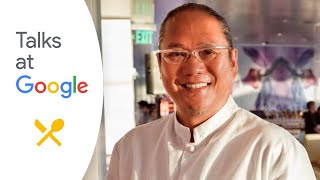
This content was created by Guy Kawasaki. This content was uploaded by Guy Kawasaki. This is a YouTube video titled "The New Art of Japanese Cooking | Masaharu Morimoto | Talks at Google" featuring a talk by chef Masaharu Morimoto at Google. The event, recorded on December 17, 2007, includes a cooking demonstration and a Q&A session where Morimoto discusses his culinary techniques, experiences on Iron Chef, and his restaurant operations.
Chapters
Hello and good afternoon. Thank you for joining us and welcoming chef here to Google. Masaharu Morimoto received his practical training in sushi and traditional Kaiseku cuisine in Hiroshima. He opened his own restaurant in that city in 1980. Influenced by Western cooking styles, he sold his restaurant in 1985 in order to travel around the United States which further influenced his fusion style of cuisine. He established himself here in Manhattan and worked in some of the city's most prestigious restaurants, including the dining area for Sony's corporate executive staff, the Sony Club where he was executive chef and the exclusive restaurant Nobu where he was the head chef. It was during his time at Nobu where he got his start on the Iron Chef television show. Several months after the Iron chef ended in 1999, he left Nobu, eventually opening his own Morimoto restaurant in Philadelphia in 2001. He now has a Morimoto restaurant in the meat packing district here in Manhattan. He is currently. The chef will be doing a demo and there will be time for question and answers later on. And it is my honor to give you Chef Morimoto.
Thank you for coming. Actually I spoke a very good English in the TV but that's not mine. Yeah, so that I have been this country 22 years but still I having little problem with the languages. And then I know this company, very huge company. But I am the very analog guy. So actually this is the maybe opposite side kind of. So I have you know, Mercedes but I can touch anything on any fitted balance. I still listen to the radio, I can even set up the DVD cd. So anyway, I'm very honored to come here to showing my technique with cuisine and thank you. They bought it my cookbook and this is my first cooking book. This was my dreams and then so when chef they become the famous. So try to have a cooking book first. But I have already biography first before the cooking book. So this is kind of maybe I'm you know, strange funny guys so but by myself but I'm very so and so I'm going to introduce this my chef from New York, Morimoto Jameson. And so I came from my restaurant this morning. Just walk five minutes. So means you can come five minutes from here. Okay, thank you very much. And holiday season coming. So this my cooking book is a very good present for holiday season. So don't hesitate to grab 1 copy, 2 copies, 3 copies, 5 copies. So if you, you know, don't want to go to any bookstore, come see me to my restaurant, you know, my restaurant having the. My cookbook. Okay. Okay, let's Start the demonstration for today. What I am going to do is tuna pizza and sugar salmon. So salmon will be dessert. So a lot of people thinking about the Japanese cuisine. Japanese food is very difficult. It's not. I'm showing the, like, a very easy technique. And then through my cooking book. So this cookbook, my concept at this time, my experience in the very popular restaurant menu or a recipe going to your kitchen. So you should try. So fu. I got the cooking book today. So other than that, you should buy. Okay. Okay. So first I'm gonna do sugar salmon. So this is a salmon. So I was not planning to do this sugar salmon. So just we talk. Just tuna pizza. And I came here one hour. Wow. A little too much for just one demo. And then so I try to do this salmon dishes. So I want to break down the form of whole fish. But, you know, this is a good salmon. Just taking the fillet and just skin off. Okay, So this is a salmon, sugared salmon. Salmon will be a dessert, but no one believes me either. But it's good. Okay, so try this. Okay, so I'm going to slice salmon fillet. So just bigger than sushi or sashimi. Then when you see slicing fish, you are making sushi. Okay, so your knife is so sharp. Yes, my knife is very sharp. You can use this, but you know what I mean. So this is sharp, but my arm is more sharp. That's very important. Okay. This is a tsunami Salmon. Salt. Salt. Little, very little. So pinch both side. This salmon salt is not the taste of salt. Put the salt. But salt going to in. In a fish. But salt to make the take out extra moisture and fishy. So that works here. Okay. Then keeping like this. Five to six minutes. Okay, so but time is so fast. Five minutes. Not very. Trust me. Time goes so fast. I feel like Happy New Year two days ago already. It's coming November, same thing like that. And then. So when I do Iron Chef, one hour. So it feels like five or 10 minutes. But did you. Did you watch the next Iron Chef last night? So the other person that. The other bottles seemed like two hours I was in judges. Oh, my goodness. In my bottle. Ten minutes, you know. Okay, then this is a lins of water. This is a poor and sp. And. Dry up. And then back to trade. Okay, this is there brandy. Connect brandy. Brandy. Brandy. The soaking like this. 10 to 15 to 20 minutes. So I'm not going to say goes fast. Okay. I have to do this a little bit. Bless you. I'm very gentle. Okay. 10 to 15 minutes. I have to keep, you know, stay like this. Then meanwhile, I have to break down to the tuna for next tuna pizza. Okay. So this is a very, very nice big white tuna. So this is this one from a dorsal. Okay. This is a loin from 1/4. So from dorsal side and then very side. We call the like auto rodis then. Okay. Oh, microc. Okay. See this is skin side. It's not like this whole, you know, this is skin. This is the inside. This is bone inside. Okay. Those skin side need a lot of fat because it prevent water the cold or whatever. So this is from those. So this is we call chutoro. Okay, so change the color. This is the red. This is the tuna actually this whole tuna. But yeah, this, this called like a chutoro. This is a red tsunam. Okay, so then, so this is in the middle of the body, you know. See, this is a kind of bloody part. We're going to take this out. This is can use. So that's why it's not expensive, you know. Then take a skin off. This is cabbage expensive. Okay. And then I have to take the breaking down red and pink, which is a red and toro. So this is this part of the red. So this part is a chuter. This part is going to be a maybe spicy tuna. Okay, maybe. So when you see sushi case like this, making sushi sashimi from these pieces. Okay. Bring back to my respond. Okay, so this is a blue fin tuna from maybe Canada. So this is a big line. I don't know what you want to say. Little bit of roofing. Expensive. Okay. And okay, 15 to 20 minutes, isn't it? No. Oh, I lost one piece. Then. So this is a brown roast sugar. So chef took from a coffee station from a little, little, little. So. So that's why you should wait a little bit, you know, started getting delayed because this. Okay. Sugar. But you can, you, you can make decent ahead. Mix with the starnes black peppercorn and cinnamon. So mix with, you know, you should put a little bit more flavor going to. Salmon. I mean sugar. Okay. This and this. And I made this iron Chef America salmon bottom. So stay like this 45 to 1 hour maybe enough another 30 minutes I have. Okay. And then I have to making for a pizza cutting board. Have to clean. No stepping over. And then we call tuna pizza. Sounds like Italian, but I'm Japanese. You don't have to worry about the pizza dough. So this is a tortilla dough. You can grab any supermarket. Okay. And then this is using a grill pan. If you don't like grill pan. You have. You can maybe you don't have saute pan, whatever you want. They're making crispy here. Then I'm going to use make crispy and put the seasoning with this eel sauce. Well, you don't have to use eel sauce. So maybe you can use the teriyak sauce instead. Any supermarket, they have a teriyak sauce. Okay. And don't put too much one time. Okay. And you see that. Maybe you should, you know, turn over like this, you know, so. So this is. I think they are not strong enough. This. Okay, so. So if you take a banana, it's going to be okay. And then make like this. So time goes fast. Then. Okay, so this is a tortilla dough like this and slicing tuna. Maybe I'm going to use a tutorial today. So when you cut the tuna so against a senior here. So it's like a. I mean a meat. If senior come here, you have to cut here. So then you know, you don't. Actually I'm doing the tuna. But you can have a smoked salmon instead or maybe grilled chicken instead or mushroom. So anything's okay. I think like this. Then. Red onion. Red onion, then tomato, Then olives. And red onion first. And meros. Argos. East midwest, morimoto. Coming gogos. Okay, jalapeno. Then. So this is a very little sauce. But this is a very important big sauce. So this is anchovy aioli. I usually aioli has a garlic. This is no garlic. Okay. Actually anchov mayonnaise. You can say. So you can come. You can buy the mayonnaise plus the ancho paste. That's all easy. But I don't want to say mayonnaise. But then, you know, Pizza pista, Then. Tabesco, anchovy kimono. So that's why I tied up like this. But not enough. And so you can cut like this. Four or five Amir easily cutting six pieces. Very difficult to movement. So you have to cut before that then. So this is some greens. Any greens? Okay, today we have a baby cilantro. Bam, bam. So now Emil shooting the Emerald live at maybe same studio with the Ayan Chef America. So I'm gonna go tomorrow with him. So taping for, I mean Imolo Live. So that's why I did practice band. So this is a tuna pizza. Okay. Okay. 30, 40 minutes. Not enough. So it's going to be little bit mer. And so we're usually serving this with the bean survey and the user form, but I don't have it today. So just waiting for sugar salmon. Okay, so. So maybe demonstrations will be 0 finish. So if you have any question. Q and A. Question and answer. Answer and question. So I achieve America was exactly one hour, no extra hour, nothing. Exactly one hour. And maybe you're going to ask me what about this secret ingredient? Did you notice that? Yes, I am. But so they giving me three hints, you know, salmon, tuna or lobster, whatever that is. Then I try to make the. Every time the like six dishes. Okay, then six dishes and the three hands. Right. Then already I have to make a half. What's that, 18 then one, you know, one. So we usually taping a whole, whole month for maybe 20 to 24 episodes with the four iron chef. Maybe next one will maybe five. But. And then I usually do four or five. Okay. Four times 1872. So I have to make the 72 new dishes. I know what you expecting to. I have to do that, you know, so I'm doing a lot of different things, you know, So I have to make. I have to invent new things. 72 each. Each version. So that's why I hate Iron Chef milk. So if possible to do that, I want to quit. But the other hand, I'm a human being. I love it to do that because only me can, you know, only myself can have the experience do this. She cannot do this, and Emerald cannot do this. So this is a very, very severe, tough situation. A lot of stress, a lot of pressure, but only I can feel that. But sometimes not so much I want to quit, but sometimes, oh, I want to do this. So this is. I hate it. I love it. Any question? Yes. Who has been your hardest competitor? Me. So because sometimes people ask me, what's the difference between original Iron Chef Japanese Japan 1, Japanese 1, and Iron Chef America. But to me, the same. So because I'm not cooking for judges, so I'm not cooking behind the camera audience, you guys, I'm cooking myself. So I'm challenging myself. So only three judges, you know, two judges likes me. I mean, two judges hate my food. So that's why I'm not doing with him. We're not. I'm not doing that. So whoever any. Anybody can come, but I don't mind. But a very difficult judgment. So tofu against apple. Have to have the apple against apples. You know, sometimes I'm doing tofu, but if I made a masterpiece tofu. But they don't understand, then maybe they like the apple better. So, you know, I'm not complaining of judgments. Okay. So I like them a lot. Yes. From the heart. Okay. But any, you know, I'm not cooking for them and I'm not cooking for the tv. So that's. Anybody can come and then kind of. I don't. I'm not care about the food, so care about me. Thank you. Where do you like to go and eat when you're not cooking or when you go to a restaurant? Where do you go? What am I doing? Yeah, where do you go to eat in a restaurant? What's your favorite restaurant? Sorry, my like weighing My restaurant. 88th Avenue. So restaurant called Morimoto. He's a chef. Thank you. What's your favorite junk food? Junk food. Oh, okay. Cheesesteak. What do you like to cook for yourself? Ah, I don't cook in my house. So I think the comedian. It's like a, you know, after stage or before stage like this. So I don't think they don't, you know, I think they don't talk too much in their own. So I don't know. This is a good example. Now I don't cook anything in my house. So my wife is cooking for me then now you know, she's giving a lot of vegetable. I'm going to be a vegetarian now. So because I'm getting here like metabolic sindalone. So she controlled my food then. So when I get out from my house. So last week we went to Napa CIA with him. But she knows when I out from my house, I eat meat. Huh? Yes. I. I have a nephew who's studying to be a chef. And the most important thing he already knows, which is television is nice, but food is important, right. Other than that, what should he know? Oh, so okay. Actually you know, okay, TV is fine, but technique is fine. The most important thing is from heart, you know, like a passion. What's important for the restaurant business be the chef is maybe you know, all the chef has different technique, different approaching, but in the same goal. You know, how to make customer happy. So this is a goal. So don't practice a lot. Don't you know, like doing for. Just for money, just for the name or whatever. So goal is one goal. So make customer happy. So that's the problem. Hearts and the keeping love it. Don't. Don't hate to, you know, cook, you know, it's better to then so what I say already, you know, good thing times go fast and fail, you know. So when you patient something or still five minutes or six minutes, the time to get long. So if you. When your nephews, you know, liking cooking, whatever. So time go first and the more you know. So I'm sorry, my English very, very bad. It's a good answer. Thank you very much. Anything else? Hi. What secret ingredient posed the biggest challenge to you? Oh, okay. So no, no. Today the salmon and tuna is good. Can be the main dishes, main course or main, you know, protein. But salmon gave me like some, maybe it's butter or milk or vinegar or curry powder or whatever. So those are very difficult to, you know, I can do all by once, but I have to squeeze what's, you know. So that's a lot of challenge and mostly I want to do the seafood. Thank you. Thank you. Hi. I think Morimoto is actually the only restaurant in New York City that you can get fugu blowfish. Not the only one, but yeah, very few. Certainly the best known. I was curious what was your thought process when you put that on the omakase menu? Okay, so you know fugu, fugu is a poison fish blowfish. So before you eat you gotta have a life insurance. Yeah. This, this is a rule. So when you get into my, my restaurant you have to have some sign for. But okay. This is a very safe. No, you don't have to worry anything. But I tried to make the fugu course but now I have a kind of short labor and a very busy time. I serving just fugu special sashimi and deep fried bones like Kentucky fried food with a bone. And not only one in New York, maybe couples, two or three here. So don't worry about your life insurance. Things you should come to eat every day serving. Do you think it's more challenging to run a high end restaurant in New York or in Japan? To me, New York, Japan too. And then Japan is a kind of trend is very, you know, like a short prime time so lopping hills and then you know, so those, the facility and maybe three years. Three years. Three years. I don't, I don't see the long, long, long life restaurant success like you know, Nobu or Daniel. 10, more than 10, 20 years. I don't think you know, like in Japan, but here. So New York mostly people who live in here is a very. I, I don't, I don't, I don't think they're too, too much gourmet. Gourmet. But so people who live in Pip has their own opinions. This is a good bad. This is a good. So, so those guys have very severe eyes to selecting a restaurant. So then. So I have to spend more time and money or invest a lot in New York more than Japan one. So you know, this is a tough market, but if there's something success, it's much, much success than anyway, I think so. This is one of the top city in the world. So that's why very tough. And my dream. I saw last night on the next Iron Chef that you sketched the food of the competitors. Is that a technique you use? You visualize the dish? Do you visualize visually the dish before you create it? I didn't watch any Iron Chef here. Like us next. I said first. Maybe first. And the seventh last night I was up here, so no. So I was on. That's why I should check my English. But I spoke English. But they have the, you know, subterranean down there. And then I don't even the. I can't understand it. What did you say? Myself. You drew the food? Yes, yes. Do you do it on your own for your dishes? Yes, I do. Yes, I do. Yeah. So when I make the maybe a new creation or you know, drawing force. And then I have only one deep technique for Japanese. So she sashimi, little classic things or Japanese technique. But so I have, you know, this, the French, Italian, like Western technique. I have Chinese technique, Korean technique, Indian flavor. Guys, then we got a meeting. So I want to do this and with drawing or whatever. And then when I do Japanese like this. What about your opinions? Why when I do this with the French technique. And so we have meeting and then I have final. I have to make the final decisions. Then I'm going to make the conductor or chief executive producer. Yes. So we are probably going to go soon to your restaurant. What is your top three recommendations to try on your menu? So maybe I'm not going to answer with those question. A lot of people ask me when people coming in or chef, what to recommend you. But are you married? No. Okay. So anyway, when you get married and if you make 10 babies. Okay. Or maybe nine. Nine baseball. Okay, nine. Okay. Then maybe I'm going to ask you which kids are your favorite? So my menu in my lesson, my menu is my. I squeeze from this and you know, we did a lot of work in making recipe. We love the actually all the dishes. So I always say, oh, so you should ask my server. So actually this is not exactly the same as a kid. I mean a baby or so I have maybe 50 baby. Anyway, when you come to my lesson, see me and if you see me, but don't ask me that question. Okay. Anything else? My blood type is B. Oh, do you know your own blood type? Blood type. So okay, point. You know, So Japanese hundred percent. They Know, I don't know why, but anyway, hundred percent. And then, you know, they like to category, oh, A is A, B is B. A is like this character. B is like this, you know, so Japanese like, you know, categorized and then large Japanese coming to my restaurant. Foreign, in the foreign, different country. But they also, this is not, you know, Japanese food real. But I, I don't think the real is here, you know what I mean? So we have to have Japanese food for New York. Have to have the whole London, you know, Beijing, Macau, whatever. But so I don't know, you know, or not. We already make a ramen, ramen noodles and the curry rice in Japan. Okay. This is a very, very popular Japanese food in Japan already. But this is from outside. So curry rice from India. Okay. And the ramen noodle from China, I think. But the Chinese coming to the Japan and eating ramen. This, they don't say this is not a Chinese food. They don't say that as long as it tastes good. Then Indian people coming into Japan eating curry rice. But they don't see them. But they Japanese, they already made it for that. But they say, oh, this is not real Japanese food. So that's why I'm fighting with them. So this is a way of here, you know. So do you know kabuki? So Kabuki, you know, often come to the New York or they do sometimes to Paris, you know, but they arranging a little bit for the foreigner. But they don't say any Kabuki is Kabuki, you know, how come they only say the food? This is not for sushi. This is a sushi, you know, why not avocado inside, you know. So that's why, you know, I'm fighting with them. So why don't you cheer me? Okay. Anything else? So for example, how long does it take? Question, question. So he said. So he said how long it's going to take the like from idea to the making the dishes. Okay. So it's dependent. Some are very inspired and just immediately work. Some just require. Yeah. More effort. Yeah. Maybe it works in a plate, but it doesn't work on the hotline. Right, right. It's. Yeah. You know, making. We are back. I don't know who said that. We are back of house. Okay. And then Servo and Mari front house. Well, so we are making side. Maybe we can operate it. We can make it, but it's very difficult to like, you know, restaurant sizes and the operation bringing food to customers. And then we have to be considered about this or, you know, those things. Sometimes long, sometimes. Then I ask okay, I want to do this then. So maybe he gave me a sample. Not bad. And then try this model again. And the second, third time and we're still working on it. Some dishes when you finally premiere it, you want it to be perfect. You don't want to take chances on the customer. Then. Yeah. And then 8th floor. So your kitchen we are serving a tuna pizza. So you can get the. You can eat a tuna pizza upstairs. My question is in Japan, I know like instead of customer ordering food, the chef actually just prepared. Yeah. For, for. For the customer. And do you do that in. Do you do that here? I try to do that. But mean for old customers. Like yeah, Japan is a maybe Japanese serving to Japanese. So we sharing all the culture and history and then we just asking one thing. How much? That's all. But here people say okay, I leave it up to you. But I don't know what's the level they expecting, you know, fugu or you know, some. Some very hardcore things or so maybe, you know, luxury template is fine for them. So this is a very, very tough thing. But I have a counter called Omakase bar. So this is a little expensive. But this is we trying to make for the customer or the custom made for them. Yeah, you should. We have time for one more question. If anyone. Anyone out there. Okay, well, thank you so much. Oh, wait, Steve. Okay. Okay. During the filming of the original Iron Chef. What does that mean? Was Ota a pain in the neck commentator? Like did they really affect you while you were actually the cameraman more than him? I'm cutting here, here, here. And first couple battles I tried to him. But no, no, no. They are very, very professional. So when I have the camera never move. No camera is very nice guy. That's why I gave up. O first one never happened. Thanks. So try to the eighth floor and my. Thank you very much.
More from Guy


Cheryl Strauss Einhorn | The Human Edge: Smarter Decisions in the Age of AI | Talks at Google



Rachel Glennerster | Innovation and the Center for Global Development | Talks at Google

Rebecca Winthrop | Rethinking the Purpose of Education in the Age of AI | Talks at Google

Dr. Robert Wachter | A Giant Leap: How AI Is Transforming Healthcare... | Talks at Google



