The Pinball Theory of Apocalypse | Jonathan Selwood | Talks at Google
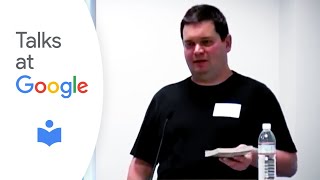
Recording of Jonathan Selwood’s Authors at Google talk for his first novel, The Pinball Theory of Apocalypse. Selwood introduces the novel (a dark comedy set in Los Angeles about artist Isabel Raven and an apocalyptic ‘pinball’ theory), reads an extended excerpt and a brief autobiographical essay, and answers audience questions about influences, the title/theory, and his MFA experience.
Chapters
Okay. Hi, I'd like to welcome everybody to the inaugural Authors at Google San Francisco office event. And it's fitting that we should have an inaugural author here with us today. Jonathan Selwood with his first book, the Pinball Theory of Apocalypse. We're very excited to kick this program off in San Francisco and I'm just going to go into a bit of the book, basically the back, to give you a sense of, I guess, the type of book it is, which is a bit hard to classify, which I personally like a lot. But here it is from the back. For years, painter Isabel Raven has made an almost living forging impressionist masterpieces to decorate the McMansions of the not quite Sotheby's auction rich. But when she serendipitously hits on an idea that turns her into the it girl of the LA art scene, her career takes off just as the rest of her life heads south. Her personal chef boyfriend is having a wild sexual dalliance with this teenage self styled Latina Britney Spears. If Isabel refuses to participate in an excruciatingly humiliating ad campaign, her sociopathic art dealer is threatening to gut her like an emu. And her reclusive physical father, sorry, physicist father, has conclusively proven that the end of the world is just around the corner. Now, with the apocalypse looming and with only a disaffected Dutch Eskimo billionaire philanthropist and his dissolute 13 year old adopted daughter to guide her, there's barely enough time remaining for Isabel to re examine her fragile delusional existence and the delusional reality of her schizophrenic native city. Now this schizophrenic native city is also Jonathan's schizophrenic native city. He grew up in Hollywood. So you get a real sense that this book could only come from somebody who actually was an original denizen of that town. And he also spent about five years riding on the cheap in Mexico and then moved to New York to ride on the not so cheap, where he got his MFA at Columbia University. And he's now living in Portland, Oregon. And this is his first book and we'd like to welcome Jonathan Selwood.
All right, can you hear me? Yeah. So this is the book Pinball Theory of Apocalypse. I had nothing to do with the COVID but I love the COVID and I really wish I had come up with this idea, but it was designed entirely in house at Harper Perennial. So when I first got the JPEG of the COVID I kind of went through, well, you've Got copies there, but there are little clip art pictures all around it. And I went through all these different clip art pictures trying to figure out how they fit into the actual novel. And almost all of the clip art pictures do somehow, you know, some are a bit of a stretch, but somehow fit into the novel or can be linked to the novel. Except right here on the edge of the COVID there's actually a toilet plunger. There's a toilet plunger on the COVID of my novel. And I have no idea where that came from. Well, like Nick said, unlike every other male author in America, I was not born in Brooklyn. I've never played stickball. I grew up, born, raised in Hollywood. And most of this book does take place either in Hollywood or in neighborhoods around Hollywood. And it is the story of Isabel Raven, who hits on the. Well, you read the back. So hits on this idea that makes her the sudden it girl, but it is a dark comedy. So her apartment building is sinking into the La Brea Tar Pits, and her Caltech physicist father has conclusively proven that the world is about to end. And also, in what, considering last week, has turned out rather prescient, the entire city is being consumed by wildfires. So I predicted that despite all the pop cultural references in the book, and there are a lot of pop cultural references in this book, I actually started working on it, or at least thinking about it, all the way back during the LA riots. 1992, I think it was. I was studying abroad in Madrid at the time, and my parents were in Hollywood. And so when the riot broke out, I ran down to the payphone and tried to get a hold of them, but of course, all the phone lines were either down or overloaded. And so I kept calling from this payphone of the base in front of my apartment building in Madrid. And finally, when I finally got through, I was like, how are you? And they were just fine, which sort of struck me. And even in Madrid on the tv, I could see that the whole city was in flames and that there were tanks parked in our local supermarket. And they even had shots of my neighbors barricading the streets with their cars and running around with assault rifles, trying to keep looters from coming up into the neighborhood. Neighborhood. But my parents were sitting in the garden splitting a bottle of wine and just enjoying the time off work. So I was just kind of like, you know, why aren't you freaking out? And my dad just said, oh, well, you know, we survived the Watts riots back in the 60s. We'll survive this one. It's all fine. And it kind of struck me at that moment that that's the quintessential Angeleno response, or it might even be the quintessential California response that everything is going to hell. But everything, when you live in la, everything is always going to hell. So you might as well just like break out the wine and have a good time. Anyway, I'm always really envious of short story writers and essayists, things like this, because they can read something beginning to end. And there's no way I can read this entire book right now, although it should be read in one sitting. My dream is to read it in one sitting because it's the kind of. I think it's 180 pages. So it's the kind of book that you could actually read in one sitting. But although, who does that anymore? So what I think I'm going to do is kind of mix it up a little and read an excerpt from this. And then Larry Doyle is a former Simpsons writer and has a book out right now called I Love youe Beth Cooper. And he ran a contest to talk about or to write an essay about your most embarrassing high school moment. And I entered the contest and actually won an ipod in this contest. But so I thought I'd also read it. It's just a short little essay that's basically the most embarrass, humiliating, bizarre event of my entire life. So that'll break it up. So I'll read a little of this first and then take a little break, ask questions if anyone has any questions, and then read that. The section I'm going to read. It comes. It's about a third of the way through the book. And Isabel, the protagonist, gets invited to a party at the mysterious art collecting billionaire Alex Tsu's house up in Mulholland, which sort of overlooks the city of Los Angeles. And her. Well, as Nick said in his introduction, her art dealer is a sociopath and completely insane, which I guess is sort of the definition of sociopath, but forces her to wear this sort of crotch length Suzy Wong style Cheong Som dress, you know, one of those really short Chinese dresses. So she's incredibly uncomfortable at this party because she's wearing this tiny little thing. And. And then when she actually gets to the party, it turns out that everybody at the party is in their early teens. So she's just like completely creeped out by this party when she gets there. Also, I guess I should say before I start reading that the book is in the first person told entirely in the first person from Isabel's perspective. So it would really help if while I'm reading, you would all try to visualize me as an anorexic 27 year old woman in a really obscenely short dress. Can you visualize that? I walk back past the pool and lawn until I reach the glass paneled door to the house. The door is slightly ajar so I slide it the rest of the way open and step into a large unoccupied room. Paintings cover all the wall space between the windows with the exception of one corner where a curiously placed L shaped bar juts out. The whole zinc surface of the bar is cluttered with liquor bottles and built into the angle of the L shaped base is a flat screen tv. The sound has been muted, but the pictures run with continuous shots of the brush fire raging through Silver Lake. It takes a moment to realize both that these are the same televised fires that were flickering red in the windows when it first arrived, and that all the paintings on the wall are mine. You like them? I spin around to see a tall, thin, possibly Asian man in a tailored black suit standing in front of the glass paned entrance. He looks like he might be in his early 30s, but his voice sounds older. They've got to go back to the gallery tomorrow for an opening, but I wanted them here for a party. Cordelia invited the artist, but of course she hasn't come. Never can trust the creative, can you? Even though I'm positive I've never met him before, his smile seems vaguely familiar. How rude of me. Can I get you a drink? Sure. I watch him cross the room in two long steps and slip behind the bar. You're. You're Alex, aren't you? I hesitate slightly on the name, unsure whether or not I should call him Mr. Tsu. After all, he is a billionaire. Very perceptive of you. He fills two highball glasses with ice and selects one of the bottles from the top of the bar. It's terrible. I've never been able to wean myself off of drinking cognac on the rocks. All that endless prep school training and forced civilization gone to naught. Hope you don't mind. Alex pours out half the bottle, filling both glasses to the brim. Feel free to throw it in the pool and fix yourself something else. He makes a slight sweeping gesture with his hand at the bottles lined up on the bar. I walk over and take one of the glasses. Alex, I think I should tell you that I'm Stop. He cuts me off. No need to introduce yourself. I'm quite drunk and most assuredly won't remember a toast. He holds up his glass. Well, maybe not. In one swig he drains half the highball, then leans forward to examine my face more closely in the flickering televised firelight. I lean back and take a swig of the cognac myself. It's smoother than I expect and seems to pour straight through my throat and into the bloodstream without ever reaching my stomach. Do you like it? He asks, examining his glass. Yes. My God, you're svelte as a barracuda in that dress. Alex takes an exaggerated step to the side so he can take me in. Thanks. Do you mind if I ask you something terribly personal? It depends. Have you tried the deviled eggs? Yes, they were. Where are my manners? He cuts me off again and motions towards a small couch under one of the windows. Please have a seat. Using my left hand to keep my hemline down, I sit tentatively on one side of the couch while Alex perches himself on the arm across from me. Despite his obvious drunkenness, he sits gracefully without the least bit of a slouch. Just as I begin to study the unusually high angle of his cheekbones, he smiles and a saber like canine tooth flashes in his mouth. Isabel Raven. Not a bad name. I suppose some clerk on Ellis island shortened it from Ravenous Kiewicz. Uh, actually I'm 1 32nd Chumash Indian. So you know my name. This entire room is filled with your paintings. Do you think I could not know who you are? He flashes his saber tooth again, then points to an open pack of cigarettes on the end table next to me. Yours? I shake my head, confused. They're mine now. Alex reaches out and I hand him the pack. He offers me one and lights us both up with a yellow pick that clashes horribly with his otherwise classy attire. So, Isabelle Raven, do you ever feel that since the world appears to be on a delusional course, we must develop a delusional approach to the world? Delusional? I cough, realizing the cigarette is another pura indigena. I read it somewhere. I think it's Baudrillard. Sounds kind of pretentious, I blurt out before I can stop myself. Pretentious? Yes, I guess so. But that doesn't make it any less true. Most people bristle instantly when you call something they said pretentious. But Alex seems to be able to evaluate the quote objectively without letting his ego get involved. And in truth, the more I think about the day I've had, the more the world does seem to be on some kind of delusional course. Okay, so how does one go about developing a delusional approach to the world? I ask. Good question. He tilts his head and strokes his stubble free chin as if in profound thought. I suppose we could join one of those ludicrous fundamentalist religions that are all the rage these days. But that might interfere with my twin loves of binge drinking and taking the Lord's name in vain. So maybe we need to create our own fundamentalist religion, I suggest after a moment's thought. You know, one specifically dedicated to the fundamentals of binge drinking and taking the Lord's name in vain. I won up his chin stroking by bending forward and resting my head on my knuckles in imitation of the Thinker. Although personally I think we should throw chain smoking into the mix and make it a holy trinity. Then it's decided. God damn it. He French inhales a cigarette and toasts my cognac highball at the same time. I wait for him to go on, but he doesn't. Either he's too drunk to notice the conversational lull or he just doesn't care. So why are you buying my paintings? I finally ask, aiming for a breezy cocktail party tone. Because you have more raw talent than Picasso, Van Gogh, and Michelangelo combined with without thinking, I throw one of my ice cubes at him, missed by a fantastic distance, and watch it sail off somewhere down the hall. Even though I've almost finished the cognac in my glass, I don't feel anywhere near drunk enough to be acting so childish. It's as if something about Alex's presence has suddenly and inexplicably caused me to revert to an adolescent state. When he turns back from watching the ice cube's path down the hall, I feel myself start to blush. Can't say I expected that. He raises an eyebrow but then flashes his saber smile again. His eyes openly acknowledge my hemline for the first time. More cognac. Embarrassed, I hop up and reach for his empty glass. Thank you. I have no idea which of the bottles on the bar is actually cognac, so after filling both glasses with ice from the bucket, I just grab one at random. Really? Why are you buying my paintings? I ask again. Because I like them. Why else you actually like them? Oh God, it's Sally Field. You're not one of those self deprecating artists, are you? Always blinding people with their faux modesty while distracting the world with their unassuming air while surreptitiously dynamite fishing for compliments. I've always Thought people should be blatant about their genius, be able to say I'm not just good, I'm the very best genius. I bring back the now full glasses. Well, okay, maybe not genius, but you really do have a flair for the camp. He takes a sip from his glass and holds it up to look at it. What the fuck is this? Fuck if I know. The mouth on you. Alex shakes his head. A misspent youth, no doubt. He takes another sip from the glass and shrugs in acceptance. Well, if you really want to know, it's because you're superficial, I swear. Because I'm superficial? No, that's why I'm buying your paintings. Oh, thanks. I meant it as a compliment. And I accept it as an insult. Seriously, if there's one thing I've learned about my own excruciatingly superficial life, it's that Los Angeles is about living for the now. Alex finally breaks posture and leans forward to begin gesturing enthusiastically with his hands, spilling what I can now taste is Scotch on the sofa. I'm momentarily startled, but there's something so disarming about his face and the slight lisp of his speech that I can't help but drop my guard. I mean, that's really what we're all about, isn't it? No one cares about last month's movie, about yesterday's fashion. Not in a town where the actual ground we stand on is in constant tectonic flux. Alex's childlike enthusiasm somehow serves to complement his almost professorial intensity. History is for New York or London or Vienna, and the future's for, I don't know, say, Tokyo. But the present, the now, that's here, that's Los Angeles. You're pretty passionate about this, aren't you? I mean, really, we get so much shit for it. Everybody's always calling Angeleno superficial. Well, you know what? They're right. LA is superficial. It's all about the surface. About the sheen of a detailed car, the arc of a fake breast, the flash of a bonded smile. It has no depth. But that's the point now, isn't it? I didn't know there was a point. What the hell is wrong with the surface? Alex continues on, undeterred. The surface of the cake is the icing. And the earth. We live on the surface of the Earth, don't we? Not down with the fucking mole people. All right, you definitely lost me with the mole people. With great effort I managed not to slur this, but the alcohol is definitely starting to hinder my elocution. What I'm trying to say is that we're always pissing all over the now. Either we're striving for some mythical future where advances in hybrid automobile engines eliminate global warming and end terrorism, or we're floundering in nostalgia for a romanticized family value packed past that never existed but the now, this precise ephemeral moment. That is what I'm interested in. You really believe all that? No. He sighs. But it's a killer theory, though. Kind of makes me wish I was back at Yale smoking gall wise and misinterpreting Derrida. I laugh, but all I can really think about is whether I'm becoming physically attracted to him simply because he likes my paintings or if there isn't something seductive in his inebriated intensity. Looking down, I see that my glass is empty again. Refill. Alex is up and heading towards the bar with both glasses. Which one was it? Was what? Which bottle? What were we drinking? I shrug. Not particularly observant for an artist, are you? Tell me more about how I'm a genius. Back to that again. You really are a one trick pony. He refills the glasses and hands one to me. I lean back on the couch and take a slug from my highball, only to spit it up a half second later. What, don't like tequila? Alex laughs. I'm about to throw my whole drink at him, but at the last minute recall that he's wearing a $5,000 suit. I settle and set on another ice cube, which miraculously follows the exact same arc as the first one. Pardon my asking, but why do you keep throwing ice down the hall? He leans towards me, smiling. He's only inches away and I can feel my cheeks start to warm. His smile widens slightly and of course, out comes his saber tooth again. Something primal overpowers my already inebriated inhibitions and surprising even myself. I try to kiss him. Whoops. He pulls back suddenly and I have to grab the arm of the couch to keep from face planting into the floor. I do Believe you're drunk, Ms. Raven. Utterly mortified, I do my best to reposition myself on the couch without my dress riding up. The fact that he's not laughing somehow makes my humiliation even worse. You're not really a pedophile, are you? I finally blurt out, thinking of all the teens hanging around the pool. A what? Everyone at your party is like 15 years old. What are you talking about? It's not my party. It's Cordelia's. My daughter. You really are a cheap drunk, aren't you? So you're not a perv? No. Gay? No. Then why won't you kiss me? I realize how arrogant that assumption that any straight male would want to sleep with me is, but up until now that's been the case. Are you married? No. Look, you lascivious lush, I'm trying to be a gentleman about this, okay? About what? That sleazeball of a gallery owner told me that you just found out your boyfriend's cheating on you and that you're probably on the rebound. Dahlman actually told you that? I glanced down at the crotch length Chong Song I'm wearing and even in my highly inebriated state I'm able to put two and two together. Is that why you bought my paintings? Because you said I'd sleep with you? Actually, I bought the paintings as a present for Cordelia. She thinks you're the next Warhol. But to be honest, he did suggest something of the sort. I'm gonna fucking kill him. Not that he doesn't deserve it, but you should know that it might clip the wings of your Icarus flight to fame. Here, give me your cell phone. I hand it over and he plays with it a moment. By the way, what's your favorite charity? I don't know. The Sierra Club, I guess. The question catches me off guard. Really more of a non profit than a charity, but it'll do. I put my number on your phone. Call me when you're sober enough to give legal consent. He hands back the phone and kisses my cheek. Better go check on the deviled eggs. Wait. I stand up, but Alex has already slipped out the glass door. The flames on the TV jump over Los Feliz Boulevard and start rolling noiselessly towards the Hollywood Hills. Somewhere deep in the back of my mind, a voice is whispering for me to have some sort of reaction to my humiliation, to scream, to start crying again, to tear off my clothes and run outside. But my earlier bout of roadside sobbing over Javier has apparently drained the last of my hysterical reserves, so instead I check my cell phone to make sure that he really did give me his number. Walking over the bar, I fish in a bucket of mostly melted ice and drop a couple of cubes in the glass. I drain the tequila in two slugs, then refill the glass with gin. This time the liquor does reach my stomach and hangs there, waiting. It occurs to me that Alex is only one of a handful of men who I've met, who I've had an extended conversation with, who hasn't at some point told me I need to smile more, grabbing the gin. I carry it back with me to the center of the room. The TV finally cuts from views of the fire to an infomercial and the room goes from red to blue. Trying to hold my glass level but spilling anyway. I stumble around in a circle, looking at my paintings on the wall. There's Venus on the half shell with Scarlett Johansson, Blue Boy with Macaulay Culkin, and perhaps kitschiest of all, the Sistine Chapel with James Earl Jones as God and Jamie Foxx as Adam. Despite the fact that they sold for a ridiculous sum of money, that Alex praised them, and that I'm just shy of blind drunk, not a single image is strong enough to counteract the depressive effects of being both dumped and denied in the same day. I leave the room before making any conscious decision to do so and am out on the lawn staring at an empty glass, unable to remember if I drank any of it or just spilled it all. With the exception of the boy in the black Speedo continuing to swim quiet lap after lap in the empty night. The guests have all left, probably caravanning on to the next party. I catch sight again of the mysterious brick path that leads around to the other side of the deck and, grabbing another deviled egg for the walk, start down it. To my surprise I find that the land does not drop straight off past the deck, but that the path follows a narrow ridge running down into the orange clouds. For a moment I think I hear laughter up on the deck, but when I look back there's no one at the railing. Almost as soon as I start down the ridge, the path turns to dirt and the light of the party is lost in the mist. Focusing on the ground in front of me, I use exaggerated care to step over the rattlesnake holes and dry rivulets in the increasingly steep trail. The completeness with which the clouds cut me off from the house behind me and the unknown in front of me emphasizes each step to the point of absurdity. I can feel each damp breath of air as it hits my lungs, each beat of my slightly elevated pulse, each tendon of my bare knee braced for each jolt. The scent of wild sage, the rustling of brush as the startled rodents scurry off, and the grade of each footstep on the damp sandy soil come to me one at a time, each a separate sensation. Then, just as I stop thinking about where I'm going, I arrive. The path comes out of the clouds and the ridge ends at a small cleared lookout where an old time brass surveyor's disc has been sunk in the ground to mark the elevation beneath the orange shelf of the marine layer. The air is absolutely clear and I can see the lights of the city spilling out in endless block by block repetition across the alluvial plain below. I want to cry out, to bellow a personal challenge to its hideous beauty, but when I open my mouth, nothing comes out. All of a sudden, the empty glass slips from my hand and I realize that it's not just me who's stumbling, drunk and unbalanced. The dirt beneath my feet is shifting, rising, falling, crumbling. The brass geological marker moves along with me, its precise calculation lost. I look back out over the city to see the lights twinkle out from another aftershock. So I'll take a little breather from reading, because otherwise it gets kind of too much. But if you have any questions, feel free to ask. I can keep talking a little while you get a chance to think, because otherwise, you know, I'm always like, questions. And everybody freezes up. The book has been out now. It came out July 24, so it's been out a few months now, and. And I've learned a few things. People that hate la, and there are. It sort of surprised me how many people there really are who absolutely hate la. I probably wouldn't surprise people here in San Francisco, but they tend to see the book as sort of a vicious attack on the city of Los Angeles. Whereas people in Los Angeles, Angelenos, and the people, you know, I've talked to down there kind of have the opposite view and see it much more as a celebration of the city and what's great about Los Angeles. So I think, you know, when I was actually writing the book, I was going. Personally, I was going somewhere in between. I was trying to have sort of a vicious celebration of Los Angeles. But, yeah, everybody kind of has a different view. And a few, for some reason, a few people have actually taken this book as a personal attack, which I don't quite know how you could. Maybe they're just insane. Actually, the one guy in one of the Seattle suburbs, I was reading, and he muttered through the whole reading, loudly, like, I'm reading. And he was just like. And people kept turning around and trying to shush him with their eyes, you know, give him that glare, like, shut up. But he just muttered through the whole reading. And when the reading ended and the Q and A started, he accused me of knowing nothing about Hollywood. And this sort of took me aback because I was born in Hollywood and raised in Hollywood and, you know, still go back to if this is my parents who still live there. And I was just like, well, you know, but it was my reading, so I didn't want to be rude. So I was like, oh, well, sir, are you from Los Angeles yourself? At which point he jumped out of his seat, yelled cocksucker, and ran off, knocking over chairs as he went. So, yeah, I have no idea exactly how that happened, but I wish that had been on tape. That was a yes, yes, yes. So any questions about this or should I go on to. I guess I have a question about the writing process and how it kind of happened. You said you started thinking about it in 1992, but what about kind of before that? And how did you kind of just how did you look at all of them? Well, yeah, well, I guess I had the first idea of the sort of absurdity of Los Angeles at that point. And then I kind of. Well, I actually. I think I even say there's a weird Harper Perennial puts in the extra material in the back. And I kind of talk about it there. But that I rewrote this book again and again. I mean, I guess because it's my first novel, I didn't really know how to write a novel when I started. And so I just kept rewriting it again and again until it worked, or at least I think it works. But I kind of wrote it just sort of every which way you read it now. And I don't think it gives the impression that it's been written. You know, there was one draft that was just a complete bloodbath and everybody died. And Isabelle was carrying this sawed off elephant gun and shooting people and it was just total gore. And then, you know, that went away. And there were other drafts where Isabel was. I mean, I wrote it as a man. I wrote it in the third person. I wrote it in the first person. So I kind of. My technique, which I'm trying to change a little bit, my technique has generally been to just write it and then rewrite it and then rewrite it and rewrite it sort of endlessly until it works. For me, I was just curious if the main character represented someone in your life or, you know, where that inspiration came from. To have her be the type of person that she isn't about. Well, I think. I mean, there was. I have a friend who, you know, who has mysteriously has the same apartment or had the same apartment as Isabel does in this book. And it sort of. I think when I started writing it, I was sort of thinking about her as the inspiration for the character. But then it sort of combined with other people I knew. And at the time I started writing the book, well, yeah, the time I started writing the draft that became this, I really didn't. The only artists I knew were women. And so it just naturally occurred to me to write a woman as the protagonist. And at that time, I was also only writing sort of in the first person. I'd gotten really into writing in the first person. So I didn't really even think about writing a book in the first person as a woman until after I'd finished a draft and showed it to a friend of mine. And she was like, oh, you know, before she read it, she was just like, oh, you know, you're going to try writing the first person as a woman. You really think you could pull that off? But, you know, at that point, I'd already written it, so. But yeah, I mean, I just sort of combined a lot of people and then I did get a lot of help. My editor and all of my primary readers. You know, the people I show it to first are women. So it sort of. That's kind of how that character developed. And hopefully I got it right. And if not, blame my editor. I just to want was wondering too, did you have an audience in mind when you wrote the book, and is that different from the audience you anticipated now that you have the book out there for a couple months now? Well, I think to me, with this kind of book, I was sort of writing to try to reach people who had the same sort of alienated experience in Los Angeles. And when I say alienated, it sounds like, oh, I hate Los Angeles. And it's not exactly that I do hate traffic, but. But there's a lot of Los Angeles that I love. And I think that I was kind of going for the sort of alienated person, maybe even writing sort of to myself as a younger person. But I did find. I was sort of surprised when the book came out that people. I got interviewed by somebody in Los Angeles for public radio who. She was 87, and she was just like, I loved your book and, you know, was so excited about it. I had no idea that it would. It would reach that audience. I definitely thought it would be a younger audience, but. And I was also. I did not think that the neighbors. I had a reading in Hollywood where a lot of the neighbors where I grew up came, and I didn't think my neighbors would like it or like how some of them were sort of portrayed, but they tended to really like it too, or at least that's what they told me.
I have One question about the title and the actual theory and maybe how you came up with that, or if you heard about that, and then the theory itself, for those who haven't read the book, is that at some point in 2049, the planets within our solar system are. There'll be some type of change in their orbital paths and they'll all start bumping into each other like pinballs, and it's the end of the world as we know it. And at first this is by the protagonist's father discovered this, and then everybody tried to disprove him and they actually figured out he's right. People decided to just ignore it, essentially, which also kind of underscores that's kind of how Los Angeles approaches a lot of stuff. If it doesn't really work for them, they seem to ignore it. Or, you know, of course, that's a gross generalization, but. Curious how that theory related to your or underscored your impression of Hollywood.
Well, I think that there is something to that. I mean, I think our country as a whole has a tendency to ignore wars and things that are going on when they don't see an easy solution. But, yeah, definitely Los Angeles and Hollywood, I mean, the traffic problems, even as a kid in the 70s, everybody's like, oh, what's going to happen? This traffic? What are we going to do? And the answer is nothing. We're going to wait until the streets stop and then people are going to move up to Portland or places like that. So it's. I think that there is, you know, in some ways it's wonderful that people are so positive in la. And I think that's, you know, it's arguably one of the most artistically creative places in the world because TV and movies, you know, entertain the entire world. And I think that there is something about the optimism and that you can just go there and. And do it and don't worry about the past, don't worry about anything else. But on the other hand, I mean, the civic planning and the giant sprawl, there really is no solution at this point. I mean, I think there could have been a solution had people thought a little bit more about it. But, yeah, I definitely see that as the theory is sort of. Well, the theory is kind of a joke. If you go to pinballapocalypse.com, you can. You can actually see the theory, but with the ridiculous math that goes along with it. But the. I think that, yeah, there is an apocalyptic sense to Los Angeles because nobody is looking to the future or looking to try to solve these problems and it's interesting to compare now that I live in Portland. It's such an opposite with Portland, you know, there's so many people there trying to figure out how are we going to make the city grow without becoming a nightmare. Well, so I guess I'm going to go ahead and read this short essay, which isn't as long, but yeah, as I said, the most embarrassing, humiliating moment of my life and why I chose to read it. I Anyway, it's called Eat or Die. I went to an all boys high school in North Hollywood, so it took a summer abroad for me to learn the kind of elation, humiliation that only first love brings. Because like all 16 year old boys, I was a complete pain in the ass. My parents jumped at a chance to send me to Spain on an exchange program and because like all parents of 16 year old boys, my mother and father were complete pains in the ass themselves, they shared my enthusiasm. Or I shared their enthusiasm. After a red eye from LA to Madrid and an agonizingly slow train ride, I arrived at a little town in the province of Baldolith. My bullfighting obsessed host father, he'd been gored three times and was reduced to walking like a crab, picked me up at the station and drove me directly to his favorite bar. It soon became apparent that my rudimentary Spanglish was not going to be of much use. Not only did I fail to understand a word the host father was slurring, but when I tried to order a bottle of agua, I ended up with a glass of the bar quickly filled up with other host families and exchangees suffering similar linguistic hurdles, and I caught the eyes of an equally bewildered girl from New York who was nursing a beer after failing to order a diet Coke. She had on a tight pink T shirt and a frilly white skirt that contrasted sharply with her NYC expression of you touch me and I will fucking castrate you. It took a couple more copas of wine, but eventually I gained the cojones to approach her with my patented pickup line, Excuse me, but do you know where the restroom is? To put it Simply, I was 16, she was 15, and we were drinking. I fell madly in love with. Well, to protect her identity, I'll simply call her Scarlett Johansson. My host family was, at least initially, quite supportive of my flowering love for Scarlet, especially when I explained that she was my novia, which I took to mean girlfriend and they took to mean fiance. They invited her along to all the various bowl related festivals occurring in the surrounding towns and plied her with the same continuous flood of wine that I'd quickly come to enjoy. That is, until one evening a local kid introduced us to the magic of gin and tonics, and we proceeded to drunkenly make out in the town's central plaza. Now I will admit that in our youthful ardor we might have actually been lying down on that park bench, and that perhaps our hands were roving a mite freely. But we did not have sex in the town square. I know this for a fact because we'd actually already had sex up at the old abandoned castle just an hour previously. Thus I was shocked the next morning when I awoke to find the family's modest apartment crammed to capacity with whispering neighbors, including the rather intimidating host father of the host family. For Scarlet, the American school teacher who headed up the exchange program muscled through the crowd and dragged me out into the hall. Did you? She was a religious Texan and had trouble getting the words out. Did you have sex with Scarlet? Of course I was guilty as charged, but attempted to equivocate with the same technique that Bill Clinton would so ineffectively use years later. Define sex. Did you have sexual congress in the main square last night? No. I carefully chose my words. I did not have sex in the main square. They saw you. She waved back at the people in the apartment, seeming to imply that all 50 or so of them had seen me. My first thought, of course, was of poor Scarlet. I'd read some of the Cliff Notes for Don Quixote and a smattering of Hemingway, so I knew that Spain was a deeply religious country full of highly unrealistic virginity demands. I was far from Scarlet's first. After all, she was from New York City, but of course the townspeople didn't know that. Would they brand her as a whore, ship her off to a convent, or, oh God, they weren't going to try to marry us, were they? I swear we were just making out, I pleaded. Unfortunately, this statement somehow only managed to confirm in the mind of the program director that I'd had sex in the plaza. I'm sorry, but you're on your own with this. They've already sent for a car. She shook her head. A car for what? She shrugged and started for the stairwell. You can't leave me, I called after her. I don't even speak Spanish. You should have thought of that before you decided to fornicate in public. It wasn't in public. I shouted, but she'd already disappeared. Before I could slip back into the apartment, the host mother burst through the still open doorway in tears and gave me a bear hug. She was the kind of woman with meaty forearms who could really crush your floating ribs. Put them on earlier, put them. She whispered soothingly in my ear. Just as I started to pass out from the bear hug, the host, Father Crab, walked into the hall rolling a giant wheel of cheese. Vamonos. Close to tears himself, he clapped a drunken hand on my shoulder and directed me toward the stairs. Minutes later I found myself wedged in the back seat of a minuscule seat with a giant wheel of cheese. The drunk father drove while the mother sat in the front passenger seat, furiously wearing out rosary beads. We made our way through the crowd of townspeople who, unable to fit in the apartment, had mobbed the streets to see us off and began driving out of town on an old overgrown pothole ridden road. As we continued to drive for over an hour along what gradually turned into a dirt trail, my thoughts shifted from Scarlet's fate to my own. Peering out the grimy window, all I could see was rocky pasture land and the occasional flock of sheep. Where were we going? What the hell was up with that giant wheel of cheese? I asked in my best Spanish, but as usual the host mother failed to understand my question and simply passed back the bottle of fundador brandy the father had been swigging. Eventually we reached a village of maybe 20 dilapidated whitewashed houses, several with actual mules tied up in front. The father wrestled out the wheel of cheese and the mother led me into one of the houses. There I was introduced to a very small old woman in traditional garb who I took to be Grandma. Grandma crossed herself a few times against my recent fornication and then directed me over to an ancient medical scale conspicuously standing in the middle of the living room. I was carefully weighed and then repeatedly pinched around the midriff as Grandma used her fingers as calipers to precisely measure my fatness. There was a lengthy discussion, which I understood not a word, and more tears and bear hugs from the host mother. Eventually I was seated alone at the head of the dining room table. Both Ma and Grandma disappeared into the kitchen, only to reappear moments later with platters of food. They placed the food in front of me and then mimed for me to start eating. And ate I did for at least two hours straight, everything from ham to chorizo to squid to lamb brains. I've never been a picky eater and Grandma's cooking was delicious. The host father returned sans cheese wheel to join Ma and Grandma, and all three of them watched with increasing delight as I shoveled in the chow. When I finally could eat no more, they had me waddle over to the scale and weighed me again. I'd gained 2.5 kilos, or roughly 5 1/2 pounds. Based on the cheers that went up in that house, you would have thought Spain had just won the World cup without explanation. Not that I would have understood an explanation had one been offered. We got back in the car and rushed home along the potholed road, me trying desperately not to puke. The crowd was still waiting for us in front of the apartment building, and when the host mother announced to them, my ass. Astonishing weight gain, they too cheered. For the next few days I even found myself, inexplicably something of a town hero. Now I imagine the question you're asking yourself is, huh? Well, I was stuck asking myself the same question for at least a week before the head of the exchange program calmed down enough to start speaking to me again. Apparently the stress of my fornication scandal had caused her to take up smoking again. They thought she were dying of tuberculosis, she said. Sucked at her Marlboro. What? I thought about this a minute and then added, what? I'm serious. The whole town believes that boys under the age of 18 who have sex die of tuberculosis. Even the doctor. It's like they're living in the Middle Ages. That doesn't make any sense. Of course it doesn't make any sense. They're Catholics. Her Texas accent kicked in with extra force on that last word. I couldn't see how being Catholic had anything to do with it. But then, like all Hollywood natives, I was raised hedonist. They think I'm dying. Not anymore. That's why they force fed you. Apparently they also believe that people with TB lose weight. When they proved that you'd actually gained weight, it signaled to the town that you'd been miraculously cured as a 16 year old. My powers of comprehension pretty much stopped there. Catholics. She leaned her head back and exhaled a cloud of smoke at the sky. Scarlett and I managed to continue long distance dating for at least a year after we returned to the States, although in the end she admitted that she'd been cheating on me pretty much from the start. Oh, and I never did figure out what was up with that giant wheel of cheese. Any more questions or Jonathan's going to.
Be Jonathan's going to be sticking around to sign some books, and if we have any more questions, I can shirt with the mic.
I'm just curious how what you think about. Like you said, you do an MFA program, right?
Yes.
I hear mixed things like MFA programs, and people just say that they just kind of give you more of a focused opportunity to write during that entire duration. Do you feel like it really taught you something like. Or changed the way you approach writing, or do you think it was just more of, like, a good exercise, like giving yourself that time and just dedicated toward developing your craft?
I think dedicating the time was helpful. I also, I went to Columbia in New York, and I think for me, living in New York City was really useful and sort of getting to know a little about the publishing industry firsthand. But, you know, it is a mixed bag. And especially, you know, I graduated from my MFA program, I think, in 98, but the tuition keeps going up and up and up, and it's sort of hard to justify spending so much money on, you know, going to so much debt for something like an mfa, which is not exactly the cash cow degree. I think a lot of it depends on who's teaching. And one of the problems with an MFA program is you look at the list and you're like, oh, I love the writers there. And then you go, and they've all left. Because people move around so much in that field. So I think it really is a mixed bag. I'm not sure if I like the workshop, which is sort of the central idea of MFA programs. Maybe it works better for poetry or other things, but for fiction, I mean, I kept seeing again and again, somebody would start a novel and they'd bring in their first chapter and everybody would tear it apart. And of course, then they'd never, ever write the whole novel. So in some ways that's kind of a pretty big negative. But, you know, it's a mixed bag and they're all kind of different. So I guess, yeah, I'm giving an absolute in the middle answer, aren't I? Yeah. What are some of your favorite modern authors? I really like Sam Lipsite, who actually teaches at Columbia now, but he didn't teach when I was there. I like his latest book, Homeland, I thought was really great. God. Other current authors, I like a lot of, well, George Saunders, but everybody says that. So, you know. But yeah, I would recommend Sam Lipseye because you probably haven't read him, and he's really good.
Any other questions? Well, thanks again for coming to the first Authors of Google event.
We're going to have more in the.
Future, including one, if it's going to be dc, it's a Mountain View event, so we'll have a VC set up tomorrow, so keep an eye out for that. And thanks again, Jonathan, for coming to be our first author that we've hosted here.
Thanks for having me.
More from Guy


Cheryl Strauss Einhorn | The Human Edge: Smarter Decisions in the Age of AI | Talks at Google



Rachel Glennerster | Innovation and the Center for Global Development | Talks at Google

Rebecca Winthrop | Rethinking the Purpose of Education in the Age of AI | Talks at Google

Dr. Robert Wachter | A Giant Leap: How AI Is Transforming Healthcare... | Talks at Google



