The Reason for God | Tim Keller | Talks at Google
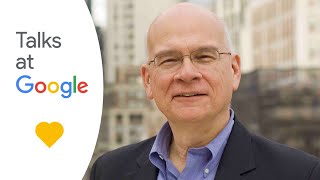
Tim Keller argues that disbelief requires as much faith as belief, and that certain facts like fine-tuning and human rights make belief more sensible than skepticism. He addresses objections about evil, religious violence, and whether God can be known at all.
Questions this video answers
Talk at Google, March 18, 2008 (Talks at Google series).
Redeemer Presbyterian Church, Manhattan — founded in 1989; congregation described as 'over 5,000' (as cited in intro).
Chapters
Good afternoon, everyone. Thanks for coming out to authorsoogle. My name is Eugene sun, and before we begin, I'd like to extend a special thank you to everyone who made this possible. A lot of work goes into setting this up, so really appreciate that it is my pleasure to bring to Google Dr. Tim Keller. For those of you who don't know his background, he was raised in Lehigh Valley, Pennsylvania, educated at Bucknell University, attended Gordon Conwell and Westminster theological seminary. In 1989, Dr. Keller founded Redeemer Presbyterian Church located in Manhattan. Today he's got a congregation of over 5,000 people. He's also helped start over 100 other churches worldwide. Last night, Dr. Keller was at UC Berkeley promoting his new book, the Reason for God, Belief in the Age of Skepticism. And he addresses a wide audience, whether they be agnostics, atheists, believers in mind. And he tackles some really difficult issues, such as why is there suffering in this world? How can a loving God send people to hell? How can there be one right religion while all the others are wrong? So with that being said, I think we're gonna have a great conversation. We're gonna be having a Q and A session afterwards. Please use the mic to my left and we'll be taking questions from there. And without further ado, I'd like to introduce Dr. Tim Keller.
Thank you.
I'm going to stay here. Thank you, though I have no thank you, Eugene. I don't have any idea why any of you would know anything about my background. Eugene said, for those of you who don't know my background, I think that'd have to be all of you. I mean, why would anybody know it? Even my children don't really know it. So I want to talk to you about the reason, the reasoning behind belief in God, or the reasoning that leads to belief in God. I am not. I can't possibly cover it in, say, 25, 30 minutes. My conscience is clearer because there is the book. In other words, what I say to you here is going to be sketchy. If anything I say really engages you, I won't feel guilty because I can always say, read the rest of it in the book. I certainly can't really give good answers to this question in a talk, but I think I address it a lot better in the book where there's a little bit more time. But the question is, what is the reasoning that leads to belief in God? And I like to deal with that under three headings. Why the reasons for God are important, how the reasons for God work, and what the reasons for God Are. Okay, first, why the reasons for God are important. Why should you even be here? In fact, I don't know why you're here, but I'll tell you why you ought to be here, okay? If you have a kind of sound, firm skepticism and you really don't believe in God, you really need to know this, what I'm about to tell you, and here's the reason why. When I was your age, looking out there when I was your age, which is a long time ago, everybody knew that the more technologically advanced a society got, the less religious it would get. That's what everybody thought they knew. And the more economically developed, the more educated people got, the more religion was going to sort of thin out. And the idea of God and truth and miracles was going to sort of die out. Hardly anybody believes that anymore because really, that's not what's happened. Instead, robust, orthodox faith in God has gotten stronger in the world. It's gotten stronger in America. Secular thought has also increased. So we have a more polarized society now. But, you know, last week, the Pew foundation took out sent out its latest survey of the religious life of people in America. And now evangelical Pentecostals is the largest single category. Bigger than mainline Protestants, bigger than Catholics. That would. I can't imagine that 30 years ago. Meanwhile, in the rest of the world, keep some things in mind. Africa has gone from 9% to 55% Christian in the last hundred years. Korea went from about 1% to 40% Christian in 100 years, while Korea was getting more technologically advanced. Same thing has basically happened for China. There's more Christians in China now than there are in America. And this has been happening even as science has advanced. So the science and so the old idea that somehow orthodox religion is sort of going to go away. No, it isn't. It's going to be here. Which means the only way we're going to get along is we've got to be able to get sympathetically into one another's shoes. See, if you don't believe in God, you need to try to understand why anybody does, or we're not going to be able to work in a pluralistic society. The new atheist books, Mr. Dawkins, Mr. Hitchens and company, when they say religion is bad in those books, that's not a new thesis. A lot of people have been saying that for a long time. What is kind of new about the books is they don't just say religion is bad, they say respect for religion is bad. And if you counsel one section of your population to belittle and disdain and do nothing. Show no respect for the beliefs of this group of people, beliefs that give them great joy in meeting in life. If you counsel one group of people to despise and do nothing to try to understand this group of people, that is a recipe for social disaster if anybody actually takes the advice. Now, if you are a believer in God, you need to know the reasons for God. And here's the reasons why. Doubt you. You've got doubts. Don't tell me you don't. I know you may come from a church that says, oh, no doubt, we don't doubt, we believe. Well, if you don't deal with your own doubts and say, okay, in light of this doubt, why do I believe? You know, why do I believe Christianity, why do I believe in God, or whatever. If you don't let your doubts drive you to ask those questions, your faith will never get strong doubts. Dealing with doubts honestly is the best possible way to develop a faith that can last in the face of anything. So you need to look at the reasoning for God. If you're a believer in God, you need to look at the reasoning for God if you're not a believer in God. And actually, if you. But most of the people that I know in this country at least really are kind of ambivalent, your relationship with belief in God is a really weird one. Sometimes you do, sometimes you don't, sometimes you do more, sometimes you do less. And you particularly need to hear this second point. How do the reasons for God work? Important. There are three basic kinds of reasons that all people who believe believe and for which all people who disbelieve, disbelieve. If you disbelieve in God or you believe in God, it's because of all three of these kinds of reasons. The first kind are intellectual reasons. In other words, you either you read the arguments for the existence of God or you read the objections to God or Christianity. Let's say I'm speaking as a Christian. That's why whenever I go into a particular religion, I'm always going to think of Christianity here. And if you think the arguments are compelling, you believe. If you think the arguments aren't compelling, you don't believe. So there's the intellectual, what you might call reasoning proper. Secondly, though you have personal reasons, nobody believes in God or disbelieves strictly for intellectual, rational reasons. There's always personal reasons. And here's what's interesting. Some people have horrible bad experiences, tragedies and difficulties and disappointments. And some people interpret that as meaning I really need God in my life. I need something to help me get through this. And other people have the very same experiences and they interpret it as meaning I don't need a God who lets stuff like this happen. Other people get very successful. For example, they come to work for Google and they're happy and the toilet seats are heated. How would I know that? And somebody told me, I didn't believe him. So you're happy, things are going well in life. So some people interpret success in life this way. They say this means I don't really need God. And other people interpret success in life as saying, you know, I'm successful and I'm still empty. So there's always interpreted experience, interpreted personal experiences, a set of reasons why some people believe in God or not, intellectual reasons why some people believe in God or not. And lastly there's social reasons. Now there's a whole field of a whole discipline called the sociology of knowledge. And the sociology of knowledge says that basically you tend to find plausible, most plausible the beliefs of people that you want to be. You want them to like you. Now there's people that you need and people that you're dependent on. People who are in the community you're in or want to be part of. Their beliefs tend to be more plausible than the beliefs of people who are in communities you don't like or aren't interested in and don't want to be part of. So to a great degree you believe what you believe because of the social support. And I think most of us have to be honest about this. If you once believed in God and kind of lost your belief to some degree, that happened because a lot of the people that you wanted to like you were also being skeptical and, and sophisticated and making jokes about it. Or if you move from belief, pardon me, non belief to robust belief in God, very often it's because you found a circle of people that you really liked and admired and you could identify with and you would like to be like, and they believed. But what you can't do is reduce belief or non belief to just one of those three. And people always do it. It's always all three. Let me show you what I mean. Very often secular, non believing people, non believing in God will say to me, yet, Christian minister, you think you've got the truth? You think Christianity is the truth? If you were born in Madagascar, you wouldn't even be a Christian. Okay? So I sit there and I say, now what is this? What is the point of this? Here's what he's saying. He's saying my understanding of God is based on rationality. I've thought it out. But your belief is socially and culturally constructed. Totally. You're only a Christian because you were raised here, not Madagascar. But see, what's the comeback? The comeback is here's a person who says, I'm a secular person who believes that religion is, you know, all religions are relative and you're this Christian. If you were born in Madagascar, you wouldn't be a Christian. And the comeback is, yeah, if you were born in Madagascar, you wouldn't be a secular relativist. Does that mean that your position is all socially constructed? Oh, no, no, no. Well, see, yes and no. To some degree, the reason he doesn't believe is because his belief was somehow socially supported. But it's not totally. It's also reason. It's all three. It's absolutely wrong, it's disdainful, it's almost exploitative to say my position is based only on reasoning and your position is based on cultural and personal issues. It's not true. And by the way, if you're a Christian, you must never think that. It's all a matter of reason. If you're a Christian, you believe that the human being, we as human beings are made in the image of God. All of us, not just our reason, our emotion, our social aspect, our emotional aspect, our intellectual aspect, we're all in the image of God. And all of those things have to play a role in belief. Now, lastly, but this is, you know, the main event. What are the reasons for God? And I would say that there's a lot of ways of stacking these. But I would like to suggest to you that by and large, reasoning that ends with belief in God moves up a ladder. And I'm going to suggest three rungs. Now, I'm not saying that everybody actually who comes to believe in God moves along the ladder in exactly these ways, but I would say there's a lot of ways of stacking all the things that happen. Here's how I'm going to do it. I think at least it's a way of making sense of it. The first rung of the ladder is you come to see that disbelief in God takes as much faith, as much faith as belief in God. That's the first rung. It takes as much faith to disbelieve in God as to believe. That's the first rung. The second rung is it takes more of a leap of faith. When you come to see it takes more of a leap of Faith in the dark, to disbelieve in God than to believe in God. And the third rung of the ladder is you come to realize that whereas you can reason to a point of probability, it takes personal commitment to get to certainty. And if you move up those three rungs, you believe in God. Let me show you how that works. The first rung. And there's a lot, by the way, there's a lot in here. So that's why I feel like if anything I'm saying intrigues you at all. I suggest get the book. And I'm really saying that not as an author who's trying to sell books, but as a minister who's trying to get a message across. You can believe that or not. You can be cynical or not. I hope, I mean, right. I mean, I hope that's really what I hope. That's my motive. I think it is. So if you can possibly get the book, because I have a feeling what I'm going to say in the next 15 minutes is too short, do so now. The first rung is this. It takes more. It takes as much faith, excuse me, to believe, to disbelieve in God as to believe. How do I back that up? Well, here's how all of the arguments that purport to prove there is no God fall flat. See all the arguments that you've ever heard that say there can't be a God or even Christianity can't be true. See, if any of those stood up, then you could say Christianity can't be true, God can't be real. But if none of them stand up, if there's no way to prove there is no God and therefore there is a God, then to live as if there's no God is an act of faith. You following me? Let me show you some of the arguments. Here are the arguments that are usually brought up that say this is why there really couldn't be a God. First one, the main one, is the argument from evil and suffering. And that argument goes like this. Look at all the senseless, pointless evil in the world. Okay? See it now. Given that senseless, pointless evil, there may be a God who's good but not powerful enough to stop it, or there may be a God who's all powerful enough but not good enough to want to stop it. But given evil and suffering in the world, all that pointless, senseless evil and suffering, there can't be an all good and all powerful God or he would stop it. And therefore the all good, all powerful, traditional God of the Bible can't exist. David Hume Discourses on natural religion, 18th century. It doesn't work. There's a guy named William Alston who's one of the leading philosophers today from Syracuse University, who recently wrote. The effort to demonstrate that evil disproves God is now acknowledged on almost all sides in philosophy as completely bankrupt. Now, here's what he means by this, and I shudder to say this to you, because if any of you actually are going through some real suffering, it's not a philosophical issue for you, it's a personal issue. But I would just hope that you don't see this as cold comfort for many people. It's philosophical. And people say, how can you believe in a God with all this senseless, pointless evil? Here's what the philosophers have been saying for the last 20 years. This is the reason why there hasn't been a major philosophical work trying to disprove the existence of God on the basis of evil and suffering since 1982. Because, as William Alston says, in the philosophical world, it's just not washing. And here's why. When you say there can't be a God because of all the senseless, pointless evil out there, here's the question, how do you know it's senseless? How do you know there's no good reason for it? The only answer is, well, I can't think of any good reason. Oh, okay. So here's your premise. Because I can't think of any good reason why God would allow evil and suffering to continue. Therefore, there can't be any. No, why would that be? And that's the reason why, if you've got a God big and powerful enough to be mad at for evil and suffering, then at the very same moment you've got a God big and powerful enough to have reasons for allowing it to continue that you can't think of. You can't have it both ways. And that's the reason why in philosophical circles, the argument that says we can disprove God with evil and suffering has fallen flat. And by the way, if there's anybody saying it's not a philosophical thing for me, it's a personal thing. I have this horrible stuff in my life, and that's the reason why I can't believe in God. But I told you a minute ago, there are plenty of people who have had every bit as much suffering as you, and they've let that turn them toward God. So personal suffering, experiences of suffering. The philosophical question of suffering doesn't disprove the existence of God. It doesn't work. Okay, well, what about this? This is what I would call the Hitchens argument against reality of God. I know he's here at one point, right? And this argument goes like this. If there really was a God, how could his believers have done so much evil in the history of the world, if there really is a God, why is it that so much of the violence and oppression and injustice in history, why has it been perpetrated by people who believed in God in the name of God? See, that's the argument, but here's the problem with that argument. It's a pretty big one. There must be something in the human heart that is so prone to violence and oppression that it can actually twist any worldview, any philosophy, any state of belief with regard to God into violence. So, for example, Buddhism and Shinto. Out of that soil grew the Japanese militarism of the World War II. Out of Christian soil grows everything from the crusades in the 11th and 12th century down to today, people shooting abortion doctors. Out of Islam comes global terrorism. But out of. Out of atheism, is that the third time I've done that or the second time it's going to be on the Internet? Look at atheism, look at Stalin, look at Cambodia, look at the Khmer Rouge. There's a guy named Milosz who is the Polish, famous Polish poet, and he has a fascinating little essay called the Discrete Charms of Nihilism. Now there's a title for you, the Discrete Charms of Nihilism. And in it he points something out. He says, if you believe there's a God, it's fairly easy to twist that belief into violence because you can say, I have the truth, you don't. I'm a better person. You are an inferior kind of person. But he says, he says, if you don't believe in God, he says, I've seen that be a warrant for violence. I've seen that be fruitful and soil. Or I've seen that twisted. You know why? He says if you're an atheist, then you can say, if I can get away with something in this life, I get away with it. If I can kill these people over here and I can get away with it, there is no judgment day. There is no punishment in the afterlife. He says, I've seen that. Now you know what that means. I don't want, as a Christian, just because some people have twisted Christianity into a warrant for violence. I don't want to say to you, if you're an atheist, well, look at what Shage lob. Milosh says Miyosh says, look at what he says. He says he's seen atheism twisted into violence. So you can twist anything into violence. Non, belief and belief. And you know what this means? It's a tie. It does not disprove God. It doesn't disprove atheism. I'm not going to say, oh, atheism is stupid. Look at that. Look at Stalin. I don't want you to say, look at Christianity as stupid. Look at the Crusades. Let's just admit it's a tie, and let's admit it doesn't really argue against or for God. It certainly doesn't disprove God. Let me give you a third. We only have time for a third. A third argument against the existence of God. Well, no, I'll give you this one. A third argument is not that there can't be a God. There's an argument I would call, you can't know there's a God. There's a lot of folks who've said, look, I don't know if there's a God or not, but nobody can know. Nobody can know. Leslie Newbiggin has a great passage in one of his books, he was a British scholar, in which he says, here's how agnostics like to argue. They. They use the illustration of the elephant and the blind man. Have you heard that illustration? Here's six blind men that come upon an elephant, and everyone grabs the elephant at a different place. And one blind man is holding onto the trunk and says, oh, elephants are kind of long and flexible. And another guy has a hold of the leg and says, that's not true at all. Elephants are kind of thick and stiff and stumpy. And the illustration goes that every one of the blind men fell thinks they kind of know the whole elephant. But every one of the blind men basically only in a sense, can sense part of the truth, and nobody can sense the whole truth. And so that's like the religions of the world. Every religion has a little bit of wisdom. But the fact is that nobody has the truth. Nobody can see the whole picture. Nobody can say, I know God truly. And Leslie Newbiggen has a great spot where he talks about. He says, like this. He says, this is a quote in the famous story of the blind man and the elephant, so often quoted in the interest of religious agnosticism. The real point of the story is constantly overlooked. The story is told from the point of view of someone who is not blind, but can see what the blind men are unable to grasp. That is the full reality of the elephant. And only the one who sees the whole elephant can know that all the blind men are blind. You see what he's saying? The only way you could know that all the blind men only sense part of the elephant is if you think you're not blind. You can only tell the story from the standpoint of someone who is not blind. And so he comes back and he says, what this means then is that there's an appearance of humility in the protestation that the truth is much greater than any one of us can grasp. But if this is used to invalidate all claims to discern the truth, it is in fact an arrogant claim to the kind of knowledge which is superior. That you have just said no religion has. You follow that? To say I don't know which religion is true is an act of humility. To say none of the religions have the truth, no one can be sure there is a God, is actually to assume you have the kind of knowledge you just said no other person, no other religion has. How dare you. See, it's a kind of arrogant thing to say. Nobody can know the truth because it's a universal truth claim. Nobody can make universal truth claims. That is a universal truth claim. Nobody can see the whole truth. You couldn't know that unless you think you see the whole truth. And therefore you're doing the very thing you say religious people shouldn't say. Does that disprove God? No. Does it even prove that you can't know God? Of course not. You undermine yourself. But lastly, the main thing I've seen people say to say, look, there can't be a God. And here's what they say. Until you prove there's a God, until you show me rational, empirical proof, I don't have to believe in God. And therefore, until you prove there's a God, there is no God. Well, here's the problem. That's a big leap of faith, you say. What do you mean, it's a big leap of faith? Sure, if you have a creator God, here's a God who created the universe. What makes you so sure that this God who is not inside the universe, I mean, he's not a being inside the universe, wholly inside. He's not like an island in the Pacific. There's no particular reason why you should believe in some island in the Pacific unless somebody proves it to you. Or a chemical compound. There's no reason to believe this chemical compound exists unless somebody proves it to you. But why should you assume that God would actually be someone or Something so inside the world that he could be provable. It may be right and you may be wrong, but you have to admit it's a leap of faith. You're actually assuming something about the nature of God in order to say he doesn't exist. C.S. lewis writes an interesting article in 1961. Some of you might know that the Russians were the first country to send somebody into space. Yuri Gagarin. And he came back and a few months later the premier of Russia, Soviet Union, Khrushchev was giving a speech and talking about atheism and he actually said we sent somebody to heaven. And he came back and he said he didn't see God anywhere. And C.S. lewis wrote an article that said, interestingly enough this, he says if there is a God who created the world and created us, you couldn't relate. You don't relate to God the way a person in the first story relates to a man in the second story. Rather you would relate to God the way Hamlet relates to Shakespeare. See, if Hamlet wants to prove there's a Shakespeare, he's not going to be able to do that in a lab, nor is he going to be able to find Shakespeare by going up into the top of the, you know, the stage. You know, the only way he's going to know anything about Shakespeare is if Shakespeare writes something about himself into the play. And what that would mean is if there is a creator God, you probably there should be evidence. But the idea that you can't believe in him until someone proves him is actually an assumption of faith leap about the existence of the nature of God before you even are willing to admit that he's there. And besides that you can't prove anything. Hardly. You know that. Didn't you take Philosophy 101? I can't prove to you that I'm not a butterfly dreaming I'm a man. And there are no non circular arguments for the proposition that your memories work. The world might have been here just five minutes ago. It could have come into existence five minutes ago. And your memories think it's farther back than that. How can you prove otherwise? See, the philosophers know that you can't prove anything. And guess what? You can't prove any of your moral convictions. Human beings are valuable, you know, people have rights. You can't prove that. No, that's not self evident. It maybe is to all your friends, but it's not self evident to all the people in the world. It's not something you can prove. You can hardly prove anything. And yet you live your life on the basis of that. So why should you say to God, if you're there, you prove yourself to me, or you have no response, I have no responsibility to you. That may be true, it may not be true, but it's a leap of faith. Now, here's where we come. This is only the first rung of the ladder. And you say, oh my gosh. Well, like I said, I'm pointing you to the book. So I can't give you everything that I'd like to give you. But here's where we are. If you can't prove that there is no God, that means there may be a God. And if you in this room are living as if there is no God, you need to admit that that's a risk, that that's an act of faith, that you're taking your life into your hands, right? And it's as much an act of faith, a personal commitment and act of faith as a person who gives him or herself to God. Now, if you don't even see that, then you're not on the first rung of belief, of reasoning toward belief in God. If you do see that, even for the first time, you've hit wrong. 1 rung 2 now rung 2 I'm going to be brief about. And the reason I'm going to be brief about it is because it actually takes more time to demonstrate than rung one RUNG two is this. It takes more of a leap of faith to disbelieve in God than to believe in God. Because God makes more sense of the things you see out there in the world than if there is no God. Let me give you only two examples. Only two. One of them is this, okay? One of them is the fine tuning of the universe, and one of them is human rights, okay? Fine tuning of the universe. You probably heard about this. There's a man named Francis Collins who's a real scientist. I am not. And he does a good job of talking about this. And the fine tuning of the universe is the fact that, that the fundamental regularities and constants of physics, the speed of light, gravitational constants, strength of weak and strong nuclear forces, all of those things have to be calibrated within a millionth of a millionth of a millionth of a degree. And they all have to agree for organic life to have grown. And therefore it looks like this world is perfectly chosen for our human life. So the argument goes like this. The argument is, what are the chances of this happening by accident? Very, very one in a trillion that we just happen to be so maybe this is an evidence for the existence of God. Now, a guy like Richard Dawkins very rightly says, that is not proof. And here's the reason it's not proof. He says, what if at the Big Bang there were a million parallel universes? A billion, a trillion, you know, infinite number of parallel universes all created at once, and we just happen to be in the one? Okay, so what? Maybe it was a one in a trillionth chance, but here it is, we're here. That doesn't prove God. And he's right. Except there's a. Alvin Plantinga is a Christian philosopher at Notre Dame that has a little bit of a comeback. That's kind of funny. He says, imagine yourself at a poker game and you're sitting around at the poker game, and one man, the man who's dealing with deals himself 20 straight hands of four aces. 20 straight hands, okay? Now, on the last time he deals himself four aces, everybody gets up and you're just ready to pound him. And here's what he says. Look, he says, I know it looks suspicious, but what if there's an infinite succession of universes so that for any possible distribution of possible poker hands, there is a universe in which the possibility is realized? We just happen to find ourselves in one where I always deal myself four aces without cheating. Couldn't that be the case? You can't prove that I'm cheating. And the answer is you're probably going to slug him anyway because you would say, of course you can't prove it, but what are the chances? It's not like nobody lives their life like that. In other words, though, the fine tuning of the universe does not prove the existence of God. If there is a God, it makes sense. If there's not a God, it's a long shot that doesn't prove the existence of a God. All it proves is if there is a God, what you see there makes more sense. Let me give you only one other example. Only one, human rights. Let me give you a good example of this. Alan Dershowitz, in his book Shouting Fire, has a chapter on where do human rights come from? And he says there's basically four possibilities. Now, human rights is the belief that human beings are so worthwhile that regardless of age, regardless of ethnicity, regardless of gender, regardless of social status, regardless how much wealth you have, every human being is of great worth and has certain rights that can't be exploited or trampled upon. Now the question comes, why should we believe that? The first possibility, Alan Dershowitz says, is that we Believe that God created human beings, and therefore they're sacred, they're made in the image of God, et cetera. And Alan Dershowitz says, but a lot of us don't believe in God, so we don't want to go there. Fine. Point two. The second possibility is maybe we find this in nature. If we look out in nature, if we just look out in nature, do we just see that somehow human beings, individuals are valuable? No, he says, because all you see out there is the strong eating the weak. That's how every one of you got here, called evolution. Annie Dillard, who wrote Pilgrim at Tinker Creek and won a Pulitzer prize for it some years ago, was living by a creek bed in Virginia, and she wanted to get close to nature. But the more she saw how nature is red in tooth and claw and stronger, eating the weak. She saw a water bug sting a toad or a frog and then suck out its brains. And she saw all this, and she began to realize, wait a minute. Everything about nature contradicts everything I feel about what is right and wrong. And she says, evolution loves death more than it loves you and me or anyone. I had thought to live by the side of the creek in order to shape my life to its free flow. But I seem to have reached the point where I must draw the line. I must part ways with the only world I know. Look. Cock robin may die the most gruesome of slow deaths, and nature is no less pleased. The sun comes up, the creek rolls on, the survivors still sing. But I cannot feel that way about your death, nor you about mine, nor either of us about the robins. We value the individual supremely. Nature values the individual not a whit. It looks as if I might have to reject this creek life unless I want to be utterly brutalized. Either this world, nature, is a monster, or I am a freak because I believe that the strong should not eat the weak. But everything in nature says it should. Either this world is my mother, my mother is a monster, or I myself is a freak. Let's consider the former. The world is a monster. There's not a people in the world that behaves as bad as praying mantises. But wait, you say there's no right or wrong in nature. Right and wrong is a human concept. Precisely. We are moral creatures in a universe that is running on chance and death, careening blindly from nowhere to nowhere, which somehow produced wonderful us. This world runs on chance and death and power. But I cherish life and the rights of the weak versus the strong. So I crawled by Chance out of a sea of amino acids through evolution. And now I whirl around and shake my fist at that sea. And I cry, shame. We little blobs of soft tissue crawling around on this one planet's skin are right and the whole universe is wrong. The world is a monster. Oh, maybe not. Let's consider the alternative. Nature is fine. We are freaks. The frog that the giant water bug sucked had a rush of feeling for about a second before its brain turned to broth. I, however, have been sapped by very strong feelings about the incident almost daily for years. All right, then. It's our emotions and values that are amiss. We are freaks. The world is fine. Let us all go have lobotomies to restore us to a natural state. We can leave the library, then go back to the creek, lobotomized and live on its banks as untroubled as any muskrat or reed. You first. Here's what she's saying. How could you look at nature and say there's something wrong with it? See, to believe in human rights is to say everything else in nature is wrong. Everything. Because that's how you got here. The strong eat the weak, and now you say, no, it's wrong. Why would it be wrong? Unless you believe in God or a supernatural standard by which to judge. How can you judge that nature is unnatural? Where did you get your idea? By which you could say nature? So you can't go to nature? No, it's not natural. The third possibility is, okay, we form human rights ourself. Legislative majorities create human rights. They're not discovered. They're not there. Yeah, you're right. Morality is something we create, so we create it. We, as a body of legislative majority, we decide that human rights make society work better. And therefore it's more practical to believe in human rights. So we create human rights. And Dershowitz says, that'll never work. You know why? What we're really saying is genocide is only wrong because we say it is. And therefore, if 51% want to vote to take away the rights of 49% and destroy them, nobody can say, how dare you? Because, you see, genocide is only wrong because we say so. Now, most of us don't say it's wrong. He says the whole value of rights, he says, as a lawyer, he says the whole value of rights is to say to the majority, you have to honor the rights of my client. Human rights are there. They're discovered. They can't be created. Oh, okay, now, wait. They don't come from Nature. We don't create them. They're there. He says, I don't believe in God, so why do I believe in human rights? And you know what he says? In the end, they're just there. We don't know where they come from. We don't know why they're there. They probably shouldn't be there, but they're there. Now what is he saying? Am I telling you that human rights proves there is a God? No. All I'm trying to say is this. If there is a God, human rights makes sense. If there's no God, human rights don't make much sense. There's. They don't make as much sense. You don't even know where they came from. What is this to say? Only that belief in God makes more sense of life than non belief. Right. Dershowitz is basically saying that Alvin planting is just. And I could give you a long list. So here's my question. I can't prove God to you. I can only show you in thing after thing after thing, issue after issue after issue. If there is a God, it makes sense that that's there. And if there is a God, the idea of justice and injustice and genocide being wrong makes sense. If there is no God, you're really just taking a leap in the dark to say, I don't know why it's wrong. I just feel it's wrong. It's a bigger leap in the dark to believe in human rights if you don't believe in God than if you do. It's a bigger leap in the dark to say somehow love is significant. Human beings are valuable. If there is no God than if there is. So why are you doing it? Why is it so hard to believe in God? Probably personal and social reasons and maybe some intellectual reasons. Now listen last, because I do want to take 15 minutes of questions. I just said that once you get through the second rung, you're only to the place of probability. God is more likely to exist. And you say, is that as far as that you can take me? Well, yes, in a way. I better put this down. But it doesn't mean that you can't be certain. If I was falling off a cliff and I saw a branch sticking out of the side of the cliff, let's just say that branch is strong enough to hold me up and I'm about to fall. If I don't grab that branch, I'm dead. If I look at that branch and I say, oh, I don't know if it's going to save me, but If I grab it, I'm saved. If I look at the branch and say, I know that branch can save me, but I don't grab it, I'm dead. You see, weak faith in a strong object is infinitely better than strong faith in a weak object, because it's the object of your faith, not the strength of your faith, that saves you. And if you get to the place where you think God probably is, there, now it's time to make a personal commitment. You know what? If one of you wanted to come work for me, I could do all kinds of rational background checks and everything to try to figure out that you're probably the right person for the job. But until I commit to you, until I bite, until I invest in you, until I actually hire you, which is always a risk, I can't know. But if I personally commit to you in a year or so, I can know perfectly well. Same thing with Jesus, same thing with God. At a certain point, you come to probability, and then you have to commit. Do you remember how? And here's the great thing about Christianity. Mind if I put in a plug for my own religion? I've been talking about God in general, but I'm a minister. Can I do that? You know, it's my job. Remember how I said CS Lewis said that if there is a God, the only way you'd know about him is since he's like Shakespeare, he would have to write some information about himself into the play? You know, you can go beyond that if you're an author. Any of you ever see the Peter Wimsey novels or ever see the. They were put on BBC. Dorothy Sayers was one of the first women to ever graduate from Oxford, and she was a detective novelist, and she wrote a series of novels. Peter Wimsey was this aristocratic detective, and he solved mysteries. And halfway through the series, a woman shows up named Harriet Vane. And Harriet Vane was one of the first women who ever graduated from Oxford. And she was a writer of detective novels. And she falls in love with Peter Wimsey and marries him. Do you know who Harriet Vane is? See, what happened was Dorothy Sayers fell in love with Peter Wimsey. She created him. She created the whole world that he was in. And she also saw he was horribly lonely, and she wanted to get into that world and save him, and guess what? She did. She wrote herself in and she married him, and they lived happily ever after. Now, you know what the gospel is. Every other religion says, God is up here and you have to believe in him. But only Christianity says God wrote himself into the play. It's really moving to say, oh, Dorothy Sayers put herself into the world she created and she fell in love with her key character. That's exactly what God has done. That's what the gospel is. And therefore, if personal commitment is the key to certainty, Christianity has a leg up. Because you've got a watertight. Not a watertight argument. You've got a watertight person, Jesus Christ, against whom, in the end, I don't think there can be a good argument. Now, what I'm going to do is walk over here without knocking anything over, and then everybody wants to ask me questions for the next 15, 20 minutes or so. Just come up there and. I'm sorry, I moved this a little bit. Am I still in line? Okay. Thank you. So thank you for listening. Can this hold me up? I'm a big guy. Okay. Hi.
Hi. I want to thank you very much for being here today. It's a fascinating talk. I actually have 100 questions and it would not be fair for me to ask them. So that means I have to go get my hands on the book.
So you're just going to Give me what, 50?
I'm just going to give you one. The argument from evil and suffering is interesting to me because you say, well, maybe God is permitting it and we just can't understand why.
Right.
Well, that may be true, but it seems to me that if that's true, then I don't understand how you can come to any conclusions about what God would do or wouldn't do based on his properties. If God is all good and all powerful and still lets babies burn to death in fires, then maybe he's all good and all powerful and chooses not to save us or chooses not to love us or. One specific thing you said is that for atheists, they're making a leap of faith. They're taking. They're risking something. They're taking their life in their hands. Well, that's not just based on a belief in God, but a belief in how atheists should act. If there's a God, the consequences for atheists, if he's going to let babies burn in fires, then maybe he's going to let atheists prosper, go to heaven and be healthy.
It sounds like you're assuming then that if babies burn in fires, he couldn't be. Actually, what you're doing is you're trying to go back and say there can't be any way that a loving God could let a baby burn fire.
No, I'm not saying that. I'm saying if we conclude that a loving, omnipotent God can let babies burn in fire, then we can conclude that he can let any horrible thing happen or any good thing happen. And therefore, assuming, for instance, that atheists are going to have to pay in some way, that's an assumption about what God will do. But we already know that we can't understand why God does things, and therefore we can't understand what he would do and what he wouldn't do in any situation.
The difference between, Listen, when the Bible says thou shalt not kill, we shouldn't be sitting around saying, well, we don't know what God's will is. There it is. When it comes to guessing why he let certain things happen, that is a completely different category. And you really shouldn't put the two together. See, for example, how do you know that the baby, if the person grew up, would have become an evil person and this was his way of just getting the baby out and saying, into heaven forever? You don't know that.
And how do you know that the atheist wouldn't be a better person? The particular atheist wouldn't be a better person for an atheist, and God wishes him to be an atheist for it.
But in other words, why don't you say, but I just said there's a difference between what the word, what the Bible says. See, the Bible would say, you've made an enormous leap. Well, yeah, because I didn't get there. I just talked about God, faith in God. Yes, you're right. You're right, you're right. That's another talk. So you're perfectly right in saying, until you, Tim Keller, until you can show me that I need to take the Bible seriously, it's tough for me to completely swallow what you just said about evil and suffering. Okay, so I'd have to go there, and I won't, partly because. Unless you. No, we just don't have the time. But you see, the point is there's nothing, for example, in the Bible about why God would let somebody die or child die. There's a lot of stuff in the Bible about saying, you have a responsibility to respond to me. I'm your creator. So that's. However, you're absolutely right about the fact I didn't establish that, so I can't leverage it. But good point. Come on.
Hi. Could it be that the derivation of basic human rights comes from our ability to see, perspective and take the role of another person? And maybe that is just a good evolutionary strategy?
Right. What you're saying is, then Human rights just helps you pass your genetic code on. It's basically a form of selfishness. In other words, you're saying that the trouble with saying that everything comes from evolution, that my. That the feeling that it's wrong to exploit somebody basically helps me pass my genetic material on. If that's all you want to say human rights is, I would say, then why can't I get away with it? In other words, I guess I would say that doesn't tell me that human rights are really there. What that tells me is why I feel that they're there. See, I think Dershowitz. See, Dershowitz actually deals with that a little bit. He says if you say the reason so many of us and most people don't believe in human rights, okay, but the reason so many of us here believe in human rights is because it's our next stage of evolution and we feel that they're there. But that only tells me why I feel they're there, not that they are there. So I wouldn't say your argument goes far enough. Okay, thanks. I think I did a lot better with him than you. So you have a very good point. Anyway, I understand what you're saying, and I hope I'm not making short shrift of these big deals, but I don't have too much time. Yes, go ahead, Dr. Keller.
First, I wanted to thank you for joining us today. One of the many interesting.
Who's that?
Oh, this is Cornelius.
Cornelius. Cool.
One of the many interesting points you made had to do with the increasing prevalence of orthodox religions in our society. And I was wondering. I read an essay by an economist named Lawrence Anacone. He talks about why strict churches are strong. You know, basically that he feels the social advantages of a strict church become increasingly desirable as society becomes more wealthy and educated. I was wondering if you had any comments on it.
That sounds a little bit like. No, I don't know. I haven't read that. It sounds a little bit like. A sociologist named Dean Kelly, back in the early 70s, wrote a book called why Conservative Churches are Growing and said the same thing. And as a Christian believer, I would say that can only be partly right. But I could see that to some degree, you'll find those kinds of churches are pretty attractive when the society is very mobile and there's like no community. And it kind of creates it's automatic community in a place where no one knows anyone. But the fact is that Christianity grows all over the place. I mean, Christianity grew explosively in China, in the rural areas, in the last 50 years where there was no mobility, there was tremendous community, and yet it's the same kind of crunchy, robust, orthodox, conservative religion that's grown there as it's growing in our exurbs right now. So if somebody wants to say one of the reasons why people go to those churches is it creates community as the world's becoming. As their society's becoming more. There's more detachment, and people feel there's no community. I agree. But you can't reduce the growth of Christianity to that. That's all. And thank you for bringing Cornelius up. You're welcome. He's. Sweetheart. Hi.
Hi.
I have a comment and a question. Sure. My comment is, I think you've misunderstood the anthropic principle, which you characterize as there's a multitude of universes and we just happen to be in one with fine tuned constants. The problem is that the fine tuned constants are required for our existence. And the poker game analogy falls down because 20 hands of four aces in a row are not a requirement to have an observer there to witness the cards being dealt. An equivalent to the poker game analogy would be to say, well, we discovered this nebula in a distant galaxy that happens to make the exact shape of the Ten Commandments written in ancient Hebrew. If you showed me such a nebula, I would be immediately convinced that Christianity, or Judaism at least, was true. But the existence of that nebula does not predicate my existence, and that's why that would convince me.
So, yeah, listen, I'm not completely convinced by what you just said, and I think some of it's subjective. If most. They heard what I said and what you said, we probably ought to leave it at that. I mean, I thought. I mean, I've read Dawkins pretty closely, and I thought Dawkins said that we would be in the only universe that actually is the right universe for our.
Right. Because we can't exist in the other universe.
But he's still saying. Right. But he's still saying that. Yes, I see what you mean, that we just happen to be in this universe and it would have to be.
Well, it's not so much that we happen to be, it's that the universe that allows for observers, has observers. And so.
Well, you would say it just happens that there's one universe that grows human life. Though you would agree with that.
That's true.
Well, that's the point of the poker game.
Still think it's different. But I'll move on to my question because we could argue about this for an hour.
Okay.
My Question is, if God is the only basis for human rights, then why is it that at least in many parts of the world, we've seen a trend toward increasing secularism and increasing human rights at the same time?
Well, there's both. Read Nicholas Wolterstorff's new book, Justice, Rights and Wrongs. It's brand new. It's a hard book. He's a philosopher from Yale. It's Princeton University Press. And he says that there's both an Enlightenment basis for human rights and a Christian one. And he would say one of the reasons why the Enlightenment view of human rights is the individual is the main unit. Individual rights, the individual happiness, is more important than the community, whereas the classic most cultures, it's. The community is more important than the individual. The idea of human rights, according to Woltersdorf, grew out of Christian roots, but it also can grow out of Enlightenment roots. But it's pretty tough to see it growing out of some other religions. So it's in there.
But if it grows out of Enlightenment.
Roots, then as well as.
As well as Christian. But if both lead to human rights, then we don't need Christianity or.
Oh, no, listen, I would never wait. Oh, my. I'm glad you said this, because I want to make this clear. I am not saying you got to believe in God to be moral or to have human rights. I would say it's a bigger leap. All I'm trying to say is it makes more sense of the thing you believe in, which is human rights, that there be a God than not. That's all I'm trying to say. So that. Then you're sort of confronting. I'm kind of trying to confront you to say, well, then what's the big problem with God? If so many of the things you believe in fit in with belief in God. That's all. But you're absolutely right. I certainly don't want anybody to think you've got to believe in God in order to be a champion of human rights. And actually, history will show you that. It was basically Christians and deists, agnostics that together came up with the idea of the United States Constitution in which church and state was separate, and a big emphasis on individual rights. It was a confluence of those two groups that we were able to get together and agree that we wanted America the way it is. Great questions. I hope I did them justice.
Yes, I have 100 questions as well. But first I want to tell you something that you may not know. I've been to many talks in this room and I've never seen it half as full. Once I saw it almost half as full. And that was when Violet Blue, the sex blogger, came to talk about sex education.
You know, I think I am really flattered. When will you know for sure? Well, you know, I'm an agnostic about this. Really.
Okay, so second question. I'm not sure it's a question, but. Second question. You talked about this literary example where the writer writes herself into the story. I wonder if you're familiar with the work of Dave Sim, who. He has this kind of graphic novel series called Sierra Vis and a lot of things. He's very idolatrical.
I've heard of it.
Yeah. So a lot of things about the comic book a lot of people would find morally reprehensible, but it's a lot of. It's very interesting in a lot of ways. And he has a whole series where he has a conversation as himself, as the author talking to his main character. So I find that very interesting in.
That, you know, Tolkien, J.R. tolkien, who was a devout Catholic, really felt that the reason, a big reason why artists do need. He called it sub creation. The reason why artists have this almost compulsion to create is because it's part of where we came from, which is from God, who is a creator God. And so the idea of creating alternate worlds and peopling them as it were, and even putting yourself into them, there's a kind of pragmatic mind that thinks that's all really weird, but from a Christian point of view, it's exactly what God is all about. So it's a good thing. So thank you for your kind words and you know what? Can I take another couple? I remember I was going to cut this off at 2:25, but I'll cut it off at 2:30. God. Lord. Okay, whoever's pulling the strings. Yes, go ahead.
Hello. So I have another question about the human rights.
I'm sorry, go ahead.
So you made a point where human rights doesn't. Really. Isn't really observed in nature and stuff like that. So, you know, I was a little confused about that because the example you gave talked about like, you know, an animal of one species attacking an animal of another species. Right. Whereas human. Human rights. You're talking about humans. Right. So like the same species. And you know, there are, there are multiple animals that they watch out for others of the same species. So it's.
But now, by the way, boy, probably I don't know what I'm talking about here. So there are certainly plenty of places where the weak animal in the pack. If it's going to slow the pack down, they just kill it or they just leave it behind in a way that humans would never do because they realize it would. Well, see, the point is, it would keep that one being that one weak one is jeopardizing the life of the entire pack. So you would figure evolution would favor people who let the weak die because that's the way that the pack is going to survive. They do what they have to. Leave people behind. Otherwise everybody dies.
People under stress of immediate death do that a lot.
Yeah. And I would say it's because evolution's probably put that into us. Right. And that's the reason. So I don't know that it would be fair to say that. No, I really think Annie Dillard. By the way, Annie Dillard's book, Pilgrim at Tinker Creek, is really pretty amazing. And I think she would not just say, it's the water bug killing the frog. Okay, good. Okay. Yes. One more.
Hi, there. First of all, I'm honored to be the last question, and thank you very much for coming out. I completely agree with this guy. I've worked here for two and a half years and I've never seen the room this full.
Well, you know, me and Violet, we know how to draw a crowd. So.
So your last. My last. My argument against religion is sort of emotional, so it's not fair to ask you to respond to it.
Go ahead.
But I would like you to comment on it nonetheless, because I've heard it repeated amongst my colleagues several times. To me, it feels kind of arbitrary to choose between so many different religions. For example, I have no problem with the argument that there is a God or there isn't a God. I personally don't feel either way. I just kind of don't care about the corporate question because it doesn't seem to affect me. And when people say, there's a guide, I don't have a problem with it. What I do have a problem with is when people say, oh, by the way, God wrote a book. And this book that he wrote, even though it contradicts with all the other books, is correct to the exclusion of all others. And I know that I've heard a lot of Christians say that, well, Christianity kind of has a leg up on the other religions because in this religion, God actually came down and told us that.
You know, which I kind of alluded to at the end. Yeah.
Surprisingly enough, there is another religion where this is true as well. I'm actually God. And if you don't kneel down before me and worship me. You're gonna go to hell. And also, my hell is actually worse than the Christian hell. It's a lot worse. There's maggots and snakes and right in laws and everything. So. And obviously you probably aren't going to worship me, which is unfortunate because I kind of need the money.
But.
Why not?
Well, there's this. The right answer is you probably ought to have me back to talk about Christianity, because I realize that it's just natural for the first questioner there. Obviously it showed me that, you know, I was sneaking certain Christian presuppositions into some of my statements without being able to. Without justifying them, because nobody really is a generic believer in God. I mean, you're almost always. There are these different human traditions. There's Christianity, Islam, Eastern, Western, have really somewhat different views of God. And I'm coming from a Christian point of view. And I definitely have slipped a few things in there that I didn't work, I didn't justify. And if you want me to be back and just do a half hour on that, I could. However, my snarky answer, and after all, this is Google and let's do this snarky answer is if you died on the cross after living a life in which everybody is amazed at the quality of it, and then afterwards, hundreds of people see you with the nail print still in 500 at a time, repeatedly over 40 days, well, that's different. Then people might start to say, you know, people who didn't believe are believing. They come and they see you. They put your fingers through the nail prints. That's a different situation. And that's really what you have with Christianity.
That did actually happen to me in Antarctica. You probably didn't hear about it, and I can't provide you any rational evidence for it, but it did happen.
But Christians would never say that. They would say, here's the eyewitness accounts, here's the 500 people. Corinthians 15. Paul wrote this 15 years after Jesus death and resurrection. He says there's still 500 people saw Jesus at once, one of his appearances. And he says, most of them are still alive. Go ahead and talk to them. But you're not doing that. So in other words, what you're saying is, I can't give you any witnesses. Paul says, I don't want you to believe in Christianity unless you go and talk to those people. They're there and you're not able to provide the same kind of warrant.
My friend Brian over there saw it happen. He could probably tell you about it best.
I would say well done and we ought to probably close. Well done. Thank you for the question.
More from Guy


Cheryl Strauss Einhorn | The Human Edge: Smarter Decisions in the Age of AI | Talks at Google



Rachel Glennerster | Innovation and the Center for Global Development | Talks at Google

Rebecca Winthrop | Rethinking the Purpose of Education in the Age of AI | Talks at Google

Dr. Robert Wachter | A Giant Leap: How AI Is Transforming Healthcare... | Talks at Google



