The Stolen Child | Keith Donohue | Talks at Google
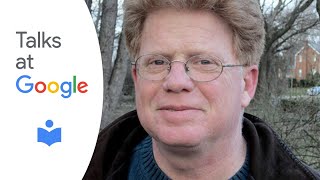
Keith Donohue reads from The Stolen Child, his novel about a boy stolen by fairies and replaced by a changeling. He discusses the Yeats poem that inspired it, his daily writing practice, and how he faced 30 agent rejections before publication.
Questions this video answers
June 22, 2007
The novel begins in 1949 when Henry Day is seven years old.
Eight months.
Two years.
Thirty agents.
Chapters
I'm going to talk a little bit about the book and the process of writing and as Samara said at the end, happy to answer any kinds of questions either about the book or about writing in general or, you know, any other Google questions that you have. The Stolen Child was based on a poem by William Butler Yeats called the Stolen Child. And the refrain of that poem goes, come away human child, to the waters and the wild, from a world more full of weeping than you can understand. And the first three verses of the poem are about enticing the fairies, enticing the child to come away with them and live out in the natural world. And they get to do all kinds of things like whisper to salmon and steal cherries and cavort and gamble and that sort of thing. But the last verse says, away with us he is going the solemn eyed no more. He will hear the lowing of the calves on the warm hillside and other images about leaving home. Where that poem takes a turn is what I was really interested in about what would happen if you did run away into the forest, if you did run away with the fairies? What would it be like? I think we tend to romanticize that vision in the novel the Stolen Child. I've taken a more contemporary 21st century look at that sort of thing and what would that be like to live out in the woods? So it begins in 1949 when the seven year old Henry Day runs away from home and hides in a hollow tree, the base of a hollow tree, and he's stolen by the fairy changelings. And the changelings are the stuff of folklore and legend. He runs away from home, stolen by the fairy changelings. And the fairy changelings are the stuff of folklore and legend, but they have a real interesting beginning and a real interesting history that we can get into later on. But the key thing to understand for those of you who haven't read it, is that they have the ability to change and make themselves an exact replica of a human. So they switch places with Henry Day. One of the changelings becomes Henry Day and goes to live with the Days, the Day family and the stolen child becomes one of the changelings. And this is their two stories. I'm not sure how much more I need to go into with setup for the passages that I'm going to read other than to say the fairy, the stolen child who becomes a changeling starts to forget who he was and he wants to remember who he was, but he can't. They rename him Anna Day. Kind of a rhyme with Henry Day. And he goes to live out in the forest, and for the first couple of months they keep a close eye on him. They don't let him out of their sight. And this passage is from the first time he's let out with his two friends, my two favorite fairies in the book, the two Irish fairies, and their names are Leucogh and Smolik, and Lukog means mouse, and Smolik means thrush or robin. And here's from the first time that he's led out of camp. I was thrilled at being out of that camp, but my companions did their best to control my curiosity. They let me stumble about on the trails for a time before my clumsiness flushed a covey of doves from their rest. The birds exploded into the air, all pipes and feathers. Smolik put a finger to his lips, and I took the hint, copying their movements. I became nearly as graceful, and we walked so quietly that I could hear the snow fall over the sound of our footsteps. Silence has its own allure and grace, heightening all the senses, especially hearing. A twig would snap in the distance, and instantly Smolik and Lukog would cock their heads in the direction of the sound and identify its cause. They showed me the hidden things. Silence revealed a pheasant craning its neck to spy on us from a thicket, a crow hopping from branch to branch, a raccoon snoring in its den. Before the daylight completely faded, we tramped through the wet grounds to the mucky bank of the river. Along the water's edge, ice crystals grew, and listening closely, we heard the crack of freezing. A single duck paddled further down the river, and each snowflake hissed as it hit the water surface. The sunlight faded like a whisper and vanished. Listen. Smolek held his breath to this. At once the snow changed over to sleet, which ticked against the fallen leaves and rocks and dripping branches, a miniature symphony of the natural world. We walked away from the river and took cover in a grove of evergreens. Ice encased each of the needles in a clear jacket. Lecoq pulled out a leather pouch hanging from a cord around his neck, first producing a tiny paper and then a fat pinch of dried and brown grass like fibers that looked like tobacco. With deft fingers and a quick lick, he rolled a thin cigarette from another section of the pouch. He extracted several wooden matches, counted them in his palm, and returned all but one to the waterproof compartment. His thumbnail struck the match, causing it to burst into flame, which Lukog applied to the end of the cigarette. Smolek had dug a hole deep enough to reach a layer of dry needles and cones. Carefully taking the burning match from his friend's fingertips, he set it in the bowl, and in short order we had a fire to toast our palms and fingertips. Lukog passed the cigarette to Smolik, who took a deep drag and held the smoke inside his mouth for a long time. When he exhaled at last, the effect of was as sudden and percussive as the punchline to a joke. Give the boy a puff, smollock suggested. I don't know how to smoke. Do what I do, said Lukahg through clenched teeth. But whatever you do, don't tell anyone at all. I took a drag on the glowing cigarette and began coughing and sputtering from the smoke. They giggled and kept on laughing well after the last scrap had been inhaled. The air beneath the evergreen boughs was thick with a strange perfume, which made me feel dizzy, light headed, and slightly nauseous. Lukog and Smolik fell under the same spell, but they merely seemed content, simultaneously alert and peaceful. The sleet began to taper off and silence returned like a lost friend. Did you hear that? What is it? I asked. Nukog shushed me first. Listen to see if you hear it. A moment later the sound came to me, and though familiar, its substance and origin mystified. Mekog sprang to his feet and roused at his friend. It's a car, little treasure. Have you ever chased an automobile? I shook my head, thinking he must have me confused with a dog. Both of my companions took hold of my hands, and off we went, running faster than I had ever imagined possible. The world whirred by patches and blurs of darkness where trees once stood. Mud and snow kicked up, mottling our trousers as we sped on at an insanely giddy pace. When the brush grew thicker, they let go of my hands and we raced down the trail, one behind. The other. Branches slapped me in the face and I stumbled and fell into the muck. Scrambling to my feet, cold and wet and dirty, I realized I was alone for the first time in months. Fear took hold, and I opened my eyes and ears to the world, desperate to find my friends. Fierce pains of concentration shot across my forehead, but I bore down and heard them running through the snow in the distance. I felt a new and powerful magic in my senses, for I could see them clearly while realizing that they should be too far ahead and out of sight. By visualizing my way, I gave chase, and the trees and branches that had confused me before now seemed no obstacle. I whipped through the woods the way a sparrow flies through the open openings in a fence without a thought, folding up its wings at the right moment, gliding through. When I caught up, I found they were standing behind the rough pines short of the forest edge. Before us lay a road, and on that road a car had stopped, its headlights streaking through the misty darkness, broken pieces of the metal grille glistening on the asphalt through the open driver's door. A small light shone in the empty cab. The anomaly of the car pulled me toward it, but the strong arms of my friends held me back. A figure emerged from the darkness and stepped into the light, a thin young woman in a bright red coat. She held one hand to her forehead, and, bending slowly, she reached out with her free arm, nearly touching a dark mass lying in the road. She hit a deer, luk said, a note of sadness in his voice. She agonized over its prostrate form, pulling her hair back from her face. Her other hand pressed against her lips. Is it dead? I asked. The trick, said Smolik in a quiet voice, is to breathe into its mouth. It's not dead at all, but in shock. Lukag whispered to me. We'll wait until she's gone and you can inspire it. Me? Don't you know you're a fairy now, same as us, and can do anything we can do? The notion overwhelmed me. A fairy. I wanted to know right away if it was true. I wanted to test my own powers, so I broke away from my friends, approaching the deer from the shadows. The woman stood in the middle of that lonesome road, scanning in both directions for another car. She did not notice me until I was already there, crouching over the animal, my hand upon its warm flank, its pulse racing alongside my own. I cupped the deer's muzzle in my hand and breathed into its hot mouth. Almost immediately, the beast lifted its head, shouldered me out of the way, and rocked itself up into a standing position. For an instant it stared at me. Then, like a white ensign, its tail shot up a warning, and the deer bounded into the night. To say that we, the animal, the woman myself, were surprised by this turn of events would be the most severe understatement. She looked bewildered, so I smiled at her. At that moment, my comrades started calling to me in loud whispers. Who are you? She wrapped herself tighter in that red coat, or at least I thought those were her words. But her voice sounded alien, as if she were speaking through water. I stared at the ground, realizing that I did not know the true answer. Her face drew close enough for me to detect the beginning of a smile on her lips and the pale blue green of her irises. Behind her glasses her eyes were splendid. We must go from the darkness. A hand grasped my shoulder and Smolik dragged me away into the bushes, leaving me to wonder if it had all been a dream. We hid in a tangle while she searched for us, and at last she gave up, got in her car, and drove off. The tail lights zigzagged over the hills and through the trees until there was no more to see. We retreated back to camp in a cross silence. Halfway home, Lukog advised, you mustn't tell anyone about what happened tonight. Stay away from people and be content with who you are. On on the journey we created a necessary fiction to explain our long absence, invented a narrative of the waters and the wild, and once told, our story endured. But I never forgot that secret of the red coated woman, and later, when I began to doubt the world above, the memory of that bright and lonely meeting reminded me that it was no myth. The other story is about Henry Day, and he grows up to become a pianist, and this is a scene from about eight years, from the time of the first scene I read to you, but from the point of view of Henry Day, and he's about 16 and he's at his final high school concert that he's given. That frozen night. I felt entirely human and heartened at the thought of the warm theater if this was to be my farewell performance. I resolved to give them something to remember me by. I moved like a whip, cracking the keys thundering, floating the right pressure on all the partial notes. Members of the audience began rising from their seats to lead the applause before the strings stopped humming. Enchanted, they showered their huzzahs, so much so that I almost forgot how much I hated the whole business. Backstage, Mr. Martin greeted me first, tears of joy in his eyes, squealing bravo. And then the other students, half of them barely masking their resentment, the other half consumed with jealousy, acknowledging with a grudging graciousness that I had outshone their performances. In came the parents, siblings, friends, neighbors, and assorted music lovers. They clumped around the players, but I drew the largest crowd, and I did not notice the woman in the red coat until most of the well wishers had vanished. My mother was wiping lipstick from my cheek with a wet handkerchief when the woman meandered into my peripheral vision. She appeared normal and pleasant, about 40 years old. Her deep brown hair framed an intelligent face, but I was Perplexed at the way her pale green eyes had fixed upon me, she stared scrutinized, studied, and pondered, as if dredging up an inner mystery. She was an utter stranger to me. Excuse me, she said, but you're Andrew Day. Henry Day, I corrected her. Right, Henry. You play wonderfully. Thank you. I turned to my parents, who intimated that they were ready to go. Maybe she saw my profile, or perhaps the simple act of turning away set off something in her brain. But she gasped and drew her fingers to her mouth. You're him, she said. You're the little boy. I squinted at her and smiled. You're the one I saw in the woods that night on the road with the deer. She started to raise her voice. Don't you remember? I saw you on the road with those other boys. It must have been eight or nine years ago by now, but you're all grown up and everything. But you're that little boy. No doubt I was worried about you. I don't know what you're talking about, ma'. Am. I turned to go, but she grabbed my arm. It is you. I cracked my head on the dashboard when I hit the deer, and I thought you were a dream at first. You came out of the forest. I yelped, a sound that hushed the room, a pure, raw cry that startled everyone, myself included. I did not realize my capacity for such an inhuman noise still existed. My mother intervened. Let go of my son, she told her. You're hurting his arm. Look, lady, I said. I don't know you. My father stepped into the middle of the triangle. What is this all about? The woman's eyes flashed in anger. I saw your boy one night on the road. I was driving home from the country and this deer jumped right onto the road in front of my car. I swerved to miss her, but I clipped her with my bumper. I didn't know what to do, so I got out of the car to see if I could help. She shifted her attention from my father and began addressing me. From the woods comes this boy, about 7 or 8 years old. Your son, and he startled me more than the deer did. Out of nowhere walks right up to the deer like the most natural thing in the world. Then he bent down to its mouth or nose or whatever you call it. Hard to believe, but he cupped his hand over her muzzle and breathed. It was magic. The deer rolled off her side, unfolded her legs, stood, and sprang off. The most incredible thing that's ever happened to me. I realized then that she had experienced an encounter, but I knew I had not seen her before, and while some changelings are willing to inspire wild animals, I never engaged in such foolishness. I got a real good look at the boy in my headlight, she said, although not so good as his friends in the forest. It was you. Who are you really? I don't know her. My mother, riveted by her story, came up with an alibi. It can't be Henry. Listen. He ran away from home when he was seven years old, and I didn't let him out of my sight for the next few years. He was never out by himself at night. The intensity melted from the woman's voice, and her eyes searched for a sign of faith. He looked at me, and when I asked him his name, he ran away. Since that night, I've wondered. My father spoke in a gentle tone he seldom used. I'm sorry, but you must be mistaken. Everyone has a double in the world. Maybe you saw someone who looked a bit like my son. I'm sorry for your troubles. She looked into his eyes, searching for affirmation, but he offered only the solace of his calm demeanor. He took the red coat from her arm and held it open for her. She slipped inside it, then left the room without a word, without looking back. In her wake trailed the remnants of anger and anxiety. Henry's father, who has become suspicious of is this my real son? Sort of thing. Something happens one day that tells him the truth, and I'll read that section and then a little bit the same scene from Annaday's point of view. Important to remember that they don't quite understand. Like most children, they don't quite understand what the adults are saying. Their words are kind of garbled, but this is from Henry Day, about a year after the concert. He's talking about his father. His voice woke me at first light, and I followed the sound from my bedroom and through the back doorway. A feathery mist rose from the lawn, and he stood, his back to me in the middle of the wet grass, calling out my name as he faced a stand of firs. A dark trail of footsteps led into the woods 10ft in front of him. He was stuck to the spot, as if he had startled a wild animal that fled away in fear. But I saw no creature. By the time I drew near, the diminuendo of a few raspy calls of Henry lingered in the air. Then he fell to his knees, bent his head to the ground, and quietly wept. I crept back into the house and pretended to be reading the sports page when he came in. My father stared at me, hunched over the newspaper, my long fingers wrapped around a coffee cup. The wet belt of his robe dragged along the floor like a chain. Soaked, disheveled, and unshaven, he seemed much older, but maybe I had not noticed before how he was aging. His hands trembled as if palsied, and he took a Camel from his pocket. The cigarette was too wet to light despite his repeated attempts, so he crumpled the whole pack and tossed it in the trash can. I set a cup of coffee in front of him, and he stared at the steam as if I had handed him poison. Dad, are you all right? You look a mess. You. He pointed his finger at me like a gun, but that's all he said. The word hung in the air all morning, and I do not think I ever heard him call me Henry again. Then this last little bit is the same scene, other fella and a day, and he's spent the night beneath the library, where he's got a little hideout with his friend Speck, and she left early. He's coming home after her. A small creek, not more than a trickle, bisected the path. I decided to follow the water. Tracing a creek at dawn can be a peaceful experience, and those woods had appeared so often in my dreams as to be familiar to me as my own name. The creek itself ran beneath a stony road, and the road led me to a solitary farmhouse. From the culvert I saw the roof and circled round to the back as the first sun rays bathed the porch in gold. Some trick of light gave the house an unfinished appearance, as if caught in a dream between night and day. I half expected my mother to come through the door, calling me home for dinner. As the light brought it into focus, the house took on a more welcoming character, its windows losing their menacing stare, its door less and less like a hungry mouth. I stepped out of the forest and onto the lawn, leaving a dark wake behind me on the wet grass. The door swung open suddenly, petrifying me to the spot. A man came down the stairs, pausing on the next to bottom step to light a cigarette. Wrapped in a blue robe, the figure took one step forward, then lifted his foot. Startled by the moisture, he laughed and cursed softly. The specter still did not notice me, though we faced each other, he at the edge of the house and I at the edge of the forest. I wanted to turn around and see what he was looking for, but I stood frozen as a hare. As the daybreak lifted around us. From the lawn, a chill rose in wisps of fog. He drew closer and I Held my breath. Not a dozen steps between us. He stopped. The cigarette fell from his fingers. He took one more step toward me, his brow creased with worry. His thin hair blew in the breeze. An eternity passed as his eyes danced in their sockets. His lips trembled when he opened his mouth to speak. And we envy. The words coming to me did not make sense. Is that you? That you cannot be Houston? The sounds he made hurt my ears. At that moment I wished to be sleeping in Spec's arms again. He knelt on the damp grass and spread out his arms as if he expected me to run to him. But I was confused and did not know if he meant me a harm. So I turned and sprinted as fast as I could go. The monstrous gargle from his throat followed me deep into the forest until as suddenly, the strange words stopped. Yet I kept running all the way home. And that's the reading for today. Be happy to answer. Oh, thanks very much. Happy to answer all your cues with my A's. Yes.
What inspired you to write this novel?
Middle age. I always wanted to be a novelist. When I was in seventh grade I knew that was my life and you know, I put it off into my early 20s and I wrote a book and I sent it to an agent and he said, you know, you sent me a nice long letter, which I thought that's a good sign and this is what's wrong with it and I'm not going to take it, the answer is no. But do send me your next book. And it took me another 20 years to sit down and write another book. I spent about 14 years as a speechwriter pretending to be a speechwriter while I was at hard a novelist. And So I turned 40 and I thought, well, Donahue, this is it. You're either going to write your book or stop yakking about it, stop dreaming about it, stop thinking about it and do it. So that's what inspired me. Now, as to why about change links and so on, I was interested in first of all, the question of the little seven year old that lives inside us. All right, the seven year old who's still there and will always be there. And what would happen if the adult you, the grown up you. And I realize I'm probably older than most of you in this room, but what would happen if the adult you, the grown up you met your seven year old self? What would you say to one another? One of the things a seven year old might say is what did you do with my dreams? What did you do with my hopes? So the question became that confrontation. And ultimately, could you forgive one another? So the changeling myth was a convenient way for me to talk about that idea. I wasn't so much interested in, you know, fantasy and changelings and fairies and so forth and so on. While that stuff is in and of itself is interesting, that wasn't where I was headed. So I went with the Yeats poem the Stolen Child. There's a great recording of it by a group called the Water Boys. A haunting. If you hear it once, you'll be stuck there. You can't get it out. And so I had that going. I had those three things going. I was old. I remembered Yeats and the Water Boys. I knew some stuff about the fairy changelings. And I wanted to write a double a story with two narrators. And I came up to this line that's at the front of the book by the poet Louise Gluck, who says in her poem Nostos, she says, we see the world once in childhood. The rest is memory. And I thought, that is worth a novel. That right there is. That line is worth a novel. So off we went a little bit. You know, I write on the subway, I write at lunch. And if you write about 500 words a day, at the end of the year, you'll have yourself a. No, not so hard. Yes.
So I think it's really interesting that you took the eight school in order to develop the babbles. Can you talk a little bit more about how, like, what kind of brainstorming and pre writing and things like that went into actual.
Right. What goes on? That's a very good question. And I'm not entirely sure you brainstorm among yourself. Not kind of bouncing it off anybody, but, you know, I had this vague notion of what I wanted to do, and I fell asleep and I had a dream. And in the dream, there was a boy hiding in a hollow tree, refusing to be found. You know, I'm sure you've all gone through this in one way or another. I don't want to, you know, be found. And I had people looking for him. And that was the dream part. And then from there I thought, okay, that's a good start for the book. I knew where I wanted it to end. And the trick was getting the 100,000 words in between that start and the finish, you know, so you go or you start every day. And, you know, I think writing a novel and probably like, what you do in your work is about creating problems for yourself. That may sound strange, but it's true. You write into the problem Right now, what do I do? I'm going to stop right there, and tomorrow I'm going to think about it. I'm going to obsess about it. I'm going to, you know, dream about it, and then tomorrow I'll have an answer. Might not be the right answer, but it's an answer. Then you create the next problem and so on. And, you know, the question in a novel is, how do you keep people interested in the unfolding story? How do you keep it suspenseful? And so on. So those are the little problems that you create for yourself. I'm not sure that answers your question, but that's as close as I get. Yes.
So who are some of your favorite writers who inspire you or ancient thrillers?
My. Well, I. Of contemporary writers. Murakami is one of my. He wrote Kafka on the Shore and numerous other books. Garcia Marquez, 100 Years of Solitude and Loving the Time of Cholera. Mikhail Bulgakov, who wrote the Master in Margarita, which is. Do I have a favorite? It's close. I love that book. Talk about smushing, too. Talk about the genesis of a novel or the genesis of a creative solution to a problem. That book is about the devil comes to Moscow in the 1920s with a talking cat and assorted other people and runs into the Master, who's a writer, and that story unfolds. But also along with it, the Master is writing the story of the crucifixion of Christ from the point of view of Pontius Pilate. It works. It really, really works. It's like two disparate elements. Probably my real favorite novel is Flann o' Brien's It Swim Two Birds, in which the characters of a novel that the. It's like a Chinese box. It's like, you know, you open it, there's another box. But the narrator of one story, his characters are drugging him to keep him asleep so that they can have their own lives. It's great fun. It's lovely, funny stuff. So those are some. I bet there's so many. I mean, you know, part of the reason the. Half the book. Well, a portion of the book is set underneath the library is because I can't think of a better place to live. Yes. What's next? I've been working on a new book, and like this book, it's inspired by a line of poetry Emily Dickinson wrote. Hope is the thing with feathers that perches in the soul. I thought that's worth a novel. That is worth a novel. So it's about hope and believing in things that you cannot see. It's about faith and angels and mothers and daughters and all kinds of stuff. So I think any good novel. There's a difference between a short story and a novel. A short story can be about one thing. A novel by its nature is about lots of different things. And what we think of as this novel is about X is about changelings, may be the farthest thing from the creator's mind. You know, my mind. This book is about memory. It's about childhood. It's about forging your identity. It's about. Ultimately about redemption and hope. But, you know, you might read it and say, well, you could fool me, Donahue. I don't. Yes.
So a lot. I really like the project that makes him the Reality of Magic.
I have a couple questions.
Do you see, you know, we live in a multimedia society where new forms of media pop up every day. And in light of that, what makes you stick to the form of the novel? I know you kind of answered it. And then also to Sarah's question, do you see kinship with your ideas in other forms of media, such as, you know, films? I think Pan's Labyrinth.
Right. Which is.
It talks about reality, the mix of reality.
Great film. Yeah. And. And there's some other. There a book I read recently is called the Secret Life of Puppets. Great title. The Secret Life of Puppets. That talks about this whole trend and art, let's call it movies, film, you know, any form imaginable where there's this blending of reality and magic. And I trace that back to sort of our desire as a culture, as a people to be re. Enchanted because we've lost a lot of that part of the book is about the loss of our spiritual connection with the natural world. You know, when I was a kid on a day like today, my mother. Six o' clock in the morning, I would be up, my mother would say, would you please leave and come back for dinner? And go ahead. And I don't really. Don't bother me with the details. Go. And we went and we poked around in the woods and we heard things that we couldn't explain and we thought there were boogeymen and, you know, a twig would snap. There's a bear chasing me. Turned out to be a chipmunk. I mean, and kids today, unfortunately, are, you know, the boundaries for a lot of our children are the ends of the yard. I want to see you. And what I think is happening is that we're losing something. We're losing the sense of independence and self discovery and the spiritual connection with the natural world that a generation or two ago was a given. I mean, if you lived near the woods, you were allowed in the woods. You were encouraged to be in the woods. Go. So I think that's kind of something that's going on culturally. Why do I continue to write? Because I love the written word. I don't doubt that the same kind of story is really being told in multiple forms. You know, they've approached me about making a movie to the book and so on, and that's great, but it'll be a completely different thing. And, you know, I am a consumer of multimedia culture as well and appreciate it all. And actually, on my website, they have. There's a soundtrack to the book because it's about. Henry is a musician, so he plays a piano. So there's, you know, I can hear the Brandenburg Concerto. I can hear when he sings jazz, you know, when he sings Louis Armstrong's I'll be dead. I'll be glad when you're dead, you rascal, you. I can hear it. I heard it when I was writing, and I can hear it when I'm reading it. I don't know if you can, but that's up to you, right? And that's maybe my nod to multimedia is that I think the writer experience 100 years ago, I'm sure who was alive 100 years ago, Yeats was not. Did not write the same way that we write today. We're products of our culture. You know, I was a television kid. I used Google. Here's your plug. Google. I used Google to research the book. I mean, I had little questions like, you know, what was the name of the theater in downtown Pittsburgh in 19, whatever, 60, that I can put this kid in to give it some verisimilitudes and so forth? I can't remember the name. You know, search, bam, answer. Go on. So it's a lot faster. That kind of stuff is great. You know, I had all kinds of questions that certainly I answered over the, you know, through the Internet, because I'm a product of these times. And that's. I think that. I think it's healthy and cool that they all kind of coexist. And I don't want books to go away. I don't want readers to go away. And I don't think they will. I mean, there's a connection. I don't know. May. I'll throw the question open to you. I mean, do you experience things differently when you're reading versus when you're watching or when you're listening. I think you do. But I'm all for peace and coexistence of all the forms and go ahead and make a movie and make a, I don't know, a game out of the Stolen Child. That's fine. I'd be happy to see it. And I would. We were talking about this earlier about, you know, do you feel weird about them making a movie about your book? And I said, well, you know, it would be a 12 hour movie for one thing. I realized they're going to have to trim a little bit of the fat. And I talked to the screenwriter and he said, you know, he's very kind, very, you know, gentle with me and I didn't really expect that. But he said, you know, this is Hollywood and they're going to want to change. Some of you have read the book. There's a sort of open endedness to the book that I think Hollywood will solve that problem. And I said that's fine. Because I'm reminded of the John Updike who said when he went to see Witches of Eastwick, the film based on the novel he wrote, you know, after the first five minutes I was really interested to see what was going to happen. Same way. I think I'll feel the same way.
Yes, you said that when you wrote your first book in your 20s, you got the rejection letter and you kind of forgot about it for a while this time when you wrote this novel and you sat down and did it, how difficult or easy did you find it then to have it published?
Really, really hard. Yes. It took me eight months to write the first draft. It took me two years to find an agent. Thirty agents said thanks but no thanks. And it's sort of like finding a spouse, you know, you've got to kiss a lot of frogs and be told no far too often. But once you find the right agent, then he saw whatever there was to see in the book and you know, it's been just a phenomenal, unexpected. I was hoping they would print 1,000 copies and I could give them to my friends and family. You know, a movie. It's going to be published in 25 different languages. And you know, and every time they call and say, oh well, would you take X amount of money for the Danish audio? Yeah, go ahead, type the Taiwan. It's on the bestseller list. How this stuff happens, I have no idea. Great.
Well I think that's time for today. So thanks everyone for coming to see Keith and I just want to give you a run.
Thank you. Thanks very much. Thank you. For coming.
More from Guy


Cheryl Strauss Einhorn | The Human Edge: Smarter Decisions in the Age of AI | Talks at Google



Rachel Glennerster | Innovation and the Center for Global Development | Talks at Google

Rebecca Winthrop | Rethinking the Purpose of Education in the Age of AI | Talks at Google

Dr. Robert Wachter | A Giant Leap: How AI Is Transforming Healthcare... | Talks at Google



