The Story of a Marriage | Andrew Sean Greer | Talks at Google
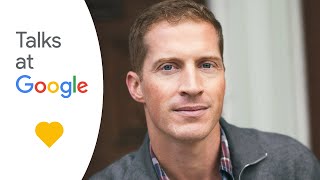
This content was created by Guy Kawasaki. This content was uploaded by Guy Kawasaki. This is a YouTube video titled "The Story of a Marriage | Andrew Sean Greer | Talks at Google" from May 13, 2008. It features a talk by author Andrew Sean Greer at a Google event, where he discusses his novel "The Story of a Marriage." The event includes a reading from the book, followed by a Q&A session with the audience, covering topics such as writing from a female perspective, the genesis of the novel, and the writing process.
Chapters
Hi everyone, and welcome to today's Authors at Google event. I'm especially pleased to have Andrew Sean Grier with us today. I discovered his work when the Confessions of Max Tivoli came out about four years ago, and I think he's one of the best young writers working today. Andy is here today to talk about his new novel, the Story of a Marriage. He's also the author of the novel the Path of Minor Planets and the Story How It Was for Me. His stories have appeared previously in the New Yorker, Esquire, and the Paris Review. He's the recipient of a California Book Award, a New York Public Library Young Lions Award, an NEA Fellowship, and high praise from the likes of John Updike and Dave Eggers about his new book. The latter said, this is a haunting book of breathtaking beauty and restraint. Greer's pitch perfect prose conjures an unforgettable woman who exists both within and somehow above the stifling class, racial and sexual constraints of 1950s America, and who must unravel the great mystery of her place within it. Andy will be discussing his new novel and then taking questions from the audience. If you do have a question, please make your way to the microphone in the center aisle before asking. And with those instructions, please join me in welcoming Andrew Shawn Greer to Google.
Great. Thank you guys for having me. I have to say I actually watch These readings, the YouTube version of them on Google a lot and I always notice the authors say the same thing when they come here, which is that basically we're here in the encampment of the enemy because we spend the hours we should be at our computers working on our novels, just googling ourselves over and over, hoping somebody said something on some blog about us. So I can't imagine how many, how heated up the servers get with our own vanity when we should be working on our novels or how many novels get lost because of that. And I wish I'm trying to maybe someone can help me here. I'm trying to get something on my computer that won't let me search for myself on Google because it never comes up with anything good. It always comes up with something humiliating or depressing at best, and at worst, nothing. Nothing at all. I'm happy here to come to read from my new book, which just came out last week. So it's actually, in a way, my first reading, certainly my first one answering questions. And if anyone does have a question, if you find yourself, I'm just going to read a little bit. If you find your mind wandering at all don't feel bad. That is the moment to come up with a question to ask me at the end. Because it's kind of the best part of it. The reading is fun, but the question and the answer I find more personal. There's no real setup I have to do for this, because I'm going to read from the beginning. It's a novel. It's told by a woman named Pearlie Cook, who's an elderly woman looking back on her younger self in the summer of 1953. I had originally said it in 1952 because I kind of thought nothing happened that year. When you look in the papers, there's not really. There's not an election. There's not, you know, there's a Korean War going on, but it's not. It's sort of static at the time. And then I kept reading and reading the newspapers and realizing that 1953, everything was happening or was about to happen. So I moved the whole thing forward a year. Which sounds subtle to the casual observer, but to a novelist it means you have to extract every little detail you put in and put new ones in. Because I realized that the year itself was a character in the book, in a way. So this is the story of a marriage. We think we know the ones we love. Our husbands, our wives. We know them. We are them. Sometimes, when separated or party, we find ourselves voicing their opinions, their taste in food or books, telling an anecdote that never happened to us, but happened to them. We watch their ticks of conversation, of driving and dressing, how they touch a sugar cube to their coffee and stare as it turns white to brown, then drop it, satisfied, into the cup. I watched my own husband do that every morning. I was a vigilant wife. We think we know them. We think we love them. But what we love turns out to be a poor translation, a translation we ourselves have made from a language we barely know. We try to get past it to the original, but we never can. We have seen it all, but what have we really understood? One morning, we awaken beside us, that familiar sleeping body in the bed, a new kind of stranger. For me, it came in 1953. That was when I stood in my house and saw a creature merely bewitched with my husband's face. Perhaps you can't see a marriage like those giant heavenly bodies, invisible to the human eye. It can only be charted by its gravity, its pull on everything around it. That's how I think of it, that I must look at everything around it. All the hidden stories, the Unseen parts. So that somewhere in the middle, turning like a dark star, it will reveal itself at last. The story of how I met my husband. Even that's not simple. We met twice. Once in our Kentucky hometown and once on a beach in San Francisco. It was a joke for our whole marriage that we were strangers. Twice. I was a teenager when I fell in love with Holland Cook. We grew up in the same farming community where there were plenty of boys to love. At that age, I was like those Amazonian frogs. Bright green, oozing emotion from every pore. But I caught no one's eye. Other girls had boys falling all over them. And although I did my hair just like them and ripped the trim off attic dresses and sewed it on my hems, it did no good. My skin began to feel like clothing, and I had outgrown. I saw myself as tall and gawky. And as no one ever told me I was beautiful, neither my mother nor my disapproving father, I decided that I must be plain. So when a boy came along who actually met my eyes, who showed up along my walk from school and got himself invited in for a slice of bread, I didn't know what to make of him. I could tell he wanted something for some reason. I thought it was to help on his schoolwork. So I always went to great pains to hide my notebooks and not sit next to him in class. I wouldn't be used like a crib sheet. But of course, that wasn't what he wanted. In fact, not in all the years I knew him. But you do not. That wasn't what he wanted. He was always good in school. He never said what he wanted. In fact, not in all the years I knew him. But you do not judge a man by what he says. You judge him by what he does. And one clear bright night in May, when we walked by the Strawberry Patch, he held my hand all the way to Childress. That's all it took. Just the briefest touch in those days when I wore my nerves outside my skin like lace. Of course I lost my heart. I was there with Holland in World War II. He loved that I talked like a book and not like any of the other girls. And when the time finally came for him to go into the army, I watched him step onto that bus and head to war. It was a lonely grief for a young girl. It never occurred to me that I could leave as well. Not until a government man walked up to our house and asked for me by name. I tromped down in my faded Sundress to find a very ruddy and clean shaven man wearing a lapel pin of the Statue of Liberty in gold. I coveted it terribly. His name was Mr. Pinker. He was the kind of man you were supposed to obey. He talked to me about jobs in California, how industries wanted strong women like me. His words. They were rips in a curtain, revealing a vista to a world I'd never imagined before. Airplanes, California. It was like agreeing to travel to another planet. After I thanked the man, he said, well, then, as thanks, you can do a favor for me. To my young mind, it seemed like nothing special at all. Now that sounds like the first bright idea you ever had, my father said when I mentioned leaving. I can't find any memory in which he held my gaze as long as he did. That day, I packed my bags and never saw Kentucky again. On the bus ride to California, I studied the mountain's ascent into a line of clouds and saw where, as if set upon those clouds, even higher mountains loomed. I had never seen a sight like that in all my life. It was as if the world had been enchanted all along and no one told me. As for the favor the man asked of me, it was perfectly simple. He just wanted me to write letters about the girls around me in the shipyard and the planes and conversations I overheard everyday rituals. What we ate, what I wore, what I saw. I laughed to think what good it would do him. Now I can only laugh at myself. The government must have been looking for suspicious activities. But he didn't tell me that. He told me to pretend I was keeping a diary. I did my duty. I did it even when I left my first job to become a wave. Only a few other girls from a community like mine spreading Noxzema on our pimply faces. The girls rears, shaking to the radio, getting used to Coke instead of rationed coffee, and Chinese food instead of hamburgers. I sat there every night and tried to write it all down. But I found my own life lacking. It hardly seemed worth telling. Like so many people, I was deaf to my own stories, so I made them up. My life wasn't interesting to me, but I'd read books that were. And that is what I put down, with details stolen from Flaubert and Ford and Ferber. Intrigues and sorrows and brief colorful joys. A beautiful work of fiction for my country, held together with silence and lies. That is, it turns out, what holds a country together. I did my job well, in the handwriting my mother taught me. Tall and loyal and true, signed with A special slipknot P for Pearly I invented at the age of nine. Mailed to Mr. William Pinker, 62 Holly Street, Washington, D.C. what did you do in the war, Grandma? I lied to my country, pretending to tattle on friends. I'm sure I was just one of thousands. I'm sure it was a clearinghouse for lonely hearts like me. Imagine the ad jingle. Be a finker for Mr. Pinker. And then the war ended, as did the factory work for women and our jobs as waves. I had long since stopped writing my notes to Washington. There was so much else to worry about, and I had my position doing pieceworks, sewing to pay for meals. And one day alone down by the ocean, I walked right by a sailor on a bench, sitting with his book face down like a fig leaf on his lap, staring out to sea. I knew very little about men, so I was startled to see such despair on his square, handsome face. I knew him, the boy who'd held my hand all the way to Childress, whose heart I had at least briefly possessed. Holland Cook, I said. Hello. Well, hi there, Sarah. How's the dog? He said amiably. The wind stopped as if, like Holland, it did not recognize me. Sarah was not my name. We stayed there for a moment in the oyster colored air with his smile slowly sagging, my hand holding the flap of my coat to my throat, my bright kerchief tugging in the wind, and a sickness building in my stomach. I could have moved on, merely walked away so he would never know who I was, just some strange girl fading into the fog. But instead I said my name. And then you recognized me, didn't you, Holland? Your childhood sweetheart, Pearlie, who'd read poetry to you, who'd taken piano lessons from your mother. That was the second time we met, a sudden memory of home opening like a pop up book. He chatted with me. He even made me laugh a little. And when I said I had no escort to the movies that Friday and asked if he would come, he paused a while before looking at me, saying quietly, all right. I was shocked when he turned up at the brooming house. The low watt bulbs revealed a weary man, hat in his hands, his skin a little ashen, his elegant necktie loosely knotted. He claimed years later that he couldn't even remember what here I wore that night. Was it the green dress? No, Holland. It was black roses on white. Its pattern is framed and hung in my memory alongside our honeymoon wallpaper, pale green garlands. I thought he might be drunk, I was afraid he might collapse. But he smiled and offered his arm, and after the film, took me to a nice restaurant out in North Beach. At dinner he hardly ate or spoke. He barely looked at me or notice the stares we got from other patrons. His own gaze was fixed on two cast iron dogs that sat before the unlit fireplace. So after we'd taken the streetcar to my corner and it was time to say goodnight, I was surprised when he turned very quickly and kissed me on the mouth. An electric jolt of happiness passed through me. He stepped back, breathing quickly, and buttoned his jacket to go. I have to see a friend, he told me sharply. Holland, I said. He looked back at me as if I had jerked a string. Holland, I repeated. He waited and then I said the right thing. It was the only time I ever did Let me take care of you. His deep eyes awakened. Did he think I meant to remind him of our time back in Kentucky? That I offered the soft threat of the past? A dark line appeared between his eyebrows. He said, you don't know me. Not really. I told him that didn't matter. But what I meant was that he was wrong. I knew him, of course. I knew all about him from that time in our constricting little hometown. The grass behind the schoolyard we used to poke with a stick, the path from Franklin to Childress cluttered with witch hazel and Touch Me Nots and railroad vine, the ice shivering in a summer pitcher of his mother's lemonade. The lost world that only I remembered. For here we were, so far from home, the one we would never regain. Who could know him better than I? I acted instinctively. All I wanted was to keep him there on the shining streetcar tracks. Let me take care of you again. You serious? He asked. You know, Holland, I never been kissed by any boy but you. That ain't true. It's been years, Pearly. So much has changed. I haven't changed. Immediately, he took my shoulder and pressed his lips to mine. Two months later, by those same cable car tracks, he whispered, pearly, I need you to marry me. He told me that I didn't really know his life, and of course he was right. Yet I married him. He was too beautiful a man to lose, and I loved him. All right. I think that's all I'm going to read. Thank you guys so much. I barely get going in the book. It's so frustrating to stop there. You don't know the mysteries involved. But I would love to answer any questions that you guys had while your minds were wandering. Yeah, one of the things that caught me about the book was the locale. It's in San Francisco, and I live in the Sunset District. And I didn't. I haven't had a chance, obviously, to read the book. But I was wondering how much. Whether you live in the Sunset and how much of your living in San Francisco affected the locale of the book. Was that really the main driver of it? That's great. The question is that the book is set in the Sunset District in San Francisco, which intrigued him, and how much my living in San Francisco had to do with picking that. Well, I think I picked San Francisco because I'm not from there and I live there now. So I love it in that way you do. When you're a transplant to a place, you're always fascinated by it. Also, it's easy to research there because I live there and I can look through the newspapers. But the tricky part was to pick a neighborhood to do it in. They have the sixth floor at the San Francisco Library, which is fantastic. It's a history center, and they've got everything arranged by neighborhood. So you can go and look at south park, which, in my last novel, I set a lot of it in the south park neighborhood. And they have the Mission, and they've got these folders of all these clippings that they've got from newspapers and various items, and it's fantastic. So I go there. They know me now, and I say, find me a neighborhood. And I sort of settled on a very strange neighborhood, the Sunset, where, if anyone in the Sunset is watching this, I apologize. It's not the most exciting part of San Francisco. You know, a tourist wouldn't head their first thing. But it's the part when you take your friends from out of town to San Francisco and you drive along Ocean Beach. They would say, oh, this is where I would live right here. It's right on the ocean. Everyone lives here, right? But of course, it's the last place they built in San Francisco because it's freezing cold and the fog is over there. It's dark, you never see the sun. And it was sand dunes until the 30s. It was huge, rolling sand dunes. I was out there the other day to get my photo taken for the LA Times. And it was like an exfoliation session out there. The sand was whipping all around. It's tough to live there. And when people first started building there, really, after World War II, some. So many soldiers, so many sailors came back through San Francisco and stayed here. They had to fill. It was a housing shortage. There was a housing shortage throughout the war, too. They all built out in the sunset and they would try to make vegetable gardens and the next day we'd all be buried in sand. And there's pictures of people with their fences. There are six foot high fences that have just a dune up over them and a woman standing on the fence with her hands like this. You know, it's 1950 or something. And it's funny to think of them as. I guess they thought of it as the frontier. I picked it because nothing was happening there because I wanted my character to be isolated in a lot of ways. And I like the idea that in San Francisco, you know, 1955, howl is going to be read in north beach and the beatniks are going to be on and there's going to start to be riots and everything's going to change and it's to going. Going to lead to the 60s. But in the sunset you would never know that. And that's where she is and why she makes the decision she makes because she's so unaware that something's happening a mile away. Sort of an over complete answer to that, but that's right. Yeah. Thank you.
Hi, sorry.
I'd love to hear more about writing from a female protagonist point of view and any challenges you may face, how.
You researched it and yeah, your experience.
Oh, that's great. The question is about writing from a female protagonist perspective and how it was different. I just got British Vogue magazine asked me to write an article for them about writing from a female perspective. They said I could have two topics I could write about writing from a female perspective or being a mummy's boy, as they put it, which I'm not. But that's actually the one I chose because writing from a female. I decided to combine them because I don't find it very different to write from. I mean, I guess it's up to the reader to think if it's persuasive. But I guess women don't seem like a different species species to me. And so my hard part is coming up with a fictional character that seems real and so that she's a woman. Well, women make a lot of sense to me more than men sometimes, so it wasn't particularly difficult. But I did think a lot about the women I know and particularly in this story. It's a story about being trapped by a lot of the historical moment she's in and the cultural moment she's in. And being a woman is a large part of that. Her choices are much more limited than a man's would be. She can't really leave or go out on her own for all kinds of reasons. And one of them is being a woman. She doesn't have work experience. It's a really tough time, you know, And I was reading the newspaper every day in 1953 to read the newspaper items. And it is. It's pretty shocking how, I mean, we imagine a woman's role in the 50s a certain way, but it was definitely just what I thought it was. You know, bathing contests and cooking shows and that kind of stuff. There was a whole women's section of the paper I think we wouldn't really put up with today. Yeah, it was fun to do, but I didn't really think of it as anything different. The struggle was to find her personal voice and not necessarily like a woman's voice. And I hope it worked. It felt. I was convinced writing it, so I hope a reader is. Yeah, yeah. Any other questions? Yeah, here's one.
So I have a question about the writing process and sort of two questions. First is if you could talk a little bit about the genesis of this novel, like, how did you come up with this idea and how long did it take you to come up with it? And then the second is just more about your writing process. Like, how do you. How do you write? Like, what rhythms or habits do you have in it, as well as some of the research that's gone to this. And I know you've talked a little bit about that and going to the library, but if you could expand a little bit more. So it's kind of a lot.
It sounds like three questions. It is. Sounds like it's a question about the genesis of this book and about the writing process in general and the rhythms of it, and then also about research. So you'll forgive me if I start going on too long and you'll have to wave your hands. I will pretend it was three different questions, but they're all really good. This book, the genesis of it is. I'm always so nervous to say this, but it was actually a family story that no one in my family believed about. And this is going to give something away about the book. So you'll have to put your hands over your ears. YouTube audience, which is that an elderly relative told me about 10 years ago that in the 50s, in rural Kentuck, Kentucky, a family friend, a guy, took her on a ride in the. In the woods and stopped the car and turned to her and said, leona, I was your husband's lover in the war, and I want to leave with him. And I Want you to help me to leave with him. And she said that you're crossing crazy. Get out of here. I never want to see you again. And when she told me the story, she told it saying she couldn't imagine how. She couldn't imagine what he was saying to her and what she was supposed to do with two sons alone, even if he was able to give her some money to survive, it was just unthinkable to her. And looking back, she really. The story was to her that she was born in the wrong time. That if it had happened to a woman now, she would have so many choices. And she would say, sure, go. I don't like what you know. We have other things to talk about than just how I'm going to survive. But she was trapped. And so I thought. Thought about that story a lot. It's a story. People in my family say she's crazy. She's always telling that story. It's made up, but it doesn't matter to me. I'm a fiction writer. So made up or not. And I thought, well, what if she said yes? What if in 1953 she did say, all right, I've got you a deal. I want a new life for myself too. What would that be like? And it got very complicated for me. It took a long time for me to unthread it. It's a lot more ambiguous than I thought it was the story I made for myself. And it's really a book more about the assumptions we have about the people around us, the people we think we know really well. And then even strangers, that there's always far more to them, which is. It begins that way. I just read that to you. Didn't always begin that way. That's part of the middle of the book that I moved to the front once I sort of saw the whole story. I did a lot of the research at that library. But mostly it was sitting reading microfiche, as old fashioned as that sounds, microfilm on those little rollers where you push the button, it goes. And it speeds through this big screen. I read the newspaper for 1953, the San Francisco Chronicle, every day to try to get a sense not of received history. There were a lot of books about the 50s, but I felt like they were. They already had it all packaged up, what it was about. I wanted a feeling of at the time, what it felt like, what people thought was going on. Which was really fascinating to me because it was. Every day the newspaper would say, world ends tomorrow, Sail Tuesday. You know, there would be this conflict within the paper of fear and hope or the everyday that was very jarring for me to read. And then I read the papers today and it's actually, that's exactly what newspaper papers do all the time, is that they have this sort of complex treatment about what's going on and that they're telling you whatever will get you to buy the paper. So that was fascinating. It was really helpful. And I went through there for all the things that Pearly wears. I read the 1948 paper because I thought she would have old clothes. So I picked out all of her clothes and I got furniture from the paper and I gave it to an 80 year old woman who lives in the sunset to read over and tell me if I got anything wrong. And I learned a lot from that, which was that our memory is faulty because she read a certain part which is just a little bit into the book, which talks about in the sunset carts coming along with vegetable men and like a bread truck that would deliver your bread to you and tinkers who would sharpen your knives or sort of beat out your dented pans and that sort of thing. That they would come up and down the street and they would yell, grind your scissors, grind your knives. Or there would be a rags, bottles, trash lady would yell out, rags, bottles, trash. And I had this whole section on that. And she said that didn't happen in the 50s. She said that's the 30s. That's when we had that stuff, milk delivery and the bread man, you know, and the Fuller Brush man. And the thing is, she's wrong. I mean, I know it was going on in the 50s, but what she meant was what her mind had done is it's more like the 30s. It was ending in the 50s. And so her mind had just put it in the 30s and had erased it from the 50s. And the 50s to her was segregation, Elvis, poodle skirts, you know, which is actually the late 50s. She had done a thing in her memory where she had put everything into decades. And so I had to say thank you. And I had to redo my research to make sure I was right. And I did. And I learned a lot from that, which was I learned that there's a sort of. I had picked a moment sort of between decades when the war is ending and the new America's about to start. And I was happy with that. That's right where I wanted to be. Yeah, there was a long answer to that one. Does someone else have another question? Here's Ricky.
I have two questions for you. The first is both this novel and your previous novel are in a way centered around these instances of people meeting each other, you know, for the first time. And I was wondering, what about that situation has been interesting to you, either literally or emotionally? And my other question is, in this novel, there's a lot of information that is revealed over time, just through the course of the action taking place in the novel. And there's a lot of information that's withheld and revealed throughout. How deliberate were your decisions about when to reveal certain information about your characters in the novel?
Two great questions, complicated questions. One was both of In Max Tivoli, it's a story about a man, he's aging backwards, so the love of his life, she doesn't recognize him every time she meets him. And he gets a chance. He's younger. He gets a chance to see if he can get her to fall in love with him this time because she didn't last time. And that's the theme of the book. And this one is, well, the part I just read, it's about me, people. Again, there's a sort of reunions throughout the book where there's second chances. I don't know. It's hard for me to tell what I love so much about it. I love the idea of recreating the self in a lot of ways. I find that so fascinating. And the idea of the path you didn't take. What if you could go back and try every single one along the way? What would your life be like? And Max gets to do that because he gets to be a new person all the time, at least with that woman. And then Pearly is offered a chance in this novel to have a different life and to imagine herself in some new way. As for the book has a lot of things that are revealed throughout. And Perley as a narrator, reviewers have said very withholding. And it's hard to talk about without revealing any of those things. But I found in writing the book, and this happened with Max Tivoli, too, that some things I found out part way through, and I had to make a decision to go back and tell the reader early on or to reveal them at the moment that I decided. Because often what happens when you're writing a book, you get to a point and you panic, you hate it, everything's going wrong. You've written 100, 200 pages, and it's just. It's not what you wanted at all. And you think, I failed. It hasn't done what I wanted it to do. I'm terrible and what has to happen there, you have a sort of nervous breakdown and you have an idea and you think, well, I could do this, which is crazy. And that crazy idea is always the way to go. You have to go off track from your plan and do something else. And that's what happened a lot in this book, was that I learned things about the characters that I thought were. I couldn't pull off. And I decided it was my whole job was to try to pull them off. I also like the idea that the reader comes to the book with certain assumptions and might be surprised to have to confront those assumptions that they make based on the book. And me as a writer, and I don't lead anyone. I don't lie to the reader in any way or lead them astray. But I think a lot of people don't pick up a lot of clues that I put down because they don't want to. They ignore a lot of things that Pearlie's telling you when she's really making clear all along. A lot of stuff that, oh, I have to be so careful about this. I can't get the secrets away. I have to be vague. Yeah, yeah. But I like that idea that you have assumptions about them and that the reader has to also confront the fact that they. When you read a character in a book, you're making up half of them. You're usually making up how they look entirely. The author rarely knows what the character looks like, and the reader always does. And that a lot of the things you make up are based on you and not anything the author did. And that's sort of the great thing about books. Books do that. Movies don't do that at all. So books, that's what I love about them. But I sort of play with it a little bit here, as you'll see when you continue to read the book. Well, I think that sounds like a great question to end on, and I want to thank you guys all for coming and letting me read here at Google. Thanks a lot.
More from Guy


Cheryl Strauss Einhorn | The Human Edge: Smarter Decisions in the Age of AI | Talks at Google



Rachel Glennerster | Innovation and the Center for Global Development | Talks at Google

Rebecca Winthrop | Rethinking the Purpose of Education in the Age of AI | Talks at Google

Dr. Robert Wachter | A Giant Leap: How AI Is Transforming Healthcare... | Talks at Google



