The Unquiet | John Connolly | Talks at Google
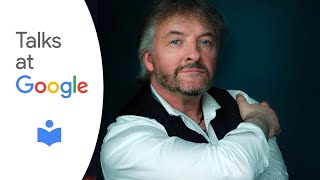
John Connolly discusses his crime novel The Unquiet, tracing how Ian Fleming, James Lee Burke, and Richard Ford shaped his writing. He draws on journalism and time in Maine for his stories, and defends blending crime with supernatural elements in his work.
Chapters
Very happy to have John Tomalin here with us today as I'll first offer to come to the Google office here in Dublin to talk about his new book, the Unquiet. And I've already read it and have to say I loved it. I never read the book from Hugh before, but it was full of suspense and I really liked it. So I'm looking forward to what he's going to talk to us about today and afterwards. Feel free to ask him as much as you want. And yeah.
Thank you. I felt a bit nervous coming here today. It's a bit like. Because you seem like a cult, it's a bit like visiting the Church of Scientology without as many people who believe they're aliens. You know, although there are computer people here, so there are a lot of people who believe in aliens, but that's not the same thing. But you're watching very happy people. It's that kind of feel that everybody's going to be grinning at you, which you kind of are. I did write down one thing. This is as far as my notes went for Mr. Beach. She did the Clydes. And there was a big piece about Google, about how basically you're taking over the world. But there was a lovely quote. Rival firms complain that Google is sucking all the talent from Silicon Valley, offering superior pay, superior conditions and superior pay, conditions and prospects. There's the other thing you're offering and, you know, you kind of think that competitors need to work in their arguments against Google a little bit more. You know, I thought I'd go somewhere else for inferior pay, prospects and conditions. You know, I thought I'd work at a salt mine instead of working. Anyway, you all seem very happy, quite normal people. I'm not really going to talk that much about young choir. I am going to talk about books and reading and research and learning, because I think these are all things that vaguely apply here, or I hope apply a little bit more than that. See, I've inadvertently offended everyone. Way to go. I'll just leave that. Thanks very much. Hello. I'm here because I believe books are important. Those of us who love fiction, I'm not sure how many who read fiction. There are certain people who only read nonfiction and they don't really understand why other people read fiction, why they read stuff that's made up. I mean, why would you do that? You know, they read history or they read geography or they read science. They don't really see the point of fiction. And part of me wants to take those people and hang two of them outside A library as an example, like Mussolini and his mistress, and invite small children to set them on fire as they go by. I think I'm getting more right wing as I get older, which worries me a little bit because they're missing the point. My father wasn't a big reader. He would read newspapers, but he wrote largely fiction. He thought that reading fiction was a very selfish thing to do. That thing. If you know some person, say, oh, you're in a corner with your head buried in a book, would you not go out and see a little bit of the world? You know, it seems like a very interior thing to do. In fact, there's really very little that's less selfish than reading a book, especially reading a work of fiction, because you're allowing yourself to see the world entirely through another person's consciousness. There's no other form of art or creative endeavor that allows you to do that. That allows you to see the world as another person understands it. Only fiction allows us to do that. And it's a gift because those of us who read a lot find that books are a way of looking at the world. They become a way of understanding the world. The first author I ever read book after book after book by was Ian Fleming. James Waller. I loved Ian Fleming books. They were just wonderful. I was about 10. I used to go to Dauphin's bar library and they had an adult librarian. They had two adult librarians, one of whom was really, really strict and one of whom really didn't give a rat's ass what she took out. So I kind of used to wait for her. I'm okay. You know, a lot of stuff went over my head in James Bond books. Like, you know, why do all the women have boss eyes or club feet and things? You. There's a lot of Fleming's dodgy sexuality that I wasn't entirely sure about. But you know, there are people in the world who have those WWJD bracelets on. What would Jesus do in this situation? You know, if you're driving down the road, somebody in a micro cuts you off and you think, what would Jesus do if he drove a car like mine? You know, you were fine in that straight way. I'm just kind of a WWJBD kid. What would James Bond do in this situation? Now, the problem with that is that very quickly you realize that James Bond only did one of two things. He shot somebody or they shot him. And when you're right, a 10 year old, those are not really applicable lifestyle choices. I am a 39 year old. And at least one of them has never been an applicable lifestyle choice and the other isn't applicable often enough. Nevertheless, that was my first inkling that you can see the world through another person's eyes. You can see an author can change your way of looking at the world, the way that you live your life, your existence. The first time I ever fell deeply in love was with a person who was kind of attached to another person. And whenever I say that, because I've kept trying to stop myself saying ATT because it makes her sound like a Siamese twin and she wasn't actually physically attached to another human being, although it would have been a very different story, probably more interesting than the one I'm going to tell you. But nevertheless, she was involved with somebody else and she was a little bit older than I was and it was the first year that I was in college and I was reading a book on the course called the Good Soldier by Ford Mavox Ford, which is still one of my favourite novels. And it's about a kind of love triangle or a love quartet, really. There were times when I thought, I'm living good soldiers. I am living parts of this book and characters would have insights and I would think, my God, that's happening to me. I haven't thought of it in that way, but I'm going through this. And when the relationship broke up, I was working in London and I came home again to plead my case the way romantic young men will. And like so many women, she had a little shard of ice where her heart should be. And I couldn't. And I couldn't answer. Oh, wait, baby. And I can't be honest. Far, far enough. Too far. Throw an orderly line in the middle. We'll find it out before the end of the evening. You see, I'm nearly over it 29 years later or 19 years later. But I left my job in London and the only job I could get was as a barman of the Listoon Barnum Matchmaking Festival. Now, let me tell you something you may already have guessed. If you're a bit heartwarn, a bit lovesick. Being a barman at a matchmaking festival is not going to make you feel any better about yourself at the world. Because I was standing behind a bar watching desperate people try to get off with each other. And I was thinking, this is my life, this is our end. I will be coming back here and it won't be as a barman. I'm going to die lonely beating at the darkness and the Novel that I was reading at the time was the Sports Writer by Richard Ford. And the Sports Writer is about the breakup of a relationship. Now, I wasn't deliberately picking stuff that was going to depress me. Rather, it was like a kind of cosmic librarian with a really bad sense of humor, but was ordering my reading material. But it was strange reading the Sports Writer at that time in my life. It resonated in a way that I wouldn't at any other time. And there's a lovely line in Sports Writer and Frank Bascom the sportswriter title. And it's trying to come to conclusions about the relationship that's ended. And he says, in truth, the heart still beats, but not as it once did. And I remember thinking, that's it. That's it exactly. Because when your heart gets broken, it never, ever knits quite the way that it did before. I've broken my arm a couple of times, just sheer carelessness. And occasionally they X ray to make sure bits of metal aren't shooting into my bloodstream. And I can see where the bone is fused because I reached that age where my bone doesn't nip quite the way it did. It's fused and there's a little raised ridge along it. You know, for Nick, that broken heart would look like that if you could photograph, that's what it would look like. It would heal, but wouldn't quite heal the way that it once did. And reading for it, I felt that here was somebody who kind of understood what I was going to. To. I'd never met him. I'm probably never going to meet him. But it was one of those moments of contact that readers. That happens when you're reading fiction. It's almost like the writer puts a hand out from the book and touches your hand. It's a moment of contact between strangers, but it lets you know in a way that you're not entirely alone in the world. You know, we all endure things. There are great things that happen as well. You can see I'm kind of a glasses half empty guy or a hot glass guy occasionally. But, you know, we all enjoy things. We all have broken hearts with all whose parents are spouses. These things happen to us and each person. No one will ever have a broken heart. Believe that you have a broken heart. No one will ever experience the loss of a parent the way that you experience the loss of a parent. That's entirely yours to feel. No one will ever have that relationship. And yet it's common to all of us. We all endure these things. And fiction I think is a way of explaining that. It's a way of trying to come to terms with your own life. And in doing that, trying to explain that to others, to try and get upon universal, universal things. I began writing crime fiction because it was what I read. Like a lot of writers. Most writers ended up reading what they read. And I read American crime fiction. It was what I loved. Didn't really like British crime fiction. Didn't really do it for me. And, you know, it's curious. Crime fiction isn't a very old genre. It's actually quite recent. If you go Back to the 30s, when crime fiction kind of begins coming about, you've got two distinct genres. You've got British kind of cozy tradition, and you've got the American hardware tradition. And then the British one. The people who die are usually not very nice people. They're usually kind of asking for it. You know, they're murderers or they're adulterers or they're petty thieves. And someone gives it to them in the neck. And you're not supposed to feel sorry for them. You know, as somebody once said, it's not murder in these circumstances. It's contributory negligence. And, you know, a detective comes in and solves the crime not because of any great moral imperative, but because it makes the village look untidy to have bodies lying around. You know, people will trip up. So, no, we're not supposed to feel sorry for these people. That's not the point. If you read negative Christie Love, you don't feel sorry for the characters in Agatha Christie novel. It's a crossword puzzle that you're meant to solve, and yet it's rigged against you so you're never ever going to solve it. And a very different tradition emerges in America. At the same time, there's the tradition of Chandler and Hammett and Ross MacDonald in particular. And in these novels there's recognition that people suffer not to any fault of their own, but because sometimes life is vicious and. And cruel. You know, you suffer because you're an immigrant. You suffer because you're a woman, you suffer because you're a child, you suffer because you're poor. And there's a realization that especially in the California of its day, the forces of law and order were not going to stand up for you the way they were going to stand up for the wealthy and the privileged. You know. Anybody's seen Chinatown? No. Chinatown is about the rape of California. Essentially, the way that water was taken from the farmers to create Los Angeles and screw them and they all lost their livelihoods, but these things happened. And if the force of law and order won't stand up for you, you need someone outside them to stand up for you. And that's when you see the private detective emerge, who's kind of a version of the Wild west hero. MacDonald has a wonderful character called Lou Archer. And Archer says at one point, I hear voices crying overnight, and I go see what's the matter. I love that idea. That idea that you can't put your pillow over your head to block it out because to do it makes you less of a human being. And I try to collect the birth of Said that all it takes for evil to triumph is for good men to stand by and do nothing. And that's what crime fiction is about. In a way. It's about the importance of not standing by no matter what the cost is to you. I love that idea about it. I went to America for the first time. I write about America generally. I don't tend to write. I've never been about Ireland. I've never wanted to. I had a kind of huge reaction against Irish literature. Where I was going, I'd done. Many Irish people are here, but of a certain age, we can remember how miserable Irish fiction was. I mean, Ireland was miserable, you know, up until kind of mid-80s, late-80s. It was a fairly grim old place to live in. And I remember doing my intersert, as it was, which is a good junior cert now. And they made to read a book called Men withering by Francis McManus. Even the title makes your heart sing. Men Withering. You know, that's not going to be a Johnny Reid. That sounds like some kind of stuff, sexual dysfunction, you know, you go to the doctor and say, do you know, it's embarrassing. Gotta touch the old man. Withering, you know, it gives you a little blue pill on a subscription to Granana Venom otters, you know, and that'll cure you in a couple of days. Dreadful book. Old man begins dying on page one. Still dying by about page 160. By the time he died, not only had I had a turn against this old guy, I'd had to turn against old people in general. But, you know, and it almost put me off reading for a couple of months. And I think when I was reading our American literature, there was part of it. A lot of Irish people, I think, used to look at America's kind of place of home. You know, it was people who had regular fruit and good teeth and decent skin and tans. It was all the Things that we aspire to as a nation. And I suppose that American literature seems so much more exciting and vibrant. It wasn't only about being American, which Irish fiction tended to be. It tended to be very insular. American fiction tended to look outwards. And so I went to America for the first time in 1991, and I ended up working in Delaware, initially proud home of the Dupont Chemical Corporation, poisoning America's air for 100 years. But I got really tired of Dupont especially. I could smell them from where I was working. I went to a place called Rehoboth beach, which is a very popular resort outside Washington. And I had a young man's view that I was going to go there, and there would be stunning American girls and Robert beach ready. One of those is the biggest gay resort in America. I'd come to the wrong place entirely. It took me about a week to realize that there appeared to be that many women there at all. It was like a Foreign Legion convention. So for various reasons, but not because of that, actually, but for various other reasons, I decided to leave and I went to Maine, where a friend of mine, his uncle over his autotel, her name in Starborough, called Blackpoint Inn. It was a really, really posh resort hotel. It was the most expensive place I'd ever set foot in. People used to come up for the social season. They would stay for six weeks. They were usually quite old people who had left Maine for Florida to get away from the really cold Maine winters and come back up to Maine to escape the warm Florida summers. And they would do the same thing every single day. They would get up in the morning and they would have breakfast, and they would have a nap, and they would have lunch, and they would have a nap, and they would have dinner, and they would go to bed. Essentially, for these people, it was like death with better food. You know, it was going to be a very gentle slide into mortality for them. They would just start missing meals. But there was a streak of oddness running through the state of Maine, I realized, and I didn't realize how long it was until in that summer, there was a hurricane warning along the state of Maine. Maine doesn't really get hurricanes very, very often. And so there was a lot. A governor came on TV and said, you know, he was going to evacuate the coast where we were. He was sending out the school buses. We were all to pack a bag and leave. And I'd seen hurricanes on television. I'd seen people in Florida clinging onto the sides of trailers and waving like flags in the Breeze. And I thought that wasn't going to happen to me. So more or less pushing women and small children out of the way to pack my bags. I was stopped on the lawn of the property. And one of the staff said to me, where are you going? And I said, well, there's a hurricane coming. I'm fleeing. This is me fleeing. See John, flee. Flee, John, flee. And, you know, there are buses coming. We're leaving. And she said, no, no, the buses have been cancelled. And I said, that would be why. And she said, well, nobody wants to leave. And I thought, you know, I'd quite like to leave. But clearly this was not enough. So a meeting was called, an emergency meeting for all the staff. And the owner of the hotel Noonduga Lane for hundreds of years stood up and said, you know, we have a hurricane event hit. And he said, for that reason, we're going to have to make certain changes this evening. You know, certain proportions going to have to be taken. So for one night only, staff will not have to wear a bow tie when they serve dinner. I was the guy at the back, just didn't want to ask a stupid question. But I was wondering what it was about bow ties and hurricanes that everybody else knew and I didn't. Why was it so important that when the hurricane hit, I not be wearing a bow tie? What happened to the last person who wore a bow tie? Did I, like, find his head in Arkansas? I wanted to be towed, but no answer was forthcoming. And so we served dinner that night. They put, you know, glass tape on the windows to stop us being shredded before they came in. It was a guy playing the piano. We served dinner. It was like a hurricane, Titanic going down. And I thought, these are really, really odd people. And I've been going back and what I've discovered is that no matter how strange a thing I come up with in my books, someone in name has done something odder in real life and is immensely proud of it. And quite frequently there's a picture of them doing the odd thing in a paper with a lot of people cheering and applauding. As an example, I wrote a book a few years ago called Killingcot. Killingcot is about religious obsession and mistaken. I make 1% of. Of this. I had to make up. The rest of it was all real. Maine, for some reason, was ground zero for every religious little case who ever wants to set up a church in his name. And it's uniquely American. A lot of Americans here. Oh, okay. They can't really gang up on this. There's Only two of them. They need at least an army. Such a small culture, so. But you know, the weird thing about it is that there is something in an American character that quite admires these kind of weird, independent creatures. The great example, and it's just curious, was David Koresh, you know, the whole Waco thing. You know, the world looked at Waco and thought, okay, here's a guy who stands up and says, David Gorsh didn't say, I'm a chosen one. David course said, I'm the son of the. That was David Percy. He said, I am the chosen, I'm the Messiah. I'm back for the second time as promised. I am here. It's me. I am the Messiah. And a whole lot of people followed him. But did nobody pause and think, hang on a minute, you're the Son of God? Three parts, One being supreme, being perfect in every way. You wear glasses. Did nobody pause and they hang on a minute. There's nothing in the Bible about Jesus being short sighted, you know, I don't remember that. Nothing about JT's Jesus goes to whatever the equivalent of the spec savers was, you know, or Joseph complaining about his tables because his eyesight was off. You know, that doesn't arise in the Bible, you know, although it would explain why they only had five loaves and two fishes at that sermon. Because Jesus could only see the people at the front. You know, it would be like, yeah, that'll be plenty. Bring more later. But, you know, why would you follow a man like that who's clearly deranged? That's. Something similar happen in Maine quite frequently, but. Or the killing hand. Even people in Maine said, that's a bit far fetched even for us. They said, we're not that bad. And I said, honestly, when it came to religion for hundreds of years, you really, really were. And they got. There was a bit of, oh, well, you know, whatever. And about two months after the book came out in the States, a guy in the. I don't know many of you are regular churchgoers or regular mosque goers or synagogue goers or wherever you may go. But one of the things about being a regular worshipper in any faith is having to deal with other regular worshippers. People are kind of irritated and, you know, it tests your Christianity or your Judaism to have to deal with other Christians and Jews. They're annoying people. You know, I'm a bad Catholic. I'm the kind of Catholic Pope Benedict would like to throw out in the church. I go at Christmas and Easter and Very occasionally I get a pang of guilt as I go by a church and I think I should really go to Mass. And I'll go to mass and I'll sit in a chair and there'll be a cough behind me and there'll be some old lady and I'll be sitting in her seat. There'll be nothing to say, but it's her seat. But she comes more often than I do, so she's entitled to a seat. You know, people like that, the people who speak along with the priest. That's not your bit. You get a bit. Later you get a chance to speak with everybody else. You're just showing up like those concerts you go to, like a Simon and Garfunkel concert. And there's a guy behind you singing along with the sounds of silence. I didn't pay to hear you. You know, it's not Simon and Garfunkel and you. It's a. Shut up. So this guy in the Baptist congregation in New Sweden, Maine, decided that he'd had enough of his fellow, you know, churchgoers. And he put arsenic into the after service coffee. Most of us just complained, but, you know, he went the whole way and killed one of them and left a lot of others in hospital. And, you know, people. There was a whole thing on the paper. Jesus, this is terrible. You probably Google it if you know how to do that. And you know, Pizza Go was terrible. And I felt kind of vindicated. I said, I told you you were like that. I absolutely told you. So I found that Maine has been very, very fertile ground for me. It's given me a lot of material. The unquiet, the book that you've all been given, began life, really. Somebody was asking me jokingly, you couldn't tell me, ask where you get your ideas from. And the example, the great answer to that is that, you know, you get it from the shop off Marybourne High Street. You know, that's where the ideas come from. But it's closed to the rest of you. But I was. There is a place called the center for Maine History in Portland, which has a library and an exhibition space. And it has a lot of exhibitions about Portland burning down. For some reason, I don't know how many people have been to Portland, Maine. It's got these really big green spaces because they kept burning the place down. And they decided that a way to avoid doing this would be to put firebreaks in. You know, they would burn it down. Other people burnt it down publicly. The British burned it down. Native American burnt It down once or twice. They burnt it down themselves. Once to stop, I think somebody else burning it down. There's a logic to that somewhere. And once, because they were celebrating the fact that it hadn't been burned down, somebody tossed a firecracker into a lumberyard and it burned down. So they quite frequently have fire in Portland exhibitions. But for a change, they had an exhibition about a guy up in the north of Maine who ran a junkyard which never really sold. He was an accumulator of junk, but he used to kind of pick up bits of main social history. He'd pick up old concert posters and old pamphlets. And when he died, they decided to put on an exhibition for the most interesting stuff. And one of the things they had was a wedding scale capable of taking a human being. And it was the possession of a guy named Dave Duguesser. Glossy and Dave Glossky for 50 years, used to go to Old Orchard beach in Maine every Memorial Day weekend and set up a little stall. And he would guess stuff about it. You would come along and he would guess your wait. Now, that was obviously a flaw because not everybody wants their weight guests in front of a whole lot of cheerful people goosed up on a Sunday afternoon. So he'd guess other things as well. He'd guess what brand of cigarettes you smoked or what car you drove or what your job was. And I remember thinking that he must have been quite an extraordinary man in his way. You know, it seemed like a little sideshow hookster's booth. But he must have had an amazing file existed in his head. He must have been watching everybody who came in and taking in all of these details about them so he could use them if they came up to him. And so that was the beginning of the book. The idea that this man would encounter somebody who says he gave him 50 cents and said, here, tell me what I do for a living. And he looks at him and he can see blood under his nails, and he can see dirt on him, and he can see the scar where someone has fallen back. And he knows what he does. And he finds himself babbling because professional pride won't let him say, won't let him lie. He finds himself telling this guy, I know what you do for a living. I know what you are on a complete tributary to this complete conversational dark Elliot. Often. So I see that men babble a lot. I'm here babbling now in front of you. Men aren't babblers. Men often say, oh, women babble. Women don't babble. Women talk Men babble. And the problem is. But men only babble when there are women involved. This is quite a complex argument. There's one question guaranteed, and we're sharing some secrets of the sex here. And I'm putting a lot of the men ill, at least. But, you know, the women can feel they have learned something here today. There is only one question that women ask men and men will never ask men, and that is what you think. No man has ever asked that question of a woman. There are a couple of reasons for that. The first is they're probably not all that interested anyway. And if they are, they're pretending because they bought you a drink. The other thing is that they're kind of afraid to ask. Especially if it's someone that you're kind of intimate with. Because when women are quiet, men start worrying. Because men figure that they might be in trouble in some way. And therefore it's probably a bad idea to say what you're thinking. Because then it's all going to fall on you like a ton of bricks. And so you're better off ignoring it. Whereas women will say to a man what you're thinking. And then men are in real trouble because they usually have to make something up. Because the fact of the matter is men are only ever thinking three things. The first thing is the obvious thing and often not with the person saying what you thinking. The second thing is men are frequently thinking of nothing at all. We are all capable of going for hours with nothing at all in our heads. If you had a big tall balloon, it would be blank. And occasionally clouds would float by. Or pigs on pieces of string. You know, random thoughts. And the third thing that men are thinking about is often about being a spy. We quite like the idea of being spies for super agents. And we fantasize about rescuing people from buses. We do. There you go back onto the main subject. Babbling. So he hears himself babbling and he's in real trouble. And that was the beginning of the book. Then the other problem is that I tend to use real places in the books. I don't like making stuff up. I'm not really very good at making stuff up. It's a bad confession for Fiction Idol to make. It implies you haven't quite got the hang of it yet. So I say, I'm a carpenter. I'm really good with nails. Bit of a problem with the whole wood and nail thing. Nails give me nails. I know what to do. So I did look for real places in which to set books. And I thought I wanted to find somewhere really remote in Maine and Maine, Brantford is full of really remote places. And I ended up in a place called Jackman, which is right underneath the Canadian border. It's where people from Maine go to throw stones at Canadians. And the Canadians can't do anything about it except wave their fists impotently in a peculiar accent. Damn you. But it was really, really desert. It's so desert. It doesn't have a police force. It's quite a big town, but it doesn't have a police force. The police are 60 miles away. The only sign of police is when you come into the town and there's an old cruiser with the body of a mannequin, you know, a mannequin wearing a police uniform hanging out of a window of a police car. And the next thing you see is an outhouse. Liberal's office. And above it is an effort. Conservatives, these are not my people, you know. And I found a lady from the Historical Society who lived in a trailer at the bottom of a crater. It was like a meteorite deposited a crater, a trailer, and there she was. And, you know, she sort of things. I do try and find people who know a little bit more than I do, which is really most of the human race, I realize by this point. And I said to her, you know, can you tell me a bit about the area? And she was kind of going off on sorts of other tangents. And I realized that this place was unspeakably dull. It was the dullest place I'd ever been in my life. Nothing happened here. And the fact that it didn't have a police force should have told me that, you know, where places where things happen, have police, you know, that's why you need police. And I said, you know, can't help but feel this place is a little bit quiet. And she said, oh, no. She said, we have murder here. Really? Not what came out again. She said, yeah, it was terrible. So this guy was shot in the head and his body was broke and he was stuffed under a tree trunk. And I thought, this is just wonderful, you know, when was this? When was this? And she said, what, about 1929? She said, I think it was to do with bootlegging. So there hadn't been a murder here in 80 years. And I realized that I had found the wrong place to set my book, but there was too much done already. So Jackman is in the book. And recently I have a MySpace page, which always makes me a bit easy saying Iraq here, like I should, flashing on the top of it and Jackman, the Chamber of commerce in Jackman, sent me a little dancing moose. You know, people can be your friends. Jackman wanted to be my friend. And I knew they hadn't read the book at that point. I just knew that. But we weren't going to be friends for very, very long. My background is in journalism. I was a journalist of the Irish Times. And when I said to you earlier that books are important and books become a way of looking at the world, my crime novels were very, very personal. They became a way for me to try and understand the world. And one thing in particular, I began writing my first novel probably five years before it was published. Like a lot of people I don't know, many of you want to Wagner or thought about writing. But most people fit it in around doing other jobs, you know. In fact, most people, even when they're published, they're doing other jobs. They reckon 90% of authors have another job. You know, 90% of them earn less than five grand. It's not a very lucrative profession for a lot of people in it. So I was writing my book and I was working as a journalist in the Irish Times and I was working on Christmas. Christmas 96. And journalists hate working at Christmas. Journalists by and large hate working anytime, but they really hate working at Christmas. There's nothing happens. Christmas is quite time here and I was about to leave. One of the things journalists do is we call the police stations and the fire station because they won't call you. The Irish town's going to be burning down and the fire brigade wouldn't have called us. You know, you have to call them. And so at the end of the day I was making my calls and I said, look, it's. Sorry how many Irish Times again, sorry for bothering you. I'm about to go off work. We're about to close up the paper for the mine. Anything happened? And he said, well, actually there's been the body of a young woman found on the north side of Dublin in an apartment just off the Liffey. And we're looking at a suspicious debt. She has head injuries. We're assuming, you know, it's the suspicion of what suspicion has involved. And so I put my. With a sign, I kind of put the phone down. I went up to the news desk and said to the news editor who'd been there for as long as I have that day, look, so I hate to bother you because we'd literally finished the front page but they found a body in Liffey street and they think it's A suspicious head. It's head injury. It's probably manslaughter, murder. And he looked at me and he said, well, it could be suicide. I kind of thought, a. How badly do you want to kill yourself to beat yourself to death? But also, you know, head injuries, I hear about. And he went, oh, I suppose, you know, I've got to go on. So I went. I did all the things that get journalists a bad name. You know, you stand outside a building, you stop people going in and out. You go to. There was one bar open, I think it was the 27th of December. There was one bar open across the street. There was a convenience store open. And eventually the policeman in charge came out and he was very, very shaken. It's one of the things that you don't really get on TV or didn't quite recently, the idea that actually policemen are quite shocked by what I see. He was really pale. He leaned against the car. And there were only two of us out there, jealously independent and me. And he said, well, what we have is a young woman, not an Irish national. We have her passport. She'd be very badly beaten. So we're kind of assuming the passport is hers, but it's the extent of her injuries. And. And he said, we'll release the name a little bit later once we got in touch with her relatives. And so her name was released later that night. Her name was Belinda Pereira. And I wrote the piece. It was the first murder I'd ever covered. And I think, you know, Dublin even then wasn't a very violent city. It has become much more violent. It's become much more blase about death. But then there was a real feeling that this was a terrible mentality, especially to a young woman at Christmas. Turned out she was free, like a. She couldn't go. She would like to via London. And people thought, you know, this young woman far away from home, dying in an apartment, and the person responsible should be found and some degree of punishment should be meted out. About two days afterwards, it emerged that Belinda Pereira had come over from London to work as a coal garden. Her parents had separated. Her mother wanted to go back to Sri Lanka. And I think she saw this as a way of making the money her mother really, really needed really urgently. And people's attitude towards her change. They made two judgments upon her. The first was kind of that one that we had earlier in British fiction. The idea that it was kind of her fault. She asked for it, you know, she was going to meet people who are less morally scrupulous than the norm. Maybe she was less morally scrupulous than the norm doing what she did, you know, could she be surprised by what happened to her? And also that her death wasn't as terrible as a nurse's death or a secretary's death. There was no longer that assumption of innocence. And I remember feeling very, very that there was nothing that this young woman could have done in her life to merit the end that she met. In fact, there's nothing that very many of us could do in our lives to merit that end. And it changed the tone of what I wrote, and it's changed it probably permanently. I wrote a book called Dark Hollow, and in it there's a character based on Melinda Burr, and in it the person who is responsible for her death is found and is punished. In real life, the men who killed her, they believe it's two men will never be. Too much time has gone by. And it's one of the things about crime fiction. No matter how dark mystery fiction is, no matter how bleak it seems, there is hope at the end. It goes back to what I said about work, the idea that all it takes for evil to triumph is for good men to stand by and do nothing. In crime fiction, people do things. They don't just stand by, they intervene. Because to do it not to intervene is to make you less of a human being. It makes you culpable. I'm going to finish in. The one thing I want to say, particularly about Google, is that, you know, you've become such a resource for journalists and for writers. And when I was growing up, libraries, like I said to you earlier, libraries were the resource. You went in and you went to a library and, you know, if you couldn't find a book, you ordered it, and if you couldn't find the piece of material you wanted. They went looking for magazines, and when I was in Trinity, they went into the stacks and they produced their copyright copies of whatever it was they had. And now I think Google has become the equivalent of that. Google has become the means for people to enter, and it's an enormous responsibility. And I think when people criticize Google, I think it's out of a kind of fear that somehow these people are the gatekeepers, you know, that they're the gatekeepers for information that you will decide what. We are allowed to read that through your resource, through your website, through that portal, all of the. This information becomes known to us. But at what point do you decide, well, how is this? Are we always going to have access to all the information that we want is this always going to be freedom of information? Because clearly there are difficulties arising. There are difficulties arising in places like China. There are difficulties arising where censorship is an issue. You know, this isn't preaching to you. I think you all know this, but I think sometimes because of the nature of it, although it's very user friendly, that's got all the bright colors, I think sometimes people do worry and as a journalist, as a writer, I suppose I worry a little bit. So it's good to be able to come in and I think to put a face on people because sometimes large corporations, even ones that are as user friendly as Google, I think can seem a bit faces, if you know what I mean. So it's good that people have access in this way and that people understand that, you know, the people who are here are genuinely passionate about what they do, that they're passionate about knowledge. So it's not just about, you know, ones and zeros. It is about the provision of knowledge to a vast number of people. And you are the future in that way. Without you, all of those portals are going to close because libraries are not going to be there the way they used to be. They're not being used in the simulator anymore. People are not going rummaging fast. People are trusting computers and maybe that's not an entirely good thing. And yet, you know, in a sense our future is in your hands anyway. This is usually the time at which people are allowed to question to us. And I also have to clarify this whole thing. I have a friend called David who runs a little bookstore called Malabi in Belfast and he was having a writer called Anne Perry coming into the store. Anne Perry, very famous, is the only crime author who's ever killed anyone. We're all very jealous. You know, I was Scott Parkington and Anne Perkin going, hell, I once killed someone with a rock and a sock. You win. But she was coming into the store and David put a sign off in the window saying, you know, Anne Perry reading today. Lovely lady comes in and says, oh, I really love Anne Perry's book. She said, I've never been at one of these things before. When Walter comes in, you know what happens? And David said, well, usually the author comes in and talks and reads for a while and then there are questions afterwards. And Walter said, you know, I'm really not sure I could answer any questions. So just to clarify, you do get to answer questions if you like, or you do get to ask questions if you like. However interesting might be to point at people and say Love life. Ok. Do you think that article will really suit you? The only other thing I'm going to say is that I know you've all got a copy of the book. A lot of music is featured in the books. Crime writers are really interested in music for some degree, for some reason. I think it's because crime writing has always been very in touch with popular culture. And I'm of a generation that listens to music that is used to having music wherever I go. And so Parker, the main character in a lot of my books, listens to a lot of the music that I listen to. And I use lyrics in the books as kind of pointers and points of resonance for the books. And I thought it would be really interesting to license a lot of these songs and allow people to listen to them a lot. It's kind of alternative country or independent rock. So as a play, thank you for coming on today. I give you all one of these CDs as well, because it's very flattering to come in and see that people have spent taking the time to listen to somebody that they might not read and might be talking with a nonsense and possibly has offended more than the entire sex of. Does anybody want to ask anything? If you don't, that's okay. Sort of.
Just like you mentioned that one of your early influences was King Fleming with James Bond who's, you know, a fairly tragic hero in some ways. I mean, the Birdman's fairly tragic himself. Was Fleming a big influence on the characters in that way?
Do you think he was an influence in terms of the villains? I like using grotesques in the books. One of the great things about Fleming's books is that they have these marvelous old style villains which kind of knew J.S. bond films have kind of lost a little bit. You know, they're not. If they moved in next door to you, you might complain, but they don't seem a real threat to the world. But he used these really grotesque characters. And right from the start I began using characters in that way, evil characters in that way. I've kind of toned it down a little bit and changed the times. But I remember interviewing a writer called James Lee Burke, who was a big influence on me as well, and I think is just the best prose writer in mystery fiction. And Marlon Brown. Jack Picnic is about telling Marlon Brownlow that he, he dies, everyone else moves upward. And it's a bit like that with James Lee Burke. He's so, so good. And Burke uses grotesques. And I remember saying to him, why? Why do you use them. And he said he believed that there were some characters who were so. Some people who were so morally corrupt that the corruption found a physical expression. And I love that idea because it's so completely antithetical to everything we know about life. You know, you don't get to spot the bad people because bad people don't. The bad people look quite normal and they're quite reasonable. And when they speak, they sound quite reasonable. And that's the threat that they pose. So I think Fleming was a big influence in that way. Not so much on the hero, but definitely on the way I approach the villains. At least initially. They're less grotesque now. Certainly the new book has. Isn't as influencing.
The second question is, you know, the kind of progression of the Private Detective. I mean, Chandler. It's very normal Private Detective when people come in and they do these cases.
But it's.
It's less so with Charles Parker and also particularly Bach's work. Yeah, the Burke novels, which are very bleak in their own way. And you've added an element of the kind of horror. Supernatural to it. I know there's a question there.
It's just. I gotta know where you go.
There seems to be this progression. And I don't know if it's differentiating in the crime writers. You know, it's not the same.
No, no, it isn't. I mean, that was certainly the beginning of the genre. But even in MacDonald, you can see touches on it. A book like the Doomsters or the Chill is a real supernatural animal running through. I read supernatural fiction when I was a kid. It was one of the first types of fiction that I read. And it didn't seem that hard to be. To mix the two together. In fact, like music, I think that sometimes interesting things are created by hybridizing by, you know, introducing rock and country music to create American things. And also, you know, I come from a religious background. I'm not a very good religious person. But it seems to me that someone once said that all crime writers are secretly moralists. If you bring up a moral question, a question of good and evil, it does beg a religious dimension, if that's what you believe. I don't hammer people over the head, but in the books, it's about, you know, the possibility of what we do in this life has ramifications for the next life. And crime fiction has always been fascinated with redemption as well. It's religious concept. The idea that you can save yourself possibly through saving others, which is a big thing in crime fiction. The other thing Is that it's. It's the thing I get criticized the most for is introducing supernatural elements. Because there's a big conservative element in crime fiction. Very big rationalist element in crime fiction. And Irish fiction was never very rationalist. It was always interested in the gothic and in the supernatural and certainly into the early twenties. What I find all about that is that I will get criticized for putting supernatural touches. I really heavily criticize. And if you go to an American mystery bookstore, there will be a shelf devoted to cat mysteries. Do people know what cat mysteries are? They are mysteries in which a cat solves the crime. I'm not quite like tripping the burglar in the cacos get a thing of milk, the burglar trips over, he goes boogering cat. You know, everybody comes down, the burglar's gone, the cat's a big hero and gets an extra tin of whiskers. No, no, these are self aware cats. These are cats that talk to each other, that have pet humans. These are cats that care if something happens to a human being. I have problems with that on so many levels as clearly you do too. But my big philosophical issue with this is that of all the answers that are going to give a rat's ass if something happens to you, that is way down on that list. You know, we're not talking Labradors here. You know, cats are like alligators, but without an alligator's emotional honesty. You know, there are very good reasons why there are no seeing eye cats. You know, they don't put cats on piece of string and let blind people cross roads with them. You know, that's dead blind people. You know, there's no. They don't send cats up mountain with barrels of brandy around their necks to rescue mountaineers. You know, a cat will drink that are considered a good night out. Cats don't care. So somehow I get criticized for having the temerity to put elements of the supernatural. And yet crime fiction has gone off in all kinds of odd directions in the time. But that's a big one because it's to do with rationalism, with the belief that you can impose order on life, with the belief that every problem has a solution and it's a logical solution. And for all of us, we know that life isn't logically. It's completely chaotic. So it's an odd balancing act. I think there is a resolution, but it's only usually a partial resolution, never entirely satisfactory. I think that's kind of a reflection of the way that we understand that anybody else like to ask your goal of frame should get really long answers to really short questions.
Do you still read the final question?
I do. Not as much as I used to because there's an element of things like magicians going to magic shows and see how the trick is done. I still read James Lee Burke. I like George Pelecanos. I quite like Michael Connolly, Laura Lippman. So there are a couple I read but I don't read so much news to him anymore. There's an awful lot of other stuff I want to read which is probably why I've ended up writing other things as well. I don't just write crime fiction. I've written a couple of other things because not every story can be told through crown fiction. I think a lot of them can, but not every story can be told in that way. Just okay. So you look at it. Yeah. If you don't mind. Your first book starts off like a house on fire. It's wham. You're into it. Do you think a good start is essential for a good book? A lot of readers are quite impatient. You know, I've kind of done that calculation that readers do which is that I'm not live until, If I'm lucky, 75. Probably started reading about seven or eight at a push get maybe 50 to 60 books a year. Read. You calculated that's not many books read over a lifetime. And I'm reluctant now to read books that are wasting my time and yet I'm not sure how to judge them. Do you give a book to them? When do you decide the book isn't going to work? Do you want to be on your deathbed thinking I finished the Da Vinci goal? What was I thinking? I thought it was going to get better at the end. And then it didn't have an end, it just stopped. So I think you need to get readers into the book quite quickly. Then once they're into it, you can take your time. The unquiet really takes its time. Very much so than the other books. When I was writing at the beginning, I was only in my twenties when I wrote the first book. And I think I was afraid that I would lose readers attention. There had to be something on every page. And then you realize actually people have to be patience. You have to respect the intelligence of your readers. I think so. But you know, there are those books that are like one and a half page chapters written really quickly, you know, designed to be read in an airplane. James Patterson written by Mexicans in the basement with his name on the top Dollar an hour, what do you want to spend? So that kind of stuff. I don't like that idea that, you know, you treat readers like idiots. You have to kind of strike a balance. I hope this pace to it, but I don't think anymore that has to be enormous part of us. But I do try to start well and I think I work on the first line and the first chapter. I work on all of them. But I do try to bring people in from the first chapter and the first line and hope that they then will persevere after that. Would anybody else like to ask? Yes, sir, to what extent do you. Well, I mean it's kind of a reality. But do you. How do you like the concept of compartmentalizing literature to say craft? Because that action will dictate that you maybe need to start with the bang. What you didn't want to because the genre is required to do it well, I mean the lines have become blurred a lot now. There was an assumption that people only read crime fiction because they were idiots and they couldn't read anything else. And that people only wrote crime fiction because they weren't able to write proper fiction. In reality they're like I was saying about James Lee Burke or Lars McDonald, fabulous novelists or Patricia Eisner who created Whipli, which is as close to literature, I think, as the genre has come. But readers do come to it with a certain set of expectations. You know, you do want a beginning and middle and event. You do want a plot, you do expect a resolution. And literature doesn't have to give you that. You know, we can read a literary novel not expecting those things from them. In fact, you can read a literary novel with very few expectations. And I think that may be why possibly queer fiction should can be up for things like the Booker. I don't agree that it should be. I'm not sure that cry fiction is ever going to produce very many unconditionally great works of literature because it has to to some degree respond to those readers expectations. You know, if you read a book like crying of Lost 49 by Thomas Pynchon, that's a crime novel, it's a Californian detective novel, but it doesn't have an ending. It doesn't have to have an ending. Peter Ackroyd's Hawksmoors, one of the best confusions of the supernatural and the English detective novel I've ever read, it's an almost perfect novel. Again, it doesn't have the resolution a crime novel would have. Ian McEwen's atonement that's an English country house, drawing room, mystery for half the book. And sometimes literary authors can do more interesting things with crime fiction than crime fiction authors can do because they don't have to conform to those expectations. They can get away with other things. But like I said, increasingly at the margins, they're becoming very blurred. It's very hard to say now, what is a crime, by the way. There are so many different things in it. When people say they don't like crime fiction, well, what kind of crime fiction don't you like? It's like saying, I don't like literature. You know, it's a bit broad. You kind of need to narrow it down. You may not like cozy fiction. You may not like very violent crime fiction. You may prefer supernatural stories. You may prefer psychological fiction. They're all in there. But I think there are problems if you're going to be put in the crime section of the store. People expect a crime, you know, they just do. They expect a certain. They have a certain set of expectations when they pick it up. And if they don't get them, they won't read you again. So, I mean, I've played with them a little bit, but certainly when I write a crime novel, it's still pretty much crime fiction or supernatural, depending upon what side of the fence you fall on. I was just wondering how you actually do it. When you sit down to write a book and you've got kind of a sketch or an outline or something in your head. I don't know what you have. How do you get from there to the finished product? I don't have a sketch or outline in my head. Unfortunately. Every writer is different. I still interview writers for the Irish Times occasionally. And the two extremes I've had were felt from James Lee Burke. Burke will finish an outline on Thursday night. On Friday morning, we'll sit down at the typewriter and begin. Type in chapter one, the next one. With no concept of what's going to happen, but knowing that somewhere in his head these ideas are there. Someone like Jeffrey Deaver will have. He has a plot outline that's 60,000 words long. It has paragraph breaks in it. If I write 60,000 words of paragraph, you can put a cover on it and sell it. That's a book. You make life easy on yourself. Jeff. There are the two extremes, and in between, everybody else falls. There are some people who need to put an outline for every chapter. There are some people who just put two or three lines and say, this is what I'm gonna do. And there are some who can't abide that at all. And I kind of like that. I will usually know one or two things that are gonna happen in it. I might know what's gonna happen in the first chapter and I'll begin writing. And writing it is like reading it at the beginning. You discover what's happening. And that's just the way I've always written. So I never really plot and I rewrite constantly. Somebody will said, there are no great writers. They were just great rewriters. But, you know, there's nobody for anyone who wants to write. There's nobody standing over your shoulder when you're writing the first thing you write. Not like your mum is there or there's a critic, you know, you write what you want to write. You clean it up later. I never go back over what I've done. Until I finish the first draft, I won't reread. I made that mistake when I wrote my first book. It took me six months to do the prologue. I kept going back over thinking, no, I can get it perfect. And you'll never get a perfect. It's human nature. You just can't do it. So I go on something like, George Pelotonis will write in the half morning. That evening, he will go back, read what he's written, then we'll never look at it again. That's it done. So there are as many ways of writing as there are as there are writers. I suppose there's no easy way around. And the other thing is that every writer goes through the same thing, which is that about 20,000 or 30,000 or 40,000 worked in college. You want to throw it away. You think, my God, this book isn't working. I've had an idea. I have a better idea now. I'll put this one away and maybe come back to it later. It was a false start. It isn't a false start. Every writer goes through that. It's like hitting a wall in a marathon. And you have to work through it. Because anyone who started writing, you get a really good run at the beginning. The first 10 or 20,000 words, you're going to write very, very quickly indeed. And then it's going to get hard work because you start thinking, well, a book is 90,000 or 100,000, or in my case, 150,000 words long. That's a long haul. And people begin to despair. And the new idea will always seem much fresher than the one you're working on. So you have to discipline yourself not to do that. And you have to write a little every day. I say every day. I mean, I don't write Saturdays, for God's sake. Who writes on Saturdays? And they're not going to write today because I've been here and I was at the doctor for my shots for going away next week, and I'm going to watch the match tonight, so I'm not doing a dick about it. But by and large, you know, you need to write a little bit every day because otherwise it gets harder and harder and people say, I'll take a month off and I'll write my magnum opus. You've got to spend it watching television. You don't watch children's TV in your vest, okay? You know, you start small, you write a hundred. You don't have to set aside an hour a day. You work for a living. It's hard. But if you can do 100 words, which takes 10 minutes, and you do that for six days, when you come back to the form, you'll find you get 200 words done at the same time. Or that it won't bother you as much writing, it won't feel like a chore. It should never feel that much of a chore because it's hard. It's not as hard as working down a mine or, you know, digging pits for a living, but it is hard. And it's a long haul writing book, you know, mine take about two years. From the time I start researching and writing to the time I hand it over to an editor. It's a long time to be working on something, and you kind of need to do it in chunks of that, make it manageable and make it easy. I've tried working for a living. I didn't like it. You know, I'm trying to achieve a balance as best I can of working and yet still enjoying what I do. Because I think if I'm not enjoying what I. Probably no one's going to enjoy reading it. I hope so. I gave it to my friend who was in the hospital. What were you thinking? Have you read the book? My God, sir.
So just as an extension of that, you know, now that you've written a number of books and it's the same character, same timeline, how do you deal with continuity? I mean, beats aren't necessarily as complicated as, like, some science fiction or fantasy books. I can't even imagine how they deal with continuity. I mean, do you find yourself poring over your other books?
I do. I find myself trying to remember how old people are, what carnage on who their friends were And I know there are writers actually paid people to go through the books and create a kind of timeline and characters and hits. But I'm such a control freak, I couldn't let someone else do it. So I rely on the fact that I tried. My memory is pretty good, I think, so far, but it is a problem. The other problem is that, you know, after writing six books with one character, six books with one novella, how do you keep it interesting? You know, how do you stop yourself repeating yourself? And the answer is, from my case thinking, let me grow up with it. You know, as I've grown over, I've changed, as I presume the character will change. And when he's 60, he's not going to be able to keep doors down. It's got hurt, you know, so the nature of the novel, it hurts now. The nature of the novels will change, I hope, if I keep writing them, if I'm still published. Yes. Did you think you'll ever kill him off, Johnny? It's approaching a kind of conclusion. I've always said that he won't outlive me. If someone tells me, you've got six months to live, he's gone. He's going there ahead of me. I'm not sure. I think that at some point they are going to. It is approaching a conclusion. I'm not sure at what pace, but it's certainly the pace has picked up. Yes. Knockturns was different to your other books, do you think, or do you see yourself with the success you had on the Charlie Parker novels, that's given you a certain freedom, actually do things that you want to do rather than what you have to do? Yeah, no, there isn't really that separation. I don't have to do the proper books. I really do them because I like them. But it has brought me a certain amount of freedom. I could do Nocturnes, which is a book of short stories. I wrote a book called the Book of Lost Things, which was about grief and loss and fairy tales. And my publishers will look at those things and will, you know, I meet them halfway on a sip off. And I wouldn't ask for the same amount of money as I do, for I gave them Nocturnes for free. Short stories just don't sell, and so I take it royalty. I took much less from the Book of Lost Things, which is really experimental. But you're right, when the Parker novels do well, I get to go off and do other things, and I'd probably do them anyway. But it's brought a certain Amount of goodwill for my publishers. And like I said, there are other stories to tell, but I hope I'm never gonna. Every book I've written has been the best book I could write at the time and has really been the book I want. I mean, I started the Unquiet, didn't want to do it at the time, put it aside, I was out of contract. I wrote the Book of Lost Things, presented to my publisher, and said, this is what I've been working on for a year. If you want to publish it, that's fine. If you don't, it'll hurt a bit, but it won't be the end of the world. And they did publish it. And then after writing that, I went back to the umpquire completely refreshed and knew exactly what I wanted to do with it. I loved writing it, whereas it would have been mature otherwise. So there's a balance. But they never sell as well, the other things. And you get a certain number of readers who come up to you and say, I don't want to read that. I want to read the Parker novels and video ties and so on. You're just done. Well, and then you want a little bit of them to die. Quite a large part for them to die. Pretty much all of them, really. Anybody else like to ask anything? Yes, sir. So with the tackles, how do you come up with tackles? Because, I mean, some of them are really odd.
Like every Dead thing.
Yeah. Which was pretty gruesome. Yeah. But how do you come up with them? Every Dead Thing was from a dawn poem, Dark Hollow, which my publishers hated, was from a song by Jane Clark, who was mentioned in the book. And the whole Dark Hollow thing is that the occasional publishers would say, we really don't like that. And what they're meaning is that you have to change it. And I came up with the worst. It was awful. I still can't bring myself to say that it's so awful. It was. It was. But it's so bad. I was. It was. It was Requiem for the Damned. And it was so embarrassed by it, I couldn't say it out loud. So when people used to say, what's the book called? I go. And someone once said, rec room of the Damned. Lockety poo's angles and ping pong balls are busted. And I said, no, I actually can't publish a book whose title I can't say defeats the purpose of the Killing Line is a generic crap title. First movie, White Rhodes from T.S. eliot. Batman. Generic title. Book of Lost Things was always that just was what it was going to be. The Unquiet was actually going to be called Revenger at one point. And then I took a straw poll. It sounded like a Lee Child book. I thought I couldn't write that. I took a straw pole at a reading I was doing and gave them a couple of titles. And quite all the linger went like that. And I thought, that's it, sort of. And I didn't even pay them for it. It was great. I was out of there like a light before people, hey, come back here. You owe us money or a drink. So the title. Some people, Ian Rankin, for example, can't start a book until he knows the title. Title stays the same all the way through. And I've been willing to change titles as they've gone along, as they've seen more appropriate, so they vary. The next one is called the Reapers. So Panic. I knew the title of it pretty much when I started the book. I knew that's what the title was going to be. Sir. Yeah, you mentioned that as a fiction writer, you write about things that you know and you're familiar with. It's interesting that you haven't written a book in Ireland. I never want to sell a book in Ireland. I promised I never would. Why is that? It's just too close to home, and I have nothing interesting to say about it. And I think when you write a book, even if it's a crime novel, it becomes an Irish novel. Colin de Bingham once said, to be an Irish novelist is to be concerned with the nature of Irishness. I can think of nothing more boring. You know, I wanted to write books that were a little bit more universal. I didn't want to write about Ireland. I didn't want to be cocooned into that section. And again, it was a reaction against, you know, I don't know how many of you, a lot of you come from other places. You know, when you grow up in a small town or a small city, you have this urge at someone just to leave it, to go anywhere else, because that's all too on top of you and too interior and almost feel like. And there wasn't a lot of crime fiction when I was growing up, certainly very little Irish crime fiction. And it almost felt like if you're writing a book, you had to go to a committee of Irish guys with, you know, patches on their sleeves and pipes in their mouths and say, I'd like to write a book. You know, I see the writing of crime bottle set in America. And they'd go, well, have you written your book about the family yet? You know, Do I have to? Oh, well, you know, feel about religious oppression, sexual oppression, the British, and then come back to. To us at the end of law. There were like things you were expected to write about if you were Irish. And I just didn't want to write about any of those things. And I still don't. I just feel like it's. I can write about almost anything now, whereas in Irish, I don't have writing about Ireland. I don't want to. It's not really. You know what I mean? It's really hard to explain. It's just never appealed to me. Even when the Book of Lost Things came out, it said in England, some of the ghost stories in fairy tales it was Nocturnes are set anywhere on Ireland, even though we have that big tradition here, just never appealed to me. Sorry. I don't want to keep people too long. I'm happy to talk, but if people want to leave, I fully understand. I'll point at you. Angel and Lewis, they're pretty good characters. Do you think that you'd ever kind of expand them out into their own series? The next book, the Reapers, is virtually arranged in the movie book. It's a lot of Louis, actually. A lot more Louis than Angel. But yeah, that is at the beginning there would have been just comic relief, but it would have been a kind of comic novel and I didn't want to write that. So it's actually quite dark. Not as dark as the books that have gone before, but still quite dark. Yes. How would you feel about your books.
Being made in Sydney?
I'm really protective of them. The Parker Knocks refused to license. The thing about it is that, you know, if Steven Soderbergh called you and says, you know, George and Damon and Annie. We were sitting around, you know, commiserating with George about the death of his pot belly pig. And to cheer him up, we thought, well, why don't we make one of your books a good movie? You'd be kind of nuts to say no or, you know, Tim Burton or Dave lynch, just to pick names off the top of the head. Even if it fails, it would be an interesting failure. What you get usually is a guy who learns, you know, a production company above a kebab shop with his brother who called you and says, oh, you know, we've got one of the Baldwin brothers, but not Alec. Why, is she on the Atkins diet? Or the one who found Jesus for the unusual suspects, you know, no. So I've kind of protected that Bad Men is due to be filmed by Lionsgate this year. A sanctuary. And now you know as much better as I do. I remember the new Daughter, one of the short stories in Nocturnes is due to be filmed next year with the girl from Pan's Labyrinth. I remember people saw Pans Labyrinth. The girl who played the daughter has some love for that. And again, you now know as much as I do. And somebody who's interested in reading the Book of Lost Things, which I'm a bit in two minds about because it's a book about the pleasures and joys of reading and of literature. It seems odd then to make that into a film which something would be lost in the process. But never say never. So I'm dipping a toe warily, but you know, it's a. You have no control. They say to you, take input from you, but they never do. And they can do anything they want with it. A great example is Lawrence Block, who sold the Burglar series to Hollywood. And in the Burglar novels, Bernie Wiltenmar is a 50 year old Jewish guy. And in the movie, who played him? Whoopi Goldberg. I rest my case. At that point you take your popcorn and you go home, you know, and just pray that no one else ever sees it. Anybody else like to ask you, well, as I'm around, I'll put out some of the CDs, I'll happily sign whatever you want. I'm very grateful to you for coming along and for being so patient. Thank you very much.
More from Guy


Cheryl Strauss Einhorn | The Human Edge: Smarter Decisions in the Age of AI | Talks at Google



Rachel Glennerster | Innovation and the Center for Global Development | Talks at Google

Rebecca Winthrop | Rethinking the Purpose of Education in the Age of AI | Talks at Google

Dr. Robert Wachter | A Giant Leap: How AI Is Transforming Healthcare... | Talks at Google



