The Washington Post | Bob Woodward | Talks at Google
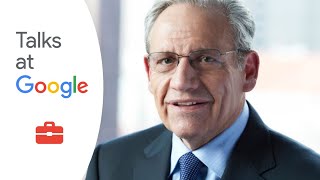
This transcript captures a February 2008 Talks at Google event where Bob Woodward discusses investigative reporting, presidential secrecy, and the Iraq War. Woodward revisits Watergate (revealing Mark Felt as Deep Throat), critiques secretive decision-making in the Bush administration (e.g., 14 meetings on war planning but no meeting on whether to go to war), and warns that "democracies die in darkness," arguing for a well-funded, independent press. The session includes audience questions about leaks, deleted White House emails, source confidentiality, and the future of journalism in the Internet age.
Chapters
Good afternoon everybody. On a day where we have a lot going on, obviously I am delighted to welcome to the Googleplex Bob Woodward. Bob is the probably both best known reporter and perhaps most seminal reporter in the United States and arguably in the world over the course of the last couple of decades. He is, I believe, the number one best selling authority of all time with something like 11 different bestsellers to his credit. He is also somebody who has been a student of Washington for many years and is a fascinating speaker on topics that I'm sure are going to include the role of information in national security, the Bush administration, the culture of the Bush administration, having recently written a trilogy and soon with a forthcoming book, first the Plan of Attack and then State of Denial most recently and a fourth book coming soon. And Bob is also somebody who has been a wonderful observer of the ways of Washington and an interested observer and perhaps participant in the rise of the blogosphere and the back and forth between the blogosphere and citizen journalism and the traditional edited journalism exemplified by the Post, the New York Times and other major papers. As a two time member of teams that have won the Pulitzer Prize for the Washington Post for distinguished reporting, he's in a unique position to be able to comment on the rise of new forms of journalism and the ways journalism will evolve in the 21st century. He's noted for a variety of different quotes and sayings, including follow the money, perhaps most famously, but also in the course of running an interview, follow the let's see, to sit back and let the silence bring out the truth, which is an interesting saying for us at Google. And then perhaps the Googliest saying, which is let's see if I can get it right. All good work is done in defiance of management. So with that, I'll leave it to our CEO and Bob Woodward.
It's a delight to have Bob here. As Kent said, Bob is an authentic American hero. And I can tell you that when I was in college and we saw on the front page of the news every day, his reporting at the tender age of his late 20s that exposed the massive, massive activities of the Nixon administration. It was an unbelievable experience. And to imagine we'd have him here today at Google, looking not just back at 30 years of exceptional reporting, but also the future is a great honor. Now, as you know, we've had the privilege of a lot of people here and one of the things that happens is that they like to tell their secrets. And the Google employees are extremely careful. We're a very secretive company and there is a secret I've known you for a very long time, and I've never had the courage to ask you this, but you can tell me and tell our audience, and they'll keep it a secret. Okay. And you know what's coming. Who was Deep Throat?
You know, I knew you were a.
Geek.
In Living in a Bubble, but that came out three years ago.
You're kidding me.
Deputy Director of the FBI, Mark Felt. And we kept that secret.
Then a different question.
Yeah, okay.
Why did you let that secret out?
Actually, we did not let that secret out. Mark felt decided, after 33 years to reveal that he had been that source. And I had no idea he was going to do it. And I was, quite frankly, horrified that somebody might have been taking advantage of him because he's now 94 years old. And it turned out no one was taking advantage of him. He wanted it known. And it turned out that it was good that it came out. You and I, over the years, have talked about transparency, that it's a good thing. In this case, the source had to be protected in order to get the information. But for people to know, and it's one of those things. It's like one of those tricks where if you know the answer, it's obvious if you don't. It was a mystery for 33 years. And it's one of the Russian novelists who said, three people can keep a secret if two of them are dead. But in this case, three or four of us knew who it was, and in order to honor that agreement, and also in a practical sense, to be able to get better information from people, we kept the secret. So I'm glad that I can reveal it finally.
This is one of the most important, I think, journalistic principles ever established was the notion of a source and a notion of. And you and your editor, Ben Bradlee, and a few others managed to actually keep it a secret for that long time. It's a remarkable accomplishment. I want to ask your perspective. I think we should spend most of our time about President Bush and those things. But I want to get your perspective of impeachment, because you have lived through two. Right. President Nixon, where you were on the enemy's list and may have actually been worried about your personal safety, and then President Clinton for completely different reasons. Since you were a part of that history, at least the first case. What is your view of the way our government dealt with both? Do you think that the ultimately right outcome occurred in both cases?
That's a great question. You could write a book on just that subject. In the case Of Nixon. He was not in impeached, technically, as he said when he resigned, that he impeached himself. And what happened to Nixon? Most of you are too young to remember the 1970s. How many people were even born at that time? Raise your hand. They were, but you were four or five. How many have any real time memory of the early 70s in the news? There are eight of you, I think. No, it's 20.
And half of them don't remember for other reasons.
Okay, I promise not to ask what those other reasons are. What happened to Nixon? He secretly taped his recordings and those tapes come out. I mean, even now there is a batch that comes out each year. And at the Washington Post, we call it the gift that keeps giving. Because on those tapes you see Nixon regularly ordering crimes and obstruction of justice, the abuse of power. The kinds of things that we never really have seen or known about. And it's the conservatives, interestingly enough, in the Republican Party who came to Nixon at the end and said, it's over. Too many lies, too many crimes. And so Nixon resigned. What? From my reading and listening to the Nixon tapes, what is so significant is certainly the crimes and the abuse of power. It's the smallness of Nixon. You see him conducting the presidency as almost an instrument of personal revenge. You know, if you're a big contributor to his campaign, he wants to help you and make you ambassador to Luxembourg. If you've done things that he doesn't like politically, he wants to get the IRS to investigate your tax returns. And when you look at it, it's totally out of the tradition of the high purpose of the presidency. And so it's extraordinary. In the case of the Clinton impeachment, he was impeached, technically had to go on trial in the Senate, where he was acquitted for matters of, some would say of the heart and the body. And it was not that kind of fundamental attack on constitutional government and accountability. The really interesting thing, and this is talking to some of your people and walking around this amazing place you have here, I feel like I've gone to another planet and I'm going to go back home and my report is going to be one of, wow. I mean, this is the future. I mean, you show it, you talk it, you see it. In the business of newspapering and journalism, we are trying to find. Find out what happened. And if there is something. I was talking to some of your news people about this. Something to worry about, to be concerned about. It is secret government. This is Nixon. This is somewhat Clinton. It certainly is. The Bush administration Secret government is the thing that will and our democracy, and there's too much of it and it's hard to break through the barriers that they put up.
I want to come back to the current government. But as somebody who has, I think, the most interesting perspective on politics as a reporter, I was looking at the we now have three candidates, likely candidates, two for the Democrats and a leader on the Republicans, all three of whom have been to Google, by the way. And I'm concerned that you're not going to have more books to write. I mean, you have a fourth book here with Bush, right? Do you have a favorite of the three in terms of being more government and more books? Well.
A friend of mine who works in the Hillary Clinton campaign told me the other day, said, just think of it, if Hillary and Bill go back to the White House, you can do a book every six months.
Does that mean you're in favor of them or are you opposed to.
No, no, it doesn't. And I remain scrupulously neutral. I think it is a really, really interesting campaign. I think it in the news business, we are driven too much by the strategy and the tactics. And I'm interested in who they are, that the electoral process of picking a president is not just something from the calendar. It's a measuring point for the country in a real way. What do we value? Who are we? Where are we going? What has meaning. Those large questions are on the table. I don't think they get discussed enough in the campaign. It gets about, you know, you snubbed Hillary or Hillary said this or Bill Clinton said the following about you. And when I talk to those candidates, my questions are about I found this with President Bush in interviewing him about why we went to war in Iraq. At one point he just said, I believe we have a duty to free people, to liberate people. It's in plan of attack. And I realized somewhat later how significant that because it's not in the Constitution, it's not in any law that we should liberate people people. But he jumps in his chair in the Oval Office when he says that. And it is. I would like to ask the candidates and Will, as I work on this book, I'm going to what's your definition of duty? What do you feel you have the duty to do? Because that conviction that George Bush has accounts, in my view, in large part why we went to war in Iraq, he really thinks that we have that duty. And he said he has a zeal to liberate people.
So you've written three Books on Bush. And one of the great things about being a CEO, being president of the United States, all of these positions, is eventually you're judged and your leadership. And in reading your books, the first one, the second one, the third one.
And there's a fourth coming out this year. And my wife Elsa says if there's a fifth Bush at war, she's going to shoot me.
Well, as far as I know, he's not going to be president after January of 2009. So when I read the first book, it seemed like a good and relatively positive portrayal of a leader who was struggling with a set of principles and challenges. 9, 11 and so forth. Second one, a more just more complicated view. There's no question that the third book has a lot of data about bad decisions, bad principles and so forth. Do I read all three books together? Do I work backward? How did we get from quote, heroic president after a major attack on the country to a government that is as.
Is dysfunctional, as you describe it in State of Denial? Well, that's a very good question. And what. It's very unusual to get three or let alone four books out of one presidency. And what you do is they're snapshots. It's like covering three baseball games. The team can do great in the first game. And even John Kerry in 2004 said President Bush did a very good job in responding to 911 and that the attack into Afghanistan was warranted and supported almost universally. And then the second ball game, which is the decision to go to war, it's very mixed. And the New York Times ran two front page stories when that book came out saying that the book jolted the White House.
Well, you had a lot of reporting that you had done that had not come out before about the actual mechanics of those decisions.
And the fact that the. I mean, this is just. You and I have talked strategy and thinking strategically in deciding to go to war in Iraq. President Bush had 14 meetings with Rumsfeld and the generals on the war plan on deciding how to do it. They had no meeting on whether to go to war. Now, that would be like you deciding that you're going to try to buy Yahoo. To go to the edge of the news. They've just announced that Microsoft is trying to. Trying to. You've heard. Yeah.
Another idea they have right now.
If you decided you wanted, or let's put it on, let's be fair to.
You who's interviewing whom.
Yeah. And deal with the question. You know, Microsoft decided to make an offer for Yahoo. Very big deal in the world. And. And I'm glad, you know, in your world, if you went back and could break the secrecy, did they have meetings about just how to do it, 14 meetings on how to do it, or did they have some meetings about whether to do it and it in itself? A good friend of mine from another news organization who read Plan of Attack said, I say this to be honest and to my embarrassment, some way, he said, the most important thing in that book is what's not there. That they never had the meeting about should we go to war? It was a kind of given and let's plan for it. And when anyone like Colin Powell raised objections, they were shouted down. Now, I'm not sure the objections were. Were strong enough. So anyway, and then the third book gets to the third baseball game, and the title tells it all that they were in a state of denial and did not acknowledge the reality of what was going on on the ground.
But let's ask, since you are the person outside the administration who's had the best vision into it, I have a very simple question. You have a management meeting, and it's private. And it's a private meeting. And you sit there and you go, let's evade Iraq. And somebody says, sure. Why doesn't someone raise a hand and say, what are we going to do once we win? Did that conversation not occur?
As best I can tell. And no one's disputed it, not really. And the only substantial caution was raised by Colin Powell six months before the war when he asked for a private meeting with Bush and said, we have to examine the consequences of war. It will suck the oxygen out of everything that it will suck the oxygen out of all foreign policy in the world, out of American politics. And then there was a summary Powell and his deputy had for describing what would happen. And it's called the Pottery Barn rule, which is, if you break it, you own it. You know, we are now in 2008, and we broke it and we own it. We have more troops there now. Just, I mean, I have to get this in because this is being broadcast. Pottery Barn insists that is not their rule. And I discovered this when I went into a Pottery Barn store and the clerk looked at my name, and she called me a very bad name and said, you're the SOB who put that in the book. And that's not our rule. But people think it is. And so they come into the store and they won't pick up anything. They tiptoe around. They think if they break anything, they're going to have to buy it, this.
Is another consequence of our war.
Exactly. It is. And I blame Colin Powell. And she looked at me and said, he hasn't been Ian. I sent him a message to not go into the Pottery Barn, the local Pottery Barn.
If you go back to the various retrospectives, perhaps the less informed retrospectives, then your very detailed work. Secretary Rumsfeld was vilified for a lot of this. Does your reporting, along with Vice President Cheney, does your reporting support that or is it a deeper problem?
In the end, it's the president's war. He's the decider. If you look at, as he says, and if you spend time in this, you realize that there is immense deference shown to the president. I'm sure you feel it as CEO here, don't you? And no matter how strong somebody might be or how defiant, there is this aura about the president that makes him or her the decider. And I asked Bush this when long interviews about how he decided to go to war. And to I think his credit, he was willing to be interviewed for hours, open ended interviews, all on the record, no restriction on questions. And the last question I asked him was, how do you think history will view your Iraq war? Because it's yours. And that's when he said, memorably, standing in the Oval Office with, with his hands in his pockets, just kind of shrugged and said, history, we won't know, we'll all be dead. Now, my wife, when I went home, said, how was the interview? And I said, he answered all the questions. And the good news, the really good news is I have the ending to the book. Endings are hard to find. And that's the ending to plan of attack. Now we won't know, we'll all be dead. He's ducking the question, right? But he's also, it's true, we don't know how it's going to look in 50 years. And as Karl Rove said, everything gets measured by outcomes. And at the same time, it is clear. Bush, and I think it's clear from the record in history that this is his war. As commander in chief, I pointed out to a group the other day, he can employ the forces he wants. And a lot of people just said, no, wait a minute, that's not the way the Constitution is written, which is true. Constitution says Congress will declare war. But presidents, Democrats and Republicans have said, in this era, as commander in chief, you can do anything. And I said to this group, George Bush could invade Mexico tomorrow if he chose. And somebody shouted out painfully, don't give him any Idea.
Do you believe that in your reporting over the 30 years you have profiled the last stages of presidencies? Nixon's last year. And people are too young to remember, but it was alleged that he was talking to portraits in the hallway and a number of.
He was.
A lot of very strange things happened in the last year or two of Nixon's presidency. We're now in that state with President Bush. Bush's war, as you call it, is defining. No one I've talked with and none of the political candidates believe that this war will end before there's a new president. Is President Bush primarily protecting his legacy? Is President Bush in a state of denial still even though he read your book? Is he.
I'd be shocked if he read my book.
What is the president doing? Well, there are people dying. There are people dying this week.
And this morning this happened. I mean, there were two bomb attacks in Baghdad, 64 people, at least 64 people killed. And imagine what would happen in this country if there were bombings in malls or markets where 64 people at random were killed. It would be. It would consume us like 9, 11. It's not on the scale of. But it would consume us. And a war is the most serious defining event for a nation. And your question is a good one about. I mean, how is he dealing with the kind of. Emotionally. As best I can. He is convinced he's on the right track, that this is a necessary war, that when we are dead, it will be judged.
His view is it will be judged positively.
Yes, that's right. Or, you know, we won't know. We'll all be dead. It's a really interesting question. And for what it's worth, as a journalist, you try to find out what happened and be neutral and not make judgments. And you have to. There is a preponderance of evidence that this is not going to turn out well. At the same time, it may turn out that we have democracy, more stability, less terrorism in the Middle east, that, you know, whatever percentage you put on that, that is a possible outcome. And he feels so strongly he's, as they say in poker, all in. And I mean in so many ways that I don't think he's going to alter his view.
One more question about the war, and I want to ask you a little bit about the news industry in general, and then we'll go to audience questions. So we will have a new president in January, likely one of the three that are currently the leaders right now. Senator McCain was here and generally pretty aggressive with respect to the war supported the surge, so forth. Senator Clinton, Senator Obama, very different views. Is it really a decision for the electorate around the war, do you think? Or do you think we are so tired of the war that the fact that there's such a huge difference between at least one and the other two candidates, and maybe a difference between the other two candidates, they argue with each other about their positions and whether Mrs. Clinton voted and so forth correctly. Do you think the American population actually has forgotten that we're at war because we're now consumed with these other very real issues within our domestic economy?
That's a really important question. There's a numbness that has taken over because the war has gone on so long and there's less violence and fewer casualties on the US Side because, or at least during the period of the surge. I think in the end, the fault line in American politics is the war. And I think it will resurface because I suspect after we start drawing the surge troops down, the landscape may change in a positive or negative way. And I have thought this for a long time. That country defines itself to the world by who we go to war with, but in a more important way, we define ourselves to ourselves by who we go to war with. And I think there'll be a realization on the part of the people that this is the hinge event in the first part of this 21st century and there is going to be a difference about the war. And so I think, you know, we're going to be staring at ourselves as we should. You go abroad, as you know, and we are defined by this war. And if you look at the Middle east and look at the dependence on oil and you look at all kinds of other issues, this is our future, whether it works or how it works or doesn't work.
One final area I wanted to cover, we have in the audience, we have people who are inventing a new model of news. It's important to note that we don't have reporters. We have engineers, we have scientists, we have marketing professionals.
I met with some of them earlier.
And it was important for you to come to Google. And you expressed to me you wanted to come, you wanted to talk to them. Can you state the concern you have about the news and your colleagues? And then can you state what you would like us to do to help? What can we do to help? This is an important principle for the world.
My. Which I shared with you, and you're very kind to let an outsider come. And my concern is that we all you people in the traditional News business, we need to think about what the next generation of quality and useful news is going to be on the Internet. And that may be, you know, the world you live in. The new generation is something sometimes two or three years or maybe 30 years. And that people, old timers like me at age 64, can't sit on the sidelines. And I argued to your news people, you shouldn't sit on the sidelines either. What is in the newspaper, and it's particularly newspapers that are hurting economically because of the Internet, because of, because of you. And as I said to you the other night, I said, you do not want on your tombstone, we put American newspapers out of business.
But then no one would write it.
Yeah, well, there would be a way. And the newspapers matter because we have the time and we have. We're willing to take risks and it's expensive. And I could sit here all afternoon and list things that we know about because of newspapers. Those newspapers didn't exist. We would not know those things. And I guess the best way I can illustrate this is to go back, wow, 35 years. January 1973. Carl Bernstein and I'd written a lot of our Watergate stories, and quite honestly, they were not believed by the public, by our colleagues at the Post. It was a moment when the credibility of the Washington Post was. Was at risk. The company, Washington Post Co. Stock, had just gone public. One of the strategies we later learned that the Nixon people used was to challenge the FCC TV licenses that we had that sent the stock into the toilet, as they would say. And at this moment, January 1973, I was 29. And came Kathryn Graham, the publisher, CEO, owner of the Washington Post, called me up for lunch. And I knew her, knew she had supported the editor running these stories. But those stories were so against the conventional wisdom, which was Nixon's too smart. He would never be involved in it. And so go in and have lunch with her and the managing editor. And she is full of questions like the really great CEOs they have, what about this? What about that? I read this, but it was a management style of not directing us to do things. It's what I call mind on, hands off. I think you run to the extent you run this place or it runs you. That's the theory. Your mind is engaged, but you're letting people. You're not running around to these cubicles and saying, do it this way or do it that way. And she didn't, she didn't say that. And my mind was blown to see, here's the boss who knows all about what we're doing, understands the stakes. And then at the end she had the killer question, like the CEO, which was, well, you've written these stories, we've supported you. When are we going to find out the truth? When is the whole story going to come out? Which is absolutely the right question. And I said that Carl and I, Carl Bernstein and I felt because it was a criminal conspiracy as we had written, that involved the highest level of the White House, the Nixon reelection committee, because they scared people. And they frightened people. They curtailed the sharing of information that was criminal. That my answer was never, we're never going to know the truth. And Katherine Graham had this pain stricken look on her face. I mean, just. And she said precisely the following. Never, don't tell me, never. And I left that lunch a motivated employee. But it was not a threat. It was a statement of purpose. And what she was saying and said is your resources. Use the resources of this newspaper. Use its money. You've already used its reputation. Get to the bottom of the story. High risk, expensive. Only newspapers will do that. It's not that she and I could go on and on and on. If we lose that, then we get secret government because no one is going to be there saying what's being hidden, what's going on. As one of the Supreme Court justices said, quite eloquently said democracies die in darkness. And that darkness is going to come if we can't figure out some way to make sure that, that the next generation of news is well funded and not risk adverse, but willing to take.
Those risks, to take enormous, enormous risks. And you can imagine the pressure that Carl and Bob were under. And it's an amazing story. Let's get.
No, no, we weren't under. I mean we were in a bubble.
Pressure. I was reading this stuff.
Yeah, we were protecting by investigators, our institution. And that's what's important. You know, you people go out and you work in your teams and however you do this stuff, you're protected by. You know, I even read one of your executives and I think you said it's okay to fail. Well, how about, you know, that's a really.
Not too often. Let's get folks comments or questions.
Go ahead.
Hi. I first like to thank you for the role you've played in exposing some of the dark underbelly of our, of our government and exposing, you know, lifting some of the veil of secrecy which is there. But I want to ask you about the morality of the other people who play a role that is the people who leak the information who violate a trust that they've promised to keep this information secret. And you know, what sort of code do you think that people should have for when it's appropriate to violate a trust in that way?
Well, I would argue that those people have not violated a trust because there is a higher trust which is the public interest. And if they're willing to risk, as hundreds, thousands of sources do to say, look, this is what's really going on and if we can use that information in a way with information and documents from other sources and I mean this is terribly self serving, but I salute the people who are willing to say, hey, wait a minute, they're not telling us what's really going on. I'm going to call, I mean when I give talks like this, I always give my email address. And so I may Woodward be@washpost.com that that's our lifeline to a more authentic.
Version of moral calculus is, you know, how do, how would somebody decide not that I'm going to reveal any secrets.
Yeah.
How would somebody that's, you know, I used to be a defense work at a defense contractor, so I, you know, had a secret clearance.
How are the, how do they decide?
No, well, how would you recommend, what model would you provide for somebody to.
Call me, email me, I'm busy, but not that busy and it's really important. And that even with good intent, people in large institutions or small institutions or in government can get on the wrong track. I think things should be out in the open. I think if it was known before the war was launched in Iraq that they'd had 14 meetings on how to do it and not a single meeting on whether to do it, people like Senator Kerry and Senator Clinton may not have voted for that resolution. So if there'd been transparency on that information, which I did not have before the war, it's possible there would have been a different outcome. Go ahead.
Next question.
Yeah, you've talked about the various sources of information that are so crucial for shining light on what's going on in the government. In particular, you mentioned the Nixon tapes and the gift that keeps on giving. At the time when those tapes first came to light, there was a lot of controversy and attention about how many tapes were there, Were they all being disclosed? And in particular the infamous 18 minute gap. What's your take on the recent reports about the deleted email archives at the Bush White House and how important do you think that is and do you think it's going to turn into a.
Big Flap or not, you know, I hesitate to give Bush's answer. We won't know. We'll all be dead. We aren't going to know what's on that email apparently. And again, I think I'm going to.
Ask you to find out.
Yeah, well, you know, if anyone knows Woodward. Bahashpost.com I'm serious. You know, there one person who's out there who can say, hey, look, and it doesn't have to be the answer that will unravel all the mysteries of the universe. It just has to be a piece of the puzzle to explain what's going on. You know, this is, this is our government. So. I really, I guess, you know, the word is plead with people to let us know what our government is doing because it's not always a good thing.
You'll remember the demonstration of how the 18 minute gap could have occurred. And there's a very famous picture that.
You'Re showing Rosemary Woods, Nixon's secretary, saying, well, she was operating the tape machine and then she was leaning like this and there was a picture and the foot in the hand couldn't reach.
Go ahead.
One of the really striking things that's happened in recent years is that presidents have begun routinely violating the Constitution with, you know, all sorts of examples, signing statements, you know, recent pocket vetoes and just a general tendency by many presidents to, you know, wage war, which, you know, it's explicitly not their ability to do without a congressional declaration. Yes. Which I see has been going on for so long that now even you shrug. But, you know, this would appear to be a problem. And there are at least two groups of people that have the ability to, you know, at least attempt seriously to do something about this, the Congress, you know, and as was demonstrated by the Clinton impeachment, it's certainly the ability of the opposition to take serious action when they feel the president's gone astray. And secondly, the press, which with the exception of a few people like you, doesn't do much to call attention to these sorts of activities. I wonder what your comments are on what these two bodies ought to be doing differently, if anything.
Well, and you know, you say lots of unconstitutional actions. I mean, lawyers would debate that quite seriously. And I have to say the war in Iraq is a legal war, as best I can tell. I mean, the president has that authority and the Congress, 3 to 1, voted those resolutions in October 2002 giving the president, contrary to what some people have said, a blank check to use the military.
They gave him a blank check.
They gave him a Blank check.
They did authorize it.
Yeah, they did authorize it. And so it would be very hard to say that that is unconstitutional. Look, I have said this before. I don't think I was aggressive enough in looking at all of this stuff. I wish I'd been more aggressive, particularly in examining the alleged intelligence that there were weapons of mass destruction. I had three sources who said, not that there was doubt about that, but the evidence was skimpier and I should have written stories about that. And there were reasons not to. But I look back on that, and that's one of my internal lessons. Be aggressive.
Go ahead.
Rosemary woods just needed to be taller to do that move.
I'm sorry, I can't hear you.
Rosemary woods needed to be taller. He's. You're six, seven, six, eight.
I have a question. You've been expressing concern about the health of the printed news industry from an economic point of view, I presume.
But I also wonder about their health.
From the point of view of being taken over by News Corp. And just.
That, that whole landscape.
And I just wonder, do you see the press getting any more courage? Do I still have to get my news from the Daily Show?
Well, as best I could hear your question about News Corp. And Rupert Murdoch taking over, and I say plainly, and I'm. I'm glad that the Washington Post is. The CEO is Donald Graham and not Rupert Murdoch. You know, we are an independent newspaper, And I, in 37 years working at the Washington Post, never really heard or saw or any evidence that anyone from management said, do a story this way or don't do this or. Or do that. So it is that independence. And that's where. That's the ingredient that we need in the press. And that's why I'm saying to you, people don't sit on the sidelines on that. I don't know what the answers are, but I'm pretty sure the place to be is not on the sidelines. Go ahead.
Can you talk for a second? You've already sort of discussed the impacts of this, but about the dangers of source confidentiality. I mean, you and Mr. Bernstein were able to break Watergate because you had somebody like Deep Throat who you could protect with confidentiality. But it seems like now many journalists, if not most, give this confidentiality to people who don't really need it. People who, if their government sources advance a government line, for example.
That indeed happens sometimes, and there's too much use of it in a frivolous way. You know, one source said so, and so is an idiot that's what you need is specific information. But quite frankly I'm in a minority of very small minority on this. I think we need more confidential sources used properly to get information about what's really going on. Not these kind of glib. One source said so and so is an idiot. But one source said the Secretary of defense met secretly yesterday to do the following and this happened. And this is the, you know, the name of the operation is get Google. And that sort of specificity can lead you to important stories and, and people are not going to be able to tell you on the record with their name. You know, you have to protect those people.
Can I follow up on that? Certainly. I mean I completely agree there are times when that is absolutely necessary. But it seems like if you're worried about democracy dying in the dark, you want at the same time to hold people who say things accountable for the things that they say. Is there a way to enforce that without hurting those other efforts?
That's right. But you that use misuse of confidential sources, it's there. It's not that prevalent frankly. And I think to find out what really goes on in government, I mean suppose my next book is Google, you'd.
Be delighted, right with your that you.
Know, you would come and say well what's going on here? And to find out what's really going on I'd have to have lots of confidential sources. Woodward bhashpost.com let's move to our next.
Question and let's see if we can move this along because we're almost.
I'm sorry.
Yes sir.
When I read your Chinese version book years ago, I wish I could see the author. So today my wish came true. My name is Tom Zhang. I'm doing talent search at Google Staffing so I'm planning to write a book on talent. I strongly believe that what makes Google goog is g talent. It's the people you see in this room and people you cannot see in Google's international office. I don't care that Microsoft is going to buy another small company.
Your questions?
Could you please give me like a first time author the advice how to write a book? Thank you.
I will pass. Just email me. I won't give it again. And you know, writing a book is hard and easy both.
Okay, go ahead. So you've talked about the problem of secrecy in the government and how it occurs to me that we're going to have a new government soon. So I'm wondering how you feel about the candidates that are running in regards to secrecy.
That's a good question. I think that particularly Senator Obama and Senator McCain have a tradition of being more open. I did a book on the first year of the Clinton White House and there's some habits there of secrecy that if people go back and look at the agenda and some of the things, there is more of a tendency to be secretive. Now sometimes secrecy is necessary. I tend to think, and Eric, you and I have talked about this over the years, that every institution needs to look at the secrets they have and say, does that really need to be secret? Because sometimes you need to get it out. But I think any of those candidates will be improvements in terms of opening government up more.
Let's do our questions quickly. Go ahead. Yes, sir.
I think about computers a lot and one thing I've noticed is that a lot of the conversations I used to have in person now occur over email and instant messages. And I figured this happens in government too. And so now there's this flood of information that used to be off the record, it's now on the record. How does this change reporting and how you actually find secrets from the government?
Our emails are, you know, the emails of the government sometimes get destroyed. Sometimes people claim they don't exist. A lot of lawyers will tell people, don't put anything in an email you don't want to read in the newspaper. That's probably good advice. I've looked at emails involving in stories on the Iraq war and they're incredibly useful. At the same time as a reporter who contacts somebody in government or say at Google, if I were to Google your or send a request to you for information. Here you tend to get, if the answer comes in an email, a kind of premeditated, canned, less authentic answer than you might get if you had a face to face interview or a phone conversation.
Let's do our next question.
You said you wouldn't pass judgment on President Bush, but I was wondering if you'd make a judgment on how the press corps behaved in the run up to the war. Because it seems like there's a sort of bias in favor of those empowering and reporting. If you see the raw footage of like a press conference with the press secretary, they will sometimes say something that's patently false and the whole press corps will sort of laugh. But you never read in the newspaper that, you know, the press corps laughed derisively at the statement.
Actually, sometimes you do read that in the newspaper.
Relatively rare.
I would. The run up to war. We should have been more skeptical. As I said, I personally should have been much more aggressive. At the same time it was a period when it was after 9, 11, there was a sense we're under siege and I think that infected everyone. All kinds of people voted for the Authorization of War 3 to 1 in the House and the Senate. Senator Clinton voted for that authorization which clearly gave the President the power to use the US military in Iraq as he deemed appropriate and necessary was the language.
So.
I think you have to be very self critical. I would be self critical of what I should have done or what I did and I should have been much more aggressive. Aggressiveness works in the news business.
I wonder if just looking at the things people see in hindsight there were questions about curveball. There were comments from people like Richard Clark. There was the issue of knowing that the statement about uranium was false beforehand.
Do you think actually that was not known beforehand, but okay, but do you.
Think it's just hindsight that shows us that some of those statements were inflated or do you think it wasn't really possible to pick up?
No, I think it was possible. And as I say we should have been much more aggressive. And what is it John Wayne said? And I would apply this to, to myself. Life is tough, but life is tougher if you're stupid.
Let's have our last question.
Sure. I just wanted to get your point of view on. We talked about sources and secret sources, but the reverse where there's a gazillion amount of sources that have opened up crowdsourcing, just many, many more pieces of information coming your way. Many, many more pieces of information out there to be sifted through. I recently went back to talk to my journalism professor and she was just all about data, all about data mining, which is all about what data mining and trending and word usage and going back in articles and seeing how many times words were used and just this one way of doing all this data mining which basically where do you see that in general reporting and what can we do to help?
But you see what often is important, the secrets aren't in the data that you will if you go on and do a Google search on causes of Iraq war. Some of the things that were really significant aren't in there or weren't in there at the time we went to war in 2003. And that's why you need the sources. That's why to go back to my point that we need an aggressive independent press that's going to go around the data and find the sources and the documents and the notes that tell us at the same time the searches in data can be incredibly useful, and I use them all the time to find out things that are on the record. And I'll have somebody tell me about a secret meeting that the following happened, and then I'll go to Google and ask about that date and the various individuals and find that sometimes somebody said the exact opposite in public to what they were doing in secret. So without that contrast, sometimes the significance of the secret is hidden.
So Bob has had obviously a big impact on the world. He's also had a big impact on my thinking about governance. And he was the first person to talk to me about managing large organizations from a standpoint of transparency. And his view, which I sort of adopted, is that with really smart people, you have to trust them and you have to operate in a reasonably transparent way. Because if, in fact, the management culture is corrupted by deception of one kind or another, eventually the truth will come out. And so you might as well get yourselves organized around a transparency model. It's a gift that Bob gave to Google that I don't think he knows about. There's so many things that Bob has done for the United States, for the press, and is sort of literally setting a standard for reporting that. It's just great to have you here. So thank you very much, Bob.
Thanks so much. Thank you.
More from Guy


Cheryl Strauss Einhorn | The Human Edge: Smarter Decisions in the Age of AI | Talks at Google



Rachel Glennerster | Innovation and the Center for Global Development | Talks at Google

Rebecca Winthrop | Rethinking the Purpose of Education in the Age of AI | Talks at Google

Dr. Robert Wachter | A Giant Leap: How AI Is Transforming Healthcare... | Talks at Google



