The Year of Living Biblically | A.J. Jacobs | Talks at Google
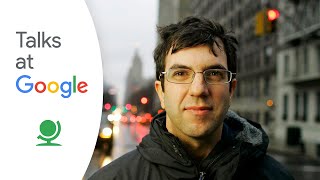
A.J. Jacobs describes his year-long experiment attempting to follow the Bible as literally as possible. He read many Bible versions, catalogued hundreds of rules (over 700) and tried to apply them in modern life—testing Sabbath observance, dietary laws, impurity rules, tithing, sacrifice rituals, stoning (symbolically), and prayer. The project led to surprising practical and psychological lessons (gratitude, reverence, behavior shaping belief, limits of literalism) and encounters with diverse religious communities (Hasidic Jews, evangelicals, Karaites, Samaritans). Jacobs concludes literalism is impractical and that selective choosing of ethical teachings (compassion, community) is common and defensible.
Questions this video answers
Over 700 rules.
About 3,000 English versions available (he did not read them all).
Yes — he says he 'was fruitful and multiplied' and had twin boys during the year.
He tithed 10% of his income (gave to widows and orphans).
Karaites: about 30,000; Samaritans: about 700.
Chapters
Hi everyone.
Thanks for coming. Today we're pleased to have AJ Jacobs as part of the Authors at Google series to talk about his latest book, the Year of Living. One man's humble quest to follow the Bible as literally as possible. The premise of AJ's book is to answer the following question. What would it be like if we followed every single rule in the Bible, not just the famous ones that we all know about, but also the hundreds or possibly thousands of often ignored ones. It always reminds me of this great line from the Simpsons where Ned Flanders says, I followed all the stuff down, everything the Bible says, even the stuff that contradicts the other stuff. So I'm sure it'll be really interesting to have AJ's unique perspective on this, to share just a little bit about aj. He's a New York Times best selling author. He's also an editor for Esquire magazine and according to his website, ajjacobs.com, a human guinea pig. And to give some examples of the more interesting experiments AJ has done in the pursuit of writing in the Know it all, it's his best selling memoir about the year he spent reading all 44 million words of the Encyclopedia Britannica in a quest to become the smartest man in the world. Another article which is called My Life as a Hot Woman is a quest to find his nanny a boyfriend, which he does by posing as her on an online dating site. So needless to say, AJ's definitely going to have some interesting experiences and perspectives to share with us. So we'll have time, as always, for questions afterwards. So just a. We want to make sure that as a quick reminder to please use the microphone, we have set up so that people on YouTube in the remote offices can hear your questions. It would be very much appreciated. So with that, let's give AJ a big welcome to Google today.
Thank you, Tyler. Well, thank you so much. It's great to be here. I'm a Google consumer, as is everyone else on planet Earth, so I guess that doesn't separate me. But actually one of the most difficult things during my year of living biblically was that the laws of vanity and pride prevented me from self googling. So that was a challenge. I thought I would start by talking a little bit about my writing. Tyler discussed it a bit, but I thought I'd expand on this idea that I like to be a human guinea pig and just really immerse myself in my topics. So I work at Esquire and a couple of years ago I wrote an article called My Outsourced life. And for this one, I hired a team of people in Bangalore, India, to live my life for me. And they answered my emails and they answered my phone and they argued with my wife for me. And it was pretty much the best month of my life because I just sat back and read books and magazines and watched movies. More recently, I wrote an article for Esquire about a movement called radical honesty. And for this one, this one, they believe that you should never, ever lie. But more than that, they say that whatever's on your brain should come out of your mouth. There should be no filter. So I tried this for a month, and this was the worst month of my life. This I do not recommend at all. To give you a sense, the name of the article was called I think you're fat. So not one I recommend. My previous book, as Tyler mentioned, was the know it all about reading the Encyclopedia Britannica from A to Z, or more precisely from ak, which is the first word, which is a type of Korean, ancient Korean music. And I read all the way up to Ziviyec, which is the last word. And that's. Well, I don't want to ruin the ending, so I won't blow it, but. Well, actually, it's a town in South Poland that makes good beer, apparently. Very good beer. Someone brought some zivich beer to me at my book party, and that one was an experiment in how much information I could shove into my brain. And. And I was trying to explore the distinctions between knowledge and intelligence and wisdom and also how we process information. So it was actually quite related to Google and what you guys do. So I'm happy to talk about that more during the Q and A if you want, but I thought I'd talk about the year of living biblically, since it's on my mind as my most recent book. And. And I have to say, of all the experiments I did, to me it was the most fascinating, the most surprising and life altering. It actually changed my life. And it started because I grew up in New York in a very secular home with no religion at all. As I say in the book, I'm Jewish, but I'm Jewish in the same way the Olive Garden is Italian. So not theory, but I've become increasingly interested in religion over the years. And I actually figured religion as a kid, I figured religion would sort of wither away and die out and we would all be living in this sort of neo enlightenment world. And obviously that did not happen. So I wanted to know, am I missing something by not having Any spirituality or religion in my life. Or is Christopher Hitchens right? And half the world is completely deluded. And I also had a young son. I wanted to know what to teach him about religion. So I decided to dive in headfirst and immerse myself in the topic and actually try to live by the Bible. Live the Bible. Everything it said, without picking and choosing, and see how it affected my life, how it made my life better, and how maybe it made my life not better at all. The first thing I did was that I bought a literal stack of Bibles, because there it is, my stack. There are 3,000 versions of the Bible available in the English language. I didn't make it through all 3,000, but I bought Jewish Bibles and Christian Bibles. A friend of mine sent me something called the Hip Hop Bible, where the 23rd Psalm is rendered as the Lord is all that, as opposed to the Lord is my shepherd. I also assembled a board of spiritual advisors because I knew this was a massive undertaking. I thought I would get all the help I could. So I had rabbis, priests, ministers, atheists, agnostics, anyone who would give me some advice. And then I read the Bible from start to finish, which is something I had never done. And I made a list of every single rule and piece of advice and nugget of wisdom that I could find. And this turned out to be quite a long list. Over 700 rules. And I wanted to follow every one of them without picking and choosing. So I wanted to follow the famous ones, like the Ten Commandments, a visual of the Ten Commandments. And I wanted to love my neighbor. I wanted to. The Bible says to be fruitful and multiply, and I actually, I was fruitful and multiplied during my year. I had twin boys. So I take my projects very seriously, is what I'm saying. But those are the ones I had heard of. I also wanted to follow the. The hundreds, literally hundreds of more obscure rules in the Bible. The Bible says that you shall not shave the corners of your beard. And I didn't know where the corners were. It didn't seem like a square or rectangular thing. So I just let the whole thing grow without shaving at all. And it started like that. Got a little more. And there I am at the end of the year, as you might imagine, I spent quite a bit of time at airport security and my wife would not kiss me for the last two months of my year. So thank you for that. That's nice. I'm going to tell her so. And there's a side shot there's another rule in the Bible that says you cannot wear clothes made of mixed fibers. It's right there in Leviticus. And it seemed an absurd rule. It seemed bizarre. You know, how could this. Why, why would. If there is a God, why would he care? And, you know, why is this in the Bible? But I figured there's no way for me to know whether it has meaning or it will affect my life in either a positive or negative way unless I actually try it. So I got rid of all my poly cotton T shirts, all my poly cotton sweaters. One of the first things I did, another rule in the Bible says, when two men are in a fight and the wife of one of those men grabs the private parts of the other man, then her hand shall be cut off. So I wanted to follow that one. Of course, that one I followed more by default by not getting in a fight with another man whose wife was standing nearby, looking like she had a strong grip. So there were quite a few I could sort of follow just by living my life. You know, I never sacrificed my son to the pagan God Molech, for instance. That one I was able to do. But there were far more that that actually changed my life and were incredibly challenging and sometimes for the better and sometimes not. The difficult ones came in several varieties. The first is. Is that the voice of God or something? The first one was that I found particularly difficult was the rules about avoiding sins. Because you can't believe how many sins we commit every day once you pay attention to it, and especially the small sins. This was what was really killer. Because the Bible says, for instance, you shall not covet, you shall not gossip, you shall not lie. And I live in New York City and I work as a journalist. So this is pretty much 65, 70% of my day. So it was a radical moral makeover. And I was faced with the question, how do you engage in a moral makeover? How do you become a better person? It was actually one of the more profound lessons of my year was that basically I pretended to be a better person, and I eventually became a little bit of a better person. I really learned this year how much the outer affects the inner, how behavior molds our thoughts, because usually we think I did anyway. Think of you, change your mind and you become a better person. But it's actually often the other way around that you behave and your mind catches up to you. Cognitive dissonance. And there's psychological studies. If you force yourself to smile, you will eventually trick your mind into thinking, oh, I'm happy. And you become a happier person. You force yourself to go to the hospital to visit a sick friend, and your mind sees you at the hospital and says, oh, I must be compassionate. You become a little more compassionate. And this is actually. I didn't know this at the time, but this is actually a theme in Judaism because there's a. I don't know whether you'd call it a catchphrase or a motto, but they talk in Judaism about deed over creed, and that if you just do perform the mitzvahs, as they call them, perform the good deeds, then your mind will catch up. Another one I found difficult was the Sabbath, because I am a workaholic. And for me, as I think for most people in America nowadays, there's very little difference between the weekday and the weekend. I'm on my BlackBerry all the time checking emails, but here I had to take a day and not work at all. This day, I had to take it as a sacred day and really just recharge and refresh and spend it with my family. And I think whatever your beliefs, the Sabbath actually is. It's a great and a beautiful ritual that I totally underestimated. There's a rabbi who calls it a sanctuary in time. And it really resonated with me. The other type of rule that was particularly difficult, perhaps the most difficult, were those rules that conflict with 21st century customs and laws, because the Bible is an ancient book, and there are things that are a little baffling. So, for instance, the Bible says that you cannot touch a woman during certain times of the month. But even more than that, if you take the Bible really strictly and literally, it says you cannot sit on a seat where a menstruating woman has sat because it's impure. And my wife found this offensive. So she, during her womanly time, she sat on every seat in our apartment. And I was forced to stand for much of the year. So I actually was able eventually to come up with a. With a little loophole. I bought my own portable chair, a little island of purity that I took on the subways and bus. And by the way, I'm dressed in white there because Ecclesiastes, one of the books in the Bible, says that your garments should always be white. And I decided I should take that literally. And it was. I gotta say, you know, it seems a little thing, but it was one of the best parts of my year because again, the outer affects the inner. I felt I couldn't be in a bad mood if I'm walking around New York looking like I'M about to play Wimbledon or about to go to P. Diddy's party. I mean, it really put me in a better frame of mind. In addition to the impurity laws, there are laws in the Old Testament about stoning, which was a bit of a challenge in Manhattan. So I thought I would read a very short passage from my book about how I tried to stone adulterers and then. And others. I didn't discriminate. You know, there's lots of Sabbath breakers, you name it. But this dealt specifically with adulterers. And then I would talk about just a handful of the deeper lessons and more surprising lessons that I learned and then open it up to any questions that you guys might have. So here is my stoning. The Hebrew scriptures prescribe a tremendous amount of capital punishment. Think Saudi Arabia, multiply by Texas and then triple that. It wasn't just for murder. You could also be executed for adultery, blasphemy, breaking the Sabbath, perjury, incest, bestiality, and witchcraft, among others. The most commonly mentioned punishment method in the Hebrew Bible is the stoning. So I figure at the very least I should try to stone. But how? I can't tell you the number of people who have suggested that I get adulterers and blasphemers stoned in the cannabis sense. Which is an interesting idea. Clever. But I haven't smoked pot since I was at Brown University when I wrote a paper for my anthropology class on the hidden symbolism of bong hits, which I got a B on that paper, by the way. Instead, I figured my loophole would be this. The Bible does not specify the size of the stones, so, pebbles. Today I get a chance. I am resting in a small public park on the Upper west side, the kind where you see retirees eating tuna sandwiches on benches. Hey, you're dressed queer. I look over. The speaker is an elderly man in his mid-70s. He's tall and thin, and he's wearing one of those caps that cab drivers wore in movies from the 1940s. You're dressed queer. He snarls. Why are you dressed so queer? I have on my usual tassels because the Bible says tassels on the corner of your clothing. And for good measure, I've worn some sandals and I'm carrying a naughty maple walking stick. I'm trying to live by the rules of the Bible, I say. The Ten Commandments. Stoning adulterers. I'm an adulterer, he says. Are you going to stone me? Well, yes, that would be great. I'll punch you in the face, he says. I'll send you to the cemetery. He's serious. This is not a cutesy, grumpy old man. This is an angry, grumpy old man. I fished my stones out of my back pocket because I had been carrying these around for quite a few weeks hoping for this interaction. And here I was, so I was very excited. I wouldn't stone you with big stones, I say. Just these little guys. I open my palm to show him the pebbles. He lunges at me, grabbing one out of my hand and flinging it at my face. I am stunned. I hadn't expected this old man to make the first move, but now there is nothing stopping me from retaliating. An eye for an eye. I take one of the remaining pebbles and I whip it at his chest. I'll punch you right in the kisser, he says. Well, you really shouldn't commit adultery, I say. We stare at each other. Yes, he is a septuagenarian. Yes, he has just threatened me using Honeymooners dialogue. But you could tell this man has a strong dark side. Our glaring contest lasts 10 seconds and and then he walks away, brushing by me as he leaves. Even though mine was a stoning light, barely fulfilling the letter of the law, I can't deny it felt good to chuck a rock at this old man. And yet I knew that this was a morally stunted way to feel. Stoning is about as indefensible as you can get. So it comes back to the old question, how can the Bible be so wise in some places and so seemingly barbaric in others? And this was a question I struggled with throughout the year. I asked my spiritual advisor, Yossi, about the stoning. Yossi was born in Minnesota. He calls himself a Juutheran, by the way, because he says that Lutheran repression and Jewish guilt are a very good mix. He's an ordained Orthodox rabbi, and he is not fazed by my question at all. We don't stone people today, he says, because you need a biblical theocracy to enforce the stoning, and no such society exists today. But even in ancient times, stoning was not barbaric. First of all, you didn't just heave the stones, says Yossi. The idea was to minimize the suffering. So what we call stoning was actually pushing the person off the cliff so they would die immediately upon impact. Plus, the stonings were a rare thing. Some rabbis say they only occurred once every seven years, others once every 70 years. In addition, the person getting executed was given strong drink to dull the pain. I half expected Yossi to say they gave the adulterer a massage and a gift bag. He made a compelling case. And yet I'm not totally sold. Were biblical times really so merciful or was there some post biblical whitewashing going on? As my year progresses, I'll need to delve deeper. So that was my experience, stoning. And it was a bit of an odd experience, but it did allow me to explore some of the issues, some of the more interesting issues that I encountered during my year, one of which was interpretation. What do the words of the Bible mean? And are those meanings static? Or do they evolve? Should we, when we're looking at the Bible, should we try to get back to the original intent, like Antonin Scalia tries to get back to the original intent of the Constitution? Or should we see them as more fluid and how they apply today? So I actually met with one. Oh, there's a. I did not have the sheep the entire year, by the way. That was more a one day rental. One day sheep rental. But this Rabbi Steve Greenberg I met with said the letters of the Bible are eternal, but the meaning evolves. And, and that really struck a chord with me. I think that it's okay that the meaning evolves. It's okay to wrestle with these texts and have them change. Actually, this is true in pretty much every tradition. But in Judaism, there's a vast difference between what the literal words of the Bible say and then the, the interpretations that the rabbis have given it over thousands of years. So for instance, there's this line in the Bible, you shall not boil a baby goat in its mother's milk. So I'm following the Bible literally. So I have to spend a year not boiling a baby goat in its mother's milk, which somehow I was able to do. I was very excited. My friend said I could always boil a baby goat in its grand grandmother's milk if I got really desperate. But I never even had to do that. But as you may know, these 11 words in Deuteronomy have been interpreted in a vastly, in a much broader way to mean you cannot eat milk and meat. This is where all the rules of kosher come from about separating milk and meat and why you can't have a cheeseburger, all from these 11 rules. So it was a real lesson in how vastly differently these words of the Bible have been interpreted. And actually it was one of the main motivations for my year, this whole issue of interpretation. As I mentioned earlier, probably the major motivation was to sort of go on the spiritual journey, see what it Was like what I was missing by not having being part of a religion or spirituality. But the secondary motivation was I'm very concerned about fundamentalism of all kinds. Christian, Jewish, Muslim, and people who say they take the words of sacred texts completely literally, and it colors their thinking in everything from homosexuality to creation. But just as an outsider look, I said, yeah, they're taking parts of the Bible literally, but. But they're not taking everything literally. They're just selecting. It's selective literalism. So I said, well, what if I took it all literally? What if I became the ultimate fundamentalist and did everything the Bible says to show that this is not the best way to approach the Bible? That if you take everything, if you just follow what the Bible says, you'll end up acting like a crazy person. You'll be stoning old men on the street. And then the final reason I found the stoning to be sort of emblematic was because I got to talk to Yossi, who was one of my spiritual advisors. And I loved this part of the year because I spent a lot of time embedding myself in different communities to see how they interpreted the Bible. So I spent a lot of time with Hasidic Jews and evangelical Christians and the Amish. And I'm very proud because I think I'm the first person to out Bible talk a Jehovah's Witness. He came over to my house, and after three and a half hours, he looked at his watch. He's like, I gotta go. I can't take. I can't take this. But I was just so excited. I mean, I'm very. I found the topic so fascinating. I could have kept him there all night. And I was able to visit Israel because I figure that's the birthplace of the. I was a shepherd for a day. I had a sort of a. Or maybe a deputy shepherd, assistant shepherd. But I did want to explore these different communities. And even when I disagreed with them profoundly, I was able to learn some wisdom from each of them, which was a surprise. And I tried to go into these communities with an open mind and not be judgmental. And I think that they responded. I feel that they were a little more open with me because I went in with this deep curiosity, and this probably counts as boasting, which I know is not biblical, but I was very excited because the book seemed to get a. A warm reception both from the secular community and also the religious community. And when it came out, I was very excited because I was on the COVID of an evangelical Christian magazine. But I was Also featured in Playboy and Penthouse. So I was very excited to bridge that gap. I'm a uniter, not a divider. I thought I would end with just a few of. Of the lessons that I learned, maybe five lessons, and then open it up to any questions you guys might have. So one of the lessons I learned was about gratitude, that thou shalt give thanks. Because I was saying, during my year, I was saying a lot of prayers of Thanksgiving and I actually became a little bit carried away. So I would say thanks for everything. I would say. I'd press the elevator button and thank the elevator for arriving. It would open. I would thank it for opening and thank it for getting on and that it didn't plummet. And it was a bit of an odd way to live and time consuming, but it was also. There was something very beautiful about it because I started to realize the hundreds of little things that went right every day that I never. That I always took for granted and never even noticed, as opposed to focusing on the three or four things that go wrong, because there always will be those three or four things. Another is that thou shalt have reverence. And this one started because this one I came to because I started the year as an agnostic. And during the year, it was very interesting to watch my beliefs change because I was saying so many prayers that eventually you start to believe in the being to whom you're praying to. And this was sort of cognitive dissonance. You can't do this earnestly for a year without having your belief system change. When the year ended and I stopped praying as much, I actually reverted to agnosticism. But a different kind of agnosticism, I think a very different kind, because a minister friend of mine refers to it as a reverent agnosticism, which I love. I love the phrase reverent agnostic. I'm trying to start it as a catchphrase, so feel free to put it out there. But my belief is that whether or not there's a God, I believe there's something very important about the idea of sacredness and that the Sabbath, for instance, can be sacred or rituals, our heritage, family time, all these things can be sacred, and that there's an importance to that. Number three is that thou shalt not stereotype. And this one I learned because every single community I went to, the preconceptions I had about that community were smashed. For instance, evangelical Christianity, I had a very narrow view of it, but it's a very broad movement and it's really hard to make generalizations. I met a group called the Red Letter Christians. I don't know if you ever heard of them, but they call themselves that because Jesus words in the New Testament in some Bibles are printed in red letters. And they say that's what they focus on, only the Red letter stuff. And their argument is that Jesus never talked about homosexuality. So they have a pamphlet, here's what Jesus said about homosexuality, and you open it up and there's nothing inside. But they say that Jesus instead talked a lot about helping the outcasts, helping the poor, and that's what they focused their mission on. And I found them to be very inspiring. Number four is that thou shalt not not take the Bible literally. I mentioned this a little, but this really struck home when I visited the Creation Museum in Kentucky. I don't know if you guys have heard of that, but it's this relatively new museum, about a year old in Kentucky, and it's sort of the Natural History Museum, but it's the Bizarro Natural History Museum. It's devoted to the idea that the world is 6,000 years old. And I am not a creationist, but I will say just they did a great job. The production values are fantastic. You can ride on a dinosaur and they have robotic dinosaurs. There's a movie theater where they show movies about the flood and there are sprinklers in the ceiling that will go off and douse you. There's Adam and Eve, which I actually thought was a little racy, but they covered up the parts, I guess, the important parts. But this was a fascinating visit because the people there were very open, very warm and very intelligent. They were. It's hard to prove, but I think the average IQ between creationists and evolutionists, I really don't believe there's a difference. But they. I think that their faith is so strong that they distort all the scientific data to fit this very narrow six day. The world was created in six literal days. And I just don't think you'd need to do that, you know, to find meaning and wisdom in the Bible. You don't need to believe that every word was historically true. And I think they're afraid of a sort of a domino effect. They call it the domino effect. Well, if this is not literally true, why should we believe any of the Bible? That brings me to the final point, which is that you do have to pick and choose. I tried to follow the entire Bible without picking and choosing, and I failed because I just don't think it's possible. And that when anyone's following the Bible, there is going to be some picking and choosing. And I fundamentalists say this is a bad thing. They say this is just cafeteria religion, that you're just picking and choosing the different parts of the Bible that fit you. But my point is, what's wrong with cafeterias? I've had some delicious meals. In fact, I just had one. You guys have an awesome cafeteria here, or like 17 cafeterias, I guess. But the. Yeah, I think that the key is in which foods you choose, you know, which parts of the Bible you pay attention to. And you can pay attention to the parts about compassion or helping your neighbor or being part of a community, respecting your elders. Or you can pay attention to the parts about how homosexuality is a sin, about violence, intolerance, sexism, because all those things are also in the Bible. Other. So anyway, it was a fascinating year. I loved it and it took me from the sublime to the ridiculous and back again. And I just hope I'm able to convey some of the lessons and enthusiasm for my year in my book. So I thank you so much for having. Oh, before I end, I thought, here, I'll just show you some final pictures. That's me there. I am painting lamb's blood on the doorpost. That's for Passover. You have to do that. You can't cut the corners of your hair. So that's. There I am hailing a cab in New York. A very effective way to hail a cab, by the way. That's me and my wife. And by the way, I should point out that my wife had just given birth to twins, so she would want me to say that, too. So she's usually. Usually very svelte and they're me and my sheep. So. Well, thank you so much for having me. And I'd be delighted to answer any questions you have about this or any other project. So thank you. Hi.
Thanks for coming. You mentioned the sexism in the Bible. I was wondering, in regards to your wife. I know there's a lot of rules about the power structure in a family and if your home life changed significantly. You said she didn't kiss you for the last two months. Was that just because of the beard or.
It's a great question. And yeah, I mean, the Bible is pretty clear. It was a man's world back then, and the man is supposedly the head of the household. My household does not work that way. And I tried at times to impose that on the house, and it did not go over so well. So in the end, she basically said, you can Live your biblical life, but I'm living a secular life, so I'm not going to follow that. I mean, there were other times. The Bible, in the Hebrew scriptures, polygamy is perfectly acceptable. So I brought that up as a possibility. And we have a beautiful nanny, so I thought that that would save us money. And she put the kibosh on that one. I actually called the head of the polygamy movement in the United States, not the cult that's in Texas now, But I guess this guy probably supports them. But I said, you know, it's an interesting idea, polygamy, but how do you go about marrying a second wife? And he says, what you do is. The secret is don't get permission. You just go out and you make a preemptive strike. You go out, you marry the second woman, you consummate the marriage, and then come home and say, hey, honey, guess what? I got a second wife. And that way you have less of a chance of, you know, it's already a done deal. But again, my wife is not going to stand for that, so never fulfilled that. Thanks.
So one question I have is, did you tithe?
I did. I did tithe. And I actually, at one point, I gave 10% to widows and orphans, because those are two types. Two people in the Bible, they talk about tithing, too. And I thought of putting on the COVID like, a little 10% go. Goes to widows and orphans. I thought it might be tacky, so I decided against it. But it was. You know, there was. On the one hand, that's a lot. You know, 10% of your income was a lot, and it was very hard. But on the other hand, it gave me more pleasure than I expected. And I actually talked to a neuroscientist on my tour who told me that there is a physiological basis for this, that when you give, it activates a certain part of your brain that tells you, oh, I'm secure enough that I can give away part of my income, that I can give away part of my resources. So it actually makes you feel good to give physiologically. So there was a bit of that. How hard was it to figure out.
Who to tithe to? It sounds like you came up with something that you were comfortable with.
Was that difficult? Well, yeah. I mean, it was. If you follow the tithing rules of the Bible, literally, it's like more complicated than any tax form you've ever seen, because it's like the Levites and the temple keepers. Since these did not exist anymore, I thought widows and orphans. Who's going to argue with widows and orphans. So that's what I went with.
So thank you for coming. I just finished the book actually last week and thought it was unbelievable. So if you haven't read it, I think you should. It was really a great read.
Thank you. Thank you. You make me commit the sin of pride.
And you mentioned earlier a couple things that have stuck with you after the year. For example, observing the Sabbath. And I'm curious, throughout the book, there were other smaller things that I noticed you doing more and more frequently. So, for example, reminding yourself not to lie in certain situations and being more honest. So I was wondering, in addition to that, what types of habits that you developed or what types of deeds that you started doing throughout the year have become part of your daily routine now?
Yeah, it's a good question. I definitely did adopt many things that I continue to do. And I still try to say these prayers of thanksgiving. I still try to say prayers for other people, even though my scientific side says if I pray for my father in law who has cancer, it's not going to make the cancer go away any faster. I just can't get my mind around that. But I do believe that it helps me become a more compassionate person that here's 10 minutes a day where I'm thinking of someone else and I can't be worrying about what's my Amazon sales ranking, what are my little petty problems. So it's sort of training. It's like moral jogging. I see it. So I try to do that. And in the end, my wife and I did decide to join a temple in our neighborhood. And it's reform. And we never go. But we do pay the annual dues, which I know is very important from the letters they keep sending us about that. That seems a high priority. But. But I did figure it would. I don't care whether my sons become atheists or observant, as long as they're good moral people, I'll be happy. But I did want to. I decided maybe it would be good to give them just a little taste of their heritage so that they know what they're accepting or rejecting. So that changed, I think. Thank you.
I have another financial question. Is there a rule about dividing your money among, like a third land, a third cash, a third business? Is that in there?
I didn't see that. Maybe I missed that one. 33. I mean, there are laws in the New Testament that you have to. That some people interpret Jesus saying that you must give away all of your worldly possessions. But then there are other People who say no, that was just in one specific instance. He was talking to a rich man and he told that rich man. So I kind of went with that interpretation. And it was just that one instance seems reasonable.
Thanks.
So you showed a whole stack of Bibles there early on. Did you have any problems reconciling them or are they all pretty much in agreement on the important stuff in the Old Testament? No, no, they're not at all. I mean, the Bible is probably the most mistranslated text in the history of the world. Even things, simple things like the Red Sea. Most scholars now believe that that's not the Red Sea, it's the sea of reeds. It's the reed sea, but which I guess makes more sense. And that might be a trivial point, but there are profound points as well. In the Ten Commandments, it says thou shalt not steal. But I would say most biblical scholars today believe that the word steal in that instance does not mean stealing physical goods, but it means kidnapping. So thou shalt not kidnap, which is of course, a radically different thing. Thankfully, I followed that one as well during my year. So anyway, the issue of interpretation is. I mean, there are vastly. The texts are not reconciled at all. I mean, there are some very interesting attempts to translate the actual Hebrew phrases into language that reflects the language at the time. And I found those very helpful. Hi, how did your years experience change the way you intend or not intend.
To introduce spirituality to your kids?
Well, as I mentioned, I am going to. I'm going to send them to temple to Hebrew school and just give them a little basis in religion. And. And you know, they probably. One of them is already. He's four years old and he's sort of taking a little. He probably knows more than I do, but he is the other thing that was actually. The Bible talks a lot about raising children and how to raise your kids. And this presented a challenge because the Bible imparts the proverbs especially is they're like very pro discipline, like physical discipline, corporal punishment. Do not spare the rod. If you spare the rod, spoil a child. So you're supposed to hit your kid with a rod. For this one, I actually ordered a nerf rod. I got like a spongy bat online. And that was my loophole. And I hit my kid and he actually thought it was hilarious and he would take. Take a wiffle bat and whack me back. So sort of counterproductive. But I will say I found it interesting, the balance that the Bible talks about between discipline and love, because that's if you model yourself on God, the ultimate parent, he does a lot of, you know, he can be an angry disciplinarian, he can be tough or he can be very compassionate. And they, you know, it's sort of finding the balance. And I think that I was more too much of a pushover dad. And I still am probably, I'm like, sure, sure. But here, you know, it says you have to gain some discipline.
So if I understand correctly, you had two children born during this year, right?
Yes, that's true.
So how did you go to the temple to sacrifice after they were born?
Well, yeah, I mean it's not just after they were born. You know, you're supposed to sacrifice for everything. Like, you know, you sneeze and you sacrifice something. There's like, you know, 40 pages of rules about sacrifice, which was again a tough one. I started by sacrificing fruits and grains because those are also in the Bible. I thought that was an easier way to, to get in, but it just didn't seem enough because there are, most of the sacrifices are animals. Those are the A list sacrifices. But it's hard to sacrifice a she goat in Manhattan. It's not looked kindly upon. So the closest thing I was able to get to sacrifice was this sort of obscure ritual that some orthodox Jews still practice today. It's called Kappa Rot. I don't know if any of you have ever heard of it, but it's practiced once a year. And the idea is that they buy a chicken, a live chicken, and you put your sins into the chicken and you wave the chicken over your head and then you give the chicken to a kosher butcher who kills it in front of you. And, and it's not technically sacrifice, but it's in the same ballpark. It's actually the original. You were supposed to put your xins into a goat. That's where the word scapegoat comes from. You put your sins into a goat and the goat is killed. So this is more of a scape chicken. So I tried that and it was actually kind of a traumatic experience. I didn't. Partly because the chicken, my little chicken, kind of looked like my 4 year old son Jasper. It sort of had the same eyes and I felt it broke my heart. You know, I felt there was some Abraham and Isaac stuff going on there and I actually. Some of the meaning of the ritual I think is very profound and beautiful. You know, it's basically trying to remind us that we could be alive right now one second and dead the next. Our life is Completely fleeting and random and we cannot control there but for the grace of God to go. I. But I think the method of getting that message across, maybe there are better methods than killing chickens. Thanks.
So, one not serious question and one serious question. So did you have to consult the rules on what to do with the rebellious child, of bringing the rebellious child before this priest and having him stoned? Anything like that ever had come up?
That's right, yeah. You have to kill your child if he argues back or if he's a drunkard or a glutton. My kid was definitely a glutton. He loves to eat his yogos. So that could be trouble. But yeah, no, I never ended up killing him.
And the serious question is the way you were following the rules, did you visit any Karaite communities? Karaites being this offset of Judaism that actually does believe the literal words of the Torah to be true. And it sounded like what you were trying to follow was the Karaite interpretation. So I'm wondering if you had any interactions with that.
I did. There are a couple branches like that, Karaite Jews and Samaritan. Samaritans also, which still exists. You know, the good Samaritans from the Bible, they still exist. There are about 700 of them. And Karaites, there are about 30,000 of them. And yeah, I did visit them and they're fascinating. The Karaites basically reject the rabbi's wisdom and say, just follow what's in the Bible, just what it says. And I found them interesting. I write a little bit about them. I will say, if you ever meet a Karaite, one tip is do not say mazel tov to a Karaite. Because I had lunch with this Karaite and he had just graduated and gotten his doctorate. And I said, ah, mazel tov. And he said, oh, no, don't say mazel tov. Because to mazel tov, if you translate it means good stars, good constellation, lucky stars. Like you got some lucky stars there. But in the Bible, astrology is not only banned, but it's a capital offense, like you can be killed. So saying mazel tov should get you executed if you follow things strictly. I have a quick question about the logistics. When you first started out on the.
Quest, did you have like a pocket.
Guide that you would consult during the.
Day or, like retroactively think at the.
End of the day, like how many marks you made and have like a cliff's notes or something like that? I did have. I printed out my list of all of the rules, all 72 of the Rule 72 pages. And yeah, at one point I wanted to try to calculate the number of sins that I was committing every day, but it just got so high that I couldn't do it. I thought maybe it'd be interesting to do at the beginning of every chapter, like a list of my sins, like Bridget Jones did a list of her weight. But it turned out to be impossible because, you know, the number of sins, like lying alone. I've probably lied like eight times during this presentation. I don't know what it was, but I'm just guessing. It's just once you start paying attention to it, it's really quite astounding.
Hi, thank you very much.
Thank you.
I was wondering, you've said a lot about your attempts to follow various rules in the Bible, and it sounds like you managed to take the whole Hebrew Bible and pick out 72 or whatever pages of things to follow. What did you think about the prescriptions that are more relational, like, say, about loving God with your heart, soul, mind and strength? And especially in the context of, you know, you said that you had. You had started out as an agnostic and then maybe found your beliefs changing a little bit and then becoming like, called a Reverend agnostic. Do you want to discuss, you know, your approach to the. The aspects about relating to God and about, say, returning to him after going astray? Parts of Deuteronomy talk about returning to God, right?
Yeah. I mean, that was, to me, a huge challenge because, for instance, the very first day, the Bible says that you have to pray to God and love God and. And I had never prayed before in my life. As I say in the book, you know, I rarely said the word Lord without following it by of the rings. And here I am trying to pray earnestly. And I did want to do it earnestly. And I remember I was sweating. I was literally my palms and my forehead were sweating because I just, you know, I felt like I was transgressing on several levels. And by the end, as I mentioned, I did start to love the certain types of prayer. And at times I did feel I had these spiritual experiences. And I've actually gotten a lot of emails from Christians, evangelical Christians, who say you say that you're an agnostic, but you are not because you experienced God. Because I talk about sort of these experiences. I mean, I don't know. I haven't come to the conclusion that these were definitely God experiences or maybe just chemical reactions in my brain that caused me to have sort of this feeling of expansiveness and universal love. All these things that they Talk about in mystical philosophy, I don't know. So that's why I sort of returned to agnosticism. But it was certainly I got to see the other side, which I'd never done. And. And it was fascinating. What were some of the rules that you found that were directly contradictory and how did you resolve that? Yeah, well, I love Tyler's quote about the great theologian Ned Flanders, because there are definitely parts of the Bible that are contradictory. And it was even simple things like, you know, the Bible says that you shall not gossip. You cannot say negative things about people you don't know. But you also have to love your wife and support your wife. So my wife would come home from work and she'd be going on about some horrible person at work who I didn't know. And I'd be like, sorry, I can't support you. I can't say anything. And in that case, I think I made the wrong decision. You definitely want to be supporting your wife on that one, by the way. Gossip was one of the most incredibly difficult, but also life changing. I really found it to be. Once you stop saying as many negative things, you stop thinking as many negative things about people and you actually have a better view of humanity. But of course, incredibly hard. There is in New York, there's a gossip hotline run by Hasidic Jews. And if you have the urge to gossip, then you can call this number. It's like a suicide hotline. They'll talk you down from the ledge. And I found myself in New York, especially a very helpful service. So if you guys want it though, I'm happy to give it to. I'm sure you can find it on Google somewhere. But anyway. Yeah, so definitely a lot of contradictory. Again, you had to pick and choose. The key was picking and choosing. Yeah. As far as sinning goes, what kind of penance type things did you have to do? Were there different ranges for different sins or how did that go? The penance was mostly prayer. You know, I didn't get into the whipping of the back like in the Da Vinci Code. I did. I remember one of the times I said the most prayers was it was regarding work. Because I work at Esquire, which is not exactly a biblical magazine. And they made it particularly difficult for me because they said, oh, let's tempt the Bible guy. Let's play with his mind. So they assigned me to interview this beautiful actress named Rosario Dawson. I don't know if you guys know her, but she was gorgeous. So I couldn't even look at her without inciting lust, which I'm not supposed to have, and then I couldn't. And she is a lovely woman, but she has the dirtiest mouth of anyone I've ever met. So I remember that night in particular saying lots of prayers, of repentance. And I will say, even more difficult perhaps, was that I felt as a journalist, I had to watch her movies to prepare. And I could tell that these movies were going to contain a lot of harlotry and coveting and things like that. So I did not want. So I actually joined a service. There are a couple in the US services that will pre censor movies for you. They'll send you a dvd, but they'll cut the naughty parts out before they send it to you. Sort of like Netflix, but for Mormons, literally. So I rented her movies. I remember I rented Alexander, which she starred. It was directed by Oliver Stone and it stars Colin Farrell and her Rosario Dawson. Or at least I think it stars her because the version I saw, she doesn't appear at all. So I can only imagine what was going on in those scenes. But, yeah, so definitely said some prayers that night. Anything else?
I think that's all we have time for. But thanks a lot, AJ for coming this week.
Thank you for having me.
More from Guy


Cheryl Strauss Einhorn | The Human Edge: Smarter Decisions in the Age of AI | Talks at Google



Rachel Glennerster | Innovation and the Center for Global Development | Talks at Google

Rebecca Winthrop | Rethinking the Purpose of Education in the Age of AI | Talks at Google

Dr. Robert Wachter | A Giant Leap: How AI Is Transforming Healthcare... | Talks at Google



