To-Do List | Sasha Cagen | Talks at Google
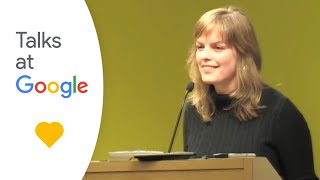
Sasha Cagen collected thousands of handwritten to-do lists and found they reveal who we are. A 1956 teenager's resolutions, someone's relationship pros and cons, the gap between what we write and what we do. Lists are personal history.
Chapters
Hello everyone, and thanks for coming. We have with us Sasha Kagan as our guest today as part of the Authors at Google program. Sasha is here to talk about her most recent book, To Do. From Buying Milk to Finding a Soulmate, what Our Lists Reveal About Ourselves. Sasha is also the author of Quirky Alone and the founding editor and publisher of to do List magazine and its blog. You can bookmark this for later if you're interested. To do listblog.com and her books have been translated in German, Danish, Portuguese, and appeared on cnn, NPR, and New York Times, to just mention a few. In a company such as Google, where our purpose, of course, is to organize all of the world's information, I think it seems only fitting that we would have someone like Sasha come and speak to us about ways in which we can organize our own personal information in our everyday lives and what this can tell us about how our own to do lists provide a unique perspective into into what else is on our minds. And just as a quick reminder, we have a microphone floating around somewhere, so if you have any questions, there it is. Please remember to use the microphone because your questions and answers. This is going to be a very interactive talk, so it's a crucial part of the presentation too. So that being said, let's welcome Sasha to Google today.
Thank you, Tyler and the rest of the team who got this presentation set up. It was a challenge and we made it happen and I'm happy about that. I created this slideshow in keynote which made it a little bit challenging and it has a lot of lists from the book in it and I think that it's going to help us and be fun because the book is very visual and this way you'll get a chance to examine other people's lists in great detail right up on screen. And also I think before we started there was an announcement that you're welcome to share a list of your own. I'm going to talk a bit about the book and show you some of my favorite lists in the collection and talk about how it all got started. And there'll also be a question and answer session during this talk. In addition, I want to invite anyone from the crowd who wants to come up and participate. It's called a list slam. It's the first time that list lambs have ever existed and this will be the third one. There have been two in San Francisco so far, and it's surprisingly entertaining to listen to someone come up and read their to do list. So it could be your list today of things you have to do the things you want to accomplish in a lifetime. Your great moments from 2007, someone read at the San Francisco launch party things that no one knows about me. And he was actually a Google employee. So, anyway, I want to welcome you to Multitask during this talk and compose your list so that at the right time, you can come up and share it. So just to start, I want to tell you a little bit about how this project got started. People always wonder, how did you become the queen of list making? And at the same time, I want to encourage you to raise your hands with questions, even during the talk, because questions always make things more interesting. So this is the COVID of the book, but this project really began eight years ago when I was decidedly going against the tide in San Francisco, and I published a print magazine called To Do List. And. It really began with the idea of To Do List as a metaphor for the things that we have to do to grow up and feel like adults. And this is not the most recent one. Okay, so that's okay. So anyway, it was a metaphor. And what happened was I published an ad in another print magazine and I invited people to send me their lists. And it was really just a lark and not something that I ever expected would amount to much, but in fact, people did send me their lists, and lots of people sent me their lists. And I found that people of all ages were doing it, and I found it such a uniquely absorbing and captivating experience to go to my post office box and reach in into an envelope and find someone else's to do list and pull it out. And I realized that they were really, it was much more than looking at someone's list. It was really almost like. Like reading someone's autobiography, but it was a very skeletal, bullet point version, and that I was left there constructing a story about that person's life. And over the years, I collected thousands of lists, and they were sitting in my apartment in boxes. And, you know, there just comes a certain point where you're like, I just can't keep them to myself anymore. You know, this is just too much sitting in my apartment. And other people need to see these too. So that's when I decided that I would make a book out of them. And what was really cool for me was that when I did this book, I decided that I would interview. I would choose 100 lists that I found to be the most intriguing, and I would interview those people about the moment in time when they were writing that list and what was going on. So it satisfied a lot of curiosity for me, this is just one example and this is the magazine where it all started. So you can see that's actually the first issue. The COVID story, as it were, was Quirky Alone, which was my first book. And then it continued. The third one there is Self Loathing, A resistance Manual, which to do. Lists can kind of help us manage our anxiety, I think. So what I really love about these lists is that they represent such a private conversation that we have with ourselves and the list that people chose to contribute. And a lot of the people who are in the book are anonymous, but a lot are not. To me, it's really brave that they did so because these are things that they didn't expect that anyone else would see. And there's always the ones that I chose and that I really love. A lot of them have like the one weird item, like often something that you could just never accomplish. For me here, it's become whole. It's like, okay, when am I going to cross that one off? The woman who wrote this was in her early 20s. You can see she is a really obsessive list maker. I took a survey in the process of writing the book and asked people all kinds of questions about their list habits. And a certain percentage identify as glazomaniacs, which is the formal term for obsessive list maker. And she definitely qualified because this was in the era before laptop computers. And she would carry around steno notebooks like this and often would spend hours recopying things to get them perfect. So it'd be like, buy mangoes, go to store, become whole, you know, and just such a jumble. And then the other thing that I'd like to point out about this one is that the fifth item is get land and not get laid, which is really a perfect one. This one came to me after I decided that I would do this book. I started a blog, which is to do List blog because, you know, I'm sure a lot of you know about Post Secret. So I started this project before Post Secret existed. But Post Secret really provided a very cool model of how to share things like this on the Internet. And a friend of mine was like, have you seen Post Secret? You need to do this for todoist. So I was like, okay. And a lot of people shared their list with me and sent them once I had a blog and blogger actually has been really supportive and wrote up to do list as a blog of notes. So I think that this one came during that rush. This one comes from a therapist and she chose to Be anonymous. But she does live in San Francisco, and she wanted to send it in because she wanted other people to know that therapists basically are people too. And, you know, you think that your shrink has it all together, but they're actually sitting there across from you in that room, struggling with a lot of the issues you are struggling with. The one that was really interesting to me was I hate having to think about clients in relation to my hair and clothes. And I wondered what that meant. And so I asked her. And for her, it was the fear of leaving her house on a Sunday morning to go get a bagel and coffee in her sweatpants and that one of her clients would see her. And she's since gotten over that, she said, but she says that's a common fear for therapists. It's sort of like being out and about and spotted. This is one that came over the transom in the to do list magazine days. And for me, this just illustrates just the randomness of the brain and just the weird ways that our list items line up. I mean, does anyone want to venture a guess at what the best item is here? It's fairly unmistakable. The combination of due taxes and then call cat psychic was unbeatable and really hard to leave out of the book. And that's the. For me, one of the beauty of these lists is that it's always a mix of the mundane and the meaningful. And, you know, it's just the jumble of things that are going on in our brains at any moment in time. And the other type, Oma's story about passing as Vera for pass, I think in World War II also has this kind of deep, resonant feeling. Oma's grandmother. So, you know, it's just such an amazing mix of stuff up there. Clean Hannibal. You also, like, have to wonder, is Hannibal like the guy in the basement or who is that? This is another list that I love this guy. It just shows to me how we write these lists. Not only our daily to do list, but we write them at pivotal moments in our lives when we're very lost and confused. And we look to list as a way to sort of take control of our lives. This guy had dropped out of a graduate program in clinical psychology, and he was at a loss for what to do with himself. I'm sure, you know, even that you guys have great jobs right now, but I'm sure many of you have experienced career confusion at some point. And he, going through exercises in what color is my parachute? Somehow came to the conclusion that he could Be a shoe salesman, a supervisor, a model, or fashion coordinator. And, you know, it's just ultimately, he went through this very rational exercise of, like, all these numbers, which he couldn't even really remember what they meant, and then discarding the list and going with his intuition, which is just kind of interesting, like we have to go through this rational process. But then ultimately, it's a gut instinct that leads us somewhere. And his job now is that he's a freelance journalist, and he writes for the New York Times and other publications. So it all worked out for him. I mentioned before that I had done a survey about list makers. This is just a little bit of the minutia that I collected. You know, it's just the list idea just kind of brings up this very private activity that a lot of us do. But at the same time, it's very universal and something that we don't often get to compare notes on. So this was just one of the many little questions that I ask people. Most people do cross off their list and can wax very prosaic about why the incredible satisfaction they feel when they cross something off. A lot of people will write down things they've already done just so they can cross them off. That was 50% of people. And then 21% use check marks. I think about 6% make the little boxes. Those people kind of amaze me because they have all this forethought, and I'm sort of just so caught in the excitement of getting it done that it's like, I can't make that little box. I just want to cross it off in a very visceral flourish. But anyway, it's interesting to kind of check in with other people. This is a check marker here. This one I just love because they're just all those sort of annoying things that are so difficult to do. And I think one of the real reasons that I've always been attracted to to do lists is that I personally have a problem with getting done stuff like this. I just hate it. And, you know, for me, it's all about kind of pulling the curtain back on the veil of everyday life. And that we all sort of walk around and feel like everyone else has it together, and they're very adults and they have their jobs and they're succeeding. And yet you look at someone's to do list and you see how kind of crazy it looks and how they've had to write pay bills three days in a row, and there's like, tons of exclamation points around it, and there's just something very comforting and affirming about it. And you see, see how we all sort of struggle with these very small issues like the wart, getting rid of that wart or really big picture stuff too, like decisions about relationships, pros and cons, lists, et cetera. Another interesting little factoid that I came across is the fact that a not insignificant number of people keep their lists in code, mostly women. And one funny factoid that came up was that it would often be about tampons or birth control. And they would be at work making lists and they didn't want a co worker or boss to come by and see that it was birth control. So they would write bc, which you know, is something I never considered. But it's interesting. People create their own codes. You know, one of the lists in the book, this woman was really proud of a code that she came up with. 10x meant thank you. I was like, well, you know, I would never think of that. But she was really happy that she had kind of created her own language for a to do list and it was her own little thing. So it's just, it's funny how a lot of our creativity comes up in this daily list making. It's often the only time we're handwriting. So it's the codes, the doodles. Like a lot of the lists in a book are like, wow, it probably took you as long to write this as it did to do anything. So this is very classic. I'll just let you all take it in. So, so, so many of the lists that have been sent to me concern love and relationships. This one is very classic Wayne Worth hanging around for question mark. And I think most people would probably agree not he makes me cry. He's vain and self centered, he's cryptic. He doesn't love me. He says that I need to lose weight to prove that I'm serious about us. He tells me that logic doesn't live in my house. But on the other hand, he smells of Oreo cookies. If I married him, I'd never ever want to have sex with anyone ever again. And we'd have pretty babies usually. I found I interviewed a number of people about their pros and cons list concerning relationships. And I think usually when you get to the point of writing a pros and cons list, you know which way it's going to go. It's just like we have to again, you have to rationalize it first to yourself and make it kind of numerical. But I guess on this end there are more pros. Maybe Than I don't. Maybe they're equal in number, but the depth and weight of the cons is kind of overwhelming. So another stat concerning this genre of list, like a very hot debate and you know, is this whole idea of soulmate shopping especially prevalent in the age of online dating. It's something that I think people did way before the Internet is they would write down their list of an ideal mate.
And.
And it's a list that people continue to consult when they're with that person, when they're deciding whether or not to break up with the person, go back and make check marks. One of the lists in the book is, you know, she kept getting back and forth, breaking up and getting back together with her boyfriend. And so then she went to the list two years later and made purple check marks. And you know, it's like 27 out of 41. And is that enough? It was really funny because a lot of people unsolicited told me when I interviewed them or just in notes they would send me is 70% was the right, was an okay number. That would be a passing grade basically if someone met 70% of your requirements. Which is kind of funny because it's like a C minus. But I guess that's what people feel is enough. Just a couple more lists and then we'll have questions. And the list slam. This one comes from a guy in Oregon and this one is just fascinating to me. He started writing the list when he was 20. You can see ultimate to do list 7, 8, 2006. And then he revised it three years later when he was 23. Skydive, drive an exotic car, buy a motorcycle, restore a car. 69 Camaro, attend performance driving school, visit every continent, live in a foreign country, become fluent in a foreign language, stay in a rainforest at least one week and it goes on. There's part of the list here, but there are actually about 30 items. And he was going through this tough time in his life when he basically was living with his parents. His girlfriend was on him to get a direction in his life. He was just basically doing nothing. And he was coming to grips with something that we all have to come to grips with when we're about that age and that is that we're going to have to get jobs and that's going to suck. And he was like not really ready to accept the reality of a 40 hour work week as an American unless you want to live in poverty. And so he wrote this list as a way to compensate and think like, well, if I can do these things then it will be okay for me to take a job and be a typical American. So, you know, three years had passed and you can't see that the thing that he had done was read a book every month. So that was the one thing he accomplished. And he actually felt kind of good about that. He had done one thing. And anyway, and the whole life list thing is just sort of an interesting trend to me. There's the movie Bucket List that's out right now with Morgan Freeman and Jack Nicholson. And you know, they're on their deathbed, they're both in a cancer ward and they make a list of everything they want to do with their remaining time. And it's just, it's something that has grown in popularity, this idea of writing a list of things you want to do before you die. I mean, a lot of it is interesting to me because it seems kind of delusional. Like things like this, like it's probably not going to happen. Like I want to be positive and encourage people, I want to encourage myself. But I think it's just interesting to me that we're living at this time when a lot of us sort of imagine ourselves as superheroes, that we can do these kinds of things. And it's this sort of escapist fantasy like it was for him, but also motivating and it can work. And this is the final list I'm going to show you. This one is probably the list that made my jaw drop the most in all my years of collecting list. This is the second page and these are New Year's resolutions that a young 16 year old girl wrote in Brooklyn in 1956 at 11:56pm you can see on the first side. And she had saved her list for 50 years. And some of her resolutions are just, you know, amazing. And they sort of point out how they're personally revealing, but also revealing of the time period. I will gossip a little less maliciously with Ruth. I will not eat so much entirely current now. I will not fall into bed without brushing my hair and teeth, no matter what time it is. I will always walk with my head up and not wiggle so much. I will not pay for dates with kisses and I will not go out with icky boys ever. Three underlines. And it was really interesting to interview her about this list because it seems so sweet and innocent and 1950s. But it turned out that there was this kind of interesting doubleness going on in the way she remembered it. Like she wanted to be really cute and kind of walk down the hallways of her high school with her ponytail swaying and look really cute, but not be too cute because of the fear of attack and rape, basically, and that birth control wasn't available at that time. And that what would happen to bad girls who did get in that situation is that they would have to leave school. So, you know, it's just. It's just really interesting to me how these artifacts take you back to a certain time and place and evoke so much more than is even written there, which, you know already is amazing. So let's see, what time is it? Okay, that's great. So I think maybe now, if anybody has any questions, we could do a little bit of Q and A and then prepare for the list slam and it would be great. Anyone who wants to share a list, again, it's quite entertaining.
So, hi. I love this. And I make tons of lists like this myself. And I find that I am sort of more inhibited when I make lists on the computer or any sort of electronic medium versus the lists I make on paper and notebooks because I'm more assured of their privacy in that way. And so I'm just wondering, do you find that when people share lists with you, are the electronic ones sort of more sanitized and more held back or more encoded?
That's a really good point. On the blog, I have this Save the To do list campaign, which is like a little bit ironic because it's like some people want to save the whales, I want to save the to do list. And it's really about saving the handwritten list. And it's interesting that you would observe that people might be more guarded in their electronic lists. I just don't really want to publish them in the blog or in the book because they're boring, basically. I mean, they're boring to look at because so much of the charm and the interest is looking at someone's handwriting and all the personality, that flow flows out that, you know, it's as much being a handwriting analysis, a graphologist as is being a to do listologist. But I think that you might be onto something there, that there's just. For me, there's just something much more expressive about handwriting. And I was actually having this debate with someone yesterday about Franklin Covey and Planners. And, you know, he was saying that that is going to be a dying industry. And I was taking the opposite position that, you know, I don't think it's a growing industry because, I mean, because of everything that's happening here. But at the same time, there's something that's so alluring and important and irreplaceable about handwriting that I think there's just something happens with the brain that's different than when you type. And it's more like a contract with yourself too. There's something about ephemerality of computer, of typing a list online that doesn't feel as solid and as much of a commitment as when you handwrite it in your own handwriting.
Hi, thanks for coming today. I was wondering if you had seen the TV show My Name is Earl and if you had some opinions on it.
I know. So I'm going to ask you just to confirm basically every episode he has to do something on his list.
Well, the, the premise of the show is that he makes a list of everything bad he's ever done to anybody, which is a very long list. And for reasons of karma works through it, trying to compensate. Okay, so it's completely and utterly based around his list. And I was thinking between that and the bucket list, it's sort of interesting. These things pop up in pop culture.
Yeah. And there's another. I mean, I think that there are a whole bunch of them. There's this movie starring Sarah Pauley. I think it's. I'm not going to say the name because I might be wrong, but basically she's also about to die. She's terminally ill and she makes a list. I just read this really cheesy book where a woman totally changes her life by writing a list. It's like I'm going to become a non selfish, thoughtful person and the next day it's like magical. It's like, wow. Lists are really powerful. But I think it is true that they're definitely a great device for telling a story and especially change. Like you mentioned with My Name Is Earl or the book that I just read. And of course we all wish it were that simple, you know, that you write the list and it magically happens. But I do really believe, I mean, I don't believe in like the simplicity of a book, like the Secret, which is, you know, crazy, that everything you put out there as an intention will come true. But at the same time, I think that there is something quasi magical about the focused energy of writing something down and how, I mean, for me it's like the smallest things, like, I will wash that cup. Okay. I will wash that cup. And now I'm going to go do it. There's just something that. The preamble to. Action. Hi.
So a lot of the lists, or I guess with the lists that you have shown there are some that are targeted around a specific kind of genre of activities and others that are a mix of taxes. Cat therapist. Going back and forth, do you have any sense of how many different types of lists people are keeping at one time? If they're writing lists for different activities or different genres of things at the same time, and if so, how many?
Yeah, I mean, it's. I think for a list maker, it becomes challenging. Like, where do you keep them all? And one of my friends is a really amazing list maker, and I actually, because I'm totally in this list mode, she came over on New Year's Day and we had this collage party where it's like, pick out all the things you want to manifest in your life and make a collage for magazines. But before that, it was a topic of, like, how many notebooks she had and how to organize. Like, this is the baby notebook, this is the ideas notebook, this is the daily notebook. And she was really struggling with where to keep all her different lists. And each person, I think, is completely individual. There are systems out there, like, I'm sure a lot of you are familiar with getting things done and other sort of productivity gurus that give systems for people. I don't really relate to any of that. And for me, it's just like the list is very much an expression of each individual's brain. And the way the items come pouring out and where they pour out is sort of a reflection of that. So, I mean, I don't have numbers, but I can tell you, I mean, if you look on the blog, you can see the incredible variety. And I always wanted it to be all kinds of lists, not just to do. Because it's just an incredible accounting of life, whatever the content is.
Hi. I wanted to feed off of that, and I was in Flax in San Francisco and found a book, like a journal of lists so you could make your own. And it had sections, and I really wanted to buy it because it had, like, my favorite restaurants and then places I need to travel and then, you know, shopping list and other people are trying to think of ways to organize them. And I thought it was great.
Yeah. Yeah. It's a great gift, too. Any other questions or does anyone have a list? We can intersperse questions and lists, too. So either way, I want to point out that there are two list slams coming up next week in San Francisco. There will be one Tuesday night and Thursday night at bookstores. The first one on Tuesday is at Modern Times, and the next one is at Red Hill Books on Thursday. So I just want to make sure that everyone knows about that. If you don't get to read your list today, you can do it tomorrow, next week. Any other questions? Questions? Lists to share.
So you mentioned that there was a neurosis or pathology or whatever for people who create lists obsessively or too much. What do you, what do you observe? Are the patterns of sort of useful and helpful list making as opposed to pathological? Like when are, when is list making good to people? Good for people as. And when is it bad for people?
Right.
For lists that you like? Some people I do this, I will write lists and then I'll never cross the things off. And that can be sort of oppressive in some ways, like because now that it's on paper, I feel like I'm accountable for it, even though maybe it's not important anymore.
Right.
I think that kind of points to the core issue is that when you feel like the list is in control of you as opposed to you being in control of the list. And it's that. Yeah, it's that idea that once you write something down, you're a slave to it and you can't sort of rationally evaluate whether it's actually important or not. I mean, and then, you know, objectively speaking, it's like when you're spending a lot more time tending to the list than you are actually doing anything on it. You know, definitely obsessive. Recopying to get the list perfect is I think one of the hallmark traits. And it is part. I mean, when you look at the OCD and the dsm, it is one of the things that people can be obsessive about. Checking the stove, you know, hair pulling, list making, you know, so you can kind of go over that edge. And the woman who wrote the become whole list, she really was an obsessive. She was sort of like pathologically obsessive. And she's had, she had to take like three years off list making. Yeah. And now. But she loves writing lists and now she, she's successful as a. She does a non profit for women in prison and she writes a lot of grants. So she gets to write lists and the grant proposals and she loves doing that. And then she also teaches life skills like list making and planning to women in prison. And it's amazing that all these things that are sort of intuitive and natural to us aren't necessarily to people who haven't learned those skills. So for the women she's teaching, writing a list is like sort of a really Revolutionary kind of behavior.
I have a quick question. You sort of touched on it already, but with all the people you've interacted with and the lists you've been given and the sharing of their information, what's.
The worst thing that ever happened? Has anything bad ever come out of this? Oh, that's a really good question. And there really is an answer. And I have to kind of calibrate how much I can actually say, but I'll just tell it in general terms. I was given some lists, like, eight years ago that were amazing, that were, like, my favorite lists that I've ever gotten. And they were written by a teenage girl, and they were given to me by an adult who knew her. This is really creepy. I've actually never, like, told anyone but a few people about this. I had to. I did some Googling to find out about him and her to get permission for the book. And I found out that he had actually abused her and taken those lists in a way that, you know, it was just very suspect. And it opened up this whole story, you know, when I read all this stuff and I. And it was like, wow, this is kind of scary, you know, having these artifacts from people's lives. And I think you're right because you just don't know where it's going to lead. They're very. They're these sort of mundane pieces of paper, but the energy they have in them is really great. And it, you know, it just leads you to a lot of unexpected places. Other questions that are more cheery? No. Okay, maybe not. Well, it might be hard to read a list in the workplace because it's kind of like a private thing. So, you know, everyone is definitely welcome to come in the outer net of San Francisco next week. The information is on to do listblog.com, it's at Tuesday and Thursday night. And I'm happy to sign books and. Yeah, thank you all for coming.
More from Guy


Cheryl Strauss Einhorn | The Human Edge: Smarter Decisions in the Age of AI | Talks at Google



Rachel Glennerster | Innovation and the Center for Global Development | Talks at Google

Rebecca Winthrop | Rethinking the Purpose of Education in the Age of AI | Talks at Google

Dr. Robert Wachter | A Giant Leap: How AI Is Transforming Healthcare... | Talks at Google



