Tu David Phu | The Memory of Taste | Talks at Google
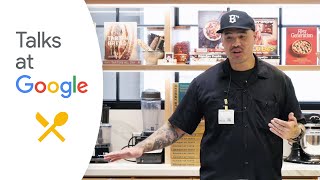
Chef Tu David Phu grew up in Oakland with a fishmonger father and gardening mother, experiences that shaped his cooking. He demonstrates how to grade fish sauce by nitrogen content, a key umami indicator, and shares two dipping-sauce recipes from his cookbook about Vietnamese American food.
Chapters
All right.
Hello, everyone. Welcome, and thank you very much for being here with us both in person and for those of you guys tuning in virtually as well. My name is Oscar Yao. I'm on the Capital Markets and investments team here at Google. And today, in partner with Food Talks and the Asian Google Network, we're very excited to bring you a very special talks at Google with Chef Tu David Fu. Now, a couple quick words about our guests. Obviously, he's an acclaimed chef restaurateur, currently serving as executive chef at Gigi's Wine Lounge. But also he is a television personality. He is a filmmaker, producer, and of course, author of this amazing book, the Memory of Vietnamese American Recipes from Phu Quoc, Oakland and the Spaces Between. Chef Tu is a SF Chronicle rising star chef. He's a alumni of Top Chef. And I think you hosted the ABC's Taste Buds Chef's Giving, which was nominated for a James Baird Award, and your documentary, which you also produced, First Kitchen Bloodlines, was nominated for an Emmy Award. Wow, that's so cool. I know you guys are really, really excited. So what we're going to do today is have a few moderated questions to begin with, then I'm going to hand it over to Chef Randy, who's the culinary manager of this beautiful teaching kitchen here at our SF offices, and they're going to go through a bit of a cooking demo, and then at the end, we'll have time for audience Q and A as well. So without further ado, please welcome Chef Tu. How are you doing, my friend?
Roscoe. Thank you.
Welcome. Thank you so much for being here. No, it's great. And I know we just heard a little bit about your bio and all the great things you've done and the things you're doing, but I'd love to maybe run it back a little bit. I understand that this book also doubles as a little bit of a memoir for yourself, and I'd love to maybe ask about your relationship with food growing up and maybe get into a little bit about how growing up, cooking and eating was a great way for you to connect with your parents, especially about their past and stuff as well. So maybe you could start with that for sure.
For reference, I am a first generation Vietnamese American. My parents, as refugees, come from Vietnam, obviously, and we landed in Oakland. I was raised in a food insecure community, but always had a passion about food. I think a lot of chef stories that you hear come from people's individuals identities where they love food, because there is an. There was an abundance of it. My Story is the polar opposites more from a place of humility, a humble place where we were food insecure. What food insecure means, just to be very clear, is that in my neighborhood, opposed to having grocery markets, they gave us liquor stores. So fresh food was limited access for me as a child. And because fresh food was limited access for me as a child, my mother, through her thoughtfulness and through her love for her children and her family, curated a beautiful garden. And one of the things that I love the most about fresh produce is I'm sitting on the table. Now, my first interaction with something fresh was mint that was grown from my mother's child. I mean, from my mother's garden. Excuse me, mother's child. For reference. For most of my friends and child. For most of my adolescence, kids in my neighborhood, if we referenced orange, they wouldn't pick up a piece of fruit. They would reference the orange soda or the orange fruit punch you would get at the corner store. So that for me, what my mother did for me broke barriers for me from what I saw, my reality to what she offered. And because we were food insecure in the community that we were. In moments of joy, as hard as my parents worked, my moments of joy is associated in the kitchen. I think that's one of the most beautiful human things you could do for another person. No matter what era, what time, what politics, where you are in the ladder of life. If you cook for somebody, if you make something delicious, the automatic human instinct is if you love me. Right?
Yeah. I think that's one of the things that really transcends all barriers. It's such a human thing, and I love it. And by the way, I think mint is the perfect way to get introduced to this world. It's fresh, and it's also easy to grow.
In my view, it's an icebreaker. Is that an herb breaker?
No, that's awesome. And I'd love to get into that a little bit more. You mentioned your parents had to be resourceful growing up, but then you were trained at Le Cordon Bleu here in sf and you worked at multiple Michelin star restaurants and stuff.
So shout out to Ocarello Chef Suzette gresham there for 30 years. Two michelin stars.
Yeah, let's go. Yeah.
So one of the first, she was part of a group with Dominic Kren in the restaurant Aquavit. The chef. I forgot her name. I apologize. I'm so sorry. But Aquavit, it was Dominic Crenn's restaurant. And Alcarello, I think we were the first three to acquire two Michelin stars from Michelin came to North America.
Wow, that's amazing.
Right? And I was part of that team.
Very proud to be Aquavent the one.
In New York or Aquavet the one in New York.
Nice. I grew up in Sweden, so I'm a huge fan.
Swedish meatballs. Yeah, let's go.
That's what I'm talking about. But I'd love to see how do you bridge those two worlds and the work that you do today and the recipes you make from, you know, this very high class fine dining training and bridging that with growing up in a, as you mentioned, food insecure and stuff over the years.
And what I've learned over the years is every topic, every industry could be studied. For me, I studied food not just as a chef, but as a storyteller. And I learned that working in world's top 50 restaurants, Michelin restaurants. I started to see the knowledge and value. I started to connect and bridge. The value and knowledge that my mother was teaching me was in line with what you would see in high end kitchens where they were sustainable. My mother was practicing circular economies in her own yard.
That's right.
My dad would bring home. My dad was a fishmonger here in Pier 45. I am Bailey of bread. Like, for real.
Yeah, yeah, Barrett, I love it.
My father is a long, a career long fishmonger over here at Pier 45, Fisherman's Wharf. Yeah. My mother was a seamstress. I'm very proud that my sister and I helped them retire. Very laborious work.
That's awesome.
But you know, given that. Note that.
Sorry, what was the question in the work that you do now, how do you bridge these two different ways?
Oh, got it. How you bridge. So my father would bring home fish scraps, fish heads. Once again, we were food insecure to nourish our family. Like delicious, delicious salmon. Right? Like. And the parts that we couldn't eat. My mother would take all that amazing potential carbon, all that nutrient dense, high calcium things for that fish, put it back into the soil. Just note for the record, you got to bury it three feet under. Because if you don't raccoons, you're going to dig it up and get a bunch of flies. So don't do that without digging it under three feet. Don't go to your family members like, oh, I dug this in the yard because Chef Tu told me to do. We're trying to implement a circular economy.
Well, for the raccoons, I guess for the raccoons.
Right, yeah, yeah, but she was. My mother only had a, I think fifth or fourth grade education. My father, my mother found out my father couldn't write his own name. And the only time she knew that was when they seeked asylum. Right. And this at 18 years old. So they prioritize education, but that doesn't discount their intelligence in any shape or form. And I learned that I had this prejudice, this discrimination against my own parents because they prioritize education so much and they didn't have education that I thought that they didn't know, but comes to find out that my mother inheriting, just like all of us here, no matter who you are, where you come from, that their knowledge, even though not academic, they didn't inherit it academically, they inherited multi generation passed down. Word of mouth is just as valuable. Right. And I'm learning that just like these recipes that I write in this book that I got from my mom to recipes that I get from Michelin star chefs and kitchens, that great ideas can come from anywhere.
Yeah, no, that's, that's beautiful. And actually speaking of your parents, I was wondering like, you know, with the, you mentioned they were prioritizing education and stuff, how when did you know you wanted to be a chef? And did you always have the support of your parents growing up to pursue this?
Iron Chef Japan satellite tv. I'm giving away my age right now. What is it, 1997, 98 is when we started to get Iron Chef Japan, the non English speaking one.
Got it, Got it.
I think those dudes are so cool. And the reason why I thought they were cool is because I knew the power of food. What my mother did for me, she could make me feel happy, she could make my day feel better through a dish she would cook right for me. I didn't associate birthday parties with gifts. I associated birthday parties on what my mom would cook for me. Right. That's my relationship and affinity with food. And because I saw that my mother was a superhero, even though she was a laborer, even though she was a woman who got paid under the table, even though in our society we value people, we value women on how much they get paid in society, which is a double edged standard. But because my mom made me feel good in that sort of way. Like she was my. She was my superhero. Yeah, right. And then I saw that in chefs, I was like, wow, Chefs can be regarded as people who cook food and make people feel good. They can be regarded as like this amazing celebrity figure. Exactly. I'm like, I want to be that that's super cool.
Were they always supportive of you pursuing this?
Nope.
No.
Who can relate? In the room, you raise your hands like parents.
Not surprised.
Didn't agree with. I feel like all of us in this room, we are very blessed to have the opportunities that we have to be in this room to live the lifestyles that we have. It's completely different from what people imagine life would be. Consider what successful is 20, 30, 40 years ago, like Silicon Valley, tech, San Francisco, people couldn't imagine this being what it is now. 30 years ago.
Exactly.
So my mom was like, you don't want to go work in an office. You don't want to be a doctor. You don't want to be a lawyer. I'm sure you guys can relate. In this room, she's like, I risk my life. We immigrated here for you, for a better life. And she's like, a chef isn't a better life. But, you know, I was stubborn.
No, you. You got through to her. I guess food.
Food influenced me in a way where I had this conviction that not only can I be happy doing the show, but I can impact other people's lives by doing the show. To me, it was spiritual.
That's really powerful. I love it. In preparation for this, I looked up on Google definition of a recipe. And it's basically just a list of ingredients and how to prepare a meal. But I'd love to hear your definition and how it goes so much deeper than just what's on a page. Tell us about how you feel.
Recipes are a little bit more intimate. For me, a recipe is something where you're inviting people into your personal space. And I'm telling you a story of who I am and what I taste, what ingredients I use through an instruction. It's way more intimate for me.
Absolutely. No, I totally relate with the storytelling aspect. For me, that's what drives me. I'm also a musician, and in my investment times, it's all about sharing my story with everybody else 100% and through food. That's one of the most powerful ways to. To share a story and invite you.
I feel like sharing food recipes is a way to break down cultural walls. Cultural divides.
Yeah. And on that note, like, obviously we mentioned you're outside of the kitchen. You have so many other endeavors as well, from media to being an author.
I'm curious if you ask my wife, it's too many.
Well, that was. You know, I'm not your wife, but I want to ask you as well, what, in your view, is the ideal blend in Terms of what you want to do, both in terms of the work that you're pursuing now as well as the impact that you're having. I know you also, you know, you're advocating for democratization, for access to food and stuff. So how do you see the work that you do in the Basic Black?
Every time I'm in front of an audience like this, or any and all audiences, no matter what age, specifically children, I am very loud and clear that to everyone that I am not self made. I'm the result of investment from teachers, after school programs, libraries, nonprofit organizations, mentors, so in no shape or form. And I'm self made. And I recognize that from the very beginning. And I feel that the work that I do, everything that I have my hands on, I'm blessed with opportunity and skills 50%. And because of that, I feel like this responsibility as a citizen of the earth. Right. If I have opportunity to do this project and create something and help assemble a team where I could impact their quality of life by paying them a livable wage and doing something cool, creating a journey for this collective team or the polar opposite, where if I could go into San Quentin prison, which I did, not as an inmate, not as everyone. As a volunteer. A volunteer. People always like you in jail. No, no, no, no. As a. As a volunteer working with incarcerated men in a rehabilitation program called Quitting Cooks and learning that no matter how many tattoos you have, what type of criminal background you have, or what mistakes you've gone through in life or what journey you have, when you eat food, it's going to make you happy, right. Or if you cut your finger, you're going to say, ow, right? Those universal, yeah, childlike human moments that stick with us forever. So for me, whether it's a film, a cookbook, a show, I feel so lucky to be blessed with these opportunities. And those opportunities only come to light once again because of the people who are behind me and supported me in this way, including my parents. Right? Yeah. So if you. Everything that you hear me see, it's not because I'm a good writer or a good speaker or whatever, or I can cook. I'm the funnel of everything, everyone that has invested in me, Right. And I'm the megaphone to speak that out. That's all it is. My. My projects and opportunities, I didn't pick that trajectory. It's because they put fuel behind my back. Right. They created. They created a cushion behind my back so I can move forward. And once again, I didn't come from privilege. I have some Privileges. But I didn't come from privilege. It. Those resources that made me feel privileged, that gave me privilege for these opportunities. So. And I would never thought. Kid from West Oakland, you know, I. I have a. I get emotional, but I have a survivor's remorse. Right. Is that I have a friend that passed away last month. Right. From X, Y, and Z. And I wake up every day, and it continues to happen because I come from a neighborhood that exists in. That continues for the rest of my life, where I lose friends left and right because of X, Y, and Z. I have this very conscious effort that we wake up every day, we have this opportunity to be alive. I have this opportunity to do the work that I want to do. I have this opportunity to change people's lives. So for me, it's not about. I want to be a writer. I never thought I would be a writer. I never thought I'd be a speaker.
The writer life chose you because you were in this.
You know, to be fair, there's. There's a huge discipline of writing where people go to Harvard and Yale, and I'm not an academic writer, but I am a cookbook author.
Yeah.
So I want to make that very clear. But there's an aspiration to get there. Right. I feel like the sky's limitless.
Right. Yeah. No, it's an extension of the storytelling aspect and being authentic and stuff.
Of course.
And on that topic, you know, I read that you've described your recipes as almost inauthentically authentic, and I'd love. And I'd love to, you know, explore that topic a little bit, because I feel like I've been falling into the trap of, like, putting something on a pedestal just because it's like, oh, it's super authentic and stuff, whether or not I truly enjoy it or not. But I'd love to hear your thoughts on what is authenticity to you in the lens of food.
You know, what's funny is that I'm a walking contradiction in my Vietnamese community because everyone's like, you're too tall to be Vietnamese. I was like, what does that mean? But as we start to understand our genetics and our lineages, we find out that especially in countries that have war or that have been colonized, you never appear anything. You know, Fun fact, I am 15% Finnish.
Finnish.
How about that maternal side? I called my mom. I was like, who did grandma sleep with? You know, but, you know, I make a joke out of it, but we don't know what the story is. Right. The truth of the matter is not to make it dark. But when there's war, women. Women are the victims. They become victims of war. Right. And I think my grandmother could have been a victim before. She just never talked about it. And that's another reason why it makes me more a fan of our matriarchs. My mother. There's all these, like, hidden stories of strength and power, but they don't speak about it because of the trauma. But it's my job not to trauma bond. My job to be like, you're motherfucking. Excuse me.
Okay.
Hey, Oakland, right? So.
Exactly.
Exactly right, mom, you're on a pedestal. You. You came up on these shores, you kicked the door open. Right? We're not refugee immigrant, like, crawling to the shores, begging. They came here, they kicked the door open, like, we're here. And then she gave birth to me and my sister. We're good. We worked hard. We're here. Right. So. And I think because they didn't tell their stories, I feel that it dehumanizing. So it's my responsibility as her child, my responsibility as a citizen of the earth to tell those stories so they can be healed, humanized. Right? Yeah. Right. Everything I do, whether it's enterprising community storytelling, it's a responsibility. I feel like the community that I was in sparked that inspiration in me. Right. That's what my measure of success is. I don't care for the accolades. You go f yourself. Right.
Yeah. So, I mean, so what's your. What's your take on, like, I guess, in general, fusion food and, like, you know what?
We're all fusion.
Yeah. But in your view, like, sometimes when we see these in the media, it's like someone's gatekeeping and stuff. You think of, like, Uncle Roger, somebody.
That'S trying to enterprise on a cultural moment, fine, go and do it. Right. If people love it, great, because you're creating something that people enjoy. But I think it's a contradiction in 2025, because we start to learn that a lot of cultures are. There's a lot of bridges to all of our cultures. There's some sort of connection. And even if you never had fermented crab paste before, doesn't mean you won't enjoy it. Right. I think it's just different ways to get. I don't think we should be defining ourselves by ingredients, but there's cultural bridges on the way things taste. Yes. Right. And that's what this book is. Right. There's Korean influences because we had a Korean neighbor that live, I think, two, three generations in Vietnam. Enterprising ginseng in Vietnam. The war happened. The Vietnamese American war happened. So she came a Korean refugee living in Vietnam, displaced into the United States. She happened to be our neighbor. She spoke 100% Vietnamese. Wow. No hesitation. I'm a five year old. I'm like, she's gotta be Vietnamese. My mom and her bond of friendship. We shared meals. She taught my mom Korean dishes. Wasn't until I was like 17, going to culinary school, I was like, mom, what's that Vietnamese dish you do with the anchovies and sesame on it? She said, son, that's not Vietnamese, that's Korean. I was like, how'd you get Korean recipes? Like, our neighbor was Korean. I was like, she's Korean. So, yeah, to me, does that make me less Vietnamese? Because that's part of my. That's all. Fusion happens naturally. You wouldn't have spaghetti and meatballs. You wouldn't have pizza, you wouldn't have pho, you wouldn't have banh mi, you wouldn't have fried chicken. You wouldn't have any of those things. If we didn't say hello to our neighbors and shared recipes.
Totally.
What would. What would Indian cuisine be without Silk Road? What would British speed without. Well, the British Indian, you know, British Indian trade. What. What would. What would Japan be without Chinese diaspora in Japan? What would Hawaii be without the Japanese migrants working the sugar plantations? Chinese as well, Portuguese as well. Anybody from Hawaii. All right, Malasa. We wouldn't have malasadas, which are like the Portuguese donuts.
Oh, they're so good. I love it. Yeah.
So like fusion. Yeah. There was a time where there was the DMV style checkboxes of identity and culture. Right. It made sense to have fusion then because people didn't understand identity, culture, and foods. Now everybody's cooking everything. Right. And that's okay.
I think I was at a. Was it raw sugar cane? Raw sugar factory. It was like half Thai restaurant, half brunch spot. And I was like, oh, my gosh. Yes. We need more like this. It's just. You can get whatever you want and go there with everybody. Yeah. Another question I had just, you know, just in terms of, like, sometimes I actually, in your view, when you go to Vietnam now, I'm sure things have changed a lot.
Nothing's authentic there. Yeah.
No, but when you compare that with some of the recipes that your mom were making, like, how has the food in Vietnam developed now? Is it more?
That's a great question. The recipes that my mom cooked is stuck in her era of existing there compound. It with her new experiences in diaspora and compound it with our visits back to Vietnam as a family. Right. When she was a kid, they didn't have. They had this dish called pho. Pho. Pho. Pho. Thailand. People say Thailand. It's not Thailand. Pho. Thailand. Average Southern accent, anybody? Vietnamese. Average Southern accent. Hey, don't. Don't judge me on my accent. But basically, it's wok, seared beef, and then you put it on top of your beef bubble.
Oh, man.
And that's a new thing that's only been around for a few decades. It's not traditional, but it's delicious. It tastes authentic, but it hasn't been around forever. So, like, we need to allow for innovation.
Absolutely, yes. One last question for you now. What's a typical week like for you? What do you like to eat? Do you make stuff yourself? Where do you go out?
So my wife is a chef as well. She's way better than I am.
You guys are so lucky.
Yes, I'm very lucky. But she. It's her kitchen. It's her. It's her realm. She's. And I'm a professional chef, fine dining, Michelin. She'll be like, babe, you left the sink to there. I was like, I'm sorry, but it's her realm. And when she has requests for me, so I'm the. As a husband, I make the pho, the bumba way, the bun, brio. But the daily stuff, she likes to keep her household staples to, like, very healthy. We are pescatarians at home, and upon request, we start, we eat the chicken, beef, and the other dishes.
Got it.
Getting older. Y', all, like, trying to, like, lower cholesterol, you know, like, all that stuff.
Yeah, no, I know all about that as well. And lastly, like, aside from Vietnamese cuisine, what's your sushi?
Sushi. Sushi.
Sushi. All right.
I love sushi. I eat sushi every day.
That's healthy as well. Perfect.
And I just have to say, in Japan, I made it a mission to find horrible sushi. I couldn't find it. I did all the conveyor belt sushi. I'm like, this is gonna be horrible. I know it now. It's amazing. Even the conveyor belt sushi. Right. Just a different standard.
Awesome. All right, let me pass it over to Chef Randy here. Are you on my chef?
Okay.
Alrighty.
Cool.
That's always great to see. Good to see you again. Thank you very much for coming to this class today with Chef Tu. Huge thanks to you for coming out, for doing this. I'M Chef Randy. For those who don't know me, I've been on this campus for the last seven years. Happy to call this my home. And we do classes every single day, multiple times a day. So if you are in the area, come on, take a class with me. So we got a very special demonstration planned out for us, talking about fish sauces. In going through the book, you listed out or you wrote that fish sauce is an identity.
Oh, yeah.
So I really wanted to touch a little bit more on that because I think that that's really a cultural identity and that, that, that makes a lot of sense when going into generations deep of fish sauce making. So, yeah, let's hear a little bit about the history of your family and, you know, fish sauce making for sure.
So my family is from a region called Phu Quoc Island. And if I could do Google Team, can you, like, apply some AI graphics with my hands? I'm just kidding. So Vietnam, if you think about the geography, it's very similar Italy, it's long, narrow, a lot of different prefectures from deserts, from mountain ranges. Inland is more mountainous regions and valleys. But as you move along the coast, there's a huge coastal line. Our island, Phu Quoc, exists southwest of Vietnam at the very bottom. And that island is actually in the Gulf of Thailand, South China Sea, where the Gulf of Thailand intersects with the South China Sea. And geographically, we're actually closer to Cambodia. Right. If you go back about, I think 70, 50, I say 50 to 60 years. I believe that territory, that island is actually was actually allocated to Cambodia. It was a Cambodian island. And it's only through the withdrawal of the French. So longer than that. Wait, this is not 1995. Sorry, I think it's 70 years. 70, 75 years. But the withdrawal of the French, they decided to give it to Vietnam because it was conveniently drawn on a map to give territories back to people like, super stupid. But the Cambodian is a Cambodian. The island is Cambodian rooted. My family has Cambodian roots with integrations of Vietnamese identities and peoples into our family. And on that island, that region, it just so happens that the biggest and the best friends of black anchovies swing right by our island out into the Pacific Ocean. Right. And what do we make with black anchovies? Fish sauce. Fish sauce. Yes. Yes, Mom. Thank you. And anchovies or black anchovies are a great thing for your diet because it's high in protein. As you know, most Asian staple foods. Most Asian staple Asian diets are vegetable heavy because they're farmers and Then rice. Heavy, but they need to be supplemented with rice. Where's the protein coming from? Especially on our coastline, it's either fish. But we found that anchovies have very high in protein. And because they're high in protein, they devised a very special way to preserve it. They found out that if you put salt into anchovies, the anchovies, the protein, the bones will start to break down. What's the building blocks of protein? Kids. Not kids. Googlers. Come on. Chemistry. 10th grade. Building blocks of protein. Amino acids. Yes. Beep, beep, beep, beep, beep. DJ Khaled. Sorry.
Yes, sorry, I had that.
So the salt breaks down the anchovy. Lots of amino acids. All those amino acids are existing in this beautiful, golden, delicious liquid. Right. So in this amino acids, you have the building blocks of protein. As you start to cook, recombine it with other things, those amino acids come back together to become a protein. Right. So in theory, that's why. Not in theory, but scientifically, that's why people use fish sauce. You're trying to add. What's that U word? U word? Umami. Yes, yes. And because this is a highly prioritized thing, and we love the taste of this in Vietnam, for us, this defines not just our palates, but defines the region because we have access to this amazing ingredient. You go to China at soy sauce. I'll show you. Right. You go to the Netherlands, it's ferments like cabbage and sauerkraut. You go to South America's chilies and what they do with sauce. Those things identify the cuisine, identifies the palate on how people eat. And those things are basically the scripture of societies and how they feed themselves.
Absolutely. One of the things that I wanted to talk a little bit about is like, certain fish sauces belong in the kitchen. And then there's other fish sauces that may not have its place. Is there. You describe in the book that there's like a champagne of fish sauce and some other quality variations in fish sauce. So tell us a little bit about what we should have on our shelves. And you know what? We shouldn't.
Fish sauce should be treated as. We should reference the fish sauce the same way we reference olive oil, a combination of olive oil and wine. There's different prefectures of fish sauce productions the same way there's different prefectures for wine. Why? Because fish migrate. Right. The reason why Tokyo and Japan has the best tuna is because that is the perfect maturation age of their migration. I think they start off from South America, go up through The Atlantic, past the east coast, past Italy and Spain, over the Arctic, and then they land over to Japan and Hokkaido, into those icy cold waters. And by the time they get to that side, through their migration, they have eaten a very diverse diet. In the fat ratio, in comparison to their maturation, is the perfect tuna, right? Same thing with black anchovies, right? We get a huge run of them going past our island. And historically, that's always been the case. And because we have this abundance of anchovies at that maturation with whatever they ate, plankton or whatnot, it's the perfect anchovy to make this delicious, beautiful fish sauce. And the different grades of them. I know, I know, I know. There's three crab. What's another one? Squid. Let me give you guys a hack, and you can do it at any grocery store. I would love to promote Sun. Good friend of mine, he makes fish sauce in my island prefecture in the style that my family and I are used to. This is. To me, this is what fish sauce is supposed to taste like, right? It's the perfect balance. It's nostalgic to me. There's also red belt. Red belt is also made on Phu Quoc island, where my parents are from. But their style of fish sauce is more westernized. They prioritize protein and amino acids, so it's super umami. But if you gave red belt to a Vietnamese person in Vietnam, they're like, this isn't fish sauce to me. Red belt's not bad. Red belt is exactly what chefs want. They want the concentrated, deep, dark flavor, which isn't a bad thing. So there's different purposes for everything. It's like the comparison of, you know, driving a Lexus versus a BMW or Toyota versus a Honda. Right. It just serves different purposes for different. For different types of people and how they like to cook. And then there's squid and three crab.
Mm.
Squid and three crab. If you look at the back label, fish sauce should be only made with two ingredients, and that's anchovy and sea salt. Should never have sugar, should never have flour, should never have yeast. All those things are fillers because there's a lack of flavor. It should never be made with anchovy extract. Would you. Okay, would you buy a ice cream bar that's made out of lemon extract or fresh lemons? Am I alone on this? Fresh lemons or a lemon extract? Fresh lemons. So why would you make. Why would you buy fish sauce with anchovy extract? You know what anchovy extract is? It's A byproduct. It's when people catch anchovies and no one wants to buy it, they further process it. This not fresh catch anchovy, they process it to sell it into the industry. So people use it for other things, right? The way fish sauce is made is they catch a huge net of anchovies, right? And they filter out anything that isn't anchovies. If anybody says I have crustacean allergies and I don't do fish sauce because there might be crab in it, that's number one. That's prejudice. Because you're suggesting that Asian peoples have a lower standard in cooking food. But all fish sauce companies, right, because they're making fish sauce, they're going to take anything out that isn't anchovies. It's going to ruin the fermentation process, right? So they take that, they take that out and it's always anchovy, right? And if they're going to do crab fish sauce, which they do, they do with crab, they do it with. For squid. Fish sauce. Do with squid, right? So they take those things out, they catch the fish, they salt it immediately, right? To retain the freshness, all those precious oils it needs to be contained. And then they put it underneath the ship where it's ice and cold, right? And then from there they immediately make fish sauce into it. What that means is they put it into these huge barrels with these specific type of woods. Don't ask me the name of the wood because I can't pronounce the name of the tree, right? And then they age it for one month along this journey of 12 barrels or 15 barrels. Each barrel lasts for about a month. And they siphon it as a form of purification from one barrel to another, right? And this happens in a closed warehouse. And because of the humidity and the temperature of that room, it's the perfect fermentation process beyond the salt breaking down the anchovy. And in addition to that, there's an evaporation process that happens where water evaporates over the course of 15 months. This sunfish sauce is aged exactly for one year. So this is 12 months, right? And for me, in my household, the way we use fish sauce is we look at fish sauce first, we look at the ingredients. And this is like a staple everyday use pantry fish sauce. This is aged for 15 years. I mean, 12 months, right? And stuff like Red Boat. That's like a finisher, right? Because it's high in protein, it's probably aged, the concentration is more high. And what you see on their fish sauce bottles. Sunfish sauce has those bottles as well too. Is that you see a number on there with an N and a degree. It's not in this bottle today, but it's, I will say like 32 degrees N 42, 45, all the way up to 50 and 60. And what that suggests is that it's a super concentrated, oftentimes aged fish sauce. And that number is a reflection of how much protein is in that bottle. And remember I mentioned amino acids. So Vietnamese food scientists in Vietnam found out that because there's a lot of amino acids floating around this bottle, they emit nitrogen. If you measure that nitrogen that is emitted from a fish sauce bottle, you'll get a number in the form of a degree. The higher the number, the higher the umami in amino acids, right? So the haramami, it's great, but just like olive oil, right? Evo, like Rachel Ray, right? Evo extra virgin olive oil, the purest of olive oils. Extra virgin means it's the first press. So you're getting all the delicious first pressed fats from olive oil from olives for the olive oil. So traditionally, chefs would use that as a finishing olive oil because you don't want to. You want to taste all that freshness, you want to taste all those oils in its virgin pure form. So that's why they use it as a finisher on dishes and they use it as a salad dressing because you could taste it the moment you apply heat to it. Not that it will ruin it, but be your waste. So they use a second press, which is just regular olive oil. So same thing with fish sauce. You want to use the ones that have a lot of umami. You want to be able to taste it on its own opinion, right? One opinion, right? I would suggest that you want to taste it on salt. So use as a finisher. So anywhere you would have sushi like aged high nitrogen degree, like 32, 45° nitrogen. Fish sauce with sushi is amazing, right? Japanese sushi chefs do it all the time. In Japan, if you want to season your rice, use the super aged, high quality stuff. But everyday cooking, you need gonna put something into a stir fry. Use this in place to show you, right? And taste to show you in comparison to this, even though they may contribute the same amount and level of umami, they contribute different types of flavors into it. And I think the best way for you to test at home is do with fried rice. Doing pan fried rice, super simple egg fried rice. Try it with shoyu, try it with fish sauce. I have a preference of using fish sauce, but I change it sometimes because it's like, I don't feel like being so Vietnamese today. Right. I'm going to show you. But yes, amazing. I know, like, long way. Very passionate about fish sauce.
Very, very passionate. And it shows that your generations deep into making fish sauce. And for those who you know, I think like for the first time anybody's ever tried fish sauce, it's always like, oof, that's really intense. It can almost scare people away from fish sauce.
So I love all it is is just unfamiliar. Yeah, right. Once you get past and you understand how to use fish sauce, you can get more comfortable with it. It's just like eating blue cheese. We were just talking about blue cheese earlier. Right. Once you can get past the nasal part of it, there's ways to enjoy it. You put honey on it, you have it with toast. But would you grab a big chunk of blue cheese and bite into it? No. Right. So it's about context as well too.
Sometimes.
Yeah. Sometimes it's the same thing with fish sauce. Right? It's about context.
Yeah, absolutely. No, no, that's all context and all good information. So, like, going back into the book, you have numerous variations of these fish sauce dips and everything that for. For different dishes and stuff. So we wanted to kind of COVID a little gambit of fish sauces today in a demonstration just to kind of showcase the different kind of styles and flavors that you can get out of making a fish sauce dip based off of this fish sauce. So we're gonna go ahead and get started and get into the demo now. And then we're gonna kind of talk about each of the ingredients and what they do for the sauce as we put it together.
Awesome.
This is the everyday fish sauce ingredients here. So we're going to kind of go.
Over and when we say every day, it's multi use. Right. It can, you can use it. I've used it on top of eggs. I've used it on poured over rice. I've substituted this for my salad dressing. Super great. Right. I've done vegetable crudites for parties where I omitted the ranch and the creme fraiche dressing. And I use this amazing stuff. And to be mindful of everyone heat levels. My wife is Korean from Hawaii. So our spice level is like, boom. Right? Like, we can handle habanero. Her funny story tangent story. You know how spicy her family eats. They buy ghost peppers in bulk. So most households have like seasoning, salt, pepper, maybe Tabasco sauce. Like Tabasco sauce. Her sister has liquid commercial capsaicin right now. So my heat tolerance is. I've developed the heat tolerance for really high heat. So anything that we use here, feel free to substitute it. If you're not using Thai chilies, you can substitute it for Serrano's. Below that, you can do jalapenos. Below that, you probably even use a bell green bell pepper. Right. It's there for flavor. I don't want to. I want you guys to hurt yourself forcing it. And also, anywhere we're using sriracha or sambal, I've used cholula in place of it because that's all I had. I'm a chef. I'm Vietnamese. Blame me. Right? Like you can. Absolutely. We welcome the substitutions because the point of cooking as being resourceful in what you have in your pantry, right? Yeah. Fish everyday. Fish sauce. Shall we?
Yeah, let's do it.
So let's start off with this. Fish sauce can be consumed straight up as a shot like this. It can be used straight up. But my mother taught me that there's nuances in fish sauce and there's different levels to kind of bring those flavors out. And she taught me that fish sauce is a lot like a whiskey. Right? Any whiskey. I'm not a whiskey drinker, but any whiskey drinkers in the house or from people who are familiar. Wendy, Sashimi. What's up? I see you right there. Yeah, that's my homie right there. So whiskey, especially aged whiskey, you can't drink it straight up. What do you guys do? You have to bloom it. You have to add water to it. You put an ice cube to it. You swirl douchebag right now, but you swirl it. You swirl it. So that way, the concentration of that whiskey can soften up. Right. And you could taste those flavors of what the whiskey is supposed to be. If you drink it straight up, it'll be like perfume. It'll be way too strong. That's what you're supposed to do with fish sauce as well, too. So here I have water. I'm using water to bloom that fish sauce. And oftentimes, way too many times, I get my chef buddy saying, hey, chef, too. I did this fish sauce, put all this stuff in, but it's too salty because it's too aggressive. Remember, it's being fermented. I mean, it was dressed and cured and fermented with salt. The anchovies came from the ocean and had salt in it. It's very aggressive. Right. And we need to add water to it to soften that up to kind of break it away from the salt so we can appreciate the other nuances. So we're doing a little bit of water. All right. There's a recipe in the cookbook. Just follow the recipe.
Yes.
Cook like my mom. Guys, don't penalize me. I'm like, this much. This much, this much. We have a little bit of vinegar. This is probably about. The water is probably about half a cup. This is probably about half a cup, too. You say a quarter cup? Quarter cup.
A third of a cup.
Maybe third of a cup.
Yeah, to be precise.
To be precise. And then we put our. Oh, sorry. Spoons. Yep. And we just kind of throw everything together. And this wants a quarter cup.
A third of a cup.
Maybe third of a cup.
Yeah, to be precise.
To be precise. And then we put our. I'm sorry, spoons. Yeah. And we just kind of throw everything together. And this, once again, is everyday fish sauce. It's just garlic, water, vinegar. This is green Thai chilies, not gerano. Okay. I like it spicy. I'm just gonna put it all in there.
Do it.
And then there's always this misconception about Vietnamese food and their use of sugar. Of course, there were sugar plantations all over Southeast Asia, all the way to the Philippines, to Hawaii. Right. So because there were sugar plantations, it was an accessible ingredient for those communities to use. The way I was taught in our province, from my mother, how we use sugar, we don't use sugar to make things sweet. Right. The way my mother taught me. And that's how I. That's how I base my arguments. Like, my mom taught me this. You guys can't argue with me. The way we use sugar is because fermentation has this funk and curtail to it. And as a chef, you need to balance that out to make it palatable. My mother taught me to use sugar, not to make it sweet. So it can curtail and mute that funkiness. Sometimes you want it, sometimes you don't. In this case, I want to mute it, but not too much. I'm just going to add a little bit of sugar in here, and we're going to taste a little bit of sugar. That's probably like two tablespoons right there. A little bit more. Right. And what we do is, even though I give you guys a recipe, the recipe is for reference. I would encourage in every step of this, you add an ingredient. You add 50% of it, and you taste. Or actually 25% of it, and you taste it, and then you add the other 25%. You could stop at 75% mark 50% wherever you like, or add the whole thing. Right. So I'm just doing this for demonstration purposes, Chef. Would you taste this with me, you think?
Yeah, don't threaten me with a good time.
Right. A little bit more sugar.
A little touch.
So if you notice, tasting it, you get the acid first, you get the fish sauce first, and then you get the funk in the back.
Right?
So this finishes with the funk, more of the sugar, and it's not sweet, Right? You're getting acid first.
You're balancing everything, essentially, when you're. When we teach classes, we always talk about hitting all five of the flavor profiles that you can taste on the tongue.
And that might look like a lot of sugar, but just know for everything that you're. This is a dipping sauce, so you'll probably get like a tenth of a teaspoon onto your. The product that you have. Right. So that also is a reflection of how much sauce you're gonna make. Don't drink this stuff. Right.
It's not a drinking sauce yet.
It's just like ketchup, right? Like ketchup. Actually, you know, to be honest, like, some people like a lot of ketchup.
Yeah.
But it wasn't meant to be consumed that sort of. Right. So you want to taste it now? Let's make sure we stir everything till it dissolves. And this is no heat, no cooking. The acid in this should be able to dissolve everything. It should bloom. The chilies should bloom. The garlic.
That's really well balanced now.
That's really good. It's not sweet. It's, like, perfect, right?
Yeah. So really good. So it's that easy to put together.
It's salivating now. Cause it's so umami.
And now we're gonna have to get all the. All the goods that we prepared already.
Right. So this is the everyday fish sauce. And then should we just do the. Quickly, the chili fish sauce?
We'll do the chili fish sauce. So one of the things that we wanted to set up was supreming, man.
Knife skills.
Knife skills. Put your knife skills to the test, man.
So Supremes is basically taking this. Taking the rind off, taking off all the white. What's the white stuff called? Rind pith. Taking all the pith off and taking the flesh out. You could use a smaller knife. You're more comfortable. But all I'm going to do is just phase the top. Phasing the top is just making. Just making a straight line out of the lemon on top and bottom. So that way, whether it's top or bottom, you can lay it flat. But then if you look at. There's. There's these lines that run through it, and there's these points.
There you go.
Right? So you see these lines that run through. There's this, like, beautiful star pattern. I'm gonna connect my blade from this point, from this end point here to that end point here. So I'm gonna apply the knife that way and then just kind of follow the curvature of the lemon to take the rind off. Right. So it's one of those things where, like, you do it like a million times a day without even thinking about it. The moment you get on camera in front of an audience, it was the most difficult thing ever.
So this recipe is the chili fish sauce, right, that we're going to be doing right now. And this one has a lot more fine dining applications, I would say.
And the reason why we're supreming and not just juicing it is because in our household, my mother really loved pulp of lemon. It adds so much dimension to the fish sauce. Not just texturally wise, but because it's sitting in that.
So this recipe's the chili fish sauce, right, that we're gonna be doing right now. And this one has a lot more fine dining applications, I would say.
And the reason why we're supreming and not just juicing it is because in our household, my mother really loved pulp of lemon. It adds so much liquid. Is there a waste bin? Let's put it in there.
Yeah, just put it in a cup.
Because of. Let's deseed it. And because of. It's sitting in there, all those oils, all that acid really permeates through everything. So I have my shallow bowl. This is allium. Allium is anything that's part of the bulb family. The thing that I hate the most is raw. Raw shallot or onion. It's dimension to the fish sauce. Not just texturally wise, but because it's sitting in that liquid. Is there a waste bin? Just put it in there?
Yeah, just put it in a cupboard.
Because of. Let's deseed it. And because of it's sitting in there, all those oils, all that acid really permeates through everything. So I have my shallot bowl. This is allium. Allium is anything that's part of the. What you want to do is macerate the shallot. So what maceration means is I'm going to apply an acid to this shallot and it's going to cook through acid so that the Shallot is going to become sweet, and it's not going to be raw.
It's going to be more mellow.
It's going to be more mellow. Okay, so I'm just separating the segments out.
I'm just cutting a V wedge in there.
Yeah, cutting the V wedge. There might be a seed. I'm not too worried about the seed. If I hit the seed, let's go around it. Or if it goes into the bowl, it's totally fine. It's not going to kill anybody. We could pick it out later.
No one's going to choke on it.
No one's going to choke on it. Watch. Someone's going to choke on it. It's because you said that.
I'll just.
Keep my mouth shut, right? And then what I like to do is just take a strong fist, squeeze all that remaining juice into a bowl. These rinds I like to save for other recipes that may be in the dish. I mean, that may be in the cookbook. Use this to brine fish with.
Also throw that in just some water and have some spa water afterwards. Sparkling water.
Sparkling spa water. So let's save that in spirit of our mothers and our matriarchs, where they existed in a harder time. And food was extremely scarce, Resources was extremely scarce. So I always try to pay homage when I'm cooking food, because no matter where I'm at in life, I have this deep appreciation for where food comes from, because I know what it's like to not have it. I know what it is to open a fridge and just see a water jug or milk. Right. You know you're poor when, you know, you tell your mom you're hungry and she tells you to drink water. So, I mean, I'm just cutting up because the lemon supremes are pretty malleable. I'm just chopping it up with a spoon. And before I add to this, before we use this, we're gonna let it sit for about a minute or so, right? And I'm gonna add. To add to this, I'm gonna add chilies to this. And let's add the garlic to it as well, too. Right? And sort of let that permeate. And once again, this is a slightly different recipe, a little bit more evolved. Remember how I talked about blooming fish sauce with water? You could swap the water out. You can use seltzer water. Yeah. Seltzer water softens everything up and pulls the flavors out. My mom, in our region, we use coconut water. It's so good. We're coconut water, but as she migrated here to the United States in her diaspora, Talking about the 80s here, there wasn't no Coco Rico or Vita Cocoa. I mean, there was no Vita cocoa in the 80s. There was, however, Coco Rico. Coco Rico is a very high corn syrup, if not high sugar soda, that is, that is flavored with coconut juice. Super delicious, but not very healthy. Right? And then sometimes you switch between. And once again, in substitution of coconut water, because we had coconuts all over the island, you go to anybody's front yard and crack open a coconut. But in substitution of coconut water, this is not sponsored by Vita Cocoa, by the way. In substitution coconut water, it went to Coco Rico. And when she didn't have Coco Rico, she went to 7Up. And sometimes she didn't get 7Up, she'd go to Sprite. And I just remember as a kid, I was like, are we ever gonna migrate to Mountain Dew? Right? But smell this. Oh, wow. So these very harsh things that are shallots, garlic, that can be pungent, right. With just a little bit of acid, it brings out these beautiful oils. It becomes a perfume now, right? Just like when you crush garlic and you mince garlic, sliced garlic, right. It has a pungent sort of spicy smell. But the moment you put heat into it, when it starts to cook, it starts to caramelize, starts to smell. Fried garlic in your dining room or in your kitchen. Same thing with this. Like, same thing. Shallot and garlic. The moment you start to cook it through the methadone of acid maceration, these beautiful aromas come out. Right? That's what we want in the fish sauce. Okay, back to fish sauce. We have a bowl of pure fish sauce because of the salt, because of the anchovy, because of the funk. Just like a whiskey. The bouquet on this is extremely strong. And to soften that up and to get those notes that we want to appreciate and taste, we bloom it with coconut water opposed to water. Right. I'm going to use a bowl. That's okay. Yeah. And then think of this as your seasoning, your shallots, all those other things. I'm just going to dump all this stuff in here because for me, especially for this recipe, being overzealous is actually a good thing. You're just adding more spices, more flavors, more aromatics.
Grab a spoon.
Yes.
So let's taste it. At this stage, no sugar yet. Why do we need. Why do. What do we. Sugar again. This is a quiz for everyone.
Balance.
Balance of F word. No funk. Or the other word, I think. I'm just kidding. I'm just Kidding. I'm just kidding. Right? So let's taste. But very acid forward, very aromatic. Right? And then this is just going to balance everything. Let's start off with half and see where it goes. It's very possible to enjoy this. For people who really enjoy tart and sour and funk, it's very possible to do this recipe and totally okay to not do with the sugar at all. It's just. This is a very traditional standard in our family home.
I got a bunch of chilies there. Developing my tolerance.
Use the rest of this coconut water. The fish sauce at the end. It's a little strong. It was a little bit strong. So let's bloom it a little bit more.
Nice.
I'm gonna see the difference in them in it. And for reference too, for fish sauce, in theory, you could keep this in the fridge for two weeks, but the characteristic of the fish sauce will change because the shallot, the, the acid will die. The shallot would change character. It will. All the ingredients will sink to the bottom. It won't be as fresh. I would encourage, just like any other salad dressing, if you make this plan to use it within 42, 48 hours. Right. I'm sorry. 36 hours. Three days. Two to three days max. And it's so easy to do. You don't need to make this ahead of time. I should.
Oh, yeah, that's perfect.
Thank you.
Amazing job. I think we're gonna wrap it up there for our segment. One of the questions that I really wanted to ask you real quickly, I saw that you have a lobster boba in the recipe in the cookbook. I was gonna ask you what other recipes are kind of a must try out of your book.
One of my favorite recipes is my mother's bread pudding. I'm a Costco kid. Any Costco kids in here, keep it real. We love Kirkland. No shame. So my mother was very fortunate enough to be able to have a family friend that had a Costco membership. And in those days, Costco is going to hate me for this. But in those days, my mom, we didn't have the extra indisposable income to get Costco membership. Our family friend was Asian, an Asian female, the same age as my mom. My mom was an Asian female. When you walk in the door, it's just flash the badge and they'll let you in. So we milked that for years. And in doing so, we were able to get very competitive priced bulk items. One of those things being Costco croissants. And I think they come in a Bulk of six. They come in a plastic clear tray. One of the things that I really loved about Costco, sometimes we wouldn't eat all the croissants on purpose because she would take the croissants and make bread pudding out of them. And. And she wouldn't use the regular banana. She would use the. They call them the Asian or the jungle banana, South American bananas called ladyfingers, which have a lot more sugar, more aromatic and perfumed. But you make bread pudding super easy to do with those ladyfinger bananas and seasoned with sesame seeds and coconut milk. So it's a very Vietnamese way to do bread pudding. I think the things that's most endear. That recipe has this nostalgic endearment moment for me because we didn't have a luxurious kitchen like this. We had an oven, but it rarely worked right. We would store our pots and pans in there. What she did have was a crappy toaster oven for toasting bagels. And in her small little tray that she had, she would make this beautiful croissant bread pudding. And for me, that croissant bread pudding showed me when times were good, when my mother was happy, she did something that was that little thing that she did extra because she had a little bit more capacity. And things were a little bit. Things were well. And for me, that recipe is easy, but also delicious. I've had a few of my James Beard Michelin star chef friends make the recipe, and they really enjoyed it. And it means a lot that I could go back to my mom and said, I was at Google hq San Francisco. My Michelin chefs tried your recipe, mom, and they loved it.
That's amazing. Well, I'm going to turn it back over to Oscar, and then we're going to finish up with a little question and answer segment. So y' all get ready with your questions.
Oh, that sounds good. Yeah. No, thank you very much. That was awesome. Yeah. I think we'll turn it over for some audience questions right now. Anyone in the room wants to grab the mic? Okay. Yeah.
Hi. You seem very in touch with your culture and your roots and your family. And I was wondering if you had any advice for anyone who would want to be more connected with their culture and might feel a little bit separated from them. That's a great question. And for me, being in touch with your family, this wasn't the truth. Five years ago, I didn't know anything about my parents. They are both refugees. They have massive ptsd, so they don't. Being American for them was erasing their Identities before, they're like, don't be Vietnamese. Because for them being Vietnamese from the south, they felt that their identities were being preyed on. Like, literally, they were running away from people who were trying to exterminate them. Right? So their identities for them has association with being a nuance. And this sounds kind of dark, but it kind of feels like they were. They were. They were dehumanized, right, for being who they were. So they told me not to be them. They wanted. They didn't want to tell stories, they didn't want to range. They didn't want to tell me stories about their past because they felt that being American was better than being Vietnamese. But I have to. We can sympathize. I'm sure a lot of you can sympathize with me. Where we don't know who we are. We're stuck in this third place. We can never be truly American. We could never be truly rooted on who we are. So my journey started five years ago where I started cooking pop ups. And I was cooking other people's food. And they're like, aren't you Vietnamese? I'm like, I don't know anything about Vietnamese food. The thing that I hate the most is raw. Raw shallot or onion. What you want to do is macerate the shallot. So what maceration means is I'm going to apply an acid to this shallot and it's going to cook through acid so that the shallot is going to become sweet and it's not going to be raw.
It's going to be more mellow.
It's going to be more mellow. Okay. So I'm just separating the segments out.
I'm simply cutting the V wedge in there.
Yeah, cutting the V wedge. There might be a seed. I'm not too worried about the seed. If I hit the seed, I just go around it or if it goes into the bowl, it's totally fine. It's not going to kill anybody. We can pick it out later.
No one's going to choke on it.
No one's going to choke on it.
Watch.
Someone's gonna choke on it. I know, you said that.
I'll just keep my mouth shut, right?
And then what I like to do is just take a strong fist, squeeze all that remaining juice into the bowl. These rinds, I like to save for other recipes that may be in the dish. I mean, that may be in the cookbook. Use this to brine fish with.
Also throw that in just some water and have some spa water afterwards. Sparkling water.
Sparkling Spa water. So let's save that in spirit of our mothers and our matriarchs, where they existed in a harder time. And food was extremely scarce. Resources was extremely scarce. So we want to. I always try to pay homage when I'm cooking food because that challenge prompts an opportunity for me to talk more and connect with my mom over recipes. Not over history, but through the recipes. Memories would trigger. She would cry, right? Because it would trigger moments of starvation, memories of people who've passed, and all these beautiful stories. Hard, but beautiful stories came out of it. So I would encourage you, just like a job promotion, a friendship, a love relationship, a passion project or hobby, if you want to be great at something, if you want to learn more about something, including yourself, put the work into it. And as painful as it's been for my family and myself, it's been amazing. It's been refreshing because I, you know, for those who are. Who are dealing with parents who have trouble, trauma, it's always worth it because you learn who they are as people, and you remove the sort of stigma of who they are as parents. And you look at them as, oh, my mom was beautiful. My mom was young. My father was, you know, wasn't so grumpy all the time. Right? And all of our parents, no matter where I'm at in life, I have this deep appreciation for where our food comes from, because I know what it's like to not have it. I know what it is to open a fridge and just see a water jug or milk, Right? You know you're poor when, you know, you tell your mom you're hungry and she tells you to drink water. Right? So, I mean, I'm just cutting up because the lemon supremes are pretty malleable. I'm just chopping it up with a spoon. And before I add to this, before we use this, we're gonna let it sit for about a minute or so, right? And I'm gonna add. To add to this. I'm gonna add chilies to this, and let's add the garlic to it as well, too, Right? And sort of let that permeate. And once again, this is a slightly different recipe, a little bit more evolved. Remember how I talked about blooming fish sauce with water? You could swap the water out. You can use seltzer water. Yeah, Seltzer water softens everything up and pulls the flavors out. My mom, in our region, we use coconut water. So good. Coconut water. But as she migrated here to the United States in her diaspora, Talking about the 80s here, there wasn't no Coco Rico or Vita Cocoa. I mean, there was no Vita cocoa in the 80s. There was, however, Coco Rico. Coco Rico is a very high corn syrup, if not high sugar soda that is flavored with coconut juice. Super delicious, but not very healthy, Right? And then sometimes she would switch between. Once again, in substitution of coconut water, because we had coconuts all over the island. You go to anybody's front yard and crack open a coconut. But in substitution of coconut water, this is not sponsored by Vita Cocoa, by the way. In substitution coconut water, it went to Coco Rico. And when she didn't have Coco Rico, she went to seven Up. And sometimes she didn't get seven Up. You go to Sprite. And I just remember as a kid, I was like, are we ever going to migrate to Mountain Dew? Right? But smell this.
Oh, wow.
So these very harsh things that are shallots, garlic, that can be pungent, right? With just a little bit of acid, it brings out these beautiful oils. It becomes a perfume now, right? Just like when you crush garlic, you mince garlic, slice garlic, right? It. It. It has a pungent, sort of spicy smell. But the moment you put heat into it, when it starts to cook, it starts to caramelize, starts to smell. Fried garlic in your dining room or in your kitchen. Same thing with this, like, same thing. Shallot and garlic. The moment you start to cook it through the method of acid maceration, these beautiful aromas come out, right? That's what we want in the fish sauce. Once. Okay, back to fish sauce. We have a bowl of pure fish sauce because of the salt, because of the anchovy, because of the funk, Just like a whiskey. The bouquet on this is extremely strong. And to soften that up and to get those notes that we want to appreciate and taste, we bloom it with coconut water opposed to water. Right? Everybody needs a breakable bowl. That's why.
Yeah.
And then think of this as your seasoning, your shallots, all those other things. I'm just going to dump all this stuff in here because for me, especially for this recipe, being overzealous is actually a good thing. You're just adding more spices, more flavors, more aromatics.
Grab a spoon.
Yes. So let's taste it. At this stage, no sugar yet. Why do we need. Why do we. What do we use sugar again? This is a quiz for everyone.
Balance.
Balance of F word. No funk or the other word. I'm just kidding. I'm just kidding. I'm just kidding. Right? So let's taste. But very acid forward, very aromatic. Right? And then this is Just going to balance everything. Let's start off with half and see where it goes. It's very possible to enjoy this. For people who really enjoy tart and sour and funk, it's very possible to do this recipe and totally okay to not do with the sugar at all. It's just, this is a very traditional standard standard in our family home.
I got a bunch of chilies there. Developing my tolerance.
Let's use the rest of this coconut water. The fish sauce at the end, it's a little strong. It was a little bit strong. So let's move it a little bit more.
Nice.
I'm gonna see the difference in them in it. And for reference too, for fish sauce, in theory, you could keep this in the fridge for two weeks. But the characteristic of the fish sauce will change because the shallot, the acid will die, the shallot will change character. It will have different timelines. You don't know when that time, time limit is going to end. If they live a full life, amazing. If they don't, that's unfortunate. But I would, I would do it as soon as possible. Connect with them, learn stories and listen. Listening is a skill, remember that. Sit there, listen, absorb, right? And then you realize that you are just a 2025 version of.
In my view. I feel, I feel like when your parents, they were trying to, you know, they did it out of, out of love, right. They didn't want, they wanted you to be more American at that time because they thought that was an easier life for you and stuff. But at the end of the day, it's really important to know both sides and, and connect with the pain as well. Right.
This is a universal concept, you know, specifically regarding our mothers. Like our mothers, we are in our mother's stomach for a, you know, eight to nine months.
Nine months is the usual amount. Yes.
My apologies. Nine months. Right, right. Forty weeks. Thank you. Thank you. Forty weeks. Right. And if they're lucky, we live under their roof. We're with them in constant interaction for 18 years. And if we live a full life, those 18 years with them compared to our 90, what's a life expectancy now? 80. 90 years.
Yeah.
Between so the rest of our lives, for the most part, we are, as an American standard.
Right.
We are out of their homes, we're out of their lives, we're living our own lives. Yeah, Right. And as a 40 year old man, I know I look 20. As a 40 year old man, I started to understand this universal concept. I looked at my parents now as a 40, like, and I See that? They're old now, right? They're getting frail. And this is true for every moment in time, every generation. That's not an old thing. That's not a new thing. So if I can. You guys probably know this, but if I can inspire, spark a little bit of inspiration, love the people around you. Time is the most expensive thing that you don't have. Right. So connect with your people. Learn your stories. Everyone has beautiful stories. I never thought I'd be in Google headquarters on a show. Cookbook.
Yeah.
Talking about. I was ashamed of my story. I think anyone. Everyone has a beautiful story. You just got to dig for it.
Exactly. And if I was to add to that, like, even if it's not for reconnecting with culture, just get to know your parents a little bit more. I feel the same thing with you. As I. As I agentize my parents, parents age, you know, I'm. I'm realizing that, like, man, I always knew them as mom and dad, not as who they were before or the type of people they were and before they had me and that kind of stuff. So it's super, you know, powerful. We do have a couple questions online as well. One of them is, it's on. On this topic, you are a great chef, but what is your favorite dish that your mom makes that, you know, wouldn't be good if you made it.
Around the cookbook?
Yeah.
So for my birthday, my mom said I was always the easiest child because for my birthday, opposed to getting presents, she would ask me what dish did I want her to make. And it's a very easy recipe. It's called bum B U n, one word, space, N H a M. And that is a very regional, specific dish. And it's a rice noodle salad, and that's why I put it on my cover.
Oh, really?
And the thing that this, it's rice noodles, all the herbs. There's perilla, there's mint, there's banana flour that you shred very thinly. And it's very reminiscent of red cabbage. That sort of flavor and taste profile. Bean sprouts, sometimes green papaya shredded very thinly and grated coconut. And shrimp floss, which is basically dried shrimp that's blitz and pulsed and or pounded to turn into, like, these fine shrimp. Dried shrimp fibers, almost like shrimp jerky, but dried, garnished on top, makes it super umami. And then this everyday fish sauce and coconut milk. Hack suggestion. Fish sauce and coconut milk together is the most amazing combination. And for our southwest region of Vietnam, that combination is usually combined for anything that's fresh, specifically salads. So I would recommend, if you're making a salad at home, especially a rice noodle salad, do the fish sauce with some warm coconut milk. It's the best combination. You get fat. My mouth is salivating. It's fatty, silky, salty, aromatic, A little bit sweet. So that's this. Shall I do the book on the book cover? It's not that hard to do either. It's a salad.
No.
And it looks beautiful as well. One last question. Anybody in the room? All right, let's do that. So, like, with the recent, like, success and like, of, like, new wave Vietnamese cooking, like Gao kitchen and chef Thw and things like that, where do you.
See, like, Vietnamese cuisine going next?
I love new wave Vietnamese cuisine. I welcome and encourage more of it because identities are complex. I feel that this year, it was an amazing year for Vietnamese cookbook authors, thw included. But there's only, like, five Vietnamese cookbooks. I want 50 Vietnamese cookbooks this year. So I. I never thought there'd be a day that Vietnamese food would be trendy or there'd be a space for it. I encourage more of it because I want people to understand when I'm celebrating Vietnamese cuisine, it's not a nationalist thing. Not at all. I'm very proud to be Vietnamese. But the more nuances we put into our identities, I find people. More people can relate to it, and they can be like, it humanizes the space. It doesn't exotify it. That's the last thing I want to do. I don't want to be like, this is authentic. And, you know, this is a fixated identity on how things need to be like, no. I want someone who is from South Africa to be like, that's so similar to what my family does. We use coconut milk in the same way. Or somebody from Senegal. Like, you have egg rolls in your cookbook. We have egg rolls in Senegal too. Quick story. Senegal, Senegalese Senegal in Africa. There's a French colony there. They brought. During the French and Vietnamese Die Bien Phu war, they brought Senegalese soldiers to Vietnam. Opposed to fighting the war, they fell in love with Vietnamese women. Vietnamese women came, but went back to Senegal. And that's how you end up with egg rolls in Senegal.
Wow.
Yeah.
How about that? No, at the end of the day, it's just. It's just good food, right?
That's the thing. You would think that dei, or celebration of other people's cultures is not making space for other people, but it actually is. It's a way to bridge people together. Right?
Absolutely.
So thanks for your question.
Yes, thank you. And thank you guys all again. Thank you, chef. Too wonderful.
All the ingredients will sink to the bottom. It won't be as fresh. I would encourage just like any other salad dressing, if you make this plan, to use it within 42, 48 hours. Right. I'm sorry. 36 hours. Three days. Two to three days. Ma. And it's so easy to do. You don't need to make this ahead of time.
Oh, yeah, that's perfect.
Thank you.
Amazing job. I think we're going to. We're going to wrap it up there. For our segment. One of the questions that I really wanted to ask you real quickly. I saw that you have a lobster boba in the recipe in the cookbook. I was going to ask you what other recipes are kind of a must try out of your book.
One of my favorite recipes is my mother's bread pudding. I'm a Costco kid. Any Costco kids in here, Keep it real. We love Kirkland. No shame. So my mother was very fortunate enough to be able to have a family friend that had a Costco membership. And in those days, Costco is going to hate me for this, but in those days, my mom, we didn't have the extra disposable income to get Costco membership. Our family friend was Asian, An Asian female, the same age. My mom. My mom was Asian female. And you walk in the door, just flash the badge, and they let you in. So we milked that for years. And in doing so, we were able to get very competitive price, bulk items. One of those things being Costco croissants. And I think they come in a bulk of six. They come in a plastic clear tray. One of the things that I really loved about Costco, sometimes we wouldn't eat all the croissants on purpose because she would take the croissants and make bread pudding out of them. And she wouldn't use the regular banana. She would use the. They call them the Asian or the jungle banana, South American bananas called ladyfingers, which have a lot more sugar, more aromatic and perfumed. But she would make bread pudding super easy to do with those ladyfinger bananas and seasoned with sesame seeds and coconut milk. So it's a very Vietnamese way to do bread pudding. I think the things that's most endear. That recipe has this nostalgic endearment moment for me because we didn't have a luxurious kitchen like this. We had an oven, but it rarely worked right. We would store our Pots and pans in there. What she did have was a crappy toaster oven for toasting bagels. And in her small little tray that she had, she would make this beautiful croissant bread pudding. And for me, that croissant bread pudding showed me when times were good, when my mother was happy, she did some. That was that little thing that she did extra because she had a little bit more capacity, and things were a little bit. Things were well. And for me, that recipe is easy, but also delicious. I've had a few of my James Beard Michelin star chef friends make the recipe, and they really enjoyed it. And it means a lot that I could go back to my mom and said, I was at Google hq, San Francisco. My Michelin chefs tried your recipe, mom, and they loved it.
That's amazing. Well, I'm gonna turn it back over to Oscar, and then we're gonna finish up with a little question and answer segment. So y' all get ready with your questions.
Oh, that sounds good. Yeah. No, thank you very much. That was awesome. Yeah. I think we'll turn it over for some audience questions right now. If anyone in the room wants to grab the mic. Okay. Yeah.
Hi.
You seem very in touch with your culture and your roots and your family, and I was wondering if you had any advice for anyone who would want to be more connected with their culture and might feel a little bit separated from them. That's a great question. For me, being in touch with your family, it wasn't. This wasn't. This wasn't the truth. Five years ago, I didn't know anything about my parents. They are both refugees. They are. They have massive ptsd, so they don't. Being American for them was erasing their identities before. They're like, don't be Vietnamese. Because for them, being Vietnamese from the south, they felt that their identities were being preyed on. Like, literally, they were running away from people who were trying to exterminate them. Right. So their identities, for them has association with being a nuance. And this sounds kind of dark, but it kind of feels like they were. They were. They were dehumanized. Right. For being who they were. So they told me not to be them. They wanted. They didn't want to tell stories. They didn't want to range. They didn't want to tell me stories about their past because they felt that being American was better than being Vietnamese. But I have to. We can sympathize. I'm sure a lot of you can sympathize with me. Where we don't know who we are, we're stuck in this third place. We can never be truly American. We could never be truly rooted on who we are. So my journey started five years ago where I started cooking pop ups. And I was cooking other people's food, and they're like, aren't you Vietnamese? I'm like, I don't know anything about Vietnamese food. That challenge propped an opportunity for me to talk more and connect with my mom over recipes. Not over history, but through the recipes. Memories would trigger. She would cry, right? Because it would trigger moments of starvation, memories of people who've passed, and all these beautiful stories, hard but beautiful stories came out of it. So I would encourage you just like a job promotion, a friendship, a love relationship, a passion project or hobby. If you want to be great at something, if you want to learn more about something, including yourself, put the work into it. And as painful as it's been for my family and myself, it's been amazing. It's been refreshing because I, you know, for those who are, who are dealing with parents who have trauma, it's always worth it because you learn who they are as people and you remove the sort of stigma of who they are as parents. And you look at them as, oh, my mom was beautiful. My mom was young. My father was, you know, wasn't so grumpy all the time. Right. And all of our parents have different timelines. You don't know when that timeline is going to end. If they live a full life, amazing. If they don't, that's unfortunate. But I would, I would do it as soon as possible, connect with them, learn stories and listen. Listening is a skill. Remember that. Sit there, listen, absorb. Right. And then you realize that you are just the 20, 25 version of them.
In my view. I feel like when your parents, they were trying to, you know, they did it out of, out of love. Right. They didn't want you. They wanted you to be more American at that time because they thought that was an easier life for you and stuff. But at the end of the day, it's really important to know both sides and connect with the pain as well. Right, right.
This is a universal concept, you know, specifically regarding our mothers. Like our mothers, we are in our mother's stomach for a, you know, eight to nine months.
Nine months is the usual amount. Yes.
Nine months, Right, right. Forty weeks. Thank you. Thank you. Forty weeks. Right. And if they're lucky, we live under their roof. We're with them in constant interaction for age 18 years. And if we live a full life, those 18 years with them compared to our 90. What's a life expectancy now? 80. 90 years.
Yeah.
Between for the rest of our lives. For most part, we are as an American standard. Right. We are out of their homes, we're out of their lives, we're living our own lives. Yeah. Right. And as a 40 year old man, I know I look 20, as a 40 year old man, I started to understand this universal concept. I looked at my parents, now as I'm 40, like, and I see that they're old now, they're getting frail. Right. And this is true for every moment in time, every generation. That's not an old thing, that's not a new thing. Right. So if I can, you guys probably know this, but if I can inspire, spark a little bit of inspiration, Know your love the people around you. You know, time is the most expensive thing that you don't have. Right. So connect with your people, learn your stories. Everyone has beautiful stories. I never thought I'd be in Google headquarters on a show. Cookbook.
Yeah.
Talking about I was ashamed of my story. I think anyone, everyone has a beautiful story. You just got to dig for it.
Exactly. And if I wish to add to that, like, even if it's not for reconnecting with culture, just get to know your parents a little bit more. I feel the same thing with you. As I, as I age and as my parents age, you know, I'm realizing that, like, man, I always knew them as mom and dad, not as who they were before or the type of people they were and before they had me and that kind of stuff. So it's super, you know, powerful. We do have a couple questions online as well. One of them is, it's on this topic. You are a great chef, but what is your favorite dish that your mom makes that, you know, wouldn't be good if you made it?
If I could grab the cookbook.
Yeah.
So for my birthday, my mom said I was always the easiest child because for my birthday, opposed to getting presents, she would ask me what dish did I want her to make. And it's a very easy recipe. It's called bum Yum B U N one word space, N H A. And that is a very regional, specific dish. And it's a rice noodle salad. And that's why I put it on my cover.
Oh, beautiful.
And the thing that this, it's rice noodles, all the herbs, there's perilla, there's mint, there's banana flour that you shred very thinly. And it's very reminiscent of red cabbage. That sort of flavor and taste profile. Bean sprouts, sometimes green papaya, shredded very thinly and grated coconut. And shrimp floss, which is basically dried shrimp that's blitzed and pulsed and or pounded to turn into, like, these fine shrimp. Dried shrimp fibers, almost like shrimp jerky, but dried, garnished on top, makes it super umami. And then this everyday fish sauce and coconut milk hack suggestion. Fish sauce and coconut milk together is the most amazing combination. And for our southwest region of Vietnam, that combination is usually combined for anything that's fresh, specifically salads. So I would recommend, if you're making a salad at home, especially a rice noodle salad, do the fish sauce with some warm coconut milk. It's the best combination. You get fat. My mouth is salivating. It's fatty, silky, salty, aromatic, a little bit sweet. So that's the dish I would do. It's the book on the book cover. It's not that hard to do either. It's salad. No.
And it looks beautiful as well. One last question. Anybody in the room? All right, let's do that. So, like, with the recent, like, success and like, of, like, new wave Vietnamese cooking, like Dao Kitchen and Chef Thw and things like that, where do you.
See, like, Vietnamese cuisine going next?
I love new wave Vietnamese cuisine. I welcome and encourage more of it because identities are complex. I feel that this year, it was an amazing year for Vietnamese cookbook authors, th included. But there's only, like, five Vietnamese cookbooks. I want 50 Vietnamese cookbooks this year. So I, I, I never thought there'd be a day that there, that Vietnamese food would be trendy or there'd be a space for it. I encourage more of it because I want people to understand when I'm celebrating Vietnamese cuisine, it's not a nationalist thing. Not at all. I'm very proud to be Vietnamese. But the more nuances we put into our identities, I find people, more people can relate to it, and they can be like, it humanizes the space. It doesn't exotify it. Right. That's the last thing I want to do. I don't want to be like, this is authentic. And, you know, this is a fixated identity on how things need to be. Like, no, I want someone who is from South Africa to be like, that's so similar to what my family does. We use coconut milk in the same way. Or somebody from Senegal. Like, you have egg rolls in your cookbook. We have egg rolls in Senegal too. Quick story. Senegal. Senegalese. Senegal in Africa, there's a French colony there. They brought. During the French and Vietnamese Die Bien Phu war, they brought Senegalese soldiers to Vietnam. Opposed to fighting the war, they fell in love with Vietnamese women. Vietnamese women came, but went back to South Senegal. And that's how you end up with egg rolls in Senegal.
Wow.
Yeah.
How about that? No. At the end of the day.
More from Guy


Cheryl Strauss Einhorn | The Human Edge: Smarter Decisions in the Age of AI | Talks at Google



Rachel Glennerster | Innovation and the Center for Global Development | Talks at Google

Rebecca Winthrop | Rethinking the Purpose of Education in the Age of AI | Talks at Google

Dr. Robert Wachter | A Giant Leap: How AI Is Transforming Healthcare... | Talks at Google



