Valley Boy | Tom Perkins | Talks at Google
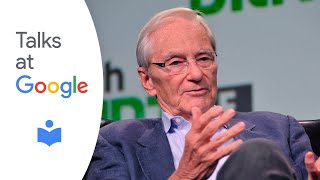
Tom Perkins discusses his memoir, covering his time at Hewlett-Packard, founding Kleiner & Perkins, early bets on Tandem and Genentech, a French boating trial, and building the Maltese Falcon yacht. He answers questions on corporate governance, venture capital, and entrepreneurship.
Chapters
I'd like to welcome all of you to today's Authors at Google event with Tom Perkins. Mr. Perkins is the author previously of the novel Sex and the Single Zillionaire and most recently a memoir, Valley the Education of Tom Perkins, which we'll be speaking about today. His new book recounts adventures from varied fields that match Mr. Perkins own range of interests, from car collecting to ballet, entrepreneurship to firefighting and sailing to technology. In the memoir, he displays a combination of honesty, wit, self awareness and a great sense of humor. A combination that is rare not just among venture capitalists or entrepreneurs, but one that is rare among writers in general. Mr. Perkins currently serves on the Board of Directors for Rupert Murdoch's News Corporation, and he was previously on the board of hp, where he was the company's first general manager of its computer division during the 1960s. Of course, Mr. Perkins is best known for having co founded the Sandhill venture capital firm Kleiner and Perkins, which later became and remains Kleiner Perkins, Caulfield and Byers. Having grown up in Silicon Valley, I, like many of you, have been aware for quite a while of the firm's status as perhaps the most prestigious and successful VC firm around. The list of companies they've backed reads like a who's who of high tech. Amazon.com, genentech, AOL, Compaq, Netscape, Sun, Tandem, and of course, Google. Mr. Perkins has also mentored a number of executives around the Valley, including our own Eric Schmidt. We're all incredibly grateful for the roles that he and his firm have played in the creation, growth and success of our company. And given the fact that we've now hosted talks with John Doar and Vice President Al Gore, who was yesterday named a partner at Kleiner Perkins, I think perhaps it's time that we start a new speaker series, Kleiner Perkins at Google. It's a tremendous privilege and pleasure to have one of the truly important and influential people in Silicon Valley with us today. And I hope that you all join me in giving a warm Google welcome to Tom Perkins.
Well, thanks Rick. It's really great to be here. I am so proud of Google and I'm honored to be able to to speak to anybody from Google. I've got to learn how to use these things. My book is called Valley the Education of Tom Perkins and I frequently get asked, well, why did you write the book? And I suppose it's, I don't really have a great answer for that, but I think it's to probably settle some scores and also to talk about two of the Most important people in my life, namely Dave Packard and Bill Hewlett. And I'll touch on that a little bit. So I've been trying to promote this book in the last week or so. And, you know, when it comes to shameless self promotion, I sort of yield the arena to no 1, although Paris Hilton is. Has been gaining. So I'm happy to talk to you. So I'm going to just kind of skip around some things and leave time for questions. So the book is a memoir, but it's not chronological at all. I didn't want to get trapped by that format. So it kind of jumps around, and it's more snapshots of interesting things that have happened. And I start off with talking about recent events at Hewlett Packard, which, of course, has been in the newspaper an awful lot. And I think there are some lessons there that I learned. And, of course, the book is called the Education of Tom Perkinson. So what was the Hewlett Packard scandal really about? And I think that's the interesting question. It really wasn't so much about a struggle of personalities. You know, Bambi versus Godzilla. I mean, I was Bambi, of course. It was more about what kind of board of directors should a giant company have? And I think that a director. When you say you're a director. Well, a director should direct. A director shouldn't be some sort of compliance officer who checks the boxes and listens to what the consultants and the lawyers say. But the director should actually get in and help management to create a better company. And if you look at what the Hewlett Packard board did, it basically was two groups within the board. There was sort of the crony group, which was myself and Dr. J. Keyworth and Dick Hackborn, who invented the laser jet printer way back and had at one time been chairman of the board of Hewlett Packard. So the three of us were kind of Silicon Valley cronies. And we established within the company a technology committee. It's like an audit committee, but for technology. And the combined Compaq and Hewlett Packard were spending $5 billion a year in research and development. And I thought that the board ought to have some say in how that went. And so over a period of three years, this committee, which expanded ultimately to include the whole board of directors, did quite a bit. And when we started off, the company was being squeezed between Dell at one end and IBM at the other end, was dead in the water, earnings static, losing market share. Seriously. And by a few simple things, primarily encouraging management to take the risk of developing an alternative source of microprocessors, namely amd. We were able to siphon off what we thought were our earnings from intel and put them back on our plot. And we also invested very heavily to compete with the Dell direct engine without sacrificing our retail channels, which was a tricky thing to do. And we did some other things and the company turned around along the way. Carly Fiorina was thrown overboard and we hired Mark Herd. So it was a very active group on the board that did those things. However, it was not politically correct. Directors aren't supposed to do that. And there's this whole idea that directors should be kind of plug to plug compatible. I mean, any director can be on any board because it's all about compliance and you just do the right things, what the consultants tell you to do. So you can be on the Safeway board or the Google board or the insurance company board, doesn't matter because you're all doing the same thing, which is compliance. Now, I think that's completely wrong, but that is the prevailing emerging view of what a giant company's board of directors should be doing. In my view, the whole Enron disaster fiasco can be blamed upon the board of directors, a board of directors that lost touch with what business the company was actually in. It started out, the board, I think, thought that Enron was in the pipeline at that end of the energy business, whereas in fact, Enron had turned into the largest commodities brokerage in the world, trading not only energy, but water and bandwidth and things like that. And the board didn't know that. And it all blew up in a terrible way, although everything had been signed off by lawyers and the accountants. So I think the HP thing was interesting as a struggle which ultimately was won by the compliance side of it. However, to win that victory, the company engaged in some illegal activities, namely spying upon its directors, spying upon newspaper reporters and Internet reporters and so forth. I resigned when I found out that had been going on. And then for about 90 days I tried to persuade the company to fix it, stop doing it and investigate itself, clean it up. I got stonewalled on that and finally my lawyer said, look, you've got a. They're going to blame it on you if you don't do something. Because I was in charge of governance without knowing this was going on. So I told the sec, it all blew up and the blood flowed. Well, so I started with hp, but then I quickly move into other things and I hope you'll read the book and I don't Want to give away too much of it. But the next thing I talk about was being tried for manslaughter and found guilty in a French court with. It was really. The accident was caused by. In a boating accident where a small boat sailed into my boat. We hit it, it sank, a man drowned. But, you know, I was ugly, rich, American. So I got arrested. Everybody finally got arrested. And I took this seriously. So I hired the best. I made a terrible mistake. I hired the best lawyer in France to defend me. He was a Parisian. And the trial. About a year later, I came back to France for the trial, even though they said they were going to put me in jail. The trial was in a little town in the south of France. And my lawyer, with his powdered wig and his cloak, the judge didn't even want to hear from him. So he was barely able to say anything. I was not permitted to say anything. I had no right to stand up and explain what had happened in this accident. And I had collected photographs. It was an accident witnessed by a thousand people. Everybody had a camera, had endless photographs. I could never show them. It was, you know, the fix was in. I was found guilty, but everybody else was found guilty. The other boat was found guilty. The race committee was found guilty, and everybody had a great time. So I talk about that, then I talk about how I actually got started as an. I was an entrepreneur before I was a venture capitalist. And, and this is kind of an interesting story, I was working for the Hewlett Packard Company. I was administrative head of the research laboratories. And I had an idea for what I thought might be a breakthrough in laser technology. The original lasers were big gas tubes on a granite bench with micrometer adjustments of the mirrors. And my idea was, I thought I had figured out a way to make it like a light bulb, just absolutely inexpensive and reliable. No adjustments, just hook it up. And it worked. But I didn't have any money and I didn't want to. I couldn't afford to quit HP and I didn't want to quit hp. So a very unusual thing. I went to Dave Packard, who was the great hero in my life, my mentor, like a father to me. And I sketched out, I explained what my idea was and that I wanted to try to do this, but without leaving hp. And would he mind if I worked on this thing on nights and weekends? And unusually, I think, for someone like that, he said, yeah, you can do that. Just, you know, don't waste too much of HP's time. But, yeah, sounds okay. Because he was such an Entrepreneur himself. He just couldn't resist letting me have a go at this thing. And then he kind of forgot about it. And I took our life Savings, which is $15,000 and invested it in some glass blowing guys and it worked. So I had an invention that worked, got the company started, borrowed on receivables, accounts receivable, financing and so on and so on. Finally put some venture capital in it, although there was very little around in those days and really got it going. And I sold it to a company called Spectrophysics. It's still going. You still see these lasers around, these lasers that are spinning beams of light and yellow, they're usually yellow. That was my invention. I had the patents on all that. Anyway, it worked very well and I didn't have to quit HP to do it. In the meantime the company had decided to go into the computer business. Dave Packard did that. He pushed always new ideas into the company. And so they had developed A thing called HP.2116 was a 16 bit computer minicomputer. They transferred it down from the research laboratories into a local division, Palo Alto division, and they sold it or marketed it for a year and didn't sell a single one, not one. And Packard's temper was just notorious. Dave was physically six six, big, strong, good looking guy, but could be just terrifying. So he put a meeting together to find out why, why the computer hadn't sold. And of course all the engineers, well, it doesn't have enough index registers and the I O and the memory and all this stuff. And he asked me, I knew why it hadn't sold. The salesman didn't understand computers at all. And they were afraid to stand up in front of the customer and talk about the computer because the customer knew so much more about it than they did. They didn't want to make fools of themselves, so they hadn't tried. They just sold volt meters and other stuff to make their quota. So Dave said, Tom, what do you think? Why isn't it sold? And I said Dave, when everything else fails, try selling. And he kind of got irritated but he came around a week later and said okay wise guy, why don't you do it? So I took over the computer business which led to huge changes in Hewlett Packard. I had to change the kind of people that sold them the way we sold them. I mean HP used to just have a photograph of the product and a list of specifications. They were in the sushi business. They would have called it cold dead fish. Anyway, got that all going. Packard and my Division became the largest part of the company. And after I left, it continued to grow. And of course it's now 100 billion a year. I'm kind of proud of it. They spun out everything else in the company into a company called Agilent, which is also going well. Anyway, Packard went back to Washington in the Nixon administration and became Deputy Director of Defense. And while he was gone, Bill Hewlett asked me to be his assistant in a sort of a staff job, which I did for three years, two and a half years, and helped kind of reorganize the company and I think laid the foundations for a lot of its future growth. When Packard came back, he said, well, you know, I help Hewlett, so I think we have to find something else for you to do. And that's when I decided, well, I had been a venture capitalist without knowing it in my laser company. I mean, I financed it and run it. So I decided to leave Hewlett Packard. I've made a career of quitting Hewlett Packard. I've done it four times. Anyway, it was my second time I quit and I met Eugene Kleiner and we put Kleiner and Perkins together. Now, I just have to tell you, Eugene and I decided that we would try to do venture capital differently than others had been. Doing it with a very hands on, get deeply involved, help build the team. The whole thing, the way Hewlett and Packard started new ventures within Hewlett Packard just seemed like the way to do it. And we didn't see why venture capitalists couldn't do the same thing. So. But there wasn't really. I'm not even sure we used the word venture capital back then, but it wasn't much of a business. So Eugene and I decided we needed to raise about $10 million to get this fund off the ground. We put some money in ourselves, traveled around the country, and after about two and a half months, we had raised $8 million. And that's all we could raise. We just couldn't raise anymore. So we decided, okay, you know, we'll start with $8 million. That $8 million fund. It's incredible to say this. It was the largest pool of venture capital in the world for high technology, the largest in the world. And everybody says, what can they do with that money? I mean, it's ridiculous. Far too much money. And they were right. We actually only invested 4 million out of that first fund. So we went in business, name on the door, and absolutely nothing happened. I mean, the phone didn't ring, nobody called, nobody came. We Got a few business plans through the mail, which we dutifully read. We've never financed the business plan that's come through the mail, but we always read them all except the ones written in crayon because we know that in the asylum they won't give them anything sharper for those. But nothing happened at all. So we thought, well, maybe we'll have to do it. So we had a guy on our staff, partner, junior partner, called Jimmy Tribig, who had worked for me at Hewlett Packard. And he had this idea that it might be possible to make a fault tolerant computer. And he and I worked on this thing and we couldn't persuade ourselves we couldn't do it. So then we hired some engineers to see if we could do it. And make a long story short, we put in all the money to start Tandem Computers. We couldn't get anybody else to invest in it. It was considered too risky. And of course it became a huge home run. You know, big success, still going strong. It was acquired by Compaq and then by Hewlett Packard, and it's now at the top of the Hewlett Packard computer food chain, runs, New York Stock Exchange, all the big credit networks, and so forth and so forth. So that was good. The second thing we did so, same way we had a partner working for us called Bob Swanson, who became attracted with the whole thought of what we now call genetic engineering. But again, it hadn't ever been done, not even at the university laboratories. Nobody had made a new form of life that would produce something useful. And that's what we set out to do, you know, neglecting Darwin and maybe even God. We tried to and did succeed in building a bacteria that would produce human insulin. It was an enormous breakthrough. It founded the whole biotech industry. Sort of knocked the ball out of the ballpark and put Kleiner Perkins on the map as the go to people in venture capital. And then of course, we put subsequent funds together and we became sort of the guys to copy. And if you're going to do venture capital, you kind of have to do it the way Tom and Eugene did. And we take for granted how well venture capital works. But to do, you know, I use Google for research constantly. So I do things like type in Wall street scandal. You get about 3 million responses. Type in venture capital scandal. Yeah, 100, 200,000 responses, mostly about stock option pricing. In other words, there isn't much of any venture capital scandal. And I think that unlike the buyout funds and the hedge funds and the Wall Street. I call them cockroaches in the book. But anyway, unlike them, venture capital has been a very clean deal. And I think it's just because Kleiner Perkins set itself up to treat the investors squarely and the entrepreneurs squarely. So we've had good luck with both investors and entrepreneurs, and you can read about that in the book. Along the way, I had some adventures. I've had a company president try to kill me, seriously, and so forth. But I've done other things in my life. I, at one point, you know, never volunteer for anything. My wife was on the board of the San Francisco Ballet, and she said, tom, you should get involved in the ballet. So I joined the ballet, too. We'd given a lot of money, and, you know, I went to. I'd never gone to a board meeting, and I finally went to one, and the ballet was in complete turmoil. The board had fired the director, and they were desperate for somebody to run the search committee for a new director. And they pleaded with me, and I said, okay, how tough can this be? It was the most difficult assignment in my life. Seriously, everything. I mean, it's an interesting chapter, I think, in the book, and it gives you some insight into the craziness of San Francisco, where everything. I put a search committee together, everything we did was in the newspaper. I never found out who the leaker was. I could have used Hewlett Packard's Spies. Anyway, ended up hiring, you know, what I knew about ballet you could put on the head of a pin. But I hired an artistic consultant, and we came up with an incredible guy, Helgi Thomason. That was 20 years ago. He's still there. San Francisco Ballet is one of the top in the world, maybe in the top five, certainly anywhere in the world. So I'm kind of proud of that. I'm going to. I'm not going to tell you the whole book, but I go through some interesting yachting things. A race across the ocean in which we had a mutiny. It's because we ran out of food. Anyway, it was kind of an interesting chapter. I talk about sailing with my favorite author in the world, Patrick o'. Brien. I talk about being married to Danielle Steele. She approved the chapter, actually, after I rewrote it three times, Sailing with Patrick o'. Brien. And I wound up the book by talking about my new sailboat, which is called the Maltese Falcon. And you might have some questions about it. And I do have a video that was put together about that. And it's just a few minutes, and I'll try to show that to you. Let's see. And then we can maybe deal with some questions. I'll talk a little bit over this video. So this, this was put together a few weeks ago by the builder, an Italian company. Although I personally provided all of the sailing technology, including the masts and the sailing system. And it is revolutionary. The idea was to pull the old clipper ships from the 19th century shown there, into a 21st century high tech machine that could be sailed by one person using the original invention of the Dyna rig, which was done in the 60s by the German government, but never followed through. This is Jerry Dykstra, the naval architect. I used to do it. The boat was built with computers, of course. Finite element analysis. All the design work done with computers. This. You still have to use towing tanks to get the hydrodynamics of a hull. So that's a model of the hull we decided to test. There it is at Delphi University in a towing tank. And you know, you measure all the forces and then knowing that you can. This is a computer simulation of what it would be like to sail the boat. Here's the first test rig we made to try this new kind of sail in a little boat and a canal in Holland. This is a radio controlled model to see if the boat would tack and join, jibe and do the things that a sailboat has to do. Because this idea had never been tried before. So here we have a boat that can be sailed by one person just by pushing buttons. This is a shot of the old original German wind tunnel work. And here is the full size test rig that I made to try to develop the mechanisms. So you can see some of it. A lot of these are my inventions and it didn't work in the beginning and it was pretty frustrating. But bit by bit we got it to work on this test setup. Those are full size, so Those yards are 75ft long. This is a shot of where the boat was built. Very industrial part of Istanbul. Built in that hall there on the left. Right. No, left. This is the obligatory. You're going to see anything on building a boat always shows metal cutting and sparks flying. We just have to. Just have to get. Just have to get through that. That's the keel of the boat. Those are the. Actually the masts. We'll see them more. Here's a shot from. It is a big boat. It's the size of a length of a football field. It's the largest sailboat in the world. That's the rotation device to turn the masts that you saw being lowered there. The boat is a high speed picture. It took about three days to pull it out of the shed. It does have propellers in addition to sails. It was moved on to a bar floating dry dock which was then sunk to float the boat. So here it is for the first time in the water. And it was moved over to a deeper part of the yard where we could continue to work on it. The boat was launched a little over a year ago. There is the carbon fiber mast going in. You can see the size of it. There's champagne. Now we're going to see some shots of it sailing. Those are the masts. You trim the sails by rotating the mast. Now you can see it actually working. This is the actual boat no longer tests. So 26,000 square feet of sails can be set in five minutes without anyone intervening. It's all totally automatic. That's some of the James Bond aspect. Cameraman was fascinating. I had nothing to do with it. That's looking up from the bottom of the boat all the way through glass floors up to the top of the mast. The name of the boat is the Maltese Falcon. And that was the Falcon. There's a lot of art. A lot of people find it obnoxious. But I like it. Here's the sailing station. It's one person sails it. That's a crew of 20. And finally you see it underway. It's very fast. We've had it going 25 knots. It's I guess the fastest sailboat in the world all round. It's in about a year and a half. Has already sailed 30,000 miles. And about half of that is under sail. The rest we've loaded when there was no wind. We're just about finished here. A little more Beethoven. The boat has become the most famous yacht, I suppose in history. And there's been a lot of attention paid to it. And I've been talking to yacht clubs about it. Okay, exit. All right. Any questions that I could answer more or less on schedule? Yes, sir. I love the boat, by the way.
My question's about corporate governance and executive compensation. Seems every filing, you know, like a.
10Q I see it says the board.
Is committed to be in the top half of executive compensation.
Compensation.
We can't all be above average.
And so we just see this, like wobble.
That's right.
All the children above average.
And I'm wondering what your thoughts are on executive compensation. Where it's going to end. Do you think? You know, it is appropriate to pay a CEO $100 million? You know what Are they worth. And how would you figure that out?
Well, if they're running Google, they're worth more than that. Yes, every board in America is preoccupied with executive compensation and the compensation committee of boards are taking these things very, very seriously. Now, five years ago they probably didn't. So I think we're going to see a sloping off of executive compensation because of that pressure. Now the trouble is that when you hire a top executive for a big company, you have a contract and you negotiate the contract coming in. And then part of it is, well, what if it doesn't work? What if I get terminated? And except for the four cause like theft and rape, it's pretty much when you get terminated, you get what, Whatever was negotiated coming in. And typically those are big numbers. So for example, recently we've seen what's his name, Merrill Lynch. Slips my mind. Anyway, he was paid 160 million to leave and the Citigroup guy was getting a huge sum. So these are embarrassing numbers. But boards are aware of this and I think we'll see less abuse in the future. Stan o' Neill is the president of Maryland. Hello. The book is personal. I have a personal question. What's next? What keeps you excited?
What are you looking for?
Well, I might write another book or two. I've got a couple of ideas and you know, I don't write well enough to have writers block it just out it comes. And the writing is pretty easy. It's the editing and the messing around. The publishing business is absolutely stone age. It is incredible. You, you know, you do your book on your computer and with a spell check and everything, you know, it's perfect. You give it to them, they set it manually, all of them. Nobody has bothered. Five of us could write the software in a day, right? To go from. We could to go from an edited computer manuscript into an automatically set. And all you're doing is justifying the margins and what they call leading. Sometimes you change the number of lines per page by one or two lines just so it looks right. That is done manually. So you write your book and then. And why don't they automate? Because they don't have to. Because the authors are so desperate to be published, they will do everything free, including me. So you get the manuscript back. And in my case, that chimpanzee that's been trying to write Hamlet for so long, he set the type in my book. I mean, unbelievable. It took me longer seriously to get it back to the way it was and it to write the book. So I might, but I Might. In spite of all that, I have an idea for two more books. One would be a nonfiction historical thing about the development of electricity at the turn of the last century, which I think could be pretty interesting. And then maybe another book on business.
Hi, Tom. Thanks for coming. So one of my friends from business school actually recently told me, richard, you could lose a lot of money chasing girls, but you'll never lose the girls chasing money. I noticed your previous book title.
I'd never heard that before. That's very good.
I was wondering what your thoughts are on that.
Well, I'll tell you. I have a file in this office. It's growing every day by with resumes of women that think they want to be the next Mrs. Perkins. So it's some combination of money and writing books is very attractive to women. Google's IPO was Dutch auction. Yes. That was fairly unusual, I guess.
What's good about it?
Bad. We were talking about that at lunch. I allude to it in the book, just in passing. I have to be careful because this is being recorded and everything. But I think. I think the Google IPO was very unfortunate that it didn't go the way I think Google thought it would go. And it was to be a mixture of classical investment banking, sponsored sales, and an auction over the Internet. And if anybody could have made that work, it should have been Google. And I don't criticize anything Google did, but I think Wall Street, I think along the way the idea was, look, if we're going to sell a lot of this stock over the Internet, why should we pay Wall street the full, you know, the full amount of the normal commission? So they paid, I think, about 80% of the full amount. But I know investment bankers. I mean, 80% is nothing if you didn't get paid nothing. So I think Wall street screwed up the Google offering. I can't prove that and I hope I don't get sued for even thinking that. But it was too bad. The price was cut, the size of the offering was cut, and yet it was one of the greatest IPOs ever. It shouldn't have gone that way. Fortunately, it has a happy ending. Not that much stock was sold at too low a price. And of course, we all know what's happened since then. So it has a happy ending. But unfortunately it didn't establish the idea of Internet Dutch auctions as a viable way to go. And I don't know who will try it next. It's too bad. What did you think of your interview.
By Leslie stall in 60 minutes? And were you satisfied?
Well, I like Leslie Stall. You know, they thanked me so many times because they flew to Italy and they spent five days on my boat and they just had a marvelous time and they shot literally hours of me and the boat and everything. So when it finally comes out, I mean, by the way, they edit it and then the voiceovers they can make, they can just say anything basically or make you say anything. I thought it was okay. I thought she was a little obsessive about how much money do you have and how much did everything cost and all that. And I don't think they talked enough about the venture capital side of the, of my life, but they did a little bit. Most people thought it was great and it did get the book off to a great start. So I'm happy. I like Leslie Stahl, but it's the producer that does all that and he was a decent guy. Yeah.
In the back with the executive compensation, do you think there'll be a change in the contracts in terms of what's.
Pre prescribed for termination?
Will they see if this is not pay for performance, this is non performance, we should offer less guarantee?
Well, I think they'll try to do that. They'll try to do that. But I mean the trouble is that that end of the contract is negotiated on the hiring side and you know, it's a little hard to, you know, to get too tough on that. And it's just built in, I think Wall street absolutely on that aspect of it. And also those numbers are extremely hard to understand. You know, if you look at the, you know, the 10k of any company, it's almost incomprehensible what the compensation is because some of it's deferred, some of it depends on the values of the options. And even if the options are way underwater, it's still a big number. And it's, it's really complicated. And if you try to explain what really is going on, they won't let you. I mean, you have to do it just exactly that way now, you know, for example, on News Corp, it takes a long time for the directors to understand what all those numbers mean. It's complicated and that's wrong. What advice would you give to aspiring advice or wisdom would you give to aspiring entrepreneurs? Well, in fact, that might be my next book. It would be one, don't go to Wall street, you know, you'll get rich, but you know, you'll have sold your soul to the devil. Two, don't try to become a venture capitalist. Do that. Maybe later, you know, in Your golden years, be an entrepreneur. And then so definitely be an entrepreneur. And now what advice? You know, I'm frequently asked what's more important, who you know or what you know or what's more important, the idea or the person? And the answer to that is very simple. It's the idea period. A good idea is what we look for. Now good people have good ideas, you know, so you kind of get the good person with the good idea. But we at least don't expect a full team. So I think it's a mistake. You say, okay, I'm going to start a company. So I've got the idea and now I'm going to line up Joe here and he'll do the marketing and Jill, she'll do the engineering or whatever, whatever. And you put it all together and then you go to the venture capitalist and say, hey, we've got a team. Well, the venture capitalist is mostly interested in the idea, in you with that idea. And at least I'm talking about Kleiner Perkins. What we will try to do then is there'll be some risk, who knows, could be technical, could be people, could be patents, marketing, who knows? We'll try to get rid of the risk with the initial investment and then once we've gotten rid of the risk, we can just roll in the money and it'll be a great investment. And then we will try to build the team around you as the risk, as the risk is reduced, it's easier and easier to hire great people. People, great people would be crazy to go to work for you on day one. It's too risky, you know, they won't do it. So that's our recipe. So the idea and then work with the investors of the venture capitalists and there's some good angels out there, but to build the enterprise. Hi, can you tell us a little.
Bit about Kleiner Perkins, like move to green technology and the role you played with that transformation and kind of what you guys think are the most promising areas in that space?
Yes. Well, first of all, I am not personally involved in that. I'm not active in new investments. I told somebody earlier today I'm too old to buy even green bananas. So I don't want to start with new high risk deals. But we think it's a great market and there's a lot of money for flowing into it from all directions. I don't think we all agree on whether man is destroying the planet or not. But there is warming, certainly, and saving fossil resources is highly desirable. Cleaning up the atmosphere, nuclear, all of that is good and we're completely behind it. And we announced yesterday that Al Gore is joining us to help us with that. We're also branching out into China as a new thing for us, but otherwise it's kind of business as usual. Anything else? Can I borrow your boat?
Just kidding.
I work for Google's new children's center and you seem like you've had a very successful and happy life. And I wonder what you would recommend. The number one thing that we incorporate into our program in working with children under five to encourage their success and happiness in life. Well, it has been so long since I've had a child under 5. Thank God. My kids are in their 40s and my kids mate, but they don't marry, so I don't have any grandchildren. So I'm really. I really shouldn't answer that question because I don't know. I'm sorry.
So these past few years have seen an explosion of company creation and web 2.0. So I'm kind of wondering your thoughts on what's going to happen to a lot of these startups. Do you see any new business models coming into play with things like open source becoming very predominant? So how is kind of open source?
Well, there are a couple of questions there. I love open source. I love Linux and hp, when I was having something to do with it, sponsored that very aggressively. And I think open source is great. Now there's somewhere between 20 and $30 billion available right now to go into high tech venture capital in the United States. It's a staggering amount of money. You know, everybody would like to see that multiplied by 10 or 100 or even more. It isn't going to happen. It just is not going to happen. So the numbers just can't. So there's going to be an awful lot of money lost and there are going to be a lot of new ventures that fail. But it's always been that way. There's always been too much venture capital. Even when Kleiner and I had only eight and a half million, it was more than we needed. So I think on the other hand, the people like Leonard Perkins that are already in the business will continue to do well because we have a lot of momentum. And it's more than just Momentum. We financed 525 companies over the last 30, 35 years. We've created 295,000 new jobs and created about a half trillion of market value. The employees in those companies are out there meeting people running across new ideas, guys like you, and they bring those ideas to us, and that's how we get our new ideas. And that's basically everything we've done since the beginning has come to us more or less through that route. And so, yeah, I think we'll continue to do very well. But in general, there's going to be a lot of money lost. But that's always true. Hi.
Hi.
Over here by the window.
I love the boat or the yacht the you created. And I was wondering how you initially.
Got interested in sailing and boats. Oh, well, I. Sailing has been my lifelong hobby. I started when I was a little kid crewing for friends and their boats. And I've had a long list of boats. I just love sailing. It's some combination of physics and poetry and nature, and it's just marvelous. And I've had classic boats. I've had boats that require a huge crew to sail, which is fun because you're more like a coach. And I've done that for years and years. But I got intrigued with this idea of automating a clipper ship because the clippers were. Their era was from like 1850 to 1875 and. And they were gone. The Suez Canal put them out of business, basically. But they were fantastic. They were like the space shuttles of their day. They were beautiful, fast. The word clipper comes from clipping the time from like Shanghai to San Francisco, reducing the number of days clipping the records. So I thought if there's some way to make the things sail without such a huge crew. I mean, Normally you need 80 young guys to go up the mast and set the sails on a ship like that. If you could do it with a small number or no crew, but computer controlled, and if you could make the boat sail upwind as fast as any normal boat, you would really have something. And that's what the Maltese Falcon is. It's highly automated. One person can sail it and it sails fast upwind. We win races going upwind against normal boats. So it is a real breakthrough. It's the joy of my life and I just love it.
We have time for perhaps one more question.
One more question. Let's have a hard one. Okay, hard question. If you think back to various companies you've funded and pick out maybe one or two in your mind of some.
Of the spectacular disappointments or any major disappointments, just maybe to share a short.
War story and perhaps a lesson learned. Yes. Well, we have a lot of disappointments because the way we do it, if you don't have losses, you're not taking enough risks. And if you don't take risks. You won't make a lot of money when you win. The idea is to get rid of the risk with the minimum amount of investment and then roll in more money. But if you're wrong, you don't lose too much. And we've had some ridiculous ones. I think the funniest one, I guess, was early on, Kleiner and I came across a guy that had figured out a way to convert a motorcycle into a snowmobile and then back. So, you know, you could. You get the idea. And it worked. I went up and rode around in the snow fields of the Sierras. It was faster than a snowmobile turn, quicker, all that stuff. And the name of the company should have warned us off. It was called Snow Job. And we brought the product out. I mean, we got all the way into it. And it was one of the periodic fuel shortages. This is in the early 70s and the government outlawed the sale of gasoline for snowmobiles and recreational vehicles for about a 90 day period. Was just when we were trying to get the distribution going and everything, and it just cratered. So that was a funny one. Okay, thank you. You've been great. Thank you so much.
More from Guy


Cheryl Strauss Einhorn | The Human Edge: Smarter Decisions in the Age of AI | Talks at Google



Rachel Glennerster | Innovation and the Center for Global Development | Talks at Google

Rebecca Winthrop | Rethinking the Purpose of Education in the Age of AI | Talks at Google

Dr. Robert Wachter | A Giant Leap: How AI Is Transforming Healthcare... | Talks at Google



