Vivian Tu | Well Endowed | Talks at Google
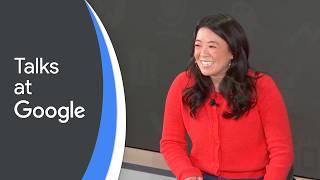
In this Talks at Google interview, personal‑finance educator Vivian Tu explains the core ideas of her book Well Endowed. She defines “well‑endowed” as building a personal financial endowment that funds both present happiness and future goals, likening it to institutional endowments. Tu distinguishes being smart with money—making binary, budget‑based choices—from being wise—navigating nuanced, relationship‑focused decisions. She urges listeners to align spending with long‑term life goals by asking whether a purchase is for personal joy or for external validation. A major portion of the conversation covers her re‑imagined view of retirement: calculating a “FU number” (the capital needed to quit a job), applying a conservative 4 % withdrawal rule, and visualizing a desired lifestyle. Tu debunks the myth that primary homeownership is a universal path to wealth, noting that in most major metros renting is cheaper and that property can be used strategically as an investment rather than a primary residence. She discusses how social media amplifies unrealistic consumption expectations while also democratizing financial education, and she warns listeners to recognize advertising incentives. Finally, she promotes her own service, AskDolly, a registered‑investment‑advisor platform that offers personalized finance advice, automated wellness assessments, and human CFP support. Throughout, she blends anecdotes, audience interaction, and practical exercises to make complex financial concepts accessible.
Chapters
Vivian, it is my pleasure to welcome you to Talks at Google.
Man, that was a longer walk than I anticipated, huh?
This is very fun. Typically we meet on Google Meet, so it's always good to do an IRL But I guess my first question for you is, obviously we know the title of the book, but as a reader, you really make us wait until almost the end to give your definition, which I appreciate it. I think it's good to get there. But I'd love if you could tell us what it means to be well-endowed.
Yeah, so I think to explain what being well-endowed in your life means, we actually have to explain why I titled the name of my book a sexual innuendo. Yeah, Al Roker made a dick joke when I went on the Today Show, which was so embarrassing. But if you actually look at the phrasing, well-endowed, we can laugh about hee-hee, ha-ha, whatever, but it actually describes something, an endowment. And you've heard of things like Harvard's endowment or your favorite charity's endowment. An endowment, simply put, is just a pot of money that gets invested. It grows for the future so that any organization's mission can be continued into perpetuity forever. And what I want for every single person reading this is to be well endowed in your own life. So I want you to feel like you get to have the happily ever after in your life because you have the money and the resources and the tools invested growing for you so that you can reach all of those milestones, whether that's whether that's buying a home, whether that's having a really wonderful marriage and having kids or not having kids and having a dog and being able to leave something behind through your estate planning. But ultimately, it's so that you can have a happy today while also having a happy tomorrow.
I love that. And I think another big aspect of the book was that you kind of emphasize the difference of being smart with your money versus being wise with your money. Can you go on kind of the difference of the two of those?
Yeah, I think that's specifically pertinent to this audience. I think it's actually really easy to be smart with your money, right? Like Google exists. You know whether or not, you know, you should be doing A or B. It's easy to say, oh, should I buy this bag or should I save my money? Like there is a yes or no answer based on your budget. But then there's the wisdom piece of it, and that's a lot more gray. That's a lot more nuanced. For everybody who can't tell because I have such a great skincare routine, I'm 31. And I am in a phase in my life right now where I am going to a wedding every other weekend. And alongside of these weddings, it's, oh, we have a bachelorette. And oh, we gotta go to this engagement party. And it's literally thousands of my dollars going towards other people's life moments. And for some reason, they all wanna go to Cabo. When you think about spending money to do those things while still maintaining your relationships, that's a much harder question. It's not black or white, it's not yes or no, there's gray area. In the same way of you guys all work at YouTube, at Google, you're doing very objectively well, but what happens when around Thanksgiving Uncle Tony asks you for a small business loan of $25,000 to start a restaurant that you know Tony's Meatballs is not going to pan out? Like there are money conversations and money moments throughout your life that are not going to be quite as easy to answer as which credit card should I get? That's the wisdom piece. It's do you know what actually makes sense for your lifestyle? What is actually going to apply and how is it going to affect your interpersonal relationships as well as the other parts of your life? And so that money is not necessarily the only decision you're optimizing against.
Yeah. I love that. I think I definitely felt pushed to make the wiser money decisions in the middle of reading. So definitely a difference there.
Anna told somebody she wasn't going to their wedding. No, I'm just kidding.
And I think another big takeaway from the book, though, is kind of aligning your spending with your long-term life goals. Like, if you've got to skip the wedding, you've got to skip the wedding. But anyway, what's a practical step step that readers can take to start doing this today?
Yeah, I think something that a lot of folks, especially high-earning folks, like struggle with is— I get a lot of DMs that are people who are in their 30s or 40s or 50s even, and they say, Vivian, I did everything right. I went to the right school, I got the right degree, I got the right job, and now I am looking back at my life but it's not what I bargained for. And I'm not super happy with how everything has panned out. I look in my closet and I've got thousands of dollars worth of stuff that frankly I can't fit into anymore, I don't wanna wear anymore, but I didn't necessarily get to have the things that I actually holistically wanted out of life. And so what I encourage people to really do is ask a series of questions before they buy something, before they spend their money that they worked so hard to get. And the big one is, Do you actually want this or do you want someone to know you have it? Yeah, the murmurs. Yeah, you heard that, right? That's because I actually learned this from a mentor in my early 20s. I was so frustrated because it felt like each purchase didn't make me happier, but it made me want to purchase more. And I bought the new, like I always wanted a new bag. I always wanted to like be in Mykonos in the summer because that's what I was seeing other people on my feeds doing. And it made me realize over time that like I didn't actually want those things. I wanted people to have a perception of me that I was rich, I was capable, I could afford these things. And ultimately, like that didn't get me where I needed to be. So it took a real big recalibration of my own finances to realize that like I should not be spending to impress other people. I should only spend things that really spark joy for me. And some of those things are like, I would say, personal finance sins. I love getting takeout. I love having food delivered to my door. I love, you know, getting a little treat in the morning. Heaven forbid I want a blueberry muffin. But like all of these things that bring me that little spark of joy, they're not as particularly sexy. To brag about, but they make me happy. And that, you know, has led to me feeling a lot more satisfied with my spending.
Something very fun that Vivian does is goes live on YouTube and answer questions from the audience. And there is always— I feel like we cover everything under the sun, but I know there's always more. And I'm curious, is there one question that you wish people would ask you about money but rarely do?
Okay. This is going to be like real talk, guys. I think this probably affects people in this audience, but a little bit less so. I think right now is a very scary time to, like, be seeing headlines in the media. There are so many headlines of, like, GDP up by 0.2% or, you know, the American economy stronger than ever. But like, Why do so many people feel like trash when they're at the grocery store? Why do so many people feel like they cannot make the math math to get everything that they want, even if they're working really hard and making a really wonderful living? And that's incredibly frustrating. And I know there has to be at least a couple folks in this room that are maybe in the more analytical, mathy space. Because the headlines are lying to you. A lot of government agencies as well as frankly even financial firms, economists, everybody is looking at the mean, the average. But if we took the average income of every single person in this room here, but let's say Anna is actually a centibillionaire, that really skews the data. And so it makes it look like the average person is doing a lot better. But if we were actually to look at the median, which is where we all stand in a number line of our incomes, and we looked at the middle number, I think it would tell a very different story. And furthermore, I think if we looked at the mode, the most frequently occurring numbers in a dataset, we would actually see an even more different story. And my guess is that the story would tell a story of two camel humps, one being folks who are really, really struggling. They are not able to make ends meet. They are putting all of their expenses on a revolving line of credit like a credit card. That's really, really scary right now. But then there's also a group of people who are high earners, and suddenly they're starting to think about buying the store brand. They're starting to think about, do I need to be cutting back on some of my discretionary expenses? Everybody is feeling that pinch in their wallet, no matter really frankly how much money you make. It's just a frustrating question to me is just that like, we aren't talking about this. No one's asking, Does anyone else feel this way? But there has been a starkly K-shaped divergence post-COVID of the haves and the have-nots. And we've seen more billionaires created in the past 5 years than ever before. But we're also seeing the average person— and average, I truly do mean, is like, can be millionaires because millionaires are closer to being homeless than they are to billionaires. But like, the average American is really struggling right now. And I think once we acknowledge that, we can figure out things that we need to change in our legislation or things that we need to do as a community to support each other. But I think we can't feel alone because that makes the whole situation worse, is that we have to realize other people are also struggling, but now we have to do something about it.
Yeah. And I feel like that really kind of lends itself to a lot of the work you do. And I feel like the question of like, does everybody else feel this way? Am I alone? And like, I feel like you do such a great job of empowering us to all use our voices financially and talk about these things. So thank you for kind of sparking those conversations.
Thanks for giving me a platform to do it.
I think one chapter of the book that I was not expecting to attract to me but ended up being one of my favorites was the retirement one. Yeah. You painted a really vibrant picture of you and your neighbors in Florida and what day in the life looks like for your retired neighbors in Florida. And I was just fascinated by it because you kind of redefine retirement as a stage where working for money becomes optional. How can readers and all of us start planning for this stage no matter what our current financial situation is.
Yeah. So for the folks who haven't read the book yet, you are getting a copy today?
Yes.
Yes. But so there's a gift involved. But something that I talk about in this book is the— I basically— so I moved to Florida. And unbeknownst to me, I moved into basically a retirement community. And my best friend's name is Susan. She is older than my mom. All of the ladies that I do Pilates with are in their 70s, some in their 80s, and they're working out 3 times a day. I'm like, what are you training for? But these women in particular that I know that I've become friends with have such vibrant lives. They wake up. They play tennis. There's a group that plays mahjong. And it's so embarrassing because I'm Chinese American and don't 100% know the rules. And these women, they're like card sharks. It's like kind of crazy. They play mahjong, they go to their like book club, they go to Pilates, they do yoga, then they have like happy hour. And I'm like, what? And I didn't really understand this because I kind of always envisioned retiring, to put it lightly, as just being like put out to pasture. Your life just kind of ends. But these people are all retired, and I realized that their lives were frankly richer and more social than mine was as a bubbly, lively 31-year-old. And I think that's the crux of what I want to get through in the book, is that, like, retirement doesn't mean you downshift and end. It means that you no longer have to do things for money. You get to do what you want. I know growing up, my mom had to decide between two jobs, one of which was 15 minutes away from our house and one that was an hour away from our house. And the one that was an hour away actually paid a little bit more. But because my mom was optimizing for money at the time, she chose this job that was a way suckier commute because she needed the money. We need the money as a family. In your retirement, I don't want you to optimize for money anymore. I want you to optimize for joy. That doesn't mean you stop working entirely, but maybe you start volunteering at the animal shelter that you've always wanted to be a volunteer at. Or maybe it means you're able to offer free childcare to your children to watch your grandbabies. You get to do things, you don't have to do things. And something that is a fun little exercise, if you've followed me for a little bit, you've probably already done this, but what I encourage people to do is calculate their FU number. And your FU number is how much money you would need to be able to kick over your desk and tell your boss— we're not gonna do it here. Everybody here has a great boss. The laughter is scary to me. But it's how much money you would need to be able to tell your boss, fuck you, because your income from investments would essentially replace your income from labor. All of us have jobs. We wake up in the morning, we type at our laptops. Nurses have jobs, they're on their feet all day, like construction workers, teachers, everything. They all do something for money. But this is how we calculate how much money you would need to replace that. So everybody close your eyes and imagine your perfect year. You get to live where you wanna live. Your house looks like the way you want it to look. You get to travel, you get to support people, whoever is important to you. Maybe that's parents, maybe that's children, maybe that's a pet, maybe whatever. You also get to make some purchases, some fun retail things that you would like to buy. Don't go crazy, don't imagine a lime green Lamborghini, but you know, like have a nice life, build yourself a really beautiful life. Now we open our eyes. And my high school calculus teacher always told me that I wouldn't have a calculator in my pocket. Joke's on you. Everybody does now. So I want you to take out your Google Pixel and go ahead and calculate on your calculator. You type in how much money your perfect year you think would cost you for 1 year. The murmurs tell me some of y'all did imagine a yacht. So you type in how much money you would need for the year, and then you divide by 0.04. 0.04 represents 4%. 4% is an incredibly conservative investment return. You can get 4% right now from some high-yield savings accounts. That's risk-free. So, you know, more realistically, you'll probably earn 8 to 10% on your investments. Closer to retirement, maybe 6%, 7%, but 4% we can pretty much bank on. The number you get is what you would like to have invested earning you enough money every single year to be able to live your happily ever after. And I want you guys to do something brave. Tell me what your number was. I saw her laughing. That's why I want to know. I think she might have done the math wrong. They're like, actually, we think the math was done perfectly correctly. I think $25 million. Okay, okay. But now we know that to fund your million-dollar lifestyle, every single year you spend $1 million. That's a lot of money. I don't spend that much a year. But if every single year you want to spend $1 million, you have to have $25 million set aside. Did we get any other numbers? 3.7. 3.7. 1.8. 1.8. So we're living off the grid. We're not really buying any designer here. Okay. But—
7.5.
7.5. Okay, great. What I think is so valuable about this fun little exercise is it gives you a, one, a roadmap of what you would likely want to have invested. And what types of moves you might need to be making with your money to get you there. But also, it gives you a plan of what your lifestyle should look like, what you want it to look like. And maybe there are some changes we need to change to the lifestyle, but there's maybe some also things that we need to change with our investment strategy that can get us there. I don't mean to pick on you. I'm so sorry. Yeah, but I think this is really great because It's good to have goals, but for some people, their happily ever after is, I want to retire at 40 and live in an Airstream, and I don't have to buy shoes anymore. I get to be barefoot and live off the land. Great. Not mine. Be very clear, not mine. And then for other people, you probably have a more traditional vision of retirement is you want to have 2 homes, one of which is a vacation home. You want to put 2 kids through college. You want to maybe support a slightly overweight English bulldog who needs heartworm medication named Pickles. This is my fantasy. Roll with it. But like, this helps you just dream for a second, and you get to change this dream as the years go on, as your life changes. But it helps you back into what you would likely need to live your happily ever after.
Wow. So in my scenario, I had a house.
Yeah.
But you challenged traditional financial beliefs and kind of the idea that homeownership is always the best investment. Can you expand a little bit more on that? And kind of on top of that, what's another financial myth that you'd like to debunk for us all?
Yeah. So I think, not to throw shade, but we're about to do it. There is a certain older gentleman with glasses. He's balding, has a Southern accent and a radio show. And throughout, if you know, you know, like he has basically convinced our parents' generation and frankly some of ours that if you don't own a home, you're a loser. I'm telling you right now, the math on primary home ownership no longer makes sense. It is actually cheaper to rent than buy in every single major like major American metro. That said, not again, back to this. Not every decision we make needs to be optimized for finance. If owning a home is still part of your American dream, you are allowed to want that. You are allowed to work hard for your money and do what you want with it. But buying a primary home right now financially is not actually the end-all be-all. For our parents' generation, it was a little different. You could throw a dart at a map any house you hit appreciated a gazillion percent in value. But for our generation, especially as how expensive homes have gotten in major metros, the type of appreciation you'll see on a primary residence that you are living in may not be what we're seeing from other investment opportunities such as index funds in the stock market. What I'm actually seeing a lot of now is that buying a home has truly become an investment decision. So people will continue to rent their primary residences. And I actually have a guy friend who can't afford his apartment to buy it in LA, but he purchased an investment property in Oklahoma where he's from. He got a duplex unit. He has tenants who live there now and are paying him rent that help him build equity in this property. And maybe one day when he decides he's done with the California lifestyle and wants to move home and live in, live in Oklahoma, kind of near a golf course and nice arid region where he can play golf every single day. He might, you know, turn this duplex into a single-family home that he can retire into. That is the creativity that some of us are going to need to have if we want to own property. But if you don't want to own property, that's not to say you still can't get incredibly wealthy. That's not to say your other investments can't really support you in the same way that we've just talked about for that happy retirement. It's just really about what matters to you, what kind of flexibility you might need. I know at places like YouTube and Google, there's a lot of mobility. People pop over from the coasts all the time. People move to Austin. People move around and have amazing opportunities because this is a global company. How would you feel if you bought a home and then 6 months later you had to move offices? That's going to be a nightmare to unwind or try to find a tenant for. But if you know you're rooted, your kids are here, whatever, like, yeah, sure, buying a home might be something you want to consider. So it's really up to you. But I think it's such a huge myth that you have to buy a home to be financially successful.
So I think as part of your brand and of course, in the book, you are great at making financial information much more digestible with a lot of references. In the book, we had a really great Midsommar reference and Succession reference, which obviously I'm obsessed with. But I think a line that really stood out to me, and I'm totally paraphrasing here, but was the idea for our parents' generation growing up, for them, it was keeping up with the Joneses. Seeing in front of them like what's going on with the neighbors. But for us, it's keeping up with the Kardashians and seeing like what's going on online. So, you know, but I'd love to know, how do you think social media has changed the way we think about money and success?
Yeah, I think it's good and bad, right? Like, I, I am so proud of the work that I've been able to do on social media to democratize personal finance. I am so in love with so many other creators that have taught me how to descale salmon fillet because I learned a skill, right? There's a YouTube channel called Dad How Do I, and it'll teach you how to unclog a toilet or tie a tie. And I think social media has truly made us a global society. I think that's great. I do, however, also think that social media has led to some pretty unrealistic expectations of what a good life looks like. In particular, and frankly, this isn't even a YouTube thing. This is— I'm not going to name names, but there are some other platforms that really highlight a highlight reel that show you photos of ultra-edited. Everybody looks like a bikini model. Everybody seems to be spending their summers in Saint-Tropez. You need to have the new Fendi beach bag. Also, by the way, don't forget to get a spray tan, lash lift, lash tint, brow microblading, perfect blah, blah, blah, blah, blah, to even be able to go on the vacation. I think that tricks us into thinking that if we don't have those things, we don't have a great life. And I think it's become very challenging because of some of the tracking and targeting available to advertisers. To actually go after consumers. I think many of you know this. I worked at BuzzFeed before I became your Rich BFF. One quiet woo is so funny. But I worked on the digital media strategy sales team. And I don't know if anybody here is on the ad sales team. We got some head shakes, yes, great. And I loved being able to target consumers. People. And as someone who has worked in digital media, you would think I would be better at basically being able to thwart off marketing in my own life. No, I am a marketer's dream. I fall for everything. But at BuzzFeed, we used to niche target down to, hey, if they're reading content about the Spanglish content, they are likely Latino. We can age target 25 to 44. They're a household CEO, the decision maker. Also, by the way, they're in the market for a new SUV and have at least one child. We're doing all that targeting. Oh, by the way, we want to know what zip code they live in. We can do all that targeting. And then we can append pixels that can track them around the internet. And that's why when you read an article, you see your favorite boots that you really wanted that you haven't bought yet pop up in the middle. Or maybe when you're scrolling social media and the boots, there they are again. It's not divine intervention. Somebody like me was in the backend asking the ops team to target you. And so I think there's something to be said about the power of social media for good, but also just being really mindful of what the incentives are for the people advertising to you on social media. If I see one more influencer shake their Stanley and then it has like, that like ball stadium, 4 quadrant thing that they're putting like chicken nuggets next to like M&M's next to like things that you should not be eating together in one, by the way. And they're all touching and then they're still sipping out of that straw. Like, I don't want to see it again. You're selling me this nasty little contraption because you get paid to do it. Like, think deeply about where the incentives are. Social media has also driven me to my favorite pair of jeans. But just be mindful. You can't buy everything and you wanna buy stuff that's actually going to be used a lot in your life.
I think my final question for you, kind of a big one, and I think something I really appreciated about the book is as a reader, you get next steps, you get actionable insight.
You gotta do the checklist at the end of each chapter before moving on to the next chapter.
Money management to-dos at the end every time. And so, With that in mind, what is one piece of advice or an action item that you want everyone to walk away with from here today?
Ooh, okay. Can this be really self-serving?
Sure.
I feel like it's more transparent when I say that, right? I have run into the issue where so many people ask me questions about money, and it's pretty frustrating that I can't get back to thousands of people across social media, across all of my different channels. And so I actually built a tool that can help answer your money questions. If you wanna check it out, you can go to askdolly.com. Dolly is short for dollar, but you can get all of your personal finance questions answered 24/7. And this is not some ChatGPT wannabe thing. ChatGPT cannot give you legal, financial, or medical advice, but we are a registered investment advisor. And if you ask a question that's a little too niche, we'll actually connect you with a licensed human CFP to get all of your stuff and your needs met. I think it's pretty good. I also do multiple headline breakdowns every single week of how news things are going to be impacting your wallet. And we also do a wellness assessment for your money, which essentially allows you to connect your accounts through Plaid similar to like a Venmo or something like that. And then we break down the things you're doing well and the things that you could be improving on. And funny enough, I connected my accounts and Dolly told me that I was doing really great. I was saving, I was investing, I was paying down my debt, blah, blah, blah. There was one thing she said that I could work on. And she said, hey Vivian, I just wanted to flag, you spent so much money on takeout last week. Ma'am, I built you, I will shut you down. Don't ever say that to me again. I joke, but, you know, I think it's a really great way to get a holistic check of your finances, your financial wellness.
Thank you so much again. This was wonderful.
Great job. Thank you guys so much for having me.
More from Guy


Cheryl Strauss Einhorn | The Human Edge: Smarter Decisions in the Age of AI | Talks at Google



Rachel Glennerster | Innovation and the Center for Global Development | Talks at Google

Rebecca Winthrop | Rethinking the Purpose of Education in the Age of AI | Talks at Google

Dr. Robert Wachter | A Giant Leap: How AI Is Transforming Healthcare... | Talks at Google



