Welcome to Biotech Nation | Moira Gunn | Talks at Google
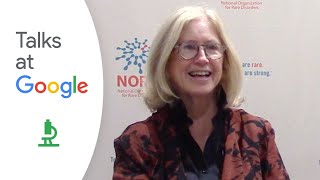
This content was created by Guy Kawasaki. This content was uploaded by Guy Kawasaki. This is a YouTube video titled "Welcome to Biotech Nation | Moira Gunn | Talks at Google" featuring a talk by Dr. Moira Gunn at a Google event. The talk, recorded on December 8, 2007, includes discussions about her book 'Welcome to Biotech Nation', her experiences in science journalism, and her interviews with notable figures like Larry Page, Sergey Brin, and Jeff Bezos. The talk also covers the evolution of Google and the impact of biotechnology and information technology.
Chapters
Hello everyone and welcome to the Authors at Google event. Today, it's my pleasure to present Dr. Moira Gunn to Google. She is the author of welcome to Biotech Nation. She's also the host of Biotech Nation and Tech Nation, which airs weekly on 200 public radio stations, on NPR channels, on Sirius satellite radio, and internationally to 133 countries via American Forces Radio. A former NASA computer scientist with a doctorate in mechanical engineering and a patent in human nutrition research, she has recently been named a Science Laureate for her contributions to science journalism. Welcome to Biotech Nation is a unique inside look at biotechnology today and a glimpse at what could be in store for us tomorrow. Dr. Gunn is also the Program Director for Information Systems in the College of Professional Studies at the University of San Francisco. In over 2000 in depth interviews, Dr. Gunn has engaged with recognizable people from every venue, from business leaders like Intel's Andy Grove to emergent tech gurus like Google's Larry Page and Sergey Brin. In her talk today, she will be replaying some of the audio clips when she interviewed Larry and Sergey in the spring of 2000. With that, please join me in welcoming Dr. Moira Gunn.
Thank you. Thank you so much. I'm glad to be here. Usually, you know, like with C Span, they back up the video and you know, you see all these empty seats, but all you guys are in the back and what nobody knows is all you guys are eating like mad. You just came from. So it's probably best that you're back there. Everybody's a great time here. And I have to say I'm here obviously because of the book welcome to Biotech Nation. But the story of how Technion started covering biotech is what the book is about, and that's only a few years old. But my relationship with Google and certainly my relationship with technation goes back many more years. So Jimmy got more than he bargained for when he invited me here. And I just remember February of 2000 very distinctively. The, the dot com boom was just thriving. Everyone was drinking the Kool Aid. It's never going to go to a bust. And I got a call from a publicist and I have to tell you, if you listen to anybody on the radio, watch anybody on tv, you have to deal with their publicist. I mean, if you want to talk to the Pope, you got to talk to his publicist. That's just the way the world works, even if you don't quite get it. Well, I worked with this fellow and he had placed a couple of guests on the show. He called me up, absolutely desperate and he said, would you interview these guys? Nobody will talk to them. And I said, well, what's wrong with them? And he said, they're computer science majors. And I went, well, there you go. But that was right up my alley. So I said, well, sure you can. Come on. So here we'll play our first clip that the audio clip one. Coming up on Techn, we'll take a look at two former Stanford graduate students who co founded a successful Internet business. No, not David Filo and Jerry Yang of Yahoo. The entrepreneurs I'll be speaking with are Larry Page and Sergey Brin. They're co founders of Google, an unexpectedly popular search engine on the World Wide Web. They'll tell us about how advanced computer science can actually translate into, into a simple state of the art business. Now there were plenty of search engines around then. In fact, the real question was, why do we need another search engine? There was Excite and altavista and Ask Jeeves. A lot of these people post ipo, everything was already running and there was just a lot of press. And then all of a sudden, yeah, we have a new search engine. It's like, oh really? We really need another one of those. But the other ones were interesting in that when they came on I was checking them out and, and I was like, well, there's none of the flashy banner ads and there's no colors. There's all this stuff jumping around. There was just the answers. And this is about a month before Google had ads, which if you didn't have ads, all of us wouldn't be sitting here. But they didn't have ads yet. They were just working on that. So I said, well, what is it? Why does your search engine look the way it does? It'd be number two.
Originally. I must confess that even part of our sparse look is due to the fact that we couldn't really afford a web designer and we were too lazy to spend a lot of time doing it ourselves.
Yeah, they couldn't afford a web designer. Can you guys hear that audio a little bit? Can we turn that audio up in the room? Is there some way to do that or are we really going to mess things up here? Because you don't get the jokes if you can't hear the audio.
Originally, I must confess, even part of our sparse look is due to the fact that we couldn't really afford a web designer and we were too lazy to spend a lot of time doing it ourselves.
So there you have it. They didn't have Any money, and they were too lazy to do it. But it turned out to be a really good thing because fast, fast, fast was the name of the game. And it was early days in the web, and you didn't know who was going to make it and. And who didn't. Frequently, whoever was getting a lot of press turned out not to make it. Everybody who was a hero frequently turned out to be a bum. Everybody who turned out to be a hero nobody knew about. You didn't know. I mean, in a similar incident, I got a call from another desperate publicist from Seattle. Would I please interview this guy, Jeff Bezos. They didn't have a press kit. They didn't know what they were doing. And the World Wide Web was earlier than this, wasn't there. He's on the show. In fact, we gotta replay that someday. He's saying shopping cart. You know, like ozone layer. He started that. There was no web. He was, like, emailing book suggestions around. And he was great because he couldn't even afford to rent a car. When he got to San Francisco, he showed up in the lobby of kqed. And he was dressed exactly the way he dresses today. Make no mistake, he looked exactly the way he did today, Only he was pulling a black rolly bag with golden retriever hair all over it. Pulled it right into the. Into the studio and stuff. And then later on, I go down to the lobby to leave, and I realize he's still standing there and he can't get a cab. So I felt really sorry for him. I gave him a ride downtown. I mean, he's pushing this thing called Amazon. I mean, it was just kind of who knew? And so as far as I'm concerned, Jeff Bezos owns me, arrived downtown, and all of these people were there. Jerry Yang and David Filo, of course. I think the classic in our first interview, which was pre ipo, is I said, well, hey, how are you going to make money with this? It's free. Because nobody really understood the economic propositions that would work. And they look at each other, and Jerry looks at me and he goes, well, the venture capitalists keep asking us that. We don't really know. So here he is today in a lot of trouble. I think he could have retired, but not Jerry. He goes on to lead Yahoo. So all these entrepreneurs actually knew each other, which a lot of people don't realize. So let's go to clip four here.
Well, let me start by telling you that one major difference is that they came long before us and we've had the Fortune of learning from their experience. And we actually talked to David and Jerry from time to time. They've given us really great advice. Actually, David is part of the reason why we started the company. He encouraged us to start Google. That's right. Now, I think there are other differences. We're really focused on developing great technology specifically for search. Yahoo is a broader, much broader company. Also, in terms of our history, I think that Google was developed out of the research that we were working on at Stanford, Larry and I. Whereas I think Yahoo came out of trying to avoid working on research at Stanford, which is fair. I spent a lot of time.
David is going to get his degree. Actually, Jerry, now that's not going to happen. Actually, the truth is nobody's made it across the line yet. But of course they could buy universities and give themselves degrees. So I think that might be the more germane route that we have. But among the messages today, I like to counterbalance what went on in the year 2000 and what's going on today. Just put just a comparative stake in the sand. And we've certainly seen an information explosion, one that is totally unprecedented. When Sergei and Larry came to see me, Google had 100 employees. Half were engineers. 20 had PhDs. You were downloading 200 million web pages onto 3,000 computers. That was nearly eight years ago. Gives you an idea. Now, of course, today you're looking at well over 100 billion web pages with the index loaded onto some number of computers. Who knows? You've got 15,000 employees. And both the information and the computer science has marched forward about how that is structured and how one might go about searching it. So we see data and information exploding everywhere. And any of us know that we know it. If we just look at the last few years, not just Google, we look at iTunes, YouTube, Google Earth. Just take Google Earth separately, the iPhone, and all the S2 phones and cell phones. Worldwide, we tend to think people use technology the way we do in the United States. But worldwide there's a lot more. Small, small texting. You know, we're talking six plus billion people in the earth. We're closing in on three billion cell phones. So we know that there's a lot of data and a lot of information, and we sense that, but that doesn't consider the information that biotech contributes and will contribute. And that's what I wanted to talk to you about today because that's what's unfolding before us simultaneously in parallel. And we're kind of just missing that in some ways. So going back to the year 2000, that was also the year the human genome project was officially completed. That's not counting the junk DNA. If you weren't in on that action, there were all the public scientists in the world, the federal project, and then Craig Venter jumped in and said, ah, that's junk. And at the end of the day, they all finished together. So the human DNA at that point had 3 billion letters. They just went through and got one of each. So it's 3 billion letters, 4 letters each. And it's only really been in the last six months that we finally have the first diploid. That means both. Remember, it's a double helix, so you have two sets of genes, one from mom, one from dad. It's actually more complicated than that. It always is. But basically we're looking at 6 billion letters for the full diploid. Took a while for that technology of trying to analyze it to move up, but that certainly happened and happened faster. And so Craig Venter actually has the first full diploid genome published on the web. Somebody will say, oh, wait a minute, just a few days before that, wasn't it James Watson? Well, James Watson decided not to have his Alzheimer's dementia gene revealed. So it's not the first full one, it's only a part one. And that's probably just as well. We have it. So let's do some numbers. The human race is, if you did six plus billion people and six gigs each, basically for one full genome, because we're talking six with the 18 zeros after it. And that's just humans. If we took the DNA of all the animals, plants, all the fruit flies, very popular in science, we've got more genomes of fruit flies than we have anything else. And all the bacteria, lots of bacteria, bacteria we can't, we've never even seen, we don't even understand. And you know, are we talking Google sized numbers? How big is a Google here's table test. Ok, that wasn't very confident. Ok. All right. It's not going to get reported on your job review. Don't worry about that. Let's have Sergey tell us about a Google.
A Google actually is 10 to the 100, so that's 1 followed by 100 zeros. And a Googleplex is 10 to the Google. So that's the one followed by Google.
So where do you go from there?
It's kind of hard to say. I think the idea is that it's.
Bigger than anything you can think of.
In the real world.
It's like bigger than the number of molecules in the universe or anything you can think of. Also, the domain name was available.
Yeah, well, there you get to the bottom line. So you could have some other name. Right now they were looking for six letters. They were looking for simple and something memorable. I mean, I'm kind of going, google, guys. I started out a math major, so I knew how to spell it. Not every G, O, O, G, L, E. Now it's a verb, you know. Did you Google me? I interviewed on stage at the Intel Developers Forum last summer, Gordon Moore. And I absolutely loved it because I said I had to have a. I had to talk to him beforehand because I had to know how fast he spoke and whether he drew. Laughs because you have to hit the timing that you're in. So I said, could we have a conference call? And they said, sure. So here I am, and there's like eight other people or 10. I don't know how many other people are on the line. They're like, ooh, we want to see Moira. We want to hear Moira Tacto Gordon. And so we were waiting actually for somebody to get on the line. And I said, and I was asking a question, but this wasn't a real interview. I could just ask him anything I wanted. I didn't have to care about the audience. And so I said, well, I better tell you something about myself. So he knew I was an engineer and I was in computers and in information. And he goes, oh, no, no. He goes, I Googled you. And I'm like, I'm going to heaven, Gordon Moore. And Moore's law Googled me. You know, I got it. You don't get any bigger than that. So. So Google has become so much more, but it also tells us about thinking about how much information there is in the world. I mean, how much information can there be? Can there be more data than molecules? How many ones and zeros can you store in a molecule? Does anybody know? It's a good question, isn't it? Is there a natural limit to the amount of digital data which can be generated and stored? As in, the speed of light limits the processing speed of a computer. So when you figure that out, let me know. I'll be sure to have you on technation. But don't forget, you might be experiencing something like this someday. So that is the bottom line, if we look at that. I think it's really an interesting question because Google is not just about data and search. It's about information, the nature of information and the growth of information as to where it goes. And I think that really bears some consideration. I'm not sure it's predictable. It's like innovation. Anytime you put technology in the hands of a particular person, innovation happens whether they're technical or not. You may give me a hammer and I may use it to open my car with it, because I need to open my car. So how we use these tools, what happens to them? What are the references that we have, all of these things and how much information we generate. Especially if you have a newborn baby and you start taking digital pictures, then you know how much data I'm talking about, how much information is getting generated and how much will continue to be generated automatically by other automation tools. I'm not sure we've seen, but I'm thinking a very high, high trajectory. So in the meantime, I want to open your eyes to when it comes to biotech and the information it will be generating. And you have all your books in front of me and it's really. I've lost my book. This is good. Well, this is fine. Oh, I brought my book here. I'm sorry. And I will explain while there is a martini glass on the front of the book. I know that's not an obvious thing because part of it is that I didn't mean to get into biotech. I meant to be in tech. I knew exactly where I was. But I had inadvertently done some biotech interviews. So the first thing I want you to understand about the book, it's not about here's the 10 greatest things about biotech or here's science. There's plenty of biotech in it. There's plenty of science in it, but it's more about how we shift, what happens to us when we get into a new field, how I happen to stumble in. Now, we're located in San Francisco and I knew about Silicon Valley. That's just down the road. That's the center of the technology universe for many people. But what I didn't really know was about life science. I'd managed to go through and get a PhD without any life science. A high school chemistry course just plain doesn't count. And so I had unexpectedly, and didn't know it, really done two biotech interviews. Now, one I had held, so that when I finally did this other one, which Nature magazine, I believe, or Science magazine named one of the technology innovations of the year, I figured I was safe. So I put them together and suddenly I produced the first full hour of biotech on techn. Now, we've already talked about publicists. The publicists began to circle. They're like, oh, my goodness, she'll do biotech. This is really good. What I didn't know is that five minutes down the road in South San Francisco is the world's largest biotech cluster. I didn't know that. So here I was, driving through it. I knew all about it, but never occurred to me what was in all those buildings. I didn't know what was really going on. I knew about UCSF in San Francisco, but I didn't really know. So I thought, what am I going to do? How has that happened? How did I fall into biotech? Well, as I said, they began. The publicists began to cluster. And what they did is one time they invited me to a dinner and they invited all the biotech journalists at a very Shishi restaurant in San Francisco. And then they had like eight CEOs of their clients, their biotech firm. This happens all the time in the press. And so you should understand how this happens. I've been to Google, where they plied me with alcohol and gave me an umbrella, and it worked really good. But they'd already been on the show, so it didn't really matter. Everybody does it. And so first of all, we walk in and they said, would you like a martini or a Cosmopolitan? Was like, oh, that's nice. And then they either passed no hors d' oeuvres or hors d' oeuvres that were like nuts, absorbing no alcohol, very sharp. They put us up. These are professionals here. They put all. All the people that you love to hear, you love to read, you love to watch, they never get to see each other. Anybody see the. I guess it was the Emmys where Jon Stewart is on stage with Stephen Colbert and somebody doesn't show up. And so they award the prize, the award to their buddy Steve Carell. Well, they were having a good time because they don't usually get to see each other all working so hard. So. So that when we get together, we're really excited. So here we have hard liquor, nothing to absorb it. They get us into the second drink, and then they send the CEOs in who split us apart like a good break on a pool table. So I'm standing there talking to one, and I say, that's wonderful. You must come on Techn. He hands me off right away to the second guy. That's fantastic. I say, what a story. You must come on Techn. And then I realized, oh, my gosh, you know, not only don't I know what I'm talking about in biotech, we can't have like 10 shows in a row, completely biotech. So I'm like, okay, I'm mum. I'm totally mum. Third guy stands there, he's talking, talking, talking, talking, talking. I'm like, I'm not saying, oh, that's fascinating. Didn't say anything about coming out of technation. I got through that. The fourth guy comes along, he's talking to me. He hates it. This is the PR equivalent of speed dating. I'm talking, telling you. And so this guy's talking to me and I look over and I see off to the side the guy I just talked to waving his hands. And I realized he's talking to the first two guys. And you could tell, it's like she didn't ask me on technation. So I turned to him and I said, we're going to do a new weekly segment called Biotech Nation. So it was as simple as that that I slid down the rabbit hole. Although I have to tell you, I really did not understand. I mean, I knew when I went to this thing, it's like if somebody says word like nuclearflavin acid, it's like some words I know, I don't know that that's cool. But what I didn't know is they had other things that were simple words that I didn't get. For instance, a small molecule is something like aspirin, which you can put in a pill and you can take. But if you get to a large molecule, you can put it in a pill, like insulin. You can put it in a pill and swallow it for the most part, but it won't stay in the same form the stomach acid and all your processes and get to your body, so you have to inject that. So there are whole companies interested in small molecules. Sometimes they want a large molecule. A small molecule will work the same way as a large molecule. You put it in a pill, you can sell more money. Or there are just properties of small molecules that are very interesting. I didn't know that. This one guy comes up to me and he goes, my name is Joe Smith and I'm with a small molecule company. And I said, I'm sure you'll be a big molecule company someday. So they were. I know, I know. There's a whole book in here called In Moira's Path. You know, it's like, here's what she said to me. I can see them all out there now. But this is the truth about what happens when you get into an area that you're totally out of. But I was so gripped by standing there and have seeing all these people. And they were like, they were so excited about what they were doing and so important. It was so important that they were saving lives and changing the future and all this. I thought, how could I have missed this? This was like in the.com boom, going to a south of market.com party where people are just like, we're here. We're at the center of the universe. And it was like, these people. I was like, how could I have missed this energy? And I said, now we have to be here. We definitely have to be here. So. So then I had the problem of, oh, what am I going to do the next day? How am I going to pull this off? And this is the story of how I went through that. I mean, there are those in science who say, science writers will frequently say to you, you explain it to me. They say to the scientists, you explain it to me, and then I'll be able to explain it to someone else. I had no such confidence. I said, you explain it to them. I'll keep asking questions. I'm a monitor here. I got to make sure that I understand, and I think it's relevant to what we're talking about. But you explain it. So how do you do that? Usually, scientists stand up, they put big pictures on the board. They have this. They're talking, or they go to their written paper. I'm making them explain it basically on the fly with. And I said, hey, you know, you get one weird word in interview. Now you might say, well, what's the deal with the weird words? I mean, that's science. It's like, well, here's what we know at NPR and we also know from neuroscience. If you say a word that nobody has heard before, then you go through about a second and a quarter where you search your sort of this Rolodex, this index in your head saying, do I know that word? Do I know a word like that? Is there a context? I can kind of bring it in. After a second, a quarter, you just quit and you go back to trying to listen to whoever it is going, one strike, strike one. But what happened, what a lot of people don't realize is that while you're going through this thing, Liz tried to figure out what it is, your hearing goes out. So here we have Jimmy Chang here. He's a very nice guy. So if we said on npr, Jimmy Chang no longer beats his wife, and you knew you'd never heard the word Jimmy Chang before, it made no sense at all. We'll start to get calls saying, you said, jimmy Chang beats his wife. And we used to say, you didn't hear that? And then we say, no, actually, that's kind of what you heard. It's not what we broadcast. It's not what we said. So it's like, whoa, what's going on here? So you couldn't have a lot of weird words because they would be rattling on. And the other thing is, once you hit one, then that's it, you hit a second one. You know, you're out of that podcast or you're switching the station. So it's like, okay, this is what you got to do. You get one weird word and that's it. Preferably none. And you know, if that's the name of the person you sent me or the trick name of your company or one of these things, that's not going to be so good. So I kept into that. And it's funny, it worked. It actually worked and it actually translated to the written page. Now, by no means is this a book of interviews. I mean, I get a lot of sharp people to explain core concepts in biotech, but I mean, there's just so much more in the book. Like how I got thrown out of the BBC. Yeah, I know. I got thrown out of the big international bio organization in Washington. And did I mention the frozen gorilla sperm? It is not easy being a journalist, I'm telling you. How do you get the gorilla? I don't know. It's all in the book. But I'll take you, I do take you on the odyssey of learning all about biotech or as many things as I've learned. Biotech is so big, it's like science. It's huge. So you can't say, I've got. You can't ever say this is all about biotech. It's like saying all about information. I mean, that doesn't really exist, but. But I didn't learn a number of things that stunned me that I thought, gee, I really better pay attention. For instance, according to Dr. Garinda Shahi, who's right here in Los Angeles at the Marshall School of Business, he's also head of the Bio Business Initiative, one third of the world's economy is driven by biotech. I was shocked when I heard it. I mean, he could even be wrong. What is it, a quarter? He's probably right. When you think of all the GM food, all the GM agriculture, US is the largest producer of GM foods. Who's number two? Argentina. There you go. It's all in the book biofuels, a lot of energy, you know, pharmaceuticals. The new breakthroughs that are happening are coming out of biotech. The DNA vaccines. If you know someone with breast cancer, Herceptin, you match to see if you have exposed express that gene and otherwise you don't give them the drug. We are moving fast away from those days when it's like, well we'll try this and then we'll try that. I mean that's almost barbaric when you think about it. Now we're matching. Are you receptive to what we are giving you? There are all the biotech medical devices. There's manufacturing huge used to be people are like don't put any laundry detergent in your washing machine because those are bio. Then we have all these great organic enzymes. We also have specific enzymes that bring those processes down, leave a very narrow, very minimal footprint. We've got environmental activity, we've got manufacturing. I said that biodefense, bio research. When you start to click down and look at all the areas that bio can affect, it's about a third of the world's economy. And while it's about the science, it's never ever only about the science. It's about politics and power. It's about global economies and national economies. It's about grassroots activism and boardroom politics. It's about global warming and food on your dinner table. And it's about individuals and families and the human race as a whole, both our individual and our collective future. And the story starts to emerge in many different places. I mean, our stem cell lines today that we do science on are generated from fertilized human embryo, which for some people are objectionable, which includes President Bush who issued an executive order some years back constraining federal funding to a certain set of stem cell lines. And if you've been watching the news lately, you'll find that two groups of scientists, one out of University of Wisconsin, one out of Kyoto University, recently announced they're able to get pretty much the same kind of thing stem cell widespread from skin cells looks very promising. We may be able to get out of the human embryonic source for stem cell lines. But you know, it's always, it's always trickier than that. The whole body of science that we have, much of it is on those presidential stem cell lines. And one of the things I discovered along with heavy things is that private companies who could do any kind of research they wanted were not only using any kind of stem cell line, but they were also using the presidential stem cell line. And why apples and apples? So they could march their science to the previously published science. So even if we go forward with these new, it's like what about science? We just say, oh, forget all that science, we'll do all the science. There's some major issues here that we would want to look at. So there are a lot of issues here that come even across back to that faith based belief in this is wrong or just a sense that it's wrong. Other people say, oh come on, we're talking a couple of cells here. We're just talking a couple of little starter cells. And that we just keep going. Has no potential to be a human. And so the winds of change are still clearly upon us. No matter what's happening for the President, I have to say I truly believe that it doesn't matter who gets elected next time. I believe that there's enough votes now that and there's enough change in belief in the people in the United States that we will see stem cell research full bore on. And it's really very simple. If you look at the state of Missouri, remember the Michael J. Fox hoo ha. He did the interview for Parkinson's and about Supporting Senator Claire McCaskill at the midterm election. And Rush Limbaugh said he was acting, I mean as it was a pretty unfortunate thing in one sense, but good in the other and that it drew attention to what was going on. Well, what people also don't know in that state is they had a stem cell initiative in that state in which people could vote to say, you know, even though Senator Claire McCaskill won, I mean, but they had a specific one that said we want to embrace, we're going to embrace whatever the federal government does so that no one would roll back. The state had a right to roll back and say no stem cell research or even more limiting stem cell research. And that passed. Not by much, but it did pass. But here's the interesting part. A third of the Democrats, excuse me, a third of the Republicans voted for it. A third of the Democrats voted against it and half of the non declared voted for and half voted against it. Didn't split on party lines. It frequently split on what happens in your family. Do you have someone with Parkinson's, cancer, dementia? You go down the line, do you have something rare in your family? And frequently it had to do with experience as opposed to what we consider traditional lines. So we've already had one veto and it's going to come back again, presidential veto and for sure eventually. And in the not too distant future, we'll see it open up. So the fact that the presidential stem cell lines may be dying may no longer be interesting. There's energy here in California. In 2004, we mandated ethanol to be roughly 6% at the pump. This summer, it was announced that California will move up to 10% by the end of 2009. I mean, this is bioethanol out of cornfields in Iowa. The opponents say the result is rising food costs. We're taking it out of the food supply and it's not sustainable. It's never going to be that much, you know. And the supporters say, well, at least we're doing something to get off fossil fuels. And at least the fuel's coming. Source is coming from here. And I have to tell you, you know, when we think about this, look at the Prius, I mean, there has been a lot of the rhetoric has been about how it's not going to be 100%. The Prius is a hybrid car. Partially it's running on electricity, and partially it's running on gasoline when it runs out of electricity in the battery. There is two sources of power in a Prius. A good business has multiple sources of revenue. Why would we have to have a single source of energy? It doesn't make sense. In today's day, as we move forward, we have to look at multiple sources for everything. And agility. The hybrid car, the Prius gives us agility. We can start our gasoline, switch over to electricity, come back. We, we have to rethink how we do it. Of course, the big winners in this is the farmers in Iowa. Every cornfield, I swear they have a big sign saying welcome Californians. Every single bit of that. And yet technology and innovation moves forward. So when I hear a discussion about energy, I sit down and I say, wait a minute, who's discussing it and what technology are they talking about? Last December, I moderated a panel on the CAFE standards and the new fuels at the National Academy of Sciences. Then I had a congressman and had a lobbyist and I had an engineer, and they were saying, you must have really big to make this work. You must have really big ethanol plants that you truck all the corn to and make ethanol. And I'm like, huh? Right now you make the little biorefinery in your field. It's like, let me get this straight. We take the corn and stuff and we put it on trucks and with gasoline and drive it to a plant to make ethanol, and then we put it on another truck and drive it somewhere so people Just like talk about a new wave technology on last millennium distribution systems and last millennium production. So we need to look at what's happening. Many of you have heard I know the new cellulosic process and I do a little rundown of, hey, here's you can't go that far on ethanol as you can on gasoline. And if you use the cellulose, do a real simple little thing, there's to try to break it down into what's going on. But the real major issue is you always have to ask, wait a minute, what technology are you talking about, number one? And number two, the nature of innovation, the nature of technology as it moves forward. If we have our eye on something, we will get better at it. We will produce it better, just as what we grow will be better to produce more energy for us, taking less water. And there's a big issue between that. We have the same people saying, I don't want genetically modified food and yet I want really clean water. But one of the genetic modifications is that we can reduce the pesticides and we can reduce the amount of water that we use to produce the genetically modified food. So it's like, well, no, there aren't any easy answers here. But they need to be informed. So we're on this field of ever changing technology. We have a new federal farm bill. There's both big agriculture and big oil lobbyists in Washington and elsewhere. There are automakers in the US late to the hybrid car arena. Have you noticed? And there are political and monetary interests galore. So you'll not find the answer just looking at a cornfield in Iowa or the nifty John Deere tractors that will now strip off the niblets of corn and put them in the food supply and take all the rest and make cellulosic ethanol out of it. But you may find the answer in science. Just understand all these issues that we move forward. We need to understand the science. But what kind of science? The kind of science that's relevant to whatever you're looking at. I hear all the time, we need to teach more science in school. But with the vast swath of science, what are the odds that the science you study in school is the science you need to know as an adult? What are the odds that the science, well, it would have completely changed. So what you did learn has changed dramatically. We have to have confidence that each of us can understand science. And in general, when I ask people about that, they go, oh, I don't really get science. No, it's not for me, of course Somebody gets sick in their family, they're right on Google, they know everything about it. They know the Latin names, they know exactly who's doing what research. And they are pretty pressing, pressing, pressing the medical establishment to say, hey, give me what I want. Thank God for Google, thank God for that. That has changed our lives. You say, well, I thought you couldn't understand science. Well, yeah, my father used to say, what's the difference between a recession and a depression? A recession is when you lose your job. A depression is when I lose my job. And this is what we're talking about. When science is relevant to you. As far as I'm concerned, don't teach any more science in school. Teach the ability to find and understand science. Improve the way you are capable of understanding. If I have one person say, oh yeah, there's that thing on diabetes and I know it's a biotech nation and I know I can understand it. If it's a biotech nation, that's a winner. We need many, many more of those, many, many more to say. We understand that. So there's good news and bad news. There's all of these things as we go forward, but there's just a lot, a few things. Let me leave you with here. One is diabetes. This is a real surprise for me. No diabetes in my family. I don't have diabetes. I know few people with diabetes, but not very close to me. But I was shocked to learn that one out of six people in the world are either pre diabetic or diabetic. We used to think, oh, it's a first world country living too. Well, no, across the board, one out of six people, over half don't know it unless you have really good medical insurance and you go to your doctor and you fall into a group that they say, you know, Joe, you better get a blood test. You go overnight and there's all this rigmarole. Here's the problem with that. The problem is that you can find this out at the FDA website. If you are pre diabetic, then you will spend 10 years being a pre diabetic. It's not a question. Oh, you're going to spend the rest of your life, you know, I'll just be pre diabetic the whole time. No, you're moving toward diabetes and you're doing a lot of damage in the meantime. So how can technology help? Well, first of all, there's a crowd called Viralite out in New Mexico. They have a nifty new box. It's going through its final paces now. You put your forearm on it and you hold it there for 20 seconds and you tell them your age. And at the end, it turns out you're born with, like, no platelets in your skin, but over time, you accumulate them. So if you take your age and the platelets, it can detect in your skin, you can tell whether you're pre diabetic or not. You say, well, that's pretty cool, because you want to get. Once you know that, you can reverse it. You can hold it, you can say, wait, whoa, what's happening? I can lose that ten pounds, honest. Or it may be something else. It can be genetic. There are a number of people. I write about this. There's a number of people who have a genetic predisposition to diabetes. And they're thin, they're young. It's like, whoa, why don't we put these in every voting booth? Why aren't we putting them in every bus station? Why aren't we, you know, just. Everybody walks in, it's like, hey, it's, you know, twice a year. Everybody's putting their arm on the box and we have a box party. Knowledge is power. Especially then when we move into diabetes. And I'll tell you the truth, I'm not very impressive. I say, oh, oh, it's going to cost us all this money. I was like, I really care about quality of life for people and the devastation that this causes for people and their families is what I'm really interested in. We're changing how we monitor diabetes. We think, oh, yeah, a couple of times a day you prick your finger. Well, now we're moving to systems that, number one, can just take very microscopic droplets through the skin so you don't have to prick your finger. There's also constant monitoring. A census in Arizona can take multiple readings a day without all the pricking of the finger. And they're coming around in the fda. And then there's also the data. I mean, Elizabeth Holmes at Theranos, here's. This is another Stanford dropout. She's got a. It's a fantastic thing. It takes microscopic droplets of blood. It takes pulse, skin, galvanic skin response, et cetera, et cetera. And then it wirelessly zips it into a website. And you say, well, why do you need all that? Well, on October 19th, not very long ago, six weeks ago, the FDA reported that there were at least 1.5 million adverse drug reactions which were preventable in the United States. By preventable, they mean somebody read the label by non preventable. We don't know but if you're on a new kind of medication and you have one of these strapped to your. It's like, it seems to me if you're adding to medication, that's when you need one of these devices. Because you want to know now what's happening in your blood, what's happening? And we need to reverse that. So these are the kind of changes we can look to in biotech. Since the year 2000, this number of drug reactions has doubled where we are today. And that reflects how much more we as a populace are taking that. But there is more than data. There are new approaches we need to grab onto. One person I write about is Dr. Ananda Chakrabarti. It's the 25th year of the first life science patent, meaning a gene. You engineered a gene and we could patent it here. And he is the holder of that. Took two trips to the Supreme Court. But what he did was he took a plate. He knew that there was bacteria that eat oil, convert it to yeast, which is, you know, organic. It's in our food chain. We eat it all the time. Other people, other animals eat it. It's. There he goes. He wanted to work on this. So he took. He had this genetic engineering toolkit. He took a basic bacteria and then he started transferring in other oil eating mechanisms off of other bacteria, creating a super bacteria. That was a pretty neat thing. So you convert it there. Well, I was just really shocked when I realized that just a few weeks ago we had a huge oil spill in San Francisco. 58,000 gallons spilled. And then I realized that today our primitive approach to oil spills, two pronged. One is containment and collection, meaning you put booms out so the oil can't float on the water and they just skim it off. The other is disbursement, where they spray chemicals on the water. I'm sure that's just tasty and really good for everybody. Spray chemicals on the water and it surrounds the oil into droplets, has it go into, you know, go down to the water on the floor of the bay or wherever it is. I mean, it just. It was just a horrible thing in San Francisco Bay and out beyond. It's just everywhere. So they were only able to collect about a quarter of the 58 million gallons. I'm sitting there going, where is Dr. Chakrabarti's bacteria? Why aren't we working? That was 25 years ago, for heaven's sakes. We know a lot more about that. And I'd asked him at the time, how come we never use this and they said, well, they're afraid what we're going to do in the wild. It's like, yeah, well, I think if you throw a whole bunch of bacteria we generate and throw it into an ocean or a gulf, that would be a bad thing. But I can see boats sitting there on San Francisco Bay where we take in a whole lot of water and we put a bunch of bacteria in and then we say, okay, then we put the water back in. We could do that. We can do those kinds of. Kinds of things. We as a populace have to understand more about biotech to push these kinds of technologies forward. If we don't think it, we don't imagine it. We can't get there. I also talk about GM foods in the book and how they got into the American book supply. A scientific food supply. Rather scientifically speaking. This was not a proud day for Americans. It was a wildly successful economic and big politics move. And. And because the big European joke is, what do you call an American supermarket without genetically engineered foods? And the answer is empty. So that all happened. We didn't buy executive order under the first Bush administration. And also, how is it that we can't eat a jelly bean without a food label this big telling us that it has, I love the food level on the water coming down in the pot. It said it has zero contribution to, you know, zero calories, zero contribution to this. Zero and zero percent of my daily requirement in vitamins and minerals. I mean, it's zero no matter what, it's still zero. But if it's a jelly bean, even that has a food label. Why is it that we have all these things on these food labels, but it never tells us if it's genetically modified? Every other ear of corn in the United States is genetically modified. 85% of the soybean crop is genetically modified. And if you don't think you're eating genetically modified foods, you know, then stop eating your ice cream. Soybeans are everywhere. Soybeans everywhere. Stop eating your ice cream. Don't go to any more fast food stuff. It's like, whoa, what are we looking at here? So while you may think I'm anti gm, it's not really about that. It's whether something is tested or untested and properly. So it's about having both full transparency about what's going on to the public and about equipping ourselves with the ability and motivation and confidence to understand what we're looking at. And the answers won't be easy. I mean, there's two genes for Instance, golden rice. Two genes beta carotene producers put into golden rice. And why is that? Well, according to the World health organization, between 250,000 and 50 500,000 children under age 5 go blind every year as a result of vitamin A deficiencies. Many live in rice based societies. You eat the golden rice, you will not go blind. Simple equation. But still, if you don't like gm, you gotta, you gotta decide. And there are six African countries who refuse to have anything to do with gm. They would truly rather starve. These are challenging times and there are no easy answers. So this is just a few of the mind boggling sort of topics and experience I talk about in welcome to Biotech Nation. We haven't talked about India, the global pharmaceutical economy and generics. Not about viruses and cancers. We haven't talked about how close we humans are as a living species to pretty darn, actually a whole lot of stuff. We are about as complex as bacteria and slightly less complex than a grain of rice. So our vaunted position at the top of the food chain kind of got jostled with all this new information and that's changing every day. And the subtext, well, the data and the information just keep coming. In the last few weeks A Google investment 23andMe has come out. You can get a number of snippets of your DNA for $999. I particularly like that you can order up to five but no more. I'm like looking at my credit card, how many can I order? Order up to five and you stick. Still have to pay the FedEx. It's like I'm giving you $5,000. Pay the, you know, give me free shipping. You know, talk to Jeff Bezos, he'll tell you I buy two books and I get free shipping, you know, so I don't know, but I'm sure everybody will catch on to that. There's decodeme.com which is $985 and they're from Iceland. It's cheaper to do it in Iceland. I don't know. What's the $14 difference? I don't really know. But they're also with Decode Genetics which has done a lot in the area. Carr Stephenson, who runs it, he's in the book in the area of trying to find the genetic basis for disease. And of course they have very heterogeneous homogeneous populace there in Iceland with all those people getting off the boats at the same time. Navigenix is announcing soon, so we'll see that. So we're starting to see all of that DNA. And you can't go to a job interview without leaving your DNA behind. So it's going to be really interesting about how that's going on. So it means lots of data and lots of new kinds of data. Just think of the new kinds of data and applications simply spawned by Google Earth. So, yes, it was the early days in which I interviewed Larry and Sergey, but these are early days still. We are witnessing the dawn of the age of information. And Google is as much about information as it is about search. So it's true. Your founders did have a distinct vision and they spoke of the perfect search engine when they talked to me. Audio clip seven, please.
The way we view search is that a perfect search engine will be, well, will know everything and we'll be able to relate your question to it perfectly. Kind of like HAL 9000, 2001.
So your search engine will be here for the interview the next time you come back?
Yeah, that's right, that's right. Ideally, only unlike hal, probably we'll try to make it not kill you.
Thank you very much, Sergey.
In general, the user.
Get that bug worked out before you bring him in, if you would. So, computer science majors, I think I know why they're having problems with the press. Believe me, they've learned, learn, learned. They never talk that way, but I kind of missed that part of it in the early days when you just were trying to do what you were trying to do and get there. So I want to thank you very much. I want to tell you that that full podcast the interview is at in our website, technation.com if you want to listen to it, it's out there now. So it'll be out there for quite some time. So thank.
You.
More from Guy


Cheryl Strauss Einhorn | The Human Edge: Smarter Decisions in the Age of AI | Talks at Google



Rachel Glennerster | Innovation and the Center for Global Development | Talks at Google

Rebecca Winthrop | Rethinking the Purpose of Education in the Age of AI | Talks at Google

Dr. Robert Wachter | A Giant Leap: How AI Is Transforming Healthcare... | Talks at Google



