What Is the What | Valentino Achak Deng | Talks at Google
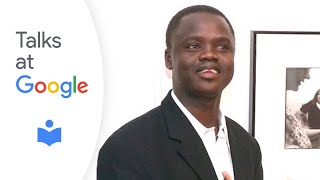
This is a transcript of Valentino Achak Deng’s talk (at Google) about his life (the subject of Dave Eggers’ novelized autobiography What Is the What). He describes arriving in the U.S. (flight coincided with the September 11, 2001 attacks), struggles resettling in Atlanta (short-term aid, low-wage work, night classes), and the trauma and resilience from his years as a refugee. He recounts Sudan’s civil-war toll (millions displaced and dead), the Janjaweed/Murahaleen atrocities and Darfur genocide, and his plans to fund schools and a community resource center in his home village via proceeds from the book and his foundation. The talk closes with audience Q&A on adaptation, violence, refugee integration, youth programs, and forgiveness.
Questions this video answers
September 11, 2001.
September 25, 2001.
September 26, 2001.
13 years.
16 years (reunited in 2003).
Chapters
It's my pleasure today to introduce Valentina Wacheck Deng. Mr. Deng's life story is the subject of Dave Eggers novelized autobiography, what Is the what? The book chronicles Mr. Deng's flight from war torn southern Sudan to refugee camps in Ethiopia and Kenya and eventually to Atlanta of the novel. Francine Prose of the New York Times writes, reading what Is the what makes it impossible to pretend that Valentino Achak Ding and the other Lost Boys and all the men and women and children who have suffered and who continue to suffer fates like his do not exist? Dave Eggers has made the outlines of the tragedy in East Africa so vague to so many Americans, not only sharp and clear, but indelible. All the proceeds from what Is the what go to the Valentino Achak Daeng foundation. Created and overseen by Mr. Deng. The foundation works to rebuild his hometown of Mariel Bai and to provide college educations to Sudanese immigrants in America. And now I'm honored to introduce Valentino Achek Deng.
Thanks Megan. I am going to sit here, then we can talk. Thank you Megan and thanks everybody for coming at this time of hour. I understand that all of you worked at Google and it must be a tight schedule that you've decided to spend your lunchtime here or your free time here. So I appreciate that and I'm going to discussed what is the water with you in three parts. In part one I will deal with my life in America starting from the day that I flew here. Then I will take you back to my country, the Sudan, and why we had conflict there and why they continue up to date in Darfur. And we'll have the time to ask each other's questions because you might have some interesting questions that you want me to address tonight before I leave. And that's it. Then we'll call it a day. My original flight to the United States happened to be on September 11, 2001. I was at the Jumbo Kenyatta International Airport waiting for my flight to leave when it was announced in the television news that America is under attack and I did not want it to be true. I pretended that that should not happen and why would it coincide with my trip? But it indeed was true and I left. I was stranded in Nairobi for two weeks but was allowed to come to New York on September 25, 2001 and upon arriving in New York, my case worker told me that my flight to San Jose, which is where I was going to live, had been cancelled and that the new plan had me going to Atlanta and that's where I would be staying for the rest of my life until I decide where to go later. And I had heard about Atlanta way back in 1996 and did not make an effort to know where Atlanta was. The only thing I could remember hearing about Atlanta was that the 1996 Olympic Games were played there and one of African teams, the Nigerian Super Eagle, won the soccer championships. But that was it. So now I needed to know where Atlanta was. And I asked my caseworker because I did not want to be sent back. I was concerned because Sudan was also in the news during that time as one of the countries that had supported Osama Bin Laden. And I was worried that being a Sudanese, I'll be sent back. And my case worker told me that Atlanta is in the state of Georgia. And my other question was, where is Georgia? Because I do not know Georgia. And he told me that Georgia is on the southern part of the the United States. And I said, that's okay, as long as it is in the US I am willing to go. And I ended in Atlanta on September 26, 2001. And there is where I began my American experience, both as an immigrant and someone who was willing to to be incorporated into the new society. What was challenging about my life in Atlanta was the fact that the resettlement agency was only paying my rent for three months and they were giving me $800 for a period of four months. And that was it. I had to begin a new life. And I found that really difficult to a difficult situation to face. So I began my first job, which was at a Christmas gift shop. And I was wrapping Christmas gifts, including Santa Claus toys. And I once remember asking about who Santa Claus really was. I was told that he comes to houses during Christmas time. And I told him, no, we don't have Santa Claus in Africa. But my job was good. I found another job later at the Best Buy store. And I was doing merchandise in that store and enjoying music at the same time and technological things like computers and televisions and big screen TVs. But then at the same time, my second job proved difficult because it takes me four hours to go to work and I was only a part time employee. So I worked for four hours and traveled for four hours to get there. And I didn't think that was going to be a good job to go on with. So I found another job at the Atlanta Decorative Arts Center. But at the same time, my opinions about going to school, you know, really grew tougher. And I wanted to go to school, but I could not go to school. Without having money to pay for my education. And so my third job was a full time job. And I would go to work during daytime and take night classes that evening. And I remember that sometimes I sleep for four hours, but I had to do that. I bought a car which was a little difficult to drive because I had just learned how to drive. And I remember that I had two car accidents within 30 minutes one day. And I would say to myself that I cannot come all the way to die in a car accident. Maybe I should stop driving and start taking buses or trains. But then I had the courage to drive more carefully and avoid traffic violations. And up to date, I have not had an accident for four years, and I've driven many cars after that. Then I began also to do speaking engagements for an organization that was founded by Mary Williams in Atlanta. And the organization was helping the new immigrants in Atlanta by taking them or finding them companies that would offer good jobs, or by helping them take their GED exams and apply to colleges. And we also had to raise fund for that organization. And I was a public speaker. So I became the keynote speaker in many events. And at the same time, I came to realize that not many people here have heard about a country called Sudan. And I didn't find that comfortable because Sudan had had many conflicts. And if many people in the world do not know about that country, then that means that those conflict will continue. And that was not a good thing to happen. So one day, during one of my events, I asked a group of high school students about whether or not they know anything about Sudan. And five people out of over 300 students raised their hands and told me that they had heard about Sudan. And out of the five students, three were already my friends. So there were only two people who knew about Sudan. And I found that not comforting. So I decided that I should have my book written. I should have a book written about my life. And by so doing, I'll be able to use my experience to help bring to the people the stories of war in Sudan. And at the same time, individuals can find the story helping or inspiring, because I believe that people have problems. Those at war have war problems. But even here in this country, people have employment problems, boyfriend, girlfriend problems, family problems. And maybe if you read a different story that you can be able to compare with your own life, then you might find a meaning to appreciate what your life is. And Mary Williams, my friend, decided to contact Dave Eggers about my book idea. And Dave had read a story about Sudan in New York Times and Time magazine. So he accepted to help me write my story. And later on we met in Atlanta. And Dave basically wanted to congratulate me and give me an honor for accepting him to help me write a book. And I said, no, you are the one who is honored for accepting to help me. And up to date, we do not know who took the honor between the two of us. And later that evening we went to a basketball game in Atlanta. And among us was Manute Bol, a Sudanese NBA player who played here in the past and many other friends. And we watched a basketball game between the Atlanta Hawks and the Orlando Magic. It was a good game. I enjoyed watching live and be a game. And at the same time, I had an experience with the cheerleaders who you came onto the stage during half time and danced really well to a break dance song that I admire. And I remember telling my friend that, oh, I really love the peer leaders. They should give them more time to play. But then that evening, Dave and I went back to my apartment and we began working on this story. I just took a linear narrative of my story and we recorded it. And later on we would exchange emails and different sort of storytelling. And it wasn't completely exciting for me to revisit my story because I could recall the situation in my country, especially in the southern part of Sudan, where over 2.5 million people died in that conflict that was fought between 1983 and 2003. And that over 4 million Southern Sudanese were internally displaced and had to live in the refugee camps in northern Sudan. And they were controlled by the same government that had contributed in their displacement in the country. And in other way their fate remains to be told. This is about 4 million people. And also I remember that in my country over a million southern Sudanese fled and went to foreign countries where they live as immigrants or refugees. And I'm among them. And remembering all of that part of my story was proved retraumatizing because I had to go back and remember some of my friends who passed away in a very awkward manner. And some of them died, while the last person they had their eyes set on on the planet was me. And I remember leaving behind people who were weak, who could not help themselves, were thirsty, were hungry, needed safety, and asking me to provide all of that to them when I reached my destination. But I wouldn't return to them. And I know that what happened to them was that they died eventually. And these were all details that I had to remember. And they weren't all challenging details too. If you read the book later, you will find some parts about my good life in the refugee camps and that I later became a leader of over 6,000 younger refugee youth from Burundi, Rwanda, Ethiopia, Kenya, Somalia, and from my country, the Sudan. I lived in the refugee camp for 13 years before I came to the US and I was separated from my family for 16 years until in 2003 I went back to reunite with my mother and my father and my entire family. But I just want to bring it to your attention that in spite of how much struggle I had to go through, you know, I did not give up. I lived through it. And I'm proud that sometime a human character can go through unthinkable incidents and still live to be part of our global society. Taking you back to Sudan, also, I would like to remind you that there is a genocide happening in Darfur and that my village is not far from Darfur. Some of the atrocities that I so committed against my people were committed by the Janjaweed. The Janjaweed were known as the Murahaleen in Southern Sudan. And my village of Mor Elbai, which is misspell on Google Help. I would like to help someone spell it right later on before I leave here. It's one of the areas that was destroyed by Morahleen, the current Janjaweed in Darfur. They would come on their horseback, on camels, on donkeys, sometime in cars and burn villages, kill men, loot domestics and non food items, leaving people with nothing to feed on. Sometimes the Murahaleen could be so devastating that in spite of having burned villages, having raped young women and girls, and having abducted children, they would also poison water wells by putting dead bodies in the water or by putting carcasses of animals in the water and just putting death in the wells. And that to me became something different than just war of defeating whoever one does not like. It became a true process of exterminating the people from Southern Sudan. Why I want to bring Darfur genocide into my book reading is that the Januids have continued to exist for many years in Sudan. In Southern Sudan, we know them as Morahleen. In the oil field of Southern Sudan, they were known as Popular Defense Forces or Mujahideen as they were declared in late 1990s. And then now in Darfur they have become the Janjaweed. You can see that only the NAMT had changed about this group. But their atrocities, their techniques of fighting and their support from successive government of Sudan had always been the same. Nothing had changed there. And you have images of Darfur genocide on Google. Earth, which maybe some of you have worked on that. And I'm proud that today the genocide in Darfur is not a secret like the one in Southern Sudan. And I'm proud that as I speak to people, you know, I give them the chance to see in my eyes what it means to live in a peaceful country, but at the same time to have people in your home country affected by genocide and systematic killing. I enjoy every aspect of my life here. I actually became an American citizen three days ago. So I have that. I have that opportunity to be a proud citizen of my new nation. But at the same time, I will not forget to support the needy people in all parts of the world because I believe that I struggle through hardship and that I need to use my freedom to help others whose freedom is denied, you know, attain it. I, at this time will allow you to ask questions and I can answer them because questions sometimes are good. They take me to the corridors that I might have not touched in my speech and we could go on from there.
Hi, thank you very much for coming to speak to us. In your book, you talk about your trip to the emergency room and before that, the experiences with being burglarized, robbed in your home in Atlanta. And one of the kind of themes throughout your conversations in the book, which I realize are partly novelized, but I think my impression was they're at least largely true. One of the overriding themes was that you and your friends felt very uncomfortable with the systems of living just day to day life in the United States. Your experience in the emergency room, you talk about being really uncertain about what's going on in the mind of the person behind the counter, whether you're ever going to get treatment, whether you're not going to get treatment because they think you can't pay. Issues that wouldn't necessarily occur to somebody who had lived in the United States their entire life. Do you feel like now, after a few more years, you're starting to feel comfortable, or do you, do you still feel confusion and uncertainty about your status as, I don't know, just in day to day life, interacting with other people? Have you become fully comfortable? And do you feel like the United States is your home completely, or do you feel like you're still struggling to adapt to this new place?
All of what happened during my robbery, having been robbed in Atlanta and the situations at the emergency rooms is something that I attribute to the crime scenes where I was robbed and beaten and left as unconscious. I actually had just come back from my school and was on the phone with my friend in San Francisco and I not in la, not San Francisco. And then I saw a woman come out from tinted black SUV and ask me to use my cell phone because she claimed that her sister lived in the same apartment complex and this was in Buckhead in Atlanta, if anyone had ever been to Atlanta. And I saw no reason to not help them with my cell phone. In fact, they were visiting one of my neighbors in the apartment complex. So I thought that would be a good service to give. But what I did not know was that this woman was working with criminals or she was a criminal herself. And the moment I handed my cell phone to her, she stepped straight into my room and went into my bedroom. And then two of her friends came behind and that sparked the assault. They beat me and when I struggled, one of them removed a pistol. And you know, you can't fight empty handed with someone who has a pistol. They started kicking me and left me unconscious. But later on I gained my strength and consciousness and I looked at my face with blood all over me and in my room and I went to my bathroom and looks at my face, face and smiles at myself. And I said that, you know what? I'm alive. That's what I needed. And these were criminals, they can assault anybody. A criminal does not have socials or political or any boundary except that attacking their target. And I immediately thought that would be safer for me to forgive them, first of all, because that will help me, that will help the anger that I have, the revenge that I was feeling. So if I had the ability to forgive them and then refocus my life or something other than the incident, that that would be the safest part of my future. And when the police came, they asked me if they can call an ambulance. And I did not want that because I actually do not like being put in an ambulance. And later on I went to the hospital and the people at the hospital took long to pay any attention to my treatment. And I laid at the doctor's house for several hours. Then I realized that, you know, this is a small wound. I thought about people who I saw badly wounded and they didn't have any medical attention and lived with that. And for me it was only my lips and my tongue that were affected and I could do with that. So I left the emergency room and went back to my room that morning. And it is an incident that only happened to me, but it also happened to many people. That's how I looked at it. There are thousands of people who are robbed and beaten and they are American. They could be immigrants, they could be visitors. And I saw no reason for me to judge the whole society based on that because I wouldn't even step three steps without even seeing that incident happening in my own country and wherever I have been. So the best thing to do about that is, first of all to forgive myself and to forgive those who hurt me and just be as faithful and as ambitious as I already were. So I never applied the incident in Atlanta to anything or to anybody. I just looked at myself and compared myself to others who have gone through the same treatment. And unfortunately, I was alive. But there are many people who are assaulted like that and never make it. Sometimes they are killed in the crossfire. So the best thing I appreciate about that is that I had my life to live. And with my life, I can do a lot.
Hi, thank you for coming. I saw a few months ago the documentary the Lost Boys. And my understanding is that they were in a very similar situation to yourself. And something that was really heartbreaking to me in watching that film was how excited these men were to come to the United States and how in so many cases it was so disappointing for many of the same reasons that you cited where they were given a very limited amount of time to make the adjustment. And, you know, rent was paid for three months. They were expected to get a job within that time period. And some of these boys were young and what came out was that, you know, their ages were uncertain and so many of them wanted to get an education but as you said, couldn't afford it or didn't have time because they needed to make money too. So many of them in the film actually ended up just getting low income jobs and kind of, you know, it didn't. I think the film spanned about a year. So you didn't know what happened to these men later on, but it seemed that they didn't live the dream that they were hoping. And the most successful man who came over actually pretended or was able to forge a birth certificate to go to high school. And he did very well in high school and went to college. So I guess my question is how, you know, do you see a better way for dealing with this issue? You know, these boys who come from Sudan who are given this opportunity, is there a better way to manage the transition once they are here that our government could do or NGOs could do to, you know, help you guys, once you're here, make a great transition to live those dreams of having a better education and not just working for survival?
Essentially, it's good that you're looking at that struggle in the views of the so called lost boys of Sudan. But in addition to that, I also think that all immigrants who come to the United States undergo the same circumstances as they try to adapt and to integrate into their new society. There is that cultural collision that sometimes doesn't make it easy for a newcomer to accept everything or to take in everything. In the case of the documentary you are talking about, I hardly watch any documentary about Sudan because they remind me a lot about several things. But the reasons behind people not feeling comfortable here, especially when they come initially, is that there is the fact about what is real and what is not real. And then there are expectations that one has whenever you are leaving a place that you do not like, a place that you prepare to go to. For example, when I left Kenya to come to the U.S. i assumed that everything I wanted would be available. I expected so much. But immediately when I came to Atlanta, I realized that even the English that I spoke, it's not the kind of English that will help me get anywhere here. I took bus rides, I took trains rides. And if anyone has been to Atlanta, then you know the kind of accents that is there. And with the kind of English that I spoke at that time, it wasn't easy. I found out that, you know what? I don't speak American English and I don't understand people. Sometimes someone would express the whole sentences that I cannot understand and I would smile and I said, I know English, I know some grammar tenses, but I cannot understand you because of the accents you have. With the groups that wanted to go to college or high school, immediately, you know, we came to this reality that when someone is older than 18 years of age, you have to work, especially if you come in as an immigrant and pay your education, or you have to have a mentor, an American mentor or a friend who will have to help you find out a way to go to college. And I did not know about financial aid and so are maybe my friends in the documentary. So when I began to work, at some point I made over $15,000 a year and I could not qualify for financial aid with that. So I had no financial aid. But yet I wanted to go to school. So I had to pay my own tuition fee when I went to the community college in Atlanta, which was expensive and for those guys too. Sometimes there are assumptions made about America when someone is not here. And it takes the courage from someone who came with those assumptions to approach the society, befriend individual and get to know exactly who Your new fellow countrymen are. But if you remain with assumption, then sometimes you may express an opinion that does not represent the whole group or the whole culture. And I know that some assumptions have been expressed in that documentary about the American society and the Americans, but it's not a big mistake. It comes from an individual. I believe that this country is wonderful. This country is a great country. There are opportunities. They are there. I have had my opportunities. I attend Allegheny College now and I'm doing my self design major in international diplomacy and world affairs. And I've been traveling throughout the country and nobody stopped me and expressed bad words to me because I looked as someone who comes from another country. But again, it depends on the attitudes that one has on his new experience. To live constructively in a cross cultural situation is a challenging experience. And what I did when I found that out was that I met many new friends and I allowed them to laugh at my expressions, at my culture. But then at the same time, I would find out some things that are funny or interesting about their culture and laugh about that. But then through that interactions, we eventually coin out a mutual understanding, a mutual relationship that we can live together as friends and as people who know each other's well. So that's what it takes. So good questions, Another question.
Hi Valentina. Thank you for coming to share your story. And I think for a lot of people in the room today, we all want to know how we can help. And I think there's a very real and clear way that we can by supporting your book. I was hoping you could talk about some of the progress of your foundation that you set up and other ways that we as individuals and as a company at Google, can help with some of the things that you faced.
Thanks. I was able to travel to Sudan in December 2003 and reunited myself with my family. They still in Marelbay. They have lived there during a long war in Sudan. And it was exciting to meet with my mother and my father and my siblings. Actually, that was the best moment of my life so far. And it was challenging too to meet my family and be able to. To witness the toll that the war had taken on them. My father was a businessman and everything he has was taken or destroyed. And I have my brothers and sisters who were not going to school because all of the schools in Southern Sudan were closed. But then at the same time, I learned that I can only do one thing to help in Sudan, and that is maybe to support my family financially and with whatever they want. But that is not all I wanted to do. I wanted to be able to support many people beyond my family. And what I decided is that I wanted to build a high school and an elementary school in Morrell Bight. And also I wanted to build a community resource center that will address gender issues because my country is a male dominated society and women's place is to be determined there. There's peace agreement between the north and the south, which is separate from the Darfur conflict. And girls are to be allowed to go to school. And for them to be allowed to do so, an education is needed so that parents can understand that their daughters are as valuable as their sons. And all of them deserve the chance to go to school or to enjoy any social activities in the society and outside. So the resource center will address that, will have also a library that will provide books and computers and also a training center where youth could be allowed to practice their potential talents either through training or exposure. So I'm going to be doing that and all of the proceeds from the book are going to that project. And that is what my program is going to be doing. And I'm going to go to Sudan this summer to make sure that everything has started in Sudan. And. Thanks. A good question.
Hi. I just wanted to I guess ask you what you think. What would, what do you expect the, I guess cultural and maybe individual impact of your book would be, you know, like now that we.
Oh, okay.
So I'm wondering what you expect.
The.
Impact of your book would be upon us as a society and maybe individually and how, you know, I guess what the story will you'd like it to kind of provoke in people to do.
The book is about my life experiences as microcosms of the conflict in Sudan. And in that sense, I hope that people who have read the book or read the book will be able to understand the intensity of the conflict in Sudan and especially the current Darfur problems. Because sometime we looked at images, sometimes we looked at villages that had been burned, but we don't manage to look at what life might have been before that, that children in the villages that are burned, that parents whose children have been killed, that people who have been separated from their friend have had a good life, they were excited and they deserve to live peacefully. So I hope that when someone reads the book, then you will even take an extra step to think about the image that you would see in the news or on the television. And that's what I hope the book will bring. And then also this book is about us. I'm not assuming that you will Read it and only think about conflict in Sudan. Use it about your own life. Sometimes we struggle looking for better jobs or looking for jobs that we want to do sometime. If we are students, then we want to have very advanced computers or we want to have an expensive ipod. And when we don't get that, students in the school make mistake to quit their school to go and make money and get the ipods. I hope that a person like that would be able to compare his life with my experience from the book. And then they will begin to say, oh, I believe that these are problems, but they are minimal than what Valentino had lived and what is the what. And if you are able to do that, then you will be able to appreciate how you are progressing with your life. And it will help you to look at good alternative. Because it's my story, but it could be our story. We can use it in so many ways. That's what I hope that the book can bring to the people. For example, with an incident where I was beaten in Atlanta, you can look at it and if you have been in that situation, then you will say, oh, it happened. But I think I can do away with it because it's not going to happen always to you. And that's what I hope that the book will help us to understand about our own life. I am not a victim of any experience that is described in the book. I have decided to say no to all of that and then that I am going to leave my life. I had the ability to improve where I need it to and the ability to change where change is required. And even I have the ability to forgive and have hopes and persevere in the face of social challenges that haunt us sometimes. Those are things that I hope the book will help us, you know, to see. I have a question.
Thank you for being here.
I remember you mentioning faith and the.
Concept of forgiveness when you're assaulted in Atlanta.
I was wondering how that falls into your story and your struggle. It helped me to understand that, you know, I can, you know, I can have. I can have negative experience anywhere. You know, I. It happened here. It was in Atlanta, in a big city, just as it would happen anywhere if I were in Sudan, in Khartoum or in Moore Elbai. And I related it with my experience. And I said that, you know, sometime we can be unfortunate in different circumstances. But that means that also you should use that experience to weigh your life. And that incident had helped me to understand that always not everybody will have good intentions in the way that they approach you. We were smiling minutes before they assaulted me. I was helping minutes before I was assaulted. But it was changed the other way. And I came to know that, you know, that's normal, that is about life. It can happen in big cities that way. Hi, I was wondering if you could talk a little more about.
I think you were saying that you became the leader of 6,000 youth in Africa. Could you talk more about that and.
What that was like? I started working with the United Nations High Commissioner for Refugees as a youth representative, I think in 1997. I was a teenager at the same time. And we were having a class when one of my teachers came and was recruiting young student to be in a drama club. And our role was to recite poems and choral verses and also conduct skids and role plays about issues that were affecting our society. And HIV AIDS was the primary focus at that time. And I was a child boy growing up. So this teacher came to my class and spoke. And she did not make us know that she was recruiting. And I smiled and I think I qualified just because I smiled. So I joined the drama club. And our work was primarily attending a reproductive health workshop. And I attended that. And they began talking about hiv, AIDS and sexually transmitted diseases. And we were showing pictures of all of the impact and diseases. And I was terrified. I did not want to have anything to do with that. But then a few weeks later, they would ask us to go out and into the community and educate the people. They told us that if you hit these diseases, if you think that people should not be infected, you are going to be the voice of your people and you will help them. So I accepted and I began few of my training. But then I had problems talking to adults and families because they did not expect me to talk about sex. My society is very secretive about sex. And for me to continue to talk like that, I would have consequences to pay both from the elders and also from young girls who might avoid me. And I didn't want that to happen. I want to be involved. But then I decided I was watching a puppetry show programs on the television one day at the UN compound and came to like the puppets idea. So I asked my boss to train me how to manipulate a puppet. I was sent to Nairobi and took a training in puppetry. And I would come back to the camp and train more youth. And then we would build puppet booths in our communities. And then we founded Social Action Teams group of young people who were trained in first aid and disaster management. And on the weekend we would go out and clean stagnant water pools so that mosquitoes cannot bite people. And we would go out and teach people to use condoms if at all. They cannot and cannot be able to abstinence, to abstain from sex altogether. And I started using puppetry. So my puppet would talk to people. And after on when I get out from the booth, someone would say, how come you talk about things like that? And I would say, no, it was the puppet talking to you. That's actually the idea behind the puppet. And we did a lot of things just to help our immediate community. And later on I got promotions from one stage to another and began working as the youth representative representing over 6,000 youth. That was my work. And I became a peer counselor as well because there were many teenagers who have growing up issues and many other problems. That was part of my work at the camp.
This is going to be the last question.
Hi.
I was wondering through your experience, as if there was a single thought or a single thing that kept you wanting to survive that stopped you from giving up a single thought. I always have confidence in myself and I always tell myself that I can do it. I can claim the highest mountain, I need it and I can do it if I have life. Because we all should appreciate the fact that we have life in us and it can help us. And I always not make a mistake to lost hope. Because with hope I always make myself understand that if this minute is the difficult, the most difficult minutes of my life, then the next minute will be the best one. And that's how I have been able to do that. That's how I've been able to fled from Sudan to my first refugee camp in Ethiopia. And then I came to Kenya and leave to the refugee camps for nine years and then came to the US when something happened to me that I don't understand. I always assume that just needed time and I will understand it because there's always an alternative that have confidence in your life. If you don't have confidence, then even the slightest movement of your life could mess you up. Thank you so much for coming and thank you.
More from Guy


Cheryl Strauss Einhorn | The Human Edge: Smarter Decisions in the Age of AI | Talks at Google



Rachel Glennerster | Innovation and the Center for Global Development | Talks at Google

Rebecca Winthrop | Rethinking the Purpose of Education in the Age of AI | Talks at Google

Dr. Robert Wachter | A Giant Leap: How AI Is Transforming Healthcare... | Talks at Google



