When Madeline Was Young | Jane Hamilton | Talks at Google
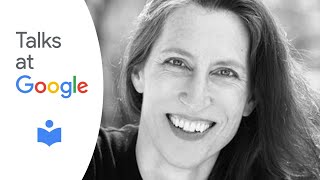
Jane Hamilton reads from When Madeline Was Young, her novel about a woman injured in 1944 who becomes mentally childlike, and the family that forms around her. Hamilton discusses scrapping a four-year manuscript before writing this one, and why she chose to tell the story through the eyes of Mac, the son from his father's second marriage.
Chapters
I just have to tell the Google story that has recently been told in my family. And it goes like this. And it might be a little impressionistic because I don't have all the details, but you'll get the gist. It's about the goodness of Google and also how important it is to keep a really good journal. But we have an old family friend and his son, he has two kids, and the younger son was kind of the kid in the family who really didn't know what he wanted to do. So he found himself riding trains, and he was in California and near the Google office in Mountain View, and he missed when he was jumping the freights and he fell off and his leg was severed. So there, you know, in the middle of sort of nowhere in acute trauma, and just about 2D, I E. So there was a doctor at Google, an employee at Google there, and there had been a conference, and it was one of those situations where, you know, the day was over and he was leaving, but then he went back into the building to get something that he'd forgotten. And then he decided to take this route that he'd never taken before. And he came upon this, and I can't remember exactly what kind of doctor he was, either ER or internist or some perfect doctor to come upon the situation. And he looked at the boy and he called, wherever he called to say, you may not send an ambulance right at this moment. It has to be the flight for life because the ambulance will die. So helicopter comes, they get the boy in, and he's as stabilized as you can be out of the situation. And this doctor is trying to find any identifying clues about who this person is, and he discovers in the pocket of the kid's jeans this journal. And he begins to read it and he's amazed. It's a fantastic journal. This kid is a wonderful writer. And when he gets to the hospital, he just says, I'm covering all the charges. We don't know what this is, but I'm going to pay for everything. So the upshot, the shot of it is that the boy lives. He loses his leg, but he lives. And in the meantime, after several days, they discovered who he was, and the parents were brought in from wherever they lived, and they got to stay in the Google Royal Suite free of charge for weeks and weeks on end. So it's a really amazing story about the goodness of Google. The moral is, if you're going to jump freight trains, have your journal in your pocket and, you know, write it. Well, so anyway, I just, I just I love that story. And then I'm going to tell you another story, which is about kind of how strange it is to be writing in our culture right at the moment, to be writing fiction. And I write what's called literary fiction, which of course means absolutely nothing. But a couple of weeks ago, I was on an airplane, and I was flying from LaGuardia to Milwaukee. And I don't know if any of you have ever flown to Milwaukee, but there's a great hometown airline called Midwest Airlines, and we're very proud of it. It's all business class, and it's the way to fly if you can fly out of Milwaukee. So there I am at Midwest Airlines, and because it's a local hometown airline, sometimes I know two people. There's several stewardesses who. So I'm sit reading a book next to my seatmate, who's asleep, and down the aisle comes my neighbor Suzanne, who's a stewardess with her beverage carton. And so, you know, we say, oh, hello. Hello, hello. You know, do you want an ice? Do you want a lime? How are you? How are your children? What are you working on? At which point my seatmate wakes up, and Suzanne says to her, do you realize that you're sitting next to a famous author? And I say, no, no, no, authors aren't famous. You know, teenagers in sitcoms are famous, but authors are not. And Suzanne says, no, no, she is. She was on the Oprah Show. So then Suzanne goes on, and my seat mate. And you know, I hate this about stereotypes, how true they sometimes are. This woman happened to be coming back from a hairdresser's convention, and she was armed with mousse and gel and curling irons for the straight hair and hairsty straighteners for the curly hair. And she said. She asked me a question which people often ask, especially in the characters, her line of work. She said, what do you write? Do you write fantasies, mysteries or romances? And, you know, these people often have only three genres in their arsenal. They don't know that there's other kinds of books. And I never know what to say because, you know, when I was a girl, there were just books, there were just novels. But now there's all these categories and all these genres, and I am pegg in the literary genre. And I knew if I said that I write literary fiction, this would mean nothing to this woman. And I don't even really know what literary fiction is, except that I know that, you know, a great book. A great book is a book where the author brings all she knows to bear on her sentences and her characters. And I happen to love books where the books are character driven rather than plot. But again, I knew there was sort of no point in saying this to exceed me, and so I kind of wanted to say what to say. And then I think how much I love great books and how I really do think that wonderful books are thrilling. And so I say to her, and I know it's a little bit disingenuous, but I don't really feel in the moment that it's dishonest. I say, well, what I aim to write is thrillers. And she says, you write thrillers? Well, that's my name. And then she says, she gets all excited and she says, are they smutty? And I think about how my mother thinks my names are scandalous. And so I say, well, so many people think they're smutting. And she says, really, really smutty. And I, you know, I'm just in so deep. And I say, well, some people think they're kind of really smutty. And she says, where can I get one? As if, you know, only an author can illuminate where a book can be found. So then I tell her that there's actually a really good bookstore in the town where we both live, which she must have driven past thousands of times in her life. So as I'm sort of describing where it is, she is suddenly distracted. The person, the woman across the aisle, was holding the baby. And it is revealed to her that this baby is coming back from a trip to New York City. And the baby was on an episode of Law and Order. And she becomes apoplectic. She's so excited. Oh, my God, did you hear that? That baby was on Law and Order. And I'm thinking, are there no cute babies in Manhattan? Bring one in for. So she, you know, she's leaning over and she's googling the baby, and she says to her mother, I just. I'm just so sad that this baby is too young to autograph my napkin. And, oh, when I give her autograph, and I'd even take her drool on it. So this is how it is for an author of smutty thrillers. A baby who has been on Law and Order is more compelling than, you know, someone who writes pure, thrilling smut. That's. But then, you know, so then I got home and I really did kind of want to kill myself, even though I didn't want to talk to her. And I did. But still, it was just sort of. It's Just sort of how it is right now. I was. My mother is 87, and she just moved from her home of 87 years in Oak Park, Illinois. So I've been spending the last several months packing her up and helping her get ready to move to an entirely different community. And I live in a small town in Wisconsin now, but I grew up in Elk park. And it was actually very wrenching. Perhaps some of you have already had this experience in your life, and I'm sort of old to have it, but to finally sort of have to say goodbye to what I consider my sort of real home, my deep heart's core of a home. And so I was wandering around the old neighborhood, and when I was a girl, there were 85 children on my block. It was the time when Catholic women mostly did not use birth control. And so across the alley there were 12 boys. On my side of the alley there were 11 girls. And, you know, the mothers. Can you imagine having 12 children? I mean, basically what they did is they opened the door in the morning after breakfast, said, go out and play and don't come back to lunch. And everybody ran around it barefoot. And, you know, it was. It was. It seems now back to pretty like a magical time. And there was that weird thing that happened because it was really the Catholics against the Protestants in the neighborhood when. And I was a Protestant, I would wake up and I would realize that it was. It was a holiday for the Catholics. They had all these saints days, so they. It seemed like they never had to go to school. They would, you know, they would taunt us going to school. You have to go to school. You have to go to school. And it was a very bitter thing to have to go to school. And so anyway, so I was remembering just all of those dynamics. There were a couple of handicapped, you know, older teenagers who sort of had always been the same. And the neighborhood just sort of tolerated them and absorbed them into the neighborhood games. And there were three kids who died when I was coming up. There was a boy who was electrocuted on the third rail. L. Trax. There was another boy who pushed his baby sister in her buggy into the street. And the buggy was struck by a car and the baby was killed. And that family moved away shortly thereafter. Who knows what became of them. And then there was a bad, bad boy, Jimmy Jacobson, who was killed joyriding. So I just remember early on really sort of absorbing the fact that life is fragile and it seem unfair that you could one minute be alive in the next not. But if you have a neighborhood of 85 kids. You know, the odds are that there are going to be kids who die. So. And then this was also a strange reality of that time, which was that we had an African American cleaning lady and she worked and lived with my grandmother for years and years. She was a domestic. My grandmother's era was one in which it was not uncommon for middle class people to have servants. So Lucille Weathersby used to come to us once a week and she'd put on her cleaning outfit and she'd work all day for my mother. And she sweeping away, felt like she was raising us and we were her children. And I remember her one day singing up to my sister, who was Sarah, wake up. The tide is sinking. The tide is sinking. I don't know what that means, but it's not really beautiful. So anyway, there was that whole weird dimension, plus the fact that my do Gooder mother decided one summer that we should invite a girl from the ghetto in Chicago to come live with us and experience suburban line. Why? Why? You know, I just. I remember driving to go pick up Elzina and, you know, going up into this tenement and she lived in this, you know, two room apartment with all her siblings and there was a bathroom down at the end of the hall. And it was just sort of the. What you think of as the quintessential ghetto. And I thought even, you know, I was eight years old and I was the one who was going to be her friend for two weeks. And I thought, what? Why does she have her. I have my life and what. So she comes and lives with us in this, you know, relative opulence for two weeks and then she has to go back to her real life and what, you know, how can you swear that? And I just, I always felt so unresolved about it. And what really was my mother thinking? So anyway, and the last thing that I'm going to say about the neighborhood as I was saying bye to it, was that at the end of the day, when we were kids, it wasn't the Catholics against the Protestants, we would split off. And it was the east side of the alley and the west side of the alley and twilight was coming on and we would go to war with each other. And it was the most thrilling thing in the world to be shinning through the mud in the yards, about to be killed or having the power to kill somebody with your finger. So all that to say, I was thinking about this as we were moving my mother and still feeling a little bit bad about the lie I told to my seat mate, the hairdresser. But thinking also that really those times in the 60s and 70s were, you could call them thrilling. And there's a lot of those details that have gone into my novels. And really that neighborhood, especially for this book, is kind of the heart and the soul of the book in a certain way. So that's my confession about my lie. I was brought up not to lie, but you know, maybe she did have the book stories and now maybe she's reading thrillers all the time. I was working on a novel for four years that didn't work and I had to throw it out. And it was a very painful experience because, you know, I just had devoted years to this thing that I knew was going to be dead on arrival. I knew even as I was working on it that it just, it just, it was a bitter failure. So one day when I was just about 50 years old, I had decided that I would write one more draft of the failed novel and see if I could make it the best failure I could. I don't know if you have that luxury working here. You probably don't, but sometimes being self employed has its. During that time I went to see this play in Chicago called the Light in the Piazza. And it's based on a novella by Elizabeth Spencer called the Light in the Piazza. And it's middle aged woman who takes her 26 year old daughter to Italy. And the daughter is impaired. She was kicked in the head when she was 12. She has the mental acuity of a 12 year old. She's very beautiful. They go to Florence. The girl falls in love with this Florentine young man. He falls in love back with her, but because of the language barrier he doesn't realize that she's impaired. So the mother at first thinks I can't let this happen, we have to keep them separated. And then she realizes that. But this love is her daughter's possibly one stab at happiness. She manipulates the situation so that the two get married. And it's a very adult musical, it's a very adult story. I mean, musical comedies often end in marriage and this too ends with the marriage. The wedding is taking place behind the mother as she pelts her lungs out. She's singing this song about how love is a fake, love is a fraud. But here's this little possibility of happiness for this child and it's really devastating. It's really about how parents, no matter what, have to let their children go into their lives. So I got home and was just utterly transfixed by the story, of course, you wonder what happens next. What happens when the Italian family realizes how long is it going to take? Then what? So I wanted to write a book about devotion and marriage, which is kind of an old fashioned concept, and I wanted to write about a happy family and I wanted to take that story, not those characters, but that story forward. So I wrote a book about a couple who gets married. And a year into the marriage, Madeline, who's the wife, goes for a bike ride and she has an accident and she's impaired her life, or so it seems. And she has the mental acuity of about a six year old. This occurs in 1944, I think. So it's the Middle Ages in terms of what doctors knew about the brain and in terms of therapy for the brain injured. If this had happened to Madeline now, she would have had a completely different trajectory. So anyway, she's impaired and she has a nurse who's caring for, named Julia, and Julia ends up marrying Madeleine's husband. So you have a husband and wife who are caring for the first wife. And it's not a secret, but it's kind of an unusual arrangement. So I'm just going to read a little bit about that, about when Julia, the second wife, comes onto the scene. This book is narrated by the oldest son of that new marriage. His name is Mac, and he has an aunt named Figgy who is very negative about this situation and sort of tells him how she thinks it is, which is different than how he thinks it is. So I'm just going to read a bit here. In the years before their marriage, my mother came to the apartment to cook a meal, to read to Madeline, to play Go Fish, to look at fashion magazines, to dress paper dolls. Julia would hold Madeleine's face and speak to her, making a loving tab. She told her stories. She tried to stretch her memory gently, gently, so that Madeline, her head to her shoulder, as if in contemplation, didn't always become enraged by the challenge. My mother understood that a woman who had once been athletic, who had shot archery and enjoyed swimming more than anything, needed to be worn out, that it was important to keep the body moving. Julia may have known, before research began to bear the evidence, that exercise is important to cognition. Mandeline had come out of the accident with a hitch in her walk, walking with an ungainly stride. It was, if I had to guess, a result not of the brain trauma, but of the wrenching of her limb and the wrecked wheel. You had to look three times at her, once as a matter, of course. And then, at that odd lope, and again to see that it really was a lovely young woman. In summer my mother took her to the beach and together they'd sink down out of the July heat into the cool water, Julia moving Madeline's arms to remind her of the strokes she'd used in synchronized sw. She was with Madeline through her hysterectomy, a surgery the doctor had suggested in order to make Mrs. McIver's life easier. As my Aunt Figgy told it, my mother's attorney cousin arranged for my father to be legally separated from his wife. He was my mother then, according to the lore, who orchestrated the divorce. Juliet, the narrator's mother, is very plain, and Madeline is a beautiful woman. Only a desperate man would have taken your mother seriously, my Aunt Figgy told me not long ago when we were up at Moose Lake. How else, she said, could Julia have landed herself a husband? Figgy, I said wearily. It wasn't the first time she'd spoken to me about my mother in disparaging tones. Mac, sweetheart, come on. My aunt leaned forward on the porch after all those years, still showing off her cleavage and her low cut blouse, the withered bosom and her pearls, at last giving birth. Trish and elegance, she said. Your mother saw her chance and went after your father. Good for her, is what I say. I'm all for that kind of capture, but on a level playing field there would have been no competing with Madeline. The glamorous made her own slips, her own camisoles, her own winter coat. She was that particular. So what if she was no intellectual giant? What hot blooded man cares about that? Madeline had powers beyond the standard young blonde, genuine star quality, that calculating femme fatale mustiness beneath the cool platinum purity. I'm telling you that in her own way she was a deep thinker. But had she ever read anything more difficult than a fashion magazine? He rubbed her hands together with a thrill of this part of the story. Say there hadn't been an accident. Your father would have died a slow death, a cruel death, if he'd stayed married to that gorgeous twit. Absolutely. He would have never gotten a divorce.
Never.
She threw her head back and laughed. He'd have taken to drink because I made no comment. She seemed to think she had to elaborate. Look it. Your father, even with those thick glasses, has always appealed to women. He's one of those killingly thoughtful men, nothing showy, but if you happen to take a fourth glance, you're smitten. Madeline was your father's real Love, the passion of his life. He knew he'd never find someone to fire his jets the way she had. And let me tell you, his quiet, indignant as your father is, he couldn't keep his hands off her. She had this way of acting, as if she tolerated his devotion. A total come on, don't you think? Yes, I said. Once she was out of the picture, so to speak, your father figured he might as well take a wife with broad hips. Figgy held her hands three feet apart as if that distance had been my mother's girth. And those sagging breasts, those ill fitting brassiers. She was a dead ringer for a Salvation army matron. There was a hardy girl from you, someone who wouldn't slip off a bike and smash her head to pieces. A woman who was so hopeless she'd care for another man's wife. Wife number one, wife number two under the same roof. So Oriental. I had only to raise my eyebrows. You don't think so? Oh, well. When Julie and I were roommates in college, I always thought I could save her from frumpiness, bring her up in the world. Her big fat spanky pants drying in the bathtub gave me the giggles every morning. Don't mistake me. I loved the woman, know that. Her secret playful streak, her intelligence. She was a walking reference for things historical. And she could recite poems stanza after stanza. I loved her like a sister. My mother had been dead for a few years when that conversation with Figgy, one of our last, took place on the Moose Lake porch. As had become usual in my talks with her, I'd been filled with the outrage of a good son. As always, I'd remained the well brought up nephew. In the early 1970s, the two of them had an argument from which they never recovered. I did try to remember that Figgy was probably still trying to justify herself, still trying as she ranted at me to make Julius see the light. I regretted, as I had often done, that I'd never gotten my mother to speak about the early days of her marriage to my father. She always brushed my questions off, as if taking on a burden like Madeline was something anyone would have done. I would have liked to tell my aunt that her friend Julia had become more beautiful as she'd aged, radiant in a way Figgy would never have understood, grew rounder and rosier and even frumpier than she'd been, if that was possible in Figgy's book. As the era of the girdle gave way to the salubrious days of the sack dress and sweatsuits like a child. I wanted to shout at Figgy that my mother was better, wiser, smarter, deeper than Figgy could fathom. Although Julia wanted to do good works on a large scale, organizing and assisting in an Eleanor Roosevelt fashion, it's not hard to imagine how she could easily have been drawn into my father's line, how she, with their store of sympathy and grace, might have thought that in the MacIver household there was, in fact, a need equal to her love. If I'd said so to Figgy, she would have laughed me off the porch, repeating my sentence as if it were a punching line. So one of the interesting things about writing this book was that I was so kind of freaked out about writing a book that failed for four years that I. I sent an early draft of this to my editor, just as kind of. I needed a little support. And usually when I write a book, I read it when I'm really down out loud to my husband. He has unerring instincts, and he listens very solemnly with his eyes closed, and he'll say, that was strawberry jam, the last chapter. Now it's raspberry jam. And he laughs in all the right places. But before I read it, I sent this to my editor, and she called me and she said, I think the book is okay, but it's missing something. And I think what it's missing is a boyfriend from Madeline. Madeline is this beautiful woman who's being raised as a child with this new couple. And. I thought, yes, absolutely, she has to have a boyfriend. So. So I said I could sort of see the whole thing. I could see this boyfriend. I could see this whole character. And I said to my editor, I'll call you in about six months. And so I invented this boyfriend named Mikey O' Day for Madeline. At this point, Madeline's about 48, and Mikey is the same age, and he lives in the next block, and he's impaired, too, and he has this habit of singing at the local ice cream stand in the summer. And he's one of those wonderfully impaired people. And his impairment is such that he knows this whole catalog of songs, and he can sing anything. So one night, Julia makes Matt take Mikey take Madeline to the Dairy dip. And I'm just going to say that true love ensues. And maybe I won't read this right at the moment, but if there's any question, push me to the question portion. I just had a diacose in my completely stone. Yes.
So is this the novel that you've been working on for four Years.
No, I threw it out.
Okay.
Because I wanted to know kind of how A Light in the Piazza, I guess, affected that novel. Or did it just cause you to start this one brand new?
I was doing a reading at Hope College, Michigan, of the failed novel. And Hope College, as you know, it's in your state, is a very religious school. And I was reading this group sex scene from the failed novel. And why did I do that? I don't know. But anyway, I was reading along, and all of a sudden I thought, the group sex scene notwithstanding, I thought, this is the worst thing I'd ever read in my life. And I repeat it, and I can't. I have to ditch it. But I've working on it for four years. You know, that's quite a commitment. So it was at that moment that I decided, I'm gonna go home. I'm going to make it the best failure I can. And I did that. And along the way, I went to see the Light in the Piazza. And, you know, writing a bad book is sort of like being stuck in a bad marriage. And for many women who are stuck in a bad marriage, you can't really leave the marriage until there's a new man in the wings. And so once I had this idea for the Madeline book, I could so happily, so freely d. The bad book. And, you know, there was. It was the happiest day of my life when I packed it up, put it in a big box, and just knew it was the right thing. And then I have, you know, the new romance to go off to. So is this romance for your question? Yeah, yeah, yeah. So. And, you know, people sometimes ask me if I think of going back to the bad book or if there are parts that I want to salvage, but the answer is, God, no. So bad. And, you know, as often to keep the marriage metaphor running, when you're in a bad relationship and when you sort of want to stay for whatever reason, you think, well, if I just, you know, nicer, or if I just try to make conversation about the football team or whatever. And I kept thinking, if I just make the sentences better, it'll be an okay book. But it had no sort of psychological depth. And it was about a girl who has a psychotic break. For some reason, at a deep level, I was really uninterested in researching psychiatry, you know, So I just. I still sort of think back to it and think, hallelujah. And the other thing is that I was working on it during and after 9, 11, and it just seems so trivial and frivolous. To be writing a little drawing room of drama about adultery, women. You know, there were obviously critical issues to write about. So this book actually is about. It takes place from Vietnam to Iraq. And I really wanted to write about the way people talk about politics and how we tend to get stuck in our corners. You know, whether Republican or Democrat or independent or, you know, whatever, we sort of get our ideas and then for generations or you know, for decades, we're sort of stuck in our places. Often that happens and in this book there's an argument that sort of spans the decades and the characters are stuck. So, you know, I lived through the 60s, but I was an empty headed girl. And it was really interesting to read books and watch footage from the time that I lived through, but was paying no attention to it. So, you know, this book, for whatever reason, allowed me to write about war in a way that I felt, you know, more meaningful than my silly little book about the role of symptomatic rank and the librarian who was doing adult work. Yeah. Yes.
I have actually two quick questions. Just me thinking of something. You said that you didn't really want to research a psychotic break. It didn't seem like a good idea. What triggered you to decide to write that book? What's triggered you to write other books besides this one?
Well, the question is what's triggered me to write the books that I've written? Why did I want to write the book about the psychotic break? You know, I don't exactly remember. I knew that I wanted to write about a woman who was a writer and was, you know, she had her success decades before, but writers often write about writers or writing and I think it's sort of a bad idea. So there was that whole aspect that I just, you know, I've heard it said that writers always have to write one book about writing. And I just. This, it just kind of bored me. So, you know, all the books and all the stories have come from different places. My first book, the Book of Ruth is about a son in law who murders his mother in law. And that actually occurred in my neighborhood. I didn't know the people, but you know, I live in a small town and you can imagine it was the talk of the town. But actually as I was writing the book, I don't know if it was a bad three or four year period for mother in laws, but I kept noticing that this was actually kind of a common crime. So I just became sort of possessed by the idea of mother, daughter, son in law living in a small apartment and how that could create a really violent atmosphere. And at the time, I was living with my husband and his aged aunt. I really liked and loved them, but I was. We were living in pretty small quarters, and as much as I love them, it was hard. So there was something in that situation that reverberated me. So. And then, you know, A Map of the World is about a woman who is minding her neighbor's child, and the child mounts, and so she has this, you know, this terrible situation where she is responsible for the death of her best friend's child. And I was. My son at the time was 2, and he was in a daycare situation with a little boy who drowned in his own family swimming pool. And it was just. When you're a parent, every next step is a disaster waiting to happen. That's the downside of parenthood. And so I just wanted to explain what that would feel like to be, A, have that responsibility, and B, to have lost a child. So all the books start with a little kernel of something, whether it's, you know, a story out in the world or something from the past. Yes, yes.
I know that you had. In Disobedience, the narrator was also the son looking back on his life. And I always wondered why, particularly that book, why you chose it to be a teenage boy as a narrator and why you chose it as a son again.
Yeah, why did I choose a teenage boy for the narrator of three books of beating, his fourth book? Well, I really like noise, and I have a couple of brothers. And in particular, one was very wry, and he doesn't talk much about everything that comes out of his mouth. It's just hysterically funny in a very quiet, pointed way. So that sort of sensibility went into Henry Shaw, the narrator of Disobedience. But I wrote that book because I was on this panel about women in literature, and the moderator said all women eventually write about adultery. And I didn't think, is that true? I thought, do I have to? And then I thought, well, what's the twist on the adulterer's story? You know, the husband finding out? So what? And I thought, well, what happens if the son finds out? You know, and what does that do to the whole relationship between mother, son, and the family? If he keeps a secret? But especially with email, you know, that's such an easy way, especially if the son is a computer geek, to tap into the mother's email if he's fixing her account, and then he sees this information. So in that book, he follows the story of her love affair and he's repelled by it and he's also addicted to it. I would say kind of an unusual relationship with his mother. I had to read that book recently and I don't usually go back and read books, but I forgot how screwed up he is. But I really loved writing Henry. And you know, as a middle aged woman, I feel that I'm right about all things. And so it was so interesting to look at my own gender and age group from the 17 year old male perspective and to realize we're really screwed up too. And we're not right all the time. And I have to say, you know, that just writing from the male's perspective, I do have new respect for husbands. I think it's hard to live with us. We talk a lot and we're moody and we like us a certain way. Anyway, so all that to say, I really enjoyed writing Henry and he made me laugh every day. And when I was done with him and then moving on to the failed couple, I just, I really missed him. And I think writing this book from an older male point of view was a way to sort of carry on my love for Henry. And you know, Mac is kind of a more muted version of Henry. He's sadder, he's older, but he still has that kind of pointed, quiet wit. So I think I'm done with that now, but I think I just, I need to stay with it a while longer. At the point I was writing Disobedience, I had a teenage son who isn't really anything like Henry Schnau. But when I got my first book, I took it into him and I said, I've written this book about a mother and a son. People will assume it's you and it's me, but it is not. So you don't have to read it, but you can if you want. Here it is. But there's no pressure. And he actually said a very Henry Shaw thing. He said, no offense, but I never want to read anything he'd written. Which I think is an appropriate response. You know why Woody? He lives with my brain. He lived with my brain at that point, day in and day out. Why enter it further? So you mentioned earlier how you were on the Oprah Winfrey show and one of your books, I think it was, was the book of books. So I'd like to just hear from your perspective the positives that you got out of that and maybe some of the negatives. Well, she gave me a million readers. Isn't that remarkable? And actually a member of the World was Book of Pick, too. So she gave me a million readers twice. And, you know, I owe her for my life, really, because, I mean, actually, she chose the Book of Ruth after it had been out for seven years. So first it was the independent booksellers who really hand sold it, and that was wonderful, and it had a great first life. But then she gave it another look. So actually, my favorite Oprah experience was long before she started doing the TV book club. It was in 1988, and her producer called me and said, we'd like to invite you to have lunch with Oprah as a surprise, because she read the Book of Ruth and she loved it. I suppose if you're Oprah's producer and you want to give her something, what can you give? I actually had never seen the Oprah Show. I just, you know, I'm sort of a Luddite and I'm out of it. And so I sent the. I said to my publisher, do I have to do this? And they said, yes, you do. So I went down to Chicago to the Oprah empire, and I first sat through. I don't know if you've ever been, but, you know, you're sort of corralled into this big room. At least this is how it was. And then she tapes two shows back to back. And so I sat through the first show, and I don't think she does this anymore, but in those days, it was like church, and it would all pile out past her, and she would, bless you. They said, you be the last of mine and just tell her who you are. And so I'm feeling like a complete idiot. And she goes, and I truly believe she did not know I was coming. And she began to spontaneously quote from the book by the paragraph. I was just expecting to have average, humiliating author experience. She just, it was just absolutely flabbergasting. And she was so excited. And so then we watched the next show, and then we went up into the Oprah empire for lunch. And her producer said, you know, we see movie people all the time. So what TV people? Author. And. Yeah, I just hadn't expected that kind of appreciation. And it was really, really wonderful. And we just talked about books. Nonst. She's a real reader, and she loves books, and she reads deeply and widely. And it was really, you know how it is when you read something, it's just you have an immediate thought. So that was really great. And, you know, I don't know if this is true, but I like to think that the seeds of the book club were in that luncheon. So then, years later, she chose the book. And I think the downside for many people were those for whom it was a first novel, and they got this glaring attention for a month, and they got a million readers. And so I think then their next book was a really disappointing experience. And even at that point, at the beginning, publishers didn't know if Oprah's viewers would continue to be interested in all her authors or if they would just read the books by the month that she told them to read, which is, in fact, I think what happened. So, you know, I think Janet Fitch first book was, do the viewers continue to read her books? I'm not sure. Probably not. Certainly in the numbers that they'd read it over some. But I had already been published for a long time, and I just. I knew that it was just going to be sort of this blast and then nothing. So in that way, it was really lucky, and it was just fun. And, you know, I don't. So far, I don't have to be a greeter at Walmart, which is my worst fear. Do the work. I mean, it's such a privilege to other lives along with your own. And, you know, you always have the novel track going. And, you know, I'm sure you experience this in your own work, especially, you know, when you're doing anything creative. Everything you look at kind of feeds what you put the work in hand. So I just. I feel grateful to her. And also, she was great for the book business in general. So it was just sort of a mark. The best thing she did was. Well, not the best thing, but one of the fun things she did was at that lunch, and I had this checkout lady in my little local supermarket, and she was the kind of person who seriously subscribes to the National Enquirer. And I had said to her, hey, Ethel, I'm gonna be having lunch with Oprah next week. And she said, oh, yeah, right. And so when I was leaving Oprah, I said, you know, my personal checkout lady at the local grocery store watches you religiously. And she says, oh, bless her heart. Well, hold on a minute. And she ran into her office, and she got this huge color picture of herself. And she wrote, poor Ethel, you're a sweetheart for watching. Thank you so much. Love, Oprah. So when I went back to the grocery store, I had it in a folder, and I just put it on the conveyor belt and said, hey, Ethel, this is for you. And she looked at it, and she truly had a cardiac in her breast. And her Daughter later told me that she'd had it framed. It was in the corner with the Blessed Virgin Mary.
What was the process of getting your first book published? How did that go?
You weren't, like, over us? No, no. Well, you know, I kind of wrote along the way, all through my life. And I didn't get into any graduate programs that I applied to. And I just figured that I was, you know, it wasn't something that I could do as a profession. And people have told me that a lot the way. Which is, you know, it's kind of sage advice because it's hard to make money, really, especially being a novelist. So I wrote little stories and I'd send them to magazines I liked. And on my 25th birthday, I got a call from Harper's magazine, and the editor there said, a summer intern has passed up your story and we'd really like to publish it. We're terribly sorry. We can only pay $500. Which, you know, this was 1982, and I was just so, you know, thrilled. Oh, well, okay. That was a really important experience because this editor there really loved to work with young writers, and she helped me make the story better. And she had that editor's gift where she showed me how to make it better. But she sort of made me think it was my idea. And, you know, a good editor is just worth so much. And so she published a few more stories. And then I could Hyper grams and, you know, they say it's impossible to get published without an agent. And you can't get an agent unless you republish, which leads you nowhere. So once I had those stories published, I had agents coming to me. And then I wrote a short story, which was the Entire Book of Ruth in 10 extremely intense pages in a hip dialect that exists nowhere on Earth. And I gave it to the Harper's editor. And she said, I assure you now that this is not a story. It's a novel. It was about that son of law. And I was pregnant at the time. And as you know, people come up to you and say, oh, really interesting. This time was when she was a baby and life was holding her. I really hate that. And it scared me so much. So I just sat down and I wrote the book. And I worked on it for about five years then. And at that point, I sent it to the agent who had been interested in my stories, and she said, I can tell you're really a writer. I know you're a writer, but this isn't my cup routine. So I had this list of Agents from Literary Marketplace, which is a resource online now, too. And I just went through all the names and I came to the last name, which started with you, the last. And I got rejected by all these agents and this last person sold it for me. And I was really, you know, with all that rejection, I was thinking, I guess this is really a terrible book. That's how it goes. And then, you know, the book, one of the. So there's just serendipity involved, certainly. But it's just such a subjective thing. What one person doesn't like. Another person might really like persistence, but it can be fairly discouraging. But, you know, because I had no expectations, I didn't expect really to ever be published. I was just sort of sending these things out on a whim. And in a way, having no expectations was really for all things, Any others. So now you have to go back to work. What's the next book? Such a nice thing. What a place. You could just live here. I love those glowy things. I was reading in the paper that the librarians have spurned. Some libraries have spurned the Google. So will that get ironed out? Well, that's.
I mean, some of them want to work with Google because they're afraid that Google's going to make them sign some sort of contract, that no other search engine is going to be allowed to provide that. And so they joined a consortium, I guess. I don't remember exactly what it's called. It's like the Open Library alliance, something like that. And Google actually has a relationship with that consortium, so it might get ironed out. It's not clear how many libraries are going to end up absolutely withholding. Yeah, it's like. It's kind of like complicated right now. But like instead of Google, they've gone to this consortium. But Google and that consortium, like RC Games.
Well, how do you feel? I mean, do you all think that the printed book, paper and all has a future? Yes. I mean, I just. I don't want to read on a computer, on the screen. I don't even remember. I want to read on a thingy. I just. I love the whole sensual aspect. Yeah. And the COVID You know, everything kind.
Of controversy right now because of copyright issues.
You know, we're doing university initiatives where we're putting the entire library online, but we're starting with the oldest pens that's not this office, and working our way towards copyrighted pens.
And sometimes we don't like that because of what happened. But right now we're not even in that Marriage.
Right.
Because there's so many thousands and millions of texts that are.
Not accessible to the greater. We're so inundated with everything. I just bought the complete New Yorker on cd. You know, I could spend the rest of my life reading New Yorker 24 hours a day, and it would be fun. It would be really good, and I love it. And I just think, yes, of course. I really do. But it's an amazing resource that you can't even begin to actually completely, of course, use.
I feel like you would never, like, lose the physical books, but, like, the book project, I think, has so much value in bringing people who don't have access to these books. Like, and not even, like, these books, but, you know, like, academic works. And it makes it so much easier for, like, academic collaboration. Like, I'm not clear, like, how far we've gone and putting, like, more kind of commercialized books online. Like, I think we were, like, really, like, working with the university libraries. We really are kind of focusing right now on, like, the scholarly material. But even, like, when we, like Jenna was saying, like, when we get to that point where we, like, want, you know, are trying to copyright. I mean, trying to make accessible, like, the copyrighted material, I don't even. I mean, do you guys. I don't think they would ever, like, there's no way that we would, like.
Lose a physical book. No. I think people are worried it'll be.
Something like how there's MP3s and how you can get all your hiring music. But I think for hardcore book people, and I think everyone here is a pretty hardcore book person, we need our books. Like, I've moved across country, and they've taken hundreds and hundreds of books and paid the money for it because they're like, the attachment to the physical book is definitely there, and for the people who are buying them and really care about it, they like the physical book.
I don't.
I also do not want to read on the computer. And it's also probably because I read someone who has really bad eyes here would be terrible. But, yeah, I don't think I'll ever be lost.
Oh, goody. All right, well, thank you. Thank you.
More from Guy


Cheryl Strauss Einhorn | The Human Edge: Smarter Decisions in the Age of AI | Talks at Google



Rachel Glennerster | Innovation and the Center for Global Development | Talks at Google

Rebecca Winthrop | Rethinking the Purpose of Education in the Age of AI | Talks at Google

Dr. Robert Wachter | A Giant Leap: How AI Is Transforming Healthcare... | Talks at Google



