Why Can't We Be Good? | Jacob Needleman | Talks at Google
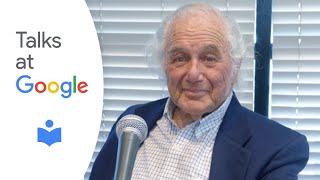
Jacob Needleman’s Google Talk explores why humans fail to live according to their ethical knowledge. He frames the problem with a Talmudic story (Hillel’s version of the Golden Rule), argues that the gap between knowing good and doing good involves strong egoic impulses and forgetfulness, and offers a modest, practical plank: disciplined listening and an experiment in role-taking (accurately summarizing an interlocutor before replying) and an attentional practice of stepping back from one’s reactive mind (noting “I am annoyed”). Needleman suggests a deep, intrinsic conscience or moral intelligence exists but needs cultivation through practice, self-observation, and small exercises that create room for an observing self that can care and give.
Chapters
It's really. It's always nice to introduce our guest authors and our speakers here. This one is particularly special for me, Jerry Needleman. Even though his book says Jacob, and everyone in the literary world calls him Professor Jacob Needleman because he is indeed a professor at San Francisco State, where he teaches religion and philosophy. Jerry has been a friend of mine for more than 30 years. I always feel weird, because when I introduce people, I say they've been friends of mine longer than most of you have been alive. I know that's a bad way to start any conversation, but in the case of Jerry, I just want to tell you the first time that I ever talked to him, which was the Summer of Love, 1967. He may not remember. I was a young hippie on Haight Ashbury, and we were being constantly exposed to all the new religions that were beginning in that time. There was a new form of Christianity, there was an old form of Christianity. There was messianic Hinduism and Buddhism and Islam and Judaism. And for a young person like me, coming from Detroit, Michigan, which was a pretty unadventurous, adventurous beginning, it was a barrage of new ideas. It was a welter of thoughts. It was part of a social upheaval. Many of you who have only read about that period in your history books may have heard that we actually thought that there was going to be a revolution right around the corner. But it was a revolution of consciousness. And it was led not by weaponry. It was led by love, by compassion. And at the forefront of that was Jerry Needleman. And he had just written a book on the new religions. And I was fortunate enough to get a copy of that book, 1967. And I was thinking, my gosh, we're trying to struggle with all these new ideas, these new countries, these names I didn't. Had never heard of in Detroit, Michigan, these new philosophies that I had never been exposed to. And I thought, here's a guy who's written a book called the New Religion. And he had chronicled what was going on in Hinduism, what was going on in Christianity, what was going on in Judaism, what was going on in Islam, especially in two parts of Islam that we don't get much time to talk about when we hear Sunni and Shiite in the Sufi world. So I did something which was uncharacteristic of me, but very characteristic of those times, which is I picked up the phone, I called up information. I said, where do I find this guy, Jacob Needleman? They gave me a number, I called him, he answered, and we had one of the best conversations that I'd ever had in my life for an hour as he led me through all the different traditions and what was happening in the world, in the religious world in those days. And shortly thereafter, I went to India for 10 years. And then I come back and I report back to Jerry whenever I go out into the world. You're very fortunate to be able to have a conversation with him. I encourage you to ask him questions. He's going to speak for about 35 minutes and then he'll take any question. Doesn't have to be any of the things he's spoken about or. He's also written a book on the meaning of money. He's written books on the history of the United States as seen from the perspective of the founders. Not the classic view of the founders spiritual and Masonic traditions, but their deepest, most vital view of what this great country could become. And you will find in Jerry Needleman a philosopher who does not so much worry about the fine details of epistemology or ontology, but who takes that entire tradition of learning and that method of reflecting on the meaning of life. And he brings it to the most vital issues of the day. And so I'm absolutely thrilled that he's brought it to the most vital company of the day, to Google. Please welcome Jerry Needleman.
Thank you very. I'd like to meet that person that he just introduced. Well, this gives me another chance to. I spoke here about a year ago. I don't know if any of you were there, but. Excuse me. I always like to take the chance to say what a philosopher is or tries to be from my point of view, although I've. I've written on so many different subjects because my aim was to try to. Has been always to try to take the great vision of human life and reality that you find at the heart of all the great spiritual teachings and philosophies of the world and try to see what. What light they throw on the concrete, real questions and problems of our culture, of our time, of our lives. And so I've written, as Larry says, I wrote a book about, called Money and the Meaning of Life and a book about medicine, a book about psychiatry, books around education, to try to see if I can find the bridge that connects this great vision to the problems of what we actually face in our life. And so I found myself lecturing and talking to many different kinds of groups and just recently. And so sometimes when I start with the group, I think I ask myself, you know, what am I doing here? What Have I got to say to these people a convention of rabbis or a group of physicians specializing in addiction? Or recently this Branson High School in Ross, California, a very fine high school. I was asked to help them devise an ethics curriculum. And in order to do that, I had to meet with all of the classes one by one. The senior class, high school students, the juniors, the sophomores and the freshmen. And what am I going to say to high school kids about this profound question of ethics? And because high school kids, I found, are much harder to fool than college students. So I was very rather nervous a little bit, but particularly when I got in front of the freshmen. There was a class of 100 freshmen, which I write about a little at the end of my book here. And these are little kids, some of them this high. And I'm sitting, standing in front of 100 freshmen and going to talk about. Because for me, the question of ethics, of what is good, what is evil, of how we know what is right. And particularly in this book, why is it we're unable to live according to what we know is right? This questions. You cannot approach these questions without approaching the deepest inquiry into what is a human being and what kind of a universe we live in in. And what kind of deep forces we have to encounter in this world that we live in. You can't just take the questions of ethics and just put them in one place and try to get to the basic points without this vision of the universe that you find in the great teachings and traditions of the world. And so I didn't know how to address these freshmen. I was little kids, and I felt then that I do sometimes. So you'll not hear. There was a cartoon by. One of the great geniuses of the 20th century was Gary Larson. He's a little insane, but. And this cartoon has an elephant on the. On a concert stage, sitting down at a concert piano, at a grand piano. And there's a big audience in the. Big number of people in the audience. And he's looking at that and he's thinking or saying to himself, what am I doing here? I don't. I can't play this thing. I'm a flutist, for Christ's sake. And sometimes with these kids, I felt that. But when I started talking about this question, to make a long story short, I felt such a hunger in these little kids. And they were raising their hands, and the first thing anyone said, I had asked them, what kind of a person do you want to be? As a way of introducing this subject? And immediately their Old antennas were all up and they. This little kid put up his hand and he didn't even let me finish my brilliant opening remarks. And he said, why do people get angry? What a great question. I said, here we are right in the heart of it. So this is a question why that has been haunting humanity ever since any record has been kept. And the quotes I have at the beginning of the book, one of them is the famous outcry by St. Paul from in the New Testament where he says something like the good that I would do, that which I know to be good I do not do, but that which I hate, that I do. And that is his cry. Who will save me? He says from that he. He goes on to talk about his vision of Christianity, of Christ. But that's the question is the main thing. So. This has bedeviled us all. On the one side of this, let's say, call it a chasm. There is what I know in my heart to be good, to be right, to care for others, to seek justice, to find my integrity, to put, don't, to not always put my ego first, to care for the earth, to care for whatever that's on one side and I know that in my deepest moments and I wake up knowing that and on the hand other, the other side of this chasm is how I actually behave, how I actually manifest. I can have all the ethical vision I want and certainties I want, but let somebody take my parking place or let me hear some gossip about me and I'm ready to kill and sometimes I actually behave in a way that is deeply, deeply wrong. And I see, I can't help it, what is that? What does that mean? And how do we make a bridge between what I know and how I act in the world toward other people? And I start this book and it's always hard for me to start a book. In fact many of you are writers and you probably will agree, some of you that. But what I know that when I find my opening sentence I feel I'm 90% finished with the book. And in this case it took me a while, but it wasn't a sentence I found, it was a story. A story that came from my own childhood tradition, Judaism, which as a matter of fact is really composed essentially of ethics as its fundamental, as its fundamental gift to the world. And that story is just a tiny little story in the Talmud, in a section of the Talmud, which is the great multi volume commentary on the sacred books of the tradition. And some people find it so full of bewildering and so many details. But there are this section of the Talmud called the Sayings of the Fathers, which is the sayings and stories about the earliest rabbis, or they weren't even called rabbis then. And this is about a tiny little story about a teacher, a rabbi, called Hillel. Hillel the Elder, a name we all recognize. Hillel's all. Hillel houses are all over but Hillel the Elder. And I never gave a darn about Judaism as I was growing up. I was allergic to it. I ran the other way. Maybe it was because when. No, I won't go into that. Anyway, anyway, this little story has come. A brash young man comes up to him and says, I will convert to Judaism. He's presumably a heathen of some kind. I will convert to Judaism if you can tell me the essence of the Torah, which is the heart of the heart of the Jewish tradition, the first five books of the Old Testament, called the five books of Moses. I will convert to Judaism immediately if you will tell me the essence of the Torah while I am standing on one leg. So I can't even do it for a second at the moment, my age, but to stand on one leg for a few seconds. You tell me the essence of the Torah. Now, the story has him just before going to Hillel, he had gone to another great teacher and asked the same, made the same challenge, and that other teacher chased him out of the room with a stick. And Hillel answers right away, you figure, this is a very gentle person. And he says, that which is hateful to you, do not do to another. That is the essence. That is the whole Torah. The rest is commentary. Now he says, go study. And that's all the story was. And that so intrigued me. There it is, the essence of ethics. One version of the Golden Rule, the other one, which his contemporary Jesus also said, of course, and which is also in the Old Testament. Do unto others as you would have them do unto you. This one is expressed. Do not do unto another that which you would not wish to be done unto you. So the book goes into the metaphysics, the ethics, the vision of human nature, the meaning of conscience. But at the heart of this question is, is there a bridge, a plank that you can begin to construct that will take you so that there is some correspondence between how you are toward another and how you feel you ought to be? And once I was working on this book, I was wondering, how am I going to. Because when I do a book, I usually wind up getting myself into a terrific trap. Terror, an unanswerable question. And when you really come down to it, the only really interesting questions are the unanswerable ones. If you think about it, those are the heart. That's the heart of philosophy. So what would be the bridge? What would be the plan? I found. I found it in my classroom, the place where I would have not expected that I was stepping on this. It's just a plank. It's just one step. And there's much more to be done. But it's one step that I hadn't recognized in all the work I've been doing with students at college and in high school a little bit what that is. And that step might sound sort of ordinary to you, but it isn't. It has to do with an experiment I tried that some of you probably have heard of, and many counselors have tried this method, but it was. I tried this in order to study something. Not to achieve a result, but to study something. And that experiment was two people disagree passionately about a subject. In this case I use in the book is abortion, sir. A subject in which there are very strong arguments on each side and nobody has come up with an answer, really, that satisfies everyone. The rules of engagement are, and you probably all heard this idea that one person will state their view and the other person will answer. Except the other second person cannot answer until they have summarized the first person's point of view. They've just expressed in such a way that the first person will say, can say, that is an accurate statement of my view. And that's not so easy. In fact, people, some people break down right at that point and they can't do it. But anyhow, that's the rule. Then the he, then that person, once they have said that, once they have said it in a way that the first person accepts it, then they can say their view, their answer, and then the rule applies to the other person. They cannot answer back until they have summarized that person's statement and that person is willing to say that was accurate. And the rule is, which I have to enforce sometimes rather vigorously, you don't say to the person after you've heard what they have. That's close enough. No, it has to be right on. It doesn't have to be every word, of course, but has to be really not let out any. Leave out anything essential and people discover something there. And if you try it sometimes yourself, you'll discover you never really listen to what a person is saying. Maybe one third of it comes in and the rest of the time you're listening to your own thoughts. You're interpreting it. You're worrying about how you're going to answer. You're putting it in concert terms in which you can be more comfortable with. You're waiting for us pause so you can go in and attack or refute. To actually let the other person in, Just make room in your mind to let the person in, let his thoughts in. You don't have to agree with them. It's like when you entertain someone for a cup of coffee, your house or tea. You let them in, you entertain them. You don't have to go to bed with them. You don't have to do anything except let them in your house. And here. You have to let the person's thoughts into your mind. In order to do that, you have to separate from your own thoughts, your own mind, your own ego. You have to have what is apparently very rare and maybe more in this culture than in other cultures. You have to begin to develop what you might call an intentional relationship to your own mind, to your own thoughts. Mostly our thoughts just come and we identify ourselves with them. That's me. That's my thought. But to be able to step back from your own mind and have a kind of sort of a warm void where you are just there and your mind and your thoughts are here and let that person in. And then that person has to, in order to do that, you have to, in order to hear what that person is really saying and not just repeat a few points, enough to get a C minus or something like that, but actually to let them in. You have to move back from your own thoughts and the other person has to too. And it's not easy, but it's extraordinarily joyful. Sometimes when people begin to do that, and what I've seen happen again and again is that people don't wind up agreeing with each other. They stay disagreeable, but they're disagreeing with a point of view, not a person. And sometimes they go out arm in arm with each other, having seen they are people. You have an idea, your idea. Disagree. I disagree with it, but I don't deny you. I don't reject you. I reject your thought. That's not what's happening in our culture and other cultures. It's even maybe more violent, but it's getting pretty violent in ours. When you disagree with me, I want to get rid of you in some way. If I can't change your mind, I'm frightened by disagreement. Now, this means is a form of thinking together, of listening like that is to My mind a practical and very moral act. I never had thought, thought that having a conversation is a moral opportunity, is an ethical act. And I call it ethical because the one thing that's happening there is a person is getting free for a moment from the egoistic attachment to their own thoughts. They're experiencing a moment of freedom from self serving personal gain impulses and agendas. You see, of course it doesn't last during that conversation two people become able to care for each other in that sense. And when they. When you leave the building, of course you kick the cat or whatever it is, you still become the usual rotten self we are a lot of the time. But for that moment, that experiment now to me that's this work of listening to the other person. And you here at Google, I'm sure, have that as somewhere your ideal in terms of your encounter with other cultures and other points of view. Because what this company stands for on the planet is this extraordinary sort of conference center of the world where people in one way or the other come together. But why I call that ethical. And takes a lot more work to actually do it, to live like that in the world you're in. But it's a step and I've never seen a step like that was actually practical. We could work on right away as listening to each other. Now why I call it ethical too, because of this capacity to step back from one's own mind to have this is extraordinary important thing. And I gave another assignment to my class because one of the philosophers we studied, and I recommend this to you very, very much is you probably have heard of the book the Meditations of Marcus Aurelius, the emperor of Rome. And the at the end of the 2nd century AD when Rome was the most widely had its greatest spread throughout the world. So in this sense, Marcus Aurelius was in one sense of the word, the most powerful man in the world, at least in the west half of the world that Rome controlled. And this most powerful man in dealing with issues and forces and elements of enormous consequence for the world he was for him power had to do with what I've just been speaking of a relationship to his own mind that was conscious and free. So that he could that would be then take the next step, which I haven't mentioned to you because we get on talk about one or two things now. Because once you are free from your own egoistically driven self or mind, you are then more sensitive to another kind of self or mind which is hidden in everybody, which is a big mind. Another thing but that's another story. But anyhow, I decided to try something with the class after doing these exercises that I had not done before. I was going to give them a practical exercise in their life. And I don't like to do that, usually, because it's not something you grade people for. Anyhow, I told them, with Marcus Aurelius tries, when I told them to try to step back from their mind, from their feelings, from their emotions, rather their reactions in their life, just to step back. When I suggested that they work with a reaction which we call being annoyed. And I said, today is Tuesday, the next class is Thursday. Between now and Thursday, you are going to be annoyed. In fact, you're going to be annoyed a lot. You're probably even annoyed right at this moment. Maybe because I'm talking like this, I don't know. But you'll be, believe me, you will all be annoyed within the next hour or two. Now, when you're annoyed, there's 50 students in the class. When you're annoyed, just step back and say, as if to say, here I am, I'm annoyed. That's all. Just to separate, not to get rid of it, not to become a little tin saint, nothing like that. You just, I am annoyed. Sounds simple, doesn't it? Well, Tuesday passed, Thursday came. How many tried to be cute about it a little bit, not to be heavy, But I said, how many of you? They all were very interested. They planned to do it. How many of you tried the exercise? One and a half people raised their hands. One guy did this and the other one was a young woman in the back row. She just went like that. Nobody else, they all forgot. And that was a huge subject for another time. This immense power of forgetting that is so much that nobody really gives there enough that most you'll never see treated in the books. Most of the books we have an intention, but we just forget. What is that? Anyway, the one guy who remembered, he remembered it, but he did it all wrong. But this one young woman, she said she was very timid. She said, well, that was Wednesday. Yesterday I was driving on the freeway and I went to the dry cleaners because they said my clothes would be ready today and I need them. So I went off the freeway and I went to the dry cleaners and I went there and showed the slip. She said, not ready, come tomorrow. And I said, but you know, she was getting angry. She'd look, it's right here. And this was a Oriental woman and she started giggling out of embarrassment. The back of the woman behind the Counter. She said, no, no, not ready tomorrow try but. And she started shouting. She told me to be ready. And then she said. I said, realize this is what Professor Needleman was talking about. I am annoyed. And she said, no. Stranger thing happened to me. I never experienced this. She said suddenly I was two people. I was an angry person and I was something else in there was just watching, not at all angry, just watching, just present. And that had a. And the result was somehow the result was. I said without it took the poison out of it. And I said all right, all right. And I left without much less angry, these two people in me. And this is what she said. And I'll finish soon because I'm going to talk about all the other aspects with your question. What she said then was to me vitally important. And I'm not sure even now of the great significance of it. She said when she tried this, stepping back, she said, I had no idea my mind could do that. Are we raising a generation of men and women who are not aware that the mind has the power to separate from itself and be free of the addictions and the habits and their conditioning and the automatic thinking that goes on in so much of our life just to step back from it? I know most of us do a little bit when we're stuck with a problem or something, but as an element in the development of our power to be good, to be moral. Because it's only when you're free a little bit, you have a space around your ordinary self that a certain genuine morality that is not conditioned by religion or education or rule books or fear or hidden personal agendas that a genuine morality can appear because. And then I'll stop. In my view, the essence of a human being is the real human being is the ability to love. And the ability to love is the heart of ethics. And the ability to love can only come when you to some extent are free from the self serving agendas that mostly govern our lives. So I wanted to give you just a taste of what the book is about. It's full of a lot of other ideas that I hope will be of interest to you. But that is just. It's a question and it's a response that I think we need to take seriously. So I think I've just about done my 35 minutes so I would be delighted if we could have some conversation now. Observation. Question can be about anything. Yes, sir. Doctor, did you ever address what a philosopher was? Yes, I will tell you what is a philosopher. Why does the first question have to Be a good question I'd like to start preface it by the story I always want to be able to tell. I was brought up in my culture background, middle class, lower middle class, Jewish family in Philadelphia. And the oldest son is strictly morally obliged to become a doctor. And I was going to become a doctor. And make a long story short, I changed my mind to become a major in philosophy. And my father, who asked me what a philosopher does because he was not. He was very, very intelligent man, but did not get go past grade school. And I said, a philosopher deals with questions like. And tries to ponder questions like why are we here on earth? Is there a soul? Is it immortal? Is death the end? What can we know? What can we hope for? Why is there suffering and evil? And he was looking at me with his eyes were beginning to sort of spin. And he said, well, can't you, can't you do that and still be a banker? And I said, well, you know, he was right. But anyway, then at a party after I got my PhD in Philosophy, my mother was there, a sweet gentle woman that she was. And somebody, she heard somebody introduce me as Dr. Needleman. And she immediately called across the room, oh, he's not the kind of doctor that does anybody any good. So that's what a philosopher is. One of the things I'm trying to do my life is to prove her wrong, if she's still looking, and I think she is. So a philosopher deals with the great unanswerable questions which I think have answers, but not usually in the state of being that we're asking them. In other words, these great questions that wake us up in the middle of the night about who? Why are we here? What's the meaning of it all. Questions that some people make fun of these questions some of the kind of questions that sometimes the mind can ask but the mind alone cannot answer. The mind can ask questions, but the mind alone cannot answer. And since we are a culture that has gravitated toward the center of gravity, gravity of most of our personalities is the intellect, this part. These questions seem to be intrinsically unanswerable. And to the answer response to these questions has to be not just in words or interesting insights, but in the movement of down from the mind to make contact with the heart and the body, which when they work together are like another, other intelligence. So that is what I think the true philosopher tries to open to that part which can respond to these and actually live what they're speaking, we're speaking about. We also one of the other tasks of the philosopher is to become. Help us all become aware of our assumptions and then to look at them honestly with a critical mind again, to look at the contents of our own mind and ask. There's so many opinions, we have so many views, so many assumptions that we have no idea where they came from. And to look at our mind, sometimes I see I have an opinion and I ask myself, how did you get in there? How did I let you in to my mind? That is now you're now telling me what to think. So in that sense, we'd like philosopher tries to help us take an inventory of our thought and look critically at each piece. Is this worth keeping? Is this valuable? Is this not? Et cetera. So, Bob, does that answer your question? Yes, I think so. Okay. Yes, please.
Do you have any practical ways to remind others do you have any practical ways to remind others who maybe haven't read your book, taken your course or had this kind of discussion before that their mind is possible of allowing for them to step back from the situation and see the two selves, the angry self and the self that doesn't really associate themselves with the angry person. I know in particular, I've seen the. This my mother, who I think is starting to get some real anger management issues as she gets older, and I think she feels she's allowed to have these outbursts of people. And you know, coming from your daughter, it's just chastisement, right? How do you gently prod people to be aware of this?
I would say first, don't try it on your mother, this big thing. Try it on your cat first. For yourself. No, for you. You can't. This is the kind of thing that's a quick, quick, amusing answer I just gave. But the. It's a long answer is required. And I would say, come, let's talk about it sometime. But basically we have to try it on ourselves first. And we see how difficult it is. And only by seeing how difficult it is do we develop the compassion toward the other person and to see that they can't help it either. And it's very hard to do that when a person is lashing out. The last thing in the world you're thinking of, well, this person can't help it. The thing you're usually thinking of is lashing back. So the compassion part comes when you see how helpless we are with our own anger. And for to be compassionate toward another. This is a short answer, very long, that requires a long thought. To be compassionate toward the other requires that you have to become compassionate toward Yourself. And we are not. We are angry at ourselves a lot of times, too, in a way that is very destructive toward ourselves. So I have some points about that in the book. Not practical methods, but to know that mostly we don't look at ourselves with the compassion. Once we could do that, then the compassion toward the other would flow spontaneously from that. But we can try. We have to try. We have to try. But we won't succeed. Not with our mother. I think you have to try not getting angry at your cat or your dog or even your plant. You know what I mean? So I'm sorry I can't give you. But this little exercise of the kind I gave my class. If you could try that a little bit could help. Then you have to give me a call. No, I mean, there are other things to try. Yes, please. I come down to hear you because I can't hear it quite so well up there.
Do you think that there's such a thing as moral intelligence. Or is it rather training your mind and your heart in a combination of those two things that you were talking about? Is it more a matter of training oneself, or is there such a thing as general moral intelligence?
Something that's measurable? Is there such a thing as intrinsic moral intelligence? I think there is. It needs input from outside. It needs filling. It needs content from family, from whatever your teachers are. But basically, Maybe a minority point of view here is that there exists in us as part of our essence, essential nature. Maybe the most essential part of what a human being is is this organ, if you like, of moral intelligence, which we call conscience. But it's intrinsic part of human nature. It's not in any biology book. You can't see it on a CAT scan or mri. It's part of the definition of humanity that we have conscience. Now, there is a more socially conditioned conscience which we're all familiar with, which is the effect of the society or the parents or the education. And sometimes. And these can differ all over the planet, all over the world. What's right here is wrong there. What's wrong there is right here that we think of as moral relativism in a way. And that is a surface thing that helps us. We have to have adjustable morality to get along, depending on our environment, social conditioning. But underneath it all, and we know it when we touch it, there is a deep conscience. And when that speaks to us, it's often very painful because it tells us we're wrong. But there's no mistaking it. And we've all had moments of that one way or the other. And the thing is, we have moments of being a real human being, but the society doesn't help us interpret them as part of our deep, essential nature. So I believe there is that. Yes, sir, I'm sorry. Yeah, I'll come up here next. So you mentioned that woman noticed the difference between the angry self and the observer. So I can understand kind of what the angry self wants and what it cares about. But what does the observer care about? Great question. Every one of these questions is just beautiful. Can we meet every day for a week or two? What does the observing self care about? I'll tell you the shorthand answer on that that I understand. It's a question that I'm pondering too. What it. It doesn't care about what the angry person cares about, that's for sure. It doesn't care about what your ordinary self cares about. Pleasure, pain, avoidance of pain, pleasure, money, success, gratification, physical or otherwise. It doesn't care about any of those things. It cares, to start with. It cares just to be, just to exist, to come into me, take its place and see. And that is like the embryo of a capacity within a human being. It's like a seed that needs to be cultivated. A capacity within a human being not just to see, but to care. But it begins with an impartial look at what I am to. And it just wants to see eventually. It wants to care. It wants to give. This is the part of the human being deep down that wishes to give, not to get. That's part of our essence. I'll tell you another little story if we have time. When I was teaching in Mexico a couple some years ago, I was at a business school and I had a class on ethics from this point of philosophical point of view. And one of my students was a young man, about 30, 35, who had a child of five, a boy. And they were sitting around the Christmas tree, he told me, and decorating it. And at the front door there was a beggar, another little boy, about the same age as his son. And the father said to the son, when they went to the beggar and they went back into the living room and left the other the beggar boy at the front door. He said to his son, give that boy one of your toys. And the little son picked up his old beat up, broken toy. And the father said to his son, no, give him your favorite toy. And the little boy, he said, no, no, no, no. Father said, yes, give him your favorite, no. And it went on like that. But the father Stayed firm and gentle, but firm. So the little boy picked up the newest toy, his favorite toy. And the father stayed in the living room while the little boy went all the way to the front door and he waited for his son to come back. And his son, after a few minutes, came back, running into the living room with his face radiant. And he said, daddy, can I do that again? So to me, that's an anecdotal proof that there exists within us the wish to serve, to give, and that it's a kind of a joy that all the getting in the world. But our culture doesn't recognize that except in hypocritical things from churches and organizations. But to recognize that we are born to give and that the culture more or less makes us feel we only be happy when we get. So that's what that part will want is connected to that which wishes to give. You're only. Maybe I sound like I'm climbing up on a pulpit now, but you're only going to be happy when you are able to serve something better than yours, greater than yourself. We know that. Somebody says to me, but why does the. Why is this thing in the Old Testament? Why do the wicked prosper? Why do nice guys finish last? We all know that cheating and stealing, you get more money that way. And that question is a good question. And Plato dealt with it and the Bible deals with it. And the answer is that the wicked don't prosper in the deep sense of the term. And that sounds a little like the usual sentimental mush, but it really isn't. But we have to become economically, financially, socially, in a position where we are able to give. Otherwise, why are we gathering all our success, our talent, our money, our business, in order to be able to give? Qed. Will you tell me when to stop? Because I think Ugi can go on. Everybody will be leaving Mobile. You touched the topic of forgetfulness. What say? You touched on the topic of forgetting. Of what? Of forgetting. Forgetting. Yes, I forgot. You have intentions. Yeah. You have good intentions. And then this has been my experience, experience of a lot of people. We don't act on them. That's right.
Act.
And then we laugh. That's right. And you know, I think going from the physical domain to the, you know, any other domain. Do you have any thoughts on, in a practical way, how do we go beyond just forgetting, just lapsing? It's such a fundamental problem that there's no simple answer. But there is an answer. There is one, but it's not in words. It's in a Kind of practice. You need a certain practice. You need to be able to. We need to be able to observe ourselves and see how we forget and suffer it without covering it over. And because we're very good at covering it over, say, oh, I forgot. You know, just everybody forgets. It's a good excuse, oh, I forgot. If it's a life threatening thing, you're never going to say oh for God, if you have a pain in your chest or something. Sometimes you do get engaged in something and forget about it. But if you really are hungry, say starving, you may engage. You're never going to forget that you're starving. And to want to be good in some way, to be unethical, you have to real somehow you have to experience the moment when you are as being more fulfilling. So you get a taste of what it's like and you begin to. It begins to take be to wish for that like a hungry man wishes for food. It takes work though. It takes time to be able to observe and not cover it over. And that's practice. And the Buddha, the story of the Buddha, once some Buddha or somebody else, some other Buddha like person who said when you want. Someone asked that question, I believe, and he took his head and plunged it into water. I don't know how the water was there. Maybe they were standing near a lake or in the ocean or they were talking in a bathtub, I don't know. Anyhow, he plunged his head into the water and the guy was struggling to get out, but he was holding him there and then finally he let him out. He said, now when you want truth in the way you wanted air, then you'll understand. So this is not a question that I can give you the theory, but the practice takes time. That would be part of. If you're interested and anybody's interested in the practical side of these questions, give me your email and we can maybe talk about it.
I think that's probably a perfect ending. Thank you very much.
Thank you.
More from Guy


Cheryl Strauss Einhorn | The Human Edge: Smarter Decisions in the Age of AI | Talks at Google



Rachel Glennerster | Innovation and the Center for Global Development | Talks at Google

Rebecca Winthrop | Rethinking the Purpose of Education in the Age of AI | Talks at Google

Dr. Robert Wachter | A Giant Leap: How AI Is Transforming Healthcare... | Talks at Google



