You Don't Love Me Yet | Jonathan Lethem | Talks at Google
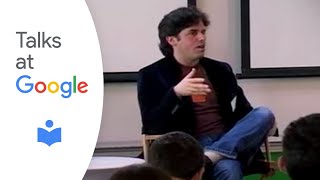
Jonathan Lethem discusses his novel You Don't Love Me Yet and argues that artists depend on borrowing and appropriation, not original creation. He explores how legal ownership frameworks clash with how art actually gets made, and takes questions about collaboration, comics, and plagiarism.
Chapters
Okay. Hello, everybody. Yeah, I have prepared remarks. Sorry about that. But anyway, yeah, thanks for coming. If you want more info about authors at Google Events, you can check out our site. It's Go Authors. And we have a bunch of events coming up. But, yeah, anyway, so I want to talk to you guys. I'm pleased to have the chance to introduce Jonathan Leatham. So where to start? Jonathan Letham. He's one of my favorite contemporary authors. He's a cell phone. He's a recipient of the 2005 MacArthur Fellowship, and he's only the second person I've ever met with a Philip K. Dick tattoo. So I was introduced to Philip K. Dick's. I mean, what? No, I was introduced to Jonathan Letham's early novels by my girlfriend when she taught a class on Philip K. Dick at Stanford, and she thought I would dig his stuff. And she was exactly right. Leatham's early short stories and his early novels like Gun, with occasional Music, Amnesia, Moon and Girl in Landscape. They play with genre conventions and mix and match. Science fiction, Westerns, road movies, hard boiled detective fiction, and his later novels that I'm sure a lot of you know are Motherless Brooklyn and the Fortress of Solitude. They're more personal, stunning works, and they are probably rightly listed as your most favorite book on your MySpace profile. So in addition to all that, Jonathan recently wrote what I can only call an extremely right on article for Harper's titled the Ecstasy of Influence, tackling discussions about copyright and art in 21st century. You can check it out on the Harper's website. And yeah, I definitely recommend it. It's made the rounds on our team on the Google Book search team. As Jonathan was quoted as saying, he's become fitful about some of the typical ways art is commodified. And I look forward to hearing him expand on some of those ideas, along with talking to us about his new novel, you Don't Love Me yet, which you should have a copy of now. So please help me in welcoming Jonathan Letham.
So I've got this. Yeah, can you hear me? Am I broadcasting? Great. Hi, everybody. Nice to be here. And I, you know, I'm going around doing a lot of, of course, very typical author events, bookstore readings, where I have a chapter of youf Don't Love Me yet that I read and then take questions from there. And this is a chance, I hope, to do something different and a little more informal. So I'm going to err on the side of your questions if I can. I always find that I'm sharper I'm more on point. I'm more interesting to myself if I'm responding to something that someone has asked me. So if only for my own interest, you guys, I hope, will indulge me. So let me just make a few general remarks, mention a couple things about the new book and about what I'm up to lately. You Don't Love Me yet is in some ways a return for me. And in one very specific sense, it's a return to California as a setting. The first four novels I wrote all have, in a sense, a western setting. Now, in case of Girl in Landscape, which is basically Mars, that seems like a little bit of a stretch. But even that Mars in that book is kind of a disguised Monument Valley. It's really a vision of John Ford's Western films transposed into science fiction. And the first three, the other three, anyway, all have basically Bay Area settings. And I lived here. Here. I lived in the East Bay, in Berkeley and Oakland, briefly in San Francisco for 10 years. When I was becoming a writer and I was working in bookstores, I worked at a place called Pegasus and then a place called Moe's, some of you may know. And that's when I was, you know, figuring out what I. What I wanted to do and convincing the world that it mattered and getting an agent and a publisher and getting started. And then shortly after I published my second novel, Amnesia Moon, I kind of hightailed it back to New York City, where I'm from, and began writing these two books in succession about Brooklyn that have created this very strong identity in a lot of people's minds. And so people now, of course, ironically, are quite surprised. They're disconcerted that I've set a book in California. Doesn't make sense to them. You know, my identity as a California author has kind of become overwritten completely by the Brooklyn stuff, and understandably so. But this book is a romantic comedy. It's a deliberately silly book in certain ways. It doesn't have the kind of overt gravity of the Fortress of Solitude, which, you know, represents, I guess, in a way, a reluctance to become pegged even as a serious author. You know, I spent a lot of time early in my career dodging the labels of either being a crime fiction, you know, a detective fiction author, a hard boiled detective writer, or a science fiction writer. I also, even though it was a very strange and baggy category that could allow almost anything, I kind of ducked out from being called a postmodern writer. And now I'm kind of evading the label of Brooklyn writer and even of serious writer. By going back to doing something that's sort of irritatingly flippant. At least to the critics. But I'm very proud of youf Don't Love Me Yet. It's. It's a piece of pure storytelling in most senses. It's, I think, the funniest book I've written and the sexiest. And, you know, that's not chopped liver. But it does have one level at which it is secretly, even in its callow, youthful, you know, inconsequential, giddy way, quite serious. And that is that this book comes, contains with it a kind of allegorical argument about intellectual property and about creativity and ownership. And one of the things about being a novelist is that almost any other kind of artist is more prone to collaboration, more social in their operations than you are. Probably the only comparison for being a novelist would be being a poet or a painter of, you know, canvas wall art. But if you think about the life of a filmmaker or a musician or a dramatist, everyone else, no matter how imperious and godlike they want to be as a creator, is tremendously dependent on collaborative effort. They have to delegate work. They have to see it enacted by other people. And then, of course, you can also start to talk about other kinds of operations where the artist, their individual iconoclastic authority, is fundamentally compromised. Well, being in a rock band is one of those forms. Everyone knows that a rock band is supposed to be, you know, like Quadrophenia. It's a group mind. And everyone knows that when rock music is great, there's a kind of mystery to where the greatness comes from. And every time a band breaks up and you get those disappointing solo records, it's like looking at scraps and wondering, where did the magic go? Who was so great? If these four guys are so disappointing individually, well, this mystery is one that compels me enormously. It does so because it's a kind of vicarious life, I guess, for a writer who is, you know, by the nature of my operation, I'm forced into this kind of solitary, ivory tower operation. The idea of mingling the creative impulse with something more social, more connected, more collaborative is, of course, very entrancing. Instead of having to decide, as I always have to do, between the world and my work, I could kind of mix them up together. But I'm also interested from this perspective of creativity and ownership. You know, the essay that was mentioned that I wrote for Harper's, called the Ecstasy of Influence. Is basically a rant from the point of view of aesthetics, about issues that are mostly debated not in terms of aesthetics, but in terms of law or business models, but are very fervent in our culture. Now, these questions of what intellectual property means, how it should be defined, how pervasive or extensive or penetrating the concept should be, whether it is properly legally defined at this time in our culture. And of course, as you guys are all familiar with, this is an issue that's very alive in our culture precisely because of the pressure that technological change has put on the operations of cultural materials and cultural practice. Making art or information, making journalism, all of these things have become permeable and transmissible in these new ways. And so, in my view, anyway, as a creator rather sort of stuck in the middle between what seemed to me very large monolithic changes and pressures on either side. You know, there's a reaction and there's a counter reaction. And it leads to an atmosphere where these issues are tremendously vital right now, but they're also very fraught. And this doesn't restrict itself to, you know, the legal or business world. This also pervades the world of aesthetics. You get an increasingly sensitized atmosphere for artists where originality and ownership are exaggerated and the defense against plagiarism or influence becomes very fraught. Because I think artists are beguiled in a way into exaggerating, you know, in a commercial society where you have to patrol the boundaries of your product, artists are persistently beguiled into exaggerating to themselves first and then to others, the solitary, original, iconoclastic nature of their practice, which is, in fact, so often at the edges at least, or at the edges of consciousness at least one that depends on borrowing, influence, collaboration, pastiche, collage, appropriation. All of these things that come up, right up to the edge, but stand, one hopes, very clearly defined as separate from plagiarism or thievery or piracy, but are, in fact, often confused with those things. And this overstatement of the difference between the basic operations of artists who are always, by their nature in this kind of miasmic realm of influence and borrowing and copying and resisting influence as well, but in conversation with it, and the kinds of panics that you see when people are accused of plagiarism or of violating one another's intellectual property rights, well, it's become very interesting to me. And so the book delves into this in sort of, I guess, I would say, a typically fizzy, foolish way. The ban in my book is one that is overtly confused about where their material has come from. And, in fact, it's been borrowed from outside. It doesn't belong to any of the four members. Whether or not it really belongs to anyone. Is something you can argue and I won't. I don't want to presuppose that conclusion. I'd be interested to have you guys read the book and try to decide. Because I think, for me, it's an open question. But, you know, pop music has this strange capacity to latch onto language, to material, to notions that are just floating around in the atmosphere. That don't completely belong to anyone. If you think about the way that, you know, the phrase Stop in the name of the law. Was just basically a kind of default, kind of junky cliche. From cops and robbers movies or from television. Before Motown gathered it up and the Supremes sang it in this heartbroken, passionate way. By changing the one word law to love. And stop in the name of love becomes deepened. It becomes an item of cultural value in its appropriation. So something that didn't really have a lot of great soul to it or depth. Becomes strangely profound when it's appropriated by an artist. Well, who does that phrase belong to? Could we ever say that we wish that the Supremes and the songwriters. Holland Dozier Holland. Had left that phrase alone where it was? No. Of course, something marvelous happened when it was incorporated. But does it belong completely to the people who are singing it? Well, no, you couldn't say that it absolutely does. And, in fact, pop does this systematically. You see this all over the place. Where artists grab onto stuff that is sort of this inert, commercial, functional language. Or cliches that seem like the meaning or the flavor has leached out of them. And then it gets suddenly deepened by its incorporation into vernacular culture. You see this in comic books all the time. You see this in. In pop music. You see this in film. And, you know, when controversies arise, they can be quite perplexing. Recently, Henry Timrod, a forgotten Confederate poet. Was revealed to be the author of some of the lyrics on Bob Dylan's new record. And Henry Timrod wasn't around to give his permission for this. He's been dead a long time. He's also someone whose name I certainly wouldn't know. And I sort of suspect most of you wouldn't know. If Bob Dylan hadn't appropriated from him yet. Some people determined that it was worth getting incensed about Dylan's incorporation of Tim Rod's poetry into these songs. And again, the question arises, well, do we think that Dylan's song wouldn't be any good Without Tim Rodd's lyrics? I don't think that's the case. In fact, Dylan is a fascinating figure. Because he's unmistakably one of the great geniuses of our age. Or of any age. You could never imagine his body of artwork existing without him. Him to make it happen. His particular voice, his particular life story. His particular passion and dedication. And yet, at every stage of his career, there have been detailed accusations of his excessive thievery. His helping himself to sources from everywhere in the culture. From the folk tradition, from the blues tradition, from literature, from other people's songs. And so he stands to me as the emblem of the fact that it's more complex than either or. It's not originality or debt or, you know, appropriation. But somehow the two things feed one another very intimately. Especially in the high level operation of someone like Bob Dylan. Being influenced and being original seemed to him to be more or less one thing. And if you want to cast around for other examples of operators like Dylan. Well, I think one of the first places you might land is William Shakespeare. Whose freedom in helping himself to material that was scattered around him. Was unselfconscious and automatic and constant. He would never survive the kind of application of the kinds of legal or ethical inquiries into appropriation. That we now tend to make of our literary artists. Where was I going with this? I'm beginning to circle around. So it may be time for me to let you guide me with some questions. Because I'm sure that will be as interesting as I promised. Yeah. Why don't I leave conclusions for later on? Hi. As you point out, there are a.
Lot of very vital collaborative art forms. And the movie is certainly a good example. I've read that judging your own likelihood of success as a writer. Has a lot to do in part with how comfortable you are spending a lot of time alone in a room. We've got a lot of examples of collaborative writing on television and in the movies. And, gee, generally it tends to be pretty awful. Is it because they're all playing the same instrument?
Yeah, it's a really interesting question. I mean, I've become very curious about this way in which. Because I've begun to try to make general observations about issues of collaboration, ownership versus, you know, the public domain. And how these things function in different art forms. I've also been forced to acknowledge. And I've become very struck by the intrinsic nature of different art practices. And I do think that you have a few examples of great writers collaborating here and there. On the kinds of Texts I write Conrad and Ford, Maddox. Ford wrote a novel together. It's not unknown. There are certain interesting examples of some of the New York poets or some of the Alipo group, which is a group of French experimental writers who made collaboration on literary writing their regular practice. But you know what? There's something about the intimacy, the solipsism and the, what would I say, the vocal nature of literary writing that is so strongly predisposed towards the individual act. It just doesn't. In very few cases does it really invite the back and forth and. Well, you're right, of course, there are. We almost associate mediocrity in writing with the committee. The too many cooks spoil the broth. I mean, you can often judge whether or not you're in for a good two hours at the movies or a bad two hours by how many names are listed when the screenplay by, written by credit comes up. And if it's three or more, there's usually some terrible story there of compromise and. Usually some imposed collaboration, something taken away from some writer and given to another one. It's often wrecked in that process. But then again, you know, other art forms are innately collaborative. And the movies, when they're good, are also, of course, you have to acknowledge, fundamentally collaborative between visual artists and writers, between actors and directors. And so, you know, you can't safely generalize, I think, about these tendencies. I've recently been writing a comic book for Marvel, and there I am wading into a realm where I think the layers of collaborative creation are so fascinating, because it's not only that every act is a writer and an artist collaborating innately. I mean, of course, there are exceptions. There are people who even forgot, for the big companies, for Marvel or DC at some point wrote and drew the comic. But between the lettering and the inking and the tendency of the writer and the artist to be two different people, it's almost always a page that's collaborative in its essence. But also these characters and these worlds that I'm writing into are layered with. You know, it's like a screenplay that never stops being handed off. You know, the corporation is always taking it away from one writer and giving it to another. And yet you can't say, as you would with the Supremes, and stop in the name of love or other examples. You can't say you wish that no one but Bob Kane had ever drawn Batman. Batman wouldn't be that rich a figure if the guy who originated him had been the only one allowed to fool around with that idea. You know, it was inordinately deepened and made more strange and rich and promising by subsequent artists and writers who handled the film figure of Batman. And this is true of almost nearly any comic book character you can think of before a certain time, starting in the. You know, one of the things that I think is the signature of the Silver Age of the Marvel characters is that there start to be some characters who you would think, oh, they should only have been drawn or written by Jack Kirby or Steve Ditko. But these arguments become very complex and very specific. And I find them fascinating precisely because you can't make the safe generalizations about whether or not collaboration, strength or a communal, a non property view of the intellectual asset or the cultural asset is a valuable one or not. You have to always go to this specific case and think about it and see how it feels to you. Just as with issues in, I think, plagiarism, you know, versus some kind of healthier, richer version of appropriation, it's always the specifics that you have to end up discussing. You know, when you talk about Led Zeppelin and the blues. Well, it passes one test variant, naturally, that is, was there value added? Yeah, you know, the Led Zeppelin songs, the way they sound, the way that band sounds, is absolutely its own. And they're as wonderful as the sources are. They've done something new. It's transformative. But there are other tests. Was it deceptive or exploitative at some level? Did they take something that kind of belonged to the public domain and privatize it? I think that test, the Led Zeppelin instance, passes much less well. And so it still feels objectionable in some way. Other times you might see the flip, you know, if you're me. And just to leave it in the realm of music, which is often a very easy one to discuss, I don't think, for instance, the Graceland, you know, the things that Paul Simon added to African music in that case don't really excite me that much. To me, like 95% of the. The value of Graceland as a record comes from the things he appropriated, not from what he added. I don't find it to be an enormously transformative, exciting, transformative instance. But on the other hand, on the level of transparency, well, he literally scooped the musicians up and toured the world with them on stage beside him. So it's an extremely generous act on the level of, you know, revealed sources and acknowledged and celebrated sources, sources. So it passes this other test quite beautifully. And so I think becomes less objectionable by the nature of that. And I think it's always these intimate measurements that you make about, well, did it work? Was it good? Did we like it? Did our imaginations soar to meet this instance? Or did they feel kind of, you know, was it depressing or degrading to discover, oh, they didn't make that up, that's stolen from someone else, you know, and you're like, well, that was the only thing that was good in it. What a drag, you know. And that just makes you want to go look at the earlier thing and stop looking at the later thing. Right. Hi. Oh, sorry. I was struck by the difference between two of your examples. One of them being Stopping the Name of the Law, Stop the Name of Love, where the original phrase, as you say it, was just floating around in the culture. Nobody could attach a name to it. Probably nobody in any real sense valued it or felt like they had created it. As opposed to something like Bob Dylan where you say there was this Confederate poet, you could probably look at the poem, there was the name of the author. Maybe not many people knew about it, but it's very specific and attached to one person. And one could imagine Dylan saying, oh, I drew on this in a way that you can't really imagine the supreme saying it. Could you talk about the differences between those two kinds of things and the spectrum between them? Yeah, that's a great question. And again, I mean, it just follows from what I was saying that it's always that you're forced after you determine whether you have a kind of general leaning towards the public domain and free culture versus a general leaning towards the traditional image of the artist as, you know, privileged, unique genius with a lot of property rights. All you can do, having acknowledged your leaning, is then go to these examples. Well, yeah, certainly there was room for an acknowledgement of Henry Timrod that was not made transparent in the Bob Dylan operation. On the other hand, on the legal level, and this is a great example of how inadequate legal definitions can be to talking about what we really feel about these things, the aesthetic and ethical issues. Henry Timrod's poetry was exactly like Stop in the Name of the Law. It belonged to everyone technically. Right. It just was out of copyright. So, you know, it's. And I think that's a wonderful distinction to make that, you know, however fine tuned, wherever you arrive at with the definitions of ownership, and even if you extend them enormously, they're not going to finally capture all of the complicated things we feel about uses of culture. Other descriptions, ethical ones and aesthetic ones, I think will have to also be applied. Yeah, there Was room for more transparency about Henry Timrod. On the other hand, I'm struck when I debate these kinds of things with another fact about art making. And I think Dylan is a good way to talk about this too. That is, we wish artists to beguile us, entrance us, manipulate us, create a kind of illusion of wholeness out of the strange, mundane, and sometimes appropriating operations behind the scenes. We want them to be Oz. Right. We don't always want to see the man behind the curtain. The power of the work partly depends on our being in their hands. And, you know. Now, do I think that Dylan's album would have been lesser if there had been a liner note with a couple of arrows pointing here and there, including to Henry Timrod? Not particularly. But I do think it's worth mentioning that, you know, these are not scholarly articles where putting quotation marks or a footnote at every point, you can't do that in a Bob Dylan. So there can't be quote marks around the Tim Rod lyrics. There can't be quote marks around the collage elements in a Robert Rauschenberg painting that actually come from some other image. It would destroy the illusion. It would destroy the wholeness of the work. And we have to remember to value this aspect of art making. And this isn't to say artists are special. They're above the law, They're a special breed of human. We don't get to question what they do, but to just grant that everyone has these privileges when they enter the realm of culture making. Because ultimately what we want from artists is to be overwhelmed, entranced, persuaded in a way that digs deeper than these kinds of legal or the kinds of standards of scholarly citation that it would be one impulse to say, well, academics make sure that you know where everything comes from. Artists can't always do that and also do what we want them to do. They're illusion makers. Partly right. So again, it just becomes so terribly specific. There was some other thought that was coming out of that, but that was interesting. So what if my example were not stopping the name of the law? But Buddy Holly goes to the movies in 1956, wants to see the new John Wayne Western, and he hears John Wayne in the Searchers saying over and over again. Because it wasn't just one line of dialogue, it was like a catchphrase, kind of. Kind of dorky. But it's like they were trying to establish it over and over again. In the Searchers, John Wayne says, that'll be the day. And Buddy Holly gets all buzzed and runs home to the crickets and in their garage and they write this song, that'll Be the Day. Now it's this other thing, and it's very much deepened and made into something more beautiful and interesting. You know, I love the Searchers, but I don't think that'll Be the Day as the center of its value. I think it's a kind of odd thing for John Wayne to be emphasizing so strongly, actually. And it sticks out of the movie in a weird way. But even if you think that it's the best part of the Searchers is Buddy Holly's song, which comes out later that year, rivalrous with the John Ford film. Should the makers of the John Ford film be able to sue Buddy Holly and keep us all from knowing and hearing this amazing song that has changed. Changed Buddy Holly's career and changed pop music as a result? Well, you've got to think about whether or not you want that to be ownable. Right. If you do, you're also saying you want Buddy Holly's act to be preventable. You know, so this is not Henry Timrod, nor is it junk commercial language. It's something that a screenwriter wrote, you know, less than a year before and had just been presented by, you know, a Hollywood studio, which, as we know, is now one of the great, you know, along with. Along with the record companies, you know, the great driving forces in this realm of expanding notions of intellectual property. Would the present day, that'll be the day be permitted? Well, it might fly under the radar, but it might not. Isn't that the problem with kind of making this conversation about the dangers of this and rules about citation, rules about preventing people from doing these kinds of things? Because you think that Paul Simon didn't add anything to Graceland? Well, maybe somebody does. You think that the Searchers is, like, less important than the Buddy Holly song. But somebody might think that Buddy Holly ruined, you know, the Searchers. I'm just curious how we delve into these kinds of conversations without being, you know, overtly mentioning that all of this is completely subjective. Yeah, well, it is. It is subjective. And. But I think, you know, it's great to use kind of super universal examples. And I always think the universal solvent is Shakespeare. You know, people. One of the things interesting conversations I've gotten into recently is John Gordon, the guy who wrote Six Degrees of Separation, beautiful play, which became, I think, a wonderful movie as well. Which, as it happens, John Guare's play depends, first of all on this idea of Six Degrees of Separation, which I Don't think he originated. Second, it incorporates in it characters talking about paintings that are real paintings by real people, Kandinsky and J.D. salinger's novels. So he's made use of the freedom to quote culture in the sense of, you know, describing it and citing it and making us remember, you know, so some value or some power has moved from the Salinger text, which is still in copyright, into John Guare's play. But John Guare is involved in the Beckett estate. Now. Beckett is a very severe and intense gentleman who made some of the most amazing artwork of the 20th century. And the tendency is to think whatever he wants is good. He's some sort of ultimate figure of artistic integrity, right? Beckett never, like, wrote a commercial or, you know, or sold an option to Jim Carrey. He just seems sort of like this titanic figure of modernist artistic authority and integrity. And Beckett was very adamant that he not ever have to see Waiting for Godot or any of his other plays done a way that he didn't exactly approve. And he. He was very fierce about pursuing control on these things. So when someone tried to mount, for instance, a blackface Beckett, he hired lawyers who made sure it didn't happen. And we all feel, in some instinctive way, because it proceeds from his artistic integrity of purpose, that there's something very righteous about that. He knows what Waiting for Godot consists of. It doesn't consist of this. He's around to tell us. Why wouldn't we listen, right? So as a result, there is to be no, you know, Waiting for Godot in samurai costumes or, you know, or with puppets or anything else. And now that he's gone and his personal dignity is no longer around to be affronted, he can't be hurt by this. He can't be hurt by the conversation we're having today. He can't be hurt by the puppets. He can't be hurt by anything. The Becket Trust is still quite dedicated to instituting these kinds of controls over the material. And to some extent, that feels still quite righteous and appropriate. And John Guar feels very strongly about this, and he works very hard to extend this kind of protection to the Beckett properties, and I respect him for doing so. But I just want to say, where does it stop? When does it belong to everyone the way Shakespeare does? We'd better have a theory or a philosophy or a belief that accounts for the fact that if there were a Shakespeare Trust, and this is Lawrence Lessig's point I'm appropriating right now, there was a Shakespeare Trust that was permitted somehow to deny permission or evaluate the worth of every recursion, every appropriation, every satire, every manipulation of Shakespeare. Well, would we have west side Story? Would we have Hamlet machine? Would we have Rosencrantz and Guildenstern are dead? Now, you might argue with me that I'm wrong or you're right, that Graceland is value added. But by the time you extend to the universal principle with Shakespeare, we don't have to agree which one is worth having. Maybe you love west side Story, and I love Rosencrantz and Guildenstern are dead. But we can all absolutely agree that this culture will be infinitely diminished if Shakespeare were under wraps, right? It just wouldn't be nourishing. It wouldn't be alive the way it is now as a part of our culture, as a, you know, a source, a kind of river of possibilities flowing through the culture that anyone can dive into and come out with something. You know, I might take just one little shred from Shakespeare, and you might not know it, but the fact that I feel free to do so is part of being in contemporary culture. Because he's so foundational. Well, if Beckett is ever to take his place, as he seems potentially to do, and, you know, this applies as well to people, not as. Maybe as impressive or severe to us as Beckett, but it's like, you know, I think that there's something. There's a kind of. There ought to be a kind of recognized principle. It's like Band Aid. If you do so well with your. With your trademarked name, it stops belonging to you. Sorry. If the only way people can think about your product is to say the trademark name, and it enters the language that way, well, you've won and lost. Okay? You win universality, and you've lost control. That seems to me very basic. And it seems to me that's a principle that, for instance, the Gone with the Wind estate should recognize that when you add something that becomes so titanic in the culture, so many people have feelings and thoughts and responses about. I mean, this is every artist's dream, right? You want to change the way people think. You want to change the culture. Well, there's actually also a kind of corresponding loss of control of it. You can't ask anymore that you command every possible permutation or. Or response or appropriation of it. It doesn't make sense. And artists need to keep in mind that the point of their operation is to connect, influence, inform, and create response in the first place. You can't do that and also say, well, think this and this and this about it. But stop here. You don't get to. I want to pull it back. I don't really think that works. It's comparable to the way that people feel. I think intuitively that the price of fame. If you're like, you know, a movie star, the price of fame is a loss of privacy. It's not always easy. And the negotiation is. Has its sticky particulars. And we do sometimes feel that celebrity photographers go too far and, you know, invade people's beach vacations. But we. The fundamental exchange of, you get to be famous, but we get to think about you a lot and take pictures of you and talk about you and make fun of you. Seems kind of natural. Well, I think it's true for cultural materials as well. Okay. More. I think a lot of people have an intuitive sense of a particular subcategory of acceptable appropriation, that is reference, where you're not trying in any way to hide something or even make it look like it's yours. You're saying, I'm explicitly pointing to this other cultural thing. And I wondered if you could talk about that a little. Yeah. Transparency is what I call that. And it's definitely one of the. I'm missing something in your. I don't just mean transparency, not just citing your sources, but also. But something where you don't even have to cite your sources because everyone knows the original. If you say to be or not to be in a song. Yeah. Well, this is one kind of very fertile appropriation, is the instantly recognizable one. I mean, the comparison is sampled music. You know, when I like a sampled song, the response is an instantaneous recognition of where the other thing came from. Oh, listen, it's two seconds of the Jackson 5 in this rap song. That sounds great to me. It sounds the same, but different. But not every kind of fertile, creative artistic appropriation consists of this kind of visibility or should or could. There are other kinds where it's more subsumed, where the appropriated element is transformed and is maybe at some level of the operation, acknowledged. But in the immediate perception of the art, the kind of first, you know, frisson. I mean, when you watch a Quentin Tarantino movie, no one's telling you, if you haven't watched a lot of old forgotten crime films, you know, Don SIEGEL Movies from 1965, no one's telling you, oh, here, this comes from somewhere else. It's not like a sample in music. But often if you go back and say, see that Don Siegel movie? It says very much as specific as a sampled riff But Tarantino isn't expecting you to know it. And your pleasure in it is not dependent on knowing it. And we have to also ask whether we disapprove of instances like that, because there are lots of them. When I make appropriations in my. In my fiction, it rarely is something that anyone, that very many people would have any kind of instant recognition of. But it's part of my operations, part of how I get where I want to get. And if you value what I do, we're going to have to get in a conversation about is it okay that I do that sometimes? You know, I've actually got a two part question. Sure. As a comics fan, I personally hate Roy Lichtenstein with a passion because I feel that he literally ripped off the work of others who were still alive. I don't feel he contributed anything other than a name in the art gallery world, as it were, and made a lot of money off that. So that would be one example of going too far in terms of appropriating someone else's work for your own benefit. And the sort of related question is, as someone who is considered a serious literary writer, can you talk a little bit about how comics have influenced your writing? And that also falls into the whole melange of influences in terms of what, while not specifically coming out as a reference, affects someone's writing and creative process. Okay, well, I'll just remark on Lichtenstein. I mean, he's not my favorite painter. And I do think there's a little bit of that Led Zeppelin feeling that attaches to the way his. You know, it's that total disparity between high and low, the way he seemed to be taking stuff and just throwing it into a museum context. But then I wonder if you feel, as I do, that, for instance, the relationship between Philip Guston and R. Crumb is a very rich and interesting one, and that Guston's appropriations of Crumb were more exploratory and more had a richer and more, you know, open, a less kind of raw, sardonic appropriation and more of a kind of human one. So I wouldn't say that the relationship between a kind of culturally despised form like comics and an exalted one like painting can only be exploitative. I think it can also be nourishing, potentially. I found it to be in other places. Yeah, comics are a huge influence on me in all sorts of ways. I didn't write about comics initially for a long time. I'm now strongly identified with it because of two books, because of my book the Fortress of Solitude and a short story collection called Men in Cartoons. And I've also confessed in a couple of essays about my passion for comic books. So people will sometimes think that I've written about comics more than I have in the fiction. But I do think that the reading style of comics is a very interesting one. You know, one reason that comic books don't make really good movies very easily, even though everyone thinks they should, is that I think the relationship of the viewer to these two forms is extremely different. Movies are totally fluid and accessible, and they wash over you. It's a very passive viewing experience. And it's also communal. You can do it in a giant room full of people and it feels public. Whereas comic book reading is extremely private. Digesting comic book panels is a very elaborate act, actually. People start to learn to do it naturally. But to jump from. From the drawing to the words and back and forth and make it make sense is actually quite an esoteric form of reading. And I think any comic book fan who's tried to give someone who's never read comics a comic book and found that they said, I really can't read this or that. They seem to be stuck at the basic operation should reflect on the fact that actually what you've learned to do as a comic book fan is a very peculiar and esoteric kind of. Of reading. And it's very private. You kind of animate these things with your mind, at your own pace. So I don't think that they're actually as similar film and comic book as they seem. And this strangeness in this slight disruption where you have to make things go together that don't naturally go together as you read, I think influenced my work in the way I use metaphors, the way I insert strange images, the way I make fantastical things intrude on otherwise realistic scenes. I think my readiness to let my stories and novels be awkward in a certain way or contain disruptions come straight out of comic books, if that makes sense. Yeah, maybe that's enough of an answer to that. Hi, I want to talk on a slightly different field in cultural creation. I was interested in your thoughts on things like term papers where there's a lot of concern about the educational community about plagiarism, because the point of the exercise isn't cultural creation so much as the improvement of the individual doing it. And that fundamental difference in where it's coming from. I'm curious your thoughts on that. Yeah, well, we can all agree completely that there are realms where there need to be very clear and enforceable standards for appropriation or plagiarism. Academia is the simplest. That's where we understand it the best. What's treacherous about this? You know, it's not hard to say. Students shouldn't cut and paste papers, they should originate them. Which, of course, puts slightly aside for the moment, the fact that, in fact, a lot of academic work at the highest levels does include a lot of drawing on sources and a lot of what some academics call patch writing. But we'll just ignore that kind of funny contradiction for the moment and say we know what students should be doing and it isn't downloading already written term papers from the Internet and putting their name on them. Right. So that's crucial to learning. What interests me aren't these areas that are so easy to agree on. It's the fact that there's this leakage from those standards into other realms. I think journalism is a great area of what you might call kind of bogus righteousness. People getting incensed about cut and paste operations when they're the most natural thing to do in the world. People are always accusing each other of plagiarism in the world of newspaper or magazine writing for just taking chunks of information that are kind of flat units. They're inert, factual units and not changing them enough. Like there's this elaborate game that German journalists are supposed to play where they kind of find ways to alter the syntax when they reproduce facts. Which I think, well, it's fine. I mean, I don't really care if journalists want to be constantly playing this game of gotcha with each other. It doesn't make a ton of sense to me. But what's important to me is that the more creative practice, the act of writing essays or stories or poems or novels be recognized for. For its difference from these other realms. And the reason, of course, it seems dangerously nearby, is that it's all done in language, that novels are written in the same medium, that journalism and academia are transacted in, you know, the written language. But I just think it's very important to constantly reinforce the other important resemblance, that when you write a novel, you're really supposed to be doing something like writing a symphony or painting a painting or making a film. And the aesthetic and ethical notions that should surround the act should come from an understanding of art practice, not from what it is that teachers try to keep students from doing wrong. Does that make sense? I wanted to return to collaboration. Where are your.
I can't see. You.
Mentioned in the beginning how writing is solitary and other art forms are Collaborative to degrees. Right. And I was curious about your opinion about the relationship between a writer and an editor, such as James Joyce and Ezra Pound. Yeah, well, that's gonna be your last question, I'm afraid. Oh, good. Okay. Well, sure. There are great. I mean, you can always find very provocative counterexamples to all sorts of things. And there are fiction writers and poets, for sure, where someone was hugely influential on a piece, and it was essentially a kind of collaborative work. And yet that's often at some sort of teaching stage. What's very interesting is if you look. If the writer in question continues, you know, as Eliot continued after the Wasteland, as Joyce continued after his encounter with Pound, as Raymond Carver continued after his extremely collaborative editorial relationship with Gordon Lish, the writer usually seizes more complete authority for themselves later on. And I think that's because of the innate tendency of writing to one want to be one mind, one kind of one voice. But I don't really have anything much to say except to acknowledge the interest in these areas like the one you described, because it's very true that there have been moments of collaboration. And I think that behind a lot of things that appear to be absolute, singular voices, you know, from Dylan to Eliot's the Wasteland to all sorts of things, there is so often some variety of collaboration or precursor or influence or appropriation that is less well known than the celebrated image of the individual author seems to suggest. Because we are social animals, and culture is an enormous, chaotic conversation. And what we do represents a participation in an existing stratum of language. It does not come out of nowhere. So inevitably, there are those traces. Yeah, thank you. Thank you very much for coming. Thanks.
More from Guy


Cheryl Strauss Einhorn | The Human Edge: Smarter Decisions in the Age of AI | Talks at Google



Rachel Glennerster | Innovation and the Center for Global Development | Talks at Google

Rebecca Winthrop | Rethinking the Purpose of Education in the Age of AI | Talks at Google

Dr. Robert Wachter | A Giant Leap: How AI Is Transforming Healthcare... | Talks at Google



