A Deep Look into Relationship Dynamics with Dr. Jessica Higgins | Ep. 145
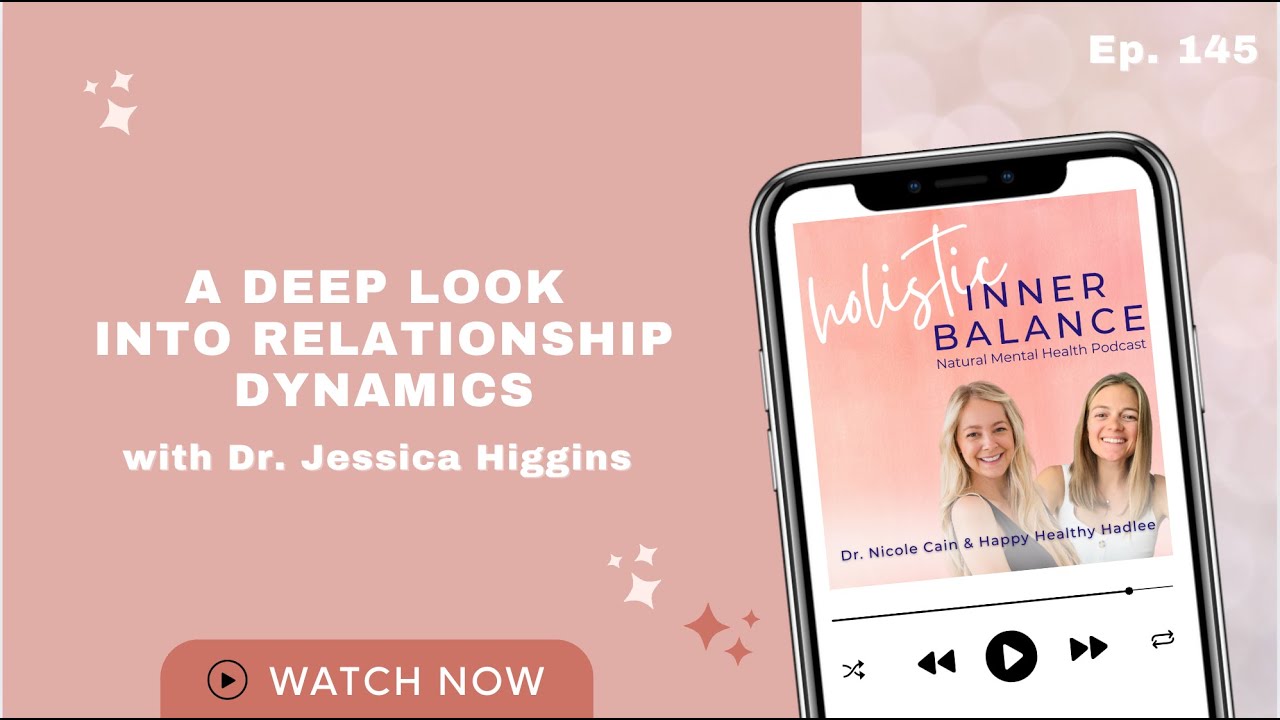
In this episode of the Holistic Inner Balance Podcast, hosts Dr. Nicole Cain and Hadlee Garrison interview Dr. Jessica Higgins, a licensed psychologist and host of the Empowered Relationship Podcast. The conversation explores how couples can move from destructive criticism to constructive feedback by recognizing that unsolicited comments often mask unmet needs. They discuss attachment theory, inner‑child wounds, and the habit of expressing needs through criticism, illustrated with a vivid personal story about dirty dishes that triggered an emotional hijack. The hosts examine how to ask for needs, manage repeated requests without nagging, and differentiate genuine disagreements from gaslighting. A substantial portion of the dialogue introduces therapeutic tools: Gestalt’s empty‑chair technique, Internal Family Systems (IFS) parts work (protective, vulnerable, curious parts), and somatic metaphors such as a “beetle shell” over the heart. Practical exercises like the rose‑bud‑thorn reflection, a six‑chair family‑systems table, and the “cycle” diagram are suggested for couples to practice at home. The episode ends with resources for listeners, including Dr. Higgins’s website, her podcast, and a PDF of the cycle diagram.
Chapters
Hi everybody, welcome to the Holistic Inner Balance Podcast. I'm Dr. Nicole.
And I'm Hadlee.
And we just had a really great conversation with Dr. Jessica Higgins, and she's the host of the Empowered Relationship Podcast, which is where I met her. And Hadlee and I were So excited and so blessed to get to have her on today.
It was such a rich conversation and like fun, and there are lots of stories in this one. So I think—
And sound effects.
Yeah, stories and sound effects and some, some vulnerable shares, I would say, on our parts. And, uh, you guys can kind of get a little glimpse into our relationships with our partners and how they are definitely not perfect. So I think you guys are really going to like this episode. Dr. Jessica is also wonderful. She's got just a beautiful energy and soul, I would say.
Totally.
Yeah. Yeah, she's really cool. She's a licensed psychologist and professional counselor based in Colorado, and she's got over 20 years of experience With multiple advanced degrees in psychology. Her specialty is helping clients transform confusion and heartache into clarity and deep connection with their partners. So we're going to be talking about relationships. We talk a little bit about what to do when faced with criticism and what is more constructive criticism, which versus Which she talks about destructive criticism, which I had never heard that term before, and I really liked it. Um, so yeah, we, we go in deep. It's gonna be good.
Yeah, yeah. And I am so excited to hear what you guys think. We would love your questions, your comments. And if this has been valuable for you, if you know anybody in a relationship, any kind of relationship really, please share it with them.
Yeah, yeah. It's, um, it's so helpful, obviously, for the people that you're sharing it with, and then also for us to get the, get the podcast out there. And if you, uh, benefit from the podcast and you want to give us a 5-star rating and review, we always so appreciate it. We read every single review and, uh, we love, love, love hearing from you. Also, like, feel free to DM us because we just love connecting with all of you.
And you can connect with Dr. Jessica at her website, drjessicahiggins.com, and it's doctor as in D-R. So I'm ready. Are you?
Yes, let's get into it.
Yeah, so tell, tell me about criticism versus constructive feedback. Like, what is, what is the scoop?
Oh, okay, we're in the interview.
Yes, we're in it. Yeah, okay, just dive in.
Excellent. Well, what I would say, first of all, just to back up even from that question, if I may, Constructive and destructive—that's really important to be looking at around the delivery and the focus and what constitutes constructive versus destructive. But what I want to say first off, in relationship and intimate long-term partnership, we are usually most interested and desiring to feel a sense of connection, closeness, and belonging. And this is very much related to the attachment research. This is very much just how we're wired from cradle to grave, just needing that sense of bondedness. Typically when we're little, it's our parents, but caregivers also in adulthood, it's typically our partner, our spouse, and it can take other forms, but we need this sense of safe haven. We need a sense of feeling refuge of this bondedness. In partnership, when we are living life together, we are witnessed to our significant other. We're going to see them, our partner, and how they operate. And you're also negotiating, co-creating together. So while you might have certain agreements or certain understandings, we are different people, so we're going to approach things different. And those differences feel like conflict. Or we might have some really brilliant feedback to give that, oh, I want to make their life even much better, right? And I'm going to offer some input or some insight. Well, the challenge is if it's unsolicited. That's the thing I want to just start with. If it's unsolicited feedback, even if it's constructive, will likely feel critical. Mm-hmm. Because we're not signing up to be evaluated. We're not signing up to be in a place of scrutiny, or we're not asking for feedback. So when it's unsolicited, it's almost like we're getting in their lane a little bit. Now we can ask, like, this is something I will do if I feel like, oh, I've got some good input, or I feel like I see something. And especially if you've been with somebody and you kind of value the growth mindset, that this could be a little bit more welcomed and a little bit more agreed upon. And I still think it's good etiquette to be like, oh, I noticed something, or I have an observation. Are you open to it? Would you like to hear? Without just giving it, because they could say like, I am, but perhaps now is not a good time. Like my husband will try to offer me some input about my business, and sometimes I'm like, oh, it's been a long day. I'm just too tender about it. I don't necessarily want Even if it's great feedback, I'm just not in a place where I wanna go there. And so the person on the receiving end has a little bit of a choice and can say yes or no. And then perhaps there's a better time when one could be a little bit more regulated to be open to that, or maybe not at all. But that's not— unless it's something— this is where we're gonna get into the dynamics of relationship, because when it's purely for the other person. I don't think many people would mind to wait or let it be on the other person's terms because we are a little bit kind of in their lane. But most of the time when we lead with criticism, it actually is an attempt to get a need met or to be seen about something, but it's a bit protected and guarded delivery. And so the person on the receiving end, it seems like it's about them and they might even get defensive, but it actually isn't. It's like a— Don't, don't, don't go for the smoke, the smoke signal. It's actually not that. Right. I'm not sure if that's the right analogy, but I'll stop there because there's a lot to this. But usually when we do lead with a critical comment or approach, it's usually something on the inside that we're needing or wanting that's not visible and we're not necessarily making
clear. One of the greatest gifts is withholding unsolicited advice, right? And I love what you're saying in terms of like pausing and just doing a quick audit of, is this for them or is this for me?
Yes.
Yeah. And if it's for me, can I actually just ask for my need to be met rather than having it be a criticism?
Precisely,
girl.
Which is not easy to do,
right? Right. No, that takes vulnerability.
Correct.
Oh, that's—
or even just an unpacking even ourselves. Like, sometimes I might— it's like the low-hanging fruit. It's the easy thing to do sometimes when, you know, I see this really with people who are a little bit more intellectual or are environments in their work where they have to be big decision makers, right or wrong, black or white. It's very evaluative. Those critical thinking skills are necessary. Or perhaps they even grew up in an environment that was a little bit more performance-based, or they just need these skills. So it's not like they're bad skills. It's just, again, doesn't create a safe environment and relationship when we're not asking for it and/or it's confusing. So. If we are leading with the criticism, and we might know what we need, and it's too vulnerable, and we don't ask, that's one thing. But sometimes we're in such the habit and the pace of life, I will raise my hand that I will be commenting about my husband. And if I notice, and I have to catch it sometimes, okay, like, what is in this for me? And sometimes I don't know first blank. I have to actually drop in and say, okay, well, if you were to do the thing that I'm— asking or needing him to do, what would that allow me to feel like? What is it for me? What's in this for me? Or what am I worried about or have a need around?
Yeah. So what you're saying is a lot of times we don't realize that we actually have an unmet need in the first place.
Yeah, exactly. Yes. I mean, look, if we look at environment, perhaps this wasn't a safe thing to do. Perhaps emotional Relating or making difficult emotions visible was not the smart move. So we don't maybe trust it or don't have a lot of experience with it. It's a little bit, again, more of a, a guarded approach to lead with criticism in hopes that our partner can decode it and then respond to us.
Yeah. Read our minds. Yeah.
Oh, you're talking about me, but you really have something you're asking for that you need. Tell me more about that. Like, that's a little bit of a ninja move. Like, we're not usually. That table.
Yeah. While also trying to field off the defensiveness that comes when someone is criticizing.
Yes. Yes. And I will raise my hand here again, like I am very prone to getting defensive if I feel misunderstood or being misperceived or, and I have to hold on and really try to get my bearings if I'm like, oh, okay, he's got a thing. Like, what is it that he's needing? And try to get curious about that. Not easy to do, but
right. And this is your jobs.
Correct. Correct.
The rest of us, it's okay, y'all. We're, we're all muddling through this.
Yeah.
I'm thinking about my patterns of communication with my partner, and I grew up in a family where when needs were expressed, it was through criticism. And so that comes very naturally to me. Um, I've— I'm not not. I've been accused of maybe nitpicking a little bit, and Paul feels sometimes— Paul's my partner— feels like maybe I'm a little bit overcritical. And, um, and so reflecting on that, I always want to ask the question of why. Like, what are the roots? Where does this come from? And for me, Inner child work and like young habits aside, one of the things that I feel like I noticed is I love that you're talking about unmet needs is because when I would express a need in maybe like casual conversation or just say, hey, like, for example, I'll give you a practical example. Is I grew up in a house where nobody cleaned and it was really messy all the time and It was like dishes were when we ran out of dishes, then you clean them all. And it was very stressful. And growing up in that was a lot of chaos. And so one of my needs is for Paul, when he does— when he eats something or makes dirty dishes, that he cleans the dishes. And so I would express that to him. I'm like, hey, I— if you make dirty dishes, I need you to clean, clean up after yourself. And so then he was like, oh, that's an interesting suggestion. And so it all came to a head. And one day he and I were to meet because we weren't living together yet, but we were meeting at our townhouse because we reserved it. We were getting married and we're going to be moving into the townhouse. And he'd already been there like doing whatever he does. And I get there before him. He's returning from a trip and I get there before him and the sink is full of dirty dishes that have been soaking in scum for a week growing like God knows what biohazards. And I had this inner child trauma trigger, and also it was objectively disgusting. So when, when he came and he got there and I'm like standing in the kitchen, I lose my ever-loving mind. And I'm so embarrassed about it because I was like, I was like pterodactyl lady. I was like yelling. Oh my God. I was like losing my cool, and I stormed out of the house. I slammed the door as hard as I could. He follows me out because he wasn't very wise in that moment. Emotional hijack. He should have run away, but he followed me. And so then we're screaming at each other outside, and I get into the car and I'm like, vroom, and I like vroom away, and my tires make that sound. Oh no. And I'm sure our neighbors were like, Who are these lunatics that are moving in next door? And it was all over these freaking dishes. And so I guess this isn't all about trauma dumping, although I think maybe it was just a second there. Thanks for listening. I feel so much better. But also, he felt like I was critical and he didn't understand the importance of it being a need. But I could tell you that it's never happened since. So it's like it worked. I screamed at him and I traumatized him so much. He's never left biohazard dishes in water for a week. So I know I just put a lot out there, but what— tell me what's coming up for you.
Yeah, well, first of all, thank you for just sharing something so personal. And also, I can appreciate if it were me, I wouldn't feel like it's very flattering. Right. Like, I'd be a little maybe like embarrassed, but also like, this is real and we're all in it and we're kind of negotiating the intensity of these moments. So my first thought is just recognizing just how emotionally challenging this is, the empathy around how much you're looking forward to moving in and this place that you're gonna be nesting together and the beauty and the like goodness and all that it's gonna represent and just the symbolism of that, just how in a place of like how pure and beautiful it is, right? Just really wanting to kind of have that experience and having shared with him very directly and openly about this request or need or suggestion as it maybe was perceived. And I think the thing that really stands out to me is what you're really giving us the background of. And maybe you did share this with him around, here's what it means for me. Or here's where I go when I see the dirty dish or the accumulation of dishes. And I, you know, if it were me, just the little that you've shared, I start to feel anxious. I start to feel the disorganization. I don't feel safe. It just reminds me of all the times where I didn't feel secure or, you know, and just see the emotion around that. Here's what this— it's not a dish and it's not just my preference that verifiably it's disgusting when you don't, but not like not leveraging like right or wrong. But like, here's the inside part of me. Here's where I go. Here's where I am emotionally. Here's where I go in my whole system. And it's like, that is like, that's what I feel empathy for. And that's what I would encourage in relationship. We slow down enough and we're vulnerable enough to give a little bit more of the context around the significance because then it's not a dish. It's like, Oh, my partner feels trauma in this certain circumstance. I want to really help in ways that I can. I can't be perfect. I might misstep. And I know what the significance of this means. And it can't be like everything is super like, you know, but, but just that we are— we have some things around how we're negotiating. And, uh, that's, that's the first, the first few thoughts that come up.
And I don't think that I unpacked the root causes of that before that giant explosion. I think that came later. And so I appreciate what you're, what you're describing. And to kind of recite back to make sure I'm tracking is that when identifying a need, like I need you to clean dirty dishes, is then asking what, what is this about for me? Is it just a preference? Is it a suggestion? Or does it mean something bigger for me? What's coming up for me? And then getting really clear on that so that I can communicate with my partner clearly, and then he can respond from a place of personal power as opposed to responding from a place of terror because I turned into a pterodactyl. Yeah. And so it's like doing that personal work ahead of time. And then the other thing that I really appreciate that you were saying too is Is that volley up? And is this about me and an unmet need, or is this about them? And allowing them to have some choice and some agency and some power in how we discuss it, when we discuss it, under what conditions. So I really appreciate that too. And I think had I had these skills, you know, back in that time, my neighbors probably wouldn't have thought we were both nuts.
I mean, this is tricky. I, I— everything you're saying, yes, I would absolutely agree with. And also, sometimes we're doing this as it's happening, right? We're trying to kind of get oriented around what is all here. Yeah. And I will say there's so many times where I loved what you've said about just whether or not it's holding the unsolicited feedback or the observations and/or if I'm triggered The reactive part of me that wants to spot off some type of critical thing of like, feel totally justified and warranted and, and can speak to that. But that actually isn't the thing. I can react and I can be right, but it's not actually what I need and what the deeper layers are. So sometimes it does look like I'm not in a place where I can talk about this. Yeah. I am not wanting to be kind or be in a place of constructive conversation about what is going on for me. So that's real.
Having the permission to not discuss it in the moment,
for sure.
Yeah.
Yeah.
It's gonna be messy.
And then I'm curious about, so, you know, we, well, I'm curious how many times you told him before, like, to not leave the dishes in the sink, cuz this is something that I see. With some— there are some couples close to me where I see this, where one of the partners will ask the other, or it becomes like they've asked them like a bunch of times, and then it becomes like more naggy, more like, oh, you always do this. Like, you know, so it can kind of become more of that. Like, there's sarcasm and trying to bring other people into it. Like, see, aren't I right? Isn't that person wrong? Um, but I'm curious, like, how do you navigate that when you've asked so many times? And I think, you know, well, I, I won't even, I won't even project what I think, but, uh, how do you, yeah, how do you navigate that when it has been like so many different times?
Yeah. Yeah.
There's a lot here. So potentially in the dynamic, I'll just speak archetypally, like just that the one that's feeling a little bit more— you use the word micromanaging. I feel like somebody might have said that maybe at some point, but, um, or the nagging— that the dynamic can be one is dominating a little bit more with their preferences and the other one is compliant, but also maybe passively trying to do what they want, but not necessarily negotiating. Mm-hmm. So there can be some ways personality where you have extrovert introvert, you have even attachment styles, one's a little bit more anxious. So they're going to be super engaged in like checking and monitoring and like, you know, tracking and, and making sure and checking and double checking. And the other person's a little bit more avoidant, and they turn away or they self-reference. And so there are a lot of things that can— or, you know, the one that's a little bit more sensitive, or the one that's just a little bit more expressive, like there's just a lot of things that will occur in the relationship. So I do like what we talked about around the significance around when something is vulnerable, helping the person understand. And also, when it's not shared, if one person's always saying, here's what it means to me, this is why it's important, and the other person isn't necessarily talking about their experience, it can feel really imbalanced. And I think that's hard to be, like, hard to sustain. It's actually— I remember years and years ago, I was on this person's interview. I think it it was like Brilliant You, I think was the name of the title. I don't know why, but she was making her husband these really healthy meals for lunch and he would get so locked in and work. And I think he worked from home and I— maybe she didn't. And she would come home and these like beautifully thoughtful, whole nutritious meals were going bad. And she was perceiving it as like, dismissive. I don't really care. It doesn't really matter. And she's like, his health and his— you know, she was like, it meant a lot. And so their conversation was about the food.
Hmm.
But what it meant to her was like, oh, you don't care about my efforts, or you don't— it like had a deep meaning for her. And she was just like, whoa, I never knew that it meant that to me. So this is kind of what we were just talking about. But to answer your question, I would be interested in looking at the dynamics in a bigger kind of context. And is one person a little bit more dominant? Is one person a little bit more passive? And is this like really encouraging what the person that's maybe not as active around their preferences, how they share space, like, is it all about one person's preferences? How are— is this relationship representing the other two? Because we can get into like— Mm-hmm. This way, we fold the towels this way, this way is better. Or, you know, it can be very like we need it a certain way, and that isn't necessarily like it has deep significance. It's just like we like what we like and we're pretty strong and maybe, um, very comfortable advocating for what we want. So I don't know if that answers your question, but that would be one place I would start to explore.
Totally. Yeah, in, in my family, it's It's typically the woman that wears the pants in all of our relationships. Um, so I'm, I'm also curious, how do we pull out the other person's needs and desires then? Because I mean, my husband and I have had this conversation, um, where, you know, I'm like, I, I am fine with sharing my needs. And honestly, I don't have to— like, it's It's because of him that I'm not critical, because he just does what I ask him to. Like, he's really wonderful. But, you know, we have these kinds of conversations where if that doesn't happen, like, we go into the, into the why and all of that. But we've also talked about, like, I'm like, you know, I do want you to share with me, like, what I can do for you too. And his tendency is more, you know, he's a middle child, more of the peacemaker, Enneagram 9, wanting everything to be chill. And I'm like, how do I support him in actually sharing what his needs are?
Yes. I love just you're giving some background to your question. Yes, a lot of people will probably resonate with what you're kind of asking here and whether or not it's just the role and the family around, I was a peacekeeper, I wasn't used to Making my needs visible. Some people go into shame, right? It's like I, if I don't get it right, then I am not okay. Like there's actually like a lot of pleasing in hopes that that will basically they'll feel good or feel enough or feel like that helps the bond. So I I would say this is. In part, the person that has a harder time advocating, an inner game thing for them to— if they're interested. And I can resonate. In my relationship, I'm a little bit more active, and if I'm not careful, can be more dominant. So some of the things that I do is just noticing my pacing. If I'm able to think out loud and brainstorm, just like my processing speed can be a lot faster than his. So sometimes I will intentionally Mm-hmm. Hold or reserve or just slow down and just be in a place of, like, interest and silence and wonderment just to see what happens of, like, what he might say. Other times, I will just really, similarly, but sit with the curiosity or just in a place that's less like we need to make a decision. Sometimes it's like, debriefing or after the fact. Sometimes in the past, he's known a lot more about his experience after, right? He might not have been able to say what he would have wanted, but after the fact, he can say what he didn't like or what he would have wanted more of. And so the learning curve of giving this a lot of room and space that— how was that for you? Or— What were you experiencing? Or, here's what I noticed, but I wondered where you were at. I didn't hear you say anything. And in a real place of without pressure, or there's no decision that needs to get made, just a real curiosity and learning. Sometimes I'll use the language around, my vote is, what's your vote? Like, just really being clear that we're in a place of shared decision-making, the equity. Because I do think when you mentioned a family system where there is control or power over, I do think we live in— cultural dynamics around power of like one up, one down, that, that just is so, so prevalent that it can feel like there is one person that's going to get their way and the other person isn't. So we— I think sometimes we have to be a little bit more conscious to say, oh, we can actually both have a win here. It doesn't always have to be compromise. Sometimes compromise is great. Other times we can stay with it a little longer and see if we can get to something a little bit more creative that we can feel really works for us both. So some of this takes some real intention and slowing down. I would start there.
Yeah.
So I, I have clients who will have these conversations, and there'll be almost an impasse. And so, like, I think I feel unloved when you leave the dishes in the sink, and when they're becoming a biohazard. And I just think that it's For me, it's not acceptable to have them in the, in the sink for a week. And then theoretically, what if the person is then like, I think it's fine, and it wasn't a week? And, and so then they're, they're not meeting each other. And then what I'm seeing when people aren't meeting each other in these conversations is that then they're misusing— at least how I perceive is they're misusing the term like, well, you're gaslighting me. Mm-hmm. Where I'm wondering if we can dissect a little bit what that language means. So because it's like everyone is gaslighting and everyone is narcissist right now. Yes, it seems—
drives me nuts.
And, and so yeah, can you unpack that for us a little bit?
Yeah, I mean, look, I will say that some of this has been challenging for quite a long time in relationship. We just have other words that we might use. Yeah. So for the example of whether or not something's okay or not, that people can argue for hours and years and decades. Like, it's— they both can be right,
or
Both can be wrong. Like, it's just it honestly, who's right or what's right or who's wrong or those type of things—they're not solvable. And when we have different preferences, whether or not it's for physical intimacy, emotional intimacy, for cleanliness, for a certain amount of money in the bank, like these are conflicts. People will have differences around them and sometimes not going to change. We can consider each other. But they're deemed more perpetual problems. So the gaslighting, I would say, is best used or best identified when somebody is talking about their, their experience from their emotional place, from their, here's where I go in my mind, here's what I'm afraid of, and their reality, not as a shared reality of here's the facts. Couples get stuck and try to, let's rewind what just happened. Let's play it back. Even if they were to play it back, we're notorious. Neuroscientists and neuropsychologists really recognize when any type of emo— we're not great remembering, at remembering facts, period. Mm-hmm. But also when we're emotionally charged, not great at all. So spending a lot of time around the fact finding, And whether or not that's true or false, and using words like gaslighting or not, that's just gonna be unsolvable in my opinion. So where gaslighting, I think, is in its— in my understanding of its most injury or weaponizing, damaging way is when somebody might have an intuition or a gut feeling, or they have an experience or emotion, and somebody's saying That's wrong, or you don't feel like that, or that's not— like basically telling you your experience is not right and not— and wrong, or counteracting so much so that you start to question yourself. This is where in really highly abusive or addictive, like when there's a lot going on in the relational patterns around addiction and abuse, it's a form of manipulating that this person is like, I don't feel okay. And this person's like, no, you're okay. Right? Or, you know, it's that type of thing. So that's where I would really get concerned about the dynamics and the term gaslighting. But I, I would suspect a lot of times when it's brought up, it's like, you don't agree with me and you're— we're fighting about what the fact of this is. What would you— I'm curious what you both would say.
Yeah, I really, I really appreciate that. And I think that it can be kind of just maddening to try to figure out the facts. And I— that's, that's where my— where I used— I still go there, let's be real. I am not— I am not awoken yet. And, and so I even got— this is like confess all, I feel so therapized here, you guys— is I used to record my arguments with Paul. Because I would say something And the more agitated I get, I think really quickly. I get really analytical. And the more agitated that Paul gets, he gets so emotional. And then he, he isn't as quick on his feet when he's triggered, when he's activated. So he's like saying these things and the poor man is like, wow, he's so upset. And then I'm just like getting at him with fact after fact. And then after the fact, we're, we're fighting about the details. And so I'd be like, you did say this. See, I recorded it. And then he's mad because I recorded it. And so I appreciate what you're saying is that we're talking about the lunch, as opposed to what's underneath of it. What's the unmet need? What's the experience? It's like, okay, you— your reality and your experience is this. My reality and my experience is that we probably aren't going to find an objective truth Somewhere in the middle. And so like, what are we actually talking about here? Suddenly, suddenly the conversation gets to change and we're not just fighting about facts.
Oh my gosh. Yes. I'm so relating to you. A little bit different dynamic with my husband. His name is Reid. Uh, he will use words and I will feel so reactive because it means something different to me. And I am like, okay, well, here's what— and I'll I'll reflect back what I hear, or I'll ask a question based on that now assumption. And he's like, that's not at all what I'm saying. And then I'm like, but, you know, and so we can get off track. So I— there have been times where I'm like, okay, we got our facts straight, like facts, words, we've got that dialed down. And still the meaning-making around it is vastly different. Yeah. And so I have to get very interested And what he means and what he's saying and what it— like, how it feels for him. Because even if I understand what it— what he's saying, I understand what it means, I still don't quite understand. Like, I have to stay with it longer till I'm like, oh, so it's like this. Or, you know, I just have to really try to get in his, his world around it. And if I try to get like, how does this make sense? Or how, what do I know about him? And how, and this is not easy to do because it asks me to put, you know, suspend my thing to feel heard on my things that I might have a lot of emotion around. But if I'm really trying to seek understanding, the way we might describe things is so different that like we, yeah, it's just, yeah. Yeah. Can be difficult. Yes.
It's like, would you rather be right or would you rather be happy? And I'm like, I think I would rather be right.
Yeah, for sure. I have to catch that. Yeah, that's a great question to ask in the moment, because if you're, if you're wanting to be right, it's likely you're not going to be working towards seeking understanding. You're going to—
And so I love what you're saying though. It's like listening for what they mean. Instead of necessarily what they say. Because if you're just nitpicking, which I really appreciate— this is great, so Paul's going to be so grateful for this interview— is, is what I, what I think I'm hearing is underneath this, or what I think I'm hearing you say, or what I'm wondering if this is what you mean, and coming at it from curiosity.
Yeah, and how this makes sense. Here's what I know about you, and you're saying this. How does fit or how— and there's been so many times that if I can settle into that, I'm like, oh, okay, my thing's still really true too. And yeah, okay, I get it. I— the way you're describing it, I was wildly offended and I still would use different words and take issue with your language. And underneath, oh, I get it. I get it. And then I will reflect based on my words. And he's like, yes. And I'm like, great. Like, I— that's where we— what we needed. Yes. Because it's like, I was so offended by his description. I was like, ugh, this is like gut-wrenching. I, I can't think of an example. Well, actually I can, but, um, I, I'm happy to share, but I don't want to take too much time. Hadlee, I'm curious where you're at, what you're thinking.
It's so funny. I literally yesterday had— we were We were joking around, so it wasn't really like an actual argument, but it was so funny. He said something to me yesterday, and I like a couple minutes later just said back to him, I'm like, you just said this verbatim, exactly what he said. And he's like, that's not what I said. And I'm like, no, that's literally exactly what you said. And he was like, okay, yeah, you're probably right, but that's not what I meant. I'm like, okay, well, this is literally what you said. Yeah. And again, it wasn't like a real argument, but, um, But yeah, it is interesting how we— and I've done it so many times where I say something that I don't actually mean, and it's like, well, can't you just like read my mind and like my emotions? And like, I didn't actually mean it like that, and I wasn't actually like, you know, triggered this way or whatever. Um, and yeah, it's just— I think, I think it really also comes down to like Giving the benefit of the doubt, coming at it from a lens of like, I love this person. I'm not combating with this person. We're a team, and the problem is the thing to kind of tackle. But, yeah, that's what's been coming up for me, and I've been chuckling to myself.
Well, I am so grateful about what you're saying, and my way of of perceiving that is that it's a very secure, securely functioning thing to say, right? Feeling secure that your partner loves you, feeling secure that your partner will respond, has good intentions, and that we're good. And I would say for some that maybe haven't had the history of feeling that security in relationship and/or in any relationships, might be scared of, I don't know they love me, even though I have all this evidence to support that they do. Oh, I have all this other lived experience that this person will leave, this person will not think I'm good enough, or, you know. So people are living with this internal system that might have a charge to it that doesn't feel rational, but also is really there. Mm-hmm. And so I think that that's really important to start working towards, that, you know, as we know with research, that We can earn a secure attachment and through secure functioning and really work towards establishing some of these ways of being in relationship when it is safe that like, oh, can I try that on? Can I? I've had to do this in my own life. Like, oh, the anxious part of me is afraid this, this, and this and that. Can I try to give him the benefit of the doubt? Can I just suspend this a little? Can I hold some? It's not all or nothing. Can I hold a part of me that Can, can reassure myself that he does love me and just hold some benefit of the doubt and then see what happens. And it's like, oh, you know, there's been so many times that has been helpful and resulted to something really positive and not always easy.
Yeah.
What if we do— I'm like, I'm like dreaming here. Okay, who, who was it? Do you remember who did the empty chair Was that Virginia?
It's Gestalt, if I remember correctly. Gestalt. It's Gestalt therapy. What is his first name? Fritz? No, Fritz Perls. You're testing my old school psychology memory.
I know. So a lot. Well—
Gestalt is what— that's his last name.
The empty chair. Oh, this is his last name. Boy, I would not pass my NCE if I had to take that again, probably. National Counselors Exam. So, so what I'm thinking is, I really love what you're saying, and I'm thinking about like solutions that we can use right now as we like listen to this conversation. And I'm wondering about the parts element, because for me, I'm like, I have to stand up for myself. Nobody else is. I can't just be walked all over, you know. It's in this, which I think is a beautiful strength if someone's listening. Yes. And they're like, I have this like strength of self. I'm going to advocate for myself. And so what I, what I'm wondering as you're talking about parts is that have a chair, like maybe we could even like get like tangible, like gestalted about that is like, there's a chair for like the part of me that's like advocating for my perspective and my needs and myself.
Totally.
And like, that's her chair. And then I'm going to sit in this chair of the part that's willing to be curious The part that's willing to hear their perspective, that's willing to give them the benefit of the doubt, and holding that space and then asking permission to then move to the other space. And so for those who need like an actual literal third object to represent that, that may be easier than just an internal state shift.
Totally. I would add The way that this typically is for people, the critical part, or the one that wants to advocate strongly or control, is a protective part. Right. It's a part that got developed somewhere in life for good reason. It was an adaptive strategy, worked, and also in current day causes certain side effects or challenges. So that part, we wanna love that part. That part has served us well. There's strengths to it, like you said, and it can sometimes interfere.
Yeah.
With our ability to really feel deeply connected because it's working so hard. So we have the curious part that is holding space for this dialogue and just this, okay, there's a trust. It almost, it could even be spiritual for some, or this sense of higher self or, What, what else can happen here? And just the kind of being willing to be in that unknown. The part I would add that's likely fueling this is the part that is, one might say, the injured part, or the one that's scared or wounded, or as I was saying not that long ago, the part that hasn't felt secure, has felt insecure for good reason. That part. is typically the one that hasn't gotten attention, hasn't felt supported, hasn't felt seen, and greatly needs to be. So if there's a way that we can bring, bring a seat up or hold a seat for that part, I imagine— because I could say a little bit more about the dynamic, but that part is, is fueling a lot of the reactivity, and it's kicking and screaming like, you kicked me to the curb, or like, I'm freaking out, I'm terrified, and— You know, and trying to grasp for, or, or also shutting down and like, I can't trust that you're not gonna be there. Like, I don't— you don't see me as good. I, I can't rely on you. So I would, I would really encourage that part to also have a seat.
So we would— well, what about— you said the 6 chairs? Yeah, 6 chairs at least. What were you gonna say, Had?
I was just gonna say the You said the, you don't see me as good. That one really resonated for me. It's like, oh, you don't see me as good. Yeah. Yeah. That's
where there's love lost, or I'm failing you, or I'm disappointing you. I mean, there's all places. Yeah.
Mhmm. Yeah.
So you said 6. Are you saying each person has chairs? Tell me.
Yeah, girl. I'm thinking, like, sit at the dining room table with your partner. And put all your parts out there. Put all your parts out there. And how cool this would be for kids.
Oh my gosh.
Thinking about like family systems is totally like, have the kids like draw like on a piece of paper, like, this is the part that feels hurt and sad or not enough or an unmet need. And this is my part that feels really angry. And this part over here just wants a sandwich. And like, whoever needs to be there. All parts are welcome, and then allow each part to be able to express themselves, and the part that listens, and what— whatever that is, and have a whole family systems. And then as we get more skilled at this and we practice this, we don't need to sit down at a literal table anymore having that conversation. So like, I do this with my admin, actually. I'll be— I'm Nicole when we're talking as friends. Mm-hmm. And then when we're talking as colleagues, I'm Dr. Cain. And so, so she may come in and she may be like on the verge of tears or stressed about something, and she'll be like, I just need to talk to my friend Nicole. Oh. And I'm like, all right, I'm Nicole. What do you got, girl? And so we don't need a literal sofa or dining room table because we've been practicing that. But as you're talking about, like, yeah, being trauma-informed, internal family systems informed, We could do this with our partners. And how incredible is that?
Yeah, well, I mean, look, as you're talking, this is a lot of what the emotional focus therapy— like, people who are trained in this modality will help a couple do. And there's a PDF if you're interested I can send you that actually is showing you a diagram. Scott Wollin created this. It's called the cycle, and it really puts one partner on one side, the partner on the other side. And I mean, I can explain it, but in the, in the document I do explain it a bit.
I would love that.
Yeah, we can definitely put that in the show notes.
Debbie Diaz Ashmez, I think she created arrows that talk about the direction. And how this fits with what you're talking about here is that the inside part is the vulnerable part, typically the one that maybe has an attachment injury or has a fear And then the protective part is the one that's visible on the outside and has its moves. Typically, when we're in relationship, the protective part of partner— I'll just say A— will land in a very deep, vulnerable, not so great place for partner B, or for the other partner. And that's not the intention. The intention is to protest, to get seen, to get to feel safe. not to hurt, but it hurts. And then the other one, very quickly, might even not be conscious of it, will feel that wound, but then go into their protective strategy. And their protective strategy hurts the other in a very significant, deep way. And this is where the patterns and the cycles win. Mm-hmm. It creates disconnection. People are protecting themselves, but yearn to feel understood and connected and close, but don't know how to. Talk in this way of, here's the— here's my inside part. And that's largely the work of, of helping couples do that. But what gets in the way, what the blocks are, the inner— what things, what inner— what things are interfering with that, being able to do that? I don't trust. I have never known safety. Or it's too scary. Or there's too many injuries in the relationship. Like, I don't know how to trust this. Like, there's just a lot that, or I don't know how to be vulnerable. So getting support to do that. But yes, if one can do that and be curious and use it like a creative expression, I would highly recommend. Like how dynamic and really, I mean, the other analogy, I'll just say one more thing is, I remember when I was talking, this was like probably 15 years ago. No, maybe 20. I was talking about conflict resolution and I was like, oh, can we just like put it on the table and can we like walk around and get different perspectives? Like, we're not so identified with the thing we're putting on the table that, like, can we walk around? And so I like— it kind of has this flavor of, like, we can move and be a little bit more mobile and not be so overly identified with one part and just be really looking at it from this higher, like, or just more curious, playful way that I think can hold it all a little bit more loosely or not so intensely.
I really love that. We just did a— we had a conversation with Jamie Marich, and she was talking about this, about different Parts and, and the spectrum of dissociation.
Uh-huh.
And she was on a forum with Dr. Schwartz. And so a lot of Internal Family Systems is, is the disintegration of Parts and then the goal of reintegration. And what Dr. Marich is, is talking about is allowing our Parts to be individuated in, in, in a place and in a space that is from our, our highest sense of personal power and agency, as opposed to like, I need to get rid of vulnerable part and integrate it with empowered part and just have oneself. Mm-hmm. And, and so I kind of like what you're talking about is because they're— they show up and they help us in different ways. But how can we be aware of that and, and leverage that in partnership?
Yes, help them dialogue, help them start to be able to— because usually these parts are in conflict, they don't like each other, they don't play well together. So it's like, how do you help? And this is partly like, you know, internally having a little bit more of this dialogue or this kind of understanding around what is your need, what do you need, like Yeah, it's really powerful work.
Oh, that's amazing. Hadz, I see like a thoughtful expression on your face.
Yeah, I'm just— the, the visual that comes to mind for me, like, you know, because I've done, done a lot of work around my emotions and all the things you all have been witness to some of that on this podcast who are listening. But the visual that I have is kind of like a, almost like a beetle shell of a wall. Like, it's just like, it's like over my heart. And you all know that I love like the, like very physical, tangible practices and stuff. And for me, like leaning back and allowing my chest to open up is really helpful to, to really, to actually allow my like heart to be open in those kinds of conversations and stuff and not having that wall up. Because my tendency is, is just to have the— have that wall up, um, and have that protection over my heart. And, you know, even like as a kid, I was not thought of as a sensitive kid, even though I'm like really, really sensitive, because I always had the, the wall.
Mm-hmm.
And I was always like, I'm fine, I'm just— I'm more like angry or like combative or whatever. You know, people outside of my family didn't think that I was angry, but my family was like, oh, don't mess with Hadlee. So yeah, so that's just, that's just what I've been thinking. The visual of that beetle shell over my heart.
And the leaning back around when you choose or there's enough safety to Really lean back and open the heart. Like, it's really— yeah.
Sometimes my husband will literally, like, put his hand on my heart, like, and push down, like, when I'm feeling like I need some nervousness, or when he knows that I'm needing some nervous system regulation. Like, he just comes over, puts his hand on my heart. So yeah, I think that's my addition.
Yeah. Such good awareness. I feel just how important that is, the somatic.
Yeah,
somatic. Yeah, it's getting us back into our, our grounded, centered body and out of that emotional hijack.
Yeah, totally. Yeah. And I love that you said the thing about actual physical chairs too, because for me, when I try to do like mental exercises, I just like— it's the same as like when I was kid and I was like trying to pray in my head, like I would just like, like totally mind wander, whatever, start thinking about what I need to do, whatever. So yeah, having those, having that physical thing is really, really important for me.
Yeah,
I'm gonna try that with Paul. We're gonna go home and tonight we're gonna do— I've just decided we're gonna do a rose, a bud, and a thorn. And We're— maybe we can do that for each of our parts, and we'll— I'll report back and let you know how it went.
I love it.
I love that. Amazing. This has been such a wonderful conversation with you, Dr. Jessica, and, um, wanted to ask, how can the listeners connect with you? Um, what's the best way for them to— yeah, to be able to interact with you?
Thanks. Well, I've really enjoyed this time as well, and I feel like there's so many directions that we could go and just spend a ton of time together. So thank you for welcoming me and just all that you're doing. I— my website is drjessicahiggins.com. That's doctor with a D-R. And I also have a podcast. It's Empowered Relationship Podcast, which is really supporting people navigating long term intimacy more skillfully and more mindfully. And Dr. Cain, you've been on the show. I— you might want to link to that. And there's lots of offerings on, on the website that people can peruse depending on how they want to deepen their practice or get support. So
it's so good.
And yeah, your podcast is wonderful. I've been listening to it.
Thank you. Thank you.
If you could send that PDF of the cycle that you were talking about, we'll be sure to link that too.
Yes, I'd be happy to.
Amazing. Thank you, everybody. This has been the greatest.
Yes. Oh, such a rich conversation. Thank you so much. And for everyone listening, we will talk to you soon.
More from Hadlee
Happy Healthy Habits: Automate Your Habits. Optimize Your Energy. Unlock Your Capacity.
Join us at the Align & Thrive day retreat Sunday 1/11 in San Diego 🩵 Comment ALIGN for the link
Fueling the Future: ESS60, Mitochondria & Mission Longevity with Chris Burres | Ep 156

Dancing Through Life: The Healing Power of Showtunes with Danella Mercati | Ep 155
From Breakdown to Breakthrough: Reinventing Life at Midlife with Wendy Valentine | Ep 154

Your Soul Wants To Be Surprised: The Good Life with Michele Lamoureux | Ep.153
BONUS EPISODE: Fawning: The Trauma Response Hiding in Plain Sight With Dr. Ingrid Clayton | Ep 152
Fall Asleep Faster, Rest Deeper & Wake Up Refreshed Using Sleep Science with Devin Burke | Ep 151

Your Oral Microbiome & Mental Health: The Overlooked Link with Dr. Namrata Patel | Ep 150
Acupuncture & Energy Flow: Unlocking the Body’s Healing Potential with Dr. Felice Chan | Ep. 149