Adventure, Habits, Growth, and Acceptance - A Glimpse into Hadlee's Life | Ep. 114

In this Holistic Inner Balance podcast episode, host Dr. Nicole interviews co‑host Hadlee Garrison. The conversation opens with Hadlee’s most adventurous travel stories, including a perilous hike on a volcanic island in Iceland and a rustic stay on a Malaysian island, illustrating her lifelong love of travel fostered by her parents. The dialogue then shifts to how those experiences taught her to regulate her nervous system and develop resilient habits. Hadlee explains her "Happy Healthy Habits" coaching framework, emphasizing nervous‑system regulation, sleep, movement, and non‑negotiable routines that create structure even while traveling. She connects this to the Japanese concept of kaizen—small, incremental steps—as a practical method for both physical challenges (e.g., descending a slippery mountain) and broader life change. The conversation also covers habit motivation, arguing that immediate, tangible benefits are more motivating than distant health warnings. Hadlee shares her 5‑year vision: expanding the podcast, hosting live events, retreats, and a local VIP program while continuing to travel and speak about energy management and resilience. The episode concludes with a series of rapid‑fire, light‑hearted questions revealing personal preferences (karaoke song, favorite food, superhero power, etc.) and a heartfelt affirmation of the partnership between the hosts. Throughout, the tone is conversational, enthusiastic, and supportive, with moments of humor and reflective insight.
Chapters
Hi, everybody. Welcome to the Holistic Inner Balance Podcast. This is Dr. Nicole, and I am here with . And today is an incredible day because we are going to be talking all things Hadlee today, and I'm super excited about it. And so If you've been listening to this podcast for a little while, or really honestly, if this is your first listen, you're gonna learn so much about my dear soul sister co-host, and it's gonna be really fun. So I'm glad that you're here. And as always, Hadlee has like just all sorts of words of wisdom, and I might ask her for more words of wisdom, wink wink, about all things beautiful and brilliant. So I'm excited to have some fun and to learn some cool stuff. So thanks for being here, girl, and being willing to let me interview you.
Yes, absolutely. I'm so curious what questions you have for me. I, um, yeah, it was fun to do this for your birthday, so I'm, I'm excited to share and stuff as well. I, I'm not super shy about sharing about myself, so I'm pretty, pretty good with it. Yeah, I think it'll be good.
Yeah, I want to start with adventure because that's not what people normally start with when they're doing an interview question.
Oh, I like it.
Yeah. And I, I think that it's gonna get us into some kind of like knowing you a little bit. I think it's gonna get us into some like really interesting Hadlee facts and some stories and topics.
Okay, sweet.
And so I'm curious, could you tell us about the most adventurous thing that you've done?
Hmm. Okay, let's see. It's gotta be one of the places that I've traveled to. Yeah. And I'm thinking about— well, there was this one time in Iceland. This is the thing that's coming to mind for me. This is probably the most, like, the scariest thing I've done. Um, so this is what's coming to mind. But so my husband and I, Well, we were not married at the time. We were— it was just after college. We decided to do a month-long trip throughout Europe. And like right after graduating, we graduated and I think we left the next day. It's like graduation, get out of— get out of there, go to Europe.
Yes.
So our first stop was Iceland and we were on this tiny little island right off of the coast of Iceland. So it wasn't even like the actual— like, it was really small. It was this volcanic island that the volcano had erupted, I think, in the '90s. So it was really cool because we went and you could like feel the thermal, like the heat and stuff from the volcano and everything. And then we went on this hike and we had no idea what we were getting ourselves into. There were barely any people on this island because it was in May, beginning of May, and it was still pretty cold. So So people weren't really there visiting. So we would walk around and literally not see a single person. And we go and we see this hike. It's up this mountain, and it's pretty steep. And we start going up it. And as we're going up, the terrain starts to get more and more sandy. Chossy is what they call it in climbing. really, really like loose, loose rocks in sand. So it wasn't like you could fall, like you could fall and tumble down to the bottom of the mountain. And I was freaking out and like, we didn't have the gear for this or anything. And then at the top there was this— I was like, let's turn around. And of course Todd was like, no, we'll be fine, we'll be fine. And then at the top there was this big— Oh my God. long rope. We couldn't see what it was attached to at the top. It was just like a frayed old rope. Like, it was very sketchy. And then— and so we're like, okay, well, we have to grab onto this rope because there's no way of getting back down. And then at this point, Todd was like, for sure, this is like the wrong hike. Like, there's gotta be— it's probably the other side. Once you get to the top, the other side is gonna be way easier to get down. Like, we'll be able to just do that. And we won't have to go back down this because like going down is also way scarier to me than going up. So I was like, okay, fine, I can make it to the top. I can make it to the top. It's going to be fine. And we're going up and we've got this rope and we still have no idea what the rope is attached to. And we're going up, going up, going up. Multiple times I wanted to stop. And then we get to the top and it was the most beautiful view I've ever seen in my entire life. It was like we were in Neverland, like from Peter Pan, where you look down and there was like lagoons, like the, the water below. It was so cool. It was like the mermaid lagoon in Neverland. And but I couldn't care at all because I was so terrified. And when we get to the top, there's no other way down. We're like, awesome, cool, cool, cool, cool, cool. I'm like, I'm not going down. They're gonna have to get a helicopter. I don't know. I'm going back down. He's like, we literally can't get a helicopter because no one knows we're up here. Like, there's literally no way. I'm like, I'll sleep up here. I don't care. Like, maybe our Airbnb host will realize that we haven't come home. So I was just— I was freaking out. And this is separate from the other time that I think I've told you about where I was, like, freaking out at the top of another mountain that Todd took me on. This is— yeah.
I feel like I've heard a story similar to this. There's a theme. Hadley's on the top of mountains and freaking out. Metaphor for life, maybe.
Yeah, right? I know. I'm like, oh my gosh. Hey, at least I'm facing fears, getting out of my comfort zone. So, so that was probably one of the most adventurous things I've done. But also, I was thinking about this recently, that when we went to Malaysia, we stayed in this like Old hut in— on another island off of Malaysia. And we, we like to find little islands. It's our thing. And that was pretty adventurous too. Like, when we would wake up in the morning, we would see water buffalo walking across the water and with the sunrise and everything. And there were lots of gigantic bugs and gigantic animals all over. All over the place. So that was pretty adventurous too.
So adventure is— I wanted to start with that question because I feel like that's such a big part of who you are. And it— when I first met you, you were— that was like one of the things that caused you to light up is talking about like the travels that you've done and the experiences that you've had. And so I was curious if you could tell us a little bit more about that part of you.
Yeah. Growing up, I always— my parents were very into travel. And we've talked about how my parents are awesome before on the podcast. And they, they just kind of raised me with this desire for travel, for getting myself out of my comfort zone. That was a really big theme, was the more we can get ourselves out of our comfort zone in a way that doesn't feel like we're burning ourselves out, which we've talked about in the comfort zone episode before. But when we can get ourselves out of our comfort zone, it makes our comfort zone get bigger and grow bigger, which is awesome because then we can just keep growing and growing. And so that's a really big value of mine is figuring things like, you know, putting yourself into situations where you have to figure things out. But then also just, I love exploring another culture. I love expanding my awareness of how things are in different places and different situations and with different people. Like, it's so cool to be able to meet people who are so different, and yet we all have a lot of similarities at the same time. And so I've met people from you know, all over the world with my travels throughout Europe and Asia and Mexico and the US and everywhere I've been. And that to me feels, feels really important. It feels really important to get out of our typical day-to-day bubble so that we can have perspective. I guess, really.
Yeah. It's so— it's this ingrained value from your family, your family culture, and then you've seen benefit in that, and that you feel like it helps you grow.
Well, and I think it also— it, it helps you have a lot of empathy for people too, and perspective on like what's important in life, because especially when you're, when you're traveling You have to figure stuff out. Like, there— things go wrong all the time. Like, you have to be able to just, you know, kind of— you just learn to adapt. You learn to be like, oh, okay, well, we missed this flight. Shoot. Oh, you left your passport back at the apartment or the Airbnb. Oops. Oh, see this? Because Todd did that one time. Oh, Todd. And I— like, my response— I was actually with— we were with my sister and her now husband, fiancé at the time, I believe. We were with them. And Todd was like, so I just realized that I left my passport back at the Airbnb. And I was like— my response was just like, OK. Go get it. Or like, you know, we'll meet you, we'll meet you there, we'll meet you in our destination. And they were like, wow, what a response. That would not have been your response like 2 years ago or whatever. So just, just, yeah, like not taking things as seriously, not taking things so— because I, I tend to take things seriously. My tendency is I'm a— I have a lot of fire, I have a lot of pitta in my constitution. And so I can really like want things to be perfect. And traveling, like, they— things literally can't be perfect, so you just have to adapt, which I think is really good for me.
So how do you— how does that happen? And so, like, you have a tendency and then you're thrown into this, like, very destabilizing experience. It's not like you can— you know, we think of, like, rooting behavior in developmental psychology, right? So you have, like, For those who may not be familiar with this, is we have like the caretaker or the mom, and then they study the baby during developmental phases. The baby toddles, and then they go away, and then they come back a couple minutes later. And so they call it rooting. You like go back. And so you didn't have a home base, if you will. You weren't in Michigan. You weren't like— you were in another country, in another culture. You're traveling. And so then this tendency to need things to be perfect is like blown out of the water by inevitable imperfection. And yet you were able to grow in such a way that people who were around you were like, wow, 2 years ago Hadlee might not have responded in this way. But I'm curious, for those of us who are like facing that moment, how, how did it happen that you went from maybe like theoretical idealized Hadlee into like actual, like Hadlee plays it out and does it?
Oh my gosh, it's such a good question. And I think that I've come to the realization that it's not just about actually putting yourself— like, getting yourself out of your comfort zone, but it's about doing that and regulating your nervous system. It's literally everything.
Yeah, girl.
So if I wasn't in a regulated state when that happened, then I would have freaked out. And so when we can actually regulate our nervous system and also like process our emotions, which leads to a regular, more regulated nervous system as well as— so a lot of times when, when I say regulate your nervous system, people think that there are specific practices that you have to do in order to do that. And that's true. There are some really awesome— like, I love doing nervous system regulation practices where you use your body. We've done a bunch of practices together. We've done demonstrations of practices together. And so there's, so there's a lot of really great practices that you can do. And the habits that I coach my clients in are so important for actually keeping, keeping your nervous system regulated so that you don't have to constantly be doing practices all the time. You don't have to like be thinking about, oh, I should do a nervous system regulation practice in this moment. So it builds, it builds resilience. to do these kinds of habits. So those habits are basically sleep habits, getting like circadian rhythm habits, movement practices that are going to help to regulate your nervous system, and then having like a— having some routines in your day, having some non-negotiables are really stabilizing for you. So that for me was the rooting. So the habits that I have are the things that ground me even when I'm traveling, even when I'm going all over the world. And I've had so many clients who do this, who have gone through my programs as well, and who love to travel. And some of them are digital nomads, some of them are traveling all over, but they have these habits. The habits create structure in your life, and that creates the grounding. And so having like some sort of some semblance of a routine morning, evening, maybe Or it doesn't have to necessarily be a specific morning routine or whatever. But having some semblance of structure in your day can really ground you when you're doing all of the things all of the time.
I really like that. Actually, that's probably the best argument I've had for having healthy habits because I feel like nobody wants to be told these are the behaviors and habits that you should do. We want to be told— Why? And yes, if I'm not bought in, then I'm not going to do it. And actually, you know, people are like, oh, well, you'll have less of this, but it's not necessarily like a cause and effect every single time. But if, if we have the goal of optimal performance, more success, more joy, more calm, whatever it is that we're pursuing, and this is going to get me there, and this is like such a great story of how you got there, then I'm interested, then I'm listening. Yeah.
Totally. It's like, and actually that's more motivating. So in grad school, I learned a lot about how, like, in my grad school was, I went to school for public health. And so there were, they would, there is this study on smoking cessation. So try, you know, public health trying to get people to stop smoking. And the, like, you know, the scared tactics that they tried were not very effective. It was like, you, like, you're going to get emphysema or you're going to get lung cancer. Here's all of the, like, scary things that are going to happen. It's effective for some people. That's effective for people like me because I'm like, oh, like, no way. I'm not doing that. But for, for most Most, most people and, and I'll tell you, like the other thing that is more effective for most people and is also more effective for me as well, for people like me who it might be effective to do the scare tactics, but it'll be more effective to do this thing. So instead of saying scaring people into doing something, the thing that you want to do is actually show them the ramifications or the benefits That are going to happen right away. So instead of it being like you're going to get lung cancer in 30 years or 50 years because they were doing these in like middle for middle schoolers, right? Instead of saying that, if you start saying things like you are going to have better performance, like with sports, if you don't smoke, you're going to Your clothes aren't gonna smell. So that was a big one for people. Your teeth won't get yellow. All of these kinds of things that were closer in proximity of time. So that's really important. So when we can look at it as these habits are helping us to actually have a better day today or tomorrow instead of you know, you're preventing diseases down the road or whatever, something that's happening way further down, that's going to be way, way, way more motivating for people. And so that's what I do with my clients and with all of my content is like, how can we actually feel the way that we want to feel today and tomorrow and like have the kind of life that we want to have right now rather than like someday, someday I'll do this because I have the habits or someday I will feel better in my body. Like, you can actually start to feel better today by doing so, by doing the habits that I coach my clients in.
So you had this story. One of your grandest adventures is you were doing something really scary. You persevered through. You had someone supporting you. So your partner, Todd, was like, keep going. We've got this. You're at the top of the mountain. You're like, nope, I'm done. Helicopter me back. He's like, not an option. And so in the moment, you weren't able to totally stay regulated because the scariness of the situation may have surpassed your ability to totally regulate that at the moment. And so in an acute situation, what did you do? So you're at the top of this mountain, you have this super slippy slidey dangerous terrain. What did you do to regulate yourself?
Hmm. Okay. So we sat up there for a while because I was like, I can't go down in this state. And this was also like before I was doing a lot of this work. I wasn't like intentionally— like, this was when I was, what, 22, I think. So it was before I was doing this nervous system regulation work and everything. So I was definitely panicking for a while. I'm trying to think of what happened next. All I can think of is it was literally just like, okay, once we decided we're starting to go down now, it was one step at a time, one step after another. You, you couldn't think too far ahead because if you did, you'd totally psych yourself out because Like, going down a mountain that is super, um, like slippy slidey and like you're facing down. There were some points where I actually like put, put it so that my, uh, my, my stomach was facing the mountain instead of trying to like crab crawl down.
Mm-hmm.
But like, you know, people always say like, don't look down when you're climbing or when you're doing something that's more— that's dangerous because you'll psych yourself out. So yeah, so literally it was one step at a time. It was like, okay, this is all I can do is one step after another. And that's also what I coach my clients in is kaizen, which is this Japanese term for small incremental change over time. And that's all we can do. That's the only way to actually get to a place where we want to be to a successful result, or, you know, whether it's in your career or in your health or in your relationships, anything, any, anywhere you want to have success, you just have to take it one little step at a time.
The first thing that I was thinking of as you said that is my favorite Disney movie. And we listened to this in the car. And so, like, the next right thing.
Yes, it's so good. Oh my gosh.
The next right thing.
Yes.
So I was like thinking about that, but then unfortunately the next thought that came into my head comes up between the two of us way too often, and it's March and not Christmas time, but put one foot in front of the other.
You
guys,
put one foot in front of the other, and soon you'll be walking across the floor. You guys, it's the
theme song. Japanese Wisdom's theme song.
I feel like it comes up— This comes up way too often, and I watch it every Christmas time too. This is from Santa Claus Is Coming to Town. If you haven't watched it, you gotta watch it.
You're welcome, Rankin/Bass. You can send our commission checks.
It's like this super old Christmas movie that's like claymation, and it's actually cute. There's— it's really— it's cute, it's creepy. There are parts that you're like, what?
Yeah, yeah, but it's such a good gift. It
is.
It's
like, oh my God.
So good. But you're bringing that to mind, and I feel like it's because it's such a good Hadleyism. We've been doing this podcast together for a long time now, and there are certain things that I feel like you really reinforce and remind us about and bring to the table, which is this small incremental steps, one at a time, kaizen. And so, of course, that song comes up. And if it's an earworm and it gets stuck in your head, at least it's a good message. Yeah.
Yes, I love it. I love it. I— it's so interesting because I— my tendency was always to be the kind of person to— if I were to get that advice of like, you just have to take one step after another, I would be super freaking annoyed. So listening to it and you're like, I just need an overhaul of everything, then you are in the right place. Yeah. I am the same way and I totally get it. And still the answer is always one little step after time. Now, having a roadmap is really helpful. So like, you can't just take small steps over time toward a destination that you don't want to go to. Like, that's not, that's not what it is. Like, what do they, what do they say? Like, if you were charting a course, like an airplane, and you were 1 to 2 degrees off, then you're going to end up in a completely different location.
Let's talk about peel and stick wallpaper. If you're like 1 millimeter off,
yes,
right, bottom is going to be like super crooked.
Exactly. So you do want to have like a roadmap and having structure, having like a step-by-step process can be really, really helpful. And so that's why I do what I do with my coaching clients, because they want to have a step-by-step process of how to actually get regulated in their nervous systems, have more energy on a day-to-day basis, be, you know, feel healthier, all the things. And so I have that step-by-step process. But then it comes down to most of them will, will be like, do the all-or-nothing tendency. So I have to really teach them like, this is not about doing it perfectly because you're going to fall off the wagon if you try to do it all perfectly for the rest of your life. You're not going to. How can we make it so that it's one step after another? Kind of following this structure while at the same time being like having complete and total acceptance of all of the falters along the way. So it's like a fine line.
Having total acceptance of all the falters along the way.
Complete and total acceptance. Like sometimes people are like, yeah, yeah, yeah, like I accept it, but like I want to do better or whatever. And it's like, no, like, can you actually accept it completely? Because that's when you change, right? Carl Rogers— we've talked about this before— Carl Rogers said that the curious paradox is once I accept myself fully, then I can change.
You mentioned that quote when we did our live event, and I felt like it was really powerful. Yes, such a good
one. Such a good one.
What, what was a reinforcer for you that that was actually valid, as opposed to, eh, I don't accept I love that.
It was that I actually started sticking with stuff. So perfectionism tendencies— I might— anyone, let us know if you resonate with any of this because I had such perfectionism tendencies that I would write out an entire list of all of the things that I was going to do the next day. I would do all of these like time management strategy things, and I would try to like time block things. I would try to write out, okay, at this time I'm going to do this, at this time I'm going to do this, at this time I'm going to do this. And I would be able to do that for like a day or two, sometimes a couple weeks, but never longer than that. And I was just constantly On and off this, on and off the wagon. So I was like, well, I don't really have anything to lose because I'm already on and off the wagon all the time. So I might as well try to do these little incremental steps over time. And just seeing how it started working so quickly, actually, because you think like, oh, small incremental steps, that can't work that quickly, but it actually does. And you see results right away. And they're not— I mean, like, within a couple, a few days of doing something. So like doing like some of the, the first habits that I coach my clients, and they see results right away, and they're like, oh, like, this is actually— this is different. This is different from what I've done in the past, and it actually works. So I'd say like seeing the results actually was the thing that That gave me confidence.
I love that. Okay, we're gonna do 3 rapid-fire questions. Are you ready?
Okay.
Okay. Number 1, what's your go-to karaoke song? I saw you karaoke recently.
Oh, I love it. It's Me and Bobby McGee.
All right. What's the best piece of advice you've ever received?
The thing that comes to mind is my mom used to always say, The quote, be bold and mighty forces will come to your aid. It's a Goethe quote.
And if you could only eat one food for the rest of your life, what would it be?
Coconut.
I swear I thought you were gonna say khichdi, but you said coconut.
Coconut, because you can have the coconut water and you can have the meat. You could have it in flakes. You can have it in all of them.
That's good. And it's isoosmotic, which means it has like the same fish-to-water ratio, metaphorically speaking, where nobody knows what I mean by that. I
mean, it's so great.
Like, all about ratios.
It's like the ultimate food. Like if you were on a stranded on a desert island, like coconuts, this is nature's medicine. I love coconut.
So a longer form question is, what is your motivation for doing the Holistic Inner Balance podcast? Like, why are you here? Why do you continue to show up week after week?
Okay, well, first of all, because it's like so fun.
We have a lot of fun. Yes. Yeah, we sing, we laugh, we learn. It's so good. Yes.
Like, literally, I mean, we just get to come and chat together and talk about the things that— things that we know, things that we are passionate about. And, and that's the thing is I'm so passionate about being able to share this stuff with people because I think there's— I mean, even in the wellness space, there's so much missing, especially like people don't know about Ayurveda and the doshas and like seasonal eating and how all of this stuff is affecting us on a day-to-day basis. And a lot of the wellness culture is around like pushing, pushing, pushing, pushing. It's like either pushing really, really hard or like don't push at all kind of thing. And I'm like, we need a balance of these things and, and we need nuance. So I think that's my biggest thing is that we've come and we bring the nuance to wellness. And, and I love it. Like, I am— I get so jazzed being able to come and chat with you. And I love hearing from all of our, our audience too. Like, I love getting messages on Instagram and, uh, seeing the reviews. You guys, your reviews are amazing. Uh, so yeah, so there's like multiple motivations there, but it's something I'm really passionate about.
That's kind of what I was getting at. See, I'm trying to find different ways to Draw you out without being like, Hadley, what are you passionate about?
Yes. Yeah. I love it.
Because we're looking at like behavior, like how are you showing up? And one of the ways that you show up is that you're here, you're faithfully here. And it shows me how important this message is to you, how much you care very deeply about your— what you've learned and your audience. And this is like a free platform. Like anybody can listen to this and like you're here. Sharing what you've learned from a really authentic and sincere place. And I see that in you, and I honor that in you.
Oh, thank you. You're going to make me cry. That's so sweet. I appreciate you so much. I'm so grateful for you, so grateful for being— we've been doing this for almost 2 years now. Like, it's been so fun. I love it so much.
So tell me your 5-year plan. Like, where do you see yourself in 5 years? We talked about this a little bit when we did our live, our live event. We were chatting it up together.
Yes. So 5 years from now, that's— I will be 20— I'll be 30.
You're 23. You'll be 23.
I'll be 23. No, I will be 30. Or I'll be 33. Wait, how old am I? Yeah, I'll be 33.
That's so funny.
Just about to turn 34. Um, and 5 years from now, I see— well, I see us be podcasting, like doing live events all over. I am super excited about that. That's like something I'm really, really passionate about. I also see traveling around and doing live or doing speaking engagements and sharing this, sharing a couple of different messages about how to actually manage your energy and manage and gain more resilience, more emotional and physical resilience and all of those kinds of things. I really want to help people with that. And so doing more speaking engagements and just growing, growing Happy Healthy Habits, helping as many people as I can through Happy Healthy Habits in— so helping as many people as I can, but also on the deepest level that I can, because it's really important to me for people to have a— have massive, massive transformations within that community. And so, so doing it like kind of like a deep and wide scale. I also would love to be doing some more retreats. I've never done a retreat or I've never hosted a retreat, so I'd love to host a retreat. And I would love to do more, be doing more like live programming as well. So something that I've been thinking about, so stay tuned, is doing my Happy Healthy Habits program, but doing a weekly in-person VIP thing as well for like local people in San Diego where I am currently, or wherever I end up. being in the next 5 years. We'll see, because, you know, I can't guarantee that I'm gonna ever stay in one place for too long,
right? Yes, yes, because you're an adventurer.
Exactly. Yeah.
I think it's so important, and I honor you for speaking that out loud because it's a vulnerable place to be. And so as you're listening to this conversation, like, ask yourself that same question of like, where do you want to be in 5 years? And incorporating that with soul food, like mission, which you did, Hadley, is speaking your mission and spreading the wisdom that's inside of you, bursting it out and figuring out what does that look like. And then being really specific, as you were, is being really specific with what it is that you want to create. Because then all of the habits that you develop now, all of the yeses and nos that you say now will either get you towards that or get you away from that. And so I love that you were willing to answer that question, and I think that doing in person would be amazing. Like, that connection that we get is so enriching and it's irreplaceable. Like, yes, a podcast is great, but having those— like, we did that live, like, the live stuff. It's like getting to look in someone's eyes and, like, really see them with curiosity, fascination, love, unconditional positive regard, and, like, holding that space. There's nothing like it.
It's, it's so amazing. I know. And I feel like People, especially after the last 4 years, we are craving in-person, you know, like connecting with people in, in person. And I know I am. And so I'm really excited to bring that to fruition. I am, I am not like, my tendency is toward more online because event planning is not my Zone of genius, but I'm calling in support with event planning, and I'm really, really excited to be able to bring in more of that in-person connection, because I, I agree. I think it's, it's so powerful, and there's— there are things that you can do in person too that, that, you know, that you can't necessarily always do online as well, and I think it's gonna be a really, really powerful thing.
Oh, I love it. I agree. We're gonna finish up here with 3 rapid-fire questions.
Are you ready?
Yes. Okay. Number 1 is, if you were a superhero, what would your superpower be?
Definitely being able to teleport anywhere in the world.
Teleportation.
Which makes sense with my— To my desire for travel.
It totally did. But let's say that there's a fatal flaw. So I played this game with my friend Brendan, and we always talk about your superhero power, but the superhero power always has a fatal flaw. And so you picked teleportation, and my selection is that the fatal flaw is that every time that you teleport is your eyeball gets relocated somewhere else, like in a different part of your body. Would you still teleport?
You're like, I don't know about that. I don't think so. I don't think I would.
That's so good. Okay. All right. Number, number 2 is, what's the most embarrassing thing that's happened to you in public?
Oh, I was just thinking about this the other day. I'm like, that's a good one to have.
Really? Yeah.
This question, I I really have a hard time with this question because I don't really get that embarrassed.
I know you don't. You're like, so you have like no narcissism at all. Like, you're just like, you're so easygoing.
Well, thank you. I definitely do.
But you're like, what's embarrassment? All my habits prevent all embarrassment. What is that? I've never heard of embarrassment before. Do the Happy Healthy Hadley program and you'll never be embarrassed again. I would be your first sign-up, by the way.
Yeah, right.
Yeah,
yeah. I don't know. I,
um, because I'm embarrassing her right now. I'm putting you on the spot. You know, I didn't give her a volley up for these questions, so no, you're like really on the, on the
Oh man, in public.
Yeah, public.
Like, anything that I could think of would probably— I mean, I don't know. I always used to joke when I was a kid that I have no shame, that I'm just like, like, I'm literally like, I'll just do whatever. I mean, it was embarrassing. Oh, here's one, and we've talked about this, um, in the demonstration, uh, When I was in middle school, actually middle school going into high school, because this was a multi-year thing that happened, I ran for student council like 4 years in a row. Maybe it was like middle school and then like the first 2 years of high school, then finally I stopped, but never got it. I didn't get it.
You're like She's too good for us.
Never got it. It was— I don't know, my, the, my grade, it was a majority of boys in my, in my grade. It was like a 2.5 to 1 ratio, like, so more than 2 to 1 ratio of boys to girls. So it was always like a, you know, like a boy that was just like kind of messing around that would always get it over me.
Oh my gosh, that's so, that's So tracks.
Yeah, yeah.
So this is like, this is, this is like a sincere answer as opposed to like, I peed my pants, or I was texting and fell into a fountain. Like, this is—
Right, exactly. Yeah, no, this is so like, yeah, I feel like all of my like embarrassing stories are like, like a little sad. Like they're like actually sad embarrassing, you know?
Yeah, yeah, yeah, yeah.
They're not that funny. But, you know, like, I— again, I built resilience.
Yeah. I have an ex whose mom used to always say, builds character.
Builds character. Yeah, totally. I mean, like, I don't know, I had braces and, like, missing teeth in high school. Like, I had to—
Did you really?
Yeah, yeah. I had braces from sophomore year of high school to sophomore year of college. And in high school, I had to get 3 teeth pulled out, and then I had like impacted teeth, so I had to like— they had to like put like chains in the teeth to like pull them down. And so I had like gaps, 3 gaps in my mouth.
I have 2 gaps.
No way.
Yeah, I have. You guys, this is— we have something in common we didn't know about. This is so fun. I have congenitally missing 2 teeth in the front.
There you go. Oh
my gosh. Wow, Hadley, that was so cool. Thank you for sharing that.
Yeah, of course.
Okay, one more rapid-fire question. You got it in? Yeah,
I got it. Yeah, let's do it.
If you could have dinner with any fictional character, who would it be and why?
Oh, a fictional character.
Yeah, I know, because I know you and you would pick some like real awesome— you'd be like Gandhi or So it's got to be fictional.
No, actually, it— I've been asked this before, and my answer was not— well, it would either be if it was someone dead or alive, or if it was someone alive today. I have answered Oprah, but I have also answered Will Ferrell, guys.
So yeah, definitely, definitely.
Just because it would be so fun to hang out with Will Ferrell. Yes. So in that vein, the first thing that came to mind was Buddy the Elf.
Buddy the Elf. I think that's perfect. You would, you would so be a good Buddy the Elf.
I know. People have told me that I am sort of like Buddy the Elf.
Smiling is one of your favorites.
Smiling's my favorite.
Hadlee, I'm so honored to know you. I'm so grateful. This is a birthday episode, so Hadlee, happy birthday. We, we love you. Thank you so much for being a part of our world, our community, our family. You're just absolutely amazing and one of a kind and so sincere and just so lovely. So thank you. Thank you. I honor you. I see you. I'm grateful for you.
Oh my gosh, I'm so grateful for you. Thank you so much. This is so fun, and I'm just so glad that we get to do this together all the time. And I'm so grateful for you and for Your ability to see me and to see—I mean, you see the best in everyone—and I've told you before that that's something that I admire about you so much. So thank you, thank you, thank you, thank you.
Y'all, thanks for listening. We love you. We're grateful for you.
Yes, we love you so much.
We'll see you later.
See ya. Bye.
More from Hadlee
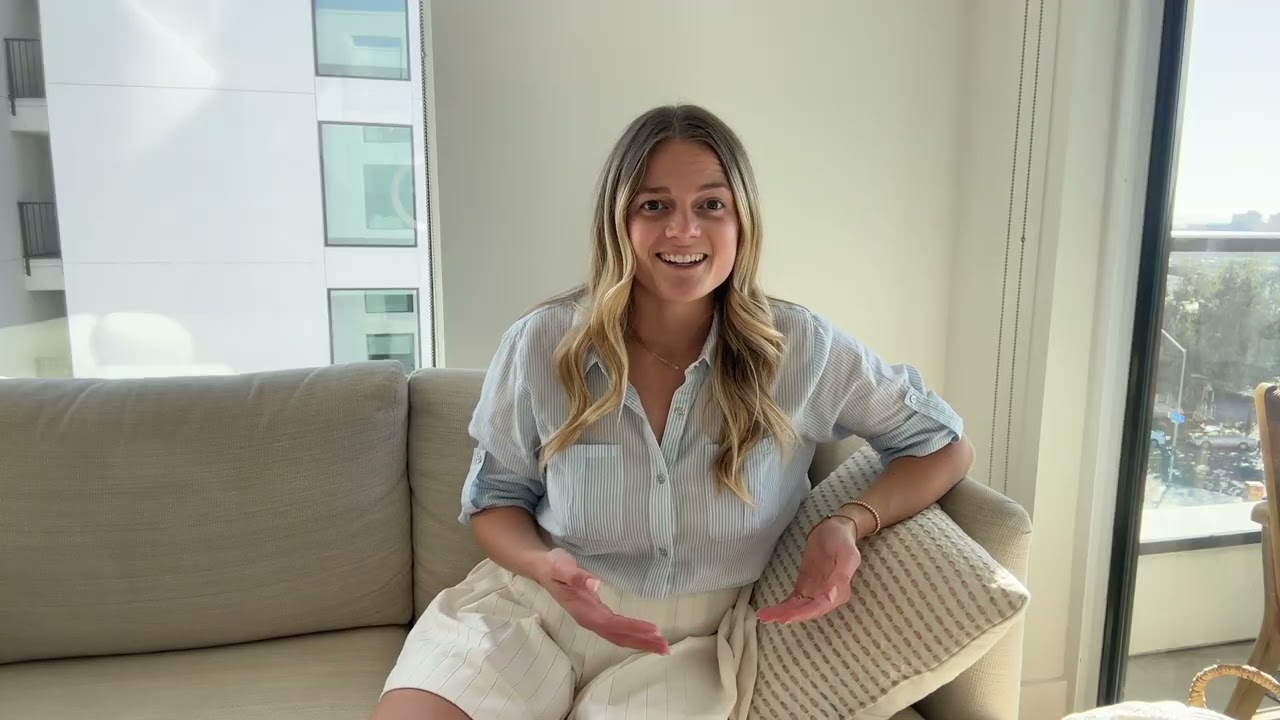
Happy Healthy Habits: Automate Your Habits. Optimize Your Energy. Unlock Your Capacity.
Join us at the Align & Thrive day retreat Sunday 1/11 in San Diego 🩵 Comment ALIGN for the link
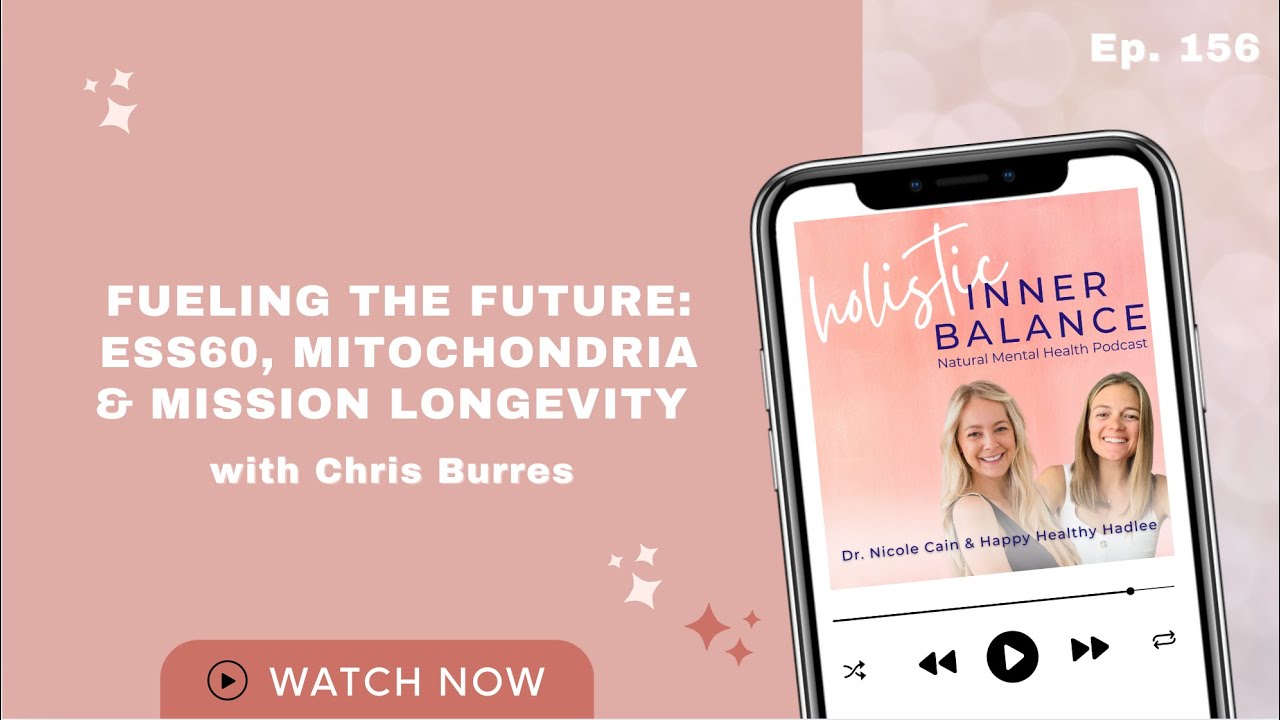
Fueling the Future: ESS60, Mitochondria & Mission Longevity with Chris Burres | Ep 156

Dancing Through Life: The Healing Power of Showtunes with Danella Mercati | Ep 155
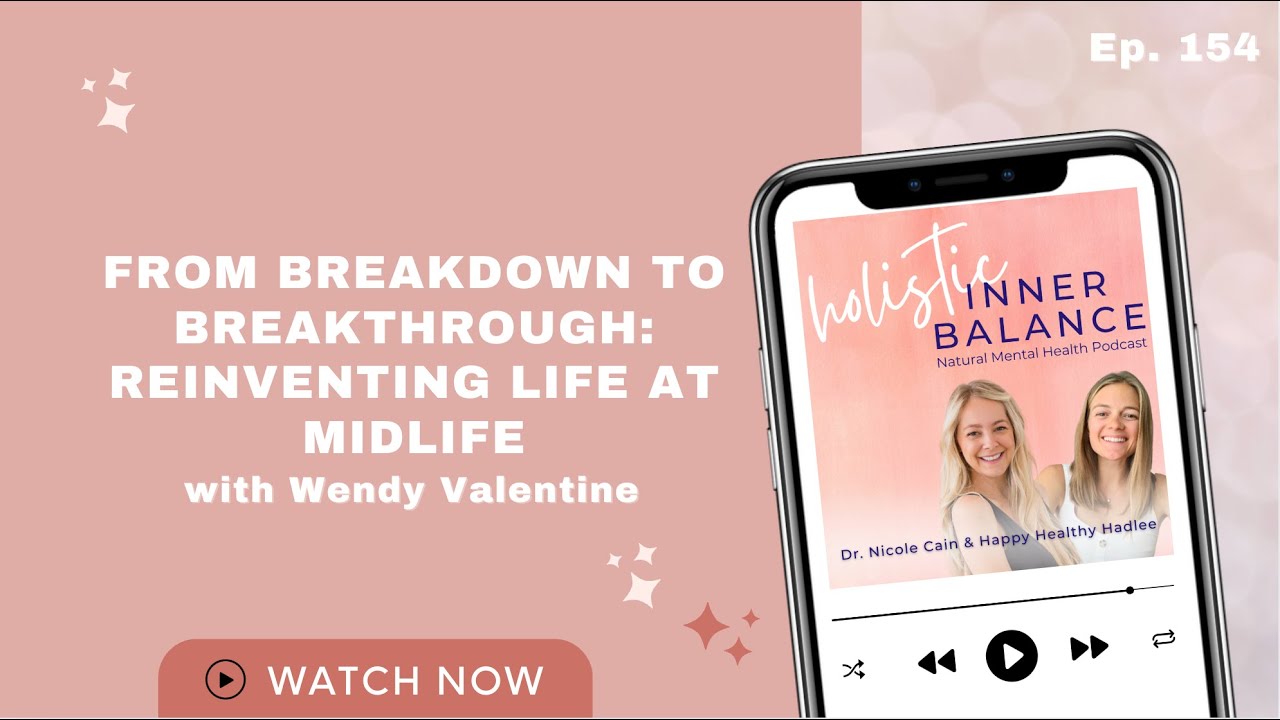
From Breakdown to Breakthrough: Reinventing Life at Midlife with Wendy Valentine | Ep 154

Your Soul Wants To Be Surprised: The Good Life with Michele Lamoureux | Ep.153
BONUS EPISODE: Fawning: The Trauma Response Hiding in Plain Sight With Dr. Ingrid Clayton | Ep 152
Fall Asleep Faster, Rest Deeper & Wake Up Refreshed Using Sleep Science with Devin Burke | Ep 151

Your Oral Microbiome & Mental Health: The Overlooked Link with Dr. Namrata Patel | Ep 150
Acupuncture & Energy Flow: Unlocking the Body’s Healing Potential with Dr. Felice Chan | Ep. 149