How to Stop Overeating & Under-Exercising During Quarantine

In this YouTube interview, host [SPEAKER A] welcomes health and lifestyle coach Hadlee Garrison, creator of the Happy Healthy Habits program, to discuss the pandemic‑related surge in overeating and inactivity, dubbed “COVID‑15.” Hadlee shares her personal journey—from a health‑conscious upbringing, through body‑image struggles, perfectionism, and a turning point during her MPH studies—to becoming a coach who helps clients reconnect with their bodies. The conversation identifies key challenges people face during COVID‑19 (overeating, reduced movement, sleep disruption, heightened anxiety) and presents practical, low‑threshold strategies: adopting a 1‑degree/kaizen mindset instead of all‑or‑nothing perfectionism; viewing food with an abundance mindset; using a hunger‑satiety scale (1‑10) to guide eating; ensuring adequate hydration with a straw water bottle; incorporating micro‑movements, especially a brief morning routine, and using movement to process emotions. Hadlee emphasizes self‑forgiveness and grace after overeating, and recommends breathing and simple body checks to break emotional eating cycles. She also provides resources—a free grocery list, newsletter, Instagram/Facebook @HappyHealthyHadlee, website happyhealthyhadlee.com, and complimentary 30‑minute health‑goal sessions—inviting listeners to engage further. The interview blends personal anecdotes, behavioral science insights, and actionable tips aimed at helping listeners achieve sustainable nutrition and activity habits during quarantine.
Chapters
thriving business and get real work-life balance. Today I am so excited to have Hadlee Garrison here. She is an awesome health and lifestyle coach and she is the creator of the— I'm gonna try to say it right— the Happy Healthy Habits program. That's a total tongue twister. And the reason why I wanted to talk with her today is because I know that so many of us are really struggling with eating well and exercising And I don't know if you guys have heard this. There's actually this new term called COVID-15. Have you heard of it, Hadlee?
Mm-hmm, yeah.
Like freshman 15, the weight that we gain the first year of college. So, and it's totally real. And I know that, you know, since a lot of us can't go to the gym, you can't do Orangetheory fitness classes anymore, we're just not moving our bodies as much as we used to. So I am really excited for you to inspire us today with some of your tips on how we can eat better and start to get our bodies moving again. So welcome, Hadlee. Thanks for joining me.
Thank you so much for having me. I'm so excited to be able to share this stuff.
Yeah, I could definitely use some tips right now. My daughter and I indulged in some Lay's potato chips and onion dip, and after I was like, why
did I do that?
So I need your guidance right now. Awesome. All right, so tell us a little bit about your background and how you got into your current job.
Yeah, so I was, I grew up being very health conscious, and my parents were really into personal development and all of that kind of thing. So you know, I was reading like Seven Habits of the Highly Effective Teens and like Don't Sweat the Small Stuff for Teens and all that kind of thing. And my parents were really into health, and they were buying like organic stuff before organic was cool or a thing really. And they were just they were really into health and. And yeah, personal wellness just ever since I was a kid. So I grew up with that knowledge. But I also was kind of raised with this— the way that I perceived health kind of took a toll on my relationship with food and with my body. So growing up, I was very body conscious, and I was also pretty disconnected from, you know, my body's sensations and like hunger, satiation cues, all of that kind of thing. You know, I would not be able to tell whether I was hungry or full. You know, I relied on what an external portion size was, or like a restriction, a food program, things like that. And so as like a high schooler and a college student, I actually got sick a decent amount. I would, I would be on antibiotics like once or twice a year. And I struggled with restricting and binging. I struggled with exhaustion, not sleeping enough. And that all happened on and off. And especially my junior year of college was the worst with all of that. I had psoriasis as well, all over my body and my face. So I saw that there was this disconnect between behaviors that I wanted to be doing and then me actually doing those behaviors. And of course, there is also— it was also the same case for the behaviors that I didn't want to be doing, but I was doing. So there was a disconnect there as well. And the more that I talked to people about this, the more I realized that almost everyone was in the same boat. In fact, as I talked to people about their struggles with wellness and everything, I found that most people were frustrated with themselves and their efforts in health. And a lot of people, they wanted to take control over their wellness and their lifestyle and all that kind of thing, but they would ultimately fall off the wagon, be on and off the wagon, all of that kind of thing until, you know, they were relying completely on motivation, willpower, and all of that. And I found that this struggle with their health was really closely tied with their relationship with food, with their bodies, with their self-worth, their confidence, all of this kind of thing played important factors into their ability to change their habits. So I had thought, you know, growing up that it was really only me, but I realized that almost every woman and man really every person I talked to had some version of their own food struggle, body struggle story. And so it was while I was studying, you know, this intersection of health behaviors, body image, food, all of these things during my master's program, my master's in public health at University of Michigan, that I, that I actually also interned for a company called Yoga Healer. And that, that company has a group program called Body Thrive that helps its participants incorporate health habits to kind of live a healthier life, better life, more happy life. And so as part of my internship, I got to take that program and it totally changed my life. It blended, you know, behavioral science research and evidence with the habits that are kind of, that are essential for living the healthiest life possible. And I found that it did that in a way that was really, really, really effective for me and all of the other people who were in it. So I kind of pivoted and I was like, that is definitely what I want to be doing with my life. So, you know, I finished up my master's program and went right into a certification with them. And now I coach people through my program, which is called Happy Healthy Habits, which is based on that original Body Thrive course that I took with them. So that's kind of the, uh, the long version of how I got into it.
I'm curious, what do you think was the tipping point of what got you? Because you kept saying there was a disconnect, which I think a lot of us feel, you know, where we know we should be and where we actually are, it's just not connecting. What do you think for you was the tipping point of you finally being like, you know what, I, I'm now going to connect the dots and I'm going to do what I want to do instead of, you know, Eating badly and feeling badly about it afterward.
It came down to perfectionism for me. It came down to having an all-or-nothing mindset of like, I was very much either doing all of the things that were like, quote unquote, right, or just none of the things at all. And it was, I very much was like, I just need to be perfect at all of these things and then everything will be fine. I'll be happy. My body will be the way I want it to be, all of that. Um, and so the being able to shoot for a, like, an 80% or a B- rather than an A was huge for me. I was always like shooting for an A and, you know, in school and all of that kind of thing. And I was very, um, you know, I wanted to do things really, really well. Um, but coming into health with that mindset can result in a lot of problematic things, which seems counterintuitive, but it actually— that was the biggest shift for me was being able to do it in a way that wasn't perfect. And so I help my clients. That's like the first thing I help people shift out of is that all-or-nothing mentality.
Oh my gosh, that so resonates. I think so many of us are perfectionists and yeah, you feel like a failure. Like if you didn't do it perfectly, then, well, I'm just going to give up. Because it's not working anyway. So like, why am I even bothered trying? But I love that. Like, I, I tell my clients, have a— what's a 1-degree shift? You don't have to like all of a sudden eat everything perfectly and have the perfect workout regimen. Like, what's one small thing you could do today? So
I love that. Yeah.
It's okay now. Doesn't have to be an A like it did before, right?
Yeah, totally. I love that, uh, the 1-degree shift. I've, I've called it, um, like the 2-minute rule before, or I've also called it kaizen, which is a Japanese word for small incremental change over time. So yeah, I like the 1-degree shift. That's good.
Yeah, kaizen. I'm going to use that too. Yeah, because I think that that makes it— it's just easier. We feel like it's not as overwhelming because right now we're trying to be perfect in our businesses. We're trying to be perfect for parents. If you have kids at home by either homeschooling them or just supporting them through All the stuff that our kids are going through right now and then showing up for your spouse. And then on top of that, you're like, now I got to eat well and exercise perfectly too. It's like really, really hard. So I think giving ourselves some grace that it doesn't have to be A+, it could be B-, C+ work, and that's okay.
Well, and the cool thing is that when we do this, it makes it so that we— giving ourselves that grace makes it so that we are having a more enjoyable life because we're not beating ourselves up, but it also is more effective for habit change. So, you know, we can muscle our way through and like really beat ourselves up about stuff for only so long. And then it becomes unsustainable. So it actually is more effective to be kinder to ourselves for behavior change.
I love that. I think that's, that's gonna resonate with a lot of people. So tell me like, you know, what kind of, what specifically do you and who do you, who do you help?
Yeah, so I help people who are feeling frustrated that they can't gain that control over their well-being in their day-to-day lives. You know, I help people who kind of— who struggle to manage their time, their health, their relationship with food, their stress, even their confidence levels. I really help them build their respect for their bodies and cultivate more body intuition, kind of acknowledging what they need at any given time instead of relying on external rules or prescriptive rules on how to eat, how to move. How to be present, all of those things. A lot of times we reach out to experts and we don't actually take that power into our own hands, that power of our health into our own hands. So I help people do that for themselves instead of just telling them, okay, just do this. And so I help empower them to really feel like, oh yeah, If this happens, I know what I can do for myself to get, you know, back on track or to get to a place where I feel really good in my body all of the time, um, instead of just doing a detox or doing a, um, a program or something like that. Um, I help them actually figure out what it is that they, that they need for their bodies at any given time.
Yeah, I think you mentioned before something about Us defining how much we eat by portion sizes, you know, like it was prescribed by somebody else. Like, I think that's how I've always lived, so I never thought about like really listening and being like, okay, is this how much I need? Like, to actually get in tune with what your body's telling you, that's something I've never been good at. So, um, that would be a very helpful thing for me to learn for sure.
Yeah, yeah, definitely. It's, um, you know, we're inundated with a lot of information and a lot of people telling us Do this or buy my program or, you know, whatever it is. And, you know, some of those things can be helpful, but we need to be able to tap into our own body intuition so that we can know what it is that we actually need. And our bodies are actually way more intelligent than we give them credit for when we're, you know, when we're aligned with our body's rhythms and the earth's rhythms. Yeah. We are much more able to tell, oh, like, I'm really hungry right now, and this is what my body actually wants, instead of, instead of it being like, I'm hungry and I have no idea what my body wants, so I have to follow this plan. And, you know, there is a time and place for following plans and all that kind of thing, but for overall health in our life, we want to be able to tap into that.
Yes, I love that. All right, so like what is the biggest issue that you see your clients are facing right now during, you know, COVID?
Yeah, yeah, so I would say that a lot of people are struggling with overeating for sure, and during COVID it's been, you know, more challenging for people to move, even if you're like going, walking to your car to go drive to work. That's something that you've, that you're doing that you're not doing now, right? Right. Or even if you're walking from, from your, the bathroom, like at work, you're walking to the bathroom and back to your desk or whatever. We're, a lot of us aren't doing those things anymore. And so that's a, that's a real struggle. I've also found that sleep is a real struggle for people right now. being able to fall asleep at night when we don't have that, okay, I have to get up at this time in the morning, that kind of structure. Those are some struggles for people. But then I find that in general, the biggest struggle for the people that I work with is A, being out of integrity with their body's needs and either not knowing what it is that their bodies need or knowing exactly what they need and not doing them. And then the other thing is the perfectionism and that all-or-nothing mentality. And so getting to a place where we can shoot for the B-minus, shoot for, you know, not perfection, is, is huge for that.
So it sounds like the problems are pretty much the same. And maybe what's happening, and this is what I'm finding with my clients too, is that during a time of crisis, like whatever we were worried about just gets kind of magnified or amplified like 10 times. So we're feeling it even more. So if you were a perfectionist before, you're feeling it 10 times more now. Now and feeling the added pressure of having everybody around you, not being able to leave. And so, you know, the go-to comfort is usually food or just like, let's not exercise. I'm gonna watch Netflix for 3 hours instead of going out and working out like I should.
Absolutely. Yes. And, and the anxiety piece of it and the stress and all of that kind of thing is definitely exacerbated right now for most people, not everyone, but for most people. And so if they already have tendencies toward that, it is It is really amplified right now. And we've been talking a lot about, in my, in my course, we've been talking a lot about being, allowing ourselves to be, and about how this is really an invitation for a lot of us, not all of us, but we have a little bit more time on our hands. And so being able, being able to sit with ourselves and sit with our feelings and all of that kind of thing is challenging. It's more advanced. But it is the most helpful thing that we can do for ourselves right now is to really feel into, okay, what is the feeling that I'm feeling right now? Breathing through it maybe. And a really great way to move through that feeling is to identify the feeling, identify where it's showing up in your body, and then doing some sort of movement to move your body through that feeling. It's— if you try it, let me know because it makes such a big difference to digest our emotions through our physicality.
Wow. I'm going to have to give that a try because for me, it's like after dinner when I'm full, but just the whole impact of the day kind of hits me where you're just tired. You've given yourself emotionally to my, you know, my family, to your clients. And I just have nothing left to give. And then I want to fill it up with like snack foods, the saltier, the sweet.
Yeah.
Yeah. Yeah. The urge, when the urge hits me to move, so move that part of your body to just connect with the feeling.
Yeah. And even a really helpful thing, even when we, if we overeat ever, to, in order to break the cycle of overeating, we can break the cycle before we overeat. Right. be like, okay, why am I about to overeat? And feel the feelings. We can also break the cycle after we overeat because when we overeat, we are way more likely to have guilt and shame. And then that leads to later overeating. And because we're feeling all of these emotions that are not positive. And so if we can give ourselves some grace, maybe even put like a hand on our heart and a hand on our stomach. Maybe not our hand on our stomach if it's too uncomfortable, but just like allowing yourself some grace after you overeat, thinking about what feelings came up that kind of led to overeating, that can actually really break the— break that cycle of overeating for the future. So giving ourselves that grace is again really, really important.
Yeah, I think self-forgiveness is so important right now for all of us, you know, for a number of different things, just forgiving ourselves and that we're all human and we're all feeling the extra, you know, stress that's coming on with this. So, okay.
Absolutely.
So what are some tips that you can give us right now that we could do to eat better and move our bodies a little bit more?
Mm-hmm, yeah, so So the first thing that I would say about food is that we want to look at food through an abundance mindset rather than a scarcity mindset. So what I mean by that is we want to look at the food that we have in our house or wherever we are and tell ourselves, I am always allowed to eat that stuff, and not be like, I can't eat this. That is bad. I'm never going to be allowed to eat that again because that makes us want it way, way more. And so looking at food as, oh, I can have that whenever I want to. Do I want to choose to have it now? Or do I want to choose to have it in the future? And right now my body doesn't want it. And so looking at food through that lens was a huge shift for me. And that's been life-changing. for so many of my course members because often we look at food as either good or bad. And so we're not allowed to eat the bad foods. And that really creates this, you know, room for cravings and all of that kind of thing. And so that's the first, that's the first tip that I would, that I would say. And then another thing that is helpful is to Make sure that you are drinking enough water throughout your day. I think it's about— it's almost 80% of hunger cravings are actually thirst in our current society right now because we don't drink enough water. And so drinking, you know, drinking enough water is huge throughout your day. A really helpful thing for that is to have a water bottle. That is, that has a straw on it. So something like this. Hmm. Um, and because this has been huge for my members, uh, and they've all bought water bottles with straws now, um, because it's very mindless. You're way more likely to just like reach for your water bottle and sip out of it when it has a straw than, uh, than even a cup of water. Huh. So, so yeah, it's, it seems like it wouldn't make that much, that much of a difference, but it really, really does. So drinking enough water, that's another thing. And then tapping into our hunger and satiation cues is really big. So, you know, being aware of, okay, tapping in before you eat a meal, maybe, how hungry am I? And, you know, is this food in front of me going to be what my body actually wants? And if not, how can you, how can you maybe switch some things around? A lot of times people think that they need to eat something that's completely different from their family members, but we can really just change the ratios on our plate. So if we want to be eating food that's lighter, like I have this with my fiancé, he needs to eat more food and more dense food than I do. And so what we'll do is just have the same meal, but I'll have more of my like green salad or whatever and then have a smaller portion of chicken or grains or whatever it is, and he has a larger portion of that part of it. And so we can kind of, we can kind of shift things around in that way. And in order to tap into our body cues, we can just do a simple body check-in, uh, where you— it can be just 30 seconds or even less than that, um, but to really tap in and be like, okay, is my, is my body showing me that it is hungry? Is it showing me that it doesn't want more food? Um, and we can look at that on a scale. There's actually a hunger scale. So 1 is, uh, very, very hungry, you know, like about to pass out. Whatever, and then ten is so full you feel sick like you might throw up. And just identifying where you are on that scale can be really helpful. Like five or six is you're just feeling you know satiated, like you're just you're just kind of normal. You're at a normal level, and then seven is you're satiated. Three four is you're hungry, and so just identifying that on a scale can be really helpful.
Yeah, I could see that. It's— I don't think I've ever identified it. Usually I eat because it's the time.
Yes.
I think a lot of us probably don't even feel hungry anymore because we are so used to being home all the time too. The snacks are right there. And so like, I will eat out of boredom, you know, or my kids are hungry and they're metabolizing a lot faster. I'm not necessarily hungry, but Since they're eating, I want to eat. So, yeah, so I think I need to start to like just say on a scale of 1 to 10, like how hungry am I? And so like, what number would you say, would you say is the good number to eat at, 3 or 4?
Uh, yeah, around a 4 is, is usually the best. Um, 3, you're getting to like, you're getting lower. Um, and if you're eating when you're really super, super, super hungry, you might Um, so you, yeah, like a 3 or a 4 is probably a good spot.
And like, never, ever, ever go to a grocery store when you're like at a 2 or below. Yeah, I just bought the entire snack aisle, which has happened, right? You're like, hey, this is not on my list. So,
oh yeah. Yeah. Okay.
Um,
yeah.
So how can people learn? Oh, actually, we wanted to go back to the exercise. So what are some tips for people to get
Yes. So I would say moving first thing in the morning is going to be really, really important for everyone. It helps us to shake out all of the stagnation that we have from sleep, and it helps us to be actually way more likely to move our bodies throughout the rest of the day. When we start our days with movement, we are going to be more likely to have that intermittent movement throughout the day as well, which is really important. So even starting your day with 5 minutes of exercise or 1 minute of exercise, like make it as small as possible, that if you can be consistent with it, that's going to be way more important than doing, you know, 1-hour workout every 2 weeks. Moving your body first thing in the morning every day instead is going to be much, much more effective. The goal here is not to— is not that one-off workout. The goal is to become someone who is consistently moving their body every day. And so, so doing that, breaking it down into the smallest, the smallest thing that will be doable for you is going to be the most effective. So you can do whatever it is that you really like to do. I would The shorter the extra— the shorter your exercise, you know, you probably want to make it more vigorous. Um, but if you're exhausted, you know, that you don't want to abuse your body with too much stress on your body as well. Um, so you have to be mindful of that, um, at the same time. So what I would say to that is more movement throughout the day. If you're really, really exhausted, going on walks, And things like that. You don't want to, you know, overwork yourself if you are feeling really, really depleted. So, so moving first thing in the morning and then having little breaks throughout the day can be really helpful. I set reminders in my phone when I am at a place where I'm not working out, you know, throughout the day, and I'll just do 1 minute or I'll do like 10 push-ups or 10 jumping jacks, uh, something like that can be really helpful for not only, you know, moving our bodies but also getting oxygen to our brains. Um, so a lot of times we'll reach for food where we really need to just get more oxygen to our brain. So even deep breaths can be helpful. Even just like reaching your hands up like above your, above your head, uh, can be really helpful.
And if anyone has taken the CVI personality assessment and you are a merchant innovator, that's what I am, we tend to do really well having an instructor. Like, we like being in group classes with like an inspiring teacher. So one of the ways I exercise is I have bought a lot of the Beachbody videos, and there's one that I've been doing called the 21 Day Fix. It's just like a 30-minute workout, and it's hard, but you could do whatever level you want, and there's all different types of exercises in there. So for me, I do well when I have someone who's kind of cheering me on, like me to be self-motivated to do workout on my own, I probably wouldn't be very good at that. So I do well with the video. So, and there's so many people that are offering online yoga, Pilates. So if you're a merchant innovator and you do well with having an instructor, find an online exercise thing or find a DVD or a video that you can do on demand.
YouTube is your friend right now. It is. There are so many people that are doing Free things. And, and yeah, there are things that are from 3 minutes to, you know, 2 hours. There are so many things that you can, you can look, look up. And I would suggest doing something that you, that you love to do with your body because you're going to be way more likely to then continue doing it. You know, if you love to dance, there are some really awesome dance workout videos that are on YouTube that are that are going to be really helpful in the morning. Or you can even just do your own dance party with yourself. I have members who part of their morning routine is to just dance to one song in the morning. And that's their, you know, that's the routine that they, that works really well for them. It also imbues more like joy into the movement. And then you're going to be way more joyful throughout the rest Yeah,
and someone just posted that the Nike training app is free right now. That is great. Oh,
awesome.
That's so cool. I think a lot of places are doing that right now. They are making their resources free. So go to YouTube, find something short. It doesn't have to be a long one, but definitely— and no one can see you right now, so you don't have to worry. You don't have to— like, find your favorite song and just wake up and do a dance. I like that.
Yeah, it's so fun.
All right, so how can people learn more about you and if they want to work with you or learn more?
Yeah, so I actually have a free grocery list, so if anyone wants that, I've given that to you so we can share that for people. So that might be helpful, especially right now for, you know, getting us to be eating in a way that really serves our bodies more. And so I'll give that to you, and then also If people want more, you know, tips, inspiration, advice, they can sign up for my newsletter or follow me on Instagram or Facebook. My handle is Happy Healthy Hadlee, and Hadlee is spelled with 2 Es at the end. So Instagram, Facebook, you can go to my website happyhealthyhadlee.com, and I actually also provide free 30-minute health goal sessions for people. So if you're like, I need help with all of this stuff, let's talk. I'm— I really, really like to help people figure out where it is that they want to go with their health next and figure out the next steps that it actually is going to take for them to get there. Because everyone's different, a little bit different. And so, you know, not everyone's going to need the exact same thing. But I like to help people figure out what it is that they do want next in their health journey. So—
That is huge. If you— I would totally take her up on this offer for the free health goal session. That is an amazing thing to be able to talk to someone, especially during this time. So thank you for offering that. That's a wonderful gift that you're giving people.
Oh yeah, for sure. It's one of my favorite things to do. All right.
You have inspired me. I am going to— I'm going to commit that every time before I eat, I'm going to do a scale of 1 to 10, like where am I? And I'm gonna really be conscious about, is this something that I wanna eat right now? Is this what my body needs? Like, I'm already rethinking the meals for the day 'cause I don't know if they're really gonna be great for how I feel today. So thank you so much, Hadlee. This was great.
Absolutely, yes. Thank you so much for having me on.
All right, thank you for being here, and I hope you guys all have a great rest of your day. Bye.
Bye.
More from Hadlee
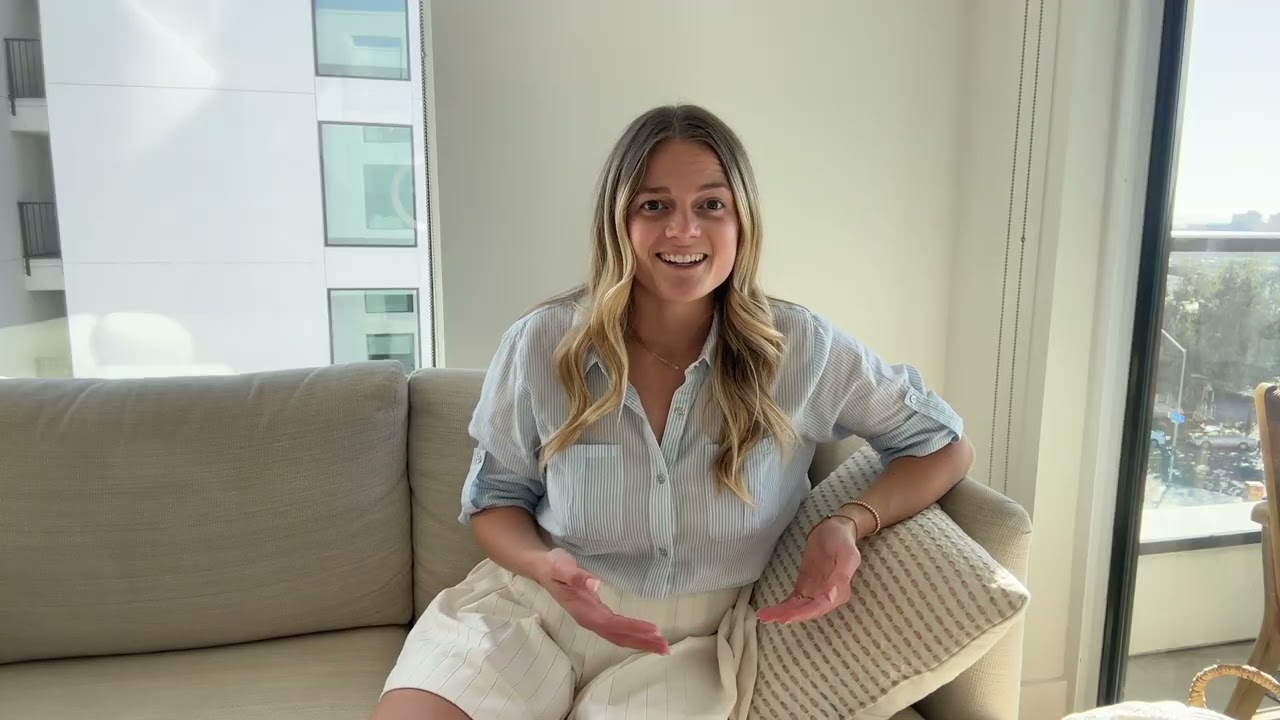
Happy Healthy Habits: Automate Your Habits. Optimize Your Energy. Unlock Your Capacity.
Join us at the Align & Thrive day retreat Sunday 1/11 in San Diego 🩵 Comment ALIGN for the link
Fueling the Future: ESS60, Mitochondria & Mission Longevity with Chris Burres | Ep 156

Dancing Through Life: The Healing Power of Showtunes with Danella Mercati | Ep 155
From Breakdown to Breakthrough: Reinventing Life at Midlife with Wendy Valentine | Ep 154

Your Soul Wants To Be Surprised: The Good Life with Michele Lamoureux | Ep.153
BONUS EPISODE: Fawning: The Trauma Response Hiding in Plain Sight With Dr. Ingrid Clayton | Ep 152
Fall Asleep Faster, Rest Deeper & Wake Up Refreshed Using Sleep Science with Devin Burke | Ep 151

Your Oral Microbiome & Mental Health: The Overlooked Link with Dr. Namrata Patel | Ep 150
Acupuncture & Energy Flow: Unlocking the Body’s Healing Potential with Dr. Felice Chan | Ep. 149