Helena Liu breaks down three real PMP application descriptions that passed the PMI audit, showing what works: PMBOK terminology, the five process groups in order, and specific details like scope definition and change requests. The third example fails because it uses non-PMBOK terms like "project assessment" and "resource loading."
Chapters
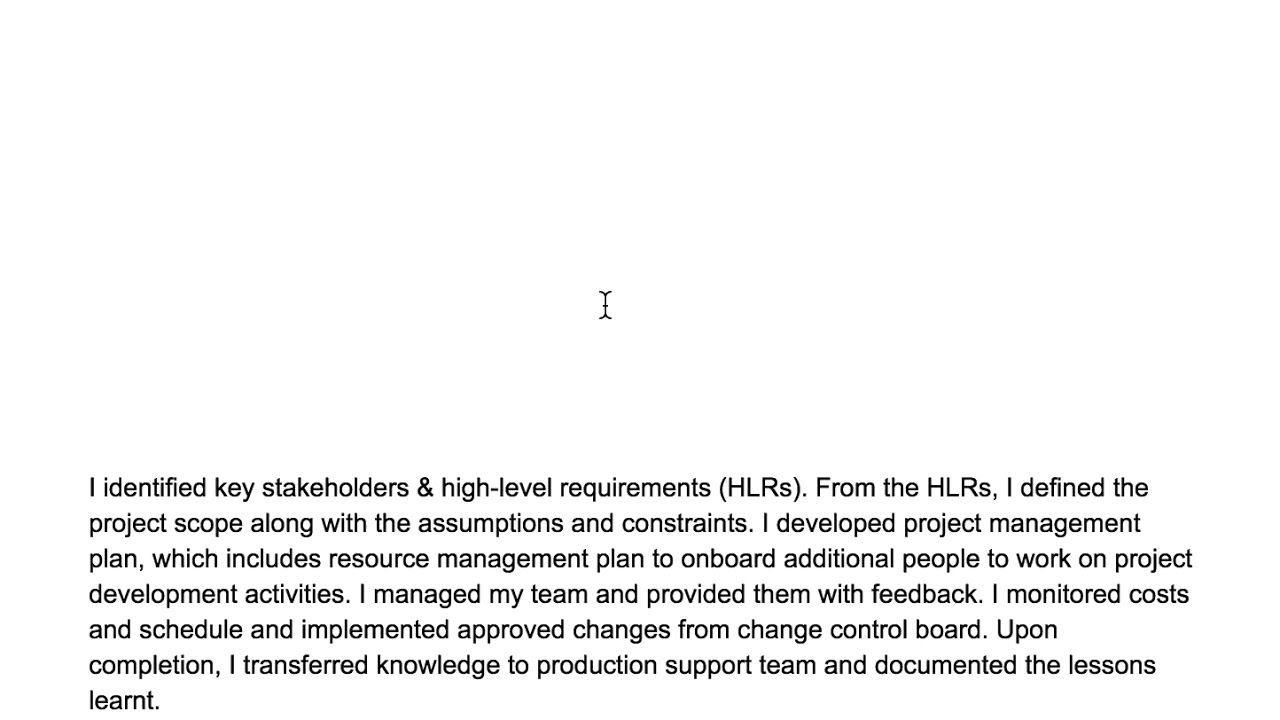
Hi there. In this video, I am going to share with you 3 descriptions that have passed the PMI audit. These 3 application descriptions meet the standards that PMI, or the Project Management Institute, have set out, and these descriptions have successfully passed their audit, and this person is now ready to write their PMP exam. Let me just share these examples with you and share with you some tips on how to write these descriptions. The first description reads, I led a team of 4 to load data warehouse from insurance policy administration systems. As you can see right off the bat here, the sentence is very clear as to what this project is about and what this person did. Then it says, I defined scope and decomposed it into the WBS. I assigned work packages to team members and managed their progress to ensure all work was completed on time. What you can see here is he used a lot of PMI terms defined scope, decomposition, assigned work packages, managed their progress. So a lot of PMI terminology going on here, which is really great. I also developed the project schedule and created CRs— CR stands for change requests— when development activities were falling behind. I implemented approved CRs by taking corrective and preventive actions. I created scorecards for KPIs to track project progress. I provided feedback to my team and documented lessons learned. Another thing you can see here is that not only did he use a lot of PMI terminology, he also structured his sentences in the timeline in which they happened. He defined the scope first, then made it into WBS, he assigned the work packages, which is the lowest level of the WBS, to the team members, tracked their progress, looked at the schedule, looked at the change request, and implemented the approved change request, and then tracked the project success. And finally, he provided the team with feedback and documented his lessons learned. So what you can see here is he's also following the 5 process groups in the order of the 5 process groups when he's listing out his experiences. So someone who's reading Seeing this can really tell the order in which these events are happening, which is great. Okay, now let's go on to our second example. So I'll read this out to you. I identify key stakeholders and high-level requirements, HLRs. From the HLRs, I define the project scope along with the assumptions and constraints. I develop the project management plan, which includes a resource management plan to onboard additional people to work on the project. project development activities. I managed my team and provided them with feedback. I monitored cost and schedule and implemented approved changes from the Change Control Board. Upon completion, I transferred knowledge to production support team and documented lessons learned. Okay, so this is really great. Just a typo right here, it should be learned, but other than the typo, this description is awesome. So a couple of reasons why it's awesome: he again uses a lot of PMI terminology, identified key stakeholders over Define the scope, assumptions and constraints, develop project management plan. And not only is he just saying what these activities are, he's also sharing how this was used on his project. A lot of times on application descriptions, what we see is that the candidate would try to fit in as many terms as possible. What you can see here is another great thing he did. He didn't just say I monitored I monitored cost. I did this, I did this, I did this. And because he's also putting it into context as well, he's saying, I monitored cost and implemented approved changes from the change control board. So he's adding context into why he's doing some of these tasks as well. So you're not just reading a blob of terms like, identify stakeholders, I defined scope, I developed project management plan, I worked with people, I managed the team. It's not just a dump of all the terms. He's using these terms sparingly to tell a story of how he managed the project, which makes this a really great description. Now let's go on to the last one here. This project was developed to capture the placement data for one of the insurance clients for reporting purposes, identify stakeholders and gather their requirements and manage their interests. This touched on what he did in stakeholder management. I performed project assessment to understand the current system. I created the project WBS and ensured the right resources loading at each stage. I tracked and reported project progress to ensure that it was on schedule and under budget. I also ensured high quality by involving in-process review. I managed deliverable sign-off and knowledge transition during closure. A couple comments about this one. This one is not as strong as the 2 other ones that we just saw. The reason for that being he uses some terms outside of the PMBOK. If you see over here, he said that perform project assessment to understand the current system. Project assessment isn't really a term that you see in the PMBOK, so using it here doesn't fit as well. He also says resource loading, which is another term that's not used in the PMBOK. This one isn't as strong because he is using some terms that may be project-specific, that isn't really covered in the PMBOK Guide. So you do want to stick with PMI terminology when you are writing your PMP applications. I hope you found this video helpful and I hope it gave you some ideas on how to write your own application for your upcoming exam. Make sure that you sign up for a free course with us, which is Examspm.com/free, really simple URL. We'll put it in the comments as well. Sign up for a free class with us and we'll go into much more details about how to write your applications And we'll give you tons of tips on your PMP exam as well. And this training is absolutely free and it's 1.5 hours long, so you're in for a treat. Okay, and if you have any questions, comment below, make sure you subscribe to our channel and like this video as well. Thanks guys, and we'll see you soon. Bye.