Lessons Learned with Tony V- plus tips on online exam
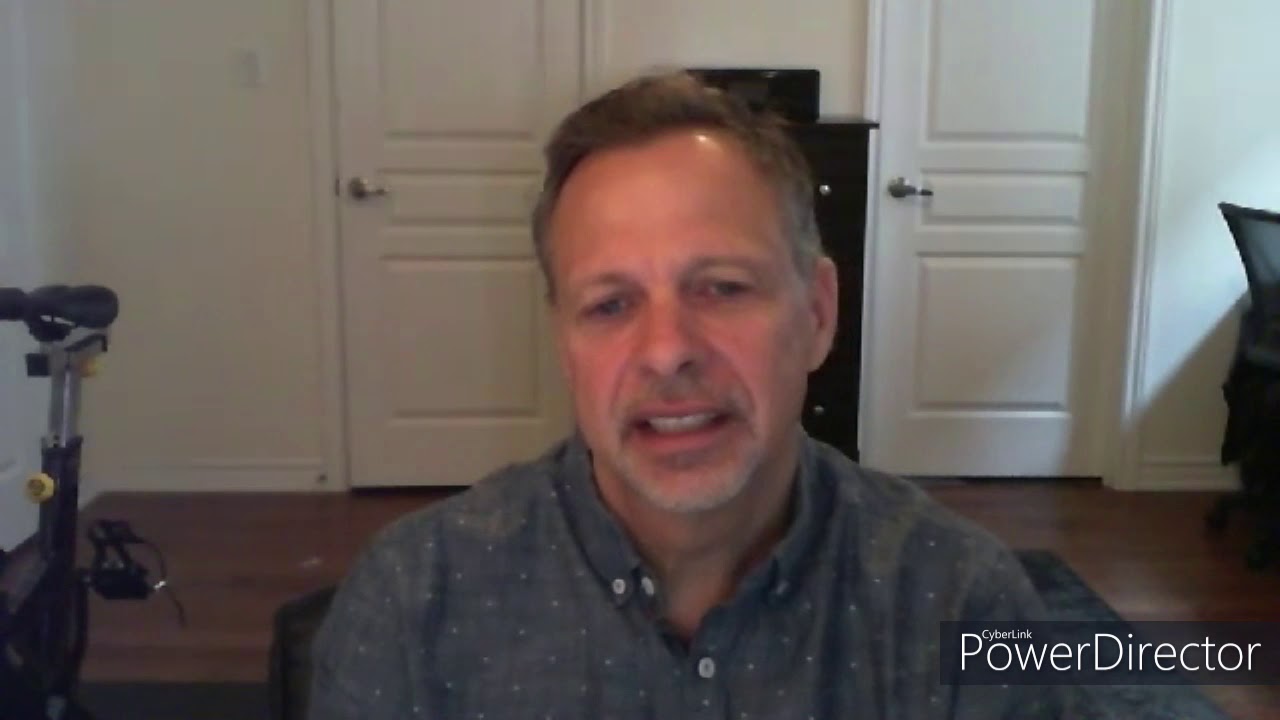
Tony V earned his PMP certification after losing a job, studying with repeated practice exams that pushed his scores into the high 70s-90s. He describes taking the 200-question exam remotely during COVID: about three hours, 95% situational questions, a clunky whiteboard tool, and one optional break. His advice: study extensively, aim for practice scores above 80%, and trust your preparation.
Chapters
later. But first of all, just tell me a little bit about yourself and why you decided to get the PMP and how that was for you.
Well, I was a project manager for 7 and a half years, and then last fall I found myself out of a job, right? So I just started doing what everyone else does is say I'm a project manager and start looking for jobs. Well, I had a, I had a phone interview with a company here in town, and he started asking me these, all these very specific questions. Now, I don't know if he was an actual PMP certified project manager, but his term— he used all the PMP terminology.
Yes.
Start-to-finish activities, quantitative risk analysis, qualitative risk analysis. He went on and on, you know, these kind of things. And in my mind, I'm thinking, dude, I have no idea what you're talking about. But what came out of my mouth was, sir, I am unfamiliar with your nomenclature. So I tried to be as professional as possible. That interview was a very quick interview. Start, middle, and done. And then I left going— I left the interview going, man, if I'm going to say that I'm a project manager, I really should look into some of these things.
Right.
So I heard about PMI years before, but usually I think in these certifications are $5,000, $3,000, $4,000, $5,000. And when I found out the training and everything was under $1,000, I'm like, I'm in. And then I started the process. And when you start going online looking for things, then your Facebook feed starts showing up all sorts of companies to train you. And Exam PM was the first one that I looked at. I did a free seminar with Helena and, and I just signed up right then and there. So that's how it worked.
Fantastic. Fantastic. And okay, so tell me a little bit about the process of studying. What was that like for you? Like, what did you focus on? You had mentioned, we had a little discussion before, you mentioned that you had looked up online all about how hard it was to do the PMP. Tell me a little bit about all that.
I'm thankfully, I didn't look that up. I didn't Google how hard is it to get your PMP license, your certificate, until after I had it.
Oh, thank God.
Because had I, I would have I would have probably been a lot more afraid than I actually was.
Right.
It was very intimidating when you Google that. There's people that are like, well, it took me years to do it. I flunked. You know, they're saying estimates say that they don't release— PMI doesn't release anything, but estimates are 40 to 50% of the people fail on their first time. And right before I click submit, I thought I was going to be— I thought I was going to fail. just because it was so hard. The test was so hard.
Right.
And it, you know, I was used to, okay, thinking, all right, I have all my formulas memorized, I have all these, the process chart memorized, I've got all these terms memorized, I did the flashcards, I did everything, but they didn't ask you any of those things. Not one calculation question was on, for me, not one calculation question was on the exam. Not one. Just cut-and-dry, black-and-white question was on the exam. They were almost all situational questions, which were the most difficult for me. The most difficult.
Yeah, I've heard that a lot from people, that the situational questions are the most difficult, and mainly because people are used to memorizing things and, and learning, like you said, definitions and formulas, but they're not so used to these questions that are a little bit less direct, I would say. Um, so give me an example, like give, give us an example of one question that you can— that sticks out in your mind like, oh my God, that is so hard to deal with. Um, can you remember?
You know, I, I can't even think of one, but yeah, uh, but the, the general kind of thing would be, you were brought on, uh, and assigned as a project manager in the execution phase of this software development Development thing, and your project sponsor comes to you with concerns. What do you do? A, do this. B, do this. C, do this. And usually, you know, multiple choice questions, you could rule out these 2 because they're just totally ridiculous. And then there's these other 2 that, okay, one of them might be, you know, then it comes down to 2. Well, the folks, the good folks at PMI, here's what they love to do. 3 of them are correct. But you have to choose the one that is the most comprehensively correct.
Hang on.
That's the one.
Yeah, that's what— sorry, that's exactly what I've heard from a lot of people, that you really need to choose that best, most comprehensive answer in the context of the question.
Yeah, exactly.
Wow.
Exactly. And that's what— that's what— that's why they were so hard for me, the situational ones. And I'm just going to say, I think 95% of the questions were all situational questions. And I was like, when I hit that submit button, if you would have asked me, Tony, did you pass or fail? I said, I think I failed because I, I guessed on so many. But I'm here to tell you that the thing that got me through it was doing what Exam PM recommended is taking those practice exams.
Mm-hmm.
And there's 10 knowledge area practice exams. I took all of those twice. And by the second time, I was getting in the high 70s, 80s. I did even a couple 90s on the second— by the second time I took it. And then I took all 5 of the 200-question tests. I took 2 of them twice, and by the time I did the second time, I got into 85% and 89%. So I felt like I was ready, but it was still the hardest thing I've ever done. It was the hardest test I've ever taken. Yeah.
Wow, wow. Yeah, I've heard that, and I've also heard like different people— of course it's not always the same test, so different people have different experiences. Some people say there's way more, there was way more formulas than they thought there would be, or there was, you know, way more definitions, and it really depends on, you know, what you get when you sit down at the table.
Yeah.
But it's really great for, for people to hear what your experience is, and it's— I've heard this a lot from people. The situational questions are definitely difficult. And do a lot of practice exams. Make sure you get more than 80%. You did great. Like, if you were getting like 90% in your practice exams or 85%, that's, that's fantastic. So yeah, I think that's something that people could take away from this for sure. So Tony, tell me a little bit more. I'm really, really curious about what it's actually like to take that home exam because, of course, now with COVID-19, it's very hard for people to get into a test center. The PMI has, has, you know, allowed this to happen where you can take these proctored exams at home, and I did write a small blog about it, but I haven't been there. I haven't really experienced it. And it's so great that you've experienced this and you can maybe share with the people what it was like, you know, to go through that process and to do that proctored exam.
Sure. All right. So you sign up for it and they give you a lot of dates and times, unlike the test center. They're only like, all right, we're doing it the 15th and 30th of the month. That's it, you know. So this whole thing delayed me like a month. Which in the big scheme of things is no big deal. I had more time to study. So they, they give you some instructions, but very bare bones, and they don't tell you exactly what it is when they send you that confirmation email that mine was on May 4th at 8:30 in the morning.
Yeah.
So what they need you to do is they want you to do ahead of time, uh, like do a test of your— that to make sure that your computer is in the area that you're going to be in. Like, don't bring it from down upstairs, downstairs like I did. test it upstairs and bring it downstairs. Test it where you're going to have it. So then they want to make sure that your microphone is working. You want to make sure that your camera is working. Then you have to take a picture. Then they send you something on your text. Then they send a picture of your workstation— front, back, left, and right— and you submit them. Okay, okay, okay, okay. And then you sit down to take the test. Well, you cannot have any pieces of paper like From day one, exams PM, all the training is you're gonna do a brain dump. They're gonna give you a piece of paper. So, you know.
Yeah.
Dozens and dozens and dozens of times, I can't tell you how many times I wrote out all of the formulas, I wrote out all of the process groups, et cetera. But when you get there, you can't have any piece of paper. They give you what's called a whiteboard, which is really akin to Microsoft Paint. It's not Microsoft Paint, it's a whiteboard. But it would have been nice, it would have, if they would have given you something like a WordPad or something, more of a word processor, more of a graphics display.
Yeah.
I didn't even bother. It was just too cumbersome, honestly, to do the process groups. It was just too cumbersome, so I didn't do it. I did the math, I did the formulas, but I didn't do the process groups. Then they give you a calculator should you need it, but they didn't ask me one question on earned value or anything like that or any kind of EAC, ETC. Anything like that.
Right, right. So, so this whiteboard, like, is like you said, it's like Paint. Now I know with Paint, because I have a touchscreen, I can use my finger to paint on it. Can, can you do that? Like, were you able to do that with your, with the whiteboard?
I just have a regular computer, so it's not a touchscreen. I'm sure I could. Okay. But again, it was very cumbersome. I mean, you could hit the text I want to create a text, hit a text box, but there's no tab or indexing. So there was no way to line things up, you know, like under the executing process group, here's all of the processes under the monitoring and controlling process group. You could not do that.
Oh boy. Yeah. Okay. Okay. That's really good. That really gives people a sense of how it is. And I guess they could draw if they wanted to with their mouse, but I don't know if you've ever tried that. So hard to do.
So that's the only thing. If they would have given you like a WordPad or something, and yeah, Notepad even would have been for me a little bit better. But be that as it may, that's what they gave you. And as it turns out, I didn't need any formulas. I didn't need any process groups. They were all in, they were all in my head. And like I said, because that I went through all of those practice exams several times, You know, thousands of questions. That's what got me ready for it, the practice.
Fantastic. Yeah, right. Okay. All right. So, so that's what it looks like to be in there. Like, what does the proctor do? Do you need to interact with that person, or do you—
I did, and he was very receptive. It was— I forget exactly what happened. Why I needed— like, I forget exactly. There was some little glitch in it. I think I hit the back button I shouldn't have or something like that. And I sent a message to him. There was no verbal communication. I sent a message and within a few seconds he says, oh, I'll restart it and you'll be right where you were. And it was a 30-second ordeal.
Oh, great.
Yeah. They do not want you to leave though. That they don't want you to leave.
Yes. Yeah. Now you do have a 10-minute break apparently. I guess a washroom break. Thank God you have something in there. Yeah.
Yeah. So you can go, but it's at a specified— it's after they said after you do the first 100 questions. But for me it was like question 89 or 90 that you'd had your 10-minute break. And if you wanted to sit through the whole 10 minutes, you could. Or if you wanted to say, just go on. I did an 8-minute break. Or something like that.
Okay, okay. Yeah, that, that— I'm not sure how that's going to go for a lot of people, but it's something to be aware of, like one 10-minute break where you can go to the washroom or do what you have to do. And I guess it takes quite a while to do all of the questions. How long did it take you?
Probably about 3 hours and 10 minutes.
Well, that's pretty good.
I mean, I, I just submitted the first ones and I just said, hey, either I'm gonna— I'm not gonna spend 2 hours going over questions that I've already answered.
Yeah.
You know, I— oh, there is a nice feature that you could flag a question and then come back and look at it.
Okay.
So just on the exam, like on the exam ones, um, you know, there's this— I forget what it's called— this index or something, something similar. You could flag if I want to come back to this question. So I probably flagged a dozen questions on the second half. And I went back and I looked at just the flagged questions. So the software seems to be very well developed and very mature. I just didn't like the whiteboard. It was very cumbersome. I would have loved it if they had a word pad. But other than that, I mean, I think it was a very good system. And I didn't have to drive an hour because they don't have a testing center in Youngstown. So I'd have to drive to Pittsburgh, Cleveland, or Akron.
Okay.
Over an hour to do it.
Yeah, that's a lot.
Turned out good for me.
Yeah, no kidding. That's amazing. So is there anything else you'd like to share about the at-home exam or the exam in general for people before we wrap up?
Just like I said, study, study, study, study, study. Don't take anything for granted. And for me, it was just— it was 95% or more situational questions. So those were the ones that I got mad at when I was taking the practice ones, yelling at the computer. That it just like, why are you asking me this? What does it matter what I do first? You know, you got to do all 4 of them. What does it matter what I do first? You know, why is that such a big deal? But that's what— that's my experience. And when I hit submit, a half a second later, it came back. And said, congratulations, you passed your PMP certification. It said, uh, uh, go out and celebrate. You deserve it. All of your hard work.
Oh my God, that's amazing.
I mean, it was like in half a second. Now they don't tell you, of course, as you know, they don't tell you like in ExamPM, they'll give you right away that you did 79% or 85% or whatever. They don't give you that. Uh, the next day you would log on and it'll say, Above, below target, target, or above target for the different 5 different process groups. And I was target for 2 of them and above target for 3 of them. So I'm happy with that.
Fantastic. Very, very good. Congratulations. So I want to, I want to say thank you for spending time with us today. I think a lot of people are going to get some good information from this video, and they're going to really appreciate that. And I appreciate you taking the time to not only write us a great email about your experience, but to be here today. And I wish you all the best, you know, in your career in the future, and I'm sure it's going to be great.
Well, thank you very much. And you've been my main contact throughout this when I've had a support question or any kind of question, you've always been really, you know, good with support, so I appreciate that as well.
Oh, you're welcome. You're very welcome. It's my pleasure to help out all the students, and hopefully these little things will make a difference for people, right?
Yeah, and I don't know if they're going to continue proctoring after this is done or it's going to go back to the, you know, you have to drive to the— but it worked out really well for me other than the month of delay because of it.
Yeah, yeah, you know, yeah, I'm not sure what that delay was for, maybe because they were setting up or something, but—
I think that's what it was. They didn't— maybe they didn't have the full-featured software, it wasn't mature as it is now, and they didn't have a procedure, the right procedure in place. I have no idea, but, you know, my original test was March 30th and I took it May 4th, so.
Right, right.
No big deal.
Fantastic. Stay on the line here with me. I'm just gonna— just gonna stop.
More from Helena


How to Use Claude Code to Get UNLIMITED Leads in 6 Mins | Best Lead Scraping Tool



These AI Videos Has 21.5M Views — Here's the Exact System (Fable 5 + Higgsfield)




NotebookLM 2.0 Update: Analyze Your Entire Business in Minutes! (Full Tutorial)

