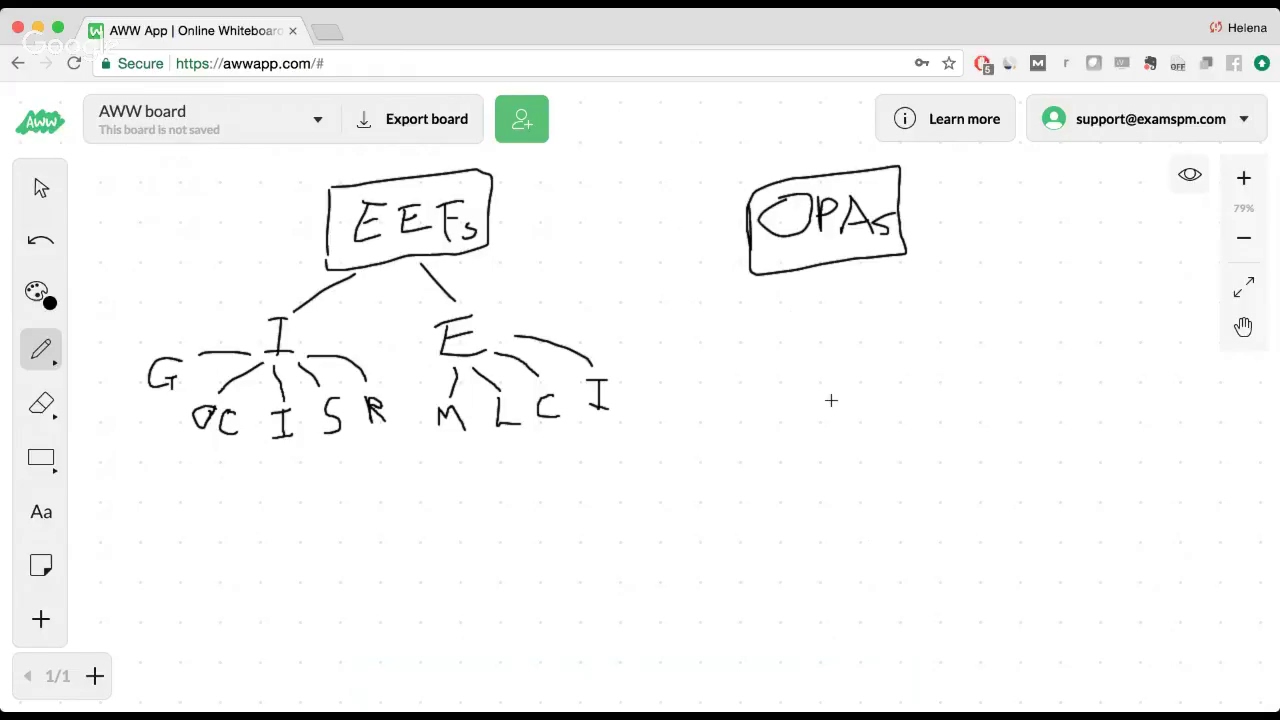
In this concise whiteboard tutorial, Helena Liu explains two key inputs from the PMBOK Guide—Enterprise Environmental Factors (EEF) and Organizational Process Assets (OPA). She defines EEFs as conditions that influence a project but are outside the project manager’s direct control, dividing them into internal (e.g., organizational culture, infrastructure, software tools, resource availability, geographic distribution) and external factors (e.g., market conditions, legal/regulatory environment, industry standards, competitor data). Liu emphasizes that project managers must recognize and manage the impact of these uncontrollable factors. She then introduces OPAs, summarizing them with the “4 Ps”: processes, plans, policies, and procedures. OPAs represent the documented artifacts, approval workflows, checkpoints, and knowledge‑capture mechanisms that an organization requires for project execution. The tutorial highlights how EEFs shape project constraints while OPAs dictate the prescribed ways to work within the organization, and notes that both appear as inputs to virtually every PMBOK process. The video concludes with a call to subscribe and a promotion for a free class at Examspm.
Chapters
Hello everybody, and in this quick tutorial we are just going to use the whiteboard right now to discuss what is EEF and what is OPA. So to start with, EEF stands for Enterprise Environmental Factors. So just write EEF right here onto our board. So we have EEFs here, which, which is our Enterprise Environmental Factors, and then we also have our OPAs, which is Organizational Process Assets. So in your PMBOK Guide, you may see both of these in a lot of the inputs for all of the processes. So almost all of the processes in the PMBOK Guide have EEF and OPA as the inputs. So you might be wondering what they are. So our EEFs are conditions that control the project, but as the project manager, you don't have control over it. And we can divide the EEFs further into internal EEFs and external EEFs. So again, enterprise environmental factors are factors that affect your project, but you don't have direct control over these factors. So you need to be aware of what these factors are and you need to be aware of what the impact these factors can have on your projects. But you also need to be aware that you don't have direct control over it, so you need to know how to manage these factors. So you might now be wondering, what are some examples of these EEFs? So if we're on the internal EEF side, we have our organizational culture. You don't have direct control over the culture in which your organization is operating in, but The culture of your organization can have an impact on your project, so you need to be aware of who is in your organization, what is the culture in this company, and how do I manage that culture and structure and hierarchies within this organization to successfully complete my project. You need to be aware of the infrastructure of your project. This includes where is this office, what are the existing facilities, what are the organizational communication channels, You need to be aware of the software and technology being used, such as the scheduling software, the testing software, configuration software, and so forth, because that could have an impact on the productivity of your project. So be aware of what software the PMO in your organization allows you to use. And the resource availability plus the resource capabilities. So this is how many people you have working for you at what time, so how much resources you have available to you, and what kind of capacity do they have. So do they have a lot of skills or expertise, or do you have to train them a lot? And the last one is geographic, geo, put a G here, geographic distribution and facility resources. So this includes where your factory locations are. Are you using virtual teams or not? Because if you are a manager managing a virtual team, then it's much different from managing people live where you can see them every day, you can see where they're going. These may be all factors that you do not have control on your project, but as you can see, the culture and where your team is and what kind of software they use, what kind of resources you have available to you can have a strong impact on the outcome of your project. You need to manage these factors successfully. And now let's turn our attention to the external EEFs. So this could include the marketplace conditions. So what is the overall global economic lookout in the country or the city or the world that you are operating in at that time that could have an impact on your project? For example, if we're in a recession, there may be more tight use of resources. There's also legal considerations. What does the government want done and what are their policies? Commercial databases, which can tell you what are the cost estimates for competitors and what the competitors are doing. That actually brings us to our next one, which is industry standards. So looking at what your competitors are doing and what are the best practices that you can implement on your project. Basically, we need to understand for EEFs is that it refers to conditions that you do not have direct control over, but it can have an impact on your project, such as the organization culture, availability of resources, what your competitors are doing, what the market condition looks like, what the government wants you to do, etc. Now let's turn our attention to the OPAs, which is our organizational process assets. And what you need to remember for OPAs is that it consists of 4 different things. So, or what I like to call the 4 Ps. So whenever you see the organizational process assets, then just remember the 4 Ps. And the 4 Ps are processes, okay, plans, policies, And procedures. So if you remember the 4 Ps, that's basically your OPA, and the name is very self-explanatory here. So OPAs consist of all of the processes that you must follow within the organization that you are operating in to complete your project. You must know what artifacts you have to complete at what time, what the processes is in your organization, for example, to raise change requests and who has to get approval. What does that What does the entire process look like? What are the policies you need to follow? What kind of checkpoints does the EPML have on you? What kind of artifacts do you need to create at the end when you're documenting your project? What kind of information do you have to collect throughout your project that needs to be archived at the end for your lessons learned, for example? You have to consider all of these different processes that your organization have and all the different artifacts or plans that they want to create throughout your project, and that has an impact on your project because you now need to know how your organization wants you to manage the project that you are in. Again, EEF, conditions you can't control. OPAs is the processes and policies and documentation that you complete within your organization to complete your project. I hope you now know the difference between EEF and OPA, and we hope to see you in a future, future whiteboarding session just like this one. And don't forget to subscribe and like this video if you enjoyed it, and don't forget to sign up for a free class at Examspm at www.examspm.com/free.