He Was Charging Too Little. I Fixed His Dog Training Business In One Session.
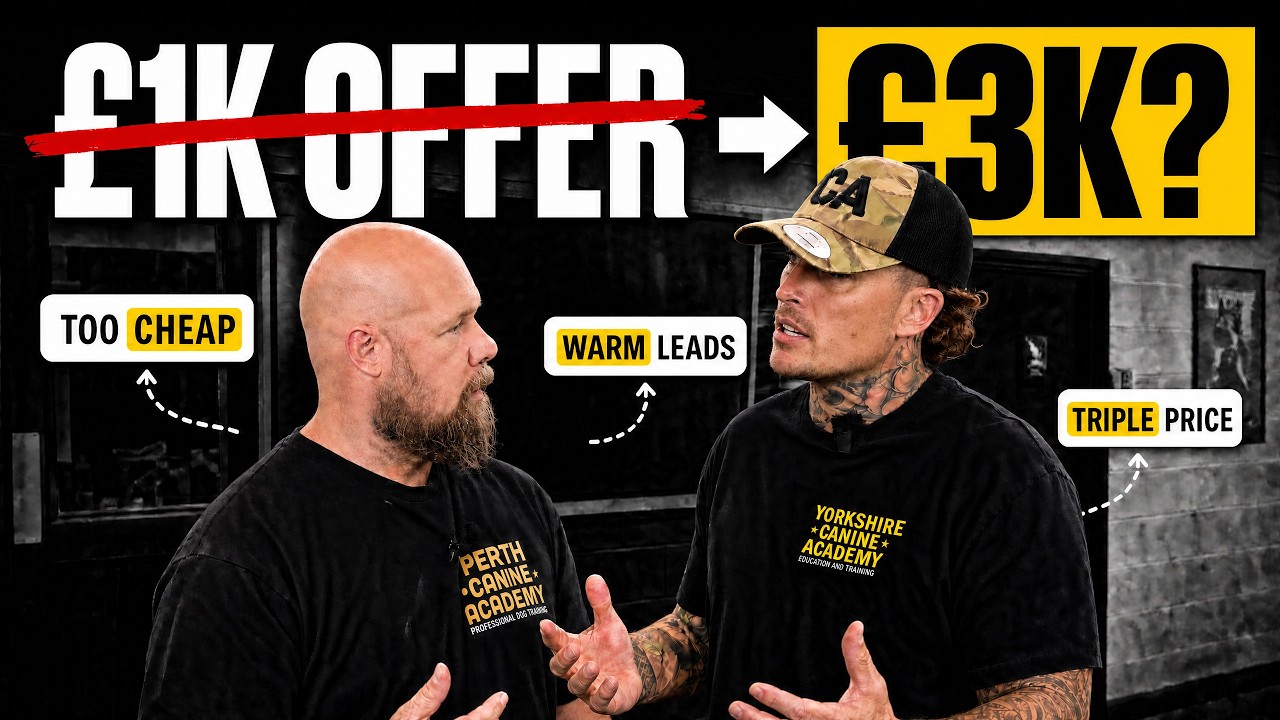
Jacob Morgan coaches dog trainer Sean on scaling to $100K monthly revenue. Key moves: raise prices to $2,500-$3,000 to test the market, add pre-call nurture and post-call follow-up to boost conversions, and hire hybrid roles that reward both sales and testimonials. Sean's underpricing was killing his margins.
Chapters
I said quadruple the price and then we might have some data. Every single call should be a laydown deal because they know the price. We're never going to know until we test ourselves at the adequate levels. It's just I don't trust to spend this amount of money in this person I don't know enough about yet. So Charlie Munger says, you show me the incentive and I'll show you the world. All right, Sean, you come all the way from sunny Sydney. Tell us who you are, what you do, what service you provide. Give us a little bit of intel on your business.
K9PT. Uh, was Aussie Trainer, met you, went Balance, one-to-one grinding, got into the mentorship, just less grinding, more making money, niche down, refine the products, presenting more one-to-many.
Yeah.
So since then, probably since we spoke last, now my main thing is my reactivity program, which is similar to what you run here, but split over a month. About zoned into 10.
Yeah.
Just on a Sunday.
So it's a group?
Group class?
4 consecutive weeks?
Yes.
10 dogs.
Yep. Started with 10, 15 now.
Who's covering the deliverables? You and a couple of others?
Yeah, me and a couple of helpers to sort of man the in and out of cars to speed things up, like time management-wise. Yeah. And I've got another trainer at my level that will take a cone side if they need to, or if we're working a pack, we can split them into 2 groups of 5 and stuff. Just started low price, up and up and up to a point now where we're getting about 60%, 80%, well, 60, 70% conversion. Not an easy sell, but—
Off the bat, just phone call consult?
Straight off the call. Still not much of a pre-nurture. Okay. Looking to implement more of an after-call nurture because I feel like I'm letting myself down for the calls that I don't close who are like still hot follower. Okay. I'm just running out of time to do that because I'm normally trying to get on the next call or work in docs. So I'm still cutting grapple rope, keep pushing the business back through the beginning and sort of refining it each, every 2 to 3 months. I try and run it back through from the beginning and be like, what can I cut out?
All right. 3 to 6 months goals. Like where do you want to be at? And then we're going to reverse engineer.
So 6 months goals. I'm looking to copy paste it into other areas now. Okay. And I want to get that $100K a month. Okay. My personal goal. Okay. I've been able to run 20 dogs a month for 2 and a half, or coming up the 3rd month now, myself in my own headquarters. Yeah. Beginning of the year it was, or end of last year it was one every 2 months. Yeah. And it was one a month. Yeah. And now it's 2 a month.
Yeah.
So $20 a month. Pretty good. Pretty busy. And prices are sort of getting where I want. I'm going to do one more slight price increase.
Okay.
Then I want to Cool.
What's the bottleneck in terms of stopping you get there? Do you think like what's gonna hold you back? Like what's gonna get in your way? What's the hurdle you need to overcome?
For the follow-up on the calls, because I think a lot die off and go, I don't get to catch on quick enough. So I need to follow up on the calls that don't close and hiring the right staff and making sure I'm working with the right people when I do look to expand.
And you want to expand on the marketing sales side or you want to expand on the fulfillment side or you want hybrid roles or what?
I want to do both. I've really struggled to find hybrid role people. As you know, like most dog trainers don't want to deal with people.
Yeah, yeah.
So people that are really good with dogs, like the gentleman I found in Inner West who I'm looking to work with, doesn't do any of the back end. But I'm good at that, and I'm looking to hire a lady to take on some of that with me so we can take care of that bit and he can handle the deliverables in person.
Yep.
Online stuff's pretty tight.
Yep.
Zoom calls weekly as well, and a school training docs and all that. We're going to redo some of those, but they're all videoed and done.
What's your— what's the current price point for that?
You maintain Now it's 1980. As soon as I go back, it's going to 2,200 in hopefully launching at both locations.
Okay. So this is about £1,000 in your conversion rate.
We reckon 60% less relevant. It's harder to sell from here.
And we're not doing much in regards to like pre-call nurture and post-call like follow-ups.
Not enough. I do text myself for the follow-ups, but pre-call, nah, comes in. Hey, you got time for a call? Yeah, cool. Or I'll just cold call, do it on the phone. Like someone this morning driving.
Okay, so you need to put your prices up to the point that it stresses your sales process. So right now, because you're not doing much pre or post-call, not obviously, as we always say, we want to put some pre-call nurture in there to make people, you know, as familiar and as educated with you and what you do as possible. So the call becomes frictionless and you can say like, here's the price, you know, here's how you sign up. If our conversion rate is that 60, 70% without all of that, It means like we haven't strength tested via price point our sales skills, you know what I mean? And be—
pressure myself.
Yeah. So we need to go, all right, a bigger price jump. I'd go like $2,500, if not nearer the $3,000 point, and then see your conversion rate without doing all the pre and post call probably drop down to somewhere around 40% to create enough kind of pressure on you to go, okay, how can I improve the sales system to take this conversion rate from 40% as it is now, which I've done purposefully by putting my prices up and, you know, putting again enough pressure on me whereby you're working the same amount but for like— you've got a 50% price increase in there on you just by doing a little bit more work pre and post call and making sure you're maximizing leads that don't come through, making sure, you know, there's different things we can do in regards to offer, but You know, that's the first thing I'll do if I look at a business and they're screaming 60, 70% close rates, but sales process is very limited in terms of, you know, what they're offering in terms of education pre and post. I'd be like, well, you don't even know how good you are at selling because your price is like too cheap. You know what I mean?
Yeah.
It's like I'm going to the gym and I'm benching 60, 70 kilos every single week. I don't know how strong I am because I've not added any weight on. You know what I mean? And so when it comes to sales, we need to add weight on, add weight on, add weight on. And then go, okay, well, our close rate is now only 45% comparatively to 60%. That does not mean in any way, shape, or form I need to put my prices back down. It means I need to cultivate a little bit more education in my prospect to create a little bit more trust in the process. Like, absolutely bombard them with testimonials and social proof that, like, what you're doing, because as we know, if you're offering a great result for people and significantly transforming the quality of life for both them and their dog, they're going to give their left arm, you know what I mean? And it's rarely a case of like, oh, I haven't got enough money. It's just I don't trust to spend this amount of money in this person I don't know enough about yet. And so the first thing I do without like complicating it or adding any more, you know, volume of leads in or turning on any paid advertising, like put a bit of sales pressure on yourself and go like, all right, let's see if I can actually sell, or if my price has been doing all the selling for me up until this point.
Yep.
And if I get to that point where, oh shit, I can sell, I can just keep putting my prices. If I get to the point where, I go, oh fuck, maybe I can't sell. Then I need to like start sharpening my sales axe, you know what I mean? And keep doing that. So that'd be the first change I'd potentially make. And then if we start thinking about like the marketing side of things, where are these people typically coming from?
We started Google Ads. I think while I was here week one at the NFT Week, we were talking about splitting your website. So I've done that in the last 2 days. Okay. Set up a landing page for activity, set the landing page for copies. Yeah. I'm looking to just automate that one because I'm not too fussed. It kind of just rolls along. And I want to nurture and work the reactivity sales one. Perfect.
So you're doing different funnels for different offers. Yeah, we see the messaging nice and consistent throughout the offer.
Yeah. And then they go on a separate sheet so we know where they're coming from. Now we've added tracking, so I know where the leads are coming from, which ads, whether it's Google or Meta. So yeah, we've split that, just done that in the last couple of days. So waiting to see how that goes. And I put price on there. Okay. To see if we get—
on the puppies or the reactivity?
Both. Okay. Just put it on it because I've never done that.
Yeah.
I always do it in a call. So I'm interested to see over the next like 10 days, hopefully I can just turn off and Maybe not get many inquiries, enjoy the rest of the trip.
Yeah, gotcha.
But I'm interested to see if we get many still getting clicks when they know the price up front.
Gotcha. So you've added more friction in terms of your funnel?
Yeah, yeah. And pumped it with like the testimonials and stuff like you said, linked all the Instagram testimonials, all the videos, all the Google reviews and done all that. So yeah, that's what we've done since we've been here.
Yeah.
But then when I get back, I do want to do a price push. Yeah. And hopefully bringing somebody on to help me do some of that sales, particularly takes a couple months to train them up, then we'll be ready to, you know, perfect that backend stuff and the frontend. So then when we look to expand more, we can start potentially doing that.
So price disclosure is very much based on if you've got a good salesperson or a non-good salesperson. If we don't have a great sales team, whether that be you or someone else taking the calls for you, we want to be transparent, as upfront as possible with our pricing. So therefore people are already sold going onto the call. It becomes a conversation of like, Hey, you know the price, you in or out? You probably got a couple of questions that you need just reassurance on. But if you've got a very good salesperson, you want to probably not disclose price and give your business the best opportunity to put the best foot forward and speak to that salesperson. Because there will be people out there that will see a price on the front end and go like, no, because they're not educated enough to see that, that why that price is important.
Exactly.
Conversely though, there's going to be a lot of people that like they're going to come through that funnel and expect you to train their dog for, I don't know, $150, $200. And when you offer, you know, a more substantial price point for the service, and again, rightly so, for the service you offer, you know, you end up wasting a lot of call time. And so just like anything, test it, test it for 2 weeks, see what the volume of leads come through look like, see what the call quality comes through look like. Realistically, unless these people are visually missing it on the page because they've just rushed to book a call or whatever, Every single call should be a laydown deal because they know the price, they know how it works, blah blah blah. You should just be like taking deposits or taking paying falls and being like, yeah, you can start.
Let's go.
Second thing you can do though, as what Will said on the weekend, we can start disclosing price later through the process. So we've got micro-commitment. So we don't disclose price maybe on website, but then you know people sign up and once they've signed up and give us a little bit of a commitment, we send over an FAQ sheet and we can do that automatically nowadays. That just says, you know, here's how we do, uh, here's what we do, here's how we help, here's the kind of people we help, here's some testimonials, how much does it cost, FAQ starts from this amount, or it is this amount. And they're like, well, I've booked my call now, I might as well see what it's all about. One thing we can start dialing up and down is as and when we add in that price. A lot of people, what they do is they just disclose the price the morning of the call. So when someone's like waited around 3 days for this call, they're like, oh, I don't cancel it now, you know.
Yeah.
Uh, and so that would be the first thing I would change if you decide to change it. But again, hopefully you don't need to decide to change— you don't need to change it. And you know, when a great business works, here's my price, here's how much it is, here's how we can help. What I will say though is like, if you are price disclosing, it needs to come lubricated with a lot of social proof to make sure people go, oh, holy shit, this actually works.
4 or 5 testimonials, video testimonials.
Yeah, yeah.
It's only on the ones that they'll link from an ad.
Yeah, okay.
Yeah, if they go to the actual website, No price. Yeah. So still, um, track. I'm interested to see where most of the leads come from, whether it's the site with price on it or the— thinking that if they've seen the ad and clicked, they're probably a bit more warmed up so they can see a price.
Yeah.
But I do find my calls try putting price out is justifying the price and almost talking people into it with a payment plan or—
Yeah.
They're not really worried about the product. There's a lot of proof. They're like, oh, you come with good, you're recommended or you come with good proof. It's just justifying the spend, particularly with the economic climate.
Yeah, gotcha, gotcha. Just something to be conscious of when you start running advertisement. This is for anyone watching. You typically do hit a colder audience that are less familiar with you. Someone says, oh, my mate Sean trained— sorry, my mate trained his dog with Sean, like transformed our lives. That's a lot of like really high value social proof because there's someone in real life that is like, hey, I just see your dog, look how great your dog is. You know what I mean? And so them calls are going to be like, there's going to be less friction in those calls. But when we run paid advertisement, whether that be via Meta or via Google, these people are coming on the positives. They're going to be intentional. So they're like reactive dog training Sydney or fucking whatever it is. They've got a problem, they're looking for it. They're not just— it's not just being thrown on their lap like it would like an Instagram reel or whatever, right?
Yeah.
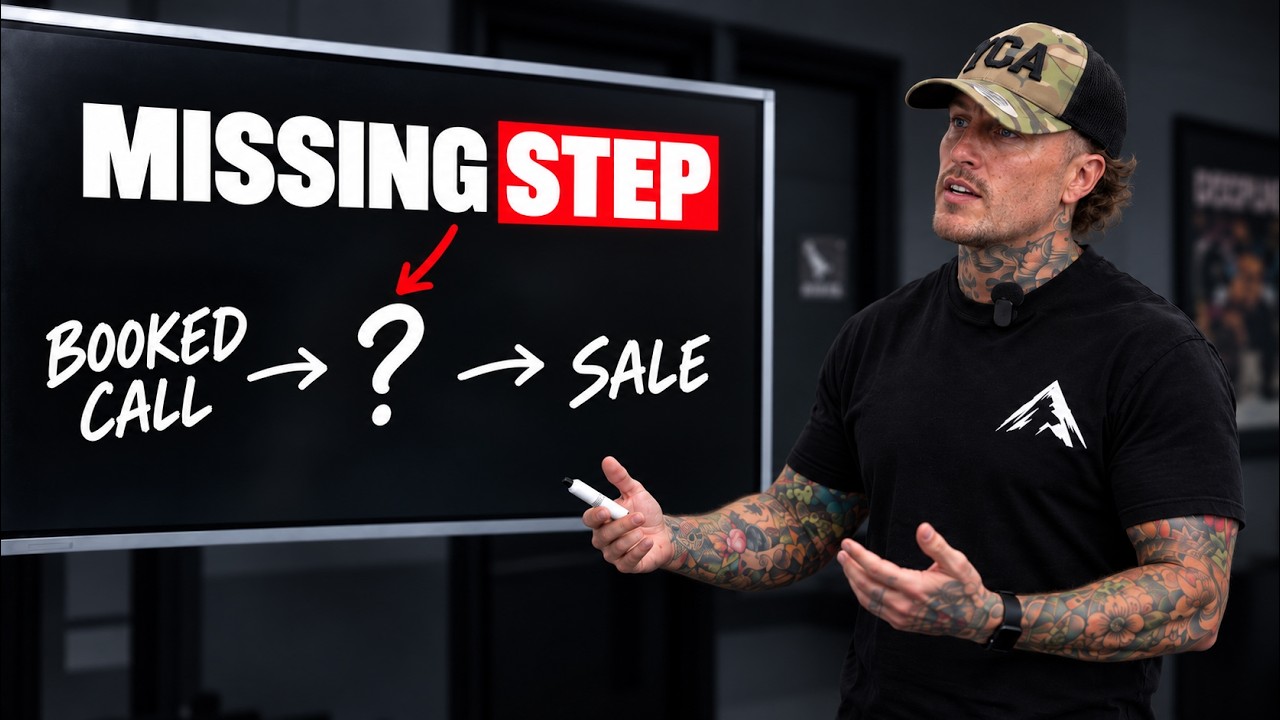
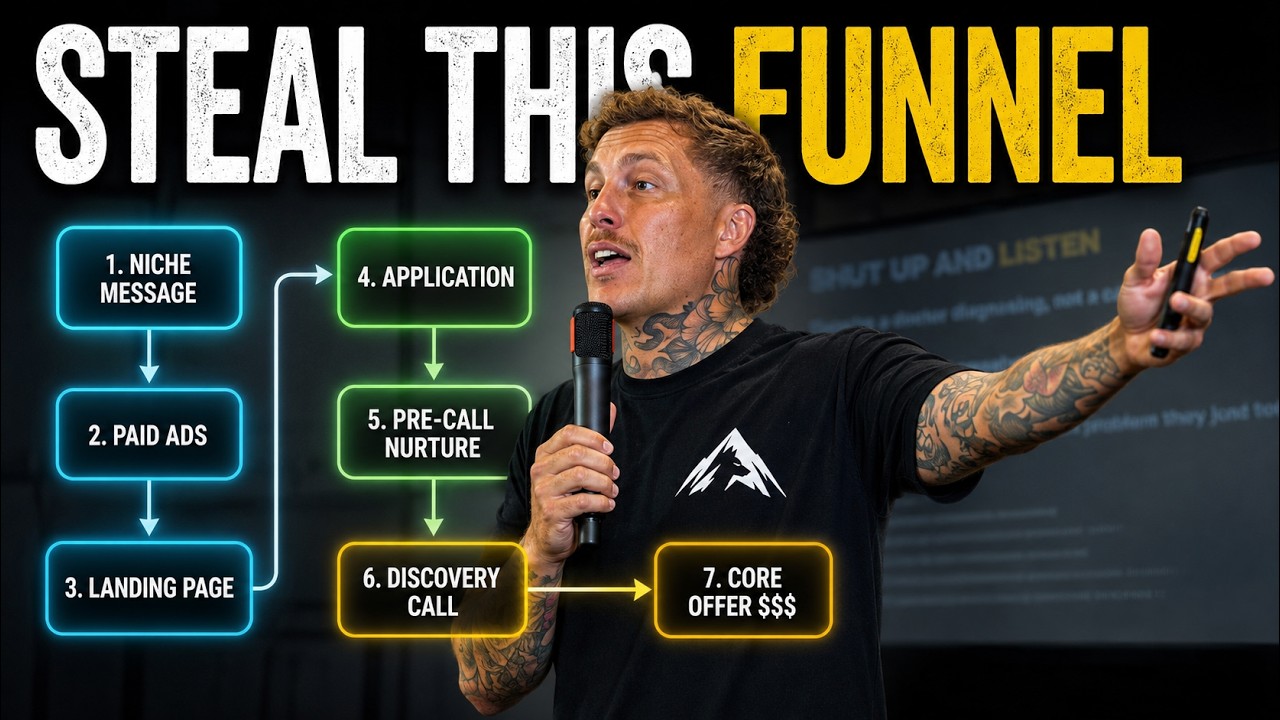
Second thing is though, like there's a little bit more competition and it's probably because they've searched reactive dog training and then get served you. They don't know who you are until they arrive on your landing page. And so if they do decide to take action and book a call, You've got a duty of care then to make sure you sell your services, to make sure you're doing some incubation work from booking call to actually conducting the call to create some familiarity. Because if we think about it, like, we go from warm to hot, and obviously people buy at hot over here, right? And then we have like a big scale. If someone goes ahead and they come from a recommendation and they've seen a dog in real life that you have trained, When they book a call, they're going to be like red hot, right? If they're going and searching some prices on Google, anything past this line, you're going to get a conversion again based on your price point. And, you know, there are lots of variables here. But if we go and run some Google Ads and people are just searching, yeah, you know, they got no friends with reactive dogs. They're not on social media. They're completely like, they don't know you. They come in and they search on Google here. And they find you, they see your webpage, it's highly congruent. So, you know, it sounds like it's just for them. You know, if anyone, dog trainers out there, they're looking, something we spoke about on the weekend, what people are looking for when they arrive on your website is, is this for me? And so when we have mixed signals like puppy training, boarding train, reactive dog training, obedience training, it doesn't necessarily mean they're gonna arrive on that website and go, yeah, this is completely for me. I digress. So they arrive from a Google ad and because they come from a Google ad and they're just searching on the internet, when they do book a call, they're gonna probably be around here and they're below our conversion line. So it's our duty of care from the, in the timeframe between booking a call, which might be on a Monday, to actually you arriving and conducting the call on a Thursday, or, you know, as soon as realistically, we want to basically propagate that timeframe in order to make 'em warm and warm and warm. And that's gonna be, okay, are we relatable? Do they feel like they know us? Do they feel like they trust us? So we might send them a podcast. talking about dog reactivity. We might send them just a bunch of case studies, you know, that is proof of us solving problems just like them, uh, or just like their problem. We might send them, I don't know, like a YouTube video. It doesn't— we don't need a whole channel, we don't need a whole, you know, a podcast with 100 episodes, but just some content so we can take them from this cold person that has just been served an advert to someone in that 3-day period. And we call this a microwave. And someone, uh, just in that 3-day period that feels like they truly know you, they trust you, and they feel like you're the guy ready for the job, right? Whereas like a lot of people, when they switch from organic to ads, they've been getting laydown deal after laydown deal after laydown deal of people that have been following up social media for 6 months, people that have been recommended them. Maybe they followed you on Facebook or been inside a Facebook group or something like that, or they've heard, you know, multiple recommendations. But when we switch to paid advertisement, which hopefully gives us some reliable leads, We've got a duty to make sure they're nice and warmed up because again, people do, uh, run some ads, they, you know, they start bitching and moaning about the leads that are coming through and saying like, oh yeah, they don't even know what fucking dog training is, or, you know, or what we do or anything about us. They don't know what slip collar is, blah blah blah. Well, that's because we haven't done our due diligence in like making sure that like we've put some education in front of them before we actually speak to them. So that conversation that we do eventually have, it becomes nice and organic and it's just like, Okay, what questions you have? Sweet. You want to sign up as this much? Let's go. That make sense?
Yep.
So just probably a little bit of elbow grease in that when we start running paid ads.
Yeah.
So a couple of things are definitely changing. You're probably not too far off, you know, where you want to be, as long as you just concentrate on like ideally what we've spoken about today. Put a bit more sales pressure on yourself. You know, if you are at 60, 65%, it's a bit of a question mark of like how good we are at selling, you know what I mean? Just like Mutt Nut once upon a time, he's like comes to me and he's like, I'm just selling. I'm at like 95% close rate. I am sick at sales. I was like, how much is this thing? He's like, 300 quid. And I'm like, well, you're not sick at sales. You're just like selling like incredibly cheap. So, you don't know. I said, quadruple the price and then we might have some data. You know, it turns out he's okay at sales. He's not phenomenal at sales. But, you know, we're never going to know until we test ourselves at the adequate levels. Like me playing like 8th grade rugby and being like, oh, I'm phenomenal at rugby.
Yeah.
And you know, who would actually know until you're chucked into first grade? You know, you might be dog shit. So put a bit of pressure on yourself. And then once you do put pressure on yourself, you should see like a natural dip in your conversion rate, which is fine. And then you need to work on what we spoke about there in order to bolster out the sales process. So people are coming through red hot, they have a lot of familiarity with you. And then from there, you're just going to spend more on your ads just to give you nice and consistent pipeline, which the numbers you're at now And if you're starting to expand team and stuff like that, you need a level of consistency. You don't want to be completely relying on organic and, and a reel going viral.
Yeah.
Um, in order to have a big month in your business. I don't think so. What other questions you got? Anything else you want to talk about? Any other bottlenecks?
So you feel like when I'm doing, maybe just touch on that when I'm doing the expansion process, some of the deals and things like that, when you're working with bringing somebody on like that, I want to bring him on as like as a staff, but I want to invest him in it. So he takes a percentage or something like that. So he's vested in delivering the good product. Have you got any structure?
Yeah, so Charlie Munger says, you show me the incentive and I'll show you the work. So I think if we bring people on, you need to show 'em incentives. I highly recommend giving them sales incentives and then giving 'em testimonial incentives. So we incentivize the front end and the back end. So you're gonna say, I'm gonna give you 5% of cash collected on what you sell, and then I'm gonna double that to 10% once you close that client for a testimonial at the end. You gimme a video testimonial, I'll take you up to 15%, you know, a spoken testimonial, as well as like potentially a base salary as well. So use your base salary to cover all the work, but also I'm going to give you— typically we split a commission between opening, closing the sale, but then also second half of commission all the way through, getting the social proof and making sure that client's happy as well, you know what I mean?
Yep.
So I think that's a good way to do it. Otherwise, you just do the front end, you're going to get some hungry salespeople that forget about the fulfillment. And if you just do the back end, you're going to get people like, you know, They're going to, you know, really care about the fulfillment side of things, of course, so they get that testimonial, but they're not going to give a fuck about selling, you know?
Yeah. You're obviously going to spend a chunk of money bringing that staff member on. Yeah. Um, that sort of commitment, you're going to invest in it, right? How long do you think before you go like, hey, I'm not getting a return on it? Or would you expect to see it start to value?
From a, like a money standpoint or like a, how I guess both, because it's got to be a learning point, right?
They come on 2 or 3 months, start to learn.
Yeah.
And then you're going to go like, right, is it worth Have I spent the money in the right place? Are they performing right or am I getting the return from them?
So you are gonna have like a 50% idea if this person is right for you and your business at the end of their first day. And then you're gonna have like, have a 90% certainty at the end of their first week. All right. And I would highly recommend at them 2 points you follow your gut instinct. 'Cause if they can't give you their best in their absolute first week, like it's only downhill from there. You know what I mean?
Yeah.
Cool. And then it's your job to motivate and incentivize them to keep, make sure that they keep that quality up.
Yeah.
And so that's something to consider. Obviously you do one-to-many, so that is a strength in your business when it comes to expanding. Because if, you know, if we're bringing in a new trainer, they basically just shadow as a bootcamp, as a chaperone for the bootcampers to begin with. And then they start being given like the easier exercises alongside a senior trainer and so on and so forth before they develop to the point. Instead of just sending people out there doing one-to-many, I see a lot of people, you know, expanding their training team, for example. you know, they're a great trainer, they train someone up over like a 3 to 6 month period perhaps, and then they just start sending them out on one-to-ones and maintaining quality. You know, I've had some people have multiple people in their businesses and the helper or the person that's come into their businesses is like a quarter of the price comparatively to the main person. That's not what we want. We want to be able to charge those nice high prices throughout. And so one-to-many is a good idea. So when we expand, you know, for example, We have one trainer to 3 to 5 dogs in a boot camp, and then when the second dog trainer comes in, it's going to jump to 8 dogs. Whereas that first trainer can still be an all-seeing eye over the whole group to make sure that quality is nice and high, as opposed to a little bit of training and then sending them out on their own where they can start kind of amplifying mistakes if they have mistakes, you know what I mean? If those mistakes go uncorrected long enough. Whereas, you know, even Kirkie to this day on a boot camp here, he's the all-seeing eye across all the boot camps. So all All of our trainers are still monitored by our most senior trainer. I highly recommend doing it that way as opposed to, you know, sending people out left, right, and center, and the quality potentially is going to dip without you even knowing, you know.
Yeah, you hear that? Cool.
All he says.
Sweet.
All right, appreciate it. Yeah, man, pleasure having you.
More from Jacob
I Had 100K Followers And No Money. Here’s What Fixed My Dog Training Business
Stop Relying On Organic Marketing, Build THIS Funnel Instead (For Dog Trainers)