Stop Relying On Organic Marketing, Build THIS Funnel Instead (For Dog Trainers)
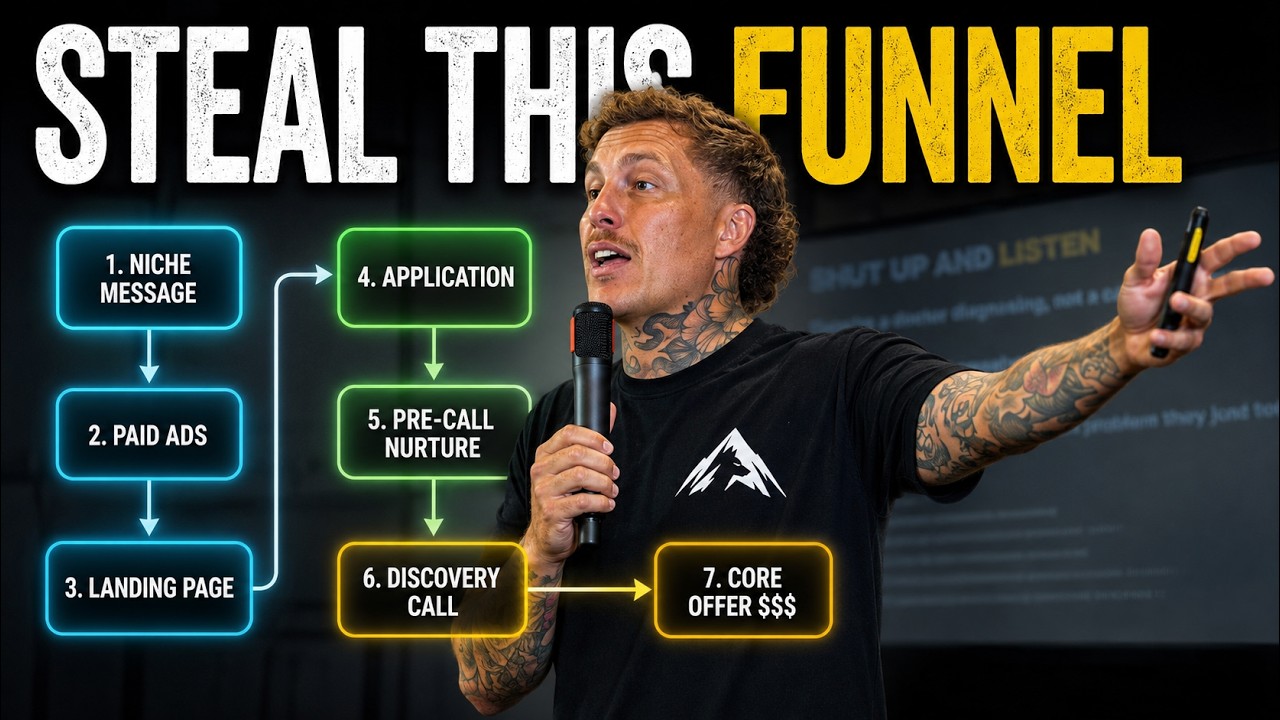
In this mentorship‑style session Jacob Morgan walks a group of dog‑trainer mentees through a complete, data‑driven marketing and sales system that replaces unreliable organic reach with a paid‑advertising funnel. He explains why paid ads give consistent eyeballs, but stresses that ads alone won’t sell – the entire funnel must be tightly aligned. Jacob outlines a step‑by‑step funnel: pick an ultra‑narrow niche (often breed‑specific), craft low‑polish but highly targeted ad creatives, drive prospects to a landing page that mirrors the ad’s messaging, use timed or application‑style CTAs to qualify leads, nurture objections with AI‑generated assets before the sales call, and close with a no‑brainer offer during a paid assessment. He repeatedly emphasizes message congruency across ads, landing pages, testimonials, and the final offer, and shows how to use AI tools (Claude, Manus) to extract pain points from recorded calls, generate copy, and even code landing pages. Jacob also discusses metrics such as ROAS, conversion rates, and how to out‑spend competitors by improving funnel efficiency rather than raw ad spend. The session includes practical Q&A on niche selection, multi‑breed landing pages, disqualifying unsuitable prospects, and iterating successful ads through hook, format, and CTA variations.
Chapters
You better believe that Meta has alien-level technology. They literally have a big facility in the United States that's like Area 51 that no one's allowed in. People will never buy something if you don't demonstrate that you have comprehensive understanding of their problem. So messaging, super, super important. The narrower your message, the louder it's going to be. You should ask every single person you work with that question because that's the most important question, because they're going to give you your number one objections. When you're running adverts, by the way, because people are hypersensitized to adverts, the more polished it is and the higher the production value, the more likely people are to swipe. And so this is why when you see our ads, they're usually like a little bit grainy, usually a little bit shitty quality.
When you've done an advert and you've found one that has performed better than something else, how do you go about recreating that?
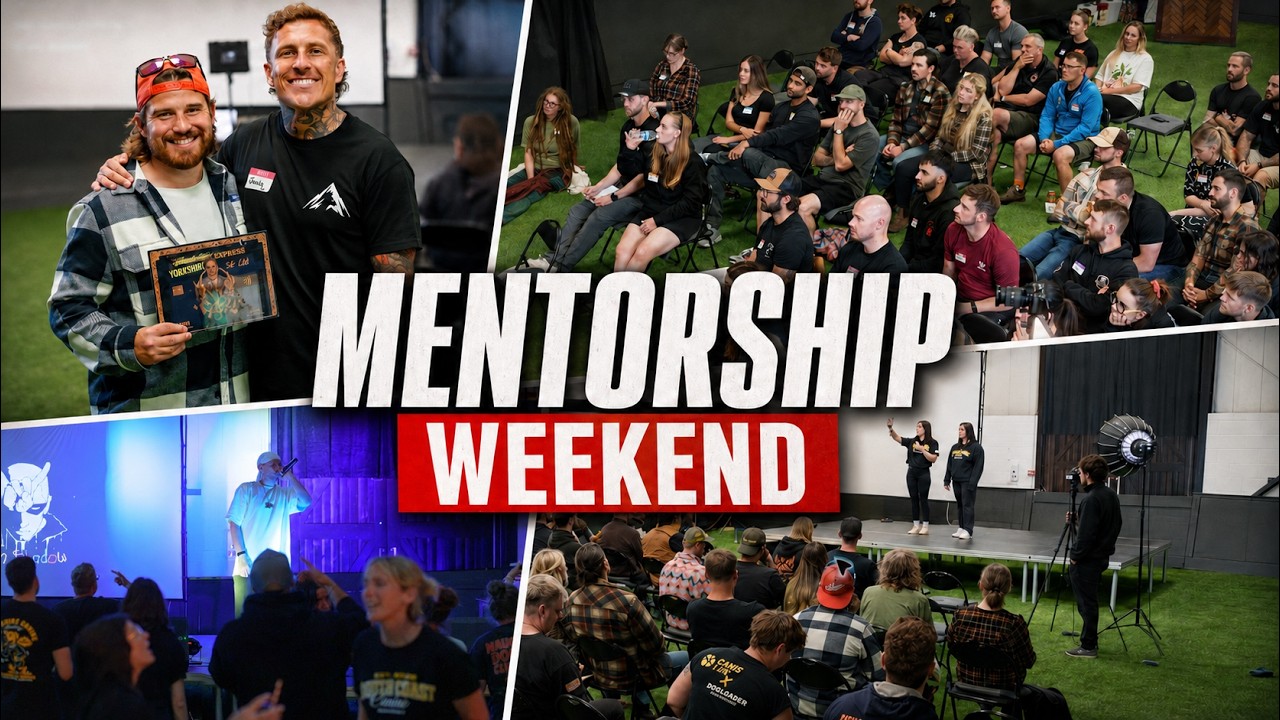
I'm going to give you a very quick talk this morning. A little bit of an overview of what I've learned from you over the last quarter. Obviously, I'm lucky enough to speak with all of you on a regular basis, and you feed back to me what's working well for you, what's not working well for you. And so, you know, it's our job as a mentorship to collate that information, make it easy to consume, and then present back to you so you can learn from not only us but one another as well. I'm going to spread little bits out throughout the weekend on the back end of some lessons our company has learned recently, as well as, like I just said, what I've learned from you guys. Right? So the collective brain in this room is a very, very powerful thing. And so I'm always trying to pattern spot not only manually but with AI tools to make sure that we've got the most forefront information to present back so you can grow, scale your businesses. And so I've come up with a little presentation today just on the back end of the last quarter, what's working particularly well, and ultimately like what I would do if I was in your shoes right now.
Right?
And with the aim of giving you guys an advantage over your local competition or beyond, right? So you might want to take some notes. You don't have to. I won't be too long. Then after that, we're going to go into the, the presentation talks. There's 15 awards to give away, which is phenomenal. You know, there's a couple of people that have achieved multiple awards during this last period of 6 months since we last got together, which is great. Okay, so I'll get into it. First and foremost, we're going to talk ads versus organic. A lot of you that have achieved success over the last six months or so are starting to pivot towards paid advertisement. Now we've got pros and cons here of paid versus organic. Paid traffic, e.g., we pay a platform such as Google or Meta to give our potential avatar, our prospects eyeballs, right? I know a lot of you in the past have run paid advertisement, perhaps to no avail, and pretty much tanked. a fair amount of money down the drain because you've not seen your return on investment. Or again, you maybe work with an agency or someone running your ads for you or whatever it is. Now, just to be clear, and not everyone gets this, Google and Meta or even any agency we decide to work with, they can only give us the eyeballs. After that, it's down to us. It's down to the information we give people. It's down to our sales process. It's down to how well we can fulfill the task at hand. So We can't just throw a bunch of money at some sort of platform and expect sales to come out the back end of it. It has to be part of a system. Those of you that are running organic, I see inconsistencies in your income. You might see $5K one month, $10K the next month, and then you go back down to plummet, right? Because of— with organic, we're obviously relying on maybe some sort of virality within our content in order to get more eyeballs. Maybe we have a week off and we just don't post. And then there's a quarter of our views go down or, you know, whatever it is, there's inconsistency there. Ads, however, you know, if we spend £100 or £1,000 or $2,000 Australian dollars on advertisement, you know, we get pretty reliable outcomes in terms of what we call impressions, e.g., eyeballs on our stuff. And so our company has pivoted toward more paid advertisement that is bolstered by organic efforts. Okay, so they go hand in hand. If you just run paid and you don't have any sort of organic presence, I don't mean a big following. I just mean something there to verify you're a real person and a real dog trainer. People are going to be like, oh no, this is just like some sort of scam, right? And then again, on the converse side of things, if we just rely on organic, there's inconsistencies there. Now, most ads work on a bidding process. So what that means is, let's say you are Jay and you're in Gloucester. and you're running Google Ads. Now, Google and Meta have very sophisticated AI algorithms whereby it knows where the best placement is, e.g., where they serve your ad to someone that is most likely to get a click. Now, if Jay is spending £200 a day and his neighbour is spending £300 a day, his neighbour is going to get the best placements, right? He or she's going to get served the best possible placements on Google search results or whatever, right? So that person has an advantage. Now, Now I want to give you guys the advantage today should you decide to run ads with a backend selling system. We're going to talk about each layer of the funnel so you can outspend your competitors because your conversion is going to be higher, your lifetime value is going to be higher, your average order value, how much they're going to spend, is going to be higher, and your conversion rate is going to be higher. E.g., the landing page they go on to is going to convert higher than your neighbor, so you can just outspend absolutely everyone. So I want to give you that advantage today so you can go ahead and just Send some spend up. Basic economics say if I spend £100 and I end up booking 4 calls, I convert one of them at £1,000, I have a 10-to-1 what we call ROAS, which is return on ad spend. My job at that point is to try and maintain that and send more money into advertisement. And I should hopefully continue to do that until I have a different problem, e.g., I'm fulfillment constrained. I need to look at what I'm actually delivering on the backend. And try and produce deliverables but maintain product or service. Here's the overview of the funnel. We want a niche. It doesn't mean like niching to cockapoos with separation anxiety. It just means our messaging has to be highly, highly accurate. We need to cut through the noise, find exactly who has spent money with us in the past, and try and speak to them directly. Then we run our ads. We use our messaging, our niche, our keywords, which we're gonna talk about in a second. That's like our bait right now. I'll come on to this, but the ad itself is less important nowadays because of the algorithms are so sophisticated, and what you're saying in the creatives of the ad is way more important. So we'll come on to that. A lot of people are having success of running ads straight to a landing page at the moment, whether that be via Meta or Google. You know, hey, you got reactive German Shepherd? You want to click this button right here and see how I can solve your problem. They go on to the page. The page is then congruent with your messaging. Lots of testimonials of German Shepherds, lots of reactivity, blah blah blah. Ideally, they land on that page, they think, wow, this is exactly for me. They book a call, we nurture prior to that call tackling objections, we conduct the call, and then obviously we give them an offer that again is very consistent with the problem. What I see a lot of you do unfortunately, and what I have to correct in a lot of you, is on your front-end messaging, that very top thing, and your offer down the bottom end, they're not consistent with one another. You're putting out one bait, but the solution to the type of problem your baiting isn't consistent with one another. And so each level of this funnel, we're looking for consistency and congruency all throughout. So when people pass through, they go, wow, this sounds like it is just for me. And when you have people say, wow, this sounds like it's just for me, or it's like you read my mind, or this sounds just like my dog, that is a little indicator that you're doing a good job in your marketing. Okay, so your ads aren't the problem. It's more so your messaging is. Because Google and Meta, they want you to spend as much money as possible. So they're actually gonna put your best foot forward, right? They're actually on your side, believe it or not. Because if you spend $100 and you see your money back, next week you're gonna spend $1,000, and the week after you might spend, or the month after you might spend $10,000. So these platforms are very much on your side. It's how they make money. They have every intention for you to spend more, but they obviously know if you are not making money back, you're not gonna spend any, right? You don't, it would take a fucking idiot to just keep spending money and not see it back, right? So our messaging on the front end needs to be highly, highly aligned. Now when we have diverse messaging, which I see a lot of you do unfortunately, people are looking for absolute yeses in your marketing. So what I mean by that is if they get to a landing page, what they're looking for at that point is, is this for me? And we want more yeses than we do nos. And so recently I was speaking to Carly in the mentorship. She's not here. She runs—
She's here.
Dog and horse training. The landing page she has, or the website she has, covers both, right? Which is a bit of a no-no because when people land on that, immediately they've either got a dog or a horse that needs training. So 50% of that page is no, not for me. That makes sense?
Yeah.
So then like the maximum score of yeses she can have is 50%. So it's a little bit like, right, they land on a landing page and you've got puppy training, reactive dog training. They're my 2 things I do. Well, I've got a reactive dog. So 50% is a no, 'cause if half of what you do is puppies, do you see where I'm going here? And so we want as close to 100% yeses as we possibly can. So when they navigate through that page, that website, that asset, whatever it is, could be a webinar, it needs to be consistent all the way. Yeah, yeah, that is me. They read the testimonials, that sounds just like me. They keep going down the who's this for, who's this not for? That sounds like me. If you're running a VSL or whatever it is, Yep, this sounds perfectly aligned. And what we're looking for there, that keyword is alignment. But when we diversify issues and services, etc., etc., and we say on the page, you know, here's the 4 things I help with: reactivity, resource guarding, separation anxiety, recall. They're like, I've got a reactivity problem. This page is only 25% yeses. All making sense so far, right? So how aligned your conversion mechanism is, and we're talking about landing pages in this example, is very much gonna dictate how well it converts. If our page converts 60%, which would be ludicrous, let's say our page converts 12%, which would be great comparatively to the neighbor that converts 4%. Great, we can outspend 'em and take the better placements on Google or Meta. All right, so messaging, super, super important. The narrower your message, the louder it's gonna be cutting through that noise. I've said this before, I've said this since the inception of this mentorship, if you're very accurate in your messaging, you will cut through, you will bypass, you will jump over your neighbor because people are looking for someone that specializes in the problem that they've got. As we all know, the everyday person with their dog, the problem that they have has never been seen before. It's, it's nigh on impossible to solve. They've tried everything they possibly can to solve this issue, right? They've tried the YouTube videos, They've tried castration, they've tried drugging the dog, maybe putting the dog on medication. They've tried a couple of other trainers, one that threw cheese on the floor, one that threw keys at the dog. And in their head, this is an impossible problem to solve unless there's a very highly skilled expert that can solve it. And so we wanna look for that one thing that we enjoy to tackle and again, align that with our messaging too. We're looking for alignment and congruency. All the way through this process. So again, we want people to be landing in our marketing, whether it's the front end ad and you're walking along and say, "Hey, you got a German Shepherd? Probably started becoming reactive at around six months old. You know, you've been to the local German Shepherd trainer. You've done the pack walks. You've tried castration. Your dog's about two years old now, and you're thinking, is this it? Is he going to be reactive forever?" I'm telling you now, I've worked with hundreds of dogs just like this, and there is hope. All you got to do is click the button below. and find out how I can help you help your dog live the best life possible. And they click the link, they arrive on the landing page, and they get hit with very consistent messaging. And they go, wow, holy fuck, that's exactly what happened. So you got yourself a sausage dog. You know, everything was fine till about 6 months old. He barked at one person down the pub once upon a time. And then every week after, it was a couple of extra people. Started with people, then it was dogs, or dogs and then people. You know, you've tried scatter feeding, you've tried the enrichment, you've tried, you know, X, Y, and Z, and yet your dog's still reactive. And they should be going, holy shit. Yeah, yeah, yeah. That sounds just like me. And when we have that, that sounds just like me effect, that's where we get high conversions. So something we do in both sides of the business, including the mentorship, we take all the sales calls, we record them with Fathom, and then we cross-reference the pain points, circumstances, and problems of our avatar as well as past attempts. So write those down: pain, problems, circumstances, past attempts. They're all the things we want to align on. We extrapolate those. I literally ask Claude or Manas, hey, the pain, problem, circumstances, and past attempts of my prospects— can you take a look at my website and see if it's consistent with what people are actually saying? So you should be recording all the consults for, for that reason. You know, we could put— we've put webinar transcripts in before. Had it referenced with sales calls. Better yet, if you could go one further and tell Manus or Claude who actually closed, whether you give it access to some sort of CRM with an API key or you manually tell it, or you do a Google Sheet and let it view that and be like, even better, not only the people that book sales calls, but the people that actually closed, they're the people I want to find more of, right? Can you help me identify their pain problem, past attempts, and circumstances? So I can speak to that in my front-end ads, messaging, content, landing pages, VSLs, webinar, etc., etc. And then I'll ask it to make suggested changes on our landing page. But because our landing pages are built with Manus, I can be like, hey, just make the changes for me and we can constantly refine and update. So circumstances would be, you know, you got a dog as a puppy, or perhaps you got a dog as a rescue dog, you got it with your partner. Now you're arguing about the dog. Et cetera, et cetera. No one wants to babysit the dog. You can't go away because if no one's going to look after the dog and the dog's a bit of a liability, you actually you know your friendship circles closing because no one wants to come and visit you because again your dog is potentially dangerous or might you know hurt someone or it's just you know a bit chaotic. The problems is we can speak to the behavioral issues themselves and then the consequential feelings that it creates in in the owner. Past attempts we've spoken about this a lot before. We want to really highlight the past attempts that people have tried. We're all familiar with that. We've spoke about endlessly on calls. All right again I know I've. Sound like I'm banging on the same drum here, but that's kind of the intention. Consistency, congruency, and alignment. We have to tell the same story all the way throughout. One of the big ones, and I'm going to talk about testimonials tomorrow based on an issue that we've had lately, there's no better way to market yourself than someone else market for you. So if you can get your clientele to speak to your prospects, you know, via testimonials, via before and afters, and so on and so forth, That acts as like a lubricant to the sales process. It's not necessarily going to sell for you, but it takes a lot of friction out. Right. And the more testimonials you have, again, those testimonials need to be aligned. There's no point having a testimonial like, oh yeah, Sean's a great puppy trainer and this person has a frothing at the mouth reactive Malinois that needs solved. The testimonials need to be very consistent with your messaging too, and it literally acts as lubricant. The more you have, the more lube you have, the easier it's gonna be as a process. All of this stuff, it gives you the advantage on the back end. Again, whether you're running organic or paid, ideally, you know, we have a combination of both at some point if we want a consistent income stream. Point there. Yeah, amazing trainer, that's good. But if you fix the exact problem that someone has as they're viewing that testimonial, that's what we're after. Just gonna touch on the call quickly, or prior to the call, what we do is we analyze our calls and we look at persistent objections that keep coming up throughout the process, which we can talk about on the call. We could send the old breakup email and try and get some— extrapolate some information from people as to why they didn't sign up. What we do a lot when we do a testimonial with clients, we ask every single client this question, and Maggie's going to ask you guys this question throughout the weekend. Hey, weird question, but what was it that almost stopped you signing up and working with us? Right? You should ask every single person you work with that question because that's the most important question, because they're going to give you your number one objections. And we take that information, we create an asset that combats that objection, and we send it to people pre-call, maybe via a long format piece of content. Could be a webinar, could be like a VSL style video, could be a case study would be a good one, could be a YouTube video, a short playlist on YouTube, could be a podcast. You know, you don't need a whole channel for these things. Might be just one video here and there. So yeah, we asked that question. Hey, weird question, but what was it that almost stopped you signing up? It's just that a lot of people that are viewing this, you know, as you're filming a video or whatever, probably have a similar reason. And so, you know, they're going to be saying something like, I, I wasn't sure about the e-collar, you know, scared the hell out of me, but actually seeing it work in practice with all the other dogs as well, you know, I was totally wrong about What I thought it was and my preconceived perception of that particular tool, right? And we take that outta the backend of our fulfillment. We send it towards the front end of the funnel and be like, hey, what you are feeling right now, we're saying this to our prospect, what you are feeling right now, other people felt that way. And we reassure. So when we jump on the call, we wanna do everything we can prior to the call that it becomes a nice organic conversation. We've got a guest speaker coming today who's gonna talk Specifically about sales and how to not be salesy in your selling. But one method that we like to use and we should all endeavor to use is like, how can we take friction outta that call before the call even happens, right? So you've all got access to the pre-call nurture stuff. If not, you can just simply ask the brain, hey brain, what should I be sending out prior to jumping on the call? And that's gonna be relevant to the particular objections you have. Perhaps you do a board and train, right? And one of the objections is like, oh, I don't wanna leave my dog. You know, never left my dog before. So we could create an asset of like a day in the life vlog of a dog where training on a board and train and a little bit of a tour of where the dog's gonna be staying and what they do, who they hang around with. You know, that could be one thing. We've talked about the tools thing. You might get loads of objections whereby people have said, oh, you know, I'm gonna go and try this trainer or that trainer or cheaper trainer.
Great.
We bring on a client that's tried the 3 or 4 different trainers before. We interview them. You know, we're not gonna do it directly. Hey, we're not gonna say, hey, tell us about all the dogshit dog trainers that didn't get anywhere with your dog. We're gonna say, you know, what have you tried prior to this? Oh, I tried this type of trainer and this type of trainer that didn't particularly work. Okay, why do you think what we did with your dog, why do you think that worked in comparison to, you know? And so that list goes on. We've talked about this a lot before as well. People will never buy something if you don't demonstrate that you have comprehensive understanding of their problem. Super, super important. This is about conducting the call itself. So working through the funnel, we're running ads, Running it to something like a landing page. Our ads and our landing page are very consistent in our messaging. The testimonials are consistent. They've eventually gone, wow, this sounds like for me. They've booked a call. We've sent objection-based— sorry, objection-handling-based assets prior to the call. Everything is hyper-aligned. I hope we can start seeing how many things there are to tinker, how many opportunities for refinement there are. And so imagine trying to do this over multiple services. You know, we've got 2 businesses. This business that you're in right now, you do the mentorship, and then dog training, which we sell one thing, which is a bootcamp, right? We're getting rid of everything else. Bootcamp, this. We have a big team of very capable people. And let me tell you now, it is very, very hard to make sure we're refining each funnel because there's 2 of them.
Just 2.
So I can't imagine someone being successful in trying to do 6, 7, 8. We, I'd never think about us doing 6 or 7 or 8. But yet I see some people operating on their own or perhaps with one other person trying to sell 4, 5, 6 different things. Look how much we have to consider, right? When it comes to that whole funnel, how many dials we have to spin, how many considerations we have to make, but how much opportunity there is to streamline this process and lubricate this process. Hence why I'll come back to niche down, pick one thing, sell one thing to one particular person on one particular problem. And then put all your eggs in trying to make this funnel as streamlined as you possibly can with all the information I'm giving you today, which again, you all have access to. You have any questions on this, ask the Brain 'cause he's been educated endlessly on all of the above. Oh, just before I move on from the call, we conduct the call, we listen more than we talk, and we present our offer. If we've done a very good job from front end all the way to this point, when you present your offer, if you've brought the right type of person in, Because the front end of your funnel is very accurate and aligned, your offer should be a no-brainer to them. It shouldn't have to be a sell because it should be like, yeah, I've got this thing specifically for this type of dog. It takes this long. Here's all the results from it. And they go, oh yeah, sounds like it's exactly for me.
Wow.
And you're like, well, duh, because I've pulled that type of person in. If you're getting a lot of friction, yeah, you could be a bit sucky at sales, but what's more than likely to have happened is that you've brought in the wrong person and you're lacking congruency throughout this whole funnel. And so case in point, you know, we took a look at our sales recently and, and who attends bootcamps, et cetera, et cetera. There's a lot of couples there right now. A £2,500 ticket spread between 2 people comparatively to one, it's basically half price. And so it would be great if we could find more couples. So what could we do to find more couples Within our marketing. Hey, you got a reactive dog and you're arguing with your partner who's gonna walk the dog? That's gonna hit someone with a partner, right? We could say, hey, you get home from work at 5:00 PM and you're arguing with your partner who needs to walk the dog. So they have a job now 'cause they're getting home from work and they've got a partner. Great. So there are little things we could think of. A ridiculous example would be like, hey, is your dog destroying your Bentley? You know, that way we know they gotta, they got enough smokes to probably pay us a couple of grand. Obviously would never say that, but hopefully it articulates my point. So yeah, it shouldn't need to be like putting them in a chokehold to try and sell them if your front end is correct. But if your front end is inconsistent and you're getting people through, the main thing you're trying to sell is reactivity program and that's what you've worked towards, et cetera, et cetera. But you know, in the front end on your website, you've talked about resource garden and this problem and that problem and this breed and that breed and this type of person and that type of person. You're gonna have people through that aren't totally aligned. Then you're gonna have to sell. You're gonna have to try and put somewhat of a square peg in a round hole. That becomes difficult, right? And you don't close any sales, and then that gets at you too, and that can have a consequential negative effect. And so the selling is really done on the front end, even though we refer to the front end stuff as more of the marketing, and prior to the call, the call, and after the call as the sales process. Hopefully we can see now how it's all intertwined. What we're really looking for is hyper-relevant messaging to the problem that we solve, whether it's like you like to solve it, whether that's you're good at solving it, you know, ideally both. So again, pick your niche, check your ads, fix your funnel. We're looking for alignment here. Swap anything generic out and make your offer solve the actual problem, right? Any questions on what we just spoke about? All makes sense.
Yeah. So the niche I've started to focus on now is adolescent dogs. And I've also found that I'm getting quite a few multi, multi-dog households. How do I market to that? Because I wasn't quite sure about how to go about it. Started off with one adolescent dog and now people are contacting me about 2. Is this something else?
Yeah. So you could simply go like, hey, you got a dog, you did the puppy classes, he become unruly, he's obsessed with other dogs. So what did you do? You went and got a second dog.
And what did you do?
You doubled your problem. So you're probably thinking you might have to get rid of one. However, you don't. You click this button right here. I can show you how we can get your dogs so we can start speaking to that.
Super. Thank you.
So we have to, we have to get our dog trainer magic ball out. And when people come to us with an issue, we have to think, how is it likely that they got to that point? How is it likely that they got to that point? And a lot of the time with multi-dog households, it's usually getting the one dog. He was a bit of a novice and they thought the second dog would solve the problem. But instead, what does it do? It compounds the problem, right? And so we could speak to like that. Might be too much of a narrow niche, but you never know.
Uh, how do you deal with like if you're focusing, for example, on reactive dogs and then you still get a lot of clients with rather insecure or scared dogs but not aggressive at all, but you, you already know like, oh, it's gonna be fearful dog?
Yeah, so you could disqualify within your marketing. You could directly speak to who this isn't for. So if your dog is reserved and more of the anxious type, this isn't really for you. And so I'd suggest you not to book a call. And when we disqualify in our marketing, it actually hyperqualifies those that do qualify. A consideration we have to make is sometimes the layperson misdiagnoses their issue, right? Which is can be a bit of a problem. So that's where we need somewhat. Of education within our marketing to help them realise, oh, this sounds like my problem. I was speaking to someone the other day, I can't remember who it was, whereby they do obedience and behaviour work. But a lot of the people that come through for obedience actually need behaviour work because the layperson thinks, oh, obedience, I get an obedient dog, it's going to suddenly stop this dog being anxious or, you know, trying to bite other dogs or whatever, right? And so that person needs to entwine a little bit of education within their marketing. But in the issue you've got, if you don't want to work with that type of dogs, just literally disqualify them within your landing page or your conversion mechanisms and, you know, webinars and stuff like that. Hey, if you've got a puppy or a dog that is more introverted, you know, the dog that needs building up, this probably isn't for you. And I'd suggest you just go away right now. You're more than welcome to stay, but you know what I mean?
Yeah. So I get a lot of calls from people who just like, oh yeah, the vets give me the number, or they just went on Google, but they have not seen anything what I'm doing. Let alone that I specialize on a certain niche and they have like a cockapoo peeing in the house.
Yeah.
Whereas I'm doing reactivity.
Gotcha. So a couple of things we could do is what I've seen work well in the past is on your website they have a timed application button. The CTA button doesn't come up until they've watched a certain percentage of a VSL video. So it only allows people to apply and actually contact you when they've consumed X amount of content, so you're not getting these dud calls coming through of problems that you maybe don't want to solve or you're overqualified to solve, etc., etc. So I've seen people do that in the past to try and create a little bit more friction. Or we could just simply switch to like an application funnel so you don't have the number there anymore. It's just an application goes to a Typeform, and then how our Typeform actually works is they have to achieve a certain score that Typeform does for us to even give them an opportunity to book a call. If they don't qualify because it's not something we help with or for whatever reason, reason they've not put enough effort in the Typeform, you know. So if they don't put more than 90 characters in the section where it says tell us about your problem, that highly reduces their score and they're very unlikely to be able to book a call, right? So the form gets submitted, goes into a Google Sheet or whatever so we can manually review them, but only qualified people technically gonna have the opportunity to book a call. But again, that's even book a call. It's not like you can just ring us there and then. You could on Google. But obviously our business is set up where we can have people handle those calls for us. But that's something you could look into as well. It's just adding friction in so you're not getting kind of these crazy leads coming through that are wasting your time, etc., etc. Or you could have some sort of timed asset on your main page, which would be a pretty good idea. Hey, I'm Bjorn. I've done this for this amount of time. You know, classic VSL. This is how I started. These are the problems I help with. These are problems I don't help with. And I'd actually recommend just, you know, going here or here, just checking these out on YouTube. I help with the big problems. So if you do have these big problems, a button is going to appear below this video right now where you can apply to work with me. You know, if this sounds like you, hit that button and I'll speak to you shortly. So you could do something like that. That makes sense.
Yeah.
Sweet. Big thing I want just you guys to take away this morning, consistency with your messaging all the way throughout. A lot of people send me landing pages and things like that. You might send me webinars and stuff. And the first thing I'm going to check is like, are things consistent throughout or do we have diverse messaging that's potentially going to pull people or the person that we do get through because we're running great ads They come through and they're like, you sold me on this to come in, but actually what you serve is not totally for me. I'm going to go find someone that has something that's totally for me.
When you're doing adverts, are you okay to be like super niche within your niche? So for example, I do gundog breeds and I'm doing Meta ads. Can I speak directly to Labradors or directly to Spaniel owners in one video and then do a separate video for different breeds? Or is that too narrow for certain audiences?
No, no, that's fine. Meta Google algorithms are so sophisticated It's terrifying how much they know about you. They know what car you drive. They know what dog you've got. They know how old your dog is. They know what food your dog eats. They know everything about you. They know where you live. You better believe that Meta has alien-level technology. They literally have a big facility in the United States that's like Area 51 that no one's allowed in, right? They scan your face when you're on your phone, and this is patented. You can check this out on the internet. And when they serve ads, They scan the emotion of that person's face to give them data on what sort of emotional impact ads are having on people. Right. So they know exactly more about you than you know about you. So they know that person's got a Labrador. They know how old the Labrador is. And so don't be afraid to be hyper niche because it's more than likely going to land on that person. This is kind of the point of my talk and what you can also do with how easy it is to adjust landing pages nowadays. You know, what we're doing lately is we're going to start running some. We've gone in, had a look what dogs come on boot camp, Malinois, German Shepherd, Sausage dogs. So we're going to create assets to those ad sets to each one of those breed types, and the landing pages they're going to get served are going to be pictures of sausage dogs, the testimonials. It's not going to be sausage dog boot camp, but there's going to be consistency throughout that page because if there's going to be, you know, breed-specific testimonials on there, etc., etc. So yeah, you can absolutely do that. And if you want to go one step further, create a duplicate landing page that is you know, the header photo is a spaniel instead of a Labrador. You could just do as, as much as that. And again, we could bang them out with Manus or Claude. And something pretty cool, you can like upload sites to Claude, and if you're using something like GHL, which I know a couple of you are, you can get Claude to write the code for you for the website and then just drag and drop it into GHL, and it, it'll build it through GHL. So I might go over some of your heads, but if you're using GHL, you know what I mean. Any more questions on that?
Just when you're running those multiple landing pages, Like I've done ads and I remember early days you were saying you were running a bunch of different landing pages for different products.
Yeah.
Something I started and I didn't finish and I want to do it again. I'm coming back to it. Have you got a system to help us work out how to set that up? Because I haven't been able to get my head around having one landing page. They obviously then go to your contact form or whatever.
Yeah.
But then if they then go to my website, they're not going to find that landing page because it's only linked to the ad. You've got a bit of a web that helps us link them up or something like that.
Yeah, gotcha. Yeah. So your website that comes up from the search. So when I'm running Google Ads and stuff like that, that's predominantly still going to landing pages, right? But then obviously we've kind of got our main website that serves as a little bit like of an index for clients. So there we might have a little bit of a dropdown so they can find it again.
So they can find it again.
Yeah.
Yeah. But, but we want to be careful there. That's not like— Yeah.
Because you didn't want that getting lost.
Yeah.
Different options, right?
Yeah, exactly right. Your website isn't so much of a marketing tool nowadays, like your main website. It's more of a, hey, I'm going to go do a bit of digging on this particular business or person, right? Our landing pages sell for us. Our website is just there for when people want to come and have an extra little nosy If they're in that buying decision timeframe.
Where would you put your booking and payment bit then? Would you keep that on your website or would you put one on each of your landing pages for, you say, specific breeds?
For payment?
Yeah. So say someone was booking an initial assessment with me.
Yeah.
It's prepayable at the time of booking.
Yeah.
So normally I get people to do that through the website where then they can book on other training sessions as well after that.
Yeah.
Would you then put that onto your landing page as well as your website?
Yeah, so obviously for transparency, I know a lot of us are going kind of landing page marketing, next step of funnel is some sort of consult or assessment, right? Whether that be paid or otherwise, the opportunity to book an assessment 9 out of 10 times, or consult— I use these terms interchangeably— is going to be via our landing page or whatever marketing asset we're using. So in your example Sean, it's going to be landing page, paid assessment. They should have the opportunity to pay and book that assessment there and then via the landing page. The ascension, e.g., the continuation and the package you sell them, should ideally, best case scenario, be sold during and paid for during the assessment, consult, or discovery call, whatever you're running. Ideally during, not after, not 2 weeks after. I get that does happen though, but the aim should be Yeah, cool. Should we, you know, you okay to pay now? Blah, blah, blah. Book them in for their session 1, give them their homework, whatever it needs to be. Purely because when someone meets you, they talk about their problems. You put your best foot forward in terms of, you know, you're the person that's going to help solve that problem. After that, when they go home, they go through a cooling off period. They convince themselves that they don't need to spend money, essentially. And so if we don't sell there and then until something happens naturally in their life, like their dog tries to bite someone again, they are convincing themselves not to spend money with you and not to continue training, whatever that might be. Right. And so it's our role ideally to catch people when they're as warm as possible during the consult or acutely after. So yes, it's— in your example, you would be running, you know, this example ads to a landing page, pre-booked assessment because the assessment is paid for. The cost per lead and booking will be exceptionally high because there's a friction point comparatively if the call was free. You'll get better quality leads, obviously. And then from there you do the assessment and you look to ascend them during the assessment. This is how we're going to start. Great. From here, this is what we would do. I have this package. They go, holy shit, that sounds like it's just for me. And then we ascend them. For the most part, 90% of people in this room are doing some sort of marketing to some sort of asset like a landing page to book a free call. On that free call or assessment, they send someone into the program. Put your hand up if that sounds like you.
Yeah.
Most people, or free in-person assessments, something like that.
When you've done an advert and you found one that has performed better than something else, how do you go about recreating that in a way that is still going to perform well but you want to test new waters? Is it like switching hook, body, call to action? Are there specific things that you— or all of the above?
Yeah, yeah. So we Frankenstein it. So one, you might have to turn it off at all, right? You just spend more money on that particular ad. But also we would add some variations in. Yeah, we're going to change the hook. We're also going to do exact same script but different format. If I've gone like talk, walk and talk, I'm going to go like full body sat with a dog or something, you know, talking head with fancy lighting and stuff like that seldom works nowadays. I wouldn't bother with that because everyone's doing it and it just blends with the noise when you're running adverts. By the way, because people are hypersensitized to adverts, the more polished it is and the higher the production value, the more likely people are to swipe. And so this is why when you see our ads, they're usually like a little bit grainy, usually a little bit shitty quality. Like the sound isn't even that great nowadays comparatively because of the more native and organic it feels, it kind of mitigates the ad effect, right? So yeah, we just take that and we do different variations of it. We might play around with a hook first and foremost, then the format, and then potentially the CTA as well. And then we just plug in 10 different creatives. We turn on AdSense. Let Meta or Google do its thing, Meta in this instance, do its thing and be like, all right, yeah, it's going to then spend most on the most effective ad. Yeah.
So
More from Jacob
I Had 100K Followers And No Money. Here’s What Fixed My Dog Training Business
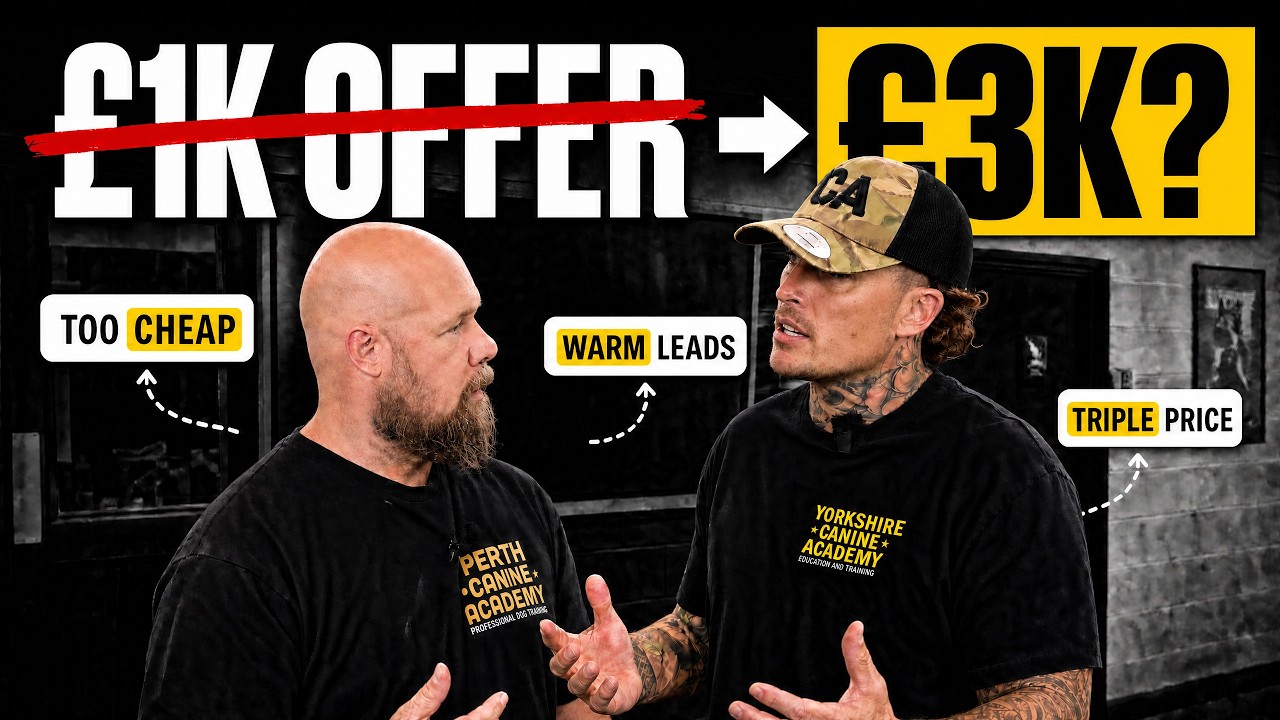
He Was Charging Too Little. I Fixed His Dog Training Business In One Session.