I Had 100K Followers And No Money. Here’s What Fixed My Dog Training Business
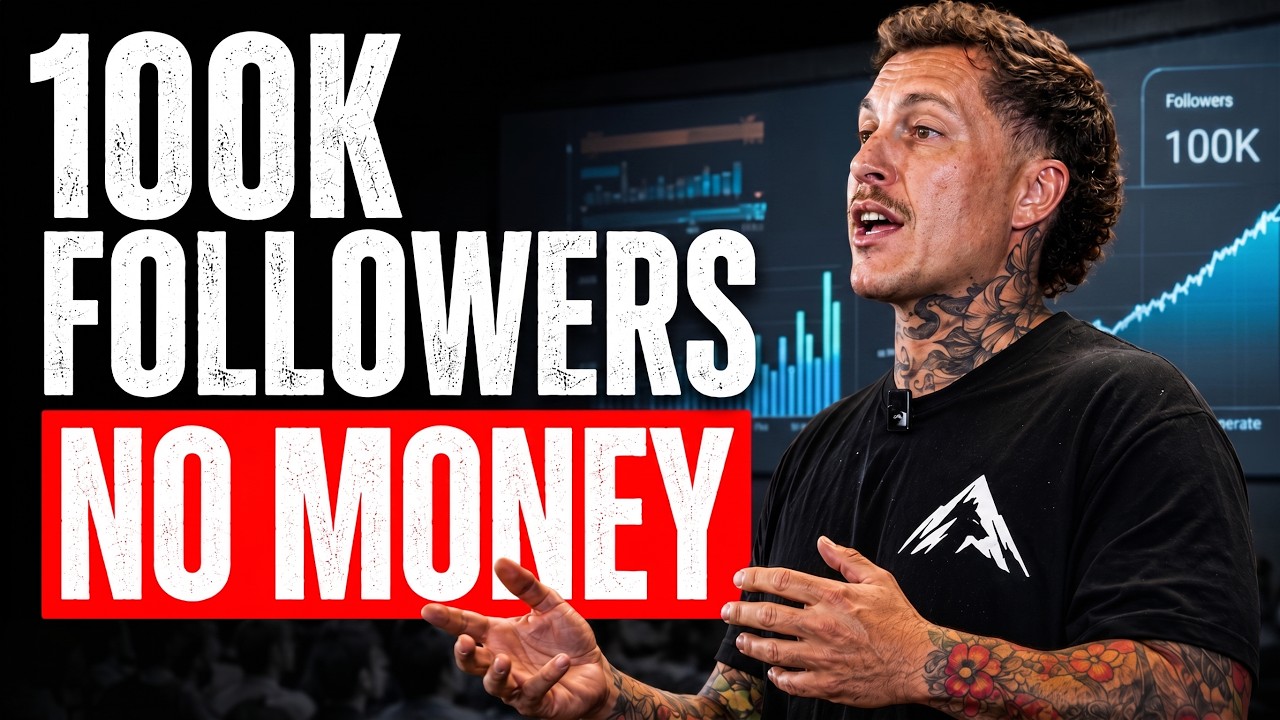
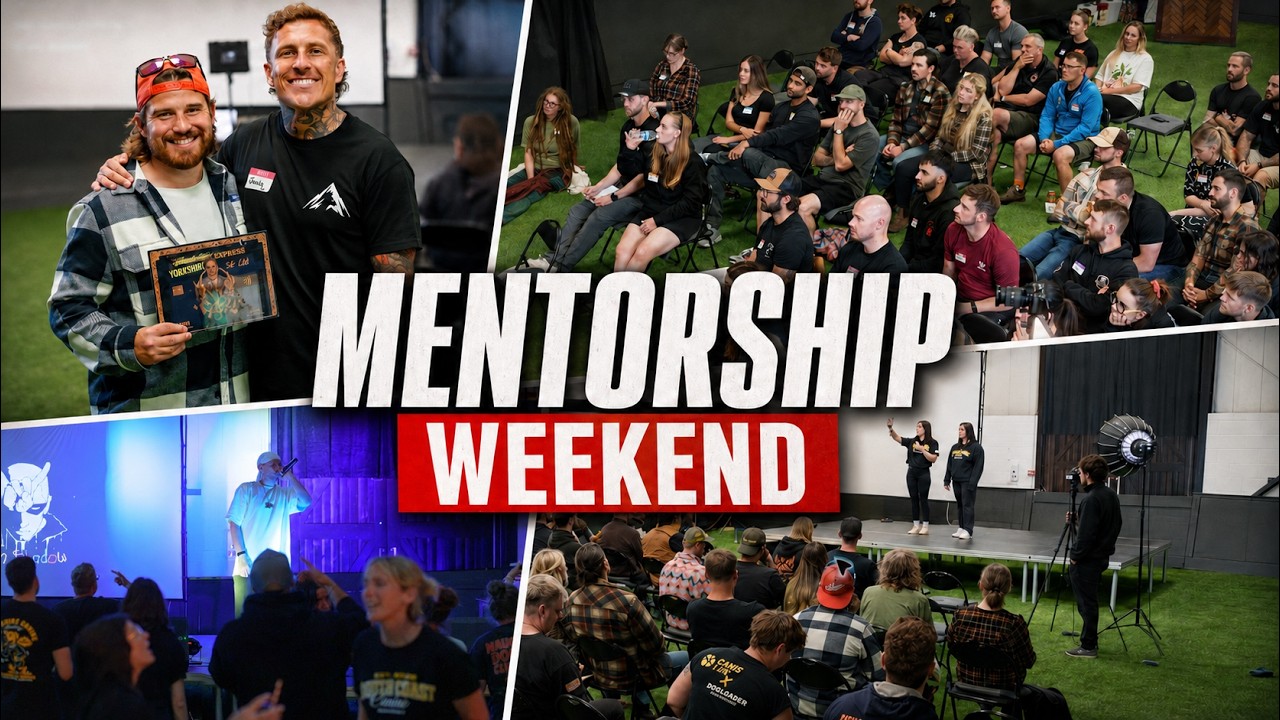
In this 60‑minute webinar Jacob Morgan, founder of Yorkshire Canine Academy (YCA), recounts his journey from living in a tent with 100,000 Instagram followers and no income to generating over £200,000 (≈ $400,000) in monthly revenue without a marketing agency. He attributes the transformation to a series of high‑leverage business changes, mentorship from a sales expert named Will, and a radical shift from treating his social presence as a popularity contest to building a profit‑driving backend system. Jacob outlines five common mistakes dog trainers make (posting daily, hiring generic agencies, poor training, neglecting self‑education, and focusing on vanity metrics) and presents a step‑by‑step framework: (1) design a high‑value, packaged offer that sells the destination, not the journey; (2) craft a persuasive pitch that includes authority, relatability, proof, doubt‑creation, and objection handling; (3) implement conversion mechanisms (PDF lead magnets, video sales letters, YouTube playlists, podcasts, webinars, live events) to move prospects from cold awareness to warm buyers; (4) prioritize long‑form content (especially YouTube) over short‑form to build deep relationships during a “trust recession”; (5) continuously test, iterate, and focus on high‑leverage actions that yield the biggest ROI. Jacob also promotes his 12‑month mentorship program, which provides SOPs, AI‑powered business agents, and access to an in‑house marketing team, promising mentees their first $10K‑$30K month within weeks. The webinar blends personal anecdotes, hard‑won lessons, and aggressive encouragement to take immediate action.
Chapters
Today's gonna be about how you can make more money, how making money is, is great, how to do it, how to reconfigure your business in order to become more profitable. My name's Jacob. If you don't know me, I'm the head trainer and founder of the Yorkshire Canine Academy. You might have seen me on social media, on Instagram or TikTok or YouTube, but I'm coming to you today as a, as a, as a dog dad, as a, as an entrepreneur, and, and just someone that has a real passion for dogs, but also Uh, making a shit ton of money as well. So yeah, let's get straight into it. So I'm gonna start this webinar with a little bit of a story, a story of, uh, a journey that YCA has undergone over the last 4 or 5 years. And I'm gonna relate parts of this story back to you, back to parts of your business and how you can learn from my mistakes and, and, and kind of fast-track your business and, and, and learn the methods that we've put in place over the last, I don't know, 2, 3 years in order to get to where we are now. So. Like I said, we're going to start with a story, and the story starts 2 years ago where I was shit out of luck, as I've said from this slide here, and I was living in a tent box at the time. At this time in my life, I'd have around 100,000 followers on Instagram. 100,000 followers and no money. I didn't have 2 pennies to rub together, and that might seem insane to some of you, but I'll explain how that come about and ultimately how we became unstuck as well. So yeah, this is where the story starts, and fast forward to today, we've been very fortunate and enough to, to have this wild journey that has led us to travel the world, to work with some of the best dog trainers in the world. Um, some of my dog training heroes. We have a, a very popular podcast, very popular YouTube channel. Like I said, we've got to work with truly some of the dog training greats. And if you, if you're into dog training and stuff, you might, you might recognize a couple of people from the, uh, next couple of slides. And ultimately, like, implementing this stuff that I'm about to show you has truly transformed my life, those around me, and ultimately our business as well. So, So yeah, you know, if you might have listened to our podcast, a very popular podcast, you might recognize some of these people. Like I said, it's led me to be able to do seminars across the world for dog trainers at some of the most prestigious schools on the planet, teaching dog trainers our training methods, but also teaching dog trainers how to grow a business, a sustainable business, and even in some instances, a lucrative business, right? So listen, at the end of the day though, this isn't a popularity contest, and today is me talking to you about how to make more money. And I'm gonna make some bold claims, as I said, and I'm gonna give some very harsh truths in some instances. And it's, I'm sure it's gonna piss a few people off, but, uh, frankly at this point I, I don't really give a shit. So last month our company actually revenue over £200,000, which is around $400,000 Australian dollars, $250,000 US Just to give some context, because I know some people, a lot of people watching this, they're from Australia, from America, so on and so forth. This is that without a marketing agency attached to us. And at the time, up until recently, only 3 dog trainers, right? So a business that has infinitely scaled over the last couple of years. And yeah, we've implemented some of these lessons with a couple more people as well, which we'll come on to. Recently, we've got all this done from a horse stable, a horse stable we converted into a studio to record. Social media content, and this was at one point, once upon a time, our biggest flex. We this is my encouragement to you to be resourceful, right? To be resourceful. So you had a small team at the time. We were operating out of a horse stable, and this is you know where we how we've been able to scale our business to this point. And listen, I know it sounds like what I'm trying to say here is that we're a pretty big deal, and it's really not. It's it's it's The reason I'm talking through these accolades and what we've done in the last couple of years is just I don't like to be educated from people that haven't walked the walk, right? We can all talk the talk. We can all say things. And you know, this next slide is explaining that there's a reason we don't listen to this guy and take dog training advice from this guy, right? You know, he's not walked the walk. He can't train a dog. So yeah, to be honest, the reason I wanted to make so much money, the reason I wanted to become affluent essentially is because I wanted a bigger Garden for my dog, right? My dogs, if you know me personally or you've ever met me, mean absolutely everything to me. They're my world, my reason for living, and especially Ranger, my first dog. And you know, I'm pleased to say we did it in 2015. This is where we live in 2025. This is the size of his garden now. I've got six other dogs at the moment too. And so these are my passion. These are my purpose. These are my my daily motivation to want to do better, strive for more, and ultimately earn as much poss. money as possible, right? And so whatever your mission is, whatever your reason for being here today is, remember it's super important that if you want to help those around you and you have a noble kind of, uh, you have no— you esteem to be noble and help those around you, then make sure you put your oxygen mask on first. Because if you don't look after yourself, you're not going to help anyone around you, right? And once upon a time, I had some real limiting beliefs when it comes to money, when it comes to making money. And everyone's ever probably told you that money doesn't buy you happiness. Money isn't the be-all and end-all. And you can achieve great things in life without making lots of money. And I had this limiting belief. And a lesson that I got from one of my mentors very early, and something I think about on a daily basis, I said to him, Will, and I'll introduce you to Will in a second, I don't care that much about making money, Will. I don't really care. I don't care to be rich. I don't care to want to like make a lot of money. And he turned around to me and he said this, and this is what stuck with me. He said, Jacob, like, what's your favorite thing on the planet? Like, what's most important to you? And I said, my dogs, of course, it's my dogs. It's Ranger, for example. And he turned around and he said, if Ranger needed life-changing, life-saving surgery tomorrow, when it was going to cost you 20 grand, and that was the difference between him living and dying, would he live or would he die? He would live. And just that question reframed my entire viewership around making money, right? And so, like, that's kind of what sticks with me. And a lot of people come to me and say, well, I don't care to be rich, and so on and so forth. Trust me, it can solve a lot of problems. And you know what, you get some cool stuff out of it. It was pretty cool flying out to Michael Ellis's school in business class and sitting there laying back on a fucking sofa bed thing, and they're bringing you champagne and bringing you orange juice every half an hour. Like, that was pretty cool. So There are cool things that can happen, but there are also important things we can do with money as well. And so over the next hour or so, I'm going to give you the lessons and share every single lesson and some mistakes that we've made in the last few years that has been able to get us to this point. And whilst we've scaled our business up to a, you know, something that is, I guess, lucrative, this has also worked for others as well, working towards their first $5K months towards their first $10K months. In some instances, uh, one of my mentees recently hit his first $30K month implementing the stuff that I'm gonna show you today. So if you're a dog trainer that is daunted by having to post religiously on social media every single day, perhaps you're a dog trainer that you know, you know, marketing is a thing. You know, you have to market to find more clients, but you have no idea where to start. Perhaps you're a dog trainer that is offering pay-as-you-go sessions. And you're getting to session two or three and then getting ghosted by your clients, and you're running on that treadmill. You you're not getting the life-changing reviews you know you can get. Perhaps you're very good with dogs. You're nailing it. You're getting good results, or you're able to get good results, but they're not coming through as final finished products at the end of things. I'm going to show you how to fix that problem as well. Or perhaps you're pretty new and you still got your spirit and you're not burnt out just yet. Or maybe worst case scenario. You might be, as I was a couple of years ago, completely spent out, figuratively and literally, living out of your van without a pot to piss in. And I've got good news for you. Oh, before we move on, sorry, you might be that type of dog trainer that is working in their business. You're super busy. You're super busy. You've got a bunch of clients, but you've got no time to market yourself. You've got that worry of where the next client is gonna come from. You don't know how to grow or scale your business 'cause you're running back and forth, doing home visits, traveling a lot, Overcompensating, overserving people—that is having an effect on you. It's having an effect on those around you, perhaps even your clients. And you're not giving the the people that are giving you money the best results possible. And let me be frank here: when you structure your business in a way that is more profitable, you will have more time. And when you have more time, you will offer a better service for each and every person and their dog that employs you. So this shit is important. Please get out of the mindset that money doesn't fucking matter. It does. And yes, this will all work even if you're a solo dog trainer, you're working for yourself. Maybe you work in a team with, with other people and colleagues or your partner. Maybe you have a team working underneath you. Maybe you do board and trains. Maybe you do one-to-one training. Maybe you do online training. The principles I'm going to show you today to implement and structure into your business works for all of the above. And you're about to receive an unfair advantage because I've had to learn some really fucking harsh lessons over the last couple of years, and hopefully I can deliver Some information today that will skip some of those lessons for those of you watching. No one else in the industry has the information I'm about to give you. Some claim to, but they don't. And if you, you know, to check that, you can go and check Companies House in the UK. So when some people are claiming they've got these big old businesses making a lot of money, but in the UK, sneaky sneaky, you can go and check how much a business is making by checking with Her Majesty the Queen. God rest her soul. And the sceptics watching this will probably think that all of this was by chance, and I'm going to prove you wrong today. And some of you may even think it's because of this big monumental following that we've got on social media is the result of being able to generate more money. But that's not the case whatsoever. I've actually had a recent mentee, he had less than 1,000 followers and he's turning over 10 grand a month. Consistently, 10, 15K months off 1,000 followers. That's not even that many. Do you know how easy it is to get 1,000 followers? The bar is so low. Look at the people with millions of followers on social media. They're fucking idiots. They're idiots. And if they can do it, I guarantee you can do it. Okay? And I know that might sound a little bit harsh, but unfortunately that is the case within our industry. The bar is very, very low. And so the concepts have worked for not just for scaling our business, To as you know as big as we want to make it. Truth be told, I want to get our business to the point that it is just ridiculous. It's off the charts, right? And I know that's not the case for absolutely everyone watching this, and that is fine too. So if you're looking for that first five K month, ten K month, you know these principles have worked for these guys too. So we've got Charlotte first month as a dog trainer. She turned over twelve thousand euros after doing my mentorship program. Ross, you might be familiar with him on social media. He times four his profits in like less than two months. We've got Ben here who times four his profits in like less than a week of working together. He just changed a couple of things within his business. Didn't take a lot of time. It's what we call low leverage moves, sorry, high leverage moves, little input, maximum output. But there are so many dog trainers at the moment working on what we call low leverage moves, things that aren't going to give good decent bang for buck in terms of the decisions you're making, in terms of your marketing, in terms of how you're structuring your programmes, for example, how you're onboarding clients and everything in between. Uh, we're all about high leverage movements, even with our business, with within our mentorship, and so on and so forth. Some of you might recognize this guy, the Mutt Nut. Uh, we scaled him from $2K to $12K months, uh, pretty rapidly, changing his offer, changing how he structured things, changing what he sells, and a little bit of dog training methodology mixed in there too. So it's up to you. You can watch this webinar today, you can make your notes, and then do nothing about it. Action is fucking everything, right? I see too many people with these grand plans, these business plans, these, these ideas, but because if they don't action things, they don't put the pressure on themselves to actually take action. And this is what I'm kicking my mentees up the ass every single day for. Take action. You have to do this. Here's the deadline. Get it done by, by then. They just become ideas in your head and they never come into fruition. So it's super important after today you go ahead, you take action, you learn how to make more money. The bad news is Only about 10% of you, from the numbers, from the data, will take action after today's webinar. Make sure you're in that 10%. Make sure you're within the 10% to go and grab this by the fucking nuts and go out there and action some of the shit I'm about to show you, because it's absolute gold. As I said, at 100,000 followers and I didn't have a fucking penny to my name until I met this chap here. His name was Will. So Will was a dog training client of mine, and Will's a bit of a business mogul, right? He's in the online selling space. He coaches sales trainers on how to sell things, and he's a very, very intelligent man. And he was my first business mentor, and he's the one who kind of reshaped how I thought about money, reshaped how I thought about business. He told me that I've created a popularity contest and not a business, and I believe that to be definitely true. There was lots of people across the internet that thought we were great. There was loads of followers back it up. But we, again, we couldn't figure out how to make money. We couldn't figure out how to convert that audience into making money. We did the hard bit. We, we, we got the following and we grafted for every single one of those followers. But if I knew what I'm about to tell you in this webinar, we could have had the same amount of money for a tiny, tiny, tiny, tiny fraction of the audience by just making sure the backend system was in place. And that's what we're all neglecting. And that's what we're going to talk about. And since I met Will, It has created this crazy domino effect of changing how I feel about, like I said, money, changing how I feel about running our business, changing how I feel about selling things, changing how I feel about delivering products too. And again, I'm going to relay all of that with you today. And Will was my epiphany moment. Will at the time was a great tutor to me. Our business now has actually surpassed Will's business, and we joke about it because I do always reference him within my webinars and my seminars and so on and so forth. And I've taken this, this slide deck all over the world now. And he'll even ring me nowadays and talk about launching a new product and, and ask for my advice. And, and that's the importance of network, right? That's the importance to be able to learn from other people. Will essentially gave me 10 years worth of education in a very small amount of time. And me trying to figure it out via trial and error and making way more mistakes than I already have done, we wouldn't have got anywhere near where we're at now. If it wasn't Will being able to kindly, graciously give me the education that he had to work his ass off for. And so there's no going back now, guys. There's absolutely no going back. I'm about to give you information you're not going to be able to unlearn. You're most certainly not going to unlearn it. It'll be there in the back of your brain, and you'll either act on it or you won't act on it. And when you're feeling lazy, when you feel like you can't be bothered, when you're sat in the rain and you've got that 8th client for the day, and it's the same session over and over again, you'll think, why didn't I just implement that stuff I heard from that idiot from Yorkshire on that webinar that time? So here's what we're going to cover. I'm going to show you today how to charge twice as much than you currently are and your clients be genuinely grateful that you have done. Imagine that. Imagine every single client you work with from now, they pay you twice as much. Imagine what that will do for your business. But not only will they pay you twice as much. They will be amazed that you charge that little just by restructuring your offer and how you're pitching your services and how you're selling things. So many of you are selling yourself short. You as dog trainers, good dog trainers, you're changing people's fucking lives. You are changing people's lives. You know, when I first had my dog Ranger and he was reactive, that had a massive impact on me because I couldn't walk him anywhere. I was riddled with guilt. I was, I was gutted that I've went and got this dog that I'd aspired and dreamed about doing all nice things with and taking him to the beach and walking him 3, 4 times a day, which I had the— which I had the time to do so. But because of his behaviour, I wasn't able to do any of that. And just changing his behaviour transformed the rest of my life. Not only did it transform the relationship with my dog, it transformed my life entirely. And you have to remember that you are genuinely changing people's lives if you're able to deliver those results. But we're going to come on to that very shortly in a little bit more detail. I'm also going to show you how to sell to twice as many people. So now imagine that you're going to— not only are you charging twice as much, but you now have twice as many people you have sold to. So if you've got 2 clients currently per week or maybe per month, they both charge— they've charged you twice as much. And we've also doubled the number of clients now. Okay. So I'm going to show you how to do that. And then I'm also going to show you how to get twice as many people. And this is an opportunity thing, twice as many people to find out about you. Because if twice as many people know you exist, you've got a bigger pool to sell to. And if twice as many of those people that you're selling to actually take you up on your offer and you charge twice as much, imagine what that does for your business. Because if you did charge twice as much, you sell twice as much, and twice as many people know that you exist, you can literally 8 times the size of your business with just a few small, high-leverage decisions and choices, all without hiring a big team, Like we have. Like I said, this is what I want to do. That doesn't mean you have to go and hire the big old team and do the big, you know, 6-figure months and so on and so forth. You're going to be able to do it without buying loads of fancy equipment. You're going to do it without working 7 days a week and getting stuck in the rat race, getting stuck within the business, not working on your business. All right? And I see so many dog trainers doing that. They're just working in the business. They've got a job. They've just created a job for themselves. They haven't got a business that they can scale to the point that they can actually ever get to a state of comfort. Right? And you don't have to post on social media every single day. You know, the month I just showed you there, uh, of that big old month of $200K, which is one of our record months, we posted 4 times on YouTube, 1 time on Instagram, right? That is a tiny amount. Whereas previous me, I was posting on Instagram every single day trying to come up with new ideas, new jokes, new concepts, and so on and so forth. It's not a popularity contest, guys. You're here to fucking make money. And we all get stuck on that, that dopamine cycle, and we care too much what people think about us, and we just want to be liked. But you don't want to do that because that's not looking after yourself, that's pleasing others. You want to start looking after yourself. Here's a word of warning: there are loads of people that are going to try and kind of— they'll identify that you've got these issues, they'll try and sweep you off your feet, they'll make you big promises. And there are plenty of people within, within our space and outside our space that claim they know what they're on about. And if I keep referencing to the wins we've had inside my mentorship group and within our business here itself. That's not me just boasting. It's not me just fucking showing off. It's just super important to me that I'm able to show you that we can walk the walk as well as talk the talk, because we're not— we most certainly need to get away from people being able to talk themselves into certain positions. Right. Okay. So promise I'm about to give you my secrets. But just like in dog training, when we're treating reactive dogs, there are some stupid shit people are doing that we need to stop doing, because continuing to do that shit is just going to make things worse. So we need to stop doing them first. So here's a couple of things. If you're a dog trainer, a canine professional, here's what you need to stop doing. You need to stop worrying about competition. Look at the competition. Look at the horizon. Look who's in front of you. Look who's absolutely killing it, right? I've got no media background. I've got no marketing background. I've got no sales background. Right? I was a dog trainer that just decided to start making videos one day and try and figure this shit out. Look, look at the other people. Look at the big names on YouTube. Look at the big names on Instagram that are making money for themselves, driving around in Ferraris and shit like that. Look at those people. If they can do it, you certainly can do it. Our industry, there's a very low bar. Yes, it is a saturated industry, but everyone mimics each other. Everyone follows the same model, just trying to post on social media Grow a big account and just be famous. That's not what this is about. Okay, so you have to stop comparing yourself to others. And second to that, you you have no idea if they're doing well or not. So in my case, on the outside, a couple of years ago, probably looked like we're doing fantastic. I'll be honest with you now, we weren't. You know, I'd fucking nowhere to live. Our market is saturated, yes, but it is not competitive. It is not competitive because of The average dog trainer, and I'm talking 99 out of 100, they don't have the very basic— and let me just reiterate here— basic understanding of marketing and sales and building products that they need to actually grow a business. Some are better on social media, like I said. There are many that are phenomenal with dogs, but without these core components, you're going to get stuck on that hamster wheel, constantly trying to rely from word of mouth from uncommitted clients and and handing out leaflets and shit like that. You've got the internet in front of you guys. The internet is, is a great thing, you know, and you might argue it's a not so great thing in some instances, but in terms of marketing and digital sales, it can truly transform your life. Further to that, competition is only a problem if you market yourself just like every other dog trainer on the planet. And what we do, because if we get stuck in a rut of comparing ourselves to others a lot, we end up copying others. We end up emulating others. You have no idea if they're doing well or not. And, and, you know, between you and I here, I've had dog trainers reach out to me with 50,000 followers, 200,000 followers, 400,000 followers, and they said, I've got this big audience, you know, and I don't feel like I'm doing as well as I should be. And I say, be honest with me, like, what are you turning over? What are you bringing in? Like, what fucking car are you driving? And they give me the details, and they've fallen into the same trap that I did all that time ago by creating a popularity contest. So don't worry about the competition. It's you versus you. It's not you versus them. Okay? Mistake number 2 is posting on social media every single day like a twat. And I appreciate the irony here. I was doing this for a long time, and I don't need to anymore because we figured out what I'm about to show you. If you've got no sales skills, no conversion mechanism— and I'm going to come on to explain exactly what that is and how it's going to be the best thing for your business, you've got a, what I call a no strategy strategy. You're just guessing it. Lots of trial and error. It's gonna take a lifetime for you to figure this out via trial and error. And like I keep reiterating, it's not a popularity contest. Your time is essentially running a charity at the moment. You, lots of output, but not much coming back your way, right? Not much input. I appreciate the irony. Posting every day on social media, getting into the rat race on social media without any of these backend systems is like the, is the equivalent of pumping air into a tire with many a puncture. What's that air going to do? It's just going to seep out the sides, right? And until we patch up that tire, there is literally no point putting any air into it. And this is one of the first things I get my mentees to do. I say, stop posting on social media. Let's fix all this stuff up first. And we can adjust our offer, adjust how we're selling, adjust the process before we sell, after we sell, follow-ups. I had a mentee once upon a time that was doing okay. He's doing a couple of grand a month or whatever, right? And we had a little look in his business. We broke things down again, maybe less than 1,000 followers on Instagram, but he was doing pretty well. We changed one little thing in his business, and that was his follow-up email after he did a consult. One little thing. It took us 5 minutes, right? That 5 minutes of input literally doubled his conversion rate. He went from converting around 30 to 40% of people he's speaking to The product didn't change, the offer didn't change, his services didn't change, his— how he was training dogs did not change. We actually put his prices up as well. We changed the follow-up email and we literally doubled. He was like converting like 80%, um, of consults he was doing. So this is what I mean by high leverage plays, right? And that's what we're going to continuously look for, these high leverage plays. Mistake number 3 is hiring a marketing agency There are more marketing agencies than there are dog trainers, than there are probably grains of sand, right? It's just an easy job for people to get into and people have big dreams. Do they have the skillset? Probably not. There's a couple of reasons why hiring a non-niche marketing agency maybe is gonna cause you problems. One, you're not in control. You basically hand control over your business and you're gonna get caught in this trap because you are stuck in the business, you're dealing with a lot of dogs, you think you need to market, and so you outsource that marketing. They don't know your mission. They don't understand our niche at all. They don't understand the messaging. They don't understand the clients and so on and so forth. You have no idea if they're doing a good job because if you don't, if you don't educate yourself on the concepts I'm about to show you and they come back to you with a willy-nilly report with a bunch of numbers and KPIs and CPAs and, and LTVs and all these things, it's going to go completely over your head very quickly. You're going to have no idea or not if they're doing a good job and whether you're spending your money correctly. They're gonna charge you a minimum of £2,000 a month as well. £2,000 a month, and you have no idea if it's good work, bad work. They're gonna give you a sheet at the end of the week with a bunch of percentages. I know people that run marketing agencies, and I've got some friends in, in some bigger circles that run marketing agencies, and it's not always the most honest work, but I'll just leave that there. And ultimately, guys, hiring outsourcing marketing is always going to fail expectations, all right? But remember, if we start figuring out how to start selling to less people, making more money perhaps, right? Or requiring to sell to less people and requiring to deliver less because if we're more profitable, maybe we can start working on this sort of stuff ourselves. Mistake number 4 is poor training. All right. So this one's, you know, I shouldn't even have to say this one. If you can't walk the walk, then you, you probably shouldn't be trying to talk the talk, right? So you can't skip this. You can't deliver anything less than life-changing results, in my experience, if you want a sustainable business that's going to push forward. And again, to reiterate here, you can't just talk the talk, you have to walk the walk as well. I've dropped mentees in the past for the pure reason that they come into the program, they've asked me, I want to grow my business, I want to make more money, blah blah blah. And I've said, that's fine, but I've seen how you train dogs. You need to come up here And you need to watch Kirky. You need to watch Alicia train a boot camp of 10 reactive dogs and turn around in 5 days and get 10 5-star reviews that said my experience here was nothing short of life-changing. I said it's not good enough taking 6 months to solve people's problems because they don't have 6 months, right? And you can't, you know, you can't be giving false promises. I said, you come up here, let's refine your skill. No, no, no, I want to learn this marketing stuff. And I said, hey, I can't help you unless you're going to come up here and start refining your skill set and be able to solve people's problems, right? And so I hold my mentees accountable for that sort of shit too. Mistake number 5 is not investing in yourself, not investing in your education, not investing in trying to learn this stuff and step outside of just your dog trainer hat, right? And people online all the time call me a marketer and they call me a salesman and bloody blah blah blah. Frankly, I don't give a shit. I don't give a shit because I've, like I said very early, in this webinar. You have to put your own oxygen mask on first before you help those around you. And for me, education is the best income supplier. I'm going to prove that point in just a second. So you can invest in the S&P 500, you could maybe buy a house and it's going to give you an 8% return maybe year after year. But I've invested in some education where I've maybe given someone 10 grand on a marketing course, for example, and I said, you need to show me how to build webinars and blah, blah, blah. And they've gone, great, fine. I've taken that lesson, I've implemented it into our business and it's paid me back that very same month. And every month after that, okay? Whereas like crypto doesn't even give you that. In 2024, just for reference, this is kind of how I feel about this, you know, resource, um, how we're prioritising resource, should I say. We spent £5,400 on rent for the year. £5,400 on just rent. But we spent £66,000 on education in marketing and sales. And that is what paid me back tenfold. I had no interest in putting that down on a deposit in a house that's going to take me 25 years to pay me back. I have no interest in investing in crypto or stock exchange and all that shit. But I got a university degree that probably cost me 30K all in, 40K all in, on fucking law and criminology. What's that paid me? Nothing. So as our favorite robot would say, e.g., ChatGPT, let's dive in. All right, so everyone thinks this is kind of where their business model starts. We start our content, then we convert people, then we sell, and then we present the offer. But that's not the case at all. Like I keep referring to, if you, if you haven't got a backend selling system in place, there is absolutely no point running content unless you just want to run a popularity contest and win a popularity contest, right? So where you actually start is at your offer. And when When mentees come to me, the first thing I look at is actually what they're selling. So that's what we're going to talk about here: how to best structure our offer. So the offer is how we make twice as much money per client. So I always recommend people package their training sessions, and I truly believe that packaging your training sessions as opposed to running rolling one-to-ones is the most ethical thing you can do, not only for you and those around you, but your clients and their dogs as well. One, because the likelihood of dream outcomes. And achieving the end perfect result with that client and with that dog is exponentially increased because you get more rolls of the dice and you get commitment from the client, right? It takes the owner beyond the comfort zone. So how many people have had this happen to them? You sign a client up, you do a session, you work on a couple of things, you say, hey, I could come back next week or the week after. And you shouldn't leave it open-ended like that, by the way. Anyway, they call you back and say, yeah, we need a little bit more help. I'm working on this and that and so on and so forth. And then you do a second session. And then after that second session, You never hear from them again. And that's because you'd likely have taken them to the point of comfort where their dog maybe pulls a little bit less on the leash. Maybe their dog comes back when he's called 60% of the time. Maybe the dog is just more manageable. Does that dog have a phenomenal life now thanks to your training methods? No. Is the owner super happy with the, the, the end result? Eh, they're happy. They're not over the fucking moon. They haven't left you a review that says, These— this person has changed my life, right? And that's because you've taken them to the point of comfort, and humans thrive in the point of comfort. And you might be in that point now with your business when you're in that state of comfort, like everything's cushy, everything's all right, I'm getting by, it's okay. But like I said, if you had that big vet bill come through tomorrow, you're going to be able to deal with it or not? All right, so this is me encouraging you to push not only you but your clients beyond the state of comfort. It's also going to stop the likelihood of regression too. So if we get to session 2 And we've, you know, we've, we've made an okay effort with the dog and we've seen some improvements. But then, you know, because we've not truly crossed the T's, dotted the I's, and taken that dog to the full extent of his capability and his potential, the likelihood of regression and that dog coming back in, and not only the dog but the owner, you know, forgetting what you've taught, taught them. And because things haven't been solidified, because you didn't package and you didn't get that 3rd, 4th, Extra session in, and ultimately when we when we package and we take that client and their dog to dream outcome, and we get that reactive dog that was pulling on the leash, that was barking at other dogs, and that owner couldn't take them anywhere to being able to take them out and walk them three times a day instead of one time a day because of you know now they can be bothered to walk their dog because it's now it is now a perfect walk with the dog or they're taking the dog to the beach. You know I love it when clients. Send me a video of their dog off lead at the beach for the first time. It's probably one of the best things as part of our job. And I love it when I see the 5-star reviews coming through on Google every single day. Alicia changed my life. Kirkie changed my life. Tony, she's changed my life entirely, right? That gives me a crazy fucking dopamine rush. But we always look for that keyword life-changing, and that's what we need to aim for. And probably there ain't a— there isn't a dog trainer on this planet that's going to do that in 1 or 2 sessions, and that's what we should Shouldn't aim for anything less than. All right, so you get those banging testimonials that you can feed back into your marketing, that you can show other people, and you can say, "Hey, look what I can do." We we don't just see subtle improvements here; we completely transform the lives of dogs and owners because that's what people are after. They want their problems solved. They want that pain removed. All right, they want to be out of that state of pain, but we want to take them past comfort. We want to take them to that dream outcome. We don't sell the flight. Sell the destination. People will not pay you $200 an hour for dog training. They might— they're not going to pay you £300 an hour for dog training. They're not going to pay you £500 an hour for dog training. Personally, my hourly rate is £1,000 per hour. All right. And truth be told, that's the case. All right. But that's because we sell the result. We sell the result. People would give their right arm for the perfect dog. And I ask this question to clients all the time, and I say to them, If you knew before signing up to training you were definitely going to get the result that you've experienced, be honest with me, what would you have paid? The type of answers I've had in the past: £40,000. I would have robbed a bank. I would have given my left arm. I would have sold my house if they knew that they were able to live that amazing life with their dog. But because of you're selling the flight as opposed to the destination, when you book a flight to the Bahamas, you don't think about being Cooped up in a plane for fucking 10 hours or whatever. You think about being on the beach with the white sand and the clear water. All right. But that's what you're all doing when we're pitching our offers, when we're pitching. This is why I'm going to help you. We're saying I will train you how to train your dog for an hour. No, that's not what you're selling. Here's what you should be selling. I'm going to give you that perfect life with your dog. All right. And of course, we want to stay ethical there. A great offer. The formulation of a great offer has a high likelihood. And you're going to write this down. If you've got pen and paper in front of you, You want to write this down: a high likelihood of a perfect outcome. So when we pitch our services, the person on the receiving end of that pitch needs to think there's a very high likelihood I'm going to get to the point where I need to be or want to be with my dog. It needs to be low risk, low time from them. Again, this is why we're not selling the flight; we're selling the destination, and low effort from them as well. All right, please stay ethical. Don't promise anything you can't deliver on. Proof and promise is everything when it comes to an offer. Like I've said, I've had mentees in the past that have doubled, tripled. One instance, he 5 times— 5 times? No, 10 times the size of his business just by changing how he restructured his offer. All right. Because he was giving proof. He showed that potential client all the proof of what he's done so far, which not enough of you are doing. I work with some dog trainers that they have 50 Google reviews, like great Google reviews, but they're not showing anyone those reviews in their marketing, not showing up, showing people these in their follow-up sequence or during their presentations if they're doing that, or during their consult calls and so on and so forth. People want to be sure that you have solved a problem that is similar to theirs in the past. That's what they're looking for. They're looking for security. Like I said, proof. Have you solved other people's problems similar to mine? You show testimonials before during and after your consult calls, and you shove it down people's throats if you need to, because you've earned it. If you've gone and solved the problems and you have evidence that you have done so, make sure you show people, right? So, you know, we've got 550 Google reviews, and every single client that comes on board with us, we show them every review that is relevant to them, every situation that's like their dog. I'm not saying you need a bunch. I've got mentees that got 5, 6, 10 Google reviews, still use them. Show them to people because that's what they're caring about. Can you solve my problem? Gemma, we made a big pro— we changed a couple of things within Gemma's business and we just restructured what she was offering. We charged a little bit more and we give a money-back guarantee. I'm going to explain the money-back guarantee in a second. But yeah, we took Gemma from $5K months to $25K months in like less than a month just by changing how she was pitching things on her website and introducing A money-back guarantee. A money-back guarantee is obviously as it sounds. If I can't help you get to where you want to be and get you to that destination, you get your money back. And for every single service we have here at the Yorkshire Canine Academy, from our mentorship program to our boot camp program to our training with instinct program to our low-ticket focus and fall program, everything comes with a money-back guarantee. That's because the people are after security. Now we do make it conditional, meaning that. We have to outline the exact steps that people need to follow. And here's the thing, for those that would ever ask you for a refund because you didn't get them to where they want to be, that's down to one of two things. One, you made a promise you couldn't keep. Don't fucking do that. We've already spoken about that. But two, chances are they didn't follow the steps that you've outlined, and therefore they wouldn't qualify for the money-back guarantee. Just make sure you've outlined that in the first instance though, right? Those that do follow the steps and do tick each box that you have outlined, and that might be make sure you do your check-ins with me every Friday, make sure you show up to one group call. I think for our Training with Instinct, it's something like you come to one group call, you check in with the trainer on WhatsApp once a week, and you make sure you watch all the videos we send you. If you hit those 3 things and you get to 60 days and you still don't see improvement, then perhaps we shouldn't have taken your money off in the first place, off you in the first place, and you can have it straight back. And we do give it back to them. Currently, we have a 4.7% refund rate across all of our services, meaning that there's a 95.3% likelihood of success with each and every one of our services. And that sounds pretty good, right? And being transparent in that, you know, in some instances, should they have got their money back? Have they put the effort in? No, but I'm not going to fight it because if you reserve for a 5% refund rate but your conversion rate goes up by 30-40%, you've sell to 30, 40% more people, then that mitigates that 5% you might have to give up on refunds. And so to summarize, just to be clear, if you set the outline of what they need to do, whether that's a check-in, whether that's coming early to their sessions, whether that's attending their follow-ups after the board and train, maybe we do like a pre-training guide as well that they have to, you know, show us and demonstrate a terminal marker to us. You tick all those 5 boxes, you're not going to need a refund because the shit we give you works. And if you come to me and ask for a refund and you haven't ticked those 5 boxes, well, no wonder it didn't work. You've got a couple of options here. You go and do as I've told you to, you know, and put things in place, and I'll help you do that. Or you can go fuck off, right? Because of it. Like I said, it's not a charity. But in some instances, maybe it just doesn't work out. No problem. You can have your money back. I don't want to upset anyone. Alrighty, let's move on. So we've talked about the offer. We talked about how we're going to start kind of restructuring our offer. Let's talk about how we actually pitch our offer. How we sell our offer. And some of you might be thinking, here, you don't want to be sleazy. We have a natural aversion to sales, okay? Sales is nothing but negotiation. Nothing in life comes free, all right? So be comfortable with being able to sell, and you're not being sleazy at all when you do learn how to sell. And here's why learning how to sell and to market yourself is one of the most ethical things you can do. You get more freedom. You get more time with your wife, your children, your parents, and most importantly, your dog. Because if you make more money, you have to work— you can work less. And when you work less, you have more free time. All right? You offer a better service. If you, if you feel now you're doing 3, 4, 5 sessions a day, you're traveling in between, let's not be under the illusion that the 4th or 5th client is gonna have the same version of you, the same quality training session as the 1st, 2nd, or 3rd. But if I figure out a way to structure my offer and my business correctly, I might only have to see 2 clients a day. The rest of the time I can start working in the business instead of running around like a headless chicken on that hamster wheel, right? You then get 2 perfect results instead of 1 good result, 1 okay result, 3 shitty results, right? And it's not sustainable. The average dog training career is about 18 months long because they all burn out. Because a good dog trainer gets busy really quick. But if they ignore all of the shit I'm going to show you today, they just run themselves into the ground. Okay, so you get good at selling. And then third and finally, mission fulfillment. Remember why you started. It might be to help more dogs, great, but you're not going to do that sat behind this desk because you burnt out and you had to go back to your fucking old corporate job. I couldn't think anything worse than having to pick my studies back up and having to do a normal job. How many, how many dogs can I help then? The number's zero. All right, so always remember why you started and use what I give you this hour To better serve your mission, whatever that is. For me, it was just to give my dogs a great fucking life. Sell the destination, not the journey. So we've spoken about that. So when you get to your consult and you get in front of people, here's a mistake a lot of you're gonna be making. You treat it like a training session, and that's only gonna do one of two things, both of which are gonna let down the dog in front of you. The first thing is you're gonna overwhelm your client. You get there for an hour, an hour and a half. Recent mentee of mine, she's doing a 2-hour consult. Conversion rate really low. I said you need to drop it to 45 minutes and treat it more like a sale. She did that. Conversion rate jumped up through the fucking ceiling. All right, and that's because of previous to that she was overwhelming people. She was trying to demonstrate how much she knew about dogs. Reality is the owner, the layperson, the person with a problem, the person in pain—they don't care about the intricacies of training dogs, of operant conditioning, classical conditioning tools. Counterconditioning. They don't care about any of that. Of course, they're gonna have to pick up a skillset eventually, right? But they don't care about any of that. And all you're actually doing by overwhelming the person is making the goal seem so unachievable that they're gonna choose to go and work with someone else that promises they're gonna fix their dog in an hour. They're gonna promise they're gonna fix their dog in an hour, and they're gonna just slap a tool on the dog or throw a, a, a rattle can at the dog and shut the dog down and take some money off 'em there and then. And the dog's just gonna regress into within like 3 days. That's you letting the dog down because you overwhelm the client. You said we gotta do this and we gotta do this and we gotta do this and we gotta do this and we're gonna do the marker and the leash and we gotta teach leash pressure and then we're gonna learn how to play and then we're gonna learn how to out. And you just— yes, like I keep referring to, you're selling the journey, not the destination. And you're overwhelming people and you're going to leave and they're going to think, holy shit, that seems so unachievable, I don't think I can do that. And some shitty dog trainer with some smart marketing is going to go and take their business, and they're going to do a shitty job with their dog. All right, and you're going to miss out. A good dog trainer like you is going to miss out on that client and helping that person and that dog. The second thing you're going to do by holding consults that you— or treating consults like training sessions— is you're going to confuse people. You're going to confuse people. You're going to give them information that is potentially great. Right? But a layperson isn't gonna take on two hours of dog training knowledge in within that window. They're just not. And what they're gonna then probably do is go like, hmm, sounds like I could probably do this on my own. But they're just confused, right? And then they feel like they might not need you, and then they're gonna fuck it up. And then what happens? They go, ah yeah, I tried this guy. Ah yeah, I tried this girl. It wasn't very good. I tried what they told me to do, and And inevitably it didn't work cuz you overwhelmed, you confused them, and it's gonna lead to one of two things. They feel like it's impossible to achieve, or they're gonna attempt to do it on their own, neither of which results in them working with a great dog trainer like yourself. And they're gonna move on and work with someone else cuz they still need help. Chances are they're gonna move on to a dog trainer that isn't as good as you. So let me be very frank here on your consults when you're pitching, cuz that's what it is when you're delivering your assessments. When you're delivering your free calls, shut the fuck up. They don't care. They don't care about all the dog trainer jargon that you and I might care about, but they don't care. All right? They want to— they want a very step-by-step, here's what we need to do. I can help you. Here's a bunch of other people I've helped in the past. Let's get the ball rolling. Sorry about that one. Not really. So here's a structure of what you're going to follow. You know, within my mentorship program, we have an SOP that is built down with a full templated script. You know, but we don't have time to go through that today. But general structure is you're going to make friends, you're going to build rapport, you talk about the weather, find something you have in common. Oh, what school did you go to? Oh yeah, I'm from there. Oh yeah, my sister's auntie's dog's vet's boyfriend lives around the corner there, whatever. Then become a doctor. You want to diagnose, you want to ask questions, you want to ask questions, you want to figure out how they're feeling, where the pain point is. Is it just about the dog, or is it their shoulder that's hurting every single day and now they've got to go physio every week because the dog's Pulling the fucking arm out of the socket. They're arguing with their spouse, right? And we want to figure out the pain, right, that they're in and it's causing them. So when we pitch our services, it's not just selling dog training. It's going to potentially change their life because they're going to— their shoulder's not going to hurt anymore. They're going to get more exercise in. They're going to get home from a stressful day in work and they're going to look forward to de-stressing with their dog, not compounding the stress because their dog is fucking kicking off. At every dog down the street. They're gonna argue less with their partner about whose turn it is to walk the dog. And we extrapolate that information. So when we say, for sure I can help you, you know, and I've got a money-back guarantee too. So, you know, if I can't help you, we don't get there, you can have a refund. I've refunded people in the past. Very rarely happens, right? So we discover the real pain. We shut the fuck up when we listen. Don't talk at them. They don't wanna be talked at. They wanna be seen, valued, and heard. That's what they care about at this point. You wanna, of course, demonstrate understanding. So I'm gonna be like, okay, so it looks like You're getting your arm pulled out the socket. You hate walking your dog. It's making worse even more stressful. Work even more stressful, not less stressful, should I say? And you're arguing with your partner. You might even be losing losing sleep because your dog's barking in the crate all night. All right. And at that point, you pitch your damn heart out. So they go, you know what? This person's listened. They know exactly how I'm feeling right now. And then we pitch. So when you got your program, you might have a lot of different inclusives. I don't know. Loose lead walking. You might have a an online portal that goes with it. You might have some checklists, some guides and. you know, all the bells and whistles. They're only going to really care about a small percentage of what you have to offer. And so if the client is like, I just need my dog off leash, I'm not going to go and then pitch my loose lead walking program or whatever, or my full program. I'm going to be like, here's my program, massive emphasis on recall, I can definitely help you. All right, they're only going to care about a small percentage of what you actually have to offer. Take Adam, for example, Freedom Canine in Australia. We took him from This is crazy but true, right? He works on his own. He now has had to— his girlfriend's had to quit her job to help him in the business. So they get to work together and that's great. We took him from his best ever month, which is $3,000 a month, to $30,000 a month in less than 2 months just by changing how he sells. We had a little change of what he did before the call. We had a pretty big change of what he did during the call, you know, And just how he was speaking and how he's pitching based on the principles I've just shown you. And then the follow-up after the call too. It really, really got to that point, to be honest. People were like, take my money now, let's go. We increased his conversion, we increased his price, and obviously increased his profits too. So he was selling to more people, converting more, more people were saying yes. And then so many people were saying yes, we had to pretty much double his prices. And then as many people said yes again. All right, so he's going to have a lot less worries in his life this year and the next just because he made some smart choices. And listen guys, don't be a twat. I see too many dog trainers saying they get and they do their consult, they might make a really good pitch, and they get to the end of the consult and go like, yeah, let me know if you want to sign up, and they, and they walk away, right? Don't leave that option to the client. That's for you to follow up on. This is business. This is your livelihood. Treat it fucking seriously. All right. So you follow up, you send your proposal after or whatever, how that needs to look, your offer. I don't know how you do that. We have a system within our mentorship. We have a, we have a 24-hour follow-up you could introduce, 48-hour follow-up. And this isn't pushy. This isn't like, hey, sign up. Hey, sign up. It's just checking in because we know how people can get. They'll go, yeah, sounds great. They don't take action. And this is why I keep encouraging you guys, you need to take action, push your clients to take action. They don't take action. And then what happens to dog behavior when it goes left untreated? It gets worse. Right? We all know a behavior that is rehearsed is reinforced. And so they could get a week down the line, four weeks down the line, or even six months down the line and go, "Shit, I really, I really should have taken up that dog trainer and what he had to offer me, or what she had to offer me." And then ping email comes from you. Hey Lisa, how's it going? Just thinking about you and Kevin today. Offer's still there if you want to take me up on training. They go, "Shit, damn right I do." But if you don't have that follow-up sequence in place, they're going to go like, "Oh, I feel a bit of a dick now." going back, reaching out to them after I ghosted them, right? That can have a massive change. I've, I've seen people introduce a good follow-up sequence into their business and improve conversion rate by like 20-25%. With AI, with automations, you can get a robot do this for you, right? You don't— is again, high leverage move. And as mentioned, because content is the last of our worries, there's one thing we need to put in before we start thinking about how to spit out a hell of a lot of content. So we've, we've covered the offer, we've covered what we're selling, we've now covered the sale and how we're selling it. We now need what we call a conversion mechanism to take someone from awareness. So to take someone from a state of acknowledgement that we exist to then really wanting to communicate with us and hear our pitch out, like eagerly hear our pitch out too. So we call that a conversion mechanism. At the moment, we are in a trust recession, especially with so many people figuring out how to sell things online and so many people getting sold to on text, on email, on social media. They're getting ads, our phones listening to us, we're getting fed ads left, right, and centre. People are really highly skeptical at the moment, and we're in what we call a trust recession. There's no one gonna trust anyone anymore. And so we need to introduce things within our marketing in order to build that bridge bridge and take someone from distrusting to trusting of us and our services and how we can help them. And a conversion mechanism is having a one-to-many conversation. So what, what might a conversion mechanism be? And I've seen you guys put out conversion mechanisms, and you know, chances are if, if you're here and you're watching this sort of stuff, you might have, um, tried to introduce one of these into your business. But not all conversion mechanisms are made equal. So what I'm going to show you now is a couple of different conversion mechanisms, things that we're able to put out to our audience to get them to go, huh, this person knows what they're on about. This person really does seem like they can help me out. All right. And they have a bunch of different formats. The order I'm going to show you is from like, okay, to fucking brilliant. Okay, so let me talk you through it. We got PDFs. We can use a PDF as a lead magnet. We can put a PDF out there and we can structure it in a way that hopefully by the end of someone reading that PDF, they go, huh, it sounds like I should take the next steps. Now it's a piece of paper. If you have a, if you have a lead magnet, this could be even a flyer, right? If you have a lead magnet that's not well structured and it doesn't have personality in there, chances are most people aren't even going to open it, right? So we have a— once upon a time we had a free PDF lead magnet and we'd send it out via email to collect data and so on and so forth. Most people didn't even open it. All right, so again, they're not all made equal. Of course, the ones at the top of this list though, they're easier to implement. All right, so you know, I won't, I won't lie to anyone there. Then we have what we call a VSL. A video VSL stands for a video sales letter. This is basically like a one-to-many pitch. This is a video anywhere from 8 to 15 minutes long, and when structured correctly and following a very thought-out structure and introducing the right things in terms of proof and pain points and so on and so forth, a VSL can be a pretty good conversion mechanism. What we're looking for here is to put things in front of people to get them from awareness to wanting to book a call and hear us out and hear our services out, right? Okay, so we've got video sales letter, we've got YouTube playlist. We could introduce one of them, more effort, but it's a collection of videos now instead. And we're looking to essentially The more time someone has in front of you and the more they feel like they know you, the more likely they're going to want to buy your shit. Okay? We have a podcast up next. So being able to listen to your podcast and be able to feel like they're within a conversation with you, that's a pretty good conversion mechanism. Again, requires a little bit of setup though. Then we got webinars. We got webinars just like this one. Okay? So webinar, live webinars, being able to convert with speak to people, talk through pain points, talk through problems, being able to be relatable and so on and so forth. Then we got live webinars that happen there, and now in the moment they do really well. And then we got live events. There's no better conversion mechanism than live events. So when we run live events, whether it's a reactivity seminar, whether it's one of my business seminars, whether it is, you know, a development week or anything like that, that's a conversion mechanism. That is to create relationships with these people so they go on to buy more stuff from us. All right, of course, at the top here PDFs, they're going to have low conversion but easy to implement. Live events, for example, very high conversion but very difficult to implement. You need one of these in your business. Sometimes I get my mentees to start on PDFs and then work their way up as they develop as marketers. All right. Sometimes if they're, you know, a little bit more switched on and they're ready and they want to take the bull by the horns, we'll get them on a VSL. A couple of them are going to get them on webinars. I bring them onto the podcast and so on and so forth. But we need to be able to get in front of people. Like I said, we're in a trust recession. People want to feel like they know you, they like you, and they trust you. All right. And that isn't really going to be done by a bunch of short-form content and reels and carousels. And, and if it is done, it's going to take a long time to get them to the point where they're warm enough. Referring to my thermometer here, The warmer someone is, the more likely they're going to buy. The colder someone is, the less likely we're going— they're going to buy. So if they're really cold, they're probably not even going to take you up on a consult call. If they're really warm, they're going to be very eager to get on the phone with you. If they're really warm, they're going to be more likely to buy. If they're really cold, they're going to be less likely to buy. Okay, and we use these conversion mechanisms to take people up that metaphorical thermometer so it increases the likelihood of One, us getting to communicate with them in the first place, and two, when we do communicate with them, to be able to buy our stuff. Okay? Oh, and by the way, I've had a mentee recently. He sold £15,000 worth of business on a webinar that only had 12 people in there. 12 people in a webinar, £15,000 worth of business. All right? So don't think we need like big crazy, you know, I've done seminars in the past where I did $50,000, $60,000 worth of business. From 30 people in a room. Okay, so this is why conversion mechanisms are very important. They are high-leverage moves instead of running around on that hamster wheel churning out shitty content that isn't resonating with people. Okay, let's move on. So conversion mechanism, here's what you need to do. You need to tick these 5 boxes at least. I have an SOP and a step-by-step template for any of my mentees if you're watching this, in terms of how you need to structure your VSL and your webinar. So we've got authority, we have got relatability, we have got proof, create doubt, tackle objections. Authority— why should anyone listen to you? All right, so, you know, at the beginning of this webinar I showed you everything we've done. Why should you listen to me? Because I've figured out how to make a fuck ton of money. The second thing, relatability— I have once walked your path, I know how you feel right now. And you— this is why you'll see in a lot of my marketing for our dog trainers services, I talk about the problems I went through with my dog. I talk about how I accidentally made him reactive, which is all true, by the way. All right? But I really, I double down on that point. And the amount of times people email me or they get on a call with me or I meet them in person and go, your story about Ranger, exactly the same. I know I've been exactly there. I know exactly how you feel. And that level of relatability allows us to build the trust. Bridge. Now that's super important, right? Proof as well. Want to tickle in proof to our— we want to tickle in proof to our conversion mechanism. So, you know, whether it's a webinar, VSL, or even a PDF, we include proof that we have solved other people's problems that the person we're pitching to has right now. Okay, we create doubt too. So we're going to start telling people maybe what the information they shouldn't listen to. This is called controlling the narrative. So within my dog training stuff, I'm You know, I might reach out and say, some people are gonna tell you that high-value treats are the only answer to training your dog, but here's why that's gonna cause you more problems. And I, I talk about why high-value treats are gonna actually fuck things up between them and, them and their dog if they, you know, if they implement that strategy for long enough. All right? So I create doubt in, in competitors. Don't slander people and slag people off. But I also wanna say like, hey, there's bad advice out there, right? Here's some good advice. And, and, and, and it, by, Creating disparity really emphasizes my points. And then we want to tackle objections. So think about any, any reason why someone might not want to sign up to training with you. Want to pre-handle that objection. Maybe they think that it's not going to work with their dog. Maybe think they don't have time. Maybe they think that, I don't know, it could be a plethora of reasons, right? It could be a million and one reasons. Want to tackle those within our lead magnet. So, you know, common one we get all the time is Yeah, I live in a country where e-collars are banned. Can you still help me? Because we use e-collars a lot. And within one of my webinars, I say, yeah, of course, it's going to take you a little bit longer and you're going to have to be really good with your reinforcement game. But we can certainly help you and show you how to get there. Now, chances are, if they weren't given that information prior to being offered to book a consult with our team, they would have never booked a consult with the team and we'd have lost business. So we're just tackling very basic objections within our conversion mechanism. Okay. And finally, Last but not least, but still last, is content. Only once you have those 3 things implemented carefully, concisely structured with a plan, should you think about trying to create content. The content is the accelerator to this system. All right. I've got mentees that only need to find 3 clients a week on a lowish one-to-one offer. $1,000, $1,000. 3 clients a week, $1,000. That's pretty easy. You know, that's $3,000 a week, $6,000 every 2 weeks, $12,000 a month. But if you have poor offers, you're going to need to find a lot more people to sell to. And if you have a poor sales system, you got to find more people to get on the phone with. If you don't have a conversion mechanism, you're going to have to find a massive audience and hope, just hope some people trickle through, get on the phone call with you and like you enough to just take any offer. And so it is much better to have a small audience and a good backend selling system And I've seen the proof of this time and time again, not only in my own business but others too, than loads of followers and no backend selling system. Okay, so let's talk about content real quick. I'm going to just make some points on short-form versus long-form content here. What we need to be conscious of when it comes to short-form content, we need daily ideas. Our short-form platforms, they like us posting every single day. They like us having to have momentum, right? And once we go for a certain period of time without posting, the algorithm isn't going to do us any favors typically. They also have a short life too. So remember, our content is all just like our conversion mechanism in a way, is there to create relationships with people and serve all similar purposes that our conversion mechanism does. But our short-form content, it has a short life. You know, an Instagram reel, it lives a life of maybe 2 days, 3 days, maybe maximum like a week, and then it just dies and disappears into the algorithm and you never see it again. If it doesn't have the depth required to be able to cultivate the appropriate relationships that we need to with our potential clients, as opposed to long-form content, Content. I keep referring to the the trust recession. So to combat the trust recession, we need depth here. We need a depth in relationship with our potential clients. Hard to ideate too, right? So you know if you post in every single day, that's seven different ideas every single day, which is difficult. It's going to take its toll on you, and that's how you're going to get stuck like I did in the rat race trying to post every single day. And like I said, it takes a long while to cultivate relationship. Now I always fuck the maths up on this example, so stay with me. But if I post a reel every single day. Uh, 30 seconds. That means every 2 days it's a minute, and that means every 30 days is 15 minutes. So that means I only have 15 minutes of time in front of someone every month. That's not very long, but I could post one YouTube video for 30 minutes long and I could incubate them in that 30 minutes very, very, very quickly. All right? And this is why we're putting more of an emphasis on long-form content at the moment. This is one weekly idea, one weekly idea we gotta come up with instead of 7 little ideas or half-assed ideas, because of those 7, probably 2 are only good ideas. Now I need to think of one, and I can pick from my 2 best ideas. It's evergreen too. So some of our YouTube videos that brings the most amount of money into our business through our lead magnet, into our mailing list, into book calls, which is a talk for another day, are like 6, 7, 8, 9 months old, a year old, because they're evergreen. And some of the big players on YouTube, you know, I won't name him who shan't be named, but he's still getting probably tens of thousands of views a day on videos that are 8, 9, 10 years old. Right. And so really learning about YouTube, learning about long-form content was one of the best ideas I ever did. I actually got a mentor, signed up to a program of his. We worked together with him very closely in order to accelerate our YouTube game and figured out how the algorithm worked, what people were looking for, how to structure our YouTube videos to serve our business and not create another popularity contest. And it's one of the best things we ever did. And people can binge on YouTube. So we post one video on YouTube a week. And, you know, I've had conversations in the past where people have gone and paid for a high-ticket program and they only found out about us like 2 days ago. Right. And they'll say, hey, I watched like all your YouTube videos yesterday. Do you see how powerful that is in incubating people and bringing people from cold, the very bottom of that thermometer, to warm? Really, really quickly. That's going to take forever to do on Instagram. And if you're purely operating on something like Instagram or TikTok and you launch a product, you're going to dry out your warm audience really, really quickly. And it's going to take you a long while then to create another level of audience that are warm enough to buy. You know, you could put out just one 4 to 8 minute YouTube video a week and that could be all the content production you do. Deeper relationship equals more money. I'm not going to be anything other than fact of the matter. So I give content a little bit of a priority sequence, I guess, or order of like how effective it is based on depth of relationship. Like TikTok, because you can't post stories on there and the DM feature isn't as good as, let's say, Instagram, you're going to have a very superficial relationship with your client. However, it is easier to grow. It's easy to get popular, but it's not a great model for running a successful business. So people that are doing really well on TikTok, what you'll start noticing is they're going to run people from their TikTok Instagrams in some instances to their YouTube channel. And so what we're doing at the moment on Instagram especially is taking Shorts and just running everyone to our YouTube channel where they can get more familiar with us and build that and cross that trust bridge. Right. So TikTok, great for growth. It's not going to do much for your business, though, if we're just operating on TikTok within a vacuum. Next up, in terms of order of efficacy, is Facebook and Instagram. Because of there's the story feature where we can show behind the scenes and the DM features are a little bit better, we can cultivate deeper relationships on these platforms. And then we've got YouTube. So obviously we've talked about the benefits of YouTube, why posting on YouTube might be a sensible idea for you guys going forward. Then we've got Spotify. So Spotify is gonna give you a further deeper relationship, however very difficult to grow. There's no real algorithm there that's gonna serve people. Typically have to come from other platforms to get onto your podcast. So, you know, if you had a TikTok following, it might be a good idea to start a podcast and start throwing people from your TikTok to your podcast in order to create that relationship. And then finally, and I always offer people to guess on this, so if you, if you're watching this live or whatever, or maybe even after the fact, comment in the chat box what you think the last one of this is creates the ultimate depth of relationship. I'll give you a second to try and figure it out. So again, we've got TikTok at the top, very superficial, easy to grow. Facebook, Instagram, easier to grow than perhaps the others, less superficial than TikTok though. Then we've got YouTube YouTube has the most sophisticated algorithm on the planet. It's owned by Google. And then we got Spotify. Okay, and then last up, and last but certainly not least, is going to be live streaming. Because we're in that trust recession, I know I keep repeating myself, being able to convey our messages live and have conversations with people like this and be able to interact really, really builds those bridges. From cold to warm, no trust, distrust to trust. So I'd encourage you guys, guys, even if it's on your Instagram story, go live. Even if you just once a week on YouTube, go live. Test out your skill set. All right, so here's content summarized, okay? We could overcomplicate it, and for my mentees, I give a very structured plan. I show them how to formulate short form, long form, thumbnails, titles, and everything in between. But listen, if you take anything from this presentation, content, do yourself a favor, go and create 10 pieces of content using your competitors' outliers. So essentially, just look what's working in our space. Like, who's growing fast? No, don't worry what platform it is right now. Who's growing fast? What sort of shit are they doing? All right, emulate them. Don't copy them. I'm not saying copy them and rip them off, but just emulate them. Create 10 pieces of content. This is where action is important. Just create 10 pieces of fucking content. There's a very good chance those 10 pieces are gonna suck. They're gonna be shit. And if you want to laugh, go scroll down our Instagram page to 2 years, 3 years ago, probably not even that long ago. Look how sucky our content was. I couldn't even speak in front of the camera. Once you've done them first 10 pieces of content, no matter how bad they are, you'll still have a top 20% and you'll still have a bottom 20%. How do we figure that out? Well, we look at the analytics, the data— views, likes, comments, shares— and we go, okay, that these 2, 3 pieces of content perform way better than everything else. Do more of them. The bottom 3, the bottom 4, don't ever do them again. The middle section, play around with that and then start introducing new ideas. It sounds ridiculous, but following that system, following that concept, if you play a game of last man or woman standing, you will eventually grow on any social media platform. Like, it's physics, it was maths, I don't fucking know what it is, but One of those two things. Again, that could be ten pieces of content. All of it could be shit, but you have a still top ten percent. Reiterate that. Keep doing that, and you'll keep refining. To get good at anything in life, you must first have to be bad at it. The quicker you get being bad at something out the way by implementing this, the quicker you're going to be good at it. But you'll never get good at it if you don't experience some time and spend some time first being bad at it. So that's super important. I'm super what I really want to relay with this next bit. It is just that you will have to go through a period of being shit at something. For me, that was public speaking. For me, that was understanding marketing, especially social media. For me, that was sales. And for a long time, I was bad at it. Once upon a time, when I was in university, I had to do a talking presentation to 6 people. I didn't show up. I failed that module, and I had to repeat the whole fucking university year Thanks to that one module, because I didn't want to speak in front of 6 people. And then recently I just got back from Australia and I spoke in front of like 80 dog trainers for a whole weekend. And I can truthfully say I wasn't in the slightest bit nervous. But that's through practice and getting bad out the way. Like nothing's going to come naturally. Just to recap, we create content, then from content people go to our conversion mechanism. And you'll have seen this. I'll post webinars, the podcast, YouTube playlists, Our behavior Bible is just a YouTube playlist because this is to incubate people and build these relationships. Then we sell and we pitch correctly and ethically into our offer, which is the promise, the proof, selling the destination, not the journey. But we have to reverse engineer this. I can't stress this enough. In summary, improve your product, improve your skill set, get very good at that first. This talk hasn't been about that. Improve the product, improve the sale, create relationships through your conversion mechanism. And then and only then should you act like a twat on social media. But ultimately, team, this is just the tip of the iceberg. We have spoken about sales and marketing in the context of dog training today in a very superficial manner. All right? And the thing is, with marketing and sales, things happen as a pendulum. So what once worked might not work now, and vice versa for the future. And let me explain why this happens. So, you know, during COVID short-form content kicked off. I think everyone lost their attention spans and growth of TikTok went through the roof. Then when that becomes saturated, you know, people will push more towards long-form content. And then when that becomes saturated, people are now getting pushed towards lives. And so people are often ahead of the trend, or people that are often ahead of the trend, should I say, they're always going to win because if they're doing things that other people aren't, for example. All right, so once everyone starts jumping on webinars from now, now I've told everyone how great they are loads of people are gonna start doing webinars. And then what happens, our audience gets satiated and they get used to being presented via a webinar. And then it'll be something else. It'll probably go to VSLs. It then might go back to PDF, like cold funnels, lead magnets, email marketing. People are getting spammed on email nowadays. Like 12 months ago, that was working phenomenal for us. Less so nowadays though. But webinars and lives and things like that are doing really well because if once people catch up to the trend and the audience gets satiated and they build immunity to that style of pitching and that style of selling, it's going to swing another way. And it's about being ahead of the game. So I'm going to offer you an opportunity to be ahead of the game now. And like I said at the very beginning of this webinar, there's a couple of directions you could, you could go in. You could either take action or you could go and do the same thing you always have been. Now, what would a business presentation be without a pitch? And here is my pitch. All right. I want to help you for the next 12 months, which is 153 chances to speak to me, to brainstorm, to ideate, to scheme, plan, strategize, learn, and so on to get you to your first $10K month, right? And more if you want to. If I have my own way, it'll be way more for you guys. You know, some of you dog trainers, you're a little noble for my liking, but that's okay. But we'll get you to your first £10K month because that's the number people seem to want to hit. The record is 2 weeks, by the way. The record is 2 weeks from signing up to our mentorship programme and hitting their first £10K month. It was £1,500 to £10K within 2 weeks. Not to mention the education I've invested away— invested in along the way as part of this journey. I've spent £10,000 on YouTube, £3,000 to learn how to do better TikToks and Instagram, £6,000 on client acquisition, £25,000 on how to build out and deliver webinars, and recently £60,000 on a digital marketing mastermind. And what I've done is I've repurposed all of the information that I've received, I've reformatted it, and I've adjusted it accordingly and applied it to our niche. And I've introduced it into my mentorship program, and I've introduced it into the industry's first living breathing SOP. SOP stands for Standard Operating Procedure, or it's a best practices interactive guide. Okay, so our modules, how they're built out in our mentorship program, is a guide you get, and it's constantly updated via AI with all the lessons we're introducing to it. And it's in your pocket whenever you need it. It'll teach you how to build webinars, it'll teach you how to build, put together VSLs, how to structure and implement short form, long form, what to post on your Instagram story, and take all the thinking away from you. Second to that, as you probably guessed, I don't like marketing agencies, but I wanted to take our business to the stratosphere. So we went and hired the Marketing Avengers. We've got an operations manager, we've got an email marketing manager, we've got a Meta Ads manager, we've got a funnel and sales manager, funnel and page manager, we've got a sales manager, we've got an events manager, and we've got a content creation team. We hired them in-house. As part of the mentorship programme, I'm going to give you access to the dog training marketing Avengers. And since this cost me around £50,000 a month, 24-hour access to this team would be pretty cool, right? The world's first AI dog training business agent. Now I want you to hear me out on this one because I didn't believe it either when I first heard it. In your pocket 24/7, our business agent has been educated with the following, and this is pretty nuts, and you wouldn't believe it until you tried it, but it is mind-blowing shit. Short-form and long-form content best practices. It has been fed hours of me talking nonsense about all of this, so you can save your ears should you so wish. Webinar best practices, VSL best practices, our conversion mechanisms that we spoke about, email marketing best practices, offer creation best practices, every podcast I've ever done, every YouTube video I've ever done, and every clinic and coaching call we run within the mentorship Updated every single day. As soon as I take a coaching call with any one of my clients, I upload it into the the business brain. And then so if you want to take your phone out your pocket and say, "Hey, here's my current offer. Tell me if it's any good or not." It'll tell you, "Hey, that's great." More than likely, it'll say, "Hey, it's shit. This is how you should structure it." Hey Jacob, I want to run a VSL. Here's my offer. How do I best run the VSL? It'll give you a template. It is absolutely insane. So what are you going to learn? This program isn't just going to give you information. It's going to give you a roadmap that has been proven to work, not for me but for others as well. We cover everything you need to know, how to scale your business no matter your starting point. I took a guy that was, um, I think he was a DPD driver and he's working with dogs on the side. Within a month, he's making £4,000 a month and he'll be able to quit his job, change his life entirely. I've taken, uh, some schools in America from like £25K months to £75K months and everything in between. So no matter the starting point, the real magic is the implementation, support, and free strategies that you won't get anywhere else on the internet. There's just some shit I can't give away for free, guys. So right now I'm just about to drop a link inside the description, get you on the phone, have a chat with you to see if this is right for you. We're just gonna make sure we can definitely help you going forward, see if this is truly, uh, something we can help you with. Sometimes we say no to people. I'm gonna be, uh, matter of fact here. If you're not bringing about the results for people or your heart's not in the right place and you don't want to best serve dogs, You just want to make a quick buck, it's not going to be for you. The link is in the description. All right, so if you take action and take that call up— so I'm going to give you a couple of the main reasons as to why you wouldn't sign up for this mentorship program. Maybe you're too busy right now. Unfortunately, if you're too busy right now, you're probably working on a lot of low-leverage, uh, movements. You're working yourself into the ground. And until you figure out what high-leverage movements are that you can implement to scale your business not run yourself into the ground and hit the inevitable burnout, you're just going to dig your hole deeper. All right? So being busy now, one of two things is going to happen. You're going to be unbusy and then you're going to have more free time but no money, or you're going to get more busy and just keep on that hamster wheel and hit the burnout. And so I'd say that is prime time to be taking action. It's super expensive. Compared to what? Is going to be my question here. If we think about all the results the mentees have got so far in the last 12 months, in the last 3 months, in the last month, what is the cost of not taking action and not making £20,000 a month compared to what you're making now, which might be £3,000 a month? It's costing you £17,000 a month not knowing how to make £20,000 a month by implementing some of the most simple shit I could possibly give you. So go ahead, do the maths in your head, get your calculator out. Double your money for the next year, double your income for the next two years, three years, five years. What's it costing you not to take action? I'm not great at social media. Some of you might think this. Well, great news: you don't actually need it. Like I said, I have many mentees that have a couple of hundred followers. I've got a few mentees that purely operate out of word of mouth and flyers. Social media, as we've discussed throughout this webinar, it's not the be-all and end-all. Maybe you don't want to be rich. Okay, we've talked about that. And the analogy or the story I always give is, what if something bad happens? What if something bad happens to someone you love, something you love, and can you help them out or not? So listen guys, there's my pitch. I hope you've taken a lot of value outside the webinar. I would encourage you to book a call, figure out if the mentorship is, is the right fit for you, and we can work together to strategize you moving forward no matter where you're at at the moment. And I just want to thank you again for coming along to this webinar. I sincerely hope it was of value, and if it was of value, do me a mess— do me a favor, fire me a message, say, hey Jacob, I watched the webinar, it was valuable. That gives me positive reinforcement and it'll make me churn out more and give this free education away. Thank you so much, I'll catch you in the next one.
More from Jacob
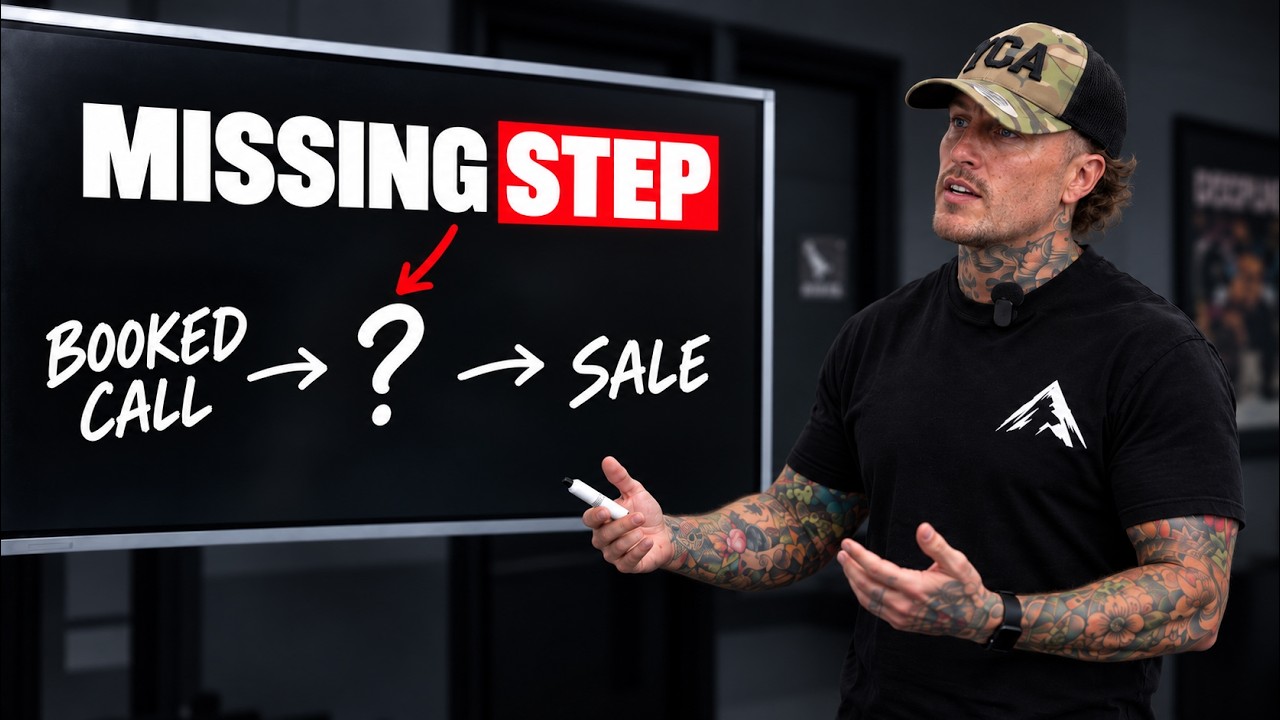
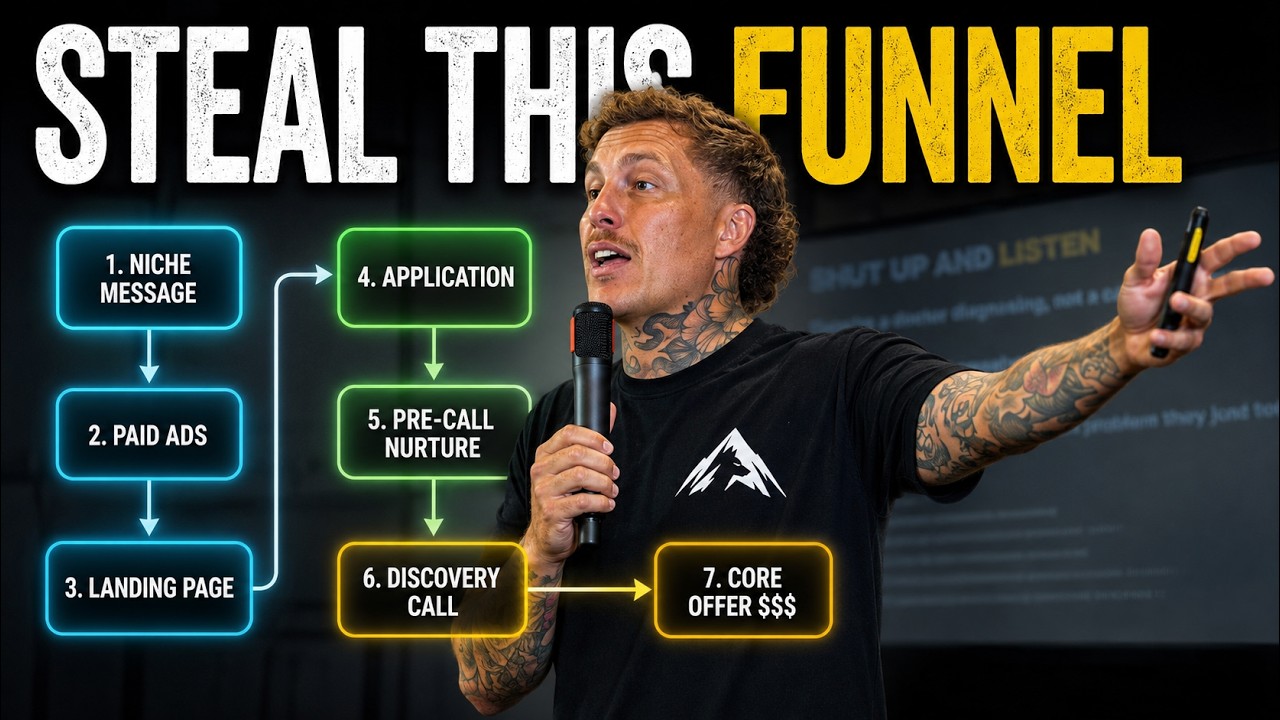
Stop Relying On Organic Marketing, Build THIS Funnel Instead (For Dog Trainers)
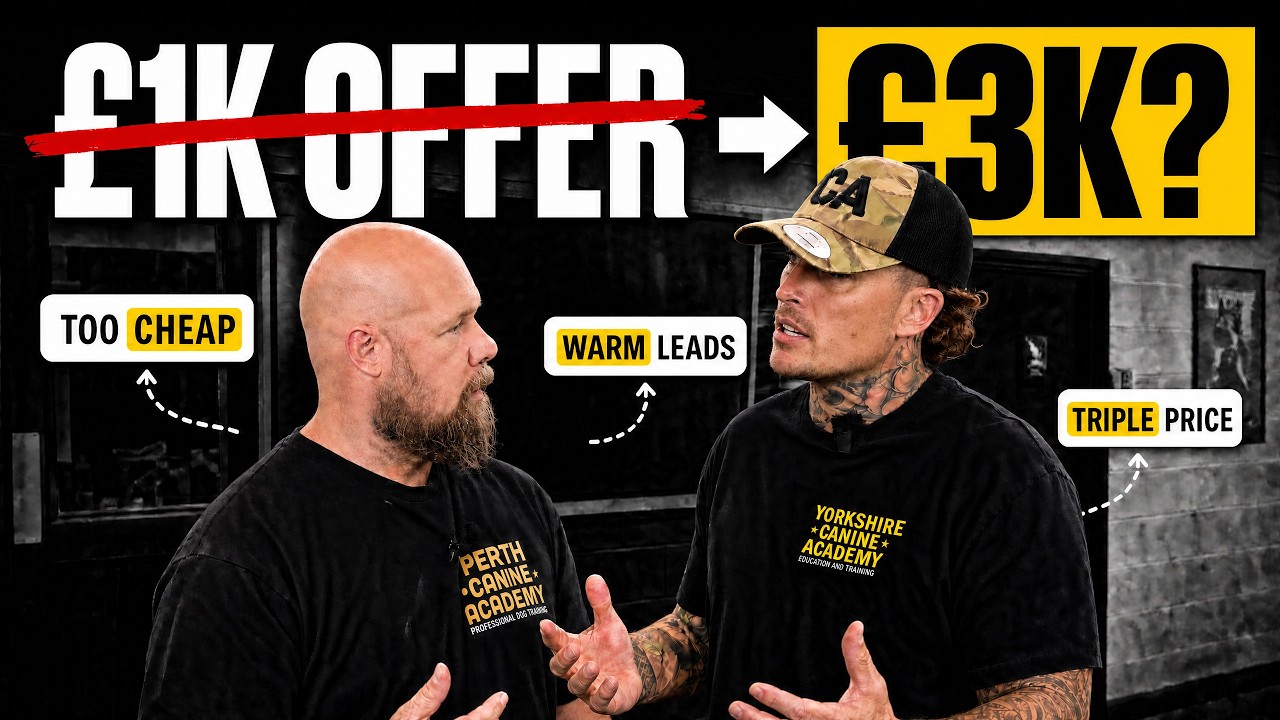
He Was Charging Too Little. I Fixed His Dog Training Business In One Session.