He Was Stuck. I Fixed His Dog Training Business In One Session.

Jacob Morgan coaches Tama, who runs I Am Canine Dog Training, on shifting from one-on-one sessions to small-cohort bootcamps. The move keeps premium pricing while cutting Tama's seven-day work week and targeting $20K revenue in six months through group dynamics, semi-online content, and hybrid programs.
Chapters
Yeah, it's starting to kind of bottleneck to the point where I'm working 7 days a week, so still working like a fucking donkey.
I always say to people, like, if you have to explain the same concept more than 3 times to 3 different clients, you need documented. It's like, instead of trying to aim for the shiny object of passive income, how can we just be more energy efficient in our delivery? And when they have sold it, you know, they've created so many fulfillment issues for themselves, you know, with just a a couple of people in there forgetting their login, you know, fucking around with the videos.
How would I actually then structure the price of my one-to-many program?
Right, tell us who you are and what you do.
Tama, I run I Am Canine Dog Training, and it's primarily based around premium personalized one-to-one services, which I found to be really of value because I think one of my biggest strengths is like building rapport with my clients. So yeah, and I found that that tends to be a really good way of building kind of like walking billboard for people who kind of leave, leave my services, especially after getting a really good result. But I think, uh, one of the things that I'm thinking about transitioning to at the moment is to a one-to-many. I think that's the biggest bottleneck, is like exchanging my revenue for time without necessarily sacrificing like the quality of my service, or I guess important one-to-one time that I get to spend with these people and like building really good relationships. In terms of maybe it's something that I prefer in my personal life, as I'm having really strong connections There have been a lot of benefits that have come outside of, outside of work. But I think it's, yeah, it's starting to kind of bottleneck to the point where I'm working 7 days a week. So still working like a fucking donkey. And I know that's one of the, one of the first kind of things to take consideration of. But I guess, yeah, I'm just wanting some thoughts around how to transition that or when the right time is to actually start transitioning into that as well as how to do it in a way that isn't also sacrificing what I find to be really meaningful. My business. Yeah, yeah, for sure.
So you want that transition because you're working a lot, you're running around like a headless chicken. We've got a lot of fulfillment and we want to be able to take more clients and maintain quality of product.
Yes.
So I guess just a point of like reassurance is when you switch to one-to-many, or like even one-to-few, like if you did small cohorts of like 3 to 5 people, and something you'll notice that those that you are working with when they observe someone else in that group, they're going to learn significantly faster from other people's mistakes than their own mistakes. Um, that's what we noticed when we started doing the boot camp. And again, just for reference, the boot camp was once upon a time just a one-off thing we did, right? It would happen once every 6 months or so, and then it started getting busier. And as the testimonials of proof of concept cups started coming through, you know, we started including more and more and more in the calendar. And again, couple of the benefits were obviously we were able to basically do these like highly personalized programs that have the same quality of a one-to-one, but in these groups, right? So we didn't really have to put our prices down in any way, shape, or form. People are often really nervous when they come to dog training too, and I think being part of a group like takes a bit of social pressure off people and not be under, you know, the spotlight, you know, for the entirety of the process. As well as, like I said, people being able to watch and learn from other people's mistakes and also what they get right. And you'll build like a real nice sense of community from the people that You know, do attend your bootcamp. I would recommend you initially launch it as like a one-off event. And I'd go into all old leads and I would go into, you know, even people you currently work with and I'd go ahead and say like, hey, I'm offering this new thing. It's formatted like this and the benefits of it being formatted. And then you could just relay what I basically just said. You know, if you'd be interested, just reply to this email or this text or this social media post, you know, ideally all three. And then you develop a bit of a waiting list. I put it maybe like 2 months out, because if you're doing it especially over days that maybe like people are working and stuff, they're going to need to get time off work or maybe find childcare, bloody, bloody blah. That said, it doesn't need to be a similar bootcamp to the format we run here. It could just be like, like Sean does it, you know, or a bunch of other people do it too. You know, groups of small groups of 3 to 5. I recommend like a good number per trainer is going to be like, Maybe 4 or 5 if we want that intensive approach. And we try and designate, you know, 3 to 4 dogs per trainer when we're doing bootcamps here and at the other centres too. So yeah, I'd launch it as like a one-off event. The thing is, when you tap back into your old leads, a lot of your old leads just didn't like the look of your initial offer. So don't think they're write-offs entirely. Go ahead and say, hey, I'm formatting it differently. And, you know, would you like to try it, you know, like this? You know what I mean? If I was buying a car, you know, the car I've got out there, the Defender, I was shown like 10 different versions of this particular car until I found the one with particular alloys I liked. So I wanted to buy a Defender, it was like 90% of the way there, but it was just the last guy come in and said, hey, how about these alloys? And I was like, yeah, 100%. So we just tweak our offer just a little bit, it can get a bunch of people over the line that we wouldn't otherwise have. So I highly recommend to anyone that's changing their offer or how they're delivering is don't write off any of your old leads that have come. So anyone that's booked a call, anyone that sent you an Instagram message like that has inquired about your services, anyone that you've had a call with, Anyone no-showed a call or cancelled a call or anything like that. Launch it, go ahead, and you want to— you could offer a potential, like, a founder's discount and be like, hey, full transparency, you've never done this, like, I've never done this in this format before, so I'm offering an extra amount of discount so I can collect some social proof to make sure, you know, the concept works. If it doesn't work, again, because it's my first one, I'll keep working with you in any way, shape, or form until you're happy. You know, I have a pretty good feeling it's going to work though. And then your first cohort you know, the intention is to get brilliant results for people and then also document those results as well. So you've got proof of concept, so you can keep flywheeling. Like I said, our initial boot camp was just a one-off, you know, and it happened once every 6 months, and then it was one every quarter, and then it happened to be once every month, and then it was week on, week off, week on, week off. Then it was 3 weeks in the month, a week off, and now we're just doing them every single week, you know, because the more proof we collect, the easier it sells, you know, the easier it is to market. And then it has this like positive exponential snowball effect, right? So yeah, run the first one, run it as a cohort, you know, reach out to all your leads. Even people that have been thinking about like working with you, they might go, oh, that actually sounds like a really good idea, you know, working around with other reactive dog owners. One of the big objections people have in regards to working with a dog trainer is like, yeah, it's all well and good around your dog because he doesn't care about my dog, but it's when another dog, you know, eyeballs into the street and stuff like that. And we can bring that into our marketing and say, you know, this is why we do it like this. So we're not working around these pristine dogs that, you know, totally well-behaved, that aren't going to necessarily pose as a trigger to your dog, you know. That makes sense.
Yeah, absolutely. So how did you, uh, I guess like compare the data? Well, I guess it's a bit of a no-brainer, like one-to-many is always going to kind of supersede one-to-one, right? So I guess it's a matter of, well, how would you actually collect the data that you get from the one-to-many to justify kind of transitioning in that, uh, in that direction? More and more. So I guess I'll kind of speak for itself, right? Yeah, the results you get and the kind of revenue that you're generating as a result of doing those, you just compare it to kind of like how much time you would spend a little one-on-one sessions with— yeah, kind of.
Yeah, you just like simply you just price it per hour and be like, all right, this should, this should, as you said, supersede my price per hour, how much money I'm making per hour. But what I always say to people that transition is like, you'll be really pleasantly surprised at how much easier it is to get to results. Because what a lot of dog trainers don't realize, these long hour sessions they're doing, you know, that's filled with a lot of stuff and fluff that isn't actually needed to bring about like a decent result for that particular person. And so what we end up doing is we, you know, we simplify things down to the very core concepts, as you've seen this week by, you know, shadowing a bootcamp. And it allows us to keep reiterating, because as I always say, people need reminding more than they need teaching. And it allows us to keep reiterating these very simple concepts that owners need to go away and a comprehensive understanding of how to apply these in with their dog to be able to navigate everyday life. Um, the one-to-many format, if we've got an hour, we've got 5 dogs, we're going to do a redirect drill, right? And we're only going to do a redirect drill for that hour, but they're going to do it themselves and they're going to watch another 4 people get it right, get it wrong. They're going to take a lot from that process, as I said earlier. And what you'll actually find is they go away with a very comprehensive understanding of this very important, you know, metaphorical tool in that exercise Whereas in a one-to-one basis, they're going to get there, they're going to do some redirects, then we might do some drop stays or down stays, then we might do a little bit of play, and then some sit waits or fucking loosely walking just to fill the void, you know what I mean? They're only going to take one or two things out of that session. They're not going to take 5 or 6 different exercises. And so it allows us really nicely without like getting people to show up for 15-minute sessions and then like say, hey, that's all we really need to concentrate on, see you later. It allows us really nicely to basically condense what we teach without allowing people to feel like, oh, have I wasted some time here? You know what I mean?
Does that make sense? Sure. Yeah. Uh, there was another question that I had on my mind regarding the, I guess, the kind of structuring format. Oh yeah. I guess like considering I don't have a facility necessarily, it's like you guys have the luxury of being able to have this like day after day. So they build a shitload of momentum within it. How would you, I guess the, the kind of the restricting factor would be Well, actually, I guess I've kind of answered my own question. It could be just a matter of having it maybe like every other day throughout the week so they're not— it's just not like one week, or just having, uh, some sort of like online resource to keep them on track and not having homework in a very structured manner.
Yeah.
So that it's not just like one week of just spending time around dogs and then just absolutely fucking nothing and then spinning it the next week. Yeah. So I guess that kind of somewhat, uh, segues into my next question around having some sort of online resources And I guess like also then turning that into some sort of like online program and how someone could go about starting to implement that as, I guess it wouldn't necessarily be a level of passive income because there's still a good amount of input on the trainer's part, like in terms of like touching base, making sure the information is making sense. But what is the, I guess, easiest kind of way of starting to introduce that into my kind of services, like another offer? Because I get quite a lot of people down the bottom of the North Island, but I'm getting a lot of people across the Cook Strait, which is like a, you know, big body of water, and the top of South Island reaching out to me. Yeah. Um, who have somehow heard a lot about me, really keen to train with me. And then of course it's a, it's a matter of, sorry, I can't help you because there's, uh, you know, geographical separation of fucking water.
Yeah. All right, so it's all good. There's a bunch of considerations here. A lot of people reach out and they're like, all right, how do I, how do I create an online course? They find themselves in a similar situation to you where people are reaching out geographically it's not logistical, you know, it's not logistically, um, it's not easy enough to go and serve them basically, right? You know, we've created online platforms in the past and we've created online courses and we've sold and made a lot of money from them, right? But what I would say is there is truly no such thing as like completely passive because by the time you've helped people like, you know, remember their password and reset their login for the 8th time as well as like being able to open videos up for them and and be able to help them like navigate. Doesn't matter how simple you make the process. Uh, of course, like we've tried to sell completely online courses before. People typically need help. And so I would nowadays, especially with the development of AI and things like this, I would encourage people more to do more intimate style training like your bootcamps and stuff like that. And if you want to serve people on the South Island, okay, we're going to do it over a 2-day workshop, for example, or even a 3-day workshop, a Friday, Saturday, Sunday in the bootcamp style because of, you Yeah, people aren't going to want to be willing to travel back and forth 5, 6 times to do a one-to-one, but they will travel back and forth once and then maybe for a follow-up a month or two later, right? And so what we found, you know, in offering a boot camp, people come up here, they stay for 5 consecutive days, and then from there, you know, they go away. We might see them on a follow-up lesson or something, you know, or follow-up group class, uh, a month down the line. You know, a lot of the time we never see them again because they're happy and they go away and their dog live in a different life. But I would just be like, word of warning there in regards to creating something online. I've seen a lot of people invest their whole life, like 6 months of their life to create an online platform, not being able to sell it. And when they have sold it, you know, have created so many fulfillment issues for themselves, you know, with just a couple of people in there forgetting their login, you know, fucking around with the videos, like making things more difficult. Then we got to jump on the Zoom and a WhatsApp and so on and so forth. What I would say though, if you want to create something that's like semi-online to be like, to support your process, don't go and create something based off what you think the client needs. Go and create a program, you know, that is predominantly in person. And then what you'll find naturally as you run people through that program is they get continually stuck on maybe one or two facets of what you're delivering, right? Maybe it's like the concept of you know, hand feeding. They just can't get their head around it. Or the concept of like, hey, tidy the toys away, and then, you know, put them, you know, away so the dog can't reach them, so the dog gives a fuck about toys, right? I always say to people, like, if you have to explain the same concept more than 3 times to 3 different clients, you need documented it for sure, right? But don't fill the void for the sake of filling the void. Make sure it's only actually something that is going to move the needle and push them forward. I see these people creating like these really elaborate, big, huge online programs. These people that we're serving, they don't want to become dog trainers. They just want their problem solved in as little steps as possible. Ultimately, whether we like it or not, you know, that's what sells, and that's what's going to give us our best foot forward to try and help solve that issue and allow that person and their dog to live a better life. And so I see these big elaborate online platforms of 15, 16 different modules, and people are going to get there, log in, go, hey, this seems like a lot of a Hell of a lot of work. They're gonna ask for a refund. You give 'em a refund, fine, you lost some money. Don't give 'em a refund, they're gonna complain, then you got issues for yourselves. And so semi-online might work, but I recommend like the majority of it being an in-person thing and the rest, the semi-online element is just to save your breath from reiterating the same lessons over and over again. You think about the mentorship, right? We got momentum as a module, we got traction as a module, we got convert like crazy as a module. That's offer creation, marketing, and sales, and those 3 modules are purely based on where I've gone into my father that records all my one-to-one calls like we're doing now. And I say, hey Claude, what lessons am I repeating over and over and over and over again? It goes, this stuff. I go, okay, you're gonna help me build some modules, you know? And then I pre-record them just to save my breath getting on a call with a new mentee and they're like, oh yeah, how much should I charge? Or, you know, how many sessions should I do? Or, or fucking whatever it is, you know what I mean? And that's what we should be thinking about. It's like Instead of trying to aim for the shiny object of passive income, how can we just be more energy efficient in our delivery? And we just like chip away at it here and there, you know what I mean? So once you find yourself getting like blue in the face repeating the same thing and articulating yourself in the same way, very simply record it, make it into some sort of asset. Okay, so, you know, we've worked together for a little while now and hopefully you're able to identify like what your bottleneck is in your business, like what's your goal and what's stopping you getting to, you know, the next phase of income or revenue?
Goal would be 6 months, so I'd love to hit $20K, but I think that's not going to come without being able to kind of free up a bit more time and actually serving more people within that same space of time that I'm doing, spending with people one-on-one.
So you're fulfillment constrained right now and you haven't got enough space for marketing and sales because of you've got so many clients you need to see to.
Yeah, exactly.
So the next, you know, the question would be, you know, conversion rate on calls and price point. What are those?
Price point is 6-session program, which I generally run between anywhere between 4 to 6 weeks based on, I guess, my kind of time allocation and also the kind of urgency of the client or if there are any time constraints. That's, I think, around $1,950. And then I've got like an 8-session program, which I generally run within like 5 weeks. And that's just under $3,000. So I'm getting a pretty decent conversion rate. I think, again, coming back to the idea of actually building rapport with clients really helps kind of get them over the line.
Prior to calling me?
Yeah, I guess not during, like during the call. So sometimes I feel like if they need a little bit more warming, I'll often go and see them in their home. They tend to feel a lot more relaxed. So I'll kind of just like shoot the shit with them a little bit and just get to know them. Just kind of go around to just have a just a regular chat instead of like hitting them with a massive sales pitch. Yeah. And then kind of warm them up. And by the time I've kind of gotten to the, the price of the, of the program, they're generally a little bit hotter, uh, down the line. So I guess that it's still, it's still good time for money, like really good time for money. Of course, within that, there are things that I offer in terms of equipment and, and so on and so forth. So I guess like there's also a question of like, how would I actually then structure the price of my one-to-many program or like my kind of baby bootcamps, if you will, to kind of start hitting that $10K to $20K mark.
Yeah, gotcha. Well, okay. So when we look at dog training, people want to be sold how life looks from as a result of training with you, right? And so if, you know, we collect enough social proof and the promise is strong enough that when they finish training with you, they do not care if it's a one-to-one basis or a group basis. You know, they don't think in their head like, all right, okay, I'm getting ripped off here because, you know, we've all paid the same amount of money, we've made Tamar a millionaire. They actually just care, are they going to walk away from you with a much happier dog that they can live a better life, you know what I mean? And so when we market that, we need a lot of social proof in doing so. So hence why I've said earlier, get as much social proof from your first boot camp as you possibly can, or your first one-to-many cohort, however that might look, you know. And from there, like, my advice is prices don't need to change too much. And so there's a couple of people in the mentorship, Thomas being one of them. He has really great offers. He does, uh, 2-week cohorts. He does 2 one-to-ones week 1 and then 2 group classes week 2, meaning that like week 1 is pretty fulfillment heavy. Week 2, he's just got to do 2 group classes to do, right? And one, the first group class is in a, like, a rented field. He doesn't have a facility. And then the second group class is a, is basically like a pack walk. It's like offsite, real, real scenarios. It's a couple of hours each of these group classes. The one-to-ones are like 45 5 minutes, and they're basically preparation for, you know, those group settings. And then he runs them into like monthly pack walks or something like that. So like, that, that's quite a good idea. On his second week, what he does is he does all his admin and his sales calls in that week, because again, on the fulfillment side of that second week, he's just got two group classes, right? But yeah, he's pretty much charging very similar price to you, which you're around £900 just for everyone's own reference, which is about $1,200, uh, USD. Um, which is a good price point for what you're offering, the result you're offering. Depending on conversion rate, you could tickle it up. But even if you go to a one-to-many, even that's a 3 or 4 to 1, I would say don't change your pricing in any way, shape, or form. And immediately, you know, talk to those benefits, talk to, you know, what we've talked about, the pros of why we do it as a one-to-many boot. They're going to learn faster, they're going to work around certain dogs, you know what I mean? You have to watch people make mistakes, etc., etc., and I get people are going to buy into it and immediately you can have a substantial increase in revenue, really drop back on your fulfillment. So you start working on the business as opposed to like running around like a donkey.
Yeah. And I think like the, the idea of what, um, what Thomas does, having the kind of one-to-ones and the one-to-me in the same program is a really good way of actually still maintaining that level of satisfaction I get from actually just working with owners. Yeah. One-on-one and then kind of integrating them into a group setting.
Yeah.
Yeah, or kind of having the group classes as more of like a having them qualify for the group classes. Yeah, it's like a conciliatory sort of thing towards the end of the program, but I guess that probably wouldn't already tick the boxes in terms of helping me meet my goals necessarily. But yeah, and that has certainly given me a lot to think about for sure.
Yeah, a couple of other people do like a one-to-one onboarding, like just via Zoom, do some prep work, and then a, a session at their house, and then roll into like 3 group classes or 3 like group situations anyway where it's It's basically, you know, still an intimate— it's not like, you know, your classic— what people are probably picturing in their head now is like 20 dogs in a field, sit, waits, and downs and stuff like that. No, it's still like we're working through things, we're working on things, uh, we're putting what we've learned in our one-to-ones into practice, etc., etc. So, you know, probably people at home thinking, you know, what's— as, as dog trainers know, like, what's a group class in the traditional sense like really do for a reactive dog case, you know what I mean? Because By the time, you know, they've barked at one or two dogs and then got used to the situation, they're not barking anymore. So we, you know, we'll test the boundaries on those group classes, you know, do some different setups, you know, bring some of our stooges out, get some dogs off leash, you know. You know what we do here on a Thursday and Friday, if we go down to the local park, Roundhay Park, I let both my dogs off leash and basically just serve as those stooges of our control of off-leash dogs, you know, like going in and out, stuff like that. So yeah, loads of food for thought.
Anything else you feel like you need to work on, or No, I think that's, that's really about it at the moment. I'm just a one-man band. So in terms of like, I guess goals for the future, that'll come when I start kind of expanding my horizons somewhat and bringing, perhaps bring on staff to expand the, the size of the group classes when I eventually do do it.
Yeah.
But no, that's about it. I'm trucking along very happy.
Yeah, nice. Good man. Right. Pleasure having you.
More from Jacob
I Had 100K Followers And No Money. Here’s What Fixed My Dog Training Business
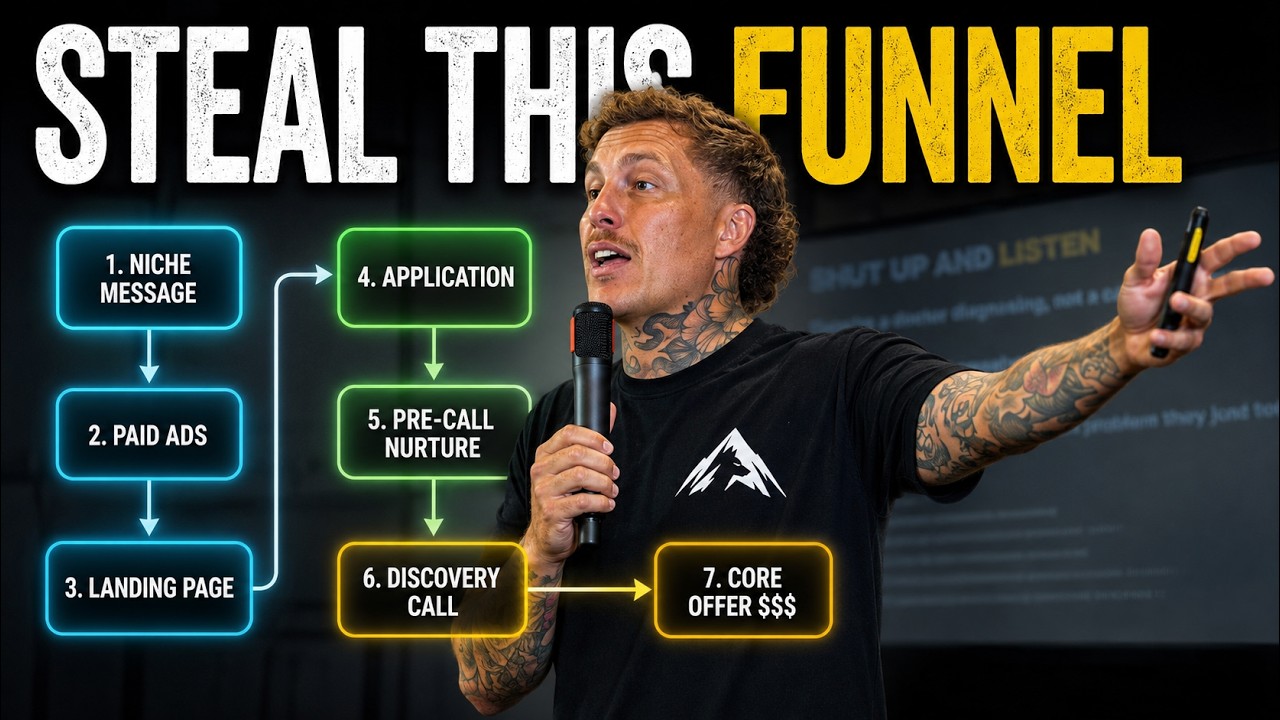
Stop Relying On Organic Marketing, Build THIS Funnel Instead (For Dog Trainers)

He Was Charging Too Little. I Fixed His Dog Training Business In One Session.