How to Keep Your Product Business Profitable When Platforms Change the Rules
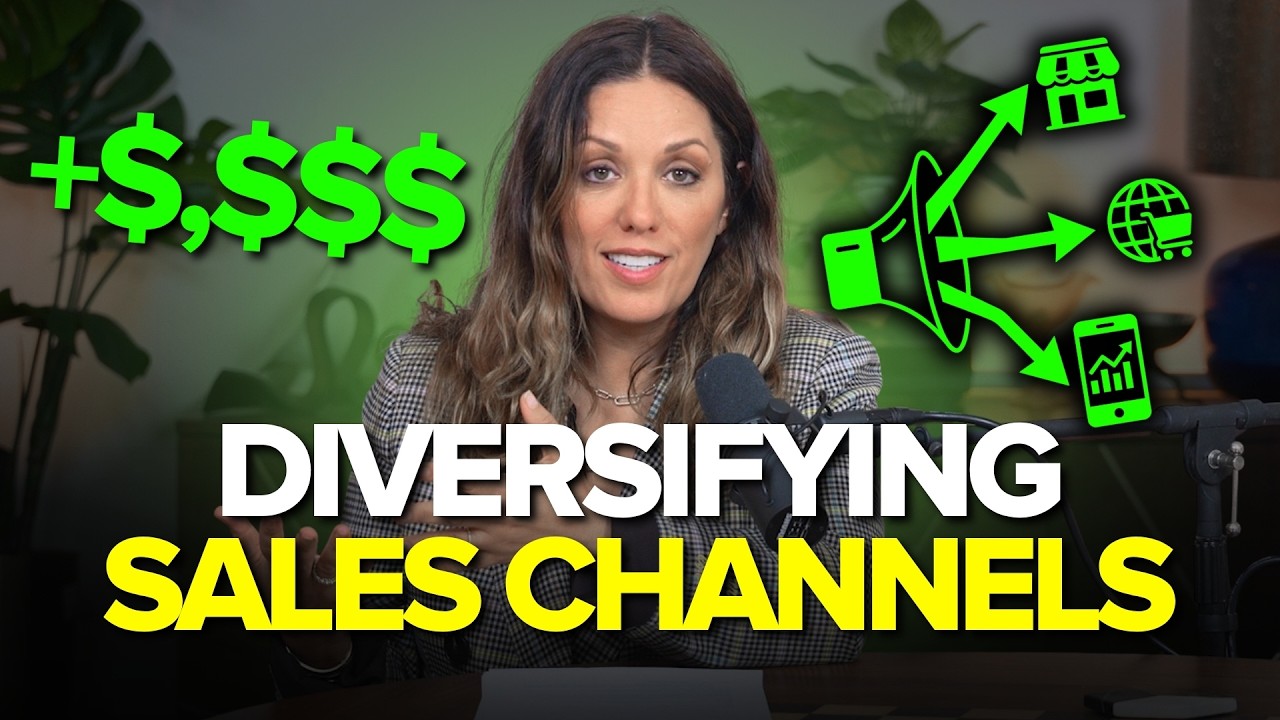
When Amazon raised seller fees to 26% plus additional surcharges, 400 top brands paused ads, costing the platform $2 billion. Jacqueline Snyder explains why relying on a single platform is dangerous and shares how to protect your business: keep any platform under 40-50% of revenue, build direct-to-consumer sales, and grow your email list.
Chapters
What happens when over 400 of Amazon's bestsellers revolt against the platform? That's what we're gonna talk about today. This is in the news, hot off the presses of what has been happening in the world of Amazon, and we're gonna dive into that today. So let's go. Hey everyone, I'm Jacqueline Snyder and welcome back to the Product Boss Podcast. This is where we help you build your brand and the business behind the brand. And whether you are getting to your first 6 figures, your multi-6, 7 figures, or you are $5 to $10 million, I'm so glad you're here because what we do here at the Product Boss is really help you build the business and the life you're building this business for. So let's dive in. So recently in the news, There has been a story about how 400 of Amazon's best sellers revolted against the platform. Like they came together and what happened was there was more than $2 billion lost towards it because guess what? Money speaks. So let's dive into what happened, why they revolted, and what we can learn from that and what our takeaway is. So in April, Amazon let some of their sellers know that from that point forward, all of their ad money, the, the money they were spending on ads was going to get pulled from their account or invoiced to them. Meaning when they were making sales, the ads were going to be pulled out of that versus, for example, when we run ads, we have a marketing budget, we have our credit card attached, we have a certain spend per day. But this is gonna be sort of like if any of you have ever done a Stripe or PayPal loan, and when you're paying it back, it's pulling from your account balance. That's exactly what happened. That's what happened on this platform where the rules just changed overnight. And we talk about this a lot because when you are selling on other people's sales channels, when you're playing in their playground, They can literally change the rules on you at any point. I mean, the ground beneath you can shift immediately. And this is a pretty cool story because they were able to do something about it, but oftentimes you don't. You know this if you've ever sold on Etsy, when Etsy raised their prices, or Faire, when they're asking you to do certain things. That, it's the trade-off of playing in another playground. Now, it's the cost of doing business oftentimes because back in the day, We didn't have access to all of these points where we could sell. There was always like a third party that got in the way, but at the same time, sometimes it's just not fair, and when you band together, there is something great that's created. The cool thing about this is with that $2 billion combined going away from Amazon, Amazon backed off, okay? 'Cause what do we know? Money speaks. So why this is really frustrating, and if you've sold on Amazon, you know that this happened, it was the third fee change in a month. that came to these sellers. And what that ended up doing was increasing their fees across the platform by 3 to 7%, which is a lot, especially if you've got a lower ticket product and knowing all the fees that Amazon takes. Now, as I share this with you, I don't want you to think in your head all of a sudden you're like, well, yep, that's why I don't sell on Amazon. That's not the case because I've seen brands, small business brands, people who have, you know, gone from Etsy to getting onto Amazon and then have completely changed the trajectory of their business and their life because they've had access. To all the people that shop on Amazon. So there are benefits, but this is one of the biggest reasons why when I'm teaching my students or you're listening to this podcast, we've gotta keep you profitable because your margin allows for things like this to happen. And for example, meet in the middle. Okay? So there's so much at play here where of course the fees out of the blue were really difficult for people. And at the same time, we wanna make sure that you're working with healthy margins. So I'm gonna read from my notes just like an old-fashioned newscaster. So if you're watching this live, you're gonna see me reading from notes, but I just wanted to really get you the stats for real life. Okay? So here's the deal. The group of Amazon sellers banded together because there's so many Amazon groups out there and they went to the million-dollar brands and they were like, hey, let's do something about this. So they ended up taking, stopping ads and it stopped a major cash influx for Amazon. Now here's the math. Ready? So they were mad because the average Amazon seller pays about 26% in fees to Amazon, which is significant for sure. Now that was up from 19% in 2020. So 19% to 26% is huge. And advertising is about 40% on top of that, which leaves you with very, very slim margins. And there's also a referral fee of 15% just to be on the platform. So when we really put all this math together, it makes it really difficult for small businesses to function on here, especially if your product costs more. Now, Amazon went and said they were going to push the change to August 1st to give people more time. So we'll see, we'll see if it actually takes action or doesn't, cuz at the time of this recording, I'm recording it in July and we'll see what happens in August by the time you hear it, this episode. Now here is the kicker, and this is why people will be mad. And honestly, it is pretty frustrating, right? It's frustrating when we have these sales channels that are working and that were really created to help small businesses, and then the fees and the money and the, the business, you know, the people behind the scenes in the conference rooms are thinking about their profit margins and not necessarily yours. So here's the deal. Their ads business alone did $14.3 billion in Q1. Okay. $14.3 billion, which was insane because it was up 24% in growth. So all of that is coming out of the seller's margin. And this is what the sellers are saying. We're running out of margin and the math just doesn't work anymore. So here's what's really interesting about this. And this is something that I've taught you guys for years. If you've been listening to the show and if you're new here, I'm so glad that you are. Literally the origin story of The Product Boss started back in the day. It was 2017 and I had a consulting company. I was one of the number one consultants. I actually started the idea of this back in LA, back in 2026, 2027, where I was a fashion design consultant. We were an agency. You could bring your products to us. I would design, develop it, produce. We'd even ideate your name and the labels and help you grow the company, right? So it was kind of like a, I call it, it was a one-stop shop in the fashion industry. So as I was creating the business back then, I was speaking at the LA Textile Show in Vegas at the Magic Show. If you're not familiar, the Magic Show is a sourcing show and an apparel and accessory show for wholesale, a giant market. And so I was speaking in lots of different places in the industry, and one of the years we were speaking at the LA Textile Show and they asked me to put together a panel. This is in 2017. They wanted more of a panel. So the panel that I created, which was literally the origin of this business, was the idea of multiple streams of revenue, right? When we looked at it, nobody that we looked around that was successful with one single sales channel. So I set up an entire panel. I had someone who was doing really well at e-commerce direct-to-consumer. I had someone who was selling to big box discounted stores. We had people selling that were just typical wholesale to boutiques. Had their own retail environment, and my ex-co-founder. So if you've listened to any of the episodes, like you know probably the first 500 episodes of the show with Mina, we had just become biz besties and friends because we were both in the product industry. But there was nothing for product people. There were no podcasts, nothing. So this was like our this is the first time we ever met. We were we were chatting online, you know FaceTiming, and I was like, "Hey, do you want to fly to LA and speak on this panel? And can you speak on Amazon?" Because Amazon was a newer sales channel at that point. And so she came to speak. That was the first time we met. Obviously fell in love, created the Product Boss. But the impetus was this idea of multiple channels, multiple sales channels, and diversification of your distribution of your products. Okay, so the thing about that and the thing about Amazon is, you know, we've watched the trajectory of it go from being a place for books to when I wanted to liquidate my cuffs, like my product, I contacted Mina originally because I was like, hey, I've got 1,200, 1,300 units that I want to get rid of. Can I liquidate on Amazon? That's how I used to think about Amazon. And our first conversation was like, it's not where you liquidate, it's where you build a brand. So that's how I ended up packing up my cuffs and donating them when I probably should have sold the business. But nonetheless, so at that point it was there. It's grown, it's grown, it's grown. It's been really supportive. And now the math's not working. And so either Amazon's going to have to meet the sellers where they're at and find some sort of compromise, or they're going to start to lose brands and that's going to hurt their bottom line. And trust me, they don't want that. So going back to my story, this is the reason why it's so important that you have diversification because what we're doing here at the Product Boss, and if you've been listening to this for a while, I've been in a rebuild rebrand stage. And one of the things that we've done now, because I've grown The Collective. It is literally the best thing I've ever created, which is our program that is this environment for product-based businesses to thrive. It's helping to build 6 and 7-figure product brands with a life-first mentality. And what I've realized is what you all need is not just to figure out how to sell another product, not just how to sell on a certain sales channel, but you need this environment, right? It's the thing that I wish I had. I went to fashion design school, I have a bachelor's in fine arts, one of the top 3 schools in the country. They gave us a quarter of entrepreneurship training, like a class in our senior year, just one quarter. I was like, okay, what do we do with this? They're like, go work for other people. And then funny enough, Mina, who was my co-founder, she actually had her master's in business. But I remember as we were building the Product Boss, she's like, literally none of what I learned is like applicable to entrepreneurship or anything that we're doing, especially product. So what I decided was, as we are building the number one education company in the world for physical product-based brands and the number one media agency for, or media company for product-based businesses and for building businesses that are aligned with your dream life. The idea here, and what I realize is, you guys, we're building brands because brands last. Brands have shelf life, okay? There's no expiration date. There's no expiration on a product. Like Etsy teaches you to sell, like be known for products that they're searching. Even Amazon isn't always brand specific, right? If you're looking for lights, you're not looking for a brand of lights, you're just looking for lights that look a certain way. So if we can really establish a brand, when sales channels crash out, burn out, shift, you get to pick your brand up and move it somewhere else because the customers are always going to go somewhere else. And that was created back in 2017, and that is still applicable today. I mean, this, even in the pandemic, at some point we were like, there's no way Amazon's still going. And then they were only shipping essentials, right? So we've always got to figure out how you build the brand that can move and the business behind the brand. Because when you're building the business behind the brand, you have the way that you're running the company, the operations, the systems, you're profitable, you've got the team to help you build it so that you can grow. So this is really important, especially for those of you out there that are Amazon sellers. If you're considering, is this the channel for me anymore? Obviously we're in like a wait and watch and see what happens. I remember when I was supporting my clients when TikTok was going to shut down, we're like, okay, let's, Prep, right? We were always prepping and having more sales channels so that if one channel turned off, then we could turn the other channel on. So this is just yet another example of the idea from 2017 that still almost 10 years later exists and is so intact. Like it's, it makes so much sense. If you're hearing this, you've heard me say this a million times. Let this be proof one more time of why it's so important that you diversify. Okay, so let's talk about how, what this means for you. What this means all in all is one, you've heard me say it before, but use other people's audiences. So being on other people's shelves, whether it's the retail environment like selling wholesale, being at in-person markets where at in-person you've got the foot traffic, wholesale, anywhere that they're bringing in your customers, but they're all borrowed channels. They're all rented just like social media as well. What's not rented is your own e-commerce site and your own email list. Okay, let me just say that again. What's not rented is your own e-commerce site and your own email list. God forbid, knock on wood, the only way your e-com site's gonna go down is if someone hacks you, but that's just literally the only thing. And even if they did, if you had an email list, you get to email people. That's like your asset. Anything can happen, you can send an email. And if you have addresses, you can send snail mail. Okay, so that is why it's so essential for you to look at all the channels you sell on. And what we do here and what I'm gonna support you in here as well is like, You must be building your own email list. I cannot stress this enough, and a website that converts. It's not the place like if you were to work with me. Okay, let's say you were to hire me as your one-on-one coach. We would analyze. We'd see see where you're at, where your sales channels are right now. Actually, just coached somebody on this in the collective today. We were talking about the holiday season that's approaching, and I'm like, right now is not the time to build a website from scratch and. Try and drive traffic there. Okay, if you have a website that converts and you have a list that you can email to go to the website, awesome. If one thing works and the other thing doesn't, then we've got to test it, right? If your website works and you haven't been emailing your list, then we just have to email your list. If your website has a conversion issue, which very well could have one, meaning people land there but they're not checking out, it might be a conversion situation. It It might be that there's something on it that's not converting the customer to buy. So one of the hardest things to do is to get people to your website and to buy. That takes lead acquisition, that takes whether it's paid ads or some sort of organic push to get people there. So we get them there and then we've got to get them to convert. So there's a lot of elements at play, and some of you have been working on this. You know, if you're listening and you're one of my programs, you've, you've probably— like, one of our advisors, Brooke, is a Shopify expert. So another client today was on the call and she's like, yeah, over the months I've been working on my Shopify site and I've seen it slowly but surely start to convert. So I say this because in this moment rolling into the holidays, it's probably not the time that we're going to overhaul or fix unless like it's somewhat functioning and working. Otherwise, you're going to lean into the places that you're selling, but you're going to start to build some version of an email list. This is So important. I don't know how many more times I can say it. If you're in-person events, you freaking get people to join a list. If you're like, what do I tell them to do? You guys have a giveaway, have a freebie, have the paper out and be like, sign up for my email list and you can win this beautiful gift basket, whatever it is. Okay. And, and this is what we really strategize on depending on your business. So you're in person, get the email. If you're selling on a channel that you can't get their email address, like for example, Etsy, Then find ways to slip something into the package that's like, hey, come join this and then get 10% off your next Etsy purchase. I believe, and I'm not an Etsy coach or expert, I believe if you send people back to Etsy, you can ask for their email address. Okay. And then once you do send them back to Etsy, then you now have them on your email list. You can send them wherever the heck you want. But like at that initial point, um, we have some other strategies around Etsy that may be kosher, maybe not. And it's up to your discretion. You know, wholesale, when you're literally building a wholesale buyer list the way that we teach, they're your contacts. And so anytime, just build your list. Then over the months, we're just going to strategically think, when do we launch the thing to your site? But you guys, it doesn't matter if you have 200 people on your list. That's an entire airplane of people. Imagine standing like the captain. This is your captain speaking. Imagine standing in the middle and being like, you want to buy my thing? And they've all said yeah, because they bought tickets to that plane. They've opted into your list. 200 people. I have a client that she had zero list. We've worked for 3 or 4 years together. She just let me know today she's got 80,000 people on her email list. And she's like, I remember when I laughed at you and you're like, create an email list. And you're like, I don't think I want to do that. And now she's 80,000 people she can email. I just coached a client yesterday who has a beautiful website, has 10,000 people on her email list, and literally never sends an email. So listen, like what do they say? The cobbler has no shoes. You guys, like we, I get it. There's so many reasons why maybe you are or you're not sending the email. But I guess what I really want you to take away from this is all of us are building on borrowed land, right? Like listening to this podcast right now or watching it on YouTube, it's not my station, right? So as long as if I'm like, hey, I could tell you to subscribe, I could tell you to follow, that's all great. But what Really is the thing where if we're going to stay connected is like, let's say I have a link and I'm like, hey, get this freebie or come to my workshop and you sign up for it. Now I've connected with you. I have your email address so I can let you know we've got an in-person event coming up in September, which we do in Arizona. So if you're not on the list, you should be. Um, and that's the way we can communicate. Otherwise, I'm just relying on that the algorithm throws you in front or that you've remembered to find me on YouTube. But a lot of you that might be watching or listening You're already on my email list and we send an email every single Thursday with a link to listen. And people are like, thank you for reminding me. Got it? Cool. So that's one thing, rented channels. We're going to have them, but if we only have rented channels, then we're kind of going to be dead on the water, in the water if you don't make the shift. So that's one of the things that you're going to think about. How do I continue to grow a list so that if anything happens, I've got people to send it to? Finally, I want you to look at all the channels you're sitting on and I want you to just run the, The math. So look at what you're paying out. Okay, so whether it's fees, there's also credit card processing fees. There's always going to be the cost of doing business. Now, something that I hear from newbie business owners that maybe are operating from scarcity are like, "Oh, it takes so much money." I remember when Etsy raised their fees and people freaked out about the fees. They were like, "Oh, it's gone to five and a half percent or six." I forget what it was. And I was like, "You guys, this is still so much cheaper than you having your own retail environment, or so much cheaper than you having to run ads." Like real ads, not Etsy ads, but like real ads to acquire the customer. Because acquisition of customers, if you're running Meta ads or Google ads, it's a whole other game. So it was like, you're in their playground, you're playing by their rules, but they're giving you access to people. This is the thing with my mom when I was growing up and I was like, Mom, you can start this business. And she's like, I don't know one, how to do it. I don't, she didn't have the, she didn't know how to build the business. That was one thing. And she didn't have confidence in it. And two, she didn't know like how to sell it. We didn't have online. So the cool thing is about these platforms is like they also handle the taxes for you. Like they send you the reports and they bring the customers there. They're doing all this marketing to attract customers. Okay. So what I want you to do though is to look at the margins and listen, I have conversations with multimillion dollar brands about this. I have conversations with people making $10K a month, $2K a month. You've got to keep looking at your numbers and look at your profitability. The bigger your company gets, the more we can create lower costs because think about this, the more you order of a material, actually I was coaching a client the other day and she makes eye pillows. If you're listening, hello. She makes eye pillows. So she said, she's like, you know, and eye pillows you stuff with like seeds. She said she used to go to the local market and buy the seeds and then eventually she was like, oh, you know what, I need to just like go straight to the manufacturer, and now she gets pallets of seeds. The pallets of seeds by the pound are way cheaper than her going to the market and paying retail prices. And she's like a half a million dollar business. So on eye pillows, by the way. So if any of you are like, oh, I need some crazy idea, or I should be making a million things, half a million dollars in eye pillows. So let's just pause on that, that thing. But moving on, I digress, is this idea that as you expand, your price per unit gets to come down because you're starting to buy in bulk. Okay. So you're always looking at your margins. Like as your company grows, we're always looking, how can we reduce labor costs? How can we— Reduce packaging, freight. The more you do, the less you can pay per SKU, per unit. But the other side of this is then what percentages need to get taken out. So that's why you've got to have a profitable product. That's one of the very first things if we were to work together that we would look at. What's your profit margin? Where can we clean it up? Where can we save? Or where does the price have to go up? And we kind of play with both, okay? Then I want you to look at all your sales channels and I want you to kind of set this like dependent ceiling. So You know, if you got 80% of your business coming from one sales channel and you don't control it, then you're kind of in a tricky situation, right? 'Cause 80%, then you'd have, you know, if they turned it off and 20% was on your website, then it gets a little bit tricky. So what we really wanna do at this point is find where you can diversify the, the pie, the, the full pie, right? 100% of the pie. How can you not be overly dependent, like more than 50%, maybe 60% max, I'm gonna say I would rather you 40 to 50% be dependent on a single channel that you don't own. I'm not including wholesale in this, and I'm not including— what I mean by that is traditional wholesale. Fair, they could kick you off the platform, right? And then if you have 800 stores on Fair and they kick you off the platform, I mean, you still have the contact information, right? But that's that. Wholesale is almost like direct-to-consumer because you have an email list of buyers and you can email them at any point. And if one store goes out of business, you can go acquire a new store over here. And we're not having another pandemic, hopefully, for another 100 years, but if something were to happen to in-person, they'd have to get online too, and they still have products to sell, right? 'Cause we're kind of, we're in it together, retailers and us as the manufacturers of product, we're all in it together. So that's really the thing I want you to do, and the 2 things that you need that maybe in this moment you're not building or you're improving, but you've actually, I'm gonna go back. You can build your email list all the time, especially right now if it's gonna be your busy season. It's like the number one influx of humans, let's do it. Building your website might be a Q1 project if you don't have it built yet, but you've heard this episode, maybe you're listening to it in the future, this is what you get to do. So whatever happens with Amazon or any other channel, you have a sustainable business, right? You've built the brand, Which can move. You've built the business which can sustain and operate and hold it, and you've diversified. Okay, so this is just, you know, I'm over here, I'm always like, I'm always a prepper. I'm like a doomsday prepper. So let's doomsday prep together. And it's benefited my clients for years because I'm always thinking, um, future. Like I'm always thinking about the future and how to serve you in that. So this has been a great episode. This is the idea of this diversification. It's just another proof point of what I teach of diversifying your sales channels. I love that you have OPA, which is other people's audiences. I love that you're selling on all these other channels, and it's okay to be paying the margins, but you want to make sure you're profitable. You want to make sure you're diversified. You don't really want more than 40 to 50% on one sales channel. Profitable so you can hold these margins, and then always building your email list, always building your email list and having your own website. And one thing I'm just going to mention really fast, because I have another client She's in my Inner Circle Mastermind, which is within the Collective. This is my high 6-figure, multi-7-figure clients. She has multiple retail locations in Texas, and one of the things that's happening right now, because you're like, well, I have my own store, well, she doesn't own the building. So one of her locations is, um, the person is selling the building, which means if they sell the building, she's either going to have to be moved out as a tenant. They gave her the option to buy it. So Right now we're like, does she move the shop down the street? Does she move to another town? So having your own retail environment, if you don't own the building, literally, and now we're talking about physically owning a building, then you still kind of are like, you're rented, right? They can move you out. They can change hands. Most of the time, no, especially depending on what your lease is. But I just want you to think in that concept. Okay? So as long as you build your email list, you can move down the street, you can move to another town. You could send your, your people a list and be like, hey, we're over here. Come visit us. Sound good? All right. So I hope this episode was helpful. Thank you so much for following the show, for subscribing. If you're watching on YouTube, thank you, because, you know, I did 700-something episodes just into a microphone, and now I get to get dressed up and be on video. And as much as you guys hear my voice all the time, sometimes getting on video is a, is a stretch for me, right? It's, it's not always the thing. So I really appreciate it. We've added video to, we're working on Apple, we've added it to Spotify and there's YouTube, so you get to kind of watch. So hi. Um, and so, so I'm so glad you're here. And if you've heard any of this and you're like, you know, I really want support, you guys, we always have availability for free calls. The, there, we have these free calls with our growth advisors. And what these are really meant to be is to look at where your business is at, where you want it to go. And if you're like, gosh, I really wanna work with the Product Boss or with me, maybe you wanna be a one-on-one client of mine, or you want a VIP day with me. You can book a call, you can talk to one of my growth advisors, and we could really just hear where you're at, what your vision is of where you want to go, and what's getting in the way. And then we could really help you see it. I like to tell people you can't read the label from inside the bottle, right? Sometimes you're just in it and you can't see what's in your way. So if you want an outside perspective by trained experts that are just there to support you, book a call. It's theproductboss.com/bookacall. I'll drop the link in the show notes. And it's really a no-pressure thing. It's like, hey, we'll tell you if we, we are a fit and if there is an option that we can work together. We'll be like, oh yeah, these are our different levels for the different levels of, of businesses or the different support that you're requesting. So we'll tell you what we have. And then if you're like, this is exactly what I needed, amazing. Because how cool would it be to go through the holiday season together? I mean, it would be incredible. It would be such an honor, right? So that might be an option for you if you want that. And if you're like, I'm not sure, but you want to come to one of my free workshops, we also do a workshop pretty much every week, and that's theproductbossworkshops.com. Okay, so I've given you 2 ways that we can really support you, whether it's a free call for an hour as a strategy growth session where we're looking at where you're at, where you want to go, and how we can support you, or come to one of my workshops. And that's where we're really talking about how to build and scale a million-dollar brand and beyond. So if you're getting your first 6 figures, if you want to go to $5 million, come join me. And in that, we're going to talk about What's getting in the way, where you're getting in the way, what gaps are happening, and how to clean that up. All right, this has been a pleasure, and I will see you on the next one.