Scale A Product Business Without Doing All the Fulfillment Yourself | Saltbox CEO Katerina Cirilli
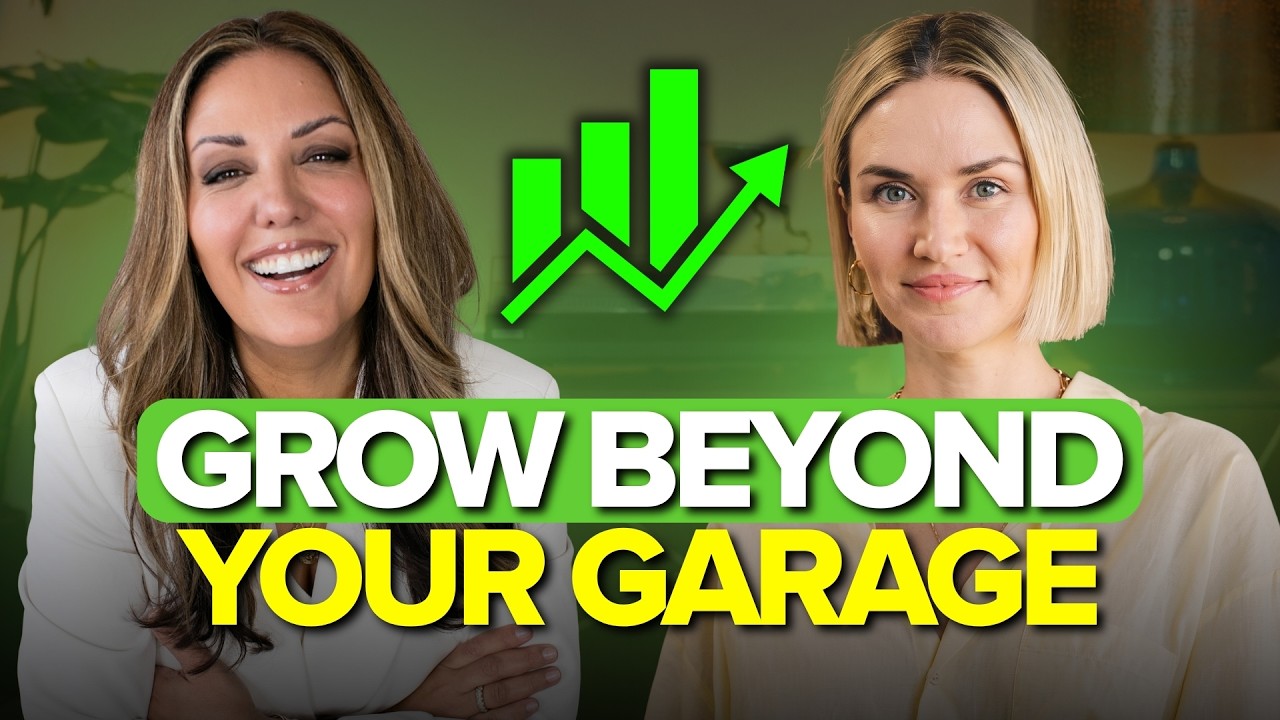
Katerina Cirilli, CEO of Saltbox, explains how product founders can outsource fulfillment and operations instead of running everything from a garage or kitchen table. Saltbox offers flexible warehouse units, 3PL services, and shared equipment that save founders time (a 14-second walk to the dock instead of constant UPS chases) and reduce costs through regional carriers and equipment sharing.
Chapters
Okay, real talk. If you make a physical product, at some point the stuff in your house or your warehouse or wherever you're making, selling, and fulfilling your product literally takes over your life, right? Maybe your garage is full, there's inventory in the dining room, there's storage unit across town that you have to drive through, and you might be driving back and forth to ship, or you're chasing down the UPS driver. I mean, I know I've gotten into near-miss accidents when I was trying to hit shipping before the end of day, right? So you didn't start this business to run a warehouse and the operations behind it, but somehow I know you're running one because this is what I've heard from so many of our listeners and our students. And so there's this part that nobody really talks about, right? We, a lot of times we talk about marketing and we talk about product and we talk about sales. And in fact, most of my students come to me like, how do I keep growing my business? But one of the things that we talk talk about here at The Product Boss is how do you lead the company, run the company so that it can grow. And so today I'm bringing on someone that's really special to this world in terms of operations and what it can do for your business overnight. My guest is Katerina Cyrilli and she is the CEO of Saltbox. And I want to be honest about this for a quick sec. Before I knew about Saltbox, I wasn't really sure what co-warehousing even was. So I'm going to ask her questions that you are probably wondering too, right? What is Saltbox? How does it work? And why would you as a small product-based business or a growing product-based business actually need it? Now, what I love about Katerina is she spent years running operations, kind of all the things that us as product people or creatives are like, we don't really want to be in the ops, we want to be in the creative. And so She was at Shipt before Target bought it, and now she sits down with thousands of product founders right at the point where their business outgrows the space that they're currently operating out of. So she knows this really well, and I'm excited to bring on Katerina. So let's get into it. Katerina, welcome to the Product Boss Podcast. I'm so thrilled that you're here.
Super excited to be here.
So you are the CEO of Saltbox, which is absolutely incredible. And I love to interview female CEOs in the industry, and especially this one specifically because Saltbox is so aligned. We were talking about this before we kicked off the show, just how we have crossover clients. And what you've created is such a gap For, or what, what Saltbox has created is such a gap for product people. So just kind of give me a quick rundown of like who you are, what Saltbox is, just like a, like a really quick intro, and then we're going to dive into the meat and potatoes.
Yeah, absolutely. So Saltbox, we are an operations hub for product-based businesses, particularly starting and scaling product-based businesses. We combine flexible warehouse space. So think modular warehouse ranging from 100 square feet, the size of a closet to a couple of thousand square feet, the size of a middle America house, as I like to call it. And we combine that with services similar to ones you might find at a 3PL, though we approach it, I would say, quite differently. And not everybody opts into all of the services and a community of like-minded entrepreneurs on site. And most of our customers are working on site every single day, engaging Uh, hands-on with their product and also with other entrepreneurs in the space.
Yeah. Amazing. And so Salt Fox didn't really come out of nowhere, right? It started with a founder who was running his business and it was like this rough warehouse. And I, and I know this from when I talked to my clients or my members as well, where, you know, it's like kitchen table, their garage, their basement, um, you know, something like their back barn. They're, they're really like overflowing within their house. And so kind of tell me where Saltbox came from. How did this idea come to life? Because it is so incredible.
Yeah, absolutely. And I think our founder story is one of the things that makes the offering so crisp and clear in what it is. So our founder, Tyler Scriven, he worked at a very, very fast-paced startup in Silicon Valley. And he and his family relocated to Atlanta. And like many other entrepreneurial obsessed leaders at the time, he bought an e-commerce business and he operated that e-commerce business out of his garage. And the juxtaposition between operating a business That there's probably no real process for your building relationships with the UPS man. And I think he tells stories about literally bribing drivers, chasing them down the street to pick up your orders. That compared to working at a startup in Silicon Valley where I think that they, don't quote me on this, I think they had a a private chef on site, like a Michelin star chef or something crazy.
I do too. It's my husband. Exactly.
There you go. There you go. And that stark difference, and he just had this realization, there has to be a better way, right? And in many ways, that is what really created Saltbox. And that's where he thought of the high-level idea and that There's a lot of obviously capital needs in an early stage company. There's a lot that just founders don't know. I think the thing that I personally have been obsessed with, and I think what really attracted me to Thoughtbox, I am a business operator at heart. I am actually very, probably very, very different from the majority of your audience. I would love to start my own product-based business, but I would have no idea What to start. And I don't have that, like, I'm obsessed with this one core thing. I'm going to nurture this, like, one product. And I don't have that, that sales, like, spark and charisma that I think a lot of product-based founders have, right? And what we always say at ThoughtBox is Most product-based founders don't start their business because they are obsessed with operations or logistics or really anything along that process. They want to create a product and they want it to get to their customer in a thoughtful way. And the simpler the better, the less time it takes the better. They want their time back. So we talk a lot about time. And for me, when I, when I found Saltbox, I was like, wait, this fits what I'm great at. And I want to deliver the thing that I am great at to our customers. And I think that the evolution that has happened over the last 4 or 5 years is we've only further leaned into that method of delivering that message and that we know what your business challenges are and we want to help you actually solve them versus just providing an open-ended blank slate for you to plug into.
Absolutely. I mean, it's very aligned with what we do here because a lot of times people, they want the brand, they're building the product, they're, they're in love with that and the idea of the end customer. They want the sales, they want the visibility, but they're not necessarily running the business. And I say that here at the Product Boss, we help them build the brand and the business behind the brand. And it really kind of goes in our framework of their leadership, how they run the company, and then, then it gets to grow. And a lot of times, And we've seen this. I have clients that have been on Shark Tank over the last couple years. If it grows fast without the operations behind it, it will break. And I ask this almost every week on my workshop. I ask people, if you were to triple your sales tomorrow, could you handle it? And people are like, yes, I can. I'm like, I don't know if you're fully thinking through.
They're like, well, I can call my cousin and they can help me pick my orders. And I'm like, well, I hope you have a lot of cousins.
Yeah, a lot of cousins. So they all live near you. Because logistically, like logistics, it doesn't work. I have a client that's growing a $5 million company. She'll have 2,000 orders in a day or, you know, 2,000 in a week and people are calling out. I mean, right now is this crazy time where we're hiring for help and if they're contractors and part-time, they're just not showing up. So I think that there's this breaking point, exactly what you're talking about.
Yeah.
One, knowing operations and that you guys have really solved for a big part of that in terms of fulfillment. Um, but also, also knowing what we're good at and knowing that there's, there's support out there that we don't have to build an entire fulfillment team by ourselves or call all the cousins, right? You guys are handling that.
Yeah, absolutely. And I would say a big thing that we see with our customers all the time, and I think one of the beauties of our offering is it's not like a 3PL where you just ship away all of your inventory at once and never see it again.
Right.
You keep your product in your space and you can dabble with fulfillment and really see the returns in real time, right? We joke about this all the time, but we'll, we'll identify customers and we're like, wait, like, first we'll start with organizing your space. So we have, we have some, some members where they're, I mean, again, they've never done it before. So there's just stuff everywhere. And we come in and we say, hey, let us optimize not only how it visually looks and feels, but also let us build a flow in your operations. And I promise you it'll save you time. Half the time we'll do it for free. And our operations VP is going to hear me say this and get mad, but we do. Well, we'll come in because we know the value that it provides. And From there, the process gets faster and we're like, let us help you during peak hours. Let us help you when you go on vacation. Because as a business owner, you don't really get to do that very often. And you see the returns so quickly because again, the efficiency with which we can do the work, the quality with which we can do the work, and Then you get your time back. And when you get your time back, you realize you can spend that time making more money. You can spend that time doing product development. You can, there's a, there's a whole slew of things that you could be doing that are so much more valuable than picking orders. And we help enable a lot of that. And again, I think for a lot of people, it takes dipping your toe into that because to your point, like, Even if the orders do come, what are you going to do?
Yeah. I mean, I've had, again, like I had a client who was on The View and this is the best. So they're on The View. They sold out of like, I think it was like multi-six figures in 24 hours. And she's on the call with The View and they're like, can we talk to your shipping department? And she mutes it and she looks at her husband and she's like, they want to talk to the shipping department, which is them.
Right.
So I think it's so important that people feel supported, that they can grow and that they can hold the business. So tell me about the ideal product boss, the ideal product person that right before they're like, oh my God, I need Saltbox, why would they move from their garage or their kitchen or their studio or their barn and say, you know what, actually now is the time that I think it's time for me to go here? And even, I just want to say, And I teach people this too with hiring. It might be before you think you need it so that the company can grow. So what do you tend to see?
Absolutely. Uh, I think there's 2 core components. One is very operational, right? A lot of the way that we not only talk about Saltbox but see the value in Saltbox is the loading dock. We call the loading dock the, the heart and center Of, of our locations, right? And that's both for product-based businesses. It's, it's for inbounding and outbounding, right? So when you're inbounding pallets of product from wherever, a liftgate costs a lot of money.
Mm-hmm.
Uh, your neighbors get really angry when you have a truck parked outside your house for hours because you're trying to offload product from that truck. There's just a lot of very frustrating components that happen and you can do it once or twice, but eventually you're like, dang, that's, that's stupid. The bigger component is on, is on the shipping side. So when you work out of Assault Box, you go drop your product at the dock at any time of the day. And one of our core principles is we clear the dock every day, meaning your, all of your product goes out. It doesn't matter if you're there when UPS picks up or FedEx picks up or regional carriers, which you can plug into their network and save money picks up. We make sure all of that happens. And walking from your unit to the dock takes like 14 seconds, and driving from your house to the UPS store takes a lot of pain and frustration and time. And again, that's like, that is completely wasted time, right? So what we often tell earlier stage founders, like you were saying, for some it should, It should be earlier than they realize because we say, hey, like ascribe a dollar amount to your time and calculate the amount of time you're taking driving to and from whatever shipping provider every single day. And that really quickly adds up.
Mm-hmm.
So I think that's, that's the more operational piece and there's 100 more reasons and I could talk about them forever, but I think the emotional side is almost bigger. One, when you're working out of your house, it doesn't feel legit. That's maybe the biggest thing that we hear from so many founders that join ThoughtBox from their house is they're like, wait, I didn't feel like I was running a legitimate business until I got here. And they literally will walk into a facility. And I love doing tours sometimes because there's so much power and Somebody that's never seen the product offering, they walk in and they're like, oh my God, this was built for me and I didn't know this existed. And they almost immediately feel like they go from running this hacky thrown-together business to a really legitimate operation. And again, a part of it is a feeling. And then there's the relational things. All the time, often, Crazy, crazy often. And I don't know how often you hear this, but we'll have people and they're like, my husband was going to literally divorce me if I kept all of my crap in the house and I just had to get it out. Like the number of times we hear that story, like it sounds like a joke.
Relationship saver.
Yes, 100%. So it's all of it. So there's the emotional component of like, once you feel like your business is legitimate, you start focusing on it differently. You start engaging with it differently. And We've seen sales, like the number of quotes we get about my sales just magically grew because again, it just felt like a legitimate business and I was working in a different way because I was leaving my house. And the community aspect is important too, right? Like getting input from peers that are doing the same thing. Like we see like no competition in the space. Like, I don't know if that's a Thought Box special, but Everybody wants to help everybody. If you have, like, again, we just went through this whole tariffs thing, right? Everybody wanted to help everybody on how they were getting around tariffs, on what they were doing and how they engage with their customers around tariffs. Just a lot of power in that overall community. We see that really come to life and help unlock things, open doors. You mentioned going on shows. We have this little network of Good Morning America brands and they're all sharing tips and tricks. And Good Morning America is going to hate us because the OG person that went on it was like, oh, you need to negotiate this into your contract and don't make the mistakes I did. And they all learn from each other. And And there's just so much power in that.
Yeah. And I love that because at The Product Boss, one of our core tenets is collaboration over competition. There are enough customers in the world to buy all the candles, all the jewelry, all the shirts. Like none of us buy a singular brand. Um, and I come out of the fashion industry, so I had an office for over a decade in downtown LA in the middle of manufacturing, but we were all behind our closed doors. Like I would pass another, you know, fashion brand and we weren't sharing who our cutters or sewers were. And of course there's like proprietary. But that was the thing. And that's how The Product Boss really got started is I felt so alone in the industry. And, and even in the world of work-at-home versions of us now, post-pandemic, I do not like working out of my house. Like I don't, I'm meant to be around humans. I'm, you know, and, and in collaboration, because I think in creative businesses, what are buyers doing? What's happening with shipping? Do you have a better place to source boxes from? It's, There's things that aren't going to undercut, right? We get to be in community. And that's what I've been working with your team a lot. I'm really excited because I'll talk about that in a sec. But I've been working with the SaltBox team on how we can really bring together, because we're serving the same people, and what can we create from a community perspective? Because I know that we also know that both the SaltBox members and the people at the Product Boss, we want more places to be together and in collaboration.
Yeah.
So love that component. I actually want to kind of back it up for a sec. Um, what do people use the spaces for? Because you can get your own space. So are we— are they making— I'm going to ask dumb questions for people here. Are people manufacturing in the space? Do they have desks and they're operating in the space, or are they really just bringing finished product that needs to be packed and shipped? Like, how are they using the spaces?
All of the above.
Okay.
And that's the beauty of it is you can use it for just about anything. Um, there are micro rules, like you can't be crazy loud or have like the super, super intense machinery set in the most human terms. But for the most part, that's the beauty of the box is it is your, it's a white box, right? You can do anything you want with it. And we see so much variability where some brands are actually putting together their entire product in the space and also storing and also shipping from it. Some are only shipping. We have some customers that have grown and are now shipping out of multiple locations to save on shipping costs. We have some that are actually only doing the manufacturing side because they have a storefront. So a whole mix of things. And I think that that's been one of the most powerful things. The big thing again for me that it always kind of goes back to though, it's the loading dock, right? It's how are they using not just their unit, but How are they engaging with the shipping or saving component? I think that's one of the biggest differences between any, us and any other, um, just flexible, whether it's workspace or, uh, warehouse space, is the dock operations are so comprehensive and we just make sure it all happens with a really high degree of like hands-on support and quality.
Yeah, I love that. And, you know, I hear this in a couple different ways. One, a lot of people will tell me, I don't want people coming into my house. Right. Maybe they've got kids or they like small spaces that they're working out of. They just really can't conceive people coming into their homes. And so I love this as an option because you can have whatever portion of your business at a Saltbox and have somebody go there. So whether it's, you know, labeling, packing, shipping, and just fulfillment or other components of it. Um, so I love it for that. And, you know, we have to like, Different clients. One's an ex-client. Well, not ex-client, but she's no longer actively in it. But we have Tiffany of Chunks who we helped when she first started Chunks. And I freak out every time I see her stuff in retail stores. So I'm like, yeah, well, it's like better than seeing Reese Witherspoon in real life because I'm like, ah, you know, whenever I see client stuff in real life. So I know that she's at the space. And I remember when she—
I think she was like our first, first or one of the first Seattle members.
Yes. And she's an amazing person to watch, everyone. Like, we'll tag her in the show notes because she does really great content behind the scenes in the warehouse with the team and kind of helped her when she transitioned from this other business that she burned down to then what Chunks was going to be. The other person who I'm obsessed with and currently still work with is Martha of Story Goods. So she does, um, View Sugar Cubes. She's growing, she's scaling, and she's also there. And if any of you are listening, DM me and be like, oh, we're at SaltBox too, so I can shout you out.
Please. Yes. Yes, let's ask.
The way that I explain Saltbox is like a WeWork for product people. It makes sense because we don't need just a desk with a computer, um, or a quiet room. Of course, that's for one part of the business, but this is really a space that we get to interact in and create the product or fulfill the product. And there are spaces, there are spaces within the Saltboxes for computer work and networking and just hanging out as well. Right.
Yes, absolutely. And I think that a really good analogy, and I don't know if this is politically correct to say, but I'm going to say it, or politically correct might not even be the right word. But I think a good analogy is if you look at a Planet Fitness, right, you pay a low membership fee, and you, you can go there and there is workout equipment. And you could be just starting out, or you could be far along. And like, yes, theoretically, you could go work out there. And you'll have a fine experience. There's absolutely nothing wrong with it. And I think that in the, um, in the, call it space industry, uh, there are a lot of spaces you could work from and to leave your house. You couldn't go to a coworking space. You can go to a coffee shop. You could get a warehouse somewhere in your city and all, and those options exist. We like to think of ourselves more as like a Lifetime Fitness where you walk into a Lifetime Fitness and you immediately feel that that space was created by somebody that understands what your day-to-day looks like, what your experience is, and what your challenges are. And the space is purpose-built for you. It's not just a generic space for anybody. And I think that's where, like, we have content studios in every facility. They're fully equipped. They're free for any of our customers, for any of our members. They can use them anytime for product photography, for personal use. I mean, whatever it may be. We have meeting rooms, like I said, that elevates the professionalism of your brand. We actually have a really great story where one of our members came to us because she does gift, like custom gift boxes, and she was or in PR boxes. And she was in Los Angeles starting to work with larger and larger brands. And she started a conversation with Nike and so excited and they're getting ready to sign the contract and they're like, hey, like the last step in the process is we need to come see your office and your production area. And she was working out of her garage.
Mm-hmm.
So she immediately panics and is like, I need a professional working environment where I can not only bring Nike, but also just generally Engage with clients, and she's working with really large brands again. This whole time has been out of her garage. Sign my salt box like two days later, and in fact, even I would say better story and really great plug because we a few months ago were walking our Atlanta facility with one of our investors, and we randomly will pop into our members' units and ask them about their experience. Always. Completely unstaged, and thankfully it all has always gone well. But we go into this member's unit, and this is the member from Los Angeles. She's now in Atlanta, and she tells us she wanted to get out of LA, wanted to get out of the LA traffic, and literally pulled up a map of where all of the salt boxes were. It was like I'm only moving to a salt box city because again, I need a space that is so purpose built for me. I want to be in salt box. So she moved to. Atlanta, and fabulous that she told one of our investors that, right? Like they were like, "You paid her to say that." We actually had no idea.
Yeah, I mean, and you guys have, and and we'll put a link to all the Saltbox or to Saltbox, and you guys can check out the locations.
I know you're opening up two new locations in Chicago, which is is a one new location in Chicago, and then we have a new location that actually is officially we got our certificate of occupancy today. Uh, for a really large Atlanta expansion. So we have a large new building coming in Atlanta and then Chicago will be a brand new market for us. Yeah.
Cause we have, and we had just done a, um, a whole event in Chicago. And the cool thing is, is like so many people drive in, you know, in, in that area because Chicago is so central. So I love where you're all setting them up. Like there's a couple in LA and, and, you know, we're going to be, we're hosting our event at Saltbox in Phoenix in September. Which is really exciting. Um, beautiful space. So everyone that does sign up and come, we're going to do a tour. I think Ashley's going to be there with us. We'll take a tour and kind of understand what operations looks like and what it's like. So that's going to be super exciting because it's this place of coworking. And what you said is so important because I was dealing with a client that had an elderberry company and there's a lot of, you know, there's certain, there's certain places have cottage laws that you can be at home. And, but as you start to kind of grow your business and she wanted to get FDA cleared or Was it FDA or I don't know, it was something.
Yeah. Regulations.
So she was doing it officially and then they came to inspect and then that was a whole issue.
Yeah.
So it's, I, you know, whenever I'm not a lawyer, but I'm always telling my clients like, we want them, I'm like, let's build this, that it's really legit so that when you are ready to grow, you don't have to catch up on the back end of it, but rather you're ready for a Nike or you're ready for Uh, you know, somebody to come inspect the space and, and you're supported. So one thing I do want us to touch on is the holidays. Um, when I launched my brand Cups Couture, I remember I, I launched, it was crickets, and then all of a sudden we got picked up by press. We were like in In Touch magazine when magazines mattered. And all of a sudden just sales started to roll in. It was nuts. And it was between Thanksgiving and Christmas. And I was going away for Christmas and I remember, thank God my stuff was so little. I packed it up all in the car and I was like going to this tiny little—
That's incredible.
Yes. It was crazy. It was nuts. It's great. It's one of those great stories, but we were in the middle of nowhere, like farmland, Northern California, and there was a tiny little UPS store. And I remember like making this stuff in my in-laws' house and driving it down and shipping every day. And thank God it was little and light, um, because I could put it in our car. So one thing I want people to start to think about is the holidays. So how can Saltbox help people? Like, let's say they do want to be with their families during the holidays, or that they, um, do have a vacation, or they want to go to their in-laws, or I don't know, go skiing or go to the beach. Can Saltbox help support people during the holiday season so they don't have to be there fulfilling all the orders from like Black Friday to Christmas?
Yes, absolutely. And I think that's again one of the beauties and how we differ from a 3PL, where with a 3PL, it's It's really an all or nothing. With Saltbox, that's not it at all. It's the very custom fulfillment experience, and we will walk you through the entire process. So a lot of our brands that are on that, like, whether it's hypergrowth track or they haven't ever done a peak season and this is maybe their first large year, we'll sit down with them ahead of the holidays. And we'll talk through where we can be most valuable. For some brands, it could be just kidding, right? Like they're like, we sell these different packs of stuff and we can slap a label on it ourselves, but putting it together is what takes the most time. So maybe we start now and we really tried to get out ahead of it. For others, it is actually packing and shipping, and that can look 100 different ways, right? Like For some brands, they want to maintain some level of hands-on engagement with it. So they might be actually in the space with our team through the entire holiday season. For others, they want their first year back with their family. They want to be able to take a vacation. They actually want to be able to spend the holidays planning for Valentine's Day or whatever the next big holiday is. And we allow for all of that because we can do any or all of the work on your behalf. And we had last year, I think a really great example is our largest, I think at the time, fulfillment or sorry, fulfillment customer was Tin Can. And they were really big last holiday season. I don't know if you remember, were a part of that craze, but they were doing really large product drops. And I think the unique thing with a product drop is orders aren't just coming in, you're having to ship Like they were actually just waiting for inventory, which is why the drops were happening. And they were shipping thousands and thousands and thousands of packages all at one time. So we worked together ahead of that season, their operations leader on site and our operations team and built a plan for us to really just take over all of their operations and ship all of their products on their behalf through the season. And That avoided them having to hire a staff, et cetera.
Yeah. I think you can turn on and off is if you, it's like once it's on, it probably stays on, but if someone really has a lot of people, right. But like if you have this moment where things just get really big, it's like instead of panicking, you know, you've got the support of Saltbox. Yeah.
And I think that there's a lot of power on, because for, I think a lot of brands that can sound, um, Like, hey, I'm not there yet. I aspire to be there, but I'm not there. I, I would love to have a demand problem. Like we hear that from a lot of people. I think there's also the inverse side of it. And I think one of the powers of our spaces is in the crowdsourcing component. Meaning if you need us to pack 3 orders that day, we can do that also. And if you're like, if you're out of town and you need someone to come pack 3 orders, you don't want to hire somebody for like, what, an hour to come do that? Like no one's going to do that. No one's actually going to go do that. If you need something super flexible where you need like an hour on Monday and 3 hours on Tuesday and 14 minutes on Wednesday, and it's super variable throughout the week, we can do that. And I think that's the power of us crowdsourcing labor, right? Like we have a team on site and we don't care if you only need an hour this day because we have so many other customers and We're filling a full day of Fulfill Network. And that's the same with a lot of the other offerings on site too, right? Like you have access to equipment, to warehouse equipment. It's really expensive to buy warehouse equipment and keep it around your house. It's actually really expensive to buy warehouse equipment and put it in your own warehouse. But because we're buying it for 100+ companies, you're all now sharing it. And well, you're not paying for it, we are, but It allows us to keep the costs where they are. Like on the shipping side, there's a lot of value in that. We don't just work with the large national carriers, we also work with a lot of smaller regional carriers, which, hot plug, they have typically way better SLA performance than the large national carriers. Just most smaller brands either one, don't know about them, or two, can't plug into their network. Because there's no singular place to do so. And we have that flexibility. So I think for us, as we look at even the next few years, we're just trying to figure out how do we get more of that so that for an early stage company, whether you're shipping 10 products a week or 10,000 products a week, you get the same opportunities that the Targets and Home Depots of the world have. Hmm.
So good. Hey, Product Boss, quick thing before we keep going. If any of this is hitting home and Saltbox sounds like the next step or the next level for your business, Saltbox has set up a super special link for you. It's a way that you can book a free tour of a Saltbox near you, and I'm gonna drop the links in the show notes, or you can go to saltbox.com/theproductboss. All right, so just go to one, walk through, talk to the team that's there, see the doc, meet the team. Picture your business there and what's possible, especially for this holiday season. And it's going to be really inspiring of what's possible for you so that you can get the support that you want in the space and you can get people and stuff out of your house, out of your basement, out of that warehouse, out of chasing the UPS truck down the street. And this link is really special for the Product Boss listeners. You are going to get a $1,000 sign-on bonus towards your 3rd month. So all you have to do is go to saltbox.com/theproductboss. I'm going to drop it in the show notes or type that in. That's the way you're gonna get that $1,000 sign-on bonus when you become a member by October 30th. All right, let's get back into the show. What's something that you think that people wouldn't expect Saltbox to provide that is kind of like a sneaky little thing where, um, you're like, you know what, we actually also do outside of all of this?
I think to me it's the consultative piece. So our team, every single one of our leaders, the one we have a staffed facility and we're staffed 9 to 5 and the onsite staff actually knows what they are doing. They all come from backgrounds where they've worked in warehousing before, they've worked with retail or retail backrooms. They understand not just how to sell a space. In fact, a lot of them are not the best salespeople because that's not what we're hiring for. We hire people and we train leaders that can really understand your operation and provide consultative support for you. They can connect you with other like-minded entrepreneurs, whether in that same space or another space. And I think they often will— one, they are actually the number one biggest thing that's shouted out anytime we send out surveys or get member feedback. The number one biggest thing we hear is your onsite team is absolutely amazing. And it's not because they're throwing pizza parties or whatever onsite. They do that too. But it's because they come into your space, they really care. They're going to give you sometimes input on things they've seen that have really worked for other members. And I think that creates this, like, again, it adds to the overall community.
Yeah. I'm going to add to that because I've been pretty impressed by what I've been involved in, which is the education component. Like you guys are also, because not only is it that onsite, but there's also this level of this online community. Like there's, the networking that happens. And then I think there's also the constantly supporting founders at every stage with education. And I think that's where we really cross over, the Product Boss and Saltbox, is wanting to help people build the business behind the brands and so that they can grow the thing. And we're solving for the— because there's not a lot of people serving physical product owners.
Yeah.
Right? But then this is the industry that AI is not coming for, like, AI is going to support, but like, this is the business that I think is going to create more of them.
There's going to be more people that are creating businesses because it's easier to get started technically, but the backend and the physical operation is the hard part. And you're right, no one's doing that.
No. So like, we're, you know, and so that's why I think it's so beautiful when we find collaborative partners or people too that have a very similarly aligned thing because product is product. It's been since the beginning of time. We've needed a mug, we've needed clothes to wear, and now what we've created. So I do love that. I think that there's— one of the biggest things I hear from people, which is why we've started doing more live events and things like that, are that people feel alone. And that's how when we started the Product Boss, it was very lonely being a product-based business. Education online wasn't for products. And so this to me is so exciting because it puts you in a space Where other people get what you're doing. They understand that November is psycho and you may or may not see your family, but also being at Saltbox means that they're, they're willing to kind of level up and start to get support and infrastructure so that they can start to shift it.
Yeah, absolutely. And I think for us from day one, it has come from a place of one, like I said, we know that No one is in this because they're obsessed with logistics. So all we can do is try to help and support. And that's the part that I get the most obsessed with. But then 2, if we can help the brands that work out of our facilities be successful, then they're going to stay. You know, like the last thing we want is for us to bring in a bunch of customers and then they all go out of business.
That's not—
Right. That's not the goal.
Right. So what do you think, what's possible? What have you seen happening? Could be specific member stories or just from you from an ops perspective, because I know even for us, when we have really solid operations, it allows for the creativity, it allows for the visionary, the vision to come back in. What do you see happen for product-based business owners when they get their time back, when this part gets solved for?
Oh my gosh. I think the biggest thing is, and actually I think I heard this on another one of your podcasts and I don't know if this is like a larger tenet, so hopefully that's what I'm referencing. But one, time is a huge thing. It is a huge thing for all of us, right? And I think the big question that I would ask any founder or product-based business owner is, What do you want to be doing? What is it that you're great at? That's actually probably one of my biggest leadership tenets. And anyone on my team would tell you, I'm obsessed with putting people in the right role. I'm obsessed with putting people in roles where they can work less hard and be more successful. And I think that's true of founders. I think the challenging thing is, as a founder, you're typically doing it all and you're kind of stuck doing it all. And when you really ask yourself, if I was to get the 10 hours back, It's going to vary person by person, but they're always going to have an answer 100% of the time. And the thing that they're going to do with their 10 hours back is not like mess around doom scrolling Instagram. It's, hey, I'm going to do something that really returns back to the business. We, again, I would say some interesting ones that have surprised me is we've, because we ask this question all the time, we had one founder recently tell us She started going to trade shows. She was like, I never actually even got to go to trade shows because I was so physically tied to my product and being at home. She, by going to trade shows, started building retail relationships. She wanted to get her product into retail. Her product is fairly expensive to ship. So there's value for her to be in retail. And by going to trade shows, that's something that was enabled for her that otherwise would have never happened. Um, and for her, we actually only pick and pack her orders. when she is traveling and when she is offsite. So again, she's one that interestingly utilizes that way. I think the other thing with similar founders is once they really take a step back and look at their business, it helps them make smarter decisions. So I was in Miami, we did this big member listening tour. So in our Miami stop, engaging with the members there, our member in Miami told us that She recently, while looking at all of her business data, which shout out, you should always be doing this, she learned that the majority of her customers are on the West Coast. So she's shipping product from Miami to the West Coast every single day. Shipping costs are astronomical. They're only going up. We, in that, like it was originally supposed to be her giving us feedback on the experience, but it turned into this whole session on How do we get her or her product into our Los Angeles facility? She doesn't have that many SKUs. We ended up over the course of the next couple of months shipping a significant portion of her product to Los Angeles. Now she still works out of Miami. She lives there. She ships her product that's on the West— sorry, on the East Coast directly from Miami. A portion of her product now, she's in a smaller unit. A portion of her product now sits in Los Angeles. We ship it on her behalf. She saves a lot of money by splitting the space. Even though she's paying us to fulfill the product that's in Los Angeles, she is still saving money on every single package because she's not paying for shipping.
Yeah. Oh my God. It's like, so many things are coming up in my brain as an advisor and a coach because it's true. I mean, and that's why when I have had my clients that are like multimillion-dollar clients, they have different locations of 3PLs, right? Or A lot of Midwest so that it's cheaper to ship to the different zones.
To everywhere.
Yeah. But this is genius. And I actually, it inspired something. I work with a lot of Canadian companies or people in the UK or, um, Australia and New Zealand that want to enter the US market. Canada, sometimes it's cheaper for them to ship to the US than within Canada, but it's also, I think, a really interesting move for anybody. So for my international listeners, Something to really consider that you could have this home-based space with a salt box in different locations, states, and then you don't have to worry. Like Canadians especially, I'm thinking about them, um, because some people are like, I'm just over the border, and it's like, how do you just get— plug it in here? Because the thing about 3PLs is they're expensive. You're paying for storage. It's just like there's so many logistical things that don't make sense at these smaller brands. So if they get to have the space and turn it on or turn it off or like Level it up as needed. It just makes so much more sense for these newer brands that aren't there yet.
Absolutely. Yeah. At a 3PL, you have to have a really high throughput and you have to be okay with the give and take. And I would say there are plenty of brands that we talk to that are larger and/or brands that operate out of our facilities that we have advised to go to a 3PL. So we're very transparent. transparent about that. I will very quickly tell you if we're not for you. But the international piece is interesting. We actually have a pretty significant portion of our Seattle customers that are Canadian. Canadian.
Yeah.
Some of them, we're shipping for them. Some of them are doing their returns processing for the United States. So we do all of that. And we also in Phoenix, we have a lot of snowbirds in Phoenix. So they live in Phoenix, part of the year. And then when they are not in Phoenix, we actually ship all of their orders for them. And then we have plenty of, um, like, oh, Miami is huge for like Caribbean-based companies. So we see a lot of that. But then like fully international, there's flexibility, right? Like you can distribute product to multiple facilities. You could just pick Dallas as a home base. Because it is Middle America, there's a lot of options and, um, we can be really consultative in that.
So good. Yeah. I got goosebumps. I get goosebumps when I'm like, I'm like, oh, we hit on something. And because that is such a pain point a lot of times when I'm, cause our, our, you know, our listeners and our students, they're worldwide. And so, but then a lot of people are, you know, what we teach makes sense where they are, but then a lot of times it's how do we enter the US market?
Yeah.
Because we buy stuff here. We love—
You buy too much.
Coming to our doors. So it's perfect.
Yeah.
I want to kind of just switch it up a bit. You're a CEO, you're a mom, you're a woman.
I am all of these things.
You're all of these things. And I think that one of the things that I really— one, my mission in this world is to help women-owned businesses. I want the impact of The Product Boss to have a billion dollars. like made by business owners around the world that we get to be behind the scenes of. So it's $1 billion generated by women-owned product businesses and you're a part of that, right? Like this, uh, Saltbox. But for you, the other side of what we teach here is very much a life-first business. And I think Saltbox allows people to get their lives back in a lot of ways.
Yes.
Um, because why else are we doing this? I mean, at least for me, at least for my listeners. So for you as a mom, as a CEO, as a woman who works a lot and likes it. What's a life-first thing that you— like a non-negotiable for you that you're like, this is so important, I do this, but it's so that my family, my life, we get to go on vacations? Like, what, what's really important to you in terms of those values?
That's an excellent question. And I will say I am on top of those things. I am female empowerment obsessed. I've very unfortunately worked with a lot of women in my career that think that there is not enough room for all women to be successful. And that makes me incredibly sad. I have an executive team of all women, which is really powerful. And I do not work in a female-powered industry. I work in a very male-dominated industry in logistics. But I think with Just the way that I've always operated. And again, leading a team of all women, I try to be really transparent in the moments that I set aside for myself. And that looks a number of different ways. I think one, I, in the last probably like 6 months or so, I've gotten much more into my personal fitness. So I got a trainer, which has been a huge unlock for me because it It's a forcing function. Like, I've always been into being active to some degree, but I used to be like the person that was like, I'm going to get on the Peloton for 30 minutes in my 27-minute break. Now I have an hour block. It changes day by day based off whatever I have going on. But I'm like, no, that's my time that I'm at the gym. Like, and I don't have my phone. And the team knows I like, My calendar is public. They can see. They're like, if you're at the gym, we know what you're doing. Call you after. And having that time and space where I put on my workout clothes and drive to the gym, and it's like I'm going somewhere, and I have this new community, and it feels like something I'm doing exclusively for myself. And it's incredibly, I think, mentally supporting. And then again, I, um, I'm on the hot girl hamster wheel, so I like do the hair and like all the stuff. But, and I'm, I schedule most of that stuff during the work week. I am at the hair salon on my computer. I've taken phone calls with like foils in my hair. Um, and I, I do that because on the weekends, then it's easier for me to have time with my kids. And then it's also easier if I need to hop on And work for a couple hours on a Saturday and not like, oh, I have to work for a couple hours on a Saturday and take time away from my family, but also I have like a 3-hour hair appointment. So I think that's personally where I find balance is fitting it in and being transparent about it. Because I think the behaviors you model are ultimately what your team emulates. And what I have personally found is women are like crazy hard workers. But we don't like to do things for ourselves and then we burn out. So I've almost forced myself to model some level of health in order to make sure my team is doing the same.
100%. I agree. And I'm the same thing. I got my hair done this week and I was like, did you do it? Fabulous. I was like, I got this time and I got to do it. Yeah. I actually called—
Your hairdresser also works faster when you're on your computer. I've learned. I'll be at the hair salon way longer.
Yeah.
Otherwise she's chatting and yapping. But if I'm on the computer, like, she's magically really efficient.
It's part of the reason I don't do lashes or my nails, because I was like, it's not efficient.
So yeah, eyes closed, right?
Yeah. Um, I call it the blend. So like, yes, it's a— it's a balance is BS. Like, there's no way we're balancing it all. So it's like, it's like, it sounds like you're blending your days so that you can have the time on the weekends for what you want, but then sometimes weekends are going to call for it. And I do think, you know, spinning this back to Saltbox is this idea of what would it look like to be supported that you don't have to be doing all the parts all the time? And yes, what you talked about with like, I just remember I was in downtown LA, always traffic. Like you can go a block and a half and it takes 20 minutes. And I would be running from my offices to the major UPS like shipping place, trying to get there before next day, you know, before certain shipping things. And I'm like, I'm going to get in an accident on my way. So instead of that, it's like, how do we— I think that's one of the smartest things, and you're tapping into this, is being supported, really making plans of building yourself into your day-to-day. They say it, put your oxygen mask on before someone else's. And so it's taking care of yourself. And then it's looking at more efficient ways to do stuff, whether it's Sitting on your computer, getting your hair done, or not needing to be the person who does all of the fulfillment or having the one stop that you're like, it's 14 seconds to get to the loading dock. Right. All of this is, these are just more efficient ways so that we can operate better.
Yeah. And the thing my husband says this all the time, cause I'll every, I mean, more often than I like to admit, but I'll have like a mini breakdown where I'm like, I have 783 things to do and only time to do 4. And my husband will always look me dead in the eye and he goes, okay, what can you not do over? And that's always— and every time he asks me that, it's such a grounding moment because I'm like, actually, yeah, that's, that's a great question. And sometimes the thing that you can't do over isn't even the thing you want to do. And it might not be the, the most like fun or exciting thing in the moment, but Prioritize what you can't do over. And, uh, for me, that's often like, if that's a kid thing or with work, it like, sometimes I will prioritize the work thing over the kid thing because the work thing I can't do over, but it's one of many kid things or like whatever it may be. But that's the barometer that I like to use. And it's been really helpful to me.
Thank your husband for that tip. Cause that's a really Cool thing for us all to kind of bring in and be like, what's not the do-over? Because you're right, like, if it's multiple soccer games and you can't make it to one because there's a big opportunity, cool. If it's their kindergarten graduation, 100%, 100%.
And that's— I think that's how we have to think about it.
Yeah.
And then—
and I say that because I did miss my son's kindergarten, uh, graduation because I was actually in Thailand. But so that's—
wait, no, I missed my daughter's like Pre-K one because I was also in Europe.
So, and I think back with like, he was my first and so I didn't get it right. I was like, he's not gonna remember because— but I talk about it because of mom guilt that Will cares.
Yeah, cool.
We were both traveling.
I still think about it.
We're gonna have to let ourselves off the hook on that one. Okay, this is something that's really cool that I do, I do want to, um, you know, share with, share with everybody is that Saltbox actually offers tours. And so what I really want everyone to do is go ahead and take a look, like drop the link for SaltBox, like go and see if there is a facility that you can visit, a box that you can visit that's close to you, or, you know, within an hour's drive. I would say go do that. Or if you're coming to September's event, you're going to get a tour anyways. But tell us a little bit like about what a tour is like, how, how they set it up. Like why, why would they go on a tour?
Yeah, absolutely. And I will also plug, if you do not live near a SaltBox, Still reach out to us. Have a conversation. It might not even be like you might want a salt box in your city, and that might be the right solution for you. We are actively expanding, and the sooner you engage and reach out and get on our list, we are I would say annoyingly not spammy. I wish we sent more emails, but so yeah, please reach out and get in contact if you are at all interested in learning about us, and there might be a world where you plug into the community and to. Into the network before there's even a location near you. But a tour for us, one, you get to see the space. And I would say 9 times out of 10, I can sit here and talk to you about what Saltbox is and what we provide all day long. But once you physically see it, you have a completely different moment. You really understand that this is a space where that is filled with other people that are going through all of the same challenges that you're going through. You'll even walking the space. We try to custom build the tour around what your business is. So if you're a jewelry business, we have plenty of jewelry companies. We'll show you several other jewelry businesses that operate out of our facilities. So you can actually see like what their space looks like, how they use it, how they engage with, with us in our facility. Whatever brand you are running, I promise there is something somewhat comparable. Most of our facilities are 100 companies. So there's a high likelihood that you're going to find some relatability. But outside of showing you the space, we get to know you and your business and we talk about one, whether you're a fit. I think part of it is not every brand is ready and some brands think that they're not ready, but they are. Some brands, like I mentioned, might be better suited for a 3PL and we're super transparent in all of that, but you don't know until you have that really consultative conversation with us. So I'd really encourage that. And again, the whole purpose of the tour is for you to visualize what your brand would look like in the space. I think the other really fun caveat is, like I mentioned, we have sizes ranging from 100 square feet to a couple thousand square feet. So the number one thing we hear is brands come in and they're like, I think I need 1,000 square feet. It's really expensive. And then they actually tour and see the space. And we like won't tell them the sizes and we'll show them like a 250 square foot space. And they're like, yeah, this looks right. Like all of my product would fit in here.
Like they didn't get the product.
And that's the reality. It's like none of us know actually what any size is besides our, our location managers. They somehow like, you could quiz them and they now know square footage in a really creepy way. But I, I also have no idea. Like I'll walk into a space and I'm like, I don't know how big this is. This was a really big one. This was a really small one. So again, until you see it, you don't really know and feel.
Yeah. And how efficient it's set up and all the things. And remember, there's the other spaces that people can use also that are the cohorts. One really cool thing that I want my listeners to hear right now is it's so generous of Saltbox that you guys are extending a $1,000 sign-on bonus that's applied to the 3rd month of membership for anyone who goes to the page and the link that we're doing, which I think is So freaking generous. So thank you for doing that for the Product Boss. So everyone, I'm going to drop the link, click that link. So when you go through that link specifically, don't just type saltbox.com because you won't get this $1,000 sign-on bonus, but, um, go tour the facility. And then if you make that decision, you guys are hooking up our listeners, which is incredible.
Well, and we're doing that because we know your listeners know what's up. They have the education and resources that they need. And like I said, for us, we always want to bring in the right members into our space. And I think that they only elevate the overall community. And I also, I know you mentioned a couple, but I'm curious to know if we have any other members. I mean, we have over 1,000 members that operate out of our facilities. So yeah, I know we have more that are part of your Okay.
So exciting. I'm excited to hear what happens for our listeners and our community when they do start to elevate. I think right now you guys are going to be listening to this in September. There's still so much time to create the opportunity so that the Q4 is like, because our mission at The Product Boss is being in full support of our listeners and our community and our students during that season, because I want them to be able to make the most sales ever and enjoy their pumpkin pie. Right. And enjoy the time with their family. Because as your kids get older, especially, it's like, Time is, time is the most valuable resource, but money is a replenishable resource. And so I really want you guys to hear us and take the opportunity, go do the tour, potentially take this $1,000 sign-on bonus if that's available to you or ready for you so that you can enjoy the holidays and you have these opportunities. So, you know, you're supported in this moment and then we get to just keep building their businesses together.
Love it. Love it. Love it.
All right. Well, thank you so much for being on. And, um, I can't wait. You're going to, I think you're going to be, We're having Saltbox as a guest in the Collective, and we're going to be in your event space. So it's just— we're just— everyone keep an eye out because there's just so much amazing, incredible collaboration happening.
Thank you so much for having me.
Thank you for being on the show.