A Couple’s Perspective on the Road to 2025
James Barry and his wife Margaret Floyd Barry moved cross-country to Massachusetts, where Margaret was diagnosed with melanoma and James's father died within a week. They're learning to say no, value their time, and after Margaret's 50-mile birthday run, they're focusing on home ownership, jiu-jitsu together, and protecting space for rest in 2025.
Chapters
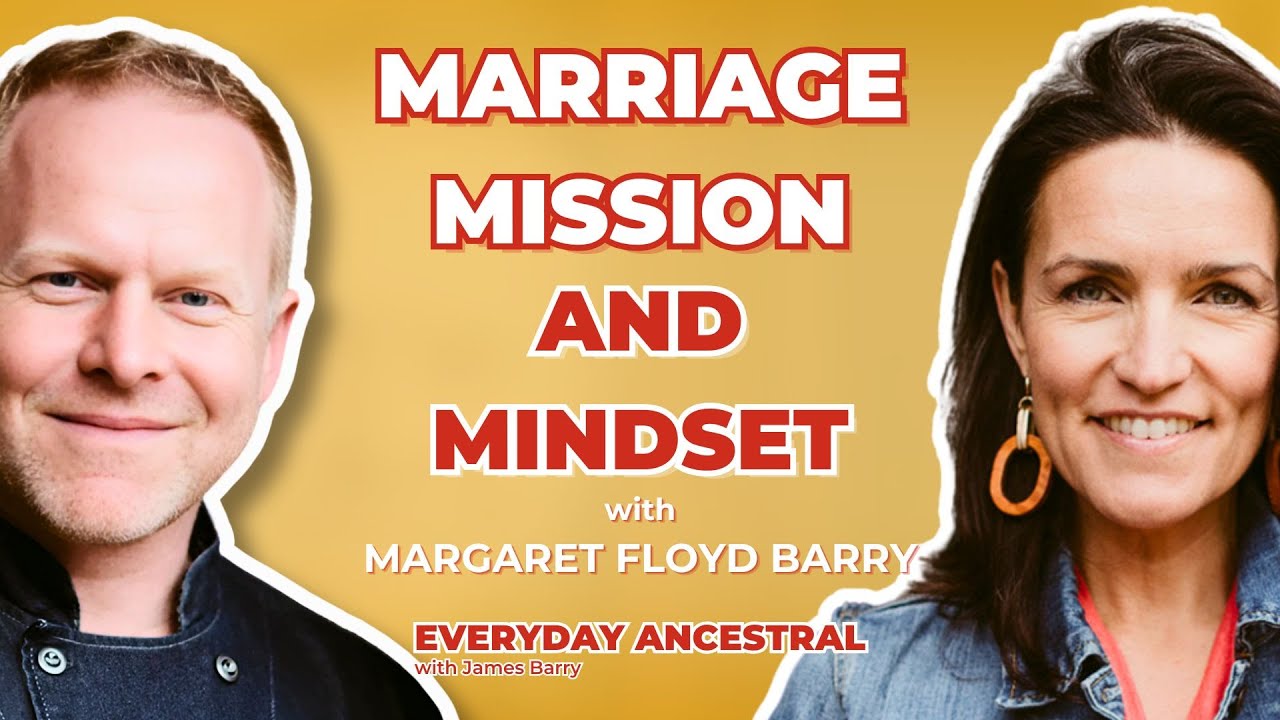
Welcome back to Everyday Ancestral. I'm your host, James Barry, and I cannot imagine a more special episode. Not only is this our end of the year episode, but this is our premiere episode where I'm introducing you to the one and only Margaret Floyd Barry, not only my wife, but an extremely talented writer, practitioner, and human being. Thank you so much for joining me.
Of course. Where else would I rather be?
There's nowhere else you'd rather be? I love that. Um, so I'm so happy you could join me, and I hope this is the first of many, um, guest appearances. But I just thought, you know, really, you're the one that gave me this idea because you did a What did you call it? A solo cast?
Ah, yes. I recorded my very first solo cast this week.
Yeah, so you did a solo cast where you just kind of talked about the year and all that. And I was like, you know, that's a really good idea. 'Cause I really love that. I mean, you and I have been doing that with each other since we first met where we talk, you know, we just kind of, at the end of the year, always check in and, Set intentions for the new year, and so I thought, well, why don't we do that with Everyday Ancestral? So to that point, to that end, I would love to oh I would love to just talk about. So let's let's talk about first our year. You know, I think this has been a monumental year. And it's funny, even though we didn't move officially at the top of the year, it feels like we did because when we first— so to give context, in 2022, the summer of 2020—
3. Summer of 2023.
3. Okay, sorry. Summer of 2023, we moved from the West Coast, Oregon, Portland, Oregon, to Massachusetts, to Newton, Massachusetts. We moved into a house that was really, like, not how we— it was presented. Like, it was a lemon in every sense of the word. Like, we got what we learned this year. We got mold from it. I mean, like, it's just—
Well, it flooded every single— the basement flooded every single time it rained. And last fall, for anybody who was in the Boston area, knows that we had record amounts of rain. So it was It was really foul. Our youngest daughter, Sasha, called it the house with the cracks or the broken house. Those are the two ways that she referred to it. Because even like the paint was peeling off the walls and it was an Airbnb, a long-term Airbnb, and the stuffing was coming out of the seat cushions in the dining room chairs, like literally rips with stuffing coming out. It just, I mean, the whole thing was so janky and gross. So you just, Kind of, if you've ever been in an Airbnb that you kind of just don't want to touch anything, imagine living there for 5 months.
Yeah, it was really not good. But so we, we fortunately were able to move pretty, you know, a few months we were there. What was that? 3 months, I guess.
And— 5.
We were there from August until the end of the year.
But we did move. You say we didn't move. We did move January 1st. We moved into this place that we're in now.
So we moved January 1st. So very much 2024 felt like Oh, we finally are in Boston area. We're in Massachusetts. And it was quite the year. I mean, it was a beautiful year of establishing contact with some amazing people that we hope will continue to flourish. Um, it was a time of establishing, uh, the kids with their friends in school.
Mm-hmm.
And routines, you know, you joined running groups, we found a gym, and yet there was still also a lot of hardship. Do you wanna talk about some of the things? 'Cause a lot of them seem to land on you. I mean, but of course I was affected deeply by all of them.
Well, can actually we reverse back before we talk about the hardship? 'Cause there was actually, I feel like there was a marker point, at least for me personally, and it also kind of felt like for the family, the midpoint of the year where it was actually very celebratory and awesome. And it was like from then, that point on, that things— like I think about this year and I think of sort of a first half and a second half.
Mhm.
And the first half, I think of it as this like fun, exciting progression where we started off in this new home, which is not our forever home, but it is a massive step up from where we were living before. And I think All of us felt this huge sigh of relief of like, like the other place was the kind of place you never wanted to take your shoes off in. Like, it's hard to describe how gross the whole thing felt. Like you showered and you were kind of like, I don't know which is worse, staying dirty or being naked in this shower. Like it was that kind of a decision that you made with everything. It was so awful.
Yeah.
And then, and we also, most of our stuff was in storage. Thank goodness, 'cause it would've all been contaminated by mold. But we, Moved into this new place is lots of light. It's really clean. You're like, not only feel comfortable taking off your shoes, you wanna take off your shoes cuz it's just like, it's clean, it's beautiful. It's not, it's not our forever perfect home, but it was a just gigantic leap up. So that felt so great. And the kids were really starting to, you know, they're making their friends and they're building their communities and we are making our friends and, and like really building our communities and. For me, this really culminated in my 50th birthday, which happened on June 1st, and where I ran 50 miles to celebrate my 50th birthday. And that probably sounds crazy to a lot of people. It's not that crazy if you know my personality. I'm sort of— I just really celebrate doing hard things. I love challenging myself physically and seeing how far I can go and setting goals that seem completely impossible and then— Just chipping away at the progress to then achieve them. And it was, I mean, I don't know how deep you wanna go into that. We don't have to make this all the Margaret show, but it was definitely a huge moment for me to run that far, almost double what I've ever run before, and to enjoy most of the process. You know, when I've run marathons in the past, I go dark partway through. Like, I start questioning life, I start questioning all my life choices. I think a lot of people wonder why I run marathons because it, you know, somewhere between mile, well, it depends race to race. Somewhere in there, I start to just hate every single step. And that is not like a, that's not a fun process. Whereas this one, I definitely had hard moments, but I never went dark and I enjoyed the whole process. It was really, it was just this celebration of this city that I love, this running route that I love. Some of my favorite humans on planet Earth flew into town and supported me on it and were running or biking with me. And it was just, it was wonderful. And one of the really cool things is that a few days later, I couldn't feel it in my body. And for anyone who's done distance running, you know, you run a marathon, you feel that thing in your body for like at least a week, if not a couple, like 2, 3 weeks after.
Amazing.
And it was, Actually almost alarming how much I didn't feel it in my body. Like, I was just so well trained, and I think I did it from such the right perspective, meaning I wasn't out to prove anything other than, like, I can do this. But I wasn't trying to, like— I didn't need a finisher's medal. I didn't need some specific time on the clock. Even my time— I had a time goal just to sort of guesstimate, you know, things like how much food I would need and how long people needed to stay, like, all sorts of things like that. But— It wasn't a hard time. And I did come in 30 minutes faster than it, even with, you know, taking sitting breaks and things like that. So it was, it was this fantastic accomplishment and I felt great right after it. So that felt like that was this like midpoint, this total high in, in the year. And then things turned.
And then, yeah, and then, then you got the call. I mean, not to go too, too in the weeds with it, but you got the call of potential melanoma cancer on your leg.
Well, it wasn't potential, it was confirmed.
Well, yeah. I mean—
It wasn't— it wasn't a— it didn't— it hadn't metastasized.
Yes, we didn't know how exactly. And then— and then we— we kind of got through that process over the— because it was— how long was it until you actually had the surgery? Was that a month or 2?
It was 2 months, which was a long time.
Yeah. So it was 2 months of just sitting in, okay, What, what's possibly gonna happen? But of course we weren't just waiting. We, you know, you immediately kicked into going to, to kotesis. Um, did I say kotesis? No.
Cotita? It's a new diet. It's a, wait till you hear about it. It's all the rage. Yeah.
Cotita cheese. That's what you did. No. Um, ketosis. Maybe just in case, I think this is a, was a big learner for me around the cancer scare. And I really liked how the perspective that I gained from that experience. And I'll say how I experienced or the perspective, and then you kind of chime in if you have a different one. But basically that we all have cancer cells in us, but what makes the difference between someone who has cancer and someone who doesn't is that those cells are not activated. So it's the environment, our internal environment that's going to potentially activate Activate those cancer cells. And so any cancer diagnosis should immediately be followed by efforts towards changing that internal environment. So, you know, how you— what you're eating, your stress levels, your sleep, you know, and ketosis has been shown to be very effective with basically starving the cancer cells. Is that correct?
Yeah, there's several different mechanisms, and I will be honest that I don't— I'm not the expert in cancer, but definitely the ketogenic diet has been shown to have significant benefits. I mean, for one, metabolically, it shifts things very significantly and reduces reliance on carbohydrates quite significantly. And there's the benefit of, like, not having the glucose circulating, high levels of glucose circulating, which can feed the cancer cells, but it's also—
Interesting.
There are protective benefits from the ketones themselves. So, it's not just about being low-carb, it's also some of the protective aspects of the ketones themselves. So, I remember when I first got the diagnosis, I immediately thought, okay, well, I've been on a bit of a carb party, because I've been running 50, doing these incredibly long training runs, and so, I thought, well, I'll dramatically drop that. And talking with a friend of mine who specializes in cancer, she was like, yeah, no, you go keto. into ketosis and you do it now, because it's not just about bringing down the glucose and the carbs, it's about the therapeutic benefit of those ketones. And I think one of the things I learned in this is, you know, as a nutrition professional, I have played around with pretty much every dietary paradigm there is, and on multiple occasions, I've tried to get into ketosis, because, you know, there's— and it's a diet that's out there. I work with it therapeutically with certain clients, and I wanted to have the experience of it so that I could be a better support to them. And every time historically that I have tried to get into ketosis, I have just— my body has rebelled. You know, we talk about the keto flu and how, you know, it can be a brutal few days or a week or two, and then you get to the other side. And I never was able to get to the other side historically when I had tried this. And I did all the things, like, you know, taking the electrolytes and like, I mean, I was doing— I was being very intentional with it. I was doing the right things to mitigate the impacts of that keto flu, and it just didn't matter. It didn't matter if I went in too quickly, if I went nice and slowly, it's just like my body was like, no. The difference this time, you know, and I remember thinking, oh my gosh, I have to go into ketosis. Great. Like, this is going to kind of suck. Except this time, it happened immediately. It was like almost overnight I slipped into ketosis. And within 2 days, I had— I mean, I had almost no symptoms. I was a little fatigued. And my brain felt a little extra foggy for a day or two as it just sort of switched fuel sources. But, you know, I was checking my ketones on the daily for the first few weeks, and I slipped right into really solid levels, and it felt like almost effortlessly. And I was like, oh, my body knows exactly what it needs right now, and what it needs is to be in ketosis. And so it's going to make it really easy for me, whereas in those other times— It wasn't what I needed. And for me, you know, I'm always talking about the bio-individuality of diet and how it's not— there's no such thing as one right diet for everybody, and there's no such thing as one right diet for you for your entire life. Like, your needs are going to change along with what's going on for you physiologically, what's going on for you in your life, what your health goals are, your training goals. Like, there's so many different variables, and it was just this very blatant example. of how our bodies really do have some powerful innate wisdom, and that when we can tap into it and listen to it, then it will really tell us if we're on course or not with a given strategy.
Yeah, that, that, um, that was quite the process. I mean, I— and, and where it led us, of course. So, so not only were we sitting in 2 months of kind of like, oh, is— are we gonna get Is it really bad news when you go for that surgery, or is this gonna be, you know, tied with a bow? What was it, like a week later? I mean, it didn't feel that long, then my father died unexpectedly.
Yeah, I remember that was a very intense week. Monday I had my surgery. Friday our kids came home from camp after being gone for the summer. And the Sunday your father died. It was a big week. It was a really big, hard week.
Gosh, it makes me like, even just thinking about the period, I can tell I have a little post-traumatic stress because it was just so intense. The lead-up to your surgery, the elation, seeing the kids, and then getting that call that night. Um, yeah.
And then, and then what, a week later, you're, you're It wasn't quite that fast, but it was, you know, a week later I got the phone call that he was not doing well and likely not going to make it for much longer. So while you, I think, were still away, I did a quick trip down to Texas to spend just a day with him to say goodbye, which was very— I'm very, very glad that I did even though it was hard and, you know, it's an inconvenience from a logistical perspective, it was absolutely worth it because a few weeks later he did pass. Yeah.
Yeah. And, and yet, you know, when we were talking, when people would ask, oh, how's it going? I'd be like, oh, it's a shit show. But there's so much to be grateful for. You know, the entire time I never lost sight with how much gratitude I felt for our family unit. For the friends and the people that were reaching out and supporting, and and then of course for what we have. You know, we're just so lucky, you know, to have everything we do. And I I think ultimately that is what this this is about today is just to end the year with you know that sense of gratitude and and then what's to come. You know, what, what are we, what are we focusing on in 2025? And I think we've already started to see some really big themes pop up for 2025. And there's even something I wanna share with you that you don't even know yet. I'm, I'm announcing it on the air. Um, but before we do, um, before I do that, what are some things that you're kind of, as the year comes to an end, that you're feeling grateful for?
And there's so many different things that I am grateful for. I mean, the most important things is our family unit. And I feel like each one of us has had our own personal struggles, but it's like busting through them and growing stronger because of them and not letting them sort of take us out. You know, watching our daughters find the things that are— they're really passionate about and leaning into those things and letting go of things that either they or we thought they quote unquote should be passionate about and trying to drive them in a certain direction, just letting them really find their true callings and soar in that has been huge. And being like the family unit that we are to me is like one of the most powerful and beautiful things in our lives. And that to me comes absolutely first before anything else. I think I'm so grateful that we took the plunge and made this bold move cross-country. Kind of into the unknown. People always ask both of us, I think, well, why Boston? Why did you move? Oh, did a job bring you here? And we don't have this like easy single sentence answer to wrap it all up nicely with a bow. And no, our jobs did not bring us here because we're both self-employed and can work from anywhere. So it was that our work, we have crafted a life that allows us to go anywhere. And so we took advantage of that and took a plunge and followed an instinct. And I think it was a really good— Really good instinct. I'm really grateful we didn't get to the next thing that happened for me, but I had a major knee injury at the gym in the middle of all of this. And nothing to do with the 50-mile run. I just need to say that out loud. Everyone thinks runners have bad knees, and it really— they're completely unrelated. But I dislocated my left patella and tore some ligaments in the process. And so I was on crutches, and I do not like not being able to move. Like, it literally was like life took me out by the knees and sat my ass down on the couch and was like, I'm gonna take away all of your escape mechanisms, all of your stress management mechanisms, and you're just gonna, like, come face to face with yourself and see how that feels.
And how did it feel?
Oh, I hated every minute of it. I hated it so much.
And what did you see?
Oh my goodness. I don't even know if I can articulate what I saw, but I did. Well, I, what I really did see is this constant pattern. You know, I'm a really ambitious person. I love big goals. I mean, the fact that I ran 50 miles to celebrate my 50th birthday while, you know, other friends of mine who are celebrating their 50th are like, Going to Fiji or like, you know, they're doing these like fun, relaxing, exotic trips. And here I am like doing this like crazy physical accomplishment. It showed me a tendency to overcommit. It showed me a tendency to never stop moving and a little overcommit, a lot of overcommit that I, that I really, I love running and I will go back to running very soon, hopefully. But I— I cannot use it to replace actually sitting in a space and coming face to face with my own stuff. I can't keep running away from it, I guess, is what I'm saying. And so I have now had the opportunity to kind of sit in my stuff and look at what is working for me, but also what really hasn't worked for me, or what really can't continue to work for me. 'Cause I'm a firm believer that even though we have these patterns that might no longer serve us, at one point they really did serve us, otherwise we wouldn't adopt them. My ability to sort of work myself into the ground and run myself into the ground is not something that I want to continue to do, but it's yielded some pretty amazing things. And I celebrate that while I also release that part of myself. I've been thinking a lot about the changes that I'm making as I step into 2025 and thinking of them less as— I'm thinking of them as a graduation. It's like they served this incredible purpose and I've outgrown them and it's time to move on to the next thing as opposed to— judging them, as it would be very easy to sit here and judge myself for the things that I have done or not done that are no longer working for me that used to work. I can beat myself up for that, or I could just thank my tendencies and habits and let go of what's no longer serving and move into new things.
Well, I think that's the theme for both of us. I mean, and for a few people we know, that concept of what got us here, Which we want to honor. Right. You want to honor what got us here will not get us where we're going.
Yeah.
And so there is a shedding. And, uh, I mean, so, so something that I am really wanting to shed is this kind of pursuit I have had for so many years now. And I think it's been about I mean, it's, it started when we were in Portland where I was just actively trying to achieve physical goals, you know, health goals that, that I, that I've been wanting to achieve my whole life, really. And, and I feel like I, so I'm either at this place where I'm, I'm either not as disciplined as I think I am, and I was talking to someone the other day. I was like, oh, maybe what it is is that I am maybe more disciplined than a certain percentage of the population around me. But for myself, if I don't compare myself and I just look at my own body's needs or my own chemical needs, it's like, I'm not disciplined for what I need, you know, so that I need to fine-tune even more than I think I do. And that's possible. But either way, I've been— I feel like I've been kind of up against the wall for a long time and not seeing the, the gains that I want to see. So I, as you know, I've been kind of like talking to different experts, uh, trainers and all that kind of stuff, uh, and trying to figure out which one was gonna be right for me. And I ended up going with, um, my friend who you also know, Billy, Billy Bosch from Frontier. So he has a trainer that he works with that's virtual. And I, and I had a meeting with him yesterday and I, I committed. I'm doing it. It's a 16-week program. And his whole business is built off referrals. So it's like What he does is, you know, works, you know, and he makes sure it works and it's very individualized. So I'm officially starting. I just filled out the stuff and I paid and I'm all in. And, you know, and then I also recently did a lot of my blood markers and we're, you know, working with a new functional doctor as well, as you know. And like, I just feel like I'm building the team. And as you know, sometimes I can get very cheap about that. And this kind of stems to another issue that got me here but is not going to get me there. And this is a big one, which is— and maybe you know a better way to word it, but that I haven't been paying myself. What I should be, and what I you know, and based on you know the business is doing well, and very grateful for any any supporters of Pluck that are listening or of my own journey. Anyone that's supporting that, I'm very grateful to you. It's really feeling the love and the feeling the effects of how Pluck is is affecting people's lives. I'm I'm hearing and I'm receiving that, and I'm taking that in, and it's. Incredibly moving, but I now need to kind of value that in myself more. And so I've already taken steps to do that, and I think it's really good because it's also that's been putting a lot of weight on your shoulders all these years. You know, as we let my business kind of. Grow and get to a place where it could pay me appropriately. And, um, and hopefully my, my stepping more into this is going to relieve some of that burden from you, which you've carried for so long. And I know it's been a part of our conversation, you know, like, it's really interesting, y'all. Like, so we'll go to these, like, entrepreneurial Uh, events or, um, retreats, and there'll be all these, these very titans of their business, you know, just very successful people. And, um, and it's mostly a men's group, and they'll all look at me and think that I'm the breadwinner or the person that's, you know, rocking it. And it's like, nope, it's been Margaret this whole time. Like, she's the one that's been running 2 to 3 businesses, um, 7-figure-plus businesses, you know, things like that. Like just doing so much output and work since really since Sasha was born. And that was 8 years ago. Because that's when— so what happened was I had a business, a meal delivery service in LA that I— we had moved from LA and I had sold. And the deal, like, they were paying me and then they just stopped paying me. And I probably could have sued them. We had just had Sasha at the time, our second child. We had just moved. I mean, there was so much going on and I was so, like, depleted and done. And that's kind of why I didn't sue them, because I just didn't want— I didn't want to take on another burden at the time because it just felt like my own health was suffering. We had a new baby and you, your business was starting to pop and you were like, well, we'll just, I'm just gonna dig into this and then you, you be the stay-at-home dad. And I was like, okay. And we did that. And then we kind of fell into that role for a very long time. But that's also during the time I got the idea for Pluck, which you also supported that direction, um, which is a whole other, we'll have to talk about that in another time, but you continued to grow and build your business, took on another business, grow and build that, and were the, the main earner all those 8 years. It's huge.
I'm getting a little teary-eyed right now. I'll be honest. Um, I just thank you for the acknowledgement because it's been a lot.
It's been a lot.
It's also what I have, you know, I certainly signed up for it too. So, but I think to your original point, I think it's really important regardless of the financial dynamic between the two of us. I think it's really important for you and for anyone else who's listening to this who runs their own business To value yourself appropriately within that business. I think that it sends really important energetic signals, if nothing else, that you're going to take care of this. I think a lot of entrepreneurs will sacrifice themselves for the business, you know, and we hear about the big successful journeys and we don't see the, you know, late nights and the blood, sweat, and tears and all of the stuff that went into that, and the often years and years of— Like, kind of almost killing themselves to make it happen. And I don't know that it has to be that way. I don't know that any of us want it to be that way. And I think that for it to be truly sustainable, it needs to be something that fills you, not depletes you. And there's different ways for it to fill you, and I've watched it fill you over these last few years, like just watching people learn to eat organ meats and go from ick factor to like, oh wow, this eating it this way is absolutely delicious. Watching kids have their palates expanded, you know, from picky eaters who don't want to eat anything to start introducing this. And then suddenly you get the emails back about like, oh my gosh, my child just ate this or ate that. And they're starting to expand their palate. Like, I know it has filled you up in these other ways. And I think this is, you know, I get a little bit on a soapbox about this when I'm supporting other practitioners, 'cause a lot of health practitioners, especially in the functional space, especially, you know, I work with a lot of functional nutritionists, those are my people, right? And not all of them, but a lot of them find it really hard to value themselves and value their work and charge what they're worth. And I think that we talk a lot about self-care in this industry, and we talk about, We think of self-care as eating the right foods, going to bed on time, hitting the gym, meditating, journaling, and those are great. And part of that self-care is financial self-care. It's taking care of ourselves and rewarding ourselves and compensating ourselves appropriately and not sending this constant message of like, everything else is worth investment except me. That creates such a wild imbalance. I don't think it's sustainable and I don't think it's accurate. It's not reflective of the reality of the business, but then it starts to become reflective of the reality of the business, right? Like you start to manifest that reality. And I just, I think it requires a real paradigm shift to recognize your value and your worth and to take care of yourself in that way as the business owner. And I'm speaking to you, but I'm also speaking to anyone who's listening who is undervaluing themselves in their business right now.
Yes. And there are multiple layers to how this plays out. And, and the health industry is a major culprit of this, whereas it's rare that I meet a practitioner, someone in the health field who's trying to help others whose own health is, is not suffering.
Yeah.
You know, and that's what I was when I had Wholesome To Go. So there's very much kind of like a Yes, we, we need to honor ourselves financially. We need to honor our journeys, you know, our process, you know. Um, but in general, it just feels like we have to be— like, it helps to be mindful.
Yep.
You know, just like we talk about even with our marriage, like, you know, it's a, it's a choice every day. It's not like you just do it and then it's okay, this is done, so I'll move on to the other, um, you know, things I have to focus on or my other goals. It's like, no, it's a choice every day that— and you work on it every day.
Yeah.
And I feel like that mindfulness is really also needs to be present, you know, in our, I wanna say our businesses, but really our mission, you know, like it, it's a mindful mission 'cause our businesses are our mission and our mission is our, is our business. And that's one thing, yet another thing to be incredibly grateful for, right? We, we are literally doing the things that we are passionate about. Yeah. And not everyone can say that. So it's, it's huge. Um, so, all right, so going into 2025, we just talked about what, what got us here is not going to get us there. So what are some things that you're being mindful of going into 2025 for yourself?
For myself? Well, number one, in the overcommitment space, I am looking very carefully at everything that I do, and I am bringing in people to— I'm either just stopping doing things that are not either on mission or are not really, you know, I'm trying to get very focused in terms of what my goals are and how I spend my time. So stopping doing anything that's not specifically within that and really empowering my team to step up and take really full ownership for their parts of the business there. I am surrounded by an incredible team. They're phenomenal. I feel like they take— I am very privileged. A lot of business owners with their teams, it's constantly trying to get them excited and on mission. And I feel like sometimes they that my team is even more on mission and, and so aware of what we are trying to create in this world. They're as committed to it as I am. And I think that's a really fortunate place to be. And I just wanna give them even more opportunity to run with that and to flourish. And, and then for me, there's a big, you know, I, I am a really good, I've, I've just read Dan Martell's book, Buy Back Your Time. And he talks about the sort of the thing that got us as entrepreneurs to where we are, especially at the beginning of the journey, is the ability to— is the GSD, to get shit done. And I am really freaking good at getting shit done. Like, I am a superhero at getting shit done. And yet it's my variability to get shit done that is getting in the way of the business's progress, not only my progress, but the business's progress, because things get bottlenecked with me. Because while I'm really good at getting shit done, I'm still just one person. And so it's really about, Examining everything that I take on and really, am I the best person to do this? Am I the only person who can do this? I've just delegated. My right-hand woman is now managing my inbox and my calendar, which is like a whole new world. I realized how much I was just like living in reactive space as opposed to consciously creating big buckets of time to be thinking about the business, working on the business. So that is a— I've created systems to enable that because it's one thing to say that and to know it, and I've been paying lip service to this for years, but actually Doing it on the day-to-day is a totally different thing. And then on a personal level for me, you know, this knee injury, I guess I should say a physical level, the knee injury and the cancer were 2 major wake-up calls. And so just taking even better care of myself physically, and that doesn't, you know, I'm already, you know, in terms of my diet and sleep and all these things, like I do the things. It's not that I haven't done the things. I think it's being gentler with myself and not pushing myself too far on other things so that the physical self— like, I just, I actually just read an incredible book that I honestly think everybody should read. It should be required reading. It was recommended to me alongside that Dan Martell book. It's called Bumpers by Nick Peterson. I've got it right here. It blew my mind. And it's like a whole different way of living. I can't articulate it yet because I feel like I needed to read it 3 more times to just like really understand the concepts. But I'm building my quote unquote bumpers so that I can, you know, make sure, for example, one of my bumpers is that I will not take on anything that's going to compromise my sleep or my health.
Those non-negotiables.
That's the baseline. That's the, that's a bumper. Like if it's going to compromise one or other of those things. So that's going to influence things as minimal or as seemingly inconsequential as what flights I choose to, you know, Decisions about what kind of projects I take on. It's gonna influence all of those things. And, you know, and then I think about my knee stuff and I'm like, and now I'm using this knee injury as an opportunity to really build. I feel like I had to learn how to walk again. You know, like I've been really kind of dissecting all of the movements and if I'm gonna relearn how to walk, I'm gonna do this in the absolute best way possible that is the most balanced, that is the strongest, that has the combination of the mobility and the flexibility. and the strength and like all of the things. I'm recognizing patterns of movement that I have compensated for even when before this injury that when I was quote unquote like fully functional. And so I'm kind of building back up from the bottom up and taking the opportunity to just get really fricking strong so that when I layer in running, I'm doing so with like a kind of a different biomechanic platform, something that's much more optimal. 'Cause when we learn to walk when we're babies, right? Like it's a little haphazard. So if it takes an injury, it gives you the opportunity to relearn it, then let's do it right.
I feel like that's very Tiger Woods. I feel like I always associate him with someone who was kind of very successful, top of his game. And then at one point though, he realized that it was also limiting him and he retaught, he relearned how to do golf and then came back and dominated, right? And so I feel like you're preparing yourself for, Total domination. Um, so something also that you did differently this year is you are really putting an emphasis on taking care, like kind of having mama or Margaret time. And, and instead of just theorizing it, talking about it, and maybe, oh, one day this will happen, you, you put it on the calendar. So you don't necessarily know where you're going yet, but it's in the calendar. The days are marked off. It's It's prepped, it's ready to be visualized now. And I think that that is a huge new thing, you know, huge difference from how either of us have handled, you know, that time before.
Oh yeah, I've been talking, I was talking with my coach the other day and she said, I remember when you were back in LA. So this is what, like, 12, 10, 11, 12 years ago. And she said, you know, we finally got you to take an afternoon at the spa and it was so good for you and you committed to like doing it again, but you never did. That was like the last time I just blocked off a day just for me and did a thing. I've gone on a couple of trips here and there, but it's never really been just for me. So yes, this year, looking at the calendar, we do our big calendaring for the entire next year. We did that recently and I realized I hadn't yet put a whole bunch of conferences and—
Yeah.
All these, all this sort of business travel on the calendar. And I realized I can just say I'm gonna take time for myself, or I can look at this calendar right now and put in me time first, and then the business stuff can work around it. And that is sending the message, kind of like you paying yourself appropriately. This is me sending the message of like, I need to take care of me the way that I take care of every other person and thing, like business and all the other things in my life. I need to put me on the calendar. So I literally put me on the calendar for 4 4-day retreats this year, which, um, is wild.
It's a big step. Well, I'm excited. Um, I think I was describing the other night to our friends, I was saying 2024, we relocated. The ground shifted, but now it's time to lay roots, to really, like, I hope for us to buy a home in 2025 because we've been renting now since we moved from Portland. I hope, um, for the kids to, you know, root down even more with their friends and those, those things that they are passionate about. Um, I'm excited. You know, C and I are going to go to a jiu-jitsu class and What I'm most excited about that is jiu-jitsu is something I have been wanting to do for a long time, but, um, I'm most excited that we're going to do it together. Like, we're entering something at the same time, at the same beginner level. And I remember my dad and I got to do that together when we both learned how to ride motorcycles. It just happened that we both learned the exact same year and same time frame. And so that was always something that connected us. And so I'm looking forward to that. And most of all, I'm looking forward to those roots of like, okay, we are on the East Coast. I have to accept this.
Little West Coast boy.
My West Coast boy. My, it's, you know, it's us except I am now on the East Coast. Love it, live it, accept it. Uh, the humidity, I'll admit, is still challenging, but I'm just gonna let the roots dig. And thicken and grow deeper, and and really just embrace everything even more. You know, embrace our community, embrace the careers we've chosen, embrace each other. You know, we're going to be scheduling more and more date nights now. You know, now that we've got some more systems in place, and having fun, you know, like laughing as much as possible. I think with all the death that happened in 2024 from our, our own lives, from our friends, it's like, it's just time to find the lighter side of things and to, um, to really just bring some laughter and joy into, as, as, as mindfully as we talked about bringing everything else in, right? To, but to be mindful about it, because sometimes it's easy to forget.
Yeah.
So very excited, and I'm very grateful that I'm on this journey with you. I love you, and I couldn't imagine— I mean, I did, I was, you know, I did go down this journey with somebody else when I was younger, right, in my 20s. And now that I have that contrast of you and what's possible, I could never imagine doing this with anyone else.
I feel very much the same way.
Well, I love you, and I, and I'm so grateful to everyone that has listened and or watched Everyday Ancestral since we launched. We're just a baby podcast. We've only been out a few months. Marga, you have a podcast that is fantastic. Now it is more geared towards practitioners, but I gotta say, like, I think anyone can get something from it, truly. Like, it's phenomenal. Do you want to just share what it is with everyone?
Thank you. So it's called The Clinician's Corner, and I interview thought leaders and practitioners, clinicians, experts in the space of functional and holistic health. And we do have the conversations from a clinician's perspective, But some of the feedback that I've gotten from non-clinicians is that they really like it, 'cause it helps them understand the thought process, and if they are gonna DIY, it helps them think through some of those questions, 'cause we're not just asking, you know, if we're talking about a new supplement or a dietary strategy, we're talking about it from that global perspective of that clinician thinking like, when are we thinking about implementing this with an individual? What are the contraindications? Are there other things that we need to be mindful of? Are there things that we wanna stack with this? To enhance the benefits of this? You know, how do we work with it most effectively in different client populations? And so we found that people really, really love hearing kind of— it's a little bit like listening to, you know, your practitioner chat with other practitioners. I mean, that's basically what it is, listening into those conversations, so you get a whole different layer of understanding on the topic. So it's been really fun. It's an absolute labor of Love for me now. I launched it in— well, I've been doing these interviews for several years, but we launched it formally as a podcast in June of this year. That was another highlight of this year. And I think we're at episode like 33 or 34 now. So still at the beginning of the journey as well. But, and you, the very famous chef James Barry appeared on it just a few weeks ago discussing—
I heard it broke the internet that It did break the internet.
I know.
Hopefully people were listening at the same time. Um, yes. So, so Clinician's Corner and, and, you know, I, I, I'm always telling people, if you're looking for, I mean, I'm really excited because 2025 could be, of course we don't know for sure, but could be a big year, uh, of just cracking open how we look at Medicare, like how we look at our health. Care system and bringing in more functional practitioners and bringing in more holistic care. Um, so it could be an incredibly just bright, bright year for bringing different perspective of health. And I'm always telling people, like, if you are looking for someone, you should go to the Restore to Wellness Solutions website because the people that come out of your program are phenomenal. They're, they're, they're what people dub miracle workers. But as you and they know, it's not a miracle. You're just doing, you're doing what you've been taught and you're looking at the body and health from a specific lens. But it feels like it's a miracle when you compare it to what most people are experiencing in their healthcare systems. So Yeah, definitely people should go to the website if you're curious, or where else can they just reach out to you or someone just if they have—
Yeah, I mean, if so, places to connect would be, um, so the practitioner website, this is called restorativewellnesssolutions.com. That's a great place if you are a practitioner and you want to learn some amazing tools to get really exceptional results with your clients, then that we do, that's what we do is practitioner training. We do, you do need to be a practitioner already. It's not someone starting from the ground, from ground zero. You need to already be either certified or licensed as a practitioner of some sort. And then, but if you're looking for a practitioner, then we have a find a practitioner page. And yes, our training program is really, I am a product of the program as much as I am a proponent of it. You know, I took the very first class back in 2014, and it completely changed my life, both professionally and personally. And that's why I'm here doing this work, training others in the same methodology, is because— 'Cause it really, as you say, you use the word miracle. I don't like that word because then it sounds like we don't understand why it's working. And there are very specific reasons why this methodology is so effective, but it can feel miraculous when you have somebody who has been through so many different practitioners and not getting results, not getting results, not getting results, and then they come to us and get incredible results, and it's really exciting for everybody involved. So, fantastic practitioners. You can connect with us on Instagram. The school's Instagram handle is Restorative Wellness Solutions. You can connect with me personally on Instagram, Margaret Floyd Barry, and if you want me to handpick a practitioner for you, feel free to DM me, and tell me a little bit about what's going on, and I can point you in the right direction, 'cause I know sometimes find-a-practitioner databases can just be a little like, overwhelming and you don't really know who to go to. So I can, I can point you in the right direction if you have some— if you have a specific situation that you would like support with.
Yeah, well, thank you for joining me, and hopefully we'll get to do this again. And thank you for watching, for listening, Everyday Ancestral. I'm— I wish you the best holiday in the world. I wish you an amazing new year and come back in 2025 and join us for amazing guests, for amazing conversations. I look forward to sharing my curiosity with you, and may you share your curiosity with everyone around you. Thank you so much. Have a great rest of your year, and I'll see you in 2025. Thank you so much for joining me on Everyday If you enjoyed this episode, hit subscribe so you don't miss the next one. You can find the show notes, links, and resources mentioned at eatpluck.com. That's E-A-T-P-L-U-C-K dot com. And hey, if you know someone who'd get something out of this, share it with them too. Stay curious, live well, and keep it ancestral.