How Much Exercise Is Too Much? Why Fittest Is Not Healthiest | Dominic Fusco
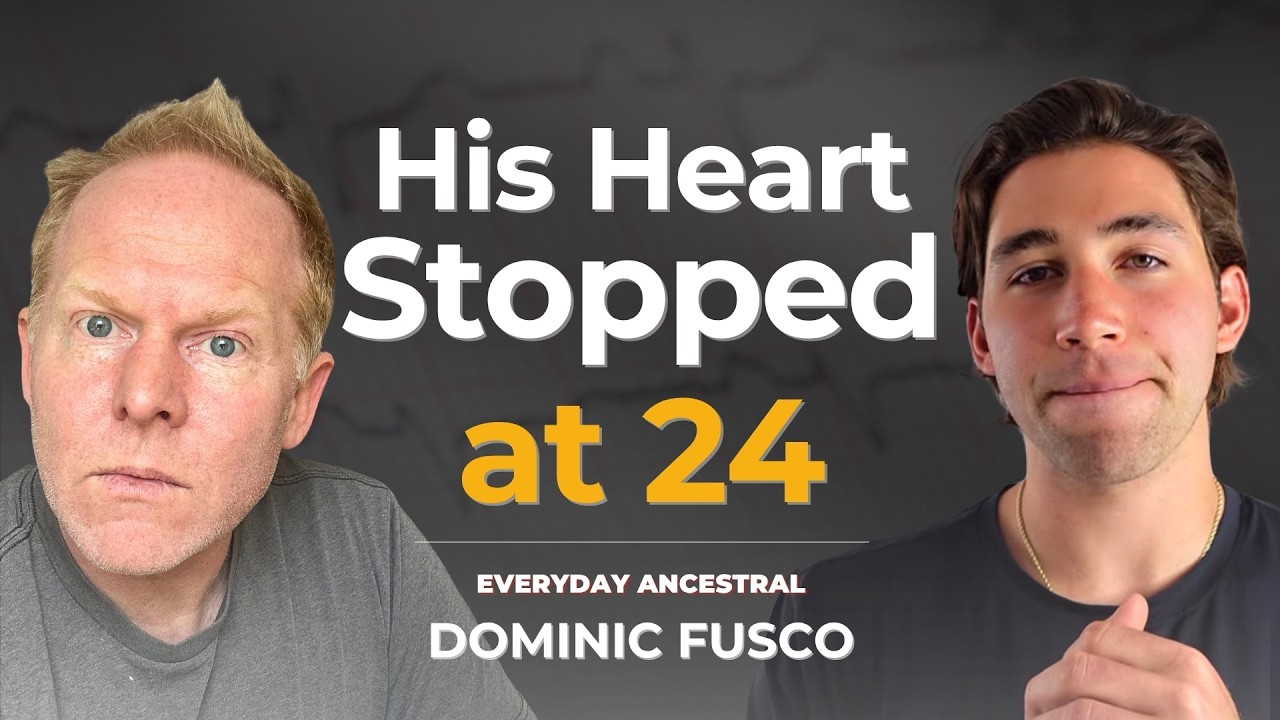
Dominic Fusco survived cardiac arrest at 24 and rebuilt his life around balance instead of performance. He now uses sleep, energy, and mood to measure health rather than pushing toward every fitness goal at once, and shifted from extreme training to sustainable habits grounded in faith and ancestral practices.
Chapters
They had no idea, like, if I was ever even gonna wake up. So I just looked up at the ceiling of the hospital. I just said, God, I don't know why you're giving me a second chance here, but I know that clearly you are not done using me.
So at 24 years old, Dominic Fusco looked like the picture of health. He was an endurance athlete, a health and wellness creator, deeply invested in taking care of his body. Then during a mild time trial with friends, his heart stopped. He went into cardiac arrest. Dom, incredible last few years for you. When you realized you had almost died at 24, what was the first thing that went through your mind?
Man, well, the first thing, honestly, when I woke up in the hospital, I was coming off all the drugs that was keeping me alive. All my friends look like balloon animals. So that's like my first memory. I was like looking around in the hospital room and all my friends, my mom, I was just like, I was so confused. And obviously I didn't know what happened at that point. I thought I was in a dream. And when I finally came off of the meds a couple hours later and they told me that I had a sudden cardiac arrest, like that whole day really is very, very blurry for me. 'Cause I mean, I was on a ventilator, I was on life support for 24 hours. So like, you know, they tried to bring me off of the ventilator 3 times, couldn't breathe under my— couldn't breathe under my own power. And dude, they didn't know what was going to happen when I woke up, if I was going to be a vegetable, if I was going to have brain damage, if— they had no idea, like, if I was ever even going to wake up. And so it took a while for my brain to actually snap back into it. And the first thing that I remember, like, actually coherently was I just looked up at the ceiling of the hospital And I just said, God, I don't know. I don't know why you're giving me a second chance here, but I know that clearly you are not done using me and I'm here. So I just knew in that moment that there was no coincidences. It wasn't luck. It wasn't an accident that that had happened to me. I was— I wasn't really shocked. I wasn't like, oh my gosh, why me? Why is this happening? It was kind of just like, okay, like— I don't know. I just had this peace about me that this was truly happening for me and not to me. And I didn't know what that meant or what that was going to look like at the moment. All I knew is that like my belief in God showed me that, hey, like again, this isn't luck. This isn't an accident. This isn't a coincidence. Like clearly he's got more work for me to do. And in a lot of ways I felt like that was like my rebirth. In a sense of like, hey, okay, like old Dom, new Dom, like let's go.
So you already had faith, you already, you know, you already shared a belief in God, but did this experience change your relationship to your faith?
100%. So I grew up in faith, I grew up Catholic. And so I went to church every Sunday, I went to Catholic school, I prayed the rosary, you know, I did all the things, but I never had a true relationship with the Lord. I was never taught to read my Bible. Everything was just kind of rules and we do this. Like, why do we do this? Because I said so, you know, like I never really understood why. And so it was always just something I did because my mom made us do it. But it wasn't a real relationship with Jesus to me. I went to college and I drank, I partied, I chased girls, I did all the things. And then I graduated and I started pursuing entrepreneurship. And, you know, my new addiction was creating and chasing business pursuits and hustle culture and grinding and all these other things. And again, like, I thought I was going to be fulfilled by those things and I just wasn't. So it was just like, man, like 23 years of just like trying to fill this, like, what is my purpose? Why am I here? Like, what does all this mean? Like, just never feeling like content, always seeking, always searching. And then finally, my mom had invited me back to church when I was 22 or 23, when I was 23, to a non-denominational church. And she was like, just come try it. And, you know, if you don't like it, you don't have to go. And I was like, okay, fine. So I went and I was just like, wow, the worship was so pure. The message from the pastor was, it was all just about the word of God. It wasn't about these rituals or rules or anything like that. And it was just like so inviting and so welcoming. And I just kept going. And every Sunday I would feel great for an hour while I was there. And then I would just go back to pursuing all the things on the side. And eventually, one day at church, I just like kind of broke down and the pastor had shared the gospel. Jesus came down to this earth, fully God, fully man, died on the cross for our sins so that We don't have to earn his favor. We don't have to earn our salvation. We can just put our faith and trust in him, and he's going to dwell within us, and we can have eternal life. And I was just like, man, I had heard that a million times, but I never— it had never like hit me in the heart that way that it did that day. And so I ended up giving my life to Jesus that day, and that was actually my rebirth, right? Like, that was actually like, okay, like, I'm an actual new creation. The Holy Spirit dwells within me. Like, Now I have direction in my life. It was so, dude, it was, it's so crazy to think about my life before then and my life after that. And it really is a supernatural thing. Like when you give your life to Jesus, it literally is a supernatural transformation. And I literally think about old me and the things that I used to do and the patterns of my behaviors and all these things. And it literally makes me sick to my stomach to think about like who I was. And man, like just how grateful I am to To not be, to not be living that way anymore. So I had that relationship with the Lord. I still had faith, but I was still also pursuing, like, again, hustle culture. I was still very achievement-driven, uh, you know, running marathons, hitting these times, growing on social media, building businesses. Like, yes, like faith was my pillar, but I was, I was still new to it all. And I was still very much interested in, you know, glorifying myself in a lot of ways. It's crazy, James, because That was August 7th, 2022, was when I gave my life to Jesus. And it was August 5th, 2023 that I had sudden cardiac arrest. August 6th was the day that I woke up in the hospital. And so August 7th was really like the first full day that I was coherent after having cardiac arrest. So it was literally like exactly a year apart to the day where like I gave my life to Jesus. And then I was fully like the first day where I was like fully coherent after the cardiac arrest, which I didn't even realize because I didn't remember the date that I gave my life to Christ. And then I ended up getting baptized the same day, which is an outward expression of an inward decision that you make. It was exactly a year apart. And I only found that out because my mom sent me a video a couple of months back, the day that I got baptized, of me doing it. And I was like, oh my gosh, I looked at the date and I pieced the things together. And I was like, That is wild. So anyways, I remember being in the hospital and that during that time being like, okay, like this is, again, this is happening for me, not to me. I can't exercise. I can't train. I can't do all these things that I've placed my identity in, that I filled my time with. So, okay, I'm just going to dive into scripture. I'm just going to pray a lot more. I'm going to journal. And I just realized it started, God just started revealing to me where I had been falling short in my life, where I was still living for the world, still living one foot in and one foot out, and how I really had an opportunity with, you know, it's not my platform that he's blessed with. Like, it's his platform and he's just using it. I'm just a vessel to help others, to point others to Jesus, help them with their health, their fitness lifestyle, their relationship with Jesus. Like, that is what my platform is. That is why I'm here. But again, it taught me that my identity is not in any of these things that I do, the businesses that I build, you know, my health, my fitness, even my relationships, like my marriage, all this stuff, like none of that defines who I am. Those are things that I get to do. But ultimately, it's like, my identity is in Christ and Christ alone. And I just, I don't know, I just had this feeling within me of like, wow, like, this is truly what I'm here to do. It's like I knew it, but I didn't really fully understand it until death. I'm staring death in the face. And then I come back to life and I'm like, wow. Like, and all the things that I used to worry about and get anxious about, my to-do lists, did this get done? Get that to get done? Did I do this? I never— dude, at the end of the day, my wife's great-great-grandmother, no, her great-grandmother is unfortunately not doing really well, very well right now. And she's 103. She's lived a super long life, but just being there and being like, wow, like, It wasn't long ago. She was 27 like I was, you know, I think about like, wow. And I was like, you know, 13, 14, even when I was a kid, I was like, kind of just feels like it was yesterday and life goes by so quickly. And it really just, it put a lot of things into perspective.
I have a gift for you. It's called the Freedom Meats Guide. And it's all about reclaiming your health, eating the most nutrient-dense traditional foods, bone broth, organ meats, raw milk, and more. See, these are the foods that built strong and resilient people for And this guide will help bring them back into your life. Whether you're just starting out or you're deep into ancestral lifestyle, this is the roadmap. And all 24 pages of it are available for download for free via the link in the description. Look, start feeding your body what it really needs. You deserve it. It's wild because, you know, you're a 20-year-old speaking the way most of us 50-year-olds speak. You know, you were introduced to That vulnerability at a very young age. I want to explore though more of of like that identity. What does that mean when you're defining your life by your athleticism, and then you can no longer be an athlete? Like like literally life or God is saying like no no dude you're like you just had cardiac arrest. You're lucky to be alive, and now you don't get to do anything. that you've been building your entire identity on. What is that process like? Because that's really, in a sense, a breaking down of the ego, which is what I hear you saying you experienced.
Yeah, 100%. That's a great question and one that I still— one that I'm still learning and one that I'm still wrestling with, honestly. And I do social media full-time, and like, I know these things and I've went through this whole experience of having cardiac arrest, of having my identity stripped away. And now, like, being able to do those things again, I still have to catch myself and be like, okay, like, am I idolizing fitness right now? Am I idolizing my health? Like, what am I constantly thinking about? What is consuming my mind? Am I overworking myself in business and saying, like, you know, it's for my family, it's for this, but really it's just for my own ego. It's for my own pride and wanting to accomplish these things, right? And so for me, it's constantly having to renew my mind, right? Romans 12:2 says, do not be conformed to the patterns of the world, but be transformed by the renewal of your mind. That way you can discern what is the will of God. And that's one that I constantly have to do daily, because if I'm not renewing my mind, I'm going to start conforming to the patterns of the world, because literally my job is putting my life out there on the internet, you know? And I share like all these details of my life. I share the wins, the losses, like what's going on. And, you know, essentially like I'm judged, I'm constantly being judged by people, whether or not they wanna follow me, whether or not they wanna engage with my content for brands or companies or potential clients if they wanna work with me. Like I'm constantly like being judged based on my performance. And if I put my identity in that performance of what I'm doing, it's very easy to let that, infiltrate my mind, steal my joy. Like, I've— my joy has risen and fallen based on how much money I'm making, or how many views or likes or comments on my post or whatever, or how my health is looking, how my body looks, or how fast I ran in a marathon. Like, at the end of the day, it doesn't really matter. And I'm so grateful to have a wife who is just my absolute rock, my best friend, my right hand. And she's You know, we hold each other accountable. We're not afraid to tell each other like, hey, like, you either, you know, you're slacking, you got to pick it up here, or like, hey, like, you need to pull back, you need to check yourself, or just ask questions and just encourage each other out of love to become more like Christ and less like ourselves. And that's really what it's all about. But for me, it's like, dude, I got— yeah, I get out and I train my body every day. I eat well. I want to be as healthy as I possibly can for my kids, for my future kids, for my wife, for my work and all those things. But at the end of the day, it's like, if I'm not Spending time with the Lord in prayer and reading my Bible and just focusing on my relationship with God. Like, that is where— that's like the fountain that everything pours from, you know, it's the main fountain that pours into all the other buckets. And if I'm not doing that, I'm like, I wonder why all these buckets are empty because I didn't start at the top.
How do you look at training now?
Man, this has been, again, something that I'm still wrestling with, something that I'm still Yeah. So then I'm still wrestling with it, dude. When I was 24, like right before I moved to Austin, right before I had sudden cardiac arrest, I had my blood work done and the doctor was so concerned with how bad my hormone panel looked. Like my testosterone levels were 99, I think it was my, it was my like testosterone level. And my free testosterone was like a 7.3 or like just something absurdly low. I don't drink. I don't, you know, like I try to eat well. And it was like, man, I was just overtraining so hard and I was under-recovering. I was sleeping like 5 hours a night, you know, because I was just in all my spare time, I was just working on business stuff and I was constantly just under stress. And then even over the past couple of years, it's like, I think I've gotten my testosterone up to like You know, 350 or something like that, which like is still low, but it's like, you know, 3.5, 4x what it was, which is a good thing. But doing those things like that are good, like checks for me too, because it's like, hey, yes, they're numbers and you want to, you don't want to get hyperfixated on the numbers, but they do leave clues and they do help reveal things. So I've definitely gotten to points where I see myself start to overtrain. I can see it in how inflamed my body is and my mindset and how energized and how focused I am throughout the workday and just in my genuine joy throughout the day. So, my relationship with training now is it goes through seasons. I am training for the New York City Marathon right now, which I'm super stoked for. I was going to try to run a sub-3, a sub-3-hour marathon, which is a 6:50 pace. And, I've just realized I've been training, I've been running like 50-mile weeks for the past couple weeks. And I was just like, my body is not in the shape right now to go and do this. And I have like some really, really amazing things that the Lord's doors that the Lord's opening up from like a business standpoint that I know that I need to put a lot of effort and intention into. And it's like, if I'm just constantly thinking about food and training and sleeping and doing all these things that at the end of the day is just a fun pursuit for me. There's different seasons for it, right? So I just recognize like, hey, in this season, if I want to focus on these things from like a business standpoint that are going to help my family, that are really more important than my fitness, like I'm still going to train, but like I'm going to train in a way that makes me feel good, makes me feel healthy, gives me energy to go throughout the day. It's much more like, hey, like I'm doing this One, because I love it and I enjoy it. And a lot of the times I get to hang out with my friends is when I'm running or lifting or doing all these things. Like, it's just genuinely like a hobby that I love and I enjoy. Doing a hard thing in the morning helps me work through the hard things that I'm going to face throughout the day. That's why I train in the morning. But ultimately, it's like, hey, I'm trying to steward my body so I can be the best that I can be in all the other areas of my life, for my wife, for my work, if I'm serving, like whatever else it is. Because I know that if I'm constantly just focused on how fit I can get or hitting all these goals or whatever, I'm just going to be so focused on me. I'm going to be so focused on my sleep, my nutrition, like all these other things that take my mind away from the bigger picture of life.
I mean, this is something so many of us struggle with, right? It's trying to find balance between, you know, all the different to-dos we have, all of our lists. I hear you kind of throwing out a few things like you're noticing symptoms, so you're trying to balance the symptoms that pop up. Faith. Are you practicing your faith religiously, for lack of a better word? You're using your wife as a sounding board. What do you recommend just everyday people do to gauge when is, you know, the pursuit of health becoming unhealthy?
Oh, when is the pursuit of health becoming unhealthy? I love that. You should pin that. That's a good question to ask people. I might steal that. When is health becoming unhealthy? So when I, was getting my personal training certification back in college, nutrition coaching certifications. One of the things I learned was biofeedback. And so, when you're working with a client, it's having them track their biofeedback. So, those things being your sleep quality, your energy levels, your mood, your focus, your sex drive. There's 5 to 7 biomarkers that you're looking for. And so, one of the things that I would do with my clients and I also do kind of just to check in with myself is how are your biomarkers? If I'm not sleeping well, if I find it hard to focus throughout the day, if I'm tired, if I'm feeling like I need to keep reaching for coffee or nootropics or whatever else to get through my work, if I'm nodding off on my computer at 3 o'clock, if I feel like I'm not recovering well from a workout, I'm like, yo, like, all right, I need to, I need to check myself here. I might need to take a rest day. I might need to just get some more sleep. I might need to, you know, eat a little bit more carbs, a little bit more protein. I might need to just back off a little bit. So that's the biggest thing for me is like, I've been doing this for long enough where, you know, I'm not always the best at it, but sometimes I'm, you know, we're men, we try to just, you know, strong-arm our way through everything. But the recognizing your biofeedback is a huge way that I realize like, okay, this pursuit of, you know, health is actually not making me healthy. And honestly, health and fitness are 2 different things, right? Like your health and your fitness are 2 different things is what I've realized is because typically when I am like the fittest, That I've like, when I'm at my fittest, I'm usually not at my healthiest. And when I'm at my healthiest, when I feel my healthiest, I'm usually not my fittest.
Wait, I understand the part of when I'm at my fittest, I'm not at my healthiest because that, because sometimes our fittest is an extreme, but explain that when I'm not at my, when I'm at my healthiest, I may not be at my fittest because a lot of people associate health Like, okay, if you're healthy, that means you are doing the things to keep yourself fit. So what do you mean by that?
So I guess that just comes down to my definition of fit too. And like fit being, I can go out, I might be able to go out and run, you know, let's say like, I don't know, 17 miles, like hit some marathon paces, like just really be able to crush it in the gym. That's like what I define as fit. And when I'm more focused on like being like as healthy as possible, like I might only be lifting 3 times a week, you know, 4 times a week. I'm probably not running that often. I'm, I'm getting, you know, 8, 9 hours of sleep. Like my diet is, is really locked in. I got very low inflammation. I'm, I'm leaner, I'm a healthier body weight versus again, when I'm fit, I might look a little bit fluffier. I might lose some definition in my muscles. But, again, there was a great analogy that I was taught in this nutrition coaching course too. It's the triangle of awareness. And, it's like if you were to draw a triangle, it's performance, aesthetics, and just general health and longevity. And, you can't try to optimize for all 3 because if you go closer to this one, you're further away from this one and that one. So, when I'm when I'm at the top of the triangle, when I'm at the performance triangle trying to like hit a marathon PR or a goal or something like that, I'm sacrificing my over— my general health and longevity because running a marathon, like being like doing all these challenges, like it's not the healthiest thing. And then also aesthetics, I'm further away from there too. Like you think about a bodybuilder, which is like the peak of aesthetics, like they're not necessarily healthy. And like in the place for longevity either, right? And so you're doing a lot of things that are pulling you away from those other things. So when I'm like, okay, I want to be as healthy as I possibly can, typically I land somewhere in between like looking good and like the health and longevity, like, but I'm further away from performance, if that makes sense. So when I'm not training for a race or a challenge or whatever else, I kind of want to be right in that middle, in that center for me. Like, that really is the sweet spot. So, I'm never going to be the most jacked, the most fit, or Bryan Johnson, try to live till I'm 105. Like, I'm not going to ever be any 3 of those, but I'm okay with that because I want to be in the center because I want to be able to perform. I want to be able to go out and go on runs and do hill sprints and bike rides and all these fun things. I want to look pretty good, but I don't want to sacrifice, you know, I don't want to have to like track every macro, count every calorie in order to look shredded all the time. And I don't want to be a freaking weirdo biohacker to like try to live till I'm 100. So I'm like, I'll find myself somewhere in the middle.
No disrespect, biohackers. No. Okay. Yeah.
No.
What we're talking about though, a lot of is mindset. Did the cardiac arrest create any physical limitations? Like, can you just not push it as far as you can physically anymore, or how does that show up?
I think I've done more crazier fitness challenges since I had cardiac arrest, which is funny. I ran across the Grand Canyon. So, I did the rim-to-rim-to-rim, which was 43 miles. I think I've ran 4 marathons. I've competed in HYROX. I've done some pretty cool fitness stuff. You know, it's compared to some of these other people out there, it's nothing. But for me, I was like, that's that's pretty darn good. And but it definitely took it took a while to be able to get to that point where I was like, okay, I don't have any fear to go and do this again. Like because there was definitely that a little bit at first. But as I continued, dude, I just had to start from like going for walks. Like I literally when I got out of the hospital, like I literally just started going for walks. I lost like 25 pounds. Like when I Had after I had cardiac arrest, because that was like, that's a whole nother thing where I was like, oh, like I can't work out. So I didn't like earn my food, you know? So I was eating like, you know, one or I was eating like one or two like bigger meals a day. I was like, I wasn't eating anything besides like, you know, steak and like sweet potato and eggs and like raw milk. I got like really in, and again, I, I still love that stuff, but it was weird. Like I would walk like 20,000, 25,000 steps a day and I would eat like You know, like less than 2,000 calories a day. And then all of a sudden I was like, whoa, I'm like 175 pounds.
Like, well, no, hold on a second then. So here you had this near-death experience, but did it reveal that you had some kind of strange relationship to food and working out?
Yeah, 100%. Definitely, definitely. Because it was like all of a sudden I was like, I didn't see food. I saw food as nourishment, but I also was just like, oh, I'm not training as hard. I don't need to eat as much. So, I was intermittent fasting pretty much every day.
Was it connected to your hunger or was it connected to like, hey, well, I didn't run today, so I don't deserve to eat? Because you mentioned that. So, I'm just curious, were you kind of not hungry or were you Psychologically making yourself not hungry.
Yeah, I was psychologically making myself not hungry.
Yeah. So how, what do you think that was all about?
My relationship with food. And it's weird. I'm hesitant to even say like relationship with the food because food isn't an animate object. So you can't have a relationship with it, but basically like my mindset around food. Right. And it's something that I've had to really work on. Over the years, and be like if I'm trying to like lose some body fat, right? I'm like oh then I should train fasted, even though like I know I shouldn't do that. Like but even in my head, I'm like this is you. I don't know. I need to I need to eat less. So it's I don't know, man. It's something I'm still again really trying to work through, and I really appreciate you you asking the question on this because it is definitely something that a lot of people struggle with. I I have this mindset, this philosophy that I I took from my friend Zach. And he's, he's a really big-time creator. He does recipes and a lot of awesome stuff. But he, he was like, food is either it's fuel or it's fun. And when I kind of changed that mindset of like, oh, like this is fueling not just me for performance, but like just understanding that word performance, I had to fix my view on that, right? Because it went from Training in the gym, going for a run, whatever, like viewing that strictly as performance to being like, I gotta perform right now. Like we're performing, like we need to be mentally, physically locked in so that we can have a great conversation or I can put out the best work I possibly can. Or for a mom who's gotta have the energy, the strength to, to take care of her kids throughout the day, or a dad who's gotta go to work and, you know, do his job well as an electrician and then still have energy when he gets home for his family. That is performance right there. And, it doesn't matter what your calorie burn is throughout the day, what the number on your watch says, or if you even go to the gym that day. It's like we all need food. We need good quality nutrients that we're fueling our body with. Fuel is performance for life, not just health and fitness. Like I said, fitness should be— working out should be part of our daily hygiene, I believe. Just like movement should just be brushing our teeth, whatever. It doesn't have to be you're going to the gym for an hour crushing it. Go for a run, whatever. But, you should be moving, stretching, trying to break a sweat every day, I believe. And, in order for us to see the adaptations, we need to fuel the ability to go and do that and recover from it. So, I've really had to shift it, my mindset around that. And, it was really interesting to look back at that time and be like, I was so self-conscious Like about my body too.
Almost performing for other people, like doing things for other people's reactions. Right.
And I was just like, man, well, I can't lift. So like, I'm, I guess I'm just not going to eat as much.
Right.
And that's true for sure. But to the point where like, I wasn't stepping on this, like I wasn't stepping on the scale every day. I was just like, I was like proud of myself for not eating as much. And then all of a sudden my roommate was like, Dude, you don't look healthy. And I was like, what do you mean? And then, I stepped on the scale and I saw I was like 178 or something like that. And I was like 200 pounds beforehand. And I was like, oh, whoa. And then, I started to look at pictures of myself beforehand and I took a picture of myself in the mirror and I compared them and I was like, dang, this isn't it. And then, I got blood work done again. And again, there was just things signaling like, yo, you need to stop fasting. Your body's constantly stressed out. You need to eat more. And I was like, Wow. I started to feel so much better. I started to have more energy. I started to sleep better again. And we go through those things and they're not bad things. It's all just information. It's all experiences. And I'm grateful I had that because I can use that testimony now to help others who have struggled with that too.
Now, your doctor never gave you a definitive reason why your heart stopped, right? So where does your understanding of what happened stand today?
At the end of the day, I was running an all-out mile in Austin in the middle of summer. It was 105 degrees. It comes down to just, I think I just overexerted myself to the point of, I put so much stress on my heart that I went into cardiac arrest. That happens. Exercise-induced, sports-induced cardiac arrest is a lot more common actually than I thought when I started to, you know, research it and dive into it, because honestly, if you would've asked me what a cardiac arrest was before I, I had it, I was like, I don't know, like a heart attack.
You had just gotten the vaccine shot before that, right? So do you think there was a connection there?
I mean, I definitely do. Like, I'm, I'm, I'm, I, I think there was. My, so funny, if you ask my mom, she'll be like, 100%, there was. It was 2 years after, like almost to the, like almost to the day of like 2 years after I got the vaccine. I got it Literally just because I could, so I could play football in college. Like, so I could play my senior season. Literally around that time, like Bronny James, LeBron James' son, had cardiac arrest the same week as me. There was like, and there was like 3 other like college athletes that had cardiac arrest, something like that, like in the same week as I did. And I just kept seeing it pop up again and again and again. And it was all the research was showing like people like Dr. Peter McCullough, Who have studied this stuff, who's a cardiologist up in Dallas. He was on Joe Rogan talking about literally the repercussions of the vaccine on people's hearts. So I definitely think it could be linked to that. But at the end of the day, I just had to kind of give it to God and accept that like, hey, I may never know the answer to this. And that's okay. You know, I just know that it's, it's made me more conscious and more aware of like what I do. You asked me about like my relationship with exercise and doing that now. It's like, I know when I need to pull back. Like, I was supposed to do— my anniversary's tomorrow. So, I was like, I'll do my long run today instead of tomorrow. And, I was supposed to do 17 miles today and I was at 15 miles. I was like, I am so spent. My core body temperature is so high. I need to just stop. And, in the past, I would've just been through it because I said I'm going to do this, so I'm going to go out and do it. At the end of the day today, I was like, bro, it's just not my day. I'm just not feeling it. Like, I'm just gonna stop. I know when I need to pull back, and I don't— I don't— PR or ER is not a thing anymore. I don't— I don't believe in that.
If we were to like break down the difference of, you know, pre-DOM, before the cardiac arrest, and then now current DOM, would you say that it's the difference between pre and current Is presence and listening?
Yes, but also, also no, in a way, because I wish I could say that I've never struggled with being an overachiever, with being a striver, with trying to, with focusing so much on my accomplishments and instead just being present. But there's been so many times where like, I've still fallen short. Like, again, I'm human. I'm always going to fall short. There's been like times with my wife where she's just like, I feel like you don't listen to me. You know, I feel like you're just constantly just not present because you're thinking about work or you're thinking about this or you're thinking about those things. And that's a hard pill to swallow. And my pride or my ego wants to be like, no, like, you know, that's not true. But when I really just go and pray for that, for God to reveal that, I'm like, Yes. Like, she's absolutely right. But it's, I'm a lot less, I'm still selfish in a lot of ways. Truly, I think I am.
You're human.
I'm a lot less focused on the outcome now, and I'm more focused on the inputs. Like, that's what I would say is, but like something I come back to all the time is like, at the end of the day, like I'm not in control of the outcomes, but I am in control of the inputs. And the things that I consume, how I structure my day, the people I spend time with, you know, what I say yes and no to, not burning the candle at both ends. I'm very much more discerning in what I do. And I try to do everything with intention so that I can give the best that I can. But at the end of the day, realizing like, hey, at the end of the day, like, I am just simply a vessel to tell more people about Jesus, help people with their health and their wellbeing and try to just inspire and help out the next generation as much as I can. That's really my mission and my passion. And yeah, I would just say that I was a lot more outcome-focused beforehand, whereas now I'm a lot more input-focused.
It seems from my judgment that you're just, your light is even brighter. You know what I mean? Like you already had a bright light, You were already coming from a very giving and connected place, but it just feels like the wattage is higher.
I love that. I definitely feel that way most days. It's funny, man, because I feel like I'm still like— I'd be lying if I said like, yeah, my light shines this bright all the time, or I'm so energized like this all the time. Because dude, I love this. This fills my cup up, being able to chat with you, do these podcasts, creating content. I love that stuff. But then there's other times where like, man, it's like I'll have a tough day or you just get stressed out by a lot of things that are on my plate and I won't— my light won't shine as bright that day. So for me, I'm just— I'm trying to— one of the things in my life is to be more steady and like, because sometimes I go like, I'm really up and then I'm really down. I'm really up and really down, trying to just be more steady in that state of like, okay, here's the line. Like, I just want to be like above the line and stay there. I don't need to be like, you know, top of the graph going off of it all the time. That's kind of exhausting. It's okay to have a bad day every now and again, but it's like, you know, how quickly you can recover, how quickly you can get back to here. That's something I've been big on recently is just like when you get knocked off course or whatever, it's like how quickly can you recover and get back on track? Same thing with fitness and your health. It's like if you overtrain all the time, And it's like, you do nothing for a couple of days and then you go out and crush yourself. You can't recover well. And so it's, you're going to be back up here. It's like, if I can just boom, daily inputs, inputs, inputs, inputs, I'm going to be able to stay right here. I'm going to recover well and keep being able to give the best that I can to whatever I do.
Here's a question I ask everyone. If you could wave a magic wand, bring back one ancestral practice, what would it be and why? Oh, Wow.
That's a really, that's a really good question. I actually recently learned about, um, in like the, in the old, older biblical times where they would go to bed at like, I don't know, whenever the, whenever the sun went down, you know? So if it was like the sun went down, depending on the time of year, it'd be like, I don't know, 7, 8 o'clock, maybe 9 o'clock, whatever. They would go to sleep for a couple hours and then they would wake up in the middle of the night. And have like this time from like 12, 1 o'clock till like, you know, 3 or 4. And they would like dedicate themselves to prayer, to reading scripture, whatever it was. And then they would go back to sleep and they would wake up when the sun comes up. So they would go to sleep like after dinner, they would have that time, and then they would wake back up. And I think that's just a really cool time, or it's really cool to think about, man, like Have, especially for men, having that time where you can just, where you can think, where you could spend time with God, where you can just, you can just be present when the world's kind of asleep. I think that's just a really cool thing. And, and, and with that, just, um, people eating together, you know, like that, that whole concept of sitting down, having dinner together, early dinners. I'm a big fan of early dinners, like just Communal dinners, earlier dinners, going to bed early. I don't know, I felt that time in the middle of the night, because I've definitely had times where like I wake up in the middle of the night, I can't go back to sleep, and I'll just like spend some time in prayer, reading or whatever, and I'm like, this is amazing, I should do this every night, and then the next night, you know, I'm like, never mind. So anyway.
Awesome, thank you so much again, Dom, and how can people work with you or learn more about, or do you take Clients, or is it more just they find your content and that's how they work with you?
Yeah, right now I don't have an offer. I'm not trying to sell anything. I don't have— I'm literally just, if you want to go check out more of my content, Dominic Fusco on any platform, and yeah, search me up, find my name, hit me up. Would love to chat, would love to connect. And yeah, I'm just trying to serve through my content right now. I'm just trying to create as many good things that That will help others as possible.
Well, keep it up and, uh, love seeing you. It's been a while since we got to talk. And, uh, thank you all for joining us today on the episode of Everyday Ancestral. Remember, stay curious. Thank you so much for joining me on Everyday Ancestral. If you enjoyed this episode, hit subscribe so you don't miss the next one. You can find the show notes, links, And resources mentioned at eatpluck.com. That's E-A-T-P-L-U-C-K dot com. And hey, if you know someone who'd get something out of this, share it with them too. Stay curious, live well, and keep it ancestral.