James Barry | Learning from Tom Cruise's former personal chef | MMR Ep. 68
James Barry, who cooked for Tom Cruise and George Clooney, founded Pluck, an organ-meat seasoning designed to make offal easier to eat. He shares how to build better eating habits and what's coming next for the brand, including a pure organ-meat version.
Questions this video answers
April 19, 2022
eatpluck.com
MAVEN10
Chapters
Foreign.
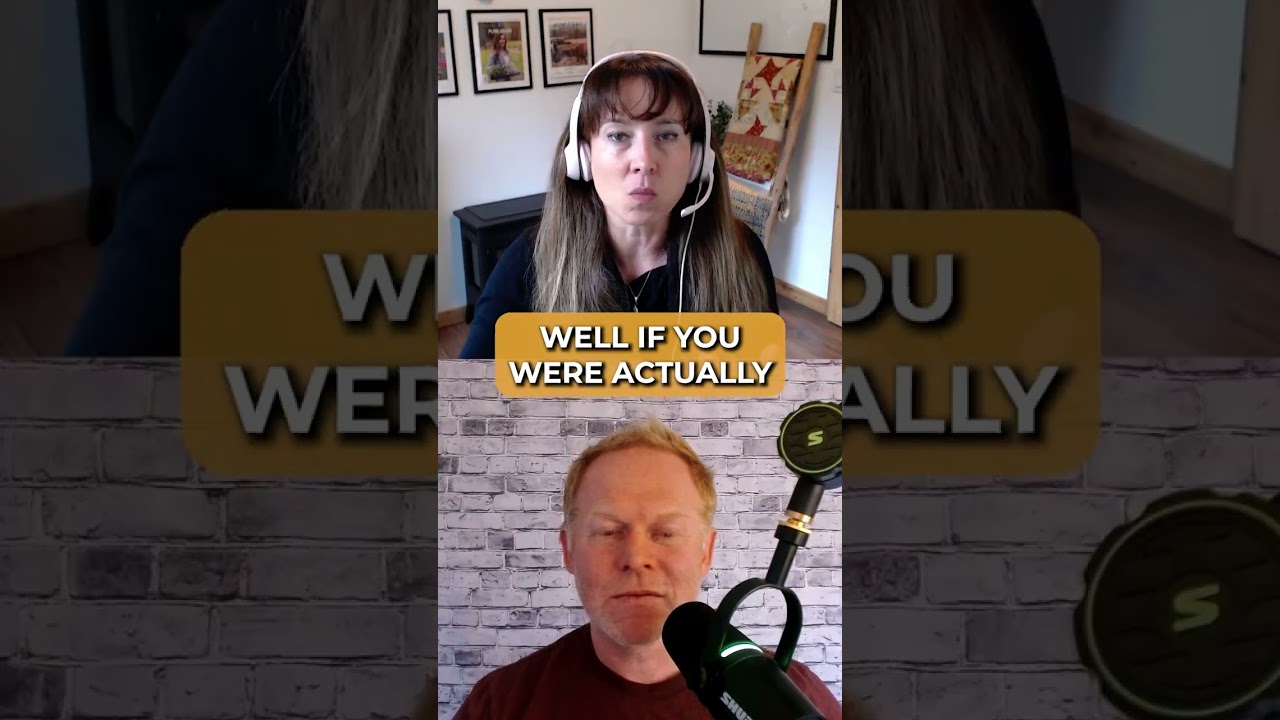
Hi there and welcome to Muscle Maven Radio. I'm your host, Ashley Van Houten, AKA the Muscle Maven. I hope you guys are well. Thank you for being here. Today's episode is a bit unexpected for me anyway. I like to think that I do my research and kind of know what I'm getting into with every interview that I do. But in this case, some things came up that I did not expect and it was quite hilarious and entertaining and I hope you, I hope you agree with me. My talk today is with chef James Barry. He is also the founder of Pluck, which is an organ meat based seasoning blend. So obviously, if you guys know anything about me, you know that this is right up my alley because I'm kind of, you know, the organ meat lady wrote a book about it, kind of dedicating most of my career to it at this point. So when I learned about this company that made this delicious spice blend that has organ meat, desiccated organ meat in it. So it's basically a nutrient dense spice and a way to kind of introduce people to organ meats who maybe are intimidated and don't know where to start. I thought it was a very cool, very innovative idea. I've used the product, I really like it and I've chatted with James on and off and I thought, so let's, let's have him on the podcast talk a little bit about, you know, how he came up with the idea, where he sources the product, how it works, all that stuff. We ended up going in a kind of completely different direction. We do talk about things like whether the amount of organs you're getting from the spice blend is kind of even worth it, honestly. We talk about whether desiccated organ meats, like in pill form is really even kind of worth it. But we talk about also sort of the business side of it and how to sort of find that niche, whether it's business or life or any kind of passion, how to kind of figure out where to go when it's sort of never been done before. But also, I'm just going to cut to the chase here. I did not know that he started out as a private personal chef to celebrities and that he worked for Tom Cruise, he worked for George Clooney, like in their homes making food for the, some of the most famous people in the world.
He just kind of threw it out.
There and he was actually willing to talk about it, which I love. So we kind of talk about that because everybody wants to know what it's like interacting with famous people. That's crazy. So we talk about that, too. Kind of goes all over the place. But James is a really knowledgeable, cool guy who is making organ meats accessible, and that's. That's sort of my jam, too. So we talked about organ meats and Tom Cruise. That's really all you need to know.
So I'm going to stop it here.
And just dive right into the interview. I hope you enjoy it and stay tuned. After the chat, I'll. I'll give you some more information and where you can find him, Save some money on the product if you want to try it, and what's coming next. So enjoy my interview with chef James Berry.
James, welcome to the podcast. Thanks for being here.
Oh, thanks for having me, Ashley. Super fun.
I'm excited to chat with you. Well, we have been chatting for some time. I decided to hit record before we, like, forget what the purpose of this chat was, but it's nice to catch up. I feel like we're. We were talking offline about how we're kind of, like, getting back into the swing of, like, going to events and, like, meeting people in real life. And I'm very excited for the opportunity for us both to do that in the coming year at a couple different events, maybe. So we'll see. But in the meantime, we'll chat on a podcast. So.
Yeah, well, it's an honor to be associated kind of or in the same arena with you because, you know, not enough people are talking about organ meats. And so I loved it when I discovered your cookbook. And I just love that that's something that's important to you because, you know, one of the messages I've been putting out there is just I actually. And I truly do believe this, so it's not. It's going to sound maybe a little cheesy, but I really do believe this. I think organ meats can change the world. Like, I believe that if we can get more people eating organ meats, then we can change the world. When people are nutrient deficient, they don't feel as good in their body. When you don't feel as good in your body, you don't treat people as well. So if we can get people feeling good in their body, then they'll start treating people better.
That's the truth. I don't think you're overselling it at all. I agree with you. And I'm just going to give some of that right back to you because. Because when I learned about you and your company pluck. So you make organ meat based seasonings. And I remember, I think, saying this to you at the very beginning, like.
Part of my job and part of.
My work historically as a journalist and working for different health publications and podcasts and all these things, has been learning about new companies and new people and companies putting out new products in the health and wellness space. And yours has to be one of the more unique and kind of innovative that I've seen in a very long time. And especially you're speaking my language with the organ meats, but it's just so different. And I was really, really pumped. And then I was extra pumped when I tried it and it was actually good. And so I knew that this would be a great gateway for people to try something that may be intimidating for them in a very accessible, not intimidating way. So you're doing a great job. Love the product. But maybe if you could tell our listeners just a little bit about your background and how you came to be doing what, you know, we were saying offline is a very niche thing. It's very niche message and product and an important one for sure. But how did you get here?
Yeah, well, I was like, I was like one of those kids that, I mean, I grew up very practically. I mean, I didn't even grow up eating organ meats really. And my family was kind of. I'm not straight and narrow to a degree, and I learned about cooking at a young age. But neither of my family, neither of my parents were really cooks or anything like that. But my neighbor was, he was really into gourmet cooking just on his, in his own house. And so I was exposed to things, you know, caring about the food and what ingredients on all that from him. And, and then it just, I don't know, it just kind of blossomed for me. I just, I just had a passion for it. But, but because of how I was raised, I didn't see it as a career. I just didn't, I didn't, I was like, oh, well, if you want to be a chef, you gotta own a restaurant and then you gotta work at night. And here I am in like junior high, you know, like 11, 10 or something like that, or I guess that's 12, 13. And I was like, but I'm a family man at 12 or 13, I'm like, I'm a family man. I don't want to work at night.
You've got priorities. That's good.
So I'm like, I'm just going to do cooking as a hobby, you know, And I just, I, for The longest time, didn't even consider it as a career. I was definitely one of those kids that would get like a cooking magazine and I would, like, read it from front to back. And I love looking at cookbooks for fun. So I definitely had a passion for it. And it wasn't until 911 that I kind of just. I was. I was pursuing acting in the entertainment business in la and I was substitute teaching on the side. And I was just doing a couple things that weren't really my heart, kind of my life mission thing. And 911 just kind of kicked that into gear. And I was just like, you know what? I only want to be doing things that have heart, like that I feel passionate about, that are in congruence with my mission here on Earth to help people. And so I was like, well, what is that? And I reflected back and I was like, I always love cooking. I'm going to go to culinary school. And I did some research. I found a school in New York that really focused on fusing nutrition with food. So it wasn't just like, how to make a, you know, a French, you know, sauce. It was like, no, no, no. Like, what's the best way to prepare foods? That it's still nutrient dense and bioavailable. And actually your co author for Carnivorous went to the same school. Beth, right?
Beth Lipton.
Shout Out Beth Lipton, who is an.
Amazing chef, of course.
Yeah.
That's awesome.
Yeah, we were. We were there at different times, but. But both had similar learnings from there. And I got out of that program and immediately knew I did not want to be a restaurant chef. I wanted to be a private chef. And I just. I was very fortunate. I got hooked into working with a lot of different celebrities. I started to build my resume, and then it suddenly became this new thing of like, oh, wait, this is awesome. Like, I was. I was cooking for Tom Cruise at the time, right? Like, top, top. You know, a actor. I was cooking for Tom Cruise, a list actor.
Okay.
This whole podcast might go in a completely different direction, but. Okay, continue your story.
So I'm cooking for him and I'm like, this is awesome. I loved him, Loved cooking for him. But I was like, but I need to help more people. Like, I can't just be helping the one person.
Tom Cruise is fine on his own. Okay?
He doesn't need.
He's got all what he needs. He doesn't need the help. I need the help. Okay, sorry.
Continue blowing my mind. So then I got this idea like, well, I'm gonna I'm going to try to create this business that's a meal delivery service. So it's my style of cooking, but now I'm able to feed the masses more. And I started that, but I didn't know the first thing about running a business. And I struggled for eight years just muscling through things and working so hard. And I grew that business. It was called Wholesome to Go. It was an LA based meal delivery service business. I grew that from one client to eventually thousands. And it was like killed me though. And I lost some of my health. I just, I wasn't getting enough sleep, I wasn't eating well. Here I was. And I'm sure you've talked to tons of people like this. Here I am in the health field supporting people with their health and my health is suffering. And I know that's the age old story with all health practitioners. It's so hard to walk your talk when you're, when you're kind of giving, you're in overabundance, right. And so I eventually left la. We moved, my wife and I moved to Portland, Oregon. We had our second child and I had sold the business at that point and I just had some time to get healthy again. I had a good three years where I was just getting more sleep. I was the primary caregiver for our second child. And then I started getting creative again. Right. Once you actually start taking care of yourself, you benefit. And I got, I started to percolate with ideas. And one of those was an organ based seasoning because I was like, well, wait a second. When you make a pate, you're adding onions, you're adding garlic, you're adding all these things. I'm like, well, why can't I just take the modern, the modern like benefits. The benefits we have of the modern techniques of freeze drying which we're doing with encapsulated organ meats anyway. And that's a shelf stable dried product. And combine it with those spices and herbs that you would be using in a pate, for example. And I tried it out and it ended up working really well. Like people responded very well to it when I was holding dinner parties and letting them try it and it made me go, okay, I think this is a product here. This is a way to get the benefits of organ meat. But you don't have to taste that, you know, associated ick taste or you don't have to worry about how to cook it or where to source it, you know, done for you.
Okay, I have so many questions now. Parts of your story that I did not know. This is very exciting. First of all, I'm glad that you, like, name dropped right off the bat because I was going to ask you and I'm like, he's probably not going to say any of the names, but are there any other big names that you can tell us?
Oh, yeah, yeah. I cooked for Gerard Butler. He was super fun. I cooked for George Clooney for a little bit.
So, like, in their homes.
Yeah, yeah. George Clooney was one of my favorites too.
I.
You know, there's actually a funny story. So when Obama was elected the second time, I was delivering food. The night that he won, I was delivering food to George and his then girlfriend, Stacey Keibler. And they invited me in and I got to hang out with them and there was another couple there. And so the five of us were all hanging out as they had this big screen TV on as Obama's winning. And, you know, George helped him. Like, so George, when he did the LA fundraiser, George did it, I think at his house. And, and so he was telling me stories and I was like. And I think at one point he got texted by Obama saying thank you. So I was like, literally one degree away from Obama. And at that time, and it was just, it was so surreal, so surreal. And I just couldn't believe it because I really enjoy, I just think George Clooney is the cat's meow. And then, and I really, you know, it was like. And there was Obama winning and I got to share that with him, you know, and he was so happy.
Did you have some of these connections because you were like, sort of working in this field? Like, you were in LA and you were, you said you were pursuing a little bit of acting. Like, were you kind of in that environment already? Like, how does one become a professional? Or like a private chef to the stars? Like, how does that even happen?
That is such a good question. Because it really is one of those categories that there is. There is no model. Like, I remember when I got back from culinary school, I got a call from someone and it was actually a referral from the school. So ultimately the real answer that question is you got it. Whenever you, whenever you find that thing you're passionate about, you need to show up 100%, be accountable, show up with your best self, show up doing hard work. And that's how I showed up. When I went to culinary school, I won the attendance award. I was there every day and the school saw how serious I was taking it, you know, and I Did I volunteered for everything. I mean, I was a sponge. And so whenever they got a call from anyone in LA looking for, you know, support, I was the top of their list because they saw that I was dependable and that I was reliable. So that's ultimately what got me in the door. Cause the school was. And then I chose, you know, I chose wisely with the school. Now, I didn't fully know this, but the school was seen as a resource for all the households that were looking for healthy chefs. And so they would call the school looking for them. The school referred me. But I remember when I got back to la, I, I, this is horrible. So, so first of all, the first job I got offered was working at a, was that working at a rehab center in Malibu. And it was, I had intern there. And then they went to offer me the job. And no joke, it was $9 an hour. And I literally, I'm coming from, you know, substitute teaching where I was making $25 an hour. And I'm like 40, I'm like, I'm not, I'm not a spring chicken at this point. I'm like, in my, or when you're.
Working in Malibu, I mean, that's gotta be well below the survival.
The restaurant business, I mean, just cooking business is really like, you know, I could see why so many people don't want to go back to it now after 9 11. Sorry, not 9 11, Covid. Because, because it's so low paying unless you're doing something like private chef or you kind of find that niche. But so I got offered that job and I literally started crying. I was like, I can't believe that I've changed my whole career and I can't even find a job where I'm going to be able to even pay my bills. And then fortunately, I didn't say yes to it yet. And the very next day, I got a call for my first private chef gig. And I was able to set the pricing for that. And then it kind of just grew from there. And I was able to kind of gain my confidence and whatnot. But I remember when I got that first private chef, I was like, how much do I charge? How do I do this? I had no model, there was no one to talk to. And fortunately, I think it was through talking to different friends, I was able to find another private chef that already existed out there. And I shared. She and I met and we just, I just grilled her on questions. I'm like, what do I do? How much do I charge? How do I. How do I approach this? Do I have a contract and all? And I was able to ask these questions, but there is no model. And even today, I think there really isn't a very good model for private chefing specifically. I think, I think if you want to become a caterer, you can kind of learn that trade. I think if you want to work in a restaurant, you can kind of learn that trade. But private chefing is kind of like the. The front new frontier. I mean, it's just kind of a wild west.
It's funny because I see sometimes on Instagram people, like, you know, when they ask these questions of, like, if you were super rich, like, would you have a private chef? Would you have a, you know, cleaning service every day? Would you have your hair done every day? Whatever. And everybody always chooses chef. Like, everybody wants somebody to take that labor away and that even I think the, like, thought process and the decision making process, a lot of people, and this is a whole different topic we could get into. But I do feel like one of the big challenges for folks in eating healthy and eating well is not even necessarily not knowing, not having the resources. It's like the exhaustion maybe or the concept of monotony, that it has to be like the same 10 healthy things over and over again. Just being tired and I know I experienced some fatigue during the first really kind of big chunks of COVID where we really were kind of stuck in the house. And you're trying to double down on taking care of yourself and eating healthy. And because you're never going out to eat or you're never ordering in, or you're never even leaving your house and eating outside or having a picnic or whatever it is, it's exhausting. I'm like, the amount of dishes that we've been doing, the amount of monotonous food prep and just day after day, it gets exhausting. So your job, I guess, is around about saying, like, private chef job is like, it's an important one. It's a coveted one. It's one that like, a lot of people would kill to have if they could. I do want to, like, I do want to talk about organ meats and stuff too, but I just, I kind of have to, like, close the loop on this, like, crazy part of your job. Can you still hear me? Am I cutting out?
Yeah, I was cutting out a little bit, but I think we're okay.
Okay. Okay. I just got to go back to Tom Cruise for a hot minute because I, you know, listen, I've watched a lot of Tom Cruise movies, big fan of Top Gun. I think that people can, you know, maybe say good or bad things about him, whatever. He's an interesting eccentric character. One thing I will say is that he very much like dedicates himself completely to the things that he's passionate about. It seems like, like if you look at like the last couple Mission Impossible movies where he's basically like, no one in the world is going to insure me. I'm going to learn how to like jump out of planes. Like, it's whatever. He seems like a pretty interesting dude. What was it like cooking for him and what kind of food does he like to eat?
I know, right? I mean that's one thing I can't talk too much about. The extreme details tell me he wasn't.
Like vegan or something though.
No, no, he wasn't. I, because I had a son in the days and all that stuff. But yeah, okay. But I can share mostly what my experience of it was. You know, not his specific particulars but like I personally, I really understood him. At least I felt I did. Like, you know, when you're, when you're at least how I approach chefing, I would always really try to understand the client. But not just like, oh, what's your favorite color? But like, like what do you, what, what are the textures that excites you? What, what are your comfort foods? Where do you go when you just kind of feel like it's a, it's a gray day. And you, and you, what's your, what food do you gravitate towards? What did you eat when you were little? What foods? You know, what's the trend that you're kind of curious about now that people are doing, you know, and I try to merge all that and I think felt like I really understood him on a certain level. I mean I used to even have dreams where he and I would be talking. It's just so weird. Like it was like I just felt like we were connected in a weird way. And I worked for him about two years and it's really intense. I will say that like he lives at the time at least he lives such a full on life. I mean he's just all over doing everything. You know, I've heard this and I saw this and I've heard this from other people. When he works in a film, he's like the first one there, he's the last to leave. He, he's, he's not just the actor, he's also a producer, sometimes an executive producer. Like he's all over it because it's his brand, right? And he takes full control over his brand. So he's really impressive in that way. But I, you know, here's a story. I'll say, I'll say, when I first met him, he was just so generous. You know, we were in Berlin because he was shooting Valkyrie. It was in the pre production, and I was chefing there and I hadn't met him yet, and I was supplying the food all day for him and the writers and the director, all them working on the script and whatnot. And I went up to the room and I was just checking stuff, and he walked out. And it's the very first time I'm meeting him face to face. And he's like, are you the one that's been cooking all this food? And I'm like, yeah. And he's like, just. Just incredible. He starts clapping for me. He opens the door and introduces me to all the people. And it was Brian Singer and Chris McQuarrie and all these really names that I'd known, you know, as an actor. And. And they're all. They all stand up, give me a standing ovation. And. And I just. I just remember that was the moment where I was like, I left that going, like, wow. I. I'm. I'm a chef now. Like. Like, I just got, you know, congratulated in the standing ovation from the top actor in the entire world, who's probably had so many different chefs in his, you know, his time. And I left that. And it's so funny because everyone was like, the first question people would ask me when I tell them the story, they go, well, how tall is he? And I'm like, do you think I thought about how tall he is? Like, I'm sitting there going, tom Cruise is clapping for me. Like, that's all that's going through my head. I mean, I wanted to start crying. And they're like, how tall is he? I'm like, I don't know. You don't think about it when you're meeting him because he's just. He's a big personality.
Well, it's funny, too. It's like, I'm pretty sure we can Google it and find out that he's short. But, like, who cares? He. It's Tom Cruise anyway.
I mean, he was really generous. And, you know, I know for a fact that if you talk to trainers, they will not say the same as I do because people are always like, is he nice? It's like, I know that he was sometimes challenging with the trainers because the gym is where, you know, aggressions and you kind of get that stuff out. Right? He worked, he works, he works out so hard and he gets that stuff out. So I know some trainers that probably, you know, were like, oh, you know, they wouldn't say he was as great of a person as I am. But I have to say, you know, I never had a client that was ever hard on me because I just see it as like I'm the one cooking their food. You never get cross with the person cooking.
Don't mess, yeah, don't mess with.
You don't mess with the chef because you don't want, you know, you don't want them doing anything to your food. Right.
I think one of the cool things that I'm taking from the story though is that your work is and was really immersive and really creative. You know, you're not just like, okay, here's a list of healthy foods. Here's the kind of food he wants to eat. I'll just throw together some stuff like you were really trying to learn about him and what he wanted, what he needed, what made him happy, and really trying to mix that with stuff that was of course healthy and you know, gonna fuel the person that he is. So I think that's very, that's very cool.
It was challenging too, I mean, you know, cause you don't, you just don't know what's going to work. And so sometimes you had to be. You had to have like three things ready and he would kind of like see which one was what he wanted at that moment. Because you didn't really know. I mean, over time I started to get more custom to what I thought he would want and I started to kind of dial into it. But initially you just don't know. So you're kind of stabbing at the dark. And I remember when he was working on that, he was working on that movie where he had all these prosthetics and it was that Ben Stiller one. The where.
Oh, I know when you.
Tropic Thunder.
Tropic Thunder, yeah. Thank you. So he was in that. And I remember I had to send stuff to the set that was all stuff he could drink liquid wise because he had prosthetics he couldn't eat. And it was just like challenge of like, how the heck do you get all the nutrients the person needs and keep it interesting when it's a frickin like liquid?
That's nuts.
Okay, so it's not always smoothies. You can't Always have it be a smoothie like I was mixing up. Sometimes it would be kind of a soupish thing, you know, but it was like, how do you make it interesting so the guy in an entire week doesn't feel like he's eating the exact same meal every day?
Okay, well, one thing that can help bring this back to the rest of us normal folks is like, we get, like I said, we get decision fatigue, we get bored, whatever, but we probably don't have it quite that interesting or unique. Like, most of us are just like, how do I keep all the members of my family happy? How do I make this not take up my entire life? How do I make it healthy and delicious and simple? So there are a lot of ways to do that and we can chat about it, but I do kind of want to pivot and go back to pluck and organ meats a little bit because we could just like gossip about celebrities all day, which actually people might like.
Before we go back to the pluck and all that, do you want me just share some of the things I have learned that might help the, you know, the person in the kitchen? That would be great.
So.
So these are the thing, you know, I've been. I've been in the field for over 16 years and you know, I've cooked for a lot of people. I've cooked for my own family and then had a couple businesses. And ultimately what I find is that having boundaries and also setting preparation, you know, having some prep, prep time, those two things really do make the difference. And I know that initially it's kind of like, ah, I got to take a day to, like, figure out what I'm going to eat for the week and you know, like, actually planning, you know, your week of food. Like, people kind of want to like, throw that, shrug that off and kind of like, I don't want to take the time. But it's so interesting because, you know, we think about money, you know, time is money, and, you know, we want to get the most out of our dollar, that kind of thing. Right. Well, spending that hour planning for your week will pay you back in an abundance of time and energy and not having that decision fatigue. So it's really amazing. Like, meal planning is one thing that I really do advocate. People do is. And it's. And it doesn't have to be that hard. It will be initially, but it gets easier. But you can simply like, grab your favorite cookbook. Maybe it's your new cookbook, Carnivorous. Just grab a cookbook you like that plug Just pull it off your shelf, grab a cookbook, you. And if you have kids, you can all go through it, flag the recipes that look interesting, and then just build the meal plan off of that. Write down what the ingredients are. So now you have your grocery list, and then you go to the grocery store with that list, and you only buy what's on that list. And that will change your week. And if you really want to get fancy, you can even look at your schedule for the week. And then, you know, adjust the planning around your schedule. So let's say, like, you have that day where you're like, I have got interviews and. Or meetings all day, I'm on the phone. There's not a point where I stop. Well, that would be a good slow cooker day where you can just throw all the ingredients in the morning in the slow cooker, have it cooking all day. And then when you end your day at whatever time five, you know, it's already the meal is done. You know what I mean? So you just do minor adjustments there. And then the other thing is, I would say, is boundaries. You know, if we are talking about families, one thing that we can do as parents is we can. We can really just lay the boundary and be like, okay, what I made for dinner today is the meal. Don't make two or three versions of it. Don't like, extend it. Like, where it's like, oh, I made this. But my kids came home, they didn't want that. So then I made them a whole separate meal, and suddenly the kitchen was open till 9pm or something. You know, I mean, like, set. This is dinner time. This is dinner. You either eat it or you don't. And if you don't, no worries. You know, you don't need to make it a stressful thing. No worries. But the kitchen closes, you know, at six or whatever time you finish dinner.
Yeah.
And it's like that boundary is life changing. Because I can't even tell you how many parents I talk to who are cooking multiple meals.
Yeah.
It's just not. It's a waste of your time. And it's the quickest way to burn out.
I really like that tip too. And, you know, as somebody who is, like, looking ahead at, you know, feeding my kid as he gets older, and I know there's like toddler years where people. Where kids very naturally become kind of picky. It's like almost like a control, like a learning mechanism for them and stuff like that. But one thing that I feel like that helps for those of us people Listening and who know a little bit more about human physiology and nutrition. Knowing, like, maybe our parents didn't necessarily know that, like, you know, they make you sit at the table, eat your vegetables till you're done. If not, you're going to die. Or if you don't eat it, we have to feed you something else because you can't go without dinner. Like knowing that they kind of can. Like knowing that it's like, look, if you want to, if you want to play this game with me or if you want to decide you don't want to eat this, that's okay, you can go and play and you'll have breakfast later or this food will be here later if you're hungry. But like, you know, just kind of knowing that you don't have to fight so hard and you also don't have to provide a beige version of whatever you're eating because they're a toddler and they won't eat it. You know, you don't have to do any of those things. And I understand that there are things. You fight with your toddler enough and you get tired and you say, look, I'll just do whatever to shut you up or feed you a pancake or something. I get that life isn't always perfect and easy. However, I do think that setting these boundaries, like you said, are important because I just keep thinking back to. And I know there's probably parents listening who are like, oh, you naive woman with your 8 month old. But kids don't know that chicken fingers and french fries taste better than broccoli if you've never fed them chicken fingers and french fries. You know what I mean? Like, I know they have to go out and live their life. Eventually they're going to go to birthday parties or friends houses. But like, if you can kind of control that narrative a little bit and like set this framework of eating a variety of delicious, whole, unprocessed, real foods. You know what I mean? Like, if I don't have anything in the freezer that's deep fried or breaded, they're not going to get it because that's not what we have, right?
No, you are 100%. Like, I can't even tell you how many clients I've worked with over the years. They're like, oh, my kid is this. They're addicted to Cheerios. And I'm like, well, why are there Cheerios? Cheerios don't grow on trees outside. You brought them into the house. Like you're the one that introduced them. And so that it's so important to kind of audit your own addictions and your own kind of like things because. And I, it comes, and I'll be honest, I mean, it comes up for me. Like, I totally find when I go do the grocery shopping, if my kids have been good all week, I'm like, oh, I think I'm just going to go ahead and get this and treat them this. And it's such a wrong message. And I say that admitting that I do it sometimes, but I'm really trying to stop. But the reason why I do it is because that is how I was raised. And it is like when we find something is not working, we really need to make a really hard stop effort to just no longer do it. And here is the challenge I put out to everyone is let's stop treating food as a reward and or as a default. So meaning if you have a bad day, oh, here, eat that pint of ice cream or you had a great day, oh, you deserve some candy. It's like, let's remove that as the accolade. Let's make one on one time together the reward. Like, hey, you had a great day today. Let's go for a walk together and go to the museum or go to the park and play. And you get absolute one on one time where it is like, you are not on your phone, you are not doing anything else. You are giving them your full attention. You had a bad day, hey, let's sit on the couch together and I'll just, just hold you. You know, I mean, like, let's let the human connection be the reward or the thing that helps support the emotions, not the food. If we can do that as a society, we will literally will change the entire world.
I love that.
Away from all these addictive, you know, food things, right? I mean, drugs, alcohol, the sugar. I mean, you look at what happened during COVID right? It's like Covid hit and all the health things that people were working on just went out the door. And it was like baking alcohol, drugs. Everyone now are calling it the COVID 20, right? They gained 20 pounds. It's like, what the hell happened? Yeah, what the hell happened?
Stress.
But that's where like the resiliency and the consistency comes in. It's something I talk about constantly from a coaching perspective is like, like you said, kind of get rid of this idea of like food as a reward. Get rid of the idea of perfection around food at all and things being good and bad and instead try to apply some behaviors that you know are beneficial and apply them consistently over time. Because when you have something like a movement practice or an eating practice or a cooking with your family practice, and you do it enough that it becomes a part of your life rather than a thing, you have to make a conscious decision about every day, then those things are more likely to help carry you through times of stress. So when Covid hit and we were all stuck inside and we didn't know if this was the apocalypse or what it was, you know, when you have certain things as a default. I'm going to go for a walk. I have a little home gym set up. I'm going to go do that for 20 minutes every day. I eat eggs and avocado every morning for breakfast because it's easy and it's healthy and it nourishes me. I'm just going to do that regardless of what else is happening in the world. When these things are ingrained, that can help you be more resilient, that consistency. But when people don't have that, when every day you have to wake up and say, okay, I'm going to the stor, should I get the ice cream today? I've been thinking about it. Or like, I, you know, I normally go to a class at a gym and I hate working out. Now what am I going to do? I'm stuck at home. It's very easy for that stuff to blow up in your face and for, you know, any semblance of a routine to go out the window. Right?
Yeah. It's hard to be with yourself. Right. And, you know, around the cooking thing, that's one thing I also recommend is like, you know, if cooking is overwhelming for you, which is. Okay, first of all, I mean, that's one thing. You know, we have to. We have to get over this fact that we think that because we need to eat, that we're all supposed to love cooking. And if you don't love cooking, guess what? You're. You're among the majority. The majority of people don't like to cook. And it's okay. You don't need to love cooking just because you have to eat. So first of all, give yourself a break right there. And two, if you're struggling around, like, well, I don't know what to cook. I don't know how to follow recipes. Like, no problem. Don't think of it as a recipe. Think of it as a formula. You know, you need some protein, you know, you need some fat. And then maybe you need some vegetables, which can be your carbohydrate. Right. It's like those three things. Just incorporate any version of those three things into your meals and in the ratio that feels good to your body and then just go from there.
Yeah, yeah, I like it a lot. Okay, well, I kind of do like that. This, this is why I said offline. Like, I'm not going to send you a bunch of questions because I just want to see where this goes and I'm, I have been loving where this has been going so far. You know, as we're kind of getting towards the latter part of this conversation right now, I do actually have some questions about like the product and organ meats and stuff that I'd like to ask you because it's so rare that I talk to somebody who is sort of as in this space as I am. So you mentioned earlier that you know, basically you're kind of melding like this concept of like delicious spices that make food more interesting with like kind of the modern technology of like this freeze dried organ meat kind of product. Like we see a lot of like these, these organ meat pills, like desiccated organ meats, right. And I use some of these products from time to time when I'm not cooking and eating as much. And I do get questions a lot like is it worth taking these pills because usually they're not cheap, right? Is it worth doing, doing this as a supplement? Are you getting enough? What's the, you know, what's lost in this processing and all of that. And so I guess part of the question that I want to ask you is like, you know, spices obviously are used in small amounts. The organs that are being passed along, like the organ meat that is being passed along is in small amounts. It's not the same as eating like a few ounces of liver or whatever is, you know, And I, and I do believe that like, you know, every little bit counts and like here and there. And that's why I'm adding like desiccated organ meats to my like baked goods for example, and collagen and things like that because every little bit adds up. So I do think that there is value even to little kind of slightly sprinkles, if you will, of like nutrient density throughout your day. But what are your thoughts in terms of how, how your product is being used to actually improve health? Is it more from a, a perspective of organ meats can taste delicious, you can use them subtly and it's sort of like a gateway situation. Or are there real, actual tangible health benefits coming from using this spice blend? Like talk to me about that, yeah.
It'S such a great question. And you actually, I mean, you nailed it. You just said it again now, but you said it earlier in the podcast, which is pluck is a gateway. And that's really how I look at it. I don't think pluck needs to replace eating whole organs, because my mission is to get you to eat more organs. Whether it's through pluck or buying liver or whatever, it's all good. I don't, I don't have a preference which one you do. I just want us all to be eating more organ meats. Organ meats are nature's multivitamin. They have these nutrients that are actually absorbable by our body. And they're just, they're there, they're available. This nose to tail eating that our ancestors were eating, more prevalent. We've lost the art of doing that. I don't know. We just suddenly, we've moved away from that. And the more we can get back to that, I think we'll start seeing certain chronic disease go away. That's, that's my belief now, in terms of like, how much are you actually getting from Pluck? Well, well, first of all, pluck is not 100% organ meat product like a capsule is. But here's the issue I have with some of the capsules is so we, you know, we walk a fine line between when we recommend someone doing a capsule because we're assuming that everyone needs the same nutrient density. We're assuming that you all need the same amount of vitamin A, that you're all deficient in iron. You know, we're assuming this when you take those organ meat capsules, because most of them just say, take six to eight, you know, a day, right? I do not like, self assessing. Like, I really am more about, like, go. If you truly are having, like chronic issues, you should be working with a practitioner and let that practitioner do testing. Let them find out what is needed. And if you are low in iron, then, yeah, start taking those capsules, start eating more organ meat, however you can get it. But for me, pluck to me is about. It's a gateway. It's the easiest way to start getting organ meats in your diet. It's microdosing, right? And micro dosing plus frequent use equals a cumulative effect. And so I look at that and I go, well, what, what other things in life are examples of microdosing? Well, you can look for the positive and the negative. And one of the negative ones is glyphosate. Glyphosate. When it first came out, we were told, oh, it's micro amounts. It will not affect living organisms. It will not negatively affect living organisms because it's micro dosing. And now look where we're at. It's in everything. It's in breast milk, it's in the air, it's in the water, it's in the food, it's in the soils, it's. It's everywhere. We can't get rid of it. And so to me, that's the effect of. If we're already eating food that needs seasoning and we're putting seasoning on food, wouldn't you rather choose seasoning that has nutrients in it that you wouldn't be getting from other seasonings? So to me that I would rather choose the micro dosing and choose it all the time and know that I'm getting something that I wasn't before than didn't just keep doing my lowry seasoning. That actually is probably, if anything, hindering my health because a lot of these things have sugar or stabilizers or like just things in it that actually aren't conducive towards, you know, optimal health. So that's kind of where I go with it. But no way does it cancel. Like you still eat organ meats. I mean, I know people that actually put pluck on their organ meats, you know, and I'm like, yeah, do it.
I was putting pluck in the chicken liver mousse that I made because I'm like, the seasoning, the flavor is delicious. Like, I love that answer. And it's the same, it's the same answer I give when I talk about how, you know, I have a sweet tooth. I will always have a sweet tooth. I might be carnivore ish, but I still love, like, desserts. That's going to be my kind of sweet spot forever. And so if I'm going to make my own desserts, like chocolate pudding or some kind of protein bars or something, like, I am always going to put maybe some, like I said, collagen or some desiccated liver or heart or something in it, because it is that, like, it's like, yeah, it's just like every little bit that you can do, every decision you make, every day, you can make decisions to kind of in tiny increments improve your health or do the opposite. And this is a very easy, low risk, kind of delicious way to do it.
So it makes sense when here, here's the power too. Like, so if you incorporate kind of these, these principles of like, okay, instead of Self assessing work with a practitioner. So that one is really important because like I used to be meat hungry. Like, oh, I just couldn't get enough meat. I had all these things going on. Well, well, little do you know, when I start working with a practitioner, I get tested. Oh, I have a parasite, you know, I mean, like, I start to learn that I have these different things going on. And as I, as we peel the onion of my health. Right. And we start to deal with these things that are going on slowly. It's like, oh, I don't eat as much as I used to. I don't need to. And like, I find the same thing with what you're talking about. Like, okay, yeah, you have a sweet tooth. But the more you kind of like find out what your body is needing.
Yeah.
Missing and needing then, and you start to incorporate those more in micro amounts, you start to then not have the craving as much and you start to, it just starts to change how you even look at food. And suddenly food is not about like, I need it now. It's like, oh, I'm actually good. Like, I mean, I've even gotten it down to like where I eat two, two meals a day and I'm totally satiated. And then I work out every day, you know, I mean, like, I'm good.
Yeah, no, go ahead.
I was just gonna say it's. But it's, it's like you got to do the work and you got to be willing to go down the path and you got to be willing to let go of whatever emotional associations you have with food. You just got to be willing to just take it. Yeah, you could take it baby steps, but you got to be willing to, to adjust and accommodate and change based on the testing. You get back from working with that, you know, that practitioner.
Yeah. And I think one thing that you touched on that's really important and it's something I talk about in my coaching work too, is the idea of like replacing habits that aren't really serving you as well as they could be with other habits. I think so often people are like, I eat emotionally or I eat sugar at night out of boredom or whatever it is the issue is. And they try to go from 0 to 100 and cut out this, this habit that maybe has been very deeply ingrained, that maybe they're very emotionally reliant upon and they expect to just sort of grit through it until they don't need it anymore. When I think that there's a lot of psychology that bears out the idea that it's it's better and more sustainable to try to replace a habit with another one that's going to serve you better, because those habits, if you are emotionally eating at night or whatever it is you're doing, that habit is doing something for you. Maybe in the long term, it's not benefiting your health or making you feel good, but at the moment, it's doing something for you. So what can you replace that with that is going to potentially have a similar effect, but is going to be better for you? And like, one of the things you said, you're having a rough day instead of immediately going to the freezer for the ice cream, talking to your loved one and, like, getting a little cuddle or like going for a walk or something like that. It really does do the same thing in a lot of ways. If you strip it down, it's like we're talking dopamine, we're talking comfort, we're talking, you know, so all those things. So I think that that's a very, very important thing for people to think about because we often just try to cut, like, rip off the band aid.
And it's just some of us can.
Do that very rarely. But, like, why suffer more than you need to when you can just come up with a way that's a little bit more sustainable and livable?
And I would offer too, if there's a way, you know, is to not be so hard on ourselves and to not think we have to do it all at the same time. You know, like, I have a. Keep it short, but I have a story of a kid who I knew, and I say kid because when I was in my 30s, he was like, 19. I mean, he was pretty young, maybe a little older than that. And he had adhd, he was smoking, he had horrible skin. And he was just one of those kids that just couldn't stop, right? And he hadn't even held a job when I met him. And he was living with his parents, and I gave him a job at my meal delivery service. And he started out just doing dishes. And because he saw us cooking all this healthy food, he suddenly was like, hey, what's something I could do to start getting healthier? And I just said, you know what? How about just drink water? Like, I was like, I gave him one task. I said, instead of all the sodas you're drinking, like, just start carrying around a water bottle and just drink more water. So he did it. And that one change got him off cigarettes. It got him, like, his adhd, like, went to zero. He started like, like just everything about him started on a cellular level, started to change because he was suddenly getting water and getting hydrated and removing some of these other things out of his diet because of the water. And now you see him and he's like, works out at the gym, he's got like, he's so much healthier, he's got a girlfriend, like, he's got, he's just, he's so the master of his life now. Instead of being a pawn to, you know, upon to addictions and big business. It's like it can be that, it can be that small. It's just drink more water.
Well, it always starts that small. Right. That's the thing that people don't think about. They think of like, oh, here's the success story of someone who lost 200 pounds, or someone who made a million dollars or whatever. And it always starts with like one small habit or decision or choice that you've got, you really apply yourself to. That's how all success begins. But we don't talk about it like that because that's, that's not maybe as sexy or as motivating, but that's the reality of it.
Yeah. And the key is like, okay, choose that one thing, stick to it. Find, make sure that it's something you can sustain. Like don't, don't choose the thing that's going to be really hard for you like, like to do with your, with your lifestyle or your schedule. It's like choose the thing that's actually doable with your clients current situation. You know, I mean, and then just commit to it and you stick to it. Even when you have bad days, you just push through it, you do it and you'll find over time it gets easier. And then you can start to add another thing. It's just. And you start to see massive changes in your body. But you got to stick to it. I mean, at least, you know, a few months, you got to do it beyond, you know, a week.
Yeah. Yep.
James, this has been amazing. We barely talked about pluck and I guess that's gonna have to be okay. Maybe you'll have to come back on, but folks can go to your Instagram, they can go to your website, they can learn more about your amazing products. But are you, am I right? Or maybe I shouldn't say this. We can cut it if we have to, but are you coming out with new?
Yeah.
Let's talk about it. Yeah, I am and I'm so excited and it's been a long time coming I've, I've been ready with them, but there's kind of more details to it around co packing and finding. And is it a USDA product? Is it a dietary supplement? Like, it's. It's been kind of a, a battle figuring out the USDA FDA thing because even they don't understand the product. So that's been a bit. But. But we are really close now. And so we're going to have a total of four products. We're going to have the one we have now, which is the all purpose. We're going to have a spicy version of that. We're going to have an AIP version called Zesty Garlic. That's really unique. So AIP is no seeds, no nightshades. And then this is the one I think you're going to really dig. We're going to have Pluck pure. So it's going to be literally the hundred percent organ blend. So it's for those people that are already opening their capsules and putting it in their food or the people that want to add, you know, the organs to their brownie mix or to their smoothies or whatever. Like, we're going to give that to you so you can literally add it to anything. You're already doing that you love. Just add a spoon and it's going to be cheaper than if you bought the bottles of encapsulated product. It's. It's the same product, but cheaper.
I love that. What's the ETA on that?
Oh, man, I think we're about two months away. It's coming. We're so close.
Ooh, that's very exciting. Okay, that's amazing.
Good luck.
Congratulations. I know that's a lot of work. All right, well, I got to let you go because we got to get on with our. But this has been so entertaining. I really appreciate. I can't wait for the feedback from listeners for this one. And like I said, maybe we'll have you come back and like actually do sort of like a straight shot. Let's talk about like the product in terms of like processing and stuff like that. I do, you know, we've got to take off, so we can't get into that, like rabbit hole now, but like how you source and all of those things. But I do know there is some information, like more information that people can get about the products and about the company through you. So where's the best place for them to go if they're now fascinated and want to learn more and want to try the products?
Yeah, I hope they do. Eat Pluck.com is the website and there is information on the sourcing. There's information on which we try to be very transparent. So go there to find any answers and then go to our social media Eat Pluck. And that's on Instagram and Facebook and Pinterest. And you can kind of just see how we're using pluck, how we're. How people are using pluck. It's super fun. I love seeing what other people are doing because it's not like I figured it all out when I came up with the product. It's like, so everyone's kind of informing me of, like, what it goes great with. And fortunately, we haven't found something that it doesn't go great with, and we also haven't found a kid that doesn't like it.
Yeah, yeah.
That's huge. Right? Getting the young kids in on getting that umami and that organ meat in their palate now.
Yep. Gotta start them young. Yep.
Gotta start him young.
Yeah, I've been getting my son on the chicken liver immediately. Of course, it's. It's a whole different story because he will literally eat anything. I guess he's my kid because I have not. He's eight months old and literally he. I have not put anything in front of him that he hasn't eaten and enjoyed, so fingers crossed that stays. But he's a big organ meat fan too, so.
Well, even if it doesn't stay, which it probably won't, it will come back. Right? It's like the palate is the palate and we can expand it and grow with it, and you're setting the foundations and that's really all we can do as a parent, so that's awesome. Keep it up.
Yeah.
I appreciate it. Well, thank you again for your time and thank you for doing this. Thank you for helping to expand the community of organ meat eating supporters out there, because we need more. We're growing, but we need more. So thank you for what you're doing and this was awesome. And yeah, I'd love to have you back on again to chat some more.
Thank you. It's been a pleasure.
All right, guys, that's it for today. Thank you so much for listening, for being here.
As always.
If anybody has any direct connections to some celebrities who want to start eating organ meats and wants to. To hook me up with the connect, I would appreciate that. I'll make, you know, I don't know, Lady Gaga a organ meat dress that she can eat afterwards. I don't know I'm just offering my services. If you are interested in trying Pluck, which I highly recommend because again, even if it doesn't drastically change your health because of the amounts of organ meats you're getting, it is adding more nutrient density to your food and it makes your food taste better. I mean, it's a win win. If you're interested in trying it, you can go to eatpluck.com and you can use my code MAVEN10M A V E N1O to get 10 off your first order. So worth a shot. And that's it. If you have any feedback, comments, questions, guests you'd like me to have on the podcast, topics you'd like me to talk about, any feedback at all, send me a message. Either on Instagram, you can find me at the Muscle Maven, or you can reach out to me via my website, ashleyvanhouten.com send me an email. I'm accessible. I'm open to constructive criticism and I'd love to hear from you. Otherwise, please share this podcast with someone who could benefit. Please leave me a rating and review. So I keep doing this because, guys, you know, I got a lot of things to do in a day and this is something that may not last forever unless I know from you guys that you really want me to do it at this point, as you've probably seen, I'm putting out podcasts when I feel like it and you know, we'll see where it goes in the future. But if you want me to keep doing this, if you want me to keep providing this, this resource, I just want to hear from you. That's it. So until next time, have a happy, healthy week. I appreciate you and take care.
Of.