Why I Quit the Carnivore Diet After Losing 100 Pounds
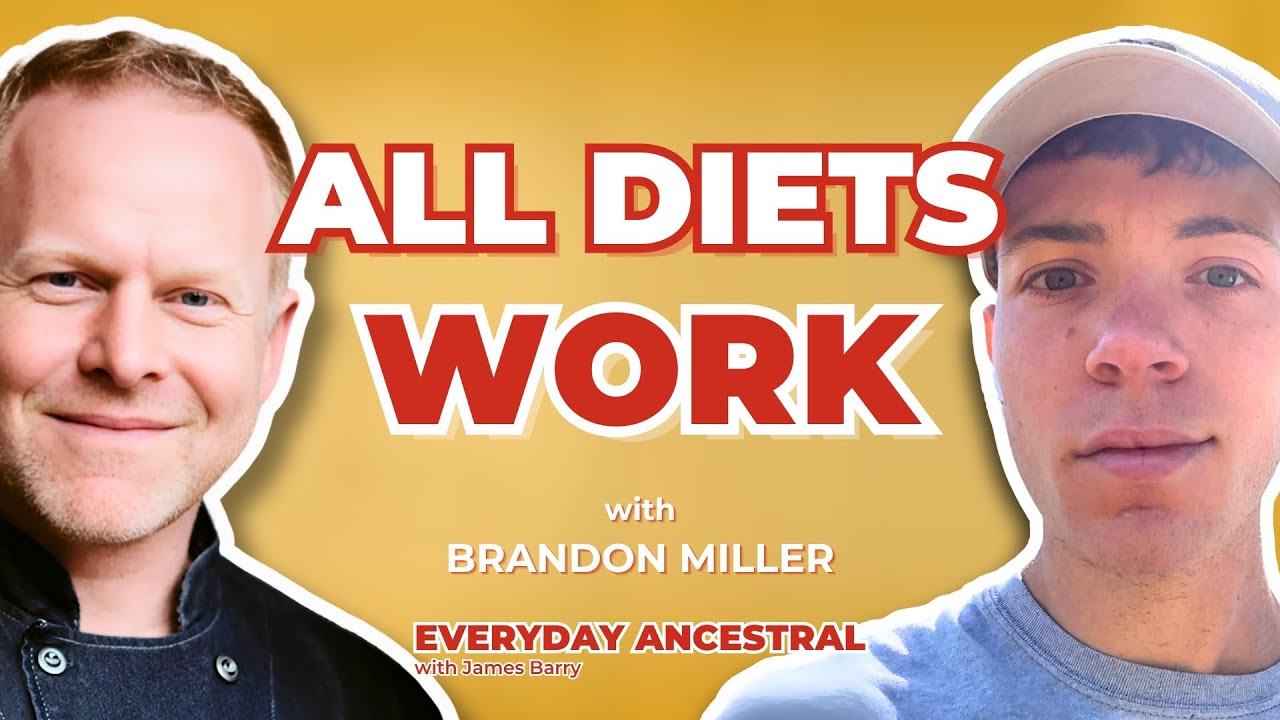
Brandon Miller lost 100 pounds on carnivore as a teenager but quit after developing heart palpitations and IBS. He switched to whole foods including meat, fish, fruit, and vegetables, and faced backlash from the carnivore community online for reintroducing plants.
Chapters
When we first connected, you were like hardcore carnivore. Why were you eating carnivore at that time? Because I know you had health issues leading up to that. Can you talk about that?
Yeah. So my main reason I even got into extreme dieting was my first attempt to lose weight in 2020, which was my only attempt to lose weight. I lost a little over 100 pounds, close to 110 pounds back in 2020. It was very powerful. It definitely got me right into the world of health and fitness, wanting to help other people lose weight, feel better about themselves, and get healthy. The way I lost weight was so wrong originally. I did a lot of things the wrong way. I was a runner and didn't lift weights, something I regret to this day, but thankfully I got into it. I didn't eat enough protein, something I also regret.
Were you also doing a lot of like starvation stuff?
Yeah, totally. It was, it was such a wrong way to go about losing weight and I think it was very, it was a very good learning lesson for me to never put any client through what I did. It was very extreme, very difficult. Lucky—
To be fair, how old were you at this point?
I was probably, I was probably 18 or 19. So you go on Google, you look it up and you just do a little bit of what they say. And I saw the pounds coming off and I didn't stop. And 100 pounds later, You know, people ask me always like at the end of my weight loss journey, like, you look amazing. How do you feel? I'm like, I felt better when I was fat. I feel like crap because I, you know, did a starvation diet. I ate like once a day, crappy foods, low quality nutrition, and then I burned off so much more than I was eating and I lost it way too fast. And to just show importance to people and looking back at this now that I've literally gone to school for it and my biggest passion is nutrition and I'm now a coach and I'm now a business It's just the main thing is take your time, take your time with weight loss, lose it slowly, do it the right way. It's better to lose it in 2 or 3 years instead of rushing it like I did in 8 months. And your chance of keeping it off is that much higher. So I would definitely go back and change some things.
Yeah. Well, and to be fair, you know, you were doing a lot of, I mean, maybe, maybe kids these days are getting into diet a lot easier, like sooner than I'm aware of, but I just feel like most people don't even realize how food is affecting them or how their starvation things are affecting them until their 20s or even 30s. So the fact that you were learning of what was working or not working in your body in your late teens is, is huge.
Yeah, absolutely. And it's so important to connect with yourself and with the food you're eating and understand how things make you feel. That was one of the biggest reasons why I jumped into an extreme diet like carnivore. Originally I was doing keto. I've tried all different kinds of diets in my life. Thank God I've never done a vegan diet. And I'm sure we could talk about that because vegans have amazing intention, but I'm so happy that I prioritize meat and animal foods, you know, with every diet that I've ever tried, even what I'm doing today, I still do that. I got into carnivore because of my IBS, which was something I read about online. Didn't know if it was reversible. I said, I'll give it a shot. I had lost all the weight at this point. So I was—
What was showing up though? So IBS is irritable bowel syndrome, but what kind of symptoms were showing up for you?
Just frequency to go to the bathroom and just not clean when I went to the bathroom. And it was like very consistent. It, it was something that always agitated me when I would go out to family, friends, you know, on dates, stuff like that. Like it's just, it's not a fun thing to have or to deal with. And I didn't think it was reversible. And heard about Mikhaila Peterson, heard about Jordan Peterson, Joe Rogan way back in the day when this style of diet really started to become the most popular. And I tried it and it worked. Now I had some long-term issues on keto carnivore that I want to go into that not a lot of people share. And so the reason I'm not doing it today, I do believe that a low-carb keto diet or carnivore diet Is not ideal for people that exercise for 2 hours plus a day. I feel that I ran into some serious electrolyte issues and I had severe heart palpitations, very similar to what happened to Paul Saldino and the reason why he started— stopped the diet. And it's pretty crazy because a lot of people told me, oh, you just need more fat, like, or you, you know, you just need more quality food or more, more butter or, you know, I was eating so much fat. I was gaining so much weight from this diet. And by the way, you can gain a lot of weight from a keto carnivore diet. I probably gained like 20 pounds and I didn't, I didn't feel good at the end of it. I think it was due to the excess weight gain. I think it was due to me just trying to eat enough fat to fix a problem that needed to be fixed with, with, you know, carbohydrates back in my diet. So yeah, worked on including different carbohydrates, tried one at a time, and I'm somebody who can really be strict with things. I have no problem with it, which is not easy to find with my age, but I have no problem being super strict and adding one food in back at a time. And I found out that, you know, it wasn't essentially a lot of vegetables. It was just a few vegetables that were irritating my gut and causing the IBS. And I actually eat a lot of vegetables today and it's not, I feel great and I have no problems there.
Which one, which, so which vegetables did you find were irritating you?
Believe it or not, brown rice was irritating me. I'm not sure why.
Not white rice, brown rice.
Not white rice. I'm fine with white rice. There were some other specific random ones in my life that I didn't know what was going on. And yeah, there were, there were only a handful that were causing the problem. I think large amounts of spinach were causing a huge issue for me and my gut because When you get into fitness and the, in the fitness realm, like it's very popular for people to eat like big spinach salads, like, because everyone is just so ultra-focused on calories. And yeah, a lot of people think micronutrients and spinach salad. Yes, true. But we don't absorb all those micronutrients. We, you know, we've, we flush a lot of them out and yeah, that was definitely irritating me. And just like lots of cruciferous vegetables in large amounts. Now I do cruciferous vegetables today. I'll do some cooked spinach today. But I don't have a large amount of it. And I think that's very important because so many people, especially younger people, are misled in the health fitness space that you need to be eating loads of vegetables because they're low in calories. And the nutrition for vegetables is fine. It's not as good as animal foods, but it's meant to complement your diet. It's meant to be a balance. And I think people need to understand that better.
What are you eating in large amounts these days? And is it mostly just meat?
So I essentially just eat all whole foods. I ha— I don't eat, oh, nuts and seeds. Nuts and seeds were a big problem with my IBS. That was something that I need to bring up for sure. And I haven't done large amounts of nuts and seeds and since I lost the weight, so like over 5 years ago, but it is essentially mostly meat, fish, eggs, and fruit, and then some vegetables on the side. So, and then some dairy. So meat, fish, eggs, fruits, vegetables, dairy. That's essentially what I'm eating. And I actually do raw dairy. I found that pasteurized dairy does make me bloat a little bit more personally. I think it's great for people to experiment with all this.
Hey, YouTube fam, 80% of you watching aren't subscribed. If you're digging these episodes and haven't hit that button yet, now's the time. Every sub helps us grow, land bigger guests, and keep the good stuff coming. So hit subscribe and stay curious. Now, how long did you do carnivore diet?
Probably over a year strict.
Yeah.
Yeah.
Yeah. So you're not, this was not just like a single month for, you know, this wasn't like, oh, I tried it and then I had issues and I, but you, you, you were in, you were fully 2 feet in. And I, and I, and, and I remember when we talked, you, you almost, 'cause I hear you now using language like it was an extreme diet. Like I think even your thinking around it might've been, would you say it was extreme?
Totally.
'Cause, 'cause you almost didn't wanna hear anything other than like, no, this is the only thing that works.
Oh my God. As soon as I started eating plant foods and I started putting them in my diet slowly, I got an insane amount of hate, unfollows on social media. And I would, I do wanna stress that it is a very culty world. It's, it, it's a very culty diet. People treat diets like religion and politics and are very firm in their beliefs. And I was definitely deep in that realm. It's just what I got exposed to on social media. When you start scrolling and looking at things in social media, more of that thing pops up more. And yeah, I got really deep into it and I became part of that culty religious belief that carnivore diet is the perfect diet and that's it. And anybody who has any opposing views, you know, it doesn't matter because this is what worked for me and this is what worked for X, Y, and Z people I know. I think it's important that we should look at some research. And we should look at some antidotes. I think a balance of that is really important. And throughout my time removing, adding plant foods to my diet, I've got a lot of love from people that go in my DMs and say, I was so afraid to eat, you know, a, a strawberry because people in the carnivore community would shame me for eating a strawberry. So it's, it's really became like the new vegan over the years. And I think a lot of the people in the carnivore community have amazing intention and they really wanna improve their health and other people's health. But it is very culty. So it is something you just have to be careful.
Why do you think that is? Why do you think we, so many of us lob onto diets and, and get so culty about it?
When you fix an autoimmune or a major health issue in your life, you want to tell everyone about it because it makes you feel so good. I think really the majority of whole food diets All would work. You know, essentially if you're getting all the bioavailable vitamins and minerals, if you're eating meat, fish, eggs, fruits, vegetables, dairy, it's going to work for a lot of people. And then some people are going to have to be more strict with that based on their symptoms. But when some, when a style works for someone, they get very attached to that style. And like I said, it's your entire environment. When you follow people in that community, when you scroll on Instagram, scroll on TikTok, it's all you see. You don't see the other side. And the other side is immediately dismissed by that community. I've had a lot of talks with people that have had carnivore and have had a lot of issues from it. I've had a lot of talks with people that are vegan, have had a lot of issues from it. Both diets can work. We can argue long-term if they're super healthy long-term, but you know, essentially when something works for someone, they can become very passionate in it. And a lot of people have that right intention to spread the message to other people, but it just, like I said, it becomes very culty and very religious beliefs are very powerful in today's world. Yeah.
You, you definitely sound like you're looking at life with softer eyes. Would you say that?
A million percent. I actually think that diet is a good part, but it's not everything when it comes to health there. It's also the same belief in these communities that if you change your diet, like, yeah, your health can improve. It can be amazing. But if you are on a carnivore diet and you sit inside all day and you have a desk job and you're not getting proper light and UV signals, and you're exposed to a lot of environmental toxins, like all this stuff matters too. It's not just as simple as fixing a diet. Sure, you can get some results, but I think health is a balance of a lot of different things.
Well, you said, so when you filled out the application to be on this podcast, you wrote something and I would love you to share deeper about what it means to you, but you said health is more of a state of the body and mind and less about certain foods or exercises.
True. I think certain foods are deemed as superfoods and they will do heal all these things. But like I said, it is an absolute balance and it's how you feel. It's how you truly feel. You can convince yourself you feel good on any diet, but until you get all the other stuff in your life fixed. That's how someone is truly healthy. I don't define healthy as a subset of a perfect blood marker somebody falls into. It's how they feel, how they act, you know, what they believe. All these things can make you healthier or unhealthier. And it's sort of this state of being and less of a certain exact protocol to do. And I've definitely changed my belief on that over the years.
Well, you mentioned you got, when you did kind of get off the bandwagon of carnivore, that you got a lot of intense energy around that. How did you manage that? I mean, you're a young guy, you probably grown up with a phone and, you know, being on, you know, this digital medias and looking for approval in a sense, or kind of you were becoming your own influencer on that in that space. So it's like. When suddenly you were the, you know, and I'm doing air quotes, but like the bad guy. How did you cope with that as a young person who's probably used to looking for approval, but now is not being approved of?
Yeah, I didn't take it personally. You can't take someone's comment or DM on social media super personally, especially if you don't know those people. I got a lot of good validation and approval from my family and friends who I actually care about their opinions and You know, in the real world, as crazy as it is, you can't take stuff personally. If you're gonna be a creator, you're gonna change your mind, you're gonna follow something or promote something, and you change your mind, you get slack for that. You have to be cold. You have to be, you can't let it affect you. You can't. Otherwise, you know, that's exactly what people want that comment this stuff. You know, you don't think there are people that are animal-based that switch to carnivore and they get slack from animal? It's the same thing. They both happen. Vegans, same thing. You get off a vegan diet or you promote some sort of supplement, then you say, hey, this supplement has heavy metals or it has something in it and I switched to a different supplement. Boom. People are like, oh, you're a snake oil salesman. They'll say all these things. So you're gonna get slack no matter what you do in social media if you change your mind on something. But I think those are the best creators. I think the best creators are willing to admit that they've changed their mind, they've made a mistake, they've done research and they've figured out what works for them. And if people don't like that, then it is what it is. I'll get a whole different following of different people.
Yeah, it's interesting because it almost sounds like you, you found courage within your transparency of the change.
Absolutely. I absolutely did. I became more confident over the years. And like I said, you just, you just can't take a lot of it seriously and you can't take things to heart. So no pun intended. But yeah, you can't take things to heart, even though I still ate organs and stuff like that.
I find that so fascinating though, because some of the people I know, you know, in my age bracket, like they look at social media sometimes like, well, I, they're so worried about being a hack or being misinterpreted or Or kind of that imposter syndrome, you know what I mean? Even though they're experts in their field, but there's a certain level of overwhelm when they think about putting their stuff out there on social media and it getting so scrutinized. But if I'm hearing you correctly, it doesn't sound like that fazes you at all, that it's more about, hey, I just want to be authentic, and you're not as concerned about the scrutiny.
No, because I have the right environment in my life outside of my phone. So that's extremely important. If you live on your phone, yeah, it's gonna be, as a creator, you have to have family, friends that are away from the phone where you could put the device down and hang out with people and have genuine conversation with people that actually know you and care about your life. And I think that's so valuable and honestly a big part of health in today's world that a lot of people are, that they don't have or they have less of because people are very glued to their devices and what people say online. Big difference that separates decent creators from really good creators is they just don't take slack. They just keep posting no matter what. They know that they'll find the right group of people. Eventually you will. And if you keep that mindset locked in, you'll be okay. It just, it takes a long time and it takes patience.
So what kind of lifestyle are you leading now? Like what does a day in the life of Brandon look like? I know you're a trainer now. Right.
Yeah. So, so I train remotely. Yeah. I don't train in person. It's pretty, it's amazing. Yeah. So I moved to Florida a few years ago, 1.5 years ago now. So definitely after we had our chat together on our last podcast.
Yeah.
The reason I moved to Florida is to be around healthy people, to get good sunlight, to spend a lot of time on the beach. And that's exactly what I do. So I wake up and I hit the beach and I watch the sunset. Get my feet in the muck, go for a long walk, ground. Just, you know, I don't, my phone is in the other room. My Wi-Fi is off and this is my time for sure. Each morning, usually around 6:30, 7-ish, I'll get up and I'll go on the beach. And that morning walk is essential to me. No matter what happens in life, I always have that time. I do eat before. I think it's important to eat protein when you first wake up. I don't want to skip that. So I do usually have a few eggs, a banana, something that will fuel me. And then I come back, I'll make another big meal. Usually I have smoked salmon, some more fruit, some vegetables, and then I will hit the gym, strength train. And while I'm doing all this, I am messaging clients, I am making plans, I'm onboarding people. So it is awesome and I love what I do. And then a lot of my, the rest of my day, is spent either creating content, doing client calls, making people programs, watching and reviewing workout videos. And that is all done remotely. It's a beautiful world where I can work from my phone. I'm also in school. So I'm also in school, which is something that I have gotten a lot of slack on because I'm a nutrition dietetics major. I think it's very important to understand school and to to go through it, but it is, you don't have to take everything from it. It's okay to have a mixed view on things. Don't worry guys. I don't support seed oils over saturated fat, even though I'm in school.
You're not getting too influenced by the system is what you're saying.
No, it's important to have that self-discipline to sit there and do some hard work for a few hours that you don't want to do. I think that's valuable. I think that's the only reason why I'm in school. As soon as I'm Done with school, I hope to venture off on my own business and be successful outside of school. But yeah, that is majority of what I do throughout the day. And since we last talked, I haven't missed the gym. So I haven't missed the gym in over 5 years. I take 1 day off a week and on that 1 day off I usually hike and I go for a long hike throughout the day. I will go out and walk by the beach and And I'll use my phone. I'm not too worried about the radiation and everything. I don't live near 5G. I made sure to, you know, move to a spot that was away from it. I'm very intentional with my choices. And on the weekends I'll go out, I'll have time with family, friends, I'll have that balance. But most of the time I'm very dialed in on what I do, especially with my nighttime routine and my sleep as well.
That's great. And it sounds like, I mean, 'cause you're, so you're now, are you in your late 20s or early 30s now?
I'm 23, dude.
Oh, you're 20. Jeez. Early 20s. Oh my gosh. Holy moly. So this has been a really kind of a, probably a very deep, it sounds like, but a very quick process. I mean, from 18 to 23, really. Right.
I learned quick, man. I absorb everything. Absolutely.
Wow. And so here you are at 23. Are you, are you not drinking much? Not doing too many things?
I haven't, I haven't drank alcohol. On my 21st birthday, I didn't drink. I don't, I don't drink alcohol. I don't care for it. My friends surf, they play pickleball, we work out, we eat fruit and meat. It's, there's cool people down here. It's a big reason why I moved to Florida. In New York, we don't have that. So.
Incredible. I mean, it's just mind-blowing to me, you know, you guys, like your awareness. And I mean, this is a lot of what we're promoting, you know, on this channel is like, you know, just this kind of taking the best of the past, you know, taking some ancestral principles, taking the best even from just 20 years ago, 15 years ago, and bringing them to the present. And you're very much doing it without even having to think too hard about it. I find that incredible.
Yeah, it's value. I mean, it's everything that we came from. So I'm very— I do think about it a lot. I try not to get to the level of being too extreme where it would interfere with being social. I feel like if you're in your 20s and you need to drink to be social, that's a problem. That's something that I'm, I'm not for. I think a lot of people just default when I say no to a drink because they know I'm a trainer and a lot of trainers don't drink because obviously it would interfere with their physique and it would be, it would be pretty tough to drink a lot as a trainer. I know some that do, but very rare and they often have very good genetics, which I do not for you know, fat loss and stuff like that. But yeah, there, there's a lot of intention behind what I do. I try and be super balanced. I try and be as much as locked in as I can throughout my time where I'm with myself. I think that's important. And I have a very open mind and I'm willing to look at any research that's presented and read through it. Big reason why I went to school, by the way, a lot of people in the carnivore vegan community, the Over extremes. They don't know how to read research that well. And I think that it's, I didn't know how to research, read it that well. I didn't know how to read a randomized controlled trial or a meta-analysis of something, see if something's peer-reviewed. Like I didn't know any of that. I just went with the studies that everybody said. And that's a big reason why I went to school, to be honest, is to really learn how to read hard research. So if somebody tries to make a bold claim, I can come right back at them with solid evidence and Yeah, there's another extreme too. There's the evidence-based community, which a lot of my followers are from now, but honestly, I think they take it too far. There, there's, there's a degree where you have to have both. You have to have mixed opinions. You have to have personal beliefs on what works for you, and you have to have research. It's all 3. You can't just be, oh, research says this, so we need to follow it blindly. And you also can't be, hey, this worked for me, so I have to follow it blindly, or this worked for X, Y, and Z, so I have to strictly follow it. So you have to have You have to have a mix. And I think school taught me that. And that was a good part about school.
How are you reckoning though? Because clearly you're bringing up like, oh, I'm in school and you're aware that in many ways the education system is co-opted. I mean, I think that that's where your comments are coming from of like, yeah, I'm in school, but I also can see through some of it. Right. So you're admitting that, that, but isn't that true with the research as well? Like there's some research that is funded by big ag or by, by, you know, by the ultra-processed food companies, that's clearly co-opted. Like it's clearly like they are producing the outcome they want. That's not necessarily the one that's accurate.
I think it's, I think it's so cool that I got involved with the community that I did before I went to school and really decided to do nutrition research, like in school and major in it, because I can see through that BS right away. And it's a very powerful tool to have. When someone cites me those 10 or 11 studies on seed oils and how they're totally fine, or when you're replaced with saturated fat, people, it's a, you know, everybody says, oh, it's a, it's an equal or slightly better than saturated fat when you, when you replace them. And until you actually like read those studies and like, and really read past the abstract and get into p-values and all this sort of scientific stuff that I won't go too deep into, but you could read that a lot of the saturated fat studies are grouped with trans fats and it's a huge problem. So, if somebody is just quoting these 10 studies and saying, oh, this is this, dismiss it and move on. It's good to know past that. It's good to know people that can read past that and can have still an open view that aren't extreme. It's a very hard balance to come across, but I have on social media. So I'm definitely grateful for that and to meet those people. Yeah.
This is another piece that I'm kind of blown away with is that you don't seem pessimistic, you know, that you've, you kind of came out of this system, you know, in a sense recognizing I have all these health issues because of the system, right? Because of what I've been taught to do. You, went down different avenues that maybe didn't improve. They improved it somewhat, but then they also seemed too extreme. And now you're finding this balance. But, but I don't hear a lot of pessimism from you. I hear gratitude and optimism. What, where do you think that's, uh, where do you, where do you think that's coming from at such a young age? I feel like most back in the day, most young people were seen as just angry and frustrated with this system, but you seem kind of at peace with it.
Not joking, but also not joking. I get a lot of sunlight, man. I feel really good. So when, when you live a really healthy lifestyle and your entire lifestyle is not surrounded by one extreme diet and it's a mix of all these things, like I sleep like a champion. I sleep insane. It's a reason why my brain is firing off on this podcast and can be efficient throughout the day is I have all these things going for me. I go for walks outside each day. I make sure my contacts are off my The UV is hitting my eye. I ground it on the beach each morning. When you're in this routine and you're pretty dialed in, you feel really good and that definitely rubs off on people. So I think before, like I said, people can get so caught up in just diet alone. While I do think it's extremely powerful and one of the most powerful tools, many don't look at the big picture either and can get too wrapped up in one specific thing with health. It's a state of being and it's a balance. All right.
Well, let's talk about the things that are working really well. If you were to pick a handful. So it sounds like sun is one. So when you moved from New York—
Light, light, light, light. Yes, sir.
When you moved from New York to Florida, what were some of the most immediate changes you saw in your health due to the light difference?
Energy. Energy is the biggest one. I felt drained. I felt tired. When you're staring at a screen consistently and it's a foot in front of your face, it's not so natural and you don't feel that good. I've done a lot of things to prevent that in my environment when I moved down here, but the main thing was being exposed and being closer to the equator, being exposed to the right rays and going out at the right times. I think it's very important that if you are someone with a sedentary job, you either do one of two things. You wake up early and you go watch the sunset and go for a little walk. Doesn't matter if you have to put a jacket on. I didn't do this a few years ago. And/or watch the sunrise, same thing. Like get up early before your job or, you know, stay out for a 10-minute walk after dinner and get that light in your eyes. I think energy-wise, it's made me extremely efficient. And I think it's really impacted sleep like nothing else. You can tweak all the little things to your diet, but If you're sitting inside in a room with a, you know, a flickering blue light consistently for 8 hours, it's, you're just not going to feel as good. And it stinks because some people have to provide for their family and that's what they have to do. And it's part of the modern world, but it's also important that you recognize where you come from and you have that balance too. So like I said, I'm extremely lucky that I've transitioned into a remote position and I can take my phone with me outside and do work while I walk. I never had that before. And being as a trainer in person in New York a few years ago, gyms are the same thing. So when I'm in the gym, it's for 45 minutes a day and then I'm out. If I'm doing cardio, it's outside. If it's sure, if it's 100 degrees in the summer, maybe I'll do cardio inside. It is what it is. But, you know, most trainers are just sitting under that fluorescent light for hours a day training people. And by the time you're done with your shift, you're so drained, you don't want to do anything. It doesn't matter what fuel you put in the tank with food if your environment and your hormones are not set up correctly.
Yeah. Are you wearing blue light blocking glasses?
So I do. So we're on this podcast for like an hour. And if I'm on my computer screen, first I have a filter on it. I use a program called Iris. It's pretty cool. It, have you heard of that before?
Yeah. But feel free to talk about it.
Yeah, it mimics the UV patterns that you get from nature on your computer. Like it will self-dim for you when needed. It will put less blue light on the screen, less flicker, stuff like that. So that is a really cool program. I highly recommend people get that. I'm not affiliated with them or anything, although I would love to be. I use Iris on my computer and if I'm doing schoolwork on my computer, which I do school remotely as well, I do everything on purpose, man. When I'm doing remote school and it's gonna be 5, 6 hours or I'm doing check-in calls on my computer with my clients, something that I still can't avoid in my life and it's okay. It's normal to have some time to sit and use your computer in life. I understand that. But yeah, I just make sure that I do wear the blue light glasses when I'm staring at my screen for more than an hour or 2 consistently. I think that's really important. I think the iris filter is really powerful too. If I'm doing work at night, sometimes it happens. I'm starting a business and I'm doing work at night past when I should be doing work. That's, it's part of what you have to do if you want to be successful is you have to put in work on some hours where it might not necessarily be optimal. I'll throw on the red light glasses and I'll put on a red light and I will, I have a street lamp outside unfortunately that I don't have control of. So I will close my blinds, try and just dim my environment and chill out and do the best you can. You don't have to be perfect with your choices because they will compound either way. If you're doing a lot of this stuff right, It will compound. So if you get Iris and you put the program on your computer and you put your phone on red light and you, it's, it's so much better than not doing that at all. So, you know, it, it's not about being perfect. I'm not perfect. I have a lot of things that I want to fix in my environment still, a lot of things that I want to be healthier. And I always strive to do that, but it's also cool to have balance. It, and, and balance doesn't mean like eat yourself, let yourself eat a bunch of junk or, you know, you sit inside for the entire day, like balance is still going for a walk each day and then spending time with friends, family inside. It's good to have both with the modern world. Yeah.
So, okay. So light is a big change for you. What would you say the next one would be? Just easing up on the diet and being more mindful about the food you're eating versus following a certain diet tribe. Would you say that's the other big one that's Been a shift for you mentally?
Yeah, I do think sleep is more important. I mean, it's like a triad. Like if you get good light, you're going to sleep really well. If I do not sleep well and I eat the perfect diet, I'm still going to overconsume total calories, total energy, and I'm still going to gain weight. So like, so many people are focused on this one little tweak they can make for their diet. Like, oh my goodness, this thing in a study had 1% more heavy metal or microplastic, bro. If you're sleeping 5 hours a night, that has to be fixed first. That has to be fixed first. So many people need to lock in on that. I think that's, it's crazy because every video I hear about sleep is this is underrated or this is overlooked and still nobody does anything about it. So I am starting a company, a sleep product company that I'm excited to launch either this year at the end of this year or next year to help improve people's sleep naturally. I think it's a really cool path that people should go down and It can be as life-changing as diet. So in my opinion, being that my diet was already pretty good, I would tweak light and then I would tweak sleep in my personal life before diet. It's a hot take, but yeah.
No, agreed. And then, and then what would you say is the other pillar? Would you say exercise in terms of what, what has consistently been effective for you?
Yeah. I mean, listen, having lean muscle mass is extremely powerful. There's an extreme with this too. You can take steroids, you can be a bodybuilder, you can be unhealthy. You can get unhealthily lean as a male, get too lean. So there's extremes you could take with any of this. And it's important. That's why I said health is a state. Health is a balance. I think that should be a main takeaway of our chat today, but yeah, it's, it's, it's extremely important. I'd argue movement is more important. I think movement, exercise, you know, cardio, whatever you wanna call that, is so valuable. That's also gonna play a role in how much you eat, how well you sleep, how much light you get, so on and so forth. You can sit by the pool all day and get all this light, but if you're not moving, you're not expending energy, your body, your hormones are gonna, are not gonna send the same signals to stop eating as if you are normally walking and doing all these other things for metabolism that are powerful in exercise. So yeah, important, slept on movement for sure. I think everybody focuses, especially in your realm and my realm on social media. Everyone's main focus is nutrition. It's just all nutrition, nothing else. Make this one change, make this tiny little swap, switch from this microplastic salt to this one. When in reality, we need to move, we need to sleep, we need to get good light in our eyes. We need to get toxins out of our environment. We need to be social and we need to create that spiritual and mental balance as well.
Yeah. Well, I really appreciate that. I think, I think, you know, ancestrally we are taught to look to our elders and to not only respect them, but to, you know, honor their experiences. But I also believe that it's important for us to look to our youth and see, kind of meet them where they are and see what we see, see how are they living? How are they What's their mindset? And maybe there's something for, you know, those of us in later generations to learn from you. And, and so that's, that's why it felt so important to talk to you because you, you really have been on an accelerated journey in terms of health. I mean, I mean, just to put it in perspective, dude, like I didn't, I didn't experience connecting food to my health until I was in my early 20s. And then I would say that I really didn't deal with my picky eating and my kind of like my own food journey stuff until I was in my 30s. And I don't, and I would even take that even further and say that I didn't fully come to terms with it and find balance where I wasn't like binge eating or like, you know, doing something that was destructive diet-wise until only like 3 years ago.
Yeah. I mean, that's, you know what, you've figured a lot of it out. It doesn't matter when, at least you did it. Like you can look back and be like, yeah, at least I did make these changes so that when you get to 80, you're, you know, you're, you're still going to be fine. I screwed up a lot of stuff in my life when I was a kid. And unfortunately, when you're a kid and you're obese, it's not much your fault. You're presented with food. Food tastes good. You don't know anything. You're not educated. It is who puts the food in front of you and parents, schools, I'm not blaming my own parents. I don't think they did anything wrong, but they just followed along with all the other parents and it's not their individual fault. It's the entire system. And I could go back and say the same thing, but it's important not to do that. It's important just to know where you're at and grow. And I think that's what I've continued to do over the past few years. And like I said, I mean, we're only going to live so long regardless. It's important to focus on quality of life too. And if your quality of life gets so extreme because You can't go out to eat and eat with people, or you have to be that one person in your environment that does things so differently that everybody looks at you differently. I think there's a downside to that too. It's, it's a spectrum and it's this, this mental balance you really have to have when you dive into all of this. It, because once you start learning stuff and you're passionate about ancestral health and just general health, there's a really deep rabbit hole to go down, man. There's so many different things you can go down and so many things you can pick apart. You just do the best you can. You slowly make some swaps over time and eventually in a few years from now, you'll thank, you'll only thank yourself for making these swaps. Just don't go too hard, too fast. I think I've done that in my younger years, but it's important not to look back and be like, oh, what can I reverse about that? You didn't know. You didn't know. Even you didn't know. You're in your 30s and 40s and you didn't know. Like you're not exposed to this. Your people in your environment weren't talking about light. Maybe not. They weren't talking about EMFs. They weren't talking about all this stuff. So how are you supposed to know? You don't know. You're just born and stuff's in your environment. It's just there.
Yeah.
So when you find stuff out, it's important to make swaps, but make swaps that don't interfere so much with your lifestyle that make it overwhelming or extreme. That's very hard for people to do, by the way. It's not easy, but it like, it takes patience for sure.
What would you say to the parents out there who have young kids, you know, 12, 13, 14, 15, you know, middle school to high school? Because I'm assuming this was you, but like, Where their kids are overweight, their kids are eating things that they don't agree with, particularly since, you know, as parents, we can't control— once a kid leaves the home, you can't control what they're going to eat, right? So what would you say to those parents that are, that are, you know, frightened or concerned for their kids, that their kids are not going to find their way? What would you say to that?
You do the best you can in your environment. I tell the same thing to my clients who are, you adults and trying to make better nutrition choices. There's no age on improving your health. It's the more you can do it with the less extremes, probably the better.
Because what I'm hearing is that that was you, right? You were that younger kid who was overweight. That was like, what were you feeling back then? Were you feeling— were you drowning? Did you feel like you could— you had anyone to lean to? Like, what was the prominent feeling when you were in that state before you started losing weight? I'm talking when you were feeling kind of Overweight and—
Hold on, I wanna go back before, before I wanna say that I think about this a lot. I'm 23. When I'm 33, I do wanna be a dad in 10 years. So it's a, it's something I think about. 2 years have passed since our last podcast. 5 years might pass again and, and boom, I could be a dad right there. And it's something that I do think about. I just try not to overwhelm my space in my brain with it, but I do the best I can. And as a parent, like I'm gonna go through this too. There's gonna be times where my kid's gonna eat junk food. There's gonna be times my kid's out late drinking. The only thing you can do is control your environment and let your kid make the mistakes, but not something that will permanently damage them. If you let your kid be obese, that can permanently damage them. If you let your kid go out and drink every once in a while or eat some junk food with their friends, it's not going to cause permanent damage. And just make sure your environment is controlled. So you can be a little strict in the house. If your kids want to go out and get Chick-fil-A or get Wendy's or whatever, Fine. Go out with your friends. Don't do it alone. Don't do it out of spite. Make sure that your intentions are there and you teach them at a very young age. And you also can't be extreme. You can't say you'll never have this, never have this, never have this, because as a teenager, like teenagers are rebellious by nature. They're going to break out. They're going to go to the other extreme where all they eat is crap or they drink or they smoke, or they do all these things that you're so stern about in the house. Balance for parents. It's important too, if you're raising a kid to Keep your environment mostly under control, teach them principles young, and let your kid learn. I learned. So I went—
Was there a catalyst though for you? Like, 'cause like, what was it that actually got you out of like that state? Was there someone that said something that finally sunk in?
Like, what was it? So my health journey actually, I'm a huge Kobe Bryant fan. I love Kobe Bryant. Watched him growing up. Big sports guy growing up. Not as much anymore. I love baseball now, but I still love Kobe. All right. Kobe Bryant passed away in 2020. It's exactly when I started my journey. When he passed away, it definitely hit me that no matter how rich, successful, famous, wealthy you are, you could just go tomorrow in a freak accident. I didn't think about that. I was 18. When, when we're 18, we all think that we're going to live forever. Even at a younger age, you don't understand the concept that you might die. Like you don't understand that stuff. It's deep, it's hard. It's a hard conversation to have with yourself. And nothing really hit me until that happened. And I realized, oh crap, like, you know, my life could be shortened because of what I'm doing or my quality of life might not be good and I might not be where I want to be because of how I'm treating myself. And I could go tomorrow in a freak accident. I didn't even think about this. So I live every day like it's my last and it's very corny, but I truly do. I just see if I can find joy in every single day. You never know. And that's when it really hit, when he, when he passed, 'cause he was somebody I really look up to. I watched all his games and definitely shocked me. And that was the reason why I started. I said, you know what, I'm gonna try and lose weight. I'm gonna try and be healthier. When you're 18 and you're obese, like most kids don't think, most fat kids don't think they'll ever see a 6-pack. Like it wasn't in my head that I could have a 6-pack and be shredded. Like I, I didn't think that that was possible. I think it's important to educate people as well. When I started my weight loss journey, when we originally started talking at the beginning of this podcast, I did so many things wrong. I wasn't educated. I didn't know. So that's what I do now. That's why I have the passion to do what I do now is because if there's somebody in their 20s or 30s watching this, it's not too late either to make a change. You just need to be educated. Once you are educated, then it's your responsibility to do something about it. So That's how I feel about that. And that's kind of why I got into health in general is because of that change where Kobe passed away. And I said, you know what, let me, let me do something about it. You don't believe it's possible as a kid.
It's really powerful. I appreciate you sharing that. I, 'cause what I hear you saying is that as a parent, you can control the environment of the home, right? So make sure that, you know, that environment reflects the kind of health you want to see in your kid. What they do outside, they're gonna do, but always try to maintain the, that home is the sanctuary so they know that they can always come back to it. And what I also hear you saying is that you, you almost do have to trust the kid's process because obviously you didn't know you were gonna take away from Kobe's death, you know, a life change that you did, but that is what happened. And so maybe as parents, we can hear that story and say, you know what, my kid's on a journey. And it's their journey. And I'm just here to make sure they don't, you know, kill themselves or get maimed, but like that I can maybe have some faith and trust in that their journey is, is they're going to get from it what they need. And then from there, let them have the trials and tribulations, but just be there to, uh, whether it's educate or to bounce back or support them in getting education around it.
That's, that's very properly said. Yes. If I would, if I were to reword that, I would definitely, yes. The one thing I wanna, I left out that I wanna touch upon is I'm gonna be the coolest role model. I wanna be the ripped, jacked, shredded dad that kids look up to and all the other dads are obese, come or on Ozempic and skinny fat or whatever. And my kids are looking up to me because I'm ripped and I'm the ripped dad and I think it's cool. And I think that's the example I want to lead by. And parents, if you're leading by example, when your kids grow up, they're going to notice. They might not do it, but they're definitely going to notice. And don't force somebody into something. Just set your environment up so that stuff happens on its own most of the time. Don't be too extreme. Same thing. I can't force a client to do an elimination diet. I can offer, I can say, hey, this is what I did. Hey, this is what this paper said. But I don't force somebody to do a specific kind of diet. Like, no, just you do what's best for you. I try and tell people, focus on whole nutrient-dense foods, make it a priority, see what works best, see how you feel, focus on overall health. Here's some things I did that helped me. That content for me is something that I'll look back on in a few years and I'll always be proud of that I did. And that's how I have to do it as a parent. You have to lead by example. Very important.
Well, very good. Well, Brandon, I so appreciate your time today. How can, can people work with you no matter where they live and how, and if so, how can they find you?
Totally. People can work with me right through Instagram is the best place to find me. It's Brandon Miller Fit on Instagram. And you could shoot me a DM, go in the link in my bio. When I have my products out, hopefully soon for my natural sleep company that I'm Really excited to be launching off. That will be on my Instagram as well, for sure. I'll make sure to promote that. And yeah, that's where people can find me. Instagram's the best.
Awesome. Well, thank you for joining and thank you all for watching or listening. This is exciting as a father. I really appreciate you. While you can't represent your generation, I appreciate you shining a light And being a beacon of light for what's possible in someone that's so young. So, thank you for continuing to shine that light, and I wish you so much success and joy, continued joy on your journey.
Thank you, bro, and thank you for the opportunity. It was a pleasure.
Thank you so much for joining me on Everyday Ancestral. If you enjoyed this episode, hit subscribe. Subscribe so you don't miss the next one. You can find the show notes, links, and resources mentioned at eatpluck.com. That's E-A-T-P-L-U-C-K dot com. And hey, if you know someone who'd get something out of this, share it with them too. Stay curious, live well, and keep it ancestral.