55 Minute training that will explode your sales in 2026
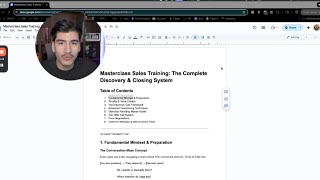
Jesus Gabriel Mendez teaches real estate wholesalers how to run discovery calls that surface pain points and close deals. The training covers pre-call prep, a full discovery framework with advanced questioning, tonality as the biggest closing factor, objection handling, and offer scripts. Jay emphasizes mindset, daily calls, and a relentless follow-up system.
Chapters
How's everybody doing? This is 10 weeks of sales trainings compacted into these slideshows where I'm going to be breaking everything down on what you're going to need to say on the phone, what questions you should be asking, what tonality you should be having. And if this is the first time you're watching one of these videos, welcome. My name is Jay. I've been wholesaling real estate for 7 years. I've been coaching for about a year and a half, and I've literally seen people that can barely speak English turn around in a couple weeks to closing deals over the phone, closing $10K deals, $20K deals, $30K deals over the phone from people that live in completely different states. So this is literally everything, every single detail that you're going to need to speak well over the phone. So pay attention, watch this video, act like you just paid me $10,000 for it. And let's get right into it. So Masterclass Sales Training: The Complete Discovery and Closing System. Here's kind of the breakdown of what we're going to be going over: the mindset, the preparation for the calls, tonality and voice control that you should be having, the discovery call framework, the advanced questioning techniques, what you should be asking over the phone, what questions are the most important, objection handling, the offer call system, price negotiation, and the common mistakes and how to avoid them, and all the pros and cons and the dos and don'ts, right? Number 1, fundamental mindset preparation. Every single conversation is a maze. Every single conversation is a new sound, is a new song. It is an art form. It's a brand new canvas that you start and you are in control of. You are the one with the paintbrush. You are the one that takes control, right? Every call is like navigating a maze where you control the direction. Think of it, you ask the question, they respond, decision point. Do I qualify them, or which direction do I take this? Every single thing that these people say over the phone, you need to analyze and move forward accordingly, right? I don't want you to sit here with a script up and only be thinking, all right, this person's done talking, let me say the next part. This person's done talking, let me say the next part. This one's done talking, let me say the next part. That is not going to get you far, that is going to get you surface-level responses, and you're going to end off the call honestly more confused than what you started with. And the underwriting process, the dispute process, the expectations, literally everything is going to be thrown out the window because you didn't do your job the right way. While you're talking, you should be thinking, where can I take this conversation? Do I qualify them more? Do I start disqualifying them? What problems are they revealing? What objections might come up that I can handle right now? Objections should be handled immediately. 2 phases of understanding. Phase 1: I just need to have a conversation, make $10,000. Now if you can see the difference between Phase 1 and Phase 3 is the exact— not really a difference, but it is a complete difference. It's a complete 180. You're saying the exact same statement, but you're coming from 2 different perspectives. The perspective of, hey, I don't know what the fuck I'm doing, but I know it's as simple as this. I didn't say it was easy. So the perspective of, I've closed multiple deals, I know exactly what to do, I've done this A through Z multiple times. Right? And it's the exact same statement, but you're coming from two different perspectives, two different pedestals. And I want you to get to level 3 as soon as possible. I want you to ignore the part in the middle, but understand that you have to go through this, right? So not necessarily ignore, but go through it, go through the motions, and understand this is what you have to go through. You have to understand every single aspect to be able to simplify everything down to one sentence of, I just have to have a conversation that makes me $10,000, right? A lot of the guys are either stuck in part 1, part 2, right? Part 1, they don't know what the fuck they're doing. They just have the confidence, the delusion that, hey, I can just make a call, make $10,000, which is completely true. And then you go into the second part of the learning curve, right? This is a weekend, this is 2 weeks, and this is 3 weeks in. I need to control the call. I need to follow the blueprint exactly. I need to read it word for word. I need to handle every single objection. I need to sound professional. I need to say this, I need to say that. Oh, this guy on YouTube said this, or this guy on Instagram said this. I should be doing all this at the exact same time. And you get confused, and then that's where most people quit, right? Because it gets hard, right? It gets hard mentally. You start to set these own objections for yourself on doing this simple thing. But then once you get through that, which is where most of people quit, where 99% of people stop making calls because it gets too hard, it gets too complicated, the learning curve gets to their head, and it's like, oh, I just want to give up, right? If you just get past that roadblock, that is when you jump to the same statement again. I just have a conversation, make $10,000. But now you know what works. You listen deeply, you pivot naturally, and you've internalized everything. Now you are a salesman, now you are a closer, now you are a wholesaler that knows exactly what they're doing. Maybe you haven't even closed the deal yet, but you have the complete understanding on how to do everything, and you have the conviction behind your voice, you have the confidence in the way you sound, right? Your job is now— now is to be the nerd in Phase 2. Learn everything about the conversation, you can eventually have natural conversations that close deals. I want you to start off not only thinking that you've talked to this person before, but that this person is your friend. I want you to have that tonality. I don't want you to think that you're speaking to you to speak to think that you're speaking to a police officer. I don't want you thinking that you're speaking to, I don't know, some person that you don't even know. I want you to have the tonality that, hey, I've already talked to this person before, this person knows me. That tonality, that level of conviction in your voice, right? Pre-call preparation checklist. Always have these ready before calling. I want you to have your script pulled up, the DISPO checklist open for tracking if you already have a deal under contract and you're talking to buyers. I want you to be in a quiet environment, no Starbucks because they have background music and you got people ordering matcha lattes and whatever the fuck they're ordering at Starbucks, I don't drink that shit. Or in your car, at work. I mean, in your car if it's a quiet environment, if there's not people honking around or people crashing against each other, yeah, keep going. Notebook for taking notes for responses, or you can do it on your phone. Comp data ready if you have it, if you need it, if you're on an offer call, right? And your character mindset ready over anything. I need you to be in that character, I want you to fully believe that you are a real estate investor. Fully believe that you've wholesaled multiple deals before. Fully believe that you are capable of fulfilling on this agreement that you are promising this person you will do, that you're promising this person the, the, the relief of pain off their shoulders, and you are capable of relieving that pain for them. You're capable of bringing them to their desired outcome, right? At the end of the day, all we're doing on these calls is building a gap from where they're at to where they want to go. Where they're at— hey, I got a property I don't want, I got a property that's been a pain in the ass, I got a property I'm not making money off of, I got a property that's honestly hurting my life. I don't want to have this property anymore. I'd rather have the money. This is the goal, right? This is the desired outcome. We want to build that gap with pain points, with the right question, with the right tonality, with the right confidence, building trust, building that relationship, and letting them know, hey, I can get you to this desired outcome as long as you sign this piece of paper, as long as you work with me, as long as you accept this price. And the bigger we build that gap, the more valuable this looks like to them, right? The more valuable our service looks like, because hey, we're adding a lot of value. Right? If there's no value, if this person doesn't have a problem keeping this property, there is no gap to build, therefore there is nothing to sell, therefore there is no value to integrate into their life. So keep this in the back of your head: building the gap. Building the gap, providing the desired outcome, and raising their level of awareness to want that desired outcome. Everybody has different levels of awareness, and we're going to talk about this in this slideshow. Your character and position. Never say these things: "We drove by and thought it was a good project for us." Why is this bad? You can pause the video, maybe comment down below under the Loom video, whatever, whatever, right? This is bad because, hey, you're saying you're local. Then you have the first objection of, hey, come buy the property before I sign anything. I don't want to sign anything before I see you in person. I don't want to sign anything before you actually come and look at the property yourself. You set yourself up for failure. Second one, I thought it was a good project for us. Off the bat, you're making them feel like their pedestal is up here and ours is down here. We need them. No, we don't. We don't need them. We are the person with the money. We're the real estate investor. We're the person solving their problems. We are up here, they are down here. They have the problem, we have the solution. Who has the power here? The person that has a solution, the person that has the money, the person that has the freedom. This person doesn't have any of that. They are needing us to build the gap for them so we can solve their problem. You get where I'm coming from? All right, we're looking for our next project. That's not too bad, but in those specific words, I do not recommend it. Your house will be perfect for us. Exact same thing. You're down here when you're saying this, and they're up here. You don't want this You don't want this pedestal framework. You don't want this at all because that's when they get ego. That's when they get disrespectful. That's when they think they run shit. They don't run shit because you're the investor. You have the money. You have the cash. You've built multiple properties. You've flipped multiple properties. You've helped multiple people in their exact situation to solve their problem. Therefore, you are higher on this pedestal. I want you to have that confidence in the way you speak and the way you come off on the phone. Why? You don't even know if they're interested yet. Saying their house is your project is disrespectful and assumes too much. You are literally telling them, hey, this is mine already. This is mine. Your stuff that you paid for, that you sacrificed so much, that you worked 10, 15 years in corporate America to afford this house that now is a pain in the ass for you, that is my property. You're coming off as an egotistical dickhead, like a rich guy that doesn't give a fuck about money. And when you come off just like that, they're going to want top dollar because they think, hey, you just got money to fucking burn. We don't have money to fucking burn. We're real estate investors. We're smart with our money. We make smart financial decisions because we don't want to lose money I'm investing in properties, right? You want to come off like that, not like the rich dickhead investor that just pays for whatever. Best positioning: I'm a local investor, I buy properties in the area. Depending if you're local, depending on your tonality, depending how experienced you are, this may backfire on a lot of you guys that are just beginners because when you get asked the question, hey, come walk the property, you might not know what to say, right? My team pulls a list of properties that might make sense. I work with my dad, partner, who's the investor, and I find the deals. If you guys are under 18 or you just sound young as fuck That last line is going to be your best friend, because if you sound like a child, you saying you're the real estate investor and you have 10 years of experience isn't really going to fly because it's not in alignment. You sound like a kid. You probably are a kid, right? Especially with most of the people that we're talking to. Most of the clients that we have, which are these sellers, are 30, 40, 50, 60, 70, 80 years old. So when they hear somebody with a high-ass tonality in their voice, some kid that's 16 years old that just heard about wholesale real estate and is watching my video, it's like, yo, I want to be like Jack. I want to have more clients. When I'm 21. You sound like a kid. Therefore, you saying you're a real estate investor is very unbelievable. We want to be believable. We want to build trust. We want to build rapport. And you can't do that when they don't believe you, right? Here are the options. Go based on your age. Exactly what I just said. That's how you know I'm fucking goated. If you sound young, my dad's a real estate investor, help find properties. If you sound professional, I work with a team of investors who buy cash. The truth often works the best depending on your situation, depending on your circumstance. I don't know what this is, but let's go ahead and remove that. Tonality and voice control, the number one reason you're not closing deals. 90% of beginners fail because of their tonality, not because they don't know what to say. A lot of times it's 80% the nonverbal shit, 80% not the information about wholesale, 80% everything outside of what you're trying to achieve that is the reason you haven't achieved that, right? That goes with anything in life, any business in life, right? If you sound good and just read the script, you'll close deals. If you sound terrible and know everything, you'll close nothing. It doesn't matter what you know about wholesale real estate, what objections you know, what— how to run numbers perfectly where you can run numbers in 30 seconds. It doesn't matter what calculator you have. It doesn't matter what cheat code you have. It doesn't matter what market you're in. If you sound like fucking shit, nobody's going to sell you their damn house. That is the whole goal of this business. Find a seller that's willing to trust you to sell their house. If people don't trust you, you got no fucking business right now. Next thing, How you sound matters more than what you say. Bad tonality indicators: um, um, um, um, um, um. We know somebody— everybody knows somebody in their life that sounds like that in real life. And this person could not sell fucking water to a sea, a fucking seashell to a sand, a fucking football to a professional NFL player. They couldn't sell shit because they sound like shit. Stop sounding like shit, right? Speaking too fast, you sound nervous, right? You sound like you're scared of the silence, like you're scared of the tension in a conversation. You need to speak with confidence the way that I am right now. Keep in mind, I like to speak fast, especially in a video like this where obviously I know what the fuck I'm doing. If you're watching this, you believe that you know what the fuck I'm doing. So it doesn't matter if I'm talking fast. If anything, I'm trying to save you time, right? But in these calls where you're trying to really go deep into their problems, really go deep into their pain points, really go deep in what is the reason they're interested in your service, you have to take your time, especially because our clients on average are between 40 and 80 years old. These people are old. These people don't want to speed through a conversation. And when you speed, you sound unconfident and you sound like you're scared of the tension in a quiet space, right? Speaking too slow, you sound dumb, right? Too slow, too slow, too slow is too slow. Going up in pitch at the end of sentences sounds like a question. If you're not asking a question, that's not good. Thinking, saying, I think, maybe, possibly, I'll try, doesn't sound confident, doesn't sound like you have conviction, doesn't sound like you've done this before. For, right? Saying sorry, thank you excessively. Again, your pedestal is right here, their pedestal is right here. If you keep saying fucking sorry— hey, I'm sorry for calling you out of the blue, hey, I'm sorry for doing this, hey, I'm sorry to bother you, hey, I don't want to waste your time— shut the fuck up, pussy. What are you, a pussy? What are you, scared of them hanging up on you? You are the cash investor, you're the wholesaler, you're the fucking guy that's solving their problem. Stop saying sorry. What the fuck are you sorry for? You're sorry for trying to solve their problems? You're You're sorry for helping them with a solution? You're sorry for reaching out to help them in life? You're sorry for that? The fuck out of here. If you're the type of guy that says that, stop doing that or get the fuck off this video. Next thing, calling them Mr. or Mrs. constantly lowers your status. Again, you have to be on the same exact pedestal. Good tonality indicators: confidence, steady pace, speaking with authority but warmth, having empathy in your voice depending on the questions that you're asking, right? If you're asking them, hey, how much do you owe on the property? That sounds completely different than, hey, Janice, I mean, I was reaching out to see if— no, no, no. What the fuck am I doing? I'm on a rant right now. The difference between, Janice, how much do you owe on the property? Versus, hey, Janice, what's the mortgage left on this? Completely different tonality, completely different response, especially in the beginning of the call. You want to Be curious. One thing that's maybe not outlined here, maybe it is later on in the slideshow, a curious salesman makes more money than the pressure-driven one. The guy that you think is, oh, he fucking closed his ass, he forced them to make the sale, those guys don't make money. The guys that make money are naturally curious because when you ask the right questions, you find the problems that this person has and you sell based off the prescription that you're giving them, right? You are a doctor. You are a doctor serving medication based off the patient's indicators, based off the patient's symptoms. You cannot just give out drugs. You cannot just give out a prescription if you don't know what the fuck they're going through, right? And if you don't know what they're going through, you have to ask in a way where, hey, it seems like you actually fucking care about them. If you don't care about them, it sounds like you're just trying to take. If you sound like you're trying to take, take, take, take, take, you're acting as a drug dealer not an actual doctor that was licensed for 14 fucking years, right? Confident, steady pace, speaking with authority but warmth, statements not questions, natural pauses, no ums, matching their energy but leading with the conversation. The voice depth issue: if you sound like a kid, you need to speak from your chest, not your throat, slow down significantly, practice speaking in a different, deeper register. I don't know what that means, but speaking in a different tone. One second. Back at it like a fucking crack addict, baby. We're back. If you sound like a kid, speak with your chest, not your throat. I have experience in this because I used to be 15 years old making these calls with a bowl cut on my head, sitting in my bedroom at my parents' house when my mom was kicking in the door saying, hey, nobody's ever gonna sell you a property. So I had to change my voice, make it sound deeper so I sound more believable, right? Yes. I'm reading through this. This is hilarious. This is goated. Okay, slow down significantly, right? Normally kids speak fast because, well, they're kids. Practice speaking in a different register. I've never said that before, but yeah, in a deeper tone. Record yourself and listen back to it, and if you still sound like a kid, make some changes, buddy. Extreme solutions not recommended but effective: sleep less. I can tell you I did that. Smoke cigarettes. Terrible idea. I do not recommend it. Do not clip this.. But I've done that before and it's helped, right? I would say for a 21-year-old, my voice is pretty deep on the deeper side. I don't know, maybe, maybe I'm just biased because it's me, but besides the point, better solutions: practice speaking with a deeper voice daily, do vocal warmups before calling, stay hydrated, and practice reading out loud in a deep voice. Go to that advice, man. Tonality practice methods: reading out loud 30 minutes a day, read books, articles, scripts, practice different inflections, record and listen back to it, and see the progress that you're making. Freestyling. Whoa, what did he just say? Yes, I did. It works, right? It makes you quick on your feet. If you want to be a salesman, if you want to be a great fucking communicator, you have to be quick on your feet. My girl was just vacuuming outside of my office door. If I was not quick on my feet, I wouldn't have paused the video because I would have been scared of getting off track, being scared of, oh, what if I forget what I was talking about? What if I, uh, no, I'm a great communicator. I'm quick on my feet. That's why I'm at where I'm at. Right. So shout out to my girl though. Thank you for cleaning. Just not the right time. Um, yeah. Freestyling, put a beat on, freestyle rap forces you to be quick on your feet, builds confidence and workflow. AI role play, create scenarios with ChatGPT, have it act as a difficult seller, practice handling objections and available 24/7 for unlimited reps. Now, if you're in a group like mine, the Contract Flipping Academy, you have multiple roleplays multiple times a week, not only with me, with other students, with Philip, with the top students, with the beginner students. You have roleplays with everybody, right? And not only outside of the group roleplays that we have, you also have access to every single one of the students that's in here so you can roleplay with them, reach out, network with them and say, hey, I want to roleplay, man. I think I suck on the phone. Can we get on a roleplay call and see what we can do, right? See what we can learn, see how we can make progress. Mirror practice. Watch yourself speak. Practice facial expressions. Build confidence in your delivery. What a lot of people don't tell you is that 80% of communication is nonverbal, right? You're seeing my face, but if the face was covered, you would hear the tonality of my voice. You would see the confidence in my voice. You would see where some parts I'm really, really, really not necessarily credible on, but really excited about, right? Really curious about, really pumped about speaking about, because you can tell that from my voice because I'm actually genuinely excited to talk about this. Because it's great fucking advice. And I know somebody that watches this video, at least multiple people, if a lot of people watch this video, they will get results just from watching this video specifically. So that's what I'm saying. Look in the mirror, practice facial expressions, smile when you speak. People can hear you when you smile through the phone because it sounds different. You might not think it does, whatever, whatever. It does, right? Now, the professional versus the robotic balance. You need to sound professional, like you've done this before, natural, like a real human. And confident, like you know what you're doing. You don't want to sound like a robot reading a script word for word. Overeager, desperate for the call, sounding like a drug dealer, sounding like a guy that's trying to take, take, take, take, take instead of giving value and receiving something in the end. Uncertain, like this is your first call, like you're scared of the result, like you're scared of getting told no, like you're scared of them saying no, I don't want that offer, like you're scared of them giving you an objection. You cannot be scared. You have to face this face on and be confident about it, right? Again, with this little code shit, I gotta remove that. 3, the discovery call framework, the sacred order. Never skip these steps, follow it like a religion. Introduction and permission, motivation on why they're selling, time on when they need to sell, property condition, decision makers, financial situation, price discussion, process explanation and expectation setting, and next steps and commitment. Why do I follow this order? Not only am I going to break it down, but number 1 is because it lowers boundaries. It builds trust, it builds that relationship. People only like to work with people that they like to do business with, right? People like to do business with people that they like. Then a lot of people start off with price. The price that you get in the beginning of the call, the first 30 seconds in, versus the price that you get 15 minutes later is a completely different price. They might give you $300,000 right here and then tell you, hey, the lowest I can go is $200,000. $100,000 spread that you didn't even know about because you followed the script the right way. Right? Why this order matters. When you ask for price in the first 30 seconds, that's how you know I'm fucking goated. I didn't even read that shit. I didn't even read it. And that's what it said. Word for word, bar for bar. That's how you know I'm goated. Introduction and permission. Get permission to have the conversation. Establish who you are. Hey Joe, my name is Jay. I'm a local investor and I work with a team that buys properties in the Dallas area. One of my agent partners drove by the property and we pulled some information on it. Just wanted to see if you ever consider selling it. Simple. You can do it shorter. I normally like, hey, my name is Jay. I was reaching out about your property on Main Street, just seeing if you ever thought about selling it, right? Normally I start off before that. I say, hey, is this Joe? Hey Joe, this is Jay. I was reaching out about your property on Main Street, just seeing if you ever thought about selling it, right? See the tonality? Like a fucking ninja. Pay attention. Now, key principles: don't apologize for calling, don't explain too much up front, get permission to continue, and sound like you've done this 1,000 times before. How do you sound like you've done this 1,000 times before? You are delusional, you are confident, you believe that you're a real estate investor, and you actually practice and you actually make calls. None of this video matters if you're not making the calls. None of this information matters if you're not putting action towards it. You will make zero progress and your bank account will not grow if you don't do something about it. If you don't make the calls, if you don't call Zillow owners, if you don't call real estate agents, if you don't call brokers, if you don't call investors, if you don't call sellers, nothing's gonna fucking happen. So keep that in mind in the back of your head. After I'm done watching this, I have to make a call. If you don't make a call, you're a loser, right? Now, key principles, we already went over that. Handling how did you get my number? Your information came up on a list of properties that we're looking at in the area. We work with data providers that pull public records. Are you the owners of the address? And immediately, perfect. So have you thought about selling it, or is this the first time you're hearing about this situation? If this is the first time you're hearing about it, great, let's talk about it, right? Motivation, the most important section. Understand the real reason they want to sell. This is your ammunition for handling objections later. Never ask, why do you want to sell? Instead, hey, what got you considering selling right now? Walk me through what's going on with the property. Tell me about your situation. Never want to say, hey, tell me your motivation and why you're interested in selling the property. Tell me your pain points. That is stuff that I'm going to tell you to do, right? You are the wholesaler. This is B2B. I'm a business owner, you're a business owner. I'm giving you advice. You never give advice B2B style to B2C, right? B2C is going to be going to be completely different. I talk to clients, sellers in a completely different way that's indirect, outside of what I'm actually trying to get out of the conversation, right? I have an agenda, right? I don't want to reveal that agenda. I don't want to reveal that I want to get the best deal possible. I don't want to reveal that, hey, I only care— I only really care about the motivation and what's the bottom dollar that you want to sell for. You never want to come off like that. So that's why we follow this proven process to underlying— to address the underlying issues, the underlying objections, and underlying pain points to to get what we want out of the conversation, see if we can help this person, right? So motivation, most important part. 80% of the conversation should be about motivation. 80/20 split. 80% of your actions, reality is 20% of those actually make up the biggest difference. 20% of the conversation should be talking about price, logistics, setting, expectations, whatever, whatever. 80% of that conversation should be only about motivation, 'cause that's the most important thing. If they're motivated, they're gonna sell. If they're not motivated, they're not gonna sell. They're going to get disqualified. Right now, this is more a part of the script. Key motivation question that reveals pain: if you don't sell, what happens? Right? Reveals consequences, shows urgency or the lack of urgency. How long have you been thinking about it? Shows if they're serious, shows if they're procrastinators, right? What would change in your life after selling? Reveals emotional drivers, gives you ammunition for closing and objection handling. Have you talked to anyone else about selling? Reveals if they're shopping around, shows their level of commitment. Why What's the worst part about owning the property right now? Direct pain point question often reveals the real answer. These are all amazing fucking questions. Examples on going deep on motivation. Hey, I'm just tired of dealing with tenants. I completely understand. How long have you been renting it out? 5 years. 5 years. Okay, is that what you're— is that— is it that you're tired of being a landlord in general? Is it that, or is it these specific tenants? These tenants specifically, they've been a nightmare. What happened? You see how I'm listening to what the fuck they're saying and and following through with a deeper level question to really get to the underlying reason on why they're interested in selling. And you can see here's a great example of that reaction. Ouch. So if we can't figure something out, you're looking at an eviction, which is that— which is what, 3 to 6 months out in your state, plus legal fees, plus they're trashing your place every day? Is that accurate? Yes, exactly. So it sounds like you got X for the property, you're going to lose that in legal fees, lost rent, repairs anyways. Am I understanding that right? Yes. You see how this is different than just, oh, tennis is the reason you're still looking to sell. Got it, man. So tell me how much you're looking for the property. Day and night difference, day and night results, right? If you just implement what's in this video, your close rate will go up, your appointment seller rate will go up, your conversion rate will go up, whatever you want to call it, it will go up because this is actual actionable information. Give me a like on this video and follow me on Instagram if you're watching till this point, which we're not even done. We're like halfway, we're not even halfway done. See how the seller went from tired tenants to uncovering $4,000 behind on rent, need an eviction, 3 to 6 month timeline, legal fees, property damage, loss of money regardless. This is your ammunition for the offer in the future objection timeline. Understand how quickly they want to move and what happens if they don't move. Key questions: if everything worked out perfectly with the price, when would you ideally want this closed? Shows their dream timeline, shows their urgency level. What's pushing that timeline reveals the deadline pressure, shows if it's flexible. What happens if you can't sell by that specific timeline? A critical pain point shows consequences. What is— is that timeline flexible or is it firm? Shows negotiation room and reveals true urgency. Timeline probing example. You got that right here. You guys can read through this and you should also have access to this doc. So I'm not going to go through that just yet. Now you know, hard 45-day timeline, new job in Florida, no moving assistance You see, this is how you want to end these conversations. And this is just, this is just maybe a minute of the conversation. Look how much stuff we got out of it. This is what I'm talking about. You leave the call with so much information, you're like, wow, I can really help this person, right? Or you leave the call saying, wow, this guy, I really can't help, right? I recommended him to a real estate agent. I recommend him to find a new tenant. I recommended him to fix the property himself and keep it, right? That is the end result that we want. We want clarity at the end of this conversation. We don't want to be more confused. The same way that, hey, if you're in the Contract Flipping Academy, you know you came in here for clarity and that's what you got. Now you know exactly what to do to be successful in your wholesale business. Or, um, what was my example? I don't know. Besides the point. But yeah, you guys get it. Property condition. Understand the repairs needed to build your repair estimate. Also disqualify it if it's too nice. Granted, We do offer novations, which is an exit strategy for properties that are nicer than the usual properties and where they have a flexible timeline. They still want all the benefits of a cash offer and they're still wanting to work with us no matter who actually buys the property. That is for a different video where I actually break down novations. If you're in the Contract Flipping Academy, you know that's in the novations module where everything is broken down. There's like 15 different modules. All right, property condition, basic information. How many bed baths? What is the property vacant or is somebody living there? When was it built? How old is it? Condition review. On a scale of 1 to 10, these are all really good questions to ask to give you clarity. We want clarity at the end of this conversation. Um, boom, boom, boom, boom, boom. Why this question is magic: they tell you what they think needs work, reveals their perception of the property, often uncovers hidden issues, and builds your repair list. That way you can have an accurate rehab budget, which is never going to be perfect, but at least you want to be in the room. At least you want to be in, in the field, and you want to be in the stadium. You want to be in the range, because obviously we're not contractors, right? As long as we have a safety range and we we're being conservative with our numbers, we will always check out, we will always close a deal. We will never lock up a deal that's too high to where you're stuck with a deal and you can't find a buyer, right? Why this question is magic, we already went over that. Recent updates question: What's the last thing you did or repaired on the property? Disqualifying questions: It sounds like the property's in pretty good condition. Why not list it with an agent and get top dollar? A lot of people, including myself in the beginning of my journey, was scared to ask this question. Why? Because I was scared of them saying, yeah, you're right, I'm going to go with a real estate agent instead. Instead. I don't want to work with you cash buyers anymore. No, I thought that was me losing a deal. I thought that was me losing a motivated seller. No, that's me losing somebody that's going to be a pain in the ass to work with. That's me losing an hour of my time running the numbers on this property and actually making the offer when they're going to tell me no at the end of the day because that's not what they actually want. That's not what best benefits their situation, right? This question removes the bullshit from the non-bullshit. It's like you mixing water and oil and having to do an oil change on your car And you're sitting there like, oh, but, but what if I remove the water, man? If you remove the water, then you're not going to cook your engine, right? Your engine is going to work perfectly fine because you're adding what's supposed to be adding in there. Your CRM should only be leads that are actually motivated, people that should be added in there, not bullshit people, not just everybody you talk to, people that are motivated. So every time you follow up, you're not wasting your time. You're building a closer connection with these sellers so you can eventually close a deal with them, right? If they say it's in perfect condition, that's great. Blah, blah, blah. Decision makers— if the deal is— the deal is normally killed if you don't ask about decision makers, right? Or at least it's an objection that's very hard to handle at the end. You want to pre-handle all these objections. You want to pre-objection the objection by asking these questions that are going to come up at the end anyways. I've done this thousands and thousands and thousands of times on calls with sellers, and that is the reason why I've closed hundreds and hundreds of deals, right? If you don't ask these questions, you're going to cook yourself and shoot yourself in the leg and not build the right foundation on the conversations, not build the right strategy when talking to a seller. You're welcome, right? Identify everybody needs to sign off before making an offer. Are you the only owner on the deed, or is anyone else with you? If married, is your wife and husband on board, uh, with selling the property? Are they a decision maker? If inherited, are there any other family members who inherited the property with you, and what are their thoughts? Or have you had the conversation before with them that they're interested in selling the property? A business partnership, do you have any other partners in the LLC that are signing reps that are decision makers that are people that would say yes or no, that are people that you can make a decision with or without, right? Deep probing question, going deeper into decision makers. If they resist having the spouse on this, if they resist having the spouse on the next call, I totally understand. The reason I ask is that I've had deals fall apart last minute because we got everybody excited and then the spouse wasn't on board. So I just want to make sure we're all on the same page from the start. And would it be possible to have her even for the last 10 minutes of the conversation, right? Financial situation, understanding if there's enough equity in the deal to make it work. Just the mortgage questions, people resist this. So just so I know where I'm at, is there any mortgage on the property or do you own it free and clear? If they say they have a mortgage, okay, and between you and me, how much is left on that, right? You have to switch the tonality between these type of questions. Some are direct questions, some are really deep questions, some are questions about their situation. Every single one has a different tonality that you should be following, right? And obviously with more practice, obviously after a while watching this video, it's going to all help out with the ingraining of all this information, right? Are you actually going to make money when this property sells? I want it to make sense for you. If the seller resists, hey, I don't really want to share that, I completely understand, that's personal information. The reason I ask is because I want to make sure that when I bring this offer to you, you're actually walking away with money in your pocket. I've had situations where I didn't ask, we agreed on a number, and then we got to the title and they found out the seller was upside down on the property. I don't want that to happen with you, right? It shows that, hey, we care. It shows that, hey, I'm not just trying to take information from you. I'm trying to make sure we are able to help you in the best ability possible, right? Alternative approach. Hey, you don't want to tell me the exact— you don't have to tell me the exact number, but ballpark, are we talking about under $100,000 owed, $10,000 to $200,000, above $200,000? Obviously, this depends. If it's a million-dollar property, you switch it accordingly, right? Back taxes. Are you currently on property taxes, or are there any back taxes owed? How much are we talking, and would you want those paid off at closing, right? And that's where, hey, we add a benefit. Throughout this whole conversation, throughout every single one of these calls, we want to emphasize on the things that actually move the needle for them. If their biggest pain point is back taxes, if their biggest pain point is a tenant, if their biggest pain point is, you know, the property's in shit condition, they don't have the money to fix it, their biggest pain point is, hey, they live 2,000 miles away, we want to emphasize on those pain points because that is the driver, right? That is the driver for the gap. That is the driver for their reason on even talking to us in the first place, right? I know where— I know you probably thought about this. What's the number in your head where I could hit it and you'd be happy to move forward? The research approach. Have you had a chance to look at what some of the properties in the area have sold for? Okay. And based off that, where does that put you— put your property? Keep in mind, yours needs boom, boom, boom, boom, boom. So it's not quite comparable to those that were renovated. The walkaway approach. Ideally, what would you need to walk away with in your pocket after closing the mess to make this deal work for you? Right. A direct approach. If they're pushing, just give me a number. I can definitely do that, but I'd be throwing out a random number without knowing what's really important to you. If it's the price that matters, if it's the closing timeline, if it's not having to do repairs, because depending on what matters the most to you, my offer might be structured completely different, right? So pretty much letting them know, hey, we have to go through a discovery. And if you want to give them a different example, you can say, hey, imagine you're a mechanic and some guy just brings you his car, doesn't let you inspect it, and says, hey, how much is it? What are you going to say, right? You have to go through the car to give them the accurate solution to this problem. Same thing here. I want to know about your situation. I want to know about the property. I want to know of everything that's going on so I can give you the best possible solution to your problem, right? And when they give you a price, never react negatively. Never try to fight it back. Never try to argue with them on price, because then that's when you're going to build that boundary completely back up, because you always want to be on their side. You never want to act like the guy that's fighting against them. You want to never act like you're the guy negotiating against numbers. You never want to be the guy that came up with a number that's going to be disrespectful towards them. You always want to be the guy on their side. Good cop, bad cop, you are on their side. It doesn't matter what offer that your finance guys, that your finance team, that your dad the real estate investor, or that your partner gave, you are on their side. You want the best for them. You don't care about the number. It doesn't affect you financially, even though it does, but we have to act like it doesn't, right? Right? When they never give you a price, never react negatively. Even if they say $500K on a $150,000 property, okay, $500,000, how did you land at that number? I understand, is that number negotiable at all? Is it pretty firm? Got it. And just to clarify, if I came back with a number at $300,000 but needed 60 days to close, would that work? Or if I came back at $280K but would close in 2 weeks, would you prefer that? Right? So seeing if there's any wiggle room, seeing if there's any playroom in that number or in their whole motivation in the first place. This reveals what they actually value. Again, focusing on what they want to focus on, focusing on what their pain point is. Process explained, building trust, making them feel confident in working with you and eliminate the 'this seems sketchy' feeling. We never want to have them have that. We want to be them. We want them to be educated. We want them to be confident. We want them to be trusting in us that we can fulfill on their duty. Right? Let me explain how we work because I want you to feel comfortable with the process. Here's what happens next. And this is a full breakdown of literally every single benefit of what it looks like to work with us. Key principles: speak in simple terms. No ARV, no MAO, no assignment, no wholesaling, no title company. Explain it like it's a retard. Explain it like you're explaining it to a 5-year-old. You never want to use these terms that I'm talking to you with. Again, again, B2B conversation. I'm telling you, bro, what the fuck is the MAO? You never want to say that to a seller. The seller doesn't know what MAO is. It's going to confuse them. And when somebody's confused, when somebody doesn't understand something, when somebody doesn't trust you, they will never make a decision. But if they trust you, they're educated, they know what they're doing, and they feel confident in working with you because they trust you, they will always make a decision and move forward. They will take action. We want them to take action, so we want to educate them, and we don't want anything to be confusing about our process, right? So explain it like a retard. Explain it like you're explaining it to a 5-year-old. Make it sound easy. Make it sound easy. Emphasize that they need that they get no cost, no repairs, flexible timeline. Don't explain the wholesaling process. You're not a fucking guru. I'm the guru. I'm the one teaching you. I'm the one breaking it down. You don't have to explain the business model to them, right? If they ask about how you make money, great question. That's the breakdown. Next steps and commitment, a good way to send off the call, right? Pre-handling objections. This works because specific time and date, they agree to it. You're texting them, you pre-handle the future objections, you recapped everything, and you got them to confirm. This is how you end off a call. This is super, super important because I see a lot of guys, not only do they fuck off the whole call, they end it with, hey, okay, I'll give you a call tomorrow, and then from there we'll see if we work together. What the fuck? What the fuck? Lock the fuck in, bro. All right, now we're done with that. Advanced question techniques, chopping down the tree. Shout out to Marion, man. He's a guy in the group. This dude came to me when I first started the mentorship. He's been killing it ever since. Now he owns a couple kiosks at the mall, bro. Shout out to Marion. And I need to go to the bathroom real quick. It's been 36 minutes. I'll be right back. Give me one second. It's only gonna take one second for you. Back like I never fucking left, baby. I was saying, shout out to my boy Marion, man. You're goated if you're watching this video. He gave me this angle, or this way of describing the technique. In a way of chopping down the tree, right? Chopping down the tree from multiple different angles. The same way you take a conversation, same way for any sort of marketing. You have different angles of explaining your process, different angles of explaining your system, different angles of explaining how you add value, different angles to build the gap. And he gave me the example of chopping down a tree from multiple different angles. You hit it from one side, you hit it from the other side, that side didn't work, Fuck it, hit it from the top, hit it from the bottom, hit it from the root, hit it from this angle, right? Because this side might be cooked, right? This angle might just bring you objections. This angle might just piss them off. But this angle keeps working. So you keep chopping, keep chopping. Maybe try this one. Chop, chop. And you're going to chop down tree way faster. Ask the same question from multiple different angles until you get the answer. Get into the real price direct. What is the magic number for you? Research. Have you looked at what properties in the neighborhood have recently sold for? What do you need to walk away with this property to make it worth, right? Have you listed with an agent? What would you hope to get? Knowing you, you'd pay 6% commission plus closing costs plus Where would that put you, right? If you could close in the next week versus 60 days, what would that change for you? Would you accept? What would you accept? Or what would you accept, right? Having problems reading because I'm just— whoa. All right. You see, this is one, this is 1, 2, 3, 4, 5 different ways of chopping down a tree, 5 different ways of asking the question. And you can make your own on 5 different ways to ask a question that you keep getting objections on. Same goal, different approaches. If one works, try the other, right? Every time they give you an answer, you can go deeper with why did that happen, what does that mean for you, how does this affect your situation, right? Why, what, how. I need to sell because I'm moving. What's making you move there? New job. What's pulling you to this new job? Better pay closer to family. What does that mean for your timeline? I started— what does that mean for your timeline? I started in 2 months. How does that affect the house? Do you need to sell before you move? Yeah, I can't afford both. Why is that? My credit won't let me qualify for 2 2 mortgages. Now you know, firm deadline, 2 months, financial constraint, can't afford both, and credit situation is limited. Options is what he has based off his credit profile, right? Handling I don't know responses. Okay, it's okay, that's okay. Nobody expects you to know everything. Let me ask it differently. I totally understand. Fair enough. If you had a ballpark, where would you be at? From your perspective as an owner, what would you say is the best guess? Silence techniques. After you ask a big question, shut the fuck up. Drop the fucking mic, right? These questions that fuck really good, right? The questions that really get you the real motivation, really get you to the underlying reason why they're interested in selling, you have to shut the fuck up for. The same way when you make an offer, you have to be quiet, drop the mic, let them speak, let the tension build. That's how you close the deal, right? Most people are uncomfortable with silence. They will fill it. Often the second thing that they say is the truth. So what's really pushing the sale right now? Oh, you know, just ready for something new. 3 seconds of silence. Actually, to be honest, I'm going through a divorce and we need to split the assets. Great. Real answer comes after silence. Assumption— assumptive question technique. Don't ask if, ask which. Bad: Would you want to close quickly or take more time? Good: Would you prefer to close in 30 days or 45 days? This assumes that they're moving forward and choosing the terms, making them feel like they're in control when in reality they're not. We're just— they're just choosing out of two factors that we gave them, right? The take-it-away technique. Sometimes the best way to get somebody To want something is to suggest that they don't want it, or they don't want to do it, right? I'm not sure if I want to sell to an investor. I totally understand. Honestly, based on what you're telling me, I think listing with an agent might be a better fit for you because we— for whatever reason, right? And then you tell them, hey, have you spoke to any agents yet? Well, I haven't talked to one, but— but what? They wanted me to fix a bunch of stuff. I see. So it's pretty common with agents, blah, blah, blah, blah, blah. If you don't go— one second. If you didn't say bless you, man, you're cooked. Wait, thank you for saying bless you, right? I see. Then seller, well, actually, I don't want to wait that long. You took it away and now they want it back. People are sold in completely different ways. Some people are sold in a minute, some people are sold in 40 minutes, right? Objection handling masterclass. The golden rules of objection handling: never argue, you will never win. The same when arguing with the retard, you're going to go down to the retard's level and lose eventually. Right? Acknowledge and redirect. I understand, with a question. Pre-handle objections, bring them up before they do. Use their own words, throw it back at the seller to confirm what they said, right? Never sound defensive, always stay calm and curious because you are the investor. Your pedestal is here, their pedestal is right here. You should always remain— what is the word that I'm looking for? Cool, calm, collected. Always keep it P. Most common objections and responses: what's your offer? When they ask it too early, I'd love to give you one, but I'd be throwing out a random number without knowing anything about your property or situation, that wouldn't be fair to either of us. Holy, this stuff's like a soda, man. Do you have a couple minutes so I can get you some details and make sure my offer actually makes sense for you and what you're trying to achieve, what you're trying to do, what you're looking to get out of the property, right? Playful. I could give you one right now, but you'd probably slap me through the phone. But you'd probably slap me through the phone. One thing I say, which obviously if you have the humor, if you tested this before and it works, you can say, hey man, if I give you an offer right now, you're you're gonna cuss me out and hang up on me, man. I don't want that to happen. Let me ask you a few questions first so I can get you the highest number possible. Does that sound fair? Right? Response C, extreme: Sure, I'll give you a Happy Meal and a kid's toy. How does that sound? Again, super extreme. It works though. I've used this myself. I'm pretty sure I've used it in a couple YouTube videos too. They laugh or get confused. See what I mean? I need to know more about your property before I can give you a real number. Let me ask you a few questions first. I've gotten a lot of calls this week. I bet you have, man. There's a lot of us out there. I'm guessing most of them asked what you wanted for the property in the first 30 seconds, right? That's why most sellers don't work with investors. They get lowballed by people who don't know anything about the property. That's not how I work. You're putting them in this red light and you are the one in the green light. This is what they do. This is how we're different and this is why we're better, right? Why are you asking so many questions? Professional, playful, if they're being difficult. Literally, I'm giving you the full breakdown right here. I want to think about it. Full objection breakdown. I need to talk to my wife. Full objection breakdown. I'm working with a real estate agent. Full objection breakdown. That's too low. Full objection breakdown. I want to give— I want to get X for the property. Full objection breakdown. I don't want to share how much I owe. Full objection breakdown. How do you make money on this? I'm literally giving you fucking everything in here, and the link should be below again if you missed it the first time I said it. All right. Offer call system. Before you call them with an offer, know your comps inside out, know what your repair estimate, know your max offer, review your notes from the discovery call and prepare for 2 to 3 likely objections. Have your calendar ready for the next steps. Offer call structure: reestablish rapport, recap their situation, review the benefits, give them the offer, handle objections, and get to the yes or no as soon as possible. We don't want a maybe, right? Opening the offer call. Hey, I have your offer, it's $150K. I've seen some guys post TikToks that they claim to make this much money with wholesale. And a lot of their calls, not only do they have a voice changer on there, but they just give the offer right away. That's not scalable. I don't believe you. And I don't think most people do. Beware of the grifters. Beware of the liars. Beware of the fake gurus. Back to this, right? Good way. Hey, my name is blah, blah, blah. Your name is blah, blah, blah. How are you doing? Perfect. I got the news. My team was able to run the numbers on your property. We've got an offer for you. Before I get into that, let me just recap what we talked about to make sure I didn't miss anything. You mentioned you were looking to sell this for this reason, and you wanted to close by this timeline, and the property needs this repairs. Did I get all that right? Perfect. So based off that, let me walk you through what we can do. Presenting the benefits first, setting the tone for the conversation, setting the tone for the benefits, focusing on what their motivation actually is and why they would say yes. Building the gap, building the gap. How do you think I got that wholesaler plate? I didn't get that wholesaler plate by not following a structure, I'll tell you that much. First, we buy the property as is. So this is literally just a breakdown of all the benefits that we emphasize before giving the offer. Then, based off the comparable properties in your area, properties similar to yours, fully renovated, conditioning, are selling for around this much. Your property needs approximately this much in repairs to get in that, to that condition. Talking into account, taking into account repairs, The holding cost while we renovate and the profit margin, we need to make this offer worthwhile. We can offer this much for the property. Now that I know that's what you were hoping for— now I know that's below what you were hopeful— hoping for, before you respond, let me ask, what are your thoughts on that? Right? And then quiet. And then dead space. And then tension. Let it build. Explain the logic. ARV. Acknowledge it's below their expectation and shut the fuck up after giving the number. Let them respond first. Handling the initial objection. The initial objection. I understand, walk me through. If they immediately reject it, I understand, walk me through what you're thinking, what you were hoping to hear. Cool. That math has to work for both of us. If they're silent, there's literally fully objection handling and negotiation dance. Never go straight to your max offer. If your MAO is $180,000 and you offered $150,000— if your max is $180,000 and you offered $150,000, their counter is $220,000, you have a $30,000 room to negotiate. Your MAO, your maximum allowable offer, you should never give that. You should only start your You should always start at 75 to 80% of your MAO. So if your MAO is $100K, you should start your offer at around $70,000 to $75,000, right, to have room to negotiate and make them feel like they won. If they don't feel like they're winning, if they feel like they're getting taken advantage of, they're gonna be a pain in the ass to work with, and they're probably gonna cancel the agreement before you find a buyer, right? Now, the response tells you everything. Maybe they say maybe, they're negotiable, in no way, they're not serious, say about $200K, they're meeting you in the middle. Make them work for every single dollar. Never jump up $10,000, $20,000, $30,000. You jump up by thousands, you jump up by hundreds, you jump up by maybe $2,000 max, right? And you go back with the team. You're building this dance, you're building this fight, right? You're not the one coming up with the numbers. You're not the one saying, you know what, maybe I can do this. No, you can't do shit because you're not in control of the numbers. You're not in control of the finance department. You're not counting your dad's pockets. You are the person that relays the information. Getting to the yes to the no never made me. Worst outcome is I'll need to think about it. I appreciate you want to think it over. Let me ask, what specifically do you need to think about? Handle that objection. Most of the time people don't need to think about shit. They just are scared to take action, right? Is it the price? Is it the timeline? Is it something else? Okay, what do— okay, I need help with that. Knowing that, where does that put you? Okay, so help me understand, you're leaning towards yes, you're leaning towards no, or right in the middle, right? This forces them to commit to one of the extremities. So, okay, you're leaning towards this. What we need to change for you to feel comfortable moving forward today? Then take it away. Close. If they're being wishy-washy, you know what, based on this conversation, I'm not sure we're the right fit for you. If it sounds like you're— it sounds like you're looking for whatever the reason is, and we can't just do that. I don't want to waste your time or mine. Have you talked to any agents about listing it traditionally? Again, showing them the other side of the coin, what it looks like to not work with you. Often they'll backtrack. Let me think about your offer. Closing the Closing the offer call. And then yeah, you got more parts of the script if they need to think about it, if they reject it. Price negotiations, the psychology of negotiating. The first person to give a number usually loses. The person who cares less has the most power. Your pedestal is up here, theirs is down here. Every concession should be earned, right? Never go more than what you should, right? Go up little by little, but they're going down by a lot, right? Never split the difference. If you read the book The negotiation book, Never Split the Difference, is never about negotiating on numbers or terms. It's always about finding the underlying issue on where they're coming from and then meeting in the middle based off those underlying issues, right? Never about the price. Use their own words against them gently, obviously. Never split the difference. Example: if you offer $150K and they want $200K, the difference is $50,000. Bad move. How about we meet in the middle at $175,000? You just gave up $25,000 in margin and cushion and room and profit. Now they think $175,000 was your starting point. Now they'll push you for $180,000, for $185,000, and you look weak. And then you're cutting away all your profit margins. What's the point of being in this business if you're going to close a $1,000 deal? We need to close $10K, $20K, $30K, $40K, right? Better move. I understand that you were hoping for $200K. Let me ask you this: how did you land on that number? Go to the backstory, go to the underlying reason. When they give you their price React. I want $250K. Wow, okay. And what's that based on? You see the tonality difference? Your reaction makes them question their own number because you're the professional. You're doing this each and every day. These people sell a property or buy a property every fucking 10 to 15 years, 2 to 3 times in their life. These people don't know what the fuck they're doing. You do. Using their pain against them ethically. You documented the problems of the discovery call. Now use them. Bring that back up. Use it as examples. Point the finger on the pain, not on them, right? The higher authority technique, blame somebody else for the lowball offer. Again, this is your finance team, this is your dad, this is your partner, this is whoever the fuck, right? The future pacing technique, make them imagine life after selling them, right? Paint the picture of the desired outcome. The negative consequences, paint the picture of the undesired outcome, right, of what they're running from. The justification, make it all logically make sense and educate them on that. Right? When to walk away. Sometimes the best move is to disqualify them because they're either completely unrealistic on the price, they're not motivated, they don't want to make a decision-making decision, right? Or they don't have the authority to make a decision, they're shopping around for fun, aka a tire kicker, or they're looking for a free appraisal, which we don't do, right? And this is what you do. How do we— how do you walk away? This is how to walk away. Why this works: it shows confidence, takes away pressure, often makes them reconsider, and saves you time if they're not serious. We don't want to waste time with people that are not interested in selling their property today, right? Or in soon enough time frame. Common mistakes and how to avoid them: sounding clueless. Again, we went over this in the beginning, why it's a problem— because you sound like shit. The fix: what to practice on. Not following up. The fortune is in the follow-up. You will make a lot of money if you follow up, because not everybody is ready to sell the second that you call them. Sometimes they need a day, sometimes they need 2 weeks, sometimes they need 3 weeks, sometimes they need 6 weeks, sometimes they need a year. Right? But if you follow up with them, you build that relationship, you really build that trust, they are going to work with you because they like you over somebody else that's maybe offering $1,000, $2,000, $3,000 more, right? Most people do send one follow-up text and give up after 3 days and assume they're not interested. What you should do: call over and over until they block you or they tell you they don't want to talk to you and block you, right? Or tell you to fuck off, right? Script follow-up right here. Sending information via email, it doesn't work because they don't— people don't check their email, it goes to spam, they forget about it, and has zero urgency. Text them, right? Making it, making it open on the call. So this is for buyers. This is for buyers. When talking to buyers, you don't want to send anything through email. You want to send everything over the phone and through text because it gets immediate action. And I got a lot of YouTube videos on that too, if you have any questions about that. Now, tracking your calls, tracking your KPIs is so fucking important, bro. It is so important. That's how you really build a business. Victim blaming— you never want to blame the seller for the problems. You want to blame external factors and be on their side trying to fight the problems. The same way you don't want to victim blame in your relationship. You want to point the finger at the problem, and you and your wife, or you and your boyfriend, or you and whatever, are trying to solve the problem together. You're working as a team. It builds the relationship, it builds a connection, and it stops cracks in the relationship. Same thing with the sellers explaining the wholesale process. You're not a fucking guru, bro. Explain how you can help them, not the wholesale process, right? They don't understand. It sounds sketchy, makes them feel like you're making money off of them, and opens up unnecessary questions and future objections. It sounds like a scam, bro. Oh, you, you reach out and then you get a property under contract and you sell it to an end buyer, but you're not the one buying it, but the buyer's the one buying it, but why doesn't he just find the property himself? It doesn't sound right, right? Make sure you explain everything like a retard, like a 5-year-old is the one hearing you. We buy properties. Give them a simple explanation of you as a real estate investor using the industry jargon. Again, don't say shit like this. They don't understand what that means. Keep everything nice and simple. Ask about mortgage and equity too early. Tonality and timing on the call is very important. Otherwise, you're going to bring more objections to yourself. Not setting up specific follow-up times. Again, ending the call off too early without specifics on the follow-up, specifics on the second call, specifics on what's going to happen or how your process works. Make sure everything is clear-cut and educational. Negotiating against yourself, you never want to fucking do that. Here you have a script on how not to do that. Bringing up objections that they didn't have. Again, don't do this. Skipping the decision maker question. Again, you're cooking yourself, you're shooting yourself. Don't do that. Mistake 13, reading the script word for word, you sound like a robot. Don't do that. Not listening. Don't fucking do that. They're going to tell you the reason they're interested in selling. If you're not listening, you're just reading through the script, you're going to miss it. You're going to have— you're going to miss a lot of points where you can negotiate and get a better deal on. Giving up too soon. Stop being a pussy. Every single no gets you closer to a yes. One yes can change your fucking life. Stop giving up. Right? Follow-up system, final thoughts and actions. Script mastery, tonality training, make calls, review and improve your follow-up system. The truth about getting your deal: finding the perfect lead, having the perfect script, sounding like a professional, knowing everything about real estate— that is not what it's about. What it's about is making enough calls to get good, learning from every single conversation, being consistent daily, following up relentless, and not giving up. Every single no gets you closer to a yes. One yes can change your fucking life. Expect a timeline. You're gonna sound like shit in the first couple weeks. 3 to 4, you're gonna start sounding decent. And weeks 5 through 8, you should get your first deal under contract. 9 through 12, you should get your second deal under contract. And you should be closing 2 to 3 deals consistently after that, right? Remember, the difference between someone who closes deals and someone who doesn't isn't talent. It's fucking persistence. It's grit. It's consistency. It's everything outside of wholesale. That's the reason they're closing deals. You don't need to be perfect. You just need to be consistent. Make 50 calls today, 50 tomorrow, and do that for 60 days. Days and you will get a deal no matter what. Obviously, no financial guarantee. You might be a bum on the street watching this video somehow, and you're probably not going to close the deal. But if you're somewhat normal, you can speak English, you're based in the US, or at least are willing to work US hours, you have a US bank account, blah, blah, blah, this is very achievable for you. It changed my life. I really hope you take action of all this information that I gave you for 54 minutes. If you watch this long, go take action. Holy, I need to stop drinking soda. Please take action, right? It completely changed my life. Hundreds of students have changed their life. Do the fucking work. Every single no gets you closer to a yes. One yes will change your fucking life. Go out there and fucking get it.