Free Virtual Wholesale Real Estate Blueprint
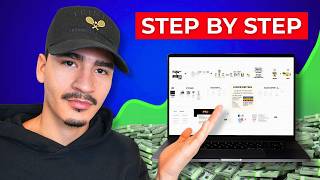
In this 30‑minute mini‑course Jesus Gabriel Mendez (Jay) walks viewers through the entire virtual wholesale real estate process, from selecting a profitable market to closing a deal. He begins by advising beginners to target lower‑priced, non‑metro markets (price bands under $120k) to secure early contracts, then explains how to test a market with 1,000‑2,000 lead lists and a modest $50‑$100 marketing spend. He provides a cold‑calling script, outlines the key questions to uncover seller motivation, and demonstrates a conservative underwriting method that calculates the Maximum Allowable Offer (MAO) by subtracting repairs, closing costs, and a desired profit margin from the After‑Repair Value (ARV). Mendez shows how to position the initial offer at 70‑80 % of the MAO to preserve profit. He then details how to locate cash‑buyer investors using Zillow, PropStream, InvestorBase, and Facebook groups, emphasizing filters for LLC‑owned, cash‑purchased, non‑owner‑occupied properties with multiple holdings. A concise investor‑pitch script is presented, followed by steps for sending property details, qualifying the buyer, securing an earnest‑money deposit, and completing the assignment agreement through a title company. Throughout, he stresses staying away from highly competitive metro areas until the wholesaler has mastered the workflow, and he offers one‑on‑one coaching and his Instagram handle for further support.
Chapters
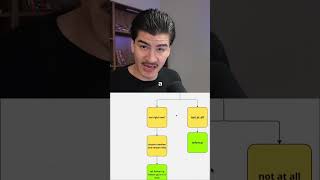
This video right here is going to be a mini course showing you from marketing to closing day what you need to do step by step, going into most of the topics. If you have any questions, leave it down below. Like, comment, subscribe, all that YouTube stuff. Let's get right into it. Pretty much we're going to do virtual, no, no local. So we need to find a virtual market. So off the bat, we want to stick between a certain price range just because average profit we want it to be consistent and not low. So if we're talking about being in the light blue market where the property values are under $100,000, we're not going to be making $10,000, $15,000, $20,000 per deal just because the property values are so low. If you think about a property where the ARV, the after repair value, is going to be $100,000 and the property's, let's say, 1,500 square feet, just in repairs for a somewhat heavy rehab is going to be between $20,000 and $25,000. Off rip, just on rehab, we're down to $85,000. If we take a percentage off that, we're probably going to be down to $60,000. Then we have to take away our profit. That's going to be another $10,000. We're at $50,000. Then we have to take away the closing costs that the investor is going to have. We'll take away another $5,000. Now we're at $55,000, right? And let's say we don't want to settle for $10,000. We want to settle for $15,000. Now we're at $45,000, $40,000 for a maximum allowable offer. And And if we think about that, let's say we offer $40,000 to the seller, we're going to have it under contract for $40,000, we're going to try to sell it for $50,000. There's not much room for the investor to make money on this property, right? Especially if it's more of a rental neighborhood, the guy's not going to want to flip it, right? Because if it's more of a rental neighborhood, families aren't going to want to move in. So that's the problem with these. There's less of a profit margin. There for us to make these big, big spreads. So in turn, we're going to be focusing on dark blue, dark green, light green, maybe yellow. Here's the thing though, it's super easy to get a property under contract in these light blue markets, which the price is around $100,000 to $120,000 in average sale price, because these sellers, well, they're not as knowledgeable on their property, right? It's a lower priced property. They're probably going to find themselves in financial issues more often than somebody that's owning a property of $450,000 to $600,000. Right? So this is going to be easier to get under contract, but smaller profit margins. That's normally what I tell my new students that are beginners to wholesale to focus on, just because it's easier to get a property under contract there, easier to get that first 2, 3 contracts. That way you can get the proof of concept and understand, hey, This process really does work, right? But once we understand the sales process, we understand how to find the buyer, we understand how our marketing works, we understand how to track the numbers and everything, then we can start focusing on these higher price point markets, which is where really, where we're really going to bake on those $15,000, $20,000, $30,000, $40,000, $50,000 deals, right? Especially when we come up here, we're talking about $100,000, $200,000 assignment fees. So that's the market research that we're going to be doing. Another thing that I'm going to tell you guys is stay away from metro cities. I live in Dallas, Texas. The competitiveness, the competitive level here in Dallas, Texas is way higher than if we were talking about Wichita Falls. If we were talking about, I don't know, what's another smaller city? If we were talking about Baytown, Texas, if we were talking about Beaumont, Texas, if we're talking about these smaller cities outside of the metro area where investors are still going to be purchasing properties, because the price point isn't going to be as high as if it was in Dallas, Texas. And also the competition is going to be less because if you think about it, let's say you're a wholesaler and you have $50,000 to $100,000 to invest money into marketing. Why would you go into a smaller market where you're going to run out of leads way faster than go into a bigger market? There's more action going on, right? So that's what I'm telling you guys is as a beginner, I want you to go into these smaller markets because there's less competition. Less competition, higher probability of you closing a deal. That's another thing. Stay away from Metro. Stay to these price points up here at the start. Once you understand the process, then you can come up here where it's a little bit more competitive. That is for finding the markets, right? Now let's say you pull a list. We— I like to tell you guys, let's stay during the testing phase. We want to test markets for about a week. And when we're talking about— when we're talking about a week, I I'm telling you guys to stick to a list amount of around 1,000 to 2,000 leads, right? We don't wanna break the bank, but we also wanna test a market to see, all right, what is the overall phase that the market is in? Is everybody motivated? Is nobody motivated? Has everybody been called in this market, right? So we're testing these markets with $50 to $100 and knowing, all right, let me spend this small amount of money before I spend $3,000, $4,000, $5,000 on the list or $5,000 on the marketing campaign into a market that's never going to pay me the money back, right? So now that we have these lists pulled and it's time to actually start marketing, my best recommendation is always cold call. Depending on how you list, how you pull your list depends if you're going to be actually cold calling or warm calling. That's a definition for another video. But we're going to go ahead and be using a simple script like this, right? These are just— this is just the bones is what I like to say, because you dress up the script, you vocalize how you want to speak to people in your own way, right? If I try to talk like you, I'm going to sound dumb. If you try to talk like me, you're going to sound dumb because we all have different ways of communication. And the script goes something like this: Hey, my name is Jay. I'm looking to reach John over at the property on Main Street. Just seeing if you guys ever thought about selling it, right? Then we get the yes or the no. If we get the no, then we go ahead and tell these people, hey, no worries, I completely understand. Do you know anybody else that's interested in selling their property? A lot of people don't ask this extra question towards the end of the call because they think it's just a waste of time. That waste of time has generated me over $100,000 just this year from asking that question, right? And it doesn't hurt to ask them. What do you— you already got to know in the first place what, what's scaring you from getting another one, right? But if they say yes, boom, now you can go into detail on that or get the contact information for that other person that has a property on the for sale? If we say yes, then we go into the unwrapping of the problem, right? Because we're problem solvers. That's the reason we're making money. So if they say yes, we right away want to go into price, we want to go into condition, we want to go into motivation and timeframe to sell. These are all the details that we're gonna be using when it's time to actually run the numbers on the property and know, hey, can we make money on this deal, or are we just wasting our time? Right? And it's key, a key component to ask all these questions and ask follow-up questions to really understand what is their motive on selling, what's the real condition of the property, what is the price that they're looking for, is that negotiable, what's the time frame to sell, are they willing to sign an agreement today and sell in the next 5 days, 10 days, 30 days, a month, a year from now, right? That's what we really want to understand to see if we can solve a problem in this specific property, this specific specific situation. Next, we're talking about underwriting, how to actually run the numbers on the property. So off rip, we want to take the ARV price. The ARV price is going to be, let's just say in this example, $100,000, right? Let's keep it simple. We want to take away off of that price a percentage between 50 to 75%. If it's a higher market, then we can go from 80 to 85. And then we want to take away from— we want to take away repairs, we want to take away closing costs, and we want to take away the profit margin that we want to make, right? So in this property, let's say ARV is $100,000. That's what you can sell it for in the open market to a retail family. We're going to take away 75% of that. Right away we're at $75,000. We take away repairs. Let's say it's $20,000. We're now at $55,000. Closing costs, another $5,000. We're now at $50,000. Your profit margin, let's say you want to make $10,000. Now we're at $40,000. $40,000 is going to be the maximum allowable offer. If you offer more than $40,000, you're risking not making any money at all, right? Even though you counted in a $10,000 profit margin, we still want to be very, very safe and conservative with the numbers. So you might be able to sell the property after repair value for $110,000, $120,000, but we want to be super conservative looking at the deal as an investor, right? If you're an investor putting in $100,000 into a deal, you want to make sure your numbers are correct and conservative, so you're not losing money at all because that's what you're doing for a living, right? So that's the mindset that we want to have when we're running numbers on these deals. So in this case, what would my offer be to the seller? I wouldn't just offer $40,000 because everybody loves to negotiate, right? Especially if the seller told me, hey, I want $60,000, I'm coming in with a $40,000 offer, he's going to tell me, let's meet in the middle at $50,000, right? We want to start off our initial offer, our MAO, not, not as our MAO. We want our initial offer to be 70-80% of our MAO. So in this case, I'd probably offer $35,000, $30,000 from the start, and then meet somewhere in the middle from that $30,000 to that $40,000, right? So even if we negotiate all the way up to $40,000, we're still making $10,000, right? Because that's how you actually make profit margin in these deals, especially when we're talking about a lower price point like $100,000 average sale price. So that's going to be actually running the numbers on the deals. Finding real estate investors. So now we did the marketing, we found the market, we talked to the seller, we found the lead, we ran the numbers, it's a deal. Now we have it under contract. We found a title company, sent the agreement in. Now it's time to find a real estate investor to purchase the property. You can use Zillow. I've showed you guys the Zillow strategy in my past video. You can use PropStream, pull a list Cash buyers, make sure the filters are in. The filters are actually on my Instagram video that I just posted today. Investorbase is a good way to find cash buyers. I think it's like only a couple hundred bucks a month. Then you got Facebook groups where active investors are in there looking for deals all the time. Just make the post, make sure you don't expose what your property actually is and the address. And when you're actually pulling lists to find cash buyers, we want to make sure that it's LLC owned, bought for cash, non-owner occupied, and at least owns 5 to 10 properties an area that he does not currently live in, right? That's kind of the sauce on the real estate investors. And keep in mind, there's still more shit that I know. This isn't me telling you everything, but this is enough for you to go out there and really close the deal. Now, when we're actually talking to the real estate investor, what is the pitch? What is the script that we're going to be using? This one's going to be pretty simple. They're more straightforward. It's less emotion connected. It's more of a logical negotiation when we're talking about wholesaler to investor, right? Right? So in this case, we're talking about, hey, this is Jay. I'm looking to reach Michael at 123 LLC. I saw you bought in the 75223 zip code. What are you— are you in the market to look for another project? Are you in the market to buy another property? Are you in the market for another investment property? Get the point across. Who are you? Why are you calling? How did you get their information? And how can they benefit from this conversation? Right? If they say yes, you send over the agreement on the house. Not the agreement. You send over the information on the house, right? What's the bed-bath count? Why should they buy the deal? What are the pictures of the property? What's current condition? Is it vacant or is it occupied? What's access going to look like? What's closing date? All those details that a real estate investor is going to need to know if they want to buy a property or not, right? So they say yes, you say that. If they say no, you can even follow up a question like we do on the seller side of, hey, do you know anybody in the market looking to buy a project right now? Ask the question, right? You already got a no. What are you scared of getting another no for? Then we're talking about asking kind of more qualifying questions about the investor to know, hey, are you— make sure we're not talking to another wholesaler, right? So what is your investment goals? How much do you want to make per deal? How quick can you close? Are you cash or hard money? Where's the last property that you bought? What all that— all those types of questions that only a real estate investor is going to know the answer to, right? And when we're talking about collecting offers from these real estate investors, you want them to go out to the property first. If they're not going out to the property and they're just throwing out a lowball number out there, do not take that as a legitimate offer, right? A lot of times they're just gonna lowball you and you're gonna think, oh, I got a shitty contract, I got the price too high, when in reality they're just fucking lowballing you because they're just— they're greedy just like you, right? Everybody's greedy. Everybody wants to make the most amount of money, but We have to play the game. You have to play the power game in this, uh, business. So boom, we got the real estate investor. We pitched them the deal. They want to go walk the property. They gave us an offer. We're good to go. Now we get them to go ahead and sign the assignment agreement, send in earnest money. We already have the upfront agreement with the seller, and we go ahead and send those all to the title company, make sure everything is good to go. If there's any issues, try to solve them. If there's it's just unsolvable, then you're cooked. Move on to the next deal, um, or find somebody that has the knowledge to actually fix the problem for you and then split profit with them. But if you have everything good up to this point, you're good to go. You're good to close. And congratulations, you just closed your first wholesale deal. If you have any other questions, leave them down below. Um, if you want to work with me one-on-one and me actually hold your hand throughout the process, the link will be down below. Um, yeah, follow me on Instagram @modestmendez, and, uh, that's about it, man. I just gave you some sauce.