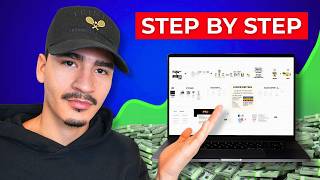
Jay Mendez walks through wholesaling real estate to make $10-20K monthly with no experience or capital needed. Pull absentee-owner lists from PropStream, cold-call with a script, diagnose seller motivation on the call, and assign the contract to an investor for profit. Scale with paid ads, pay-per-lead services, or virtual assistants.
Chapters
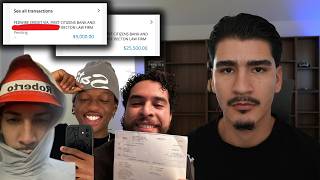
If you follow exactly what I'm going to show you in this video, you could put $10,000 to $20,000 in your bank account in the next month to month and a half, even if you're starting from zero. You know, I'm not here pitching you some course or some pyramid scheme. This is just the information on how I started flipping contracts, built a six-figure income, all without a college degree, credit, or any real estate experience. 6 years ago, I was broke, no confidence, no blueprint, had to take all the learning lessons starting from zero. But over time, it got me to the point where the skill set that I know now takes care of my parents, takes care of myself, and I'm able to give more to the world and actually be proud of what I do for a living. This video is for the version of me 4 years ago on a late night on YouTube looking for the right strategy to make it out. And if that's you, maybe on the younger side, a 20-year-old looking for consistent income, or even a 45-year-old where you already have consistent income but you want a way out of that rat race, this is for you. I only ask one thing: that for the next 10 minutes, you please turn off your TikTok brain, you pay attention, you take notes, and ready to take action after watching this video because there's going to be no fluff, no BS, all actionable information that will help you close that first deal. Let's get right into it. Before we get into it, I want to give you a little bit of a backstory of what I went through, right? Which I didn't have the most terrible life. I know everybody likes to hear the rags to riches story, but mine wasn't that raggy, right? My parents made okay money. We never missed a meal, but they were still working every single day. They were still— my dad was still working from fucking 6 in the morning to 3 in the morning sometimes. And I was there with them during the summers. And that's what created me as an entrepreneur to want to make more money and not have to work as hard for the money that I wanted to get because I wanted it in big amounts. Now, as you can see, I was born and raised in Dallas. I was a typical teenager doing a bunch of bullshit as teenagers do. And with the first amount of money that I made with wholesaling, I went and blew it on a car and some Yeezys, right? And that's why my, my checking account looked like that. And it was terrible, right? But I learned my lesson. I kept learning every single lesson that I went through, every single L that I went through, every single time I wanted to quit, I took everything as learning experience. And 6 years later, this is me, right? On the right, you see me and my friend Danny looking like drug dealers in Miami. You can see in the middle, we both got Rolexes on. I live on my own. I provide for my parents. No picture of my parents in there because a lot of you guys are weirdos, right? Privacy reasons. But I live on my own. I live in my dream apartment. I have my dream car. I have everything I've ever wanted because I stuck my head down and I focused on one thing. A lot of you guys are focused on too many different business models. Pick one thing, don't deviate from it, and make sure you stick to it until you reach your goals. So now let's get right into the step-by-step. First of all, we have to understand the business that we're in, right? We have to understand where we're providing value and why we're getting money for what we're doing. So as you can see, we are in the middle with the cool sunglasses, which if I had some, I would put them on right now. On the left side, you have the seller with this sort of expression where he doesn't feel the most comfortable, right? And on the right side, you have a real estate investor with a cash— with a lot of cash in his hand and $120,000 $100,000 at the top, which is the price that he's paying for this ugly property on top of our head. Right. How does this little circle work? How does the value exchange happen? So we have the seller, which clearly by his facial expressions, you can tell he's not comfortable. He's in a situation where he has to get rid of his property or he has to sell it as soon as possible to make sure his life reaches whatever dream destination that he has. And he's clearly willing to let go of that property for $100,000. The property is worth more than $100,000. But because we know how to negotiate, we know how to run numbers on these properties, we can get them under contract at a low enough price to where we can go ahead and sell that contract to a real estate investor for more. And that's why you see $100,000 on the left side, $120,000 on the right side, and us keeping the difference in the middle. Right. How does this work? We reach out to the motivated seller. We say, hey, I see that you might be interested in selling your property. If you are, let's go ahead and put this property under contract. The contract says that we're buying the property when in reality we're not buying anything. We don't need hundreds of thousands of dollars to start in this business. It's very low barrier to entry. But that's why our skills will make us better than everybody else. There's millions of wholesalers out there. There's millions of people, whatever you want to call it, digital real estate, you want to call it Virtual Flip Formula, you want to call it contract flipping, you want to call it wholesaling, you want to call it whatever you want to call it. Same business model, right? The only difference is strategy. So we reach out to them, we get the property under contract where we don't have to buy it, but the contract says we have to buy it. And then we assign that contract with an assignment agreement to the real estate investor where he actually purchases it. And then when the money goes through, we get to keep the difference. So we locked up the property at $100,000. We sold it to the investor at $120,000. That's why we walked away with $20,000 in cold hard cash. Something like this, right? Now that we understand how the money moves around in a real estate transaction, how we can plug ourselves right in the middle and collect just a small fee for doing— I'm not going to say minimal, but hey, we're not flipping a property. We're not sitting there with a hammer. We're not doing walkthroughs. We're sitting at our desk and getting this thing done. Let's move on to the first step on actually closing your first wholesale deal. Market. If you don't have a good market, you will prolong your results by a long shot. I can tell you from my personal experience, it took me 7 months to close my first wholesale deal. Now you ask me why, and now I know the reason years later, but before I did it, it was because I was in Dallas, Texas, my home city where there's a lot of competition. Dallas is a metro city where millions of people are moving here over the past couple of years, right? Growing market. You might think, hey, this is perfect for wholesale real estate. But the problem is I wasn't experienced at the time to compete in these seawaters with these sharks. And by these sharks, I mean these huge competitive wholesalers, these huge investment companies, these wholesale companies that are spending a lot of money in their marketing strategies. So I get beat down and I can't compete because I'm just not experienced as them. So what is my advice to you as a beginner or somebody looking to scale their wholesale business? Get out of metro cities. What are metro cities, you might ask? I'm going to tell you off the bat, we're going to skip Arizona. Every single wholesale guru, every single real estate guru, and anybody you could think that makes a good amount of money in real estate, they're all in Arizona. We're going to completely ignore that market. Next, we're going to completely ignore every single main city in Texas, which is Austin, it's Houston, it's San Antonio. And it's Dallas. We're going to ignore those. And you can see the pattern that I'm following along. In Florida, we're going to do the exact same, right? We're going to ignore Miami. We're going to ignore Boca Raton. All these major cities where there's clearly an abundance of real estate activity going on. We want to ignore those because we want to make the barrier to entry to close our first deal as low as possible and as frictionless as possible. I don't want you going through the weeds. I don't want you going through the trenches. I want it to be as easy as possible. That way you can understand the process and you can scale from there. So as far as your market, I want you to go ahead and pick a blue, either dark blue or light blue, which you can tell by the average price point on PropStream. It'll be on the top right when it comes time to look at the map. And I want you to go into those markets. Why? Because the price point is between $100,000 and $250,000. Now you might be asking, Jay, why won't I go for a $500,000 average price point in a specific market or $700,000 or $1 million? I'm going to make more money. Yes, in theory you are, but you don't have the experience. You don't have the sales experience, the negotiating experience, this marketing experience to go ahead and compete in a market like that. You don't know what you're doing. And that's why for most of my students and my recommendation to you guys is stick to these smaller markets where here are the guidelines. You want to stick in a population at least for 50,000, a buyer pool of at least 2,000 to 3,000 buyers that have bought in the area before, a.k.a. in the past year. That way, when we do lock up a deal, we know we can at least get some feedback from people that are consistently buying in this market. Otherwise, I don't want you to go in the middle of buttfuck nowhere, right, where you lock up a deal. Yeah, it's easy, but then you have no one to sell it to. What are you doing? You're wasting your time. I don't want you to do that. Now, for the actual, like, super, super niche sauce where all you got to do is copy and paste, because I'm still giving you a little bit of homework in here, click the first link down below. It'll be a link for you to book a call with my team and see if you're a good fit for our program. In our program, it is step by step. I'm holding your hand. I'm holding you accountable. I'm making sure you close that first deal. No exception unless you're not willing to do the work, right? But if you're serious about this, you want to get that first deal closed before the start of summer, click that first link below. And if not, let's get right into the next part. Now that we know what market we're going to close our first wholesale deal in, we have to figure out what data we want to attack, right? At the end of the day, the business is marketing and sales. I want you to forget about real estate for a second. Forget about the houses, forget about the land value, forget about the ARV, forget about all these things. You have to understand marketing and sales at a base level for you to be successful in this business, right? A lot of people try to overcomplicate it when it's not. If you sound good on the phone, if you sound confident on the phone, you know how to negotiate, you know how to pull motivation. I could really give you any list, any set of data, and you will close a wholesale deal. But obviously you guys aren't there yet. So I want to make sure you pull the easiest data to close in. So the sources, the softwares that I will always recommend is PropStream in the beginning. It's cheap. It's $99 a month. And it's pretty easy with the user interface that they currently have right now. As far as guidelines, I want you to follow when pulling your first list, which in my sense, I like to call it the prototype list. It is a test list where it is between 1,000 and 1,500 properties. And you can normally run through that set of data in about a week, a week and a half, which makes the testing phase very, very fast. A lot of people will stick in a market for months and months and months on end, wasting time when it wasn't a good market in the first place. So we want to make sure we understand that this market is good in a short amount of time, that we were not wasting our time. Now, As far as the guideline on what list to actually pull, I want you to stick to absentee owner data, AKA the owner doesn't live in the property, therefore they don't have an emotional connection to it. It's easier for them to actually sell the property because they don't live in it, right? Their kids aren't there. They don't have family there. They don't cook their meals every single day there to where they actually have to go and relocate somewhere else. Makes the process more complicated. Let's make it easier for you. So non-owner occupied, I want them to at least own the property for at least 3 years. That way they can build up some equity and we're not trying to make money out Nowhere, right? Next, I want the ownership status to be individual, or I want it to be mixed in trust. Now, what do I mean by this, right? It's where did they actually buy the property from? Did they buy it under their personal name? Did they buy it under their business name? Did they buy it under a trust? My easiest way to close a wholesale deal is individual, a.k.a. this person bought it under their own personal name, or mixed in trust where they bought it under trust, or maybe they moved it into a trust. One of my biggest deals was from a mixed interest list, right? So these are the ownership types I want you to avoid. LLCs— these people bought it under a company name for a reason. They probably know a little bit more than the person that bought it under their personal name. That's why I want you to target these. Now, year built— I want you to stick to 1950 to 2010. Anything under 1950, it's going to be a little bit harder to sell. It's going to be a vetted investor that's going to want to buy that. And you don't have that many vetted investors in these smaller markets, right? You want to stick to something that's easily sellable, something that you can mass market to an investor, maybe a first-time investor where it's not going to be as hard to do the flip on the property. Right. It doesn't need that much work. But yeah, 1950 to 2010 is the year built. That way the repairs aren't too crazy depending on, you know, the property's condition. And then you're going to pull that set of data. And once you get through that set of data, once you start pulling multiple, maybe 5, 10, 15 lists in a specific source, right, in a specific market, I want you to move over to list source, right? Because you need a different set of data. It's going to be a little bit higher price point, but it's also going to be a little bit higher in quality. Right. And that's when we start, you know, averaging different data sources. And that's what I want you to do when it comes time to data. Now we have the market. We know where you're going to close your first wholesale deal in. You know who you're going to target. Now we need to talk about marketing, right? Let's get into marketing. What are we going to do to get in front of these sellers so we can pitch them our service, right? So we can find out who really needs us, who we want to work with, and who is going to be easiest to close the first wholesale deal with, right? And my first recommendation will always be cold calling. I know, boo, go ahead and give me a thumbs down now. Click off the video, whatever you want to do, right? All the complainers hate cold calling because they're lazy, because they don't know how to talk to people, because they're not willing to put in the work. Now, it's not crazy grunt work because we're not sitting on our phone typing separate numbers. We're not sitting there listening to the phone ring. We're not sitting there listening to voicemails. Right? We're not doing any of that because we're using a dialer. Now, as far as dialers, I will always recommend Batch Dialer, ReadyMode, Mojo Dialer. You can use other ones like CallTools. You can use ones inside of different softwares like GoHighLevel, right? Every single dialer works, right? My best recommendation is going to be Batch Dialer. I use it on a daily basis. It's the one that's been most consistent with me for the past couple of years. I will recommend it, right? But the rest work. And why do I recommend cold calling over something else, over I don't even know why I have to mention this, but driving for dollars, right? Setting up bandit signs, door knocking, texting. It's just not consistent. I know that if I make sure somebody sounds good on the phone, if I make sure the data is good, if I make sure that the market is good, somebody after 200 calls is going to get a good lead. There's no question about it, right? Because at the end of the day, we can start to pinpoint issues in somebody's business depending on how much data they've tracked. We're going to go KPI into KPIs later, which are key performance indicators, right? So as far as marketing, we're going to be cold calling these lists. Now, that also depends on your price point and your experience level. If you're somebody that's closed multiple wholesale deals in the past year, but you're looking to scale, obviously cold calling yourself is not going to be the most smartest option, right? You're going to probably want to hire a VA. But if you don't have the sales experience, you're not going to be able to hire a VA because it's going to be the blind leading the blind, right?, right? So we can talk about that later in a scaling video. But as far as closing your first wholesale deal, I will always recommend cold calling. Now, if you have more money, if you have some sort of experience, if you've already closed your first wholesale deal, then we can talk about a little bit more advanced strategies for somebody that's already advanced in their skill set. And that's when we start talking about property leads, when we start talking about Google Ads, Facebook Ads, YouTube Ads, TikTok Ads, Instagram Ads, right? Now with property leads any other PPL provider, which is pay-per-lead, where you're paying somebody to run a campaign through a funnel, through a form, and then you get to get that data, that information of, hey, Mary Jones wants to sell her property for this much. This is the property address. This is the motivation, right? You get that straight to you. And now it's a motivated person where you didn't have to cold call for 10 hours to find this person. They reached out to you, right? The problem with that is it's a little bit more expensive. You know, you're going to have to go through 10 to 15 leads to actually get somebody that is kind of a layup deal. Right. And if you don't know exit strategies very well, if you don't know innovations, if you don't know sub-to, if you don't know creative financing, property leads or any PPL provider is going to be a big waste of money because you need to be agile. You need to be willing to navigate these trenches a little bit in terms of exit strategies because not everyone's going to be a perfect cash transaction. Same thing with Google Ads, Facebook Ads, and running these ads and these campaigns by yourself, which, yes, you're going to get a lower cost per click, right? A lower cost per lead. But the problem is now you're extending your bandwidth if you're doing it yourself right now. You have to take time to learn this skill, or you have to pay an agency $3,000 to $5,000 a month or give away 50% of your profits to an agency doing it for you. So that's more of a scaling video that I need to make and that I will make for you guys if you guys are interested in that. On what would be the right route to scale and, you know, to eliminate a little bit of that bandwidth the right way. So as far as marketing, we got it down. We're going to be cold calling these lists that we pull from property from PropStream, and then we're going to go ahead and pick the good market. So now we have the market, right? We have the data and we have the marketing. Now let's talk about sales. When it comes to sales, I want you to think of it this way. You are a doctor, right? A doctor doesn't just go out and give away pills to everybody. They don't give away prescriptions to everybody. And any, and anybody, right? You have to think of yourself as a doctor, a professional one that prescribes people based on their situation. So when you get on the phone, most people, what they do is they go ahead and say, hey, I heard you were interested in selling. You are? Okay, tell me more about the property. And then they spend the next 5 minutes getting all this pointless information when they don't know if the person is really interested in selling in the first place. Right? You have to go through this exact guideline. So you're going to start the call. You want a fast, consistent, confident introduction. You want to say, hey, my name is Jay. Is this Joe? Hey Joe, how you doing, man? I was reaching out about the property on Main Street, just seeing if you ever thought about selling the property. And you can do different versions of this. You can split test it, whatever you want to do, whatever fits your personality. After that, you want to go straight into motivation. Why is this person interested in selling? What happens if the person doesn't end up selling the property? What is their dream goal after selling this property? Why do they want a specific price point, right? How quickly do they want to sell? You want to get a base level understanding of why they're interested in selling and make sure in the back of your mind you have a magazine for a gut. And that magazine needs to get filled up with information that not only you can use to negotiate, but you can use to run the numbers. That way it's easier for you to come with a concrete offer that makes sense for the seller and also makes sense for yourself so you can pocket that $20,000, right? If you're not doing this the right way, you're going to get off the phone call call, they're not going to know your name, they're not going to know who you are, you're not going to have the right information to run the numbers accurately. And then at the end, after you wasted an hour running numbers, they're not even going to pick up the goddamn phone because they don't know who you are, they don't trust you, right? So boom, we get the introduction out of the way. They know who we are, they know what we're calling. We got straight to the point. From there, I would say about 60% of the time, most people are going to say no. But if they say no, I want you to go ahead and still be productive, not productive, but professional, right? I want you to be professional to a point where, hey, I completely understand. Do you know anybody in the area that is interested in selling? Or do you have another property you might be interested in selling? And then from there, hey, they might say no, but they also might say yes. I would say 10% of the time, 10 to 20% of the time when somebody says no, I can get a referral for somebody else, a referral for another property that they have, and boom, I'm right back into the action right now. Now, next, let's say they do say yes. Boom, you get the motivation. Then we want to talk about what are the logistics, right? How can we help this person after noticing what problems they have? That's when we start diagnosing. And if we're very agile, right? If we're like the Avengers, we play every single character, we're each in every single boat, we're ready to go, we're ready to kill, right? We're salesmen. Then we know, hey, this is going to make the most sense for you, going with a realtor. Now, we might not make the most money, we might get a little referral, but at the end of the day, we're not wasting our time with a deal that wasn't going to close in the first place because the seller was very unrealistic with their price point. Then we can go say, hey, hey, I have a white glove service where I'm able to go ahead and list the property, find the investors for you, and still go ahead and close on the property very, very quickly and help you out in the situation that you're in. That's an ovation. We can do a sub-2, we can do creative financing, we can go multiple different ways because now we understand what role we're playing in this business. Hey, doctor, we are diagnosing and then we can go ahead and diagnose that prescription from there, depending if it fits our criteria on what we want to do and what exit strategies we understand. I want you to go ahead and start asking questions about the property. This is the time where you have a different magazine. This is a 30-rounder and I want you to fill it up with property information that's going to help you run the numbers accurately. Once you understand, hey, they know who I am, they're qualified enough, I can help them with my business. Right? I understand all the property information. Now it's time to set expectations, right? And make sure they're super, super qualified. Are you interested in making a decision today? Are you the only decision maker? How much money do you owe on the property? Right? If something doesn't happen with the property, if you don't sell at this certain price point or at a certain time, what's going to happen? Are you willing to keep the property for longer? Are you willing to put a new tenant in there? Are you willing to do all the repairs needed to make sure it sells for the highest price point? From there, we go ahead and mention again our system, mention again how we're going to help them. And we let them know, hey, do you have a piece of paper with you? Do you have a pen with you? I want you to go ahead and write down my name, my company name. This is the phone I'm going to call you back from. Because if we're calling from a dialer, then we're calling from a different number. Either it be a business number, a Google number, call tools number, or even our personal number, depending on what stage of the business you're at. Right. So if you build rapport, if you got all the ammo, not only from the property details, but from the pain points and the motivation and the, and the, and the, and the qualification process, they're going to pick up the phone because they know who you are. They know you're trustworthy. You sound like you know what you're talking about. And that's where we move on to the next steps, which are, you know, it might sound a little bit complicated, but it's not simple. You get that contract signed over DocuSign, you go ahead and send it over to the title company. You go ahead and make sure, hey, this property is good to transact, it's good to switch ownership. Then we go ahead and start marketing to buyers. You can use PropStream, The buyer side is a little bit different, right? Because the buyer is B2B. We are a business, right? We're selling, we're solving this consumer, which is the seller, their problem. But that is a B2C transaction. So it has to be a little bit more sciencey, right? More sciencey or however you want to call it. Has to be a little bit more of an art, right? A little bit more of a dance, a little bit more of a song versus B2B is more straight to the point, right? All they care about is numbers. All they care about is logistics. So that's where it's more straight to the point. That's where I see a lot of people mess up because it's like, yo, you're treating this buyer like, like he's a seller, which in some ways it's good because you still have to build rapport with the buyer because at the end of the day, that's the person that's going to come back and give you more business. They're going to come back and buy more deals if you ran the numbers correctly and they made money on your deal. But the seller is more likely they're not going to get in a fucked up situation like that again. Right. And give you more business. If they do, it hasn't happened to me. It's probably happened to somebody else. But when it comes down to the buyer side, you're more straight to the point. Make sure you get them to walk the property before even trying to negotiate and then also get feedback. Right. Be open about getting feedback because because they're at the end of the day the person that's going to put money in your pocket. Now, from there, you go ahead and make sure everything is good. They submit earnest money, they're on time with everything. You're keeping communication with everybody, the title officer, the seller, the seller's family member, the tenant, whatever's going on in that situation. You're keeping up with the buyer, making sure all the paperwork is good. You make sure everything is clear to close. And at closing day, you go ahead and put this money in your pocket. Now, if this information clicked for you and this is something that you're seriously interested in getting started this year and you want to go ahead and change your situation, you see how it's changed my life around from being a 15-year-old that was broke, doing nothing with his life, to actually a 20-year-old real estate entrepreneur that's actually doing something and providing value to the world the same way I'm providing value to you guys. Click the link down below. You'll go ahead and get on a call with my team. We'll figure out a game plan for the next 90 days to make sure, hey, you're on track to close this deal and scale from there without my help. At the end of the day, a lot of these people on the internet are only breadcrumbing you information. I give it all for free because I don't care about this. At the end of the day, if you reach out to me on Instagram 3 months from now and say, hey, Jay, I didn't buy your program, but I went ahead and listened to all your videos. I took all your advice and I closed my first wholesale deal. That is a lot. That's a lot of fulfillment. And that makes me happy in a way that money can't buy. But if you do need a coach, if you are looking for a proven blueprint to close your first wholesale deal, click that first link down below. Get on a call with my team. And if it makes sense, let's team up together and close that first deal. If you like this type of content, like, comment, subscribe, share it to a friend that, hey, he might need it more than you do.