Jay, 20, makes $30-50k monthly wholesaling real estate contracts without a license or prior experience. He walks through the full process: pulling owner data with PropStream, calling leads with automated dialers, calculating offers using ARV and rehab costs, signing contracts via DocuSign, then marketing them to investors on Facebook and Craigslist to collect the spread.
Chapters
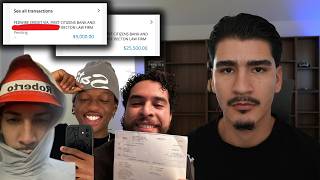
In this video, I'm going to be breaking down how as a 20-year-old, I'm consistently making anywhere between $30,000 and $50,000 a month and how you can get started the same way without a real estate license, without any experience, and without actually buying any properties. You see, this has not been an overnight success. This has taken a while. I've been doing this for 6 years now. And a lot of you guys are watching video after video after video the same way I was when I first started and doing nothing with the information that you're learning. And I need you to make a change today. I want you to watch this video, watch the step-by-step, take your notes, and actually do something about it. Because if you want to make a change, if you want to live the life that everybody on social media is portraying, you're going to have to take that action and do it on a consistent basis. So let's get right into the video. One thing is being able to get results for myself, and another thing is being able to get results for somebody else. This is Joey and Josh. They came to me and they said, hey Jay, we just want to close our first deal. We've been at somebody else's program for 4 months and not been able to make a dollar back. At this point, we don't care about the money. We just care about closing that first one and getting the conviction. 2 months later, they closed over $40,000 in profits. I have another video on my YouTube channel showing you the interview that I had with them. But now Josh just moved out of the country. He went to go live in a high-rise to go all in on wholesaling. And Joey, on the other hand, he just quit his full-time job and is ready to also go 100%. And it's not just them 2. We have multiple other students. If you go on the free training website that also are getting results just like this, just from copying and pasting and doing what I'm telling them what to do. So keep in mind, this ain't no bullshit information. People are paying for this information and changing their life. And I'm showing you the majority of it for free. So take action. Now you have to understand in every single business model where you're providing value based off the value that you provide is how much money you will make. In this case, we're providing value to the seller, which is in a desperate situation. He has to get rid of his property and a real estate investor that is looking to invest his profits into more properties. The seller in this case is going through a situation where they have to sell it to a cash investor. Why? They might be going through a situation where it might be a divorce, it might be a lien, they might be back on taxes, they might be going through a pre-foreclosure, and speed is key, right? On the other hand, they're going to have to go with a real estate agent, have the property sit there for 60, 90, 180 days, have to pay closing costs, have to pay agent commissions. And nobody wants to do that when they're in that type of situation. And the investor, he's looking for investment properties all the time. So we're providing that on a silver platter and helping them out in their business. So how does this cycle work? The seller has this ugly property that he obviously can't sell on the market. So we go ahead and market to them. We get it under contract for $100,000. We turn around and we pitch that investment opportunity, the ugly property, to a real estate investor. And it does make sense for him to buy it at $120,000. When that property gets closed, the seller gets his $100,000. I get my $20,000 and I get to buy cool sunglasses and look just like that guy right now. You might be asking, why is the real estate investor overpaying for this property? He's not overpaying because we comp the deal to the point where it makes sense for somebody else to buy. Right? And you might be asking, why doesn't he buy it directly himself? Because he's not a wholesaler, right? He's not in charge of running his own marketing. He's in charge of flipping properties and focusing on what he does best. Now, what happens after he buys the property? He obviously goes ahead and fixes and flips the property. He makes it look pretty just like this, A to Z, 0 to 100. And now he can go ahead and post this property with a real estate agent and sell it on Zillow, Realtor.com, and Trulia, where I family's going to go ahead and move in, or he can go ahead and not do that and just list the property as a rental property and make a consistent income every single month. And that is how the money moves through the real estate investment market. Now there's two sides to the business. And the way that I'm going to teach you is how you're going to be able to do every single part of it so you can take 100% of the profits home. There's acquisitions and dispositions. Acquisitions, you're acquiring the ugly property, not buying it, just acquiring it. And dispositions, you're disposing of it, right? Disposing of the ugly property. You acquire it from the seller under a piece of paper, under a contract, which is a purchase and sale agreement. And you go ahead and dispose of that purchase and sale agreement to the real estate investor. Acquisitions, dispositions, acquisitions, dispositions. Good. Now for a brief second, I want you to forget that we're in the real estate business. I want you to understand that we're in a marketing and sales business. We're marketing to a homeowner that is in a situation where he needs to sell his property. And we're using sales to go ahead and make him understand the pain that he's going through, make him understand the situation and how we can help him solve that problem with our business model. On the other hand, for the disposition side, we're doing the exact same. We're marketing to a real estate investor that has bought properties in the area and is looking to invest his money into another property. And we're using sales to make him understand, hey, this is how much the property's worth. This is how much money you're going to make. This is the solve-it-to-your-problem of needing to invest your money. Take a screenshot if you have to. This is where I want you to take notes. Number 1, your market. If you pick the wrong market, it's going to be very hard to find a motivated seller and it's going to be very hard to find a buyer, therefore very hard to run the business. Let me show you what markets I want you to avoid. Illinois gets a big X. Oklahoma gets a big X. Nebraska gets a big X. Kansas, Michigan, South Carolina, Arizona, California all get the big X for one reason or another. Listen to my advice, do not go into these markets. I want you to go ahead and go on this map that PropStream lets you and pick one of these blue areas on the map. That is where it's going to be easiest to get a deal under contract and easiest to sell it to a buyer. Now that we have your market, let's move to the next step. Data. Now I want you to go into PropStream, or you can use other sources like ListSource to pull a list and get this data of real estate property owners in a specific area that fit a certain criteria. Here is the criteria. I want you to have high equity filters, typically over 40%. I want the ownership to be individual, mixed trust. I want it to be non-owner occupied, aka the seller that we're contacting doesn't live in the property. I want it to be 5 years of ownership at least. I want it to be between 1950 and 2005 build. I want it to be at least a 1-bed, 1-bath and a non-HOA neighborhood. And that's not listed on the market. You're going to pull that list. You're going to clean up the data for only the information that you need. And you're going to put into a skip tracer, get the contact information. And next is marketing. The marketing that we're going to be doing is cold calling, but we're not going to be cold calling the old way. Like a lot of you are doing, we're not going to be using our phone. We're going to be using a dialer so we can talk to multiple people on a consistent basis. And we're not wasting our time typing out numbers. Listening to voicemails, or listening to the phone ring. The dialers that we're going to be using are Batch Dialer. You can use ReadyMode. You can use Mojo Dialer. They all work. They all call on a consistent basis. Just pick one that you want and go. Now, what I want you to do when you're calling is track your KPIs. KPIs are key performance indicators, and that's how you can run a consistent business because you're basing it off numbers, not luck. I want you to track your contacts, your leads, your offers, and how many contracts you're getting based off those numbers. Now that you got all your systems ready, I want you to go ahead and start making calls as soon as possible. But Let me give you the breakdown on what to say on the phone. That way you're not pissed off like this guy right here. On the introduction, when they pick up the phone, I want you to say this. Hey Michael, this is Jay. I was giving you a call about the property on Main Street, just seeing if you ever thought about selling it. Now the guy might look like this, but in those first couple seconds, you gave him the breakdown on who are you and why you're calling. Now the call can go one of two ways, right? You can get a yes or you can get a no. Majority of the time you're going to get a no. That's just me being realistic. Not everybody's going to say yes. Not everybody's going to want to give away their property, but If it comes down to a no, you can stay professional, get a referral, and stay credible. You can say, hey, I've been looking to buy properties in the area for a little while now. I was just reaching out to see if you were interested. I see that you're not. Do you have any other properties in the area or do you know anybody else that's interested in selling? Now, the positives of that is that at least 15% to 20% of the time you will get a referral either from them directly that they have another property they might be interested in selling, or they might refer you to a family member or a friend that is interested in selling the property at the moment. Now, if they say yes, I want you to go ahead and make the transition to the why and the how. Why are they interested in selling and how long have they been interested in selling the property? I want you to have multiple follow-up questions. I want you to have multiple why questions to get most of the information on the pain that they are going through of having that property and not being able to make money from it or it being a positive influence in their life. Once you have a good amount of information on why they're interested in selling the property, what they're going through, what their situation is like, and you ask multiple follow-up questions on why, why, why, why, why, and they're giving you all these points I want you to go ahead and transition from there to being no. Throughout this conversation, I want you to have soft questions and hard questions. Hard questions are something like condition of the property. How much are you looking to walk away with? How fast are you looking to close? What is the specific reason that you're looking to sell? But the soft questions are more of a follow-up type of question where you're getting to know who they are, getting to know what they're looking for. What is the exact goal that they're looking to walk away with when going with you? Right. Kind of building rapport with them so you don't sound like everybody else that's calling them. The big mistake that a lot of people are doing when they're doing this business, they call and then they go directly into the property's condition. Nobody sees you as a person that's trustworthy when you go directly about numbers. At the end of the day, we're talking to people, right? And they're in a situation where they need help. If we want to help them to the best of our abilities, we have to understand a lot of information about what they're going through and what is the best exit strategy for them. Once you got the information and once you're known to the point where if you call them back, they know you by name, not by the person that says, oh, this is the guy that's just calling me back about the property. That's how you know you're in the green to move forward. That's when we start talking about the property. We start talking about motivation. We start talking about tenants. We'd start talking about how long it's been vacant or how long it's been occupied. How much are the tenants paying? What is the current loan on the property if there is any? Right? What are the repairs on the property? How long has it been in that current condition? How much do they think it takes to put it into perfect condition to sell on the open market? What are the major repairs? What is HVAC? What is plumbing? What is foundation? What is the drywall looking like? What is the outline of the house? What is the bed bath count? All these questions that have no emotion tied to it, but it helps us run the numbers accurately so we can give them an accurate offer. Because at the end of the day, if we have all this information, it's going to be way easier for us to go ahead and sell the property to an investor because we have all the information about the property and product that we're selling to them. Once you got the motivation, once you got the rapport out of the way, and once you have the property information out of the way, now it's time to go into speed. How quickly are they looking to get the result with working with you? How quickly are they looking to kick out their tenants? How quickly are they looking to sell the property? How quickly are they looking to move? How quickly are they looking to use that money that you're going to pay for that property to move on? So once you have all that information, you're ready to set up the follow-up call. How you're going to do that is at the end of the call, you're going to ask them what is their availability according to yours. You're going to let them know, hey, I have time from midday to 5 PM, or I have time from 5:00 PM to 6:00 PM. Once they agree to a time, you're going to go ahead and let them know, hey, I'm going to send you a text from my personal number because your personal number and your dialer number are two different numbers. Send them a text. You're going to say, hey, this is my name, this is my email, and this is my company information. If you don't have a company yet, which you don't need it if you haven't closed your first deal, you're just going to send them your name, your last name, and Family Investments or Investment LLC or Capital LLC, right? Now that you sent that text, you sent a follow-up text at least 5 hours before that follow-up call., and then you go ahead and get on that call, make the offer, make the pitch, and go from there. Now, this is how you're going to make an offer. You have to run the numbers first and look at comparables. You can use softwares just like PropStream to look at other properties in the area and see what they're going for after renovation costs, AKA your ARV, after repair value. That is the top number that we're going to use to tell our investor, hey, once you fix up this ugly property, you're going to be able to sell it for this much. And let me show you the calculators that will help you do that. This is a quick estimate table that will let you know based off the square footage, how much you should be calculating for the rehab on the property. And you can see, you can add $10,000 for each large repair item. And you should have all this information based off the questions that you asked on that first conversation that you had with the seller. Now, this is going to be how you're going to run the numbers based off the property value, right? If the property is under $150,000, you're going to take away 70%. Then you're going to take away the rehab. You're going to take away your profit margins, which is normally between 10% and 20% of the property's value. And then you're going to take away your closing costs and that's going to be your MAO, your maximum allowable offer, the most you can offer for that property to put it under contract moving forward. Obviously under $250,000, at or over $350,000, this is the calculation. Take a screenshot if you have to. Now that you understand the business, now that you understand how to do the marketing, now that you talk to a motivated seller, you got all the information about the property, you were able to run the numbers. Now it's time to make the follow-up call and get the property contract. Once you have all that done, you get them on the follow-up call. They're interested in moving forward with you. You go ahead and want to get them under contract with the purchase and sale agreement. My personal ones that I've been using for the past 3 years, I do not give away for free. Those are only for my mentorship clients, but you can use one in that specific city that you're wholesaling in from the real estate commission. The simple purchase sale agreements, normally it's 1 through 4. You can fill those out with a YouTube video and put those to use. How you're going to get it signed is you're going to keep them on that offer call. On the phone, you're going to ask them to open their email. And before you actually send it, you want to get confirmation that it's actually open. So you're going to say something like this, hey, Mr. Seller, I went ahead and sent it. Could you open your email and double-check? If they say yes, cool, then you go ahead and send it. You always want to send it while they're on the phone, and it's easier for them to sign because you're able to answer any question that they may have. How you're going to do it through DocuSign is you're going to download the PDF either from the county, or if you have my agreements, you're going to upload it to DocuSign. You're going to fill it out and you're going to have that email be sent out to the seller's email and get that signed over the internet. As far as DocuSign, you don't have to make an account, you don't have to pay for it. Just do a 30-day free trial and you can use a different email every 30 days. Now, once you have that property under contract, you're going to go ahead and Google title company in that city and state. You're going to go ahead and give them a call and say this: do you guys work with assignment of contracts? Do you guys do blind HUDs? What is the title officer's email? And to that email, you're going to send over that purchase and sale agreement. Once you have that sent into the title company, let them do their job. And it's now time to find a buyer. Now, before we start calling a bunch of cash real estate investors in the area, I want you to build a DISPO package. I want you to make a Google document with pictures, comparables of the property, the property details, the profit that the investor is going to make, the contact information for yourself, the title company that you will be using, the closing timeline, and the access to the property. If the property is vacant, on lockbox, if the property has a tenant in it, if the seller lives there, if you have to set up an appointment, all that information so you're not wasting time on the back and forth and you're getting straight to the meat and bones of the negotiation. Here's an example from one of my students. This is Philip. You can see his contact information, the picture of the front of the property, the property specifics of the bed and bath count. You can see the asking price, the ARV, which is what the investor is looking for, a Google Drive of the actual property pictures of inside and outside of the property, comparables so the investor can use those as references. There appears that the investor is going to have to do— and a little disclaimer saying before submitting an offer, No due diligence, period. Closing with seller's title company. Do not post anywhere online. And then another call to action, which is a contact Phillip to make an offer. Obviously that's not his phone number. I took that out for privacy reasons. Don't be weird. Now that you have your DISPO package, it's time to start marketing the property to investors. Number 1, you can use Facebook and Craigslist to make posts and have that be sent out while you're actually doing the calling. For Facebook, some disclaimers: don't put out your phone number, don't put out the property's address, don't say what you got it under contract for. Anybody that texts you through Messenger, get them on the phone so you can vet them. Same thing with Craigslist. Don't put out any personal information about the property, no specific locations, no information about the seller, no personal phone numbers. Make sure that you vet everybody on the phone. You can use Zillow and realtor.com to reach out to agents that have helped investors sell their properties on the market. Then you can use PropStream and pull a list of cash buyers in the area, same thing as InvestorBase, and you're going to call them, say something like this: Hey, Mr. Investor, my name is Jay. I got this property under contract in the zip code. I was reaching out to see if you're still interested in buying properties in the area. If they say yes, you can ask them, hey, let me go ahead and send you this link. It has the property information. It is a Google document. See if you're to open that. When you have them on the phone, you want them to go ahead and look through the DISPO package and see if that's something they're even interested in. If they are, get them to go out to the property, take a look, and make an offer. Here are the dos and don'ts on how to talk to investors. I want you to always talk to them on the phone. I want you to vet them on past deals and future ones. I want you to understand their investment goals and what they're looking to get done this year. I still want you to build rapport with the investors because they're going to come back and give you more business. The seller is not going to go through another tough situation. Then I want you to get them to walk the property. I want you to proactively negotiate with them on the price after they walk the property. If they haven't walked the property, I don't want you to entertain any numbers. Then I want you to collect $3,000 to $5,000 in earnest money deposit for them to show you that they're seriously interested in purchasing the property. Anybody else will back out of the deal if you don't have them submit earnest money. Here are the don'ts. No option periods with buyers because buyers don't need option periods, only wholesalers, us. Then no, they can't market out the deal. No, you don't need to sub to the deal. They don't need the information about the seller because it doesn't matter to them. The numbers only matter. They don't need to know how much you have the property under contract for. Again, nobody buys sight unseen. No, you will not take less EMD because if they're actually interested in purchasing the property, the EMD goes towards the purchase price anyways. The only reason they will want less EMD is so if they back out of the deal, they're losing less money. I just showed you everything you need to do to close those first couple deals, but at the end of the day, one video isn't going to do everything for you. One-on-one mentorship is what's taken me to this level after 6 years of being in the business. So if you're looking for a coach and you want to close your first couple deals a short timeframe and be able to follow a proven blueprint without having to worry about what is the next step that you have to do, you can click the link below, watch my free training, and apply for my one-on-one mentorship and go from there to where you're actually knowing every single step of the way and you have me to hold your hand and close those first deals confidently. And there's a money-back guarantee. If you don't close, you don't have to pay.