How to build trust with sellers (Wholesale Real Estate)
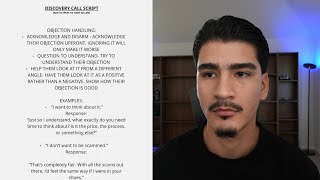
In this 45‑minute instructional video, seasoned wholesaler Jay (Jesus Gabriel Mendez) breaks down a complete, repeatable discovery‑call framework for talking to homeowners who may sell their property. He argues that the discovery call is the most critical step because it determines whether a deal can be qualified, priced, and closed. Jay frames the wholesaler as a "doctor" who prescribes solutions, emphasizing a mindset of authority, empathy, and detachment rather than desperation. He stresses the importance of tonality, rapport, and mirroring to earn trust. The call structure is divided into four pillars: (1) Motivation – 80 % of the conversation, probing why the seller wants to sell, their pain points, and dream outcome; (2) Timeline – establishing when the seller needs to close and offering realistic ranges (17‑45 days, average ~30 days); (3) Condition – systematically uncovering major‑ticket items (roof, HVAC, plumbing, etc.) and gauging honesty; (4) Price – extracting a target number or range, handling sellers who flip the question, and checking for other offers. Throughout, Jay provides concrete scripts, objection‑handling tactics (acknowledge & disarm, question to understand, reframe), and advice on realistic expectations for closing dates and pricing. He contrasts outbound cold‑calling (high objection volume, steep learning curve) with inbound leads (more motivated, easier). The video also includes a downloadable script, calls‑to‑action for coaching, and a reminder that consistency, personal development, and aligning personal life with business habits are essential for long‑term success.
Chapters
What's going on, boys and girls? In this video, I wanted to go ahead and break down my exact discovery call structure. If you don't know what the discovery call is, it is the first conversation that you ever have with a homeowner that is interested in selling their property. Now, this is arguably one of the most important parts of the whole process because you literally set yourself up for failure or for success. The questions that you're asking, the tonality that you have, the timing on the call is super, super important. Now, most people give you advice, most people give you pointers, but in this literal video, I'm going to be breaking down everything step by step to the point where you could arguably copy and paste what I'm telling you and you will see success. The problem with most wholesale businesses is that they don't have a replicable process. If you're freestyling every single discovery call, every single time you underwrite a property, every single time you try to dispo a deal, you will never be successful and you will never have consistency in your business. And that is one part of what I'm going to show you today in this video. If this is the first time you're watching one of my videos, welcome. My name is Jay. I've been wholesaling real estate for the past 7 years and it's completely changed my life. If you like this type of content, like, comment, subscribe, and let's get right into the video. The discovery call sales script. How to speak to these sellers, arguably one of the most important parts of the business in my opinion. Why the discovery call is so important: this is where you're going to get all the information you need to qualify or disqualify them for an offer. You need to be in a position where you are the doctor, you are prescribing a patient based off their problems, based off the context. Now, who is in control in the doctor-client or doctor-victim or whatever you want to call the person that's going to the doctor's office? They clearly have a problem, they clearly want a solution to whatever is going on in their life. Who has the power? The doctor does because he has the knowledge, he has the experience, he has the conviction, he knows he can help you. In this case, if you come into these conversations not from a place of need, not from a place of money hungry, not from a place of being greedy, but from a place of where you are the experienced investor, you are the person with the money, you are the person with the power, you are in control of the real estate market because your money moves the economy. That is the position you need to be at. You need to become the doctor, not the drug dealer trying to get rid of this product or trying to obtain as much as possible. You need to have the mindset of, is this person qualified for my service? Does this person deserve my help? Is this person not a good fit for my service? Would they be better off keeping the property as a rental? Would they be better off putting another tenant in the property? Would they be better off fixing the property themselves? Because they might be in construction, they might be an investor on the side, and that might be the best option for them. Would the best option be them working with a real estate agent? You need to be at a certain level of detachment in this business for you to really come across the way that you should be coming across. Now, this is where you dig into their motivation, their pain points, the condition of the property, and their timeline to sell. Every single box you need to check, every single base you need to slide through, every single thing you need to collect is going to be in this conversation. If you miss even one of these, you're setting yourself up for failure like I told you in the intro. If you're not asking about the timeline, everybody's going to be on a different page. Closing is going to be a pain in the ass. If you don't have the right property information, the underwriting process is going to be a pain in the ass. You're not going to be able to explain the property and what it needs and how the investor is going to profit from it from a place of dispo because you simply don't know what you're doing, right? And because you're not asking these right questions, you're not informing yourself up to be successful. Make sure that you have this video in the back of your mind. Make sure you're taking notes. Make sure you're actually implementing what I'm showing you Otherwise, what are you doing? Is this— I mean, is me talking about talking to sellers, talking to buyers, negotiating deals really that entertaining to the point where you're not taking action from it? That is a waste of time. Make sure you take this information and you put it into action. You watch till the end of the video. I promise you this video will make you more money, but we don't have any financial guarantees. You might not make any money, but obviously I'm in a position where I've made money. This is the information I use in my current business with my clients and the advice that I give everybody. It works. Put it into action. Now we got out of the way of why this call is so important. What do you need to know before the call? The tonality. You've heard this a million times from all these salespeople saying it's not what you say, but it's about how you say it, right? A lot of my clients ask me, a lot of people even DM me or comment on my videos, how do you feel so comfortable asking these questions? Why don't the people like get cold or, or feel pushed off or feel detached in the conversation when you're asking these deeper level questions, when you're really trying to pull the motivation. Because it's not about what you say, it's about how you say it. If you come across friendly, if you're building rapport throughout the conversation, if you sound like you know what you're talking about and you sound like you've done this before, they are going to be more than willing, as long as they're motivated, as long as they have pain points, on describing their situation. I like to think of it this way, outside of motivation, but when we're talking about price, right, when we're talking about what they're looking to get for the property If you manage this call the right way, you follow the right structure, they're not going to be unrealistic about the price. Because price is a direct motivation, a direct reflection of motivation, right? If somebody's super motivated, they already explained their whole pain points, they explained the whole process that they're going through, they explained why they don't want to have the property anymore, why would they be unrealistic about the price? It literally doesn't make any sense. Now obviously you're going to have every seller every now and then a retard on the call where he tells you all his motivation, he tells you why he literally cannot keep the property, and he's gonna be unrealistic. But if you follow this structure, you are going to be completely fine and you're gonna get a higher close rate, you're gonna get contracts at a way better price, and dispo is gonna be 10 times easier. Your tonality is very, very important. You do not want to sound like a salesperson. Most people have this misconstrued, if that's even a word, on a salesperson being a person that's pressuring people to do something. That's forcing someone, that's very impulsive. A great salesperson is somebody that is naturally curious, right? Curious about somebody's problems, curious about the solution, curious about making sure this person has the best outcome. That is what a great salesman does, he asks great questions. And you can't ask great questions if you're sitting there looking through a script. You can't ask great questions if you're not really in the conversation. You can't ask great questions if you're not actually listening to the prospect and being there human to human, right? If you're just thinking about what you're gonna say next, you're not really paying attention to what they're telling you. And you're gonna start, as you become more present in these conversations, you're gonna start having this certain level of intuition and also understanding these cues of, these cues and also reading through the lines, right? Of this person might have said something, yes, this is exactly what I want them to say, but they said it in a certain way where this might be a future objection, right? They said it in a certain way where they don't sound sure of the words that they just spoke, right? And you wanna check those things. You don't wanna leave anything unchecked on this conversation because then you're setting yourself up for failure, right? If they're talking about, yes, I wanna sell this property, but I've gotten 5 other offers before. Yes, I wanna sell this property, but I'm not in that big of a rush. Yes, I wanna sell this property, but I've maybe been thinking about a realtor. If you just simply skip over those things and act like they never said it, that is gonna be a future objection, right? And future objections, yes, you can handle them. Yes, you can have every single objection handling script in the world, but it's like, why would you set yourself up for failure when you can handle those objections immediately, right? Every single discovery call, every single sales call, these people are gonna be planting these seeds. Imagine you're walking through, I don't know, lawn. You're walking through a lawn, you're walking through a garden. Every single word that this person speaks is planting a seed. You do not wanna grow negative seeds in this conversation. You do not want By the end of the call, does this person have 10 separate seeds that they can use as objections in the future? Now, I'm not saying, hey, you have to pressure this person a certain way. If they're gonna disqualify themselves, let them disqualify themselves. Even promote it, right? Because if somebody's actually motivated, somebody's serious about using your service, they are gonna sell themselves to you. They are gonna sell this property to you, right? You have to have this certain level of detachment where you're not coming from a place of need, but coming from a place of adding value to these people. The more value you add to the world, the more fucking money you're gonna make, right? Do not sound like a salesperson. Trust is the biggest thing. Trust and people wanting to work with you, people liking you. You have to be a likable person. You have to take a risk with certain jokes. You have to be able to put yourself in a position where, hey, you might not look in the best light, but you're being relatable, right? You might have to mirror this person. Hey, if I got a guy that loves Trump and hates Indians and Asian people and only loves white people. You're goddamn right, brother. These goddamn people. My parents are immigrants, but I'm there. I'm mirroring. I'm making sure this person feels heard. This person feels comfortable. This person feels like I'm a friendly person. They relate to me, right? And a certain— there is a certain level of lines where you don't want to cross because it's like whatever morally, but in general you want to mirror this person. You want to be friendly. You want them to trust you. How do you do this? Right? That's a great question. You put yourself in places, you put yourself in experiences, and you portray to this person, I know exactly what I'm doing. I've done this before. I've helped other people in your situation, and I've been through similar situations that you've also been, right? You don't necessarily have to lie about, hey, my property also got foreclosed on. That's not going to put you in the best light. But hey, I've helped 7 other people in the exact same zip code that have also been foreclosed on. And we were able to solve their problem, we were able to get them into a new property, we were able to get that stress off their shoulders, right? That makes you seem way more trustworthy than, hey, what's the bed-bath count? Hey, I mean, if I gave you $30,000, what would you do to the property? Hey, what's the roof? Hey, what's the windows? Hey, what's the bathroom? Hey, what's the flooring looking like? What's the paint look like? What's the fixtures look like? What do the appliances look like? If you come from a place of trust, you come from a place of knowledge, they will trust you. They will be more truthful. Granted, sellers love to lie on these conversations. Sellers love to push their property past the actual condition that it's in, but you have to factor that into your numbers and confirm that with the pictures that you get from either a buyer, from a real estate agent, from a photographer in the area, just to confirm since we are doing this virtually. Now, trust is the biggest thing. Nobody will sell their house to you if they do not trust you. If they feel that you're like every single other wholesaler calling, asking the exact same fucking questions, with the exact same tonality, they're not going to want to work with you. If you lock that property up higher, maybe like a couple thousand dollars higher than everybody else in the market, not only are you putting yourself at a disadvantage, but when it comes time to get that reduction, because this person only went with you for the price difference, you are going to have a pain in the ass. They are going to want to cancel that contract and they are not going to want to work with you in the future. Granted, with sellers, most of the time you only work with them once, but you still want to have that good rapport built. You still want to have that good karma. You still want to add value.. But if they don't trust you, they don't like you as a person, they don't want to work with you, it is literally going to make everything 10 times harder. Granted, not everybody that I work with falls in love with me, but we do have a certain level of rapport, a certain level of friendliness. And I know for every single property that I lock up, I can at least go for a $5,000 reduction, $10,000 reduction, because I have that rapport set in place, because I sound like I know exactly what the fuck I'm talking about. Now, I'm coming from a pedestal of I've been doing this for 7 years. I have this script memorized, integrated. I know it like the back, front, biceps, shoulders, like my whole— I know this business end to end, top down, side to side, right? You guys don't have that conviction. You guys don't have that confidence because you simply don't have that experience yet. And one of my videos on my Instagram that actually got a couple thousand, couple hundred thousand views, I told this guy, the only difference between me and you is the fact that I've been doing this longer and I know something that you don't.. And this vid— and these videos on my YouTube channel, I literally tell you what I know that you don't. Now, the only difference is the time. I've been doing this for way longer than you have. You've— maybe you're 18, maybe you're 25, maybe you're 30, maybe you're 35. You're just now starting. That doesn't mean that you're at a disadvantage. You just can't compare yourself to someone that's been doing this for way longer and expect to copy and paste my script, try to sound like me, and then you don't get the same results. Everybody has to find their own style. Everybody has their own closer profile. Everybody must talk like themselves to come off as friendly, to come off as trustworthy, to come off as yourself, but an upgraded version, right? At this level that you're at, if you're watching a video like this, I'm not saying, hey, you're at a disadvantage, but you're probably in a place where you're still learning, where you know you have somewhere to upgrade your character, somewhere to upgrade your leadership skills, somewhere to upgrade your skill set, and you are at the right place. So nobody's going to trust you if they don't want you. Nobody's going to sell you their house if they don't trust you. Make sure you're building trust, make sure you're building rapport. Now, objection handling, right? This is great. In a perfect world, you don't want to objection handle at the end of these conversations. You don't want to objection handle at the end of the discovery call, at the end of the objection, at the end of the sales call, which is the offer call, however you want to call it. I like to call it the sales call. Or while you already have the property under contract, you want to have expectations set and everybody on the same page. What do I mean by this, right? Expectations on the closing timeline. Don't sit here and tell somebody that you can close in 7 days when you've never even closed a deal in 45 days, right? Be realistic. Give them a time frame. Give them a range. Hey, I can probably close between 25 days and 35 days. On average, we're around 30, but we are flexible and willing to work with you on your timeline based off your needs, right? You're not sitting there telling the person, hey, I can close in 7 days. Hey, I can close overnight. That's not realistic. You're setting yourself up for failure. And then that is gonna be a misalignment with the communication, a misalignment with the message, and that's gonna break the trust that they're slowly building with you if you're following this script, right? Be realistic about timelines, be realistic about the price. Let them know, hey, I am pretty solid at this number, my underwriters are confident in it, I pushed them up a little higher than they normally would be, but I do wanna get those pictures, I do wanna get these couple inspections by my contractors, by the professionals that are actually gonna be doing the work on the property. Now, are you being truthful with me? I trust you, Karen, Mary, Joe, Jonas, whatever your name is. But I do want to get that confirmation in person from these pictures, from these inspections, for me to be super, super confident and 100% dead on this number, right? You want to have that grace period in a way, right? That, hey, if you lied to me, this price won't work. And that's being realistic. People want to see real. People don't want to see perfect, right? Perfect is unrealistic. Perfect, honestly, is not trustworthy. You ever heard somebody try to sell somebody on the phone and they're literally picture-perfect, script-perfect? The other person feels sold. Nobody wants to feel like they're being sold. Nobody wants to feel like they're getting taken advantage of. Nobody wants to feel like they're giving away their property. If we're locking a price, if we're locking a property at a certain price that, yes, it might be deeply discounted, we need to have a logic behind that. We need to be able to put them in a position of, hey, I believe in this company. Hey, I know why I'm selling it for this price. Hey, I know what benefits I'm working with and why I'm selling it under market value for this reason, this reason, this reason, this reason. And we're there to support them in their decision. We're there to help them along in their journey. We're here to add fucking value, right? So back to objection handling. Acknowledge and disarm. Acknowledge their objection up front. Ignoring it will only make it worse. What I told you guys maybe a couple minutes ago, if you let these seeds grow, you are setting yourself up for a fucking failure. Make sure you snip it immediately after you hear it. Call this shit out. If you see this person is giving you vague-ass answers to your questions, call it out. Hey man, it honestly doesn't seem like you're too motivated. Hey man, you got 5 other offers and you said no. I mean, I'm not sitting here saying I'm gonna lowball you, but normally we offer more than the average investor in the area. But I also don't want to sit here and give you an unrealistic expectation of what my underwriters are going to give me. How motivated are you actually about selling this property? How serious are you about selling this property? What is the actual number that you are looking to walk away with that would make you happy, right? Now let's be realistic. We're not in a perfect world. Real estate, it's going down right now, right? Do you want to be sitting on this property, losing property tax, not making money every single month, having to pay the mortgage and all these other things, having to upkeep with the property? Or would you rather sell it for a realistic price and get this headache off your shoulders, right? Get rid of this problem that you're currently facing. Set them up with realistic expectations, but also don't let shit slide. The same way that if you get disrespect— I mean, I'm talking to the guys here most of the part. I don't, I don't think women get disrespected by other women like that. I don't know, I'm not a woman, I don't know. But if a guy disrespects you in public, what are you just gonna be like? You're just gonna ignore it? You're just gonna say, eh, it's okay? What's gonna happen, right? The guy's gonna do it again because you let it slide, because you left the door open, because you didn't you didn't punish that behavior that you didn't like, right? You're gonna say something about it, otherwise that's gonna grow, right? Same thing with this. If you let these seeds grow, they will get worse, right? They will have even more unrealistic expectations. They're gonna want more money for their property. They're gonna give you way more objections. They're gonna be more of a pain in the ass to work with. You do not want to set yourself up for failure. Make sure everything is up front. Snip these seeds in the butt before they even grow. As you see the guy even planting some sort of seed, take that shit out, throw it directly in the fucking trash. Question to understand. Try to understand their objection. I should probably block this, but it's like, it's right there. Question to understand. If you don't understand something, ask the question a different way. Be straight up about it. Hey, I don't completely understand why you did this. I don't really understand why you're saying this. I don't really understand that decision. I don't really understand Why this happened, or why you let this slide, or why you put yourself in this position? Don't be scared to ask these questions, right? At the end of the day, you have to have— you have to ask questions that are at a deeper level to get deeper level answers, to get more rapport built, right? If you're asking surface level questions, you're going to have a surface level conversation sounding like every other wholesaler asking these same exact questions to get the same exact number at the end of the day and get the same objections that everybody else is getting. You want to ask questions at a deeper level. Now, help them look at it from a different angle. Have them look at it as a positive rather than a negative. Show them how their— show how their objection makes sense and is good for their reasoning, right? It makes sense that they're thinking like that. It makes sense that they made the decision. It makes sense that they said no. You have to make them feel comfortable to make— no, you have to make them feel uncomfortable in a certain way to where it's like, damn, that does make sense. Right, you have to put them in a position where, hey, I completely understand. Hey, I have empathy. Hey, I know exactly what you're going through. And then explain why that doesn't make sense to you, right? I feel like I kind of butchered that a little bit. But yeah, this is all about objection handling. Question to understand, right? Double down on the question, ask it a completely different way, maybe even follow up with it after 2 or 3 questions and circle back to that topic, right? Acknowledge and disarm, question to understand, help them look at it from a different angle. These are all things for objections that you are gonna hear on this call. Even when you're running ads, when you're having inbound marketing working in your business, you're still going to have objections, right? But if you're starting from a place where you're doing outbound marketing, you're cold calling, you're sending out texts, you're sending out postcards, which I don't recommend, but if you're doing outbound marketing, you're putting yourself in a place where you're going to get more objections. If you learn it through that route, you're learning through literally the hardest part of the wholesale business, the hardest part of the learning curve, the hardest part of you going through this business in the beginning stages, you will have zero problem going through inbound leads because they're going to be more motivated, right? All the objection handling, all the conversational skills that you learned through the outbound process are literally going to be— yes, they're going to be more experienced, but you're not going to need it as much with inbound. And that's why I like to put people through outbound in the beginning, just because, bro, it literally gives you 10 times the learning experience. But that is objection handling. Let me give you some examples. I want to think about it. The response, just so I understand, what exactly do you need to think about? Is it the price? Is it the process? Is it something else? Is it something I said? Maybe did the weather change? Is there anybody else that makes a decision on this property? Right? Try to break everything down. Every single statement that you don't understand or is not aligned with them working with you, being the perfect fit for your service, you want to break it down. Right? Again, another one. I don't want to get scammed. That's completely fair. With all the scams out there, I feel the exact same way if I were in your shoes. Did I say something that makes you feel like I'm a scammer? I feel like you wouldn't be this long on the phone if you thought I was bullshitting. I feel like you wouldn't be this long on the phone if you thought I didn't have your best interest in mind. I wouldn't be in business for this long if I was a scammer, right? So that is for the I don't want to be scammed. Let me walk you through the exact process on how this works and you're protected. Every single step of the way. Our agreements, our tried-and-true process, the timelines that we offer, we're not unrealistic at all. We're realistic with the pricing, we're realistic with the timeline, we work with the local title company. We are known in this industry, we are known in this market, we perform, our word is bond. Right? So that is about objection handling. Next, the way you start the call sets the tone for the entire conversation. If you come across as a sketchy, unsure, as sketchy or unsure, the seller will immediately put their guard up and likely shut down. But if you are confident, you're friendly, you're professional from the start, the seller will feel way more comfortable and be more open to working with you. How you do anything is how you do everything. How do you expect to sound perfect on the phone when you haven't studied the script? How do you expect to sound perfect on the phone when you haven't called hundreds and hundreds and hundreds and hundreds and hundreds of sellers? How do you expect to sound perfect on the phone If you're not— not— I'm not asking you to be perfect, but if you're not consistent outside in the world, right? If you're sitting here thinking you're going to provide value to this person when you're not providing value to yourself, when you're not providing value to your family, your loved ones, you're not taking care of business outside of the actual business, you're not going to be confident, right? Yes, to a certain level you have to fake it till you make it, but you're going to get exposed, right? At the end of the day, how you do anything is how you do everything. The same type of ambition, the same type of consistency that you're putting into your business, you needed to be putting into your own personal life. Because in the beginning stages, especially when you don't have employees, especially when you are the only person in this business, your personal life is going to be a direct reflection of your business life and vice versa. If your personal life is struggling, your business will struggle. If your business is struggling, your personal life will struggle. So how you do anything is how you do everything. And put that, put it on a whiteboard, put it on top of your desk, print it out, fucking tattoo it on yourself if you have to. That is a rule to live by. Now, the introduction is very, very important. Start straight to the point. Let them know who you are, why you're calling, and why you are there, right? I start my calls like this: Hey, is this Martha? Hey Martha, this is Jay. I was reaching out about the property on Main Street, just seeing if you ever thought about selling it. Right? Automatically my tonality has fluctuated 3, 4 times. I've— it sounds like I've said this thousands and thousands of times because I have. But you don't have to do it thousands and thousands of times to get the same exact result. You just need to practice it over and over again and really internalize this to actually sound confident on the phone. Right? Now let's talk about the discovery call part 1. Motivation should be 80% of the conversation. This will tell you if the seller is really looking to sell if they're just kicking tires, shopping around for an offer, window shopping. This conversation, a lot of people mess up. They start the whole conversation talking about the property, talking about the condition, talking about the price, talking about the timeline. You need to start with the motivation. Why is this person interested in the first place? Why are they looking to solve this problem? Why is this a problem in the first place, right? What has led to this problem? What is the solution that they're looking for? What is their dream outcome? You want to figure this out first And honestly, the same ratios go not only about what you talk about on the call of it being 80% of motivation, 20% about the property, but also about how much talking you're actually doing. You should be doing 20% of the conversating, and they should be doing 80% of the talking. 20-80, 80-20, 20-80, 80-20. That is the breakdown. That is the fractions on the conversation of not only what you should be talking about, but also how much you should be talking. If you're talking 90% of the time, you are asking to fail. Don't ask to fail. Don't put yourself in a position where you are going to fail. Questions to ask to get a better understanding of their motivation. Is there a specific reason why you're looking to sell? What would happen if you did not sell? How long has this issue been going on, right? You're asking these needle-moving questions that are at a deeper level, right? What would happen if you didn't sell? Uh, well, I would just keep the property. What does that tell you about the seller? What does that tell you about their situation? What does that tell you about their motivation? They probably don't have much. Now obviously if you ask that in the beginning of the call, as the first question you're asking, they're gonna give you some sort of surface-level answer because they still have their boundaries up. You need to slowly break that down, and when you start to see that this person's being more friendly, being more open with you, open to giving you more information, giving you more motivation, that's when you can circle back on these questions like this and get more out of them, right? Don't expect every single person that you talk to to just open up and tell you all their problems, because that's just not realistic. Sometimes it'll happen, most of the time it won't. Now, discovery call part 2: the timeline. You want to get a feel of when they want to sell and how soon they can sell, right? This is a logistical and motivational point of the call. Let them know that you are flexible on closing. Give them examples of properties that have taken a while to close and properties that have taken 14 days to close, right? On average, like I told you, this is what you say. On average, you want to give them a range. Hey, we close from 17 days to 45 days. Our average is 25 days, 27 days, 30 days. You can make this number up. Every single time you put a property under contract, you want to do it for at least 30 days of option, 30 days of a due diligence period. That way, at least you have 30 days to shop the property around, get some feedback, go for a reduction, get pictures, all these things to make sure you have a good deal under contract and you're actually going to be able to sell it in a soon enough timeline and not have to rush anything or go for an offer that a buyer gave you where you're barely in profit making a couple thousand dollars. You don't want to be making a couple thousand dollars. Now, let them know that you're flexible on closing. Give them examples of properties that have taken a while to close and properties that have taken 14 days to close. What I just told you. Example: if we got you a good number, how soon could you sell? Is there a specific timeline that you're looking to sell in? Right? Is there anybody else that is a decision maker for actually selling this property? What is that thing that needs to happen for you to sell that property? What is the thing that needs to happen for you to sign today and get rid of this problem that you're going through? How soon do you need to sell, and what needs to happen for you to reach that dream scenario that they told you about? Do they want to move to a different city? Do they want to move to a different property? Do they want to upgrade or downgrade? Do they want to get a nicer car? Do they want to put their kids through college? All of these things you should be getting out of this conversation while building rapport. Part 3: Condition. If you don't know about the condition, it is literally impossible to make a qualified offer. You're gonna be offering literally bullshit. You're gonna be doing guesswork. If you want to be a doctor, you want to be a doctor and dissect the property. You want to get an estimate on the bigger ticket items in the beginning: roof, HVAC, plumbing, electrical, foundation, kitchen, landscaping. If it is a big visual issue, you want to go into it. Normally you can kind of tell about the way that they speak about their property, right? If somebody's like, oh no, my property's perfect. Oh no, my property's in great condition. My property's a 10 out of 10. You can assume that, hey, the property might not be a 10 out of 10, but it might be an 8 out of 10, 7 out of 10, 9 out of 10, 10 out of 10, maybe, right? Just because of the conviction that they have by themselves about the property. But if you tell them, hey, can you tell me a range from 1 to 10? It's like a 9. It's, yeah, it's like a 9. And then you start asking questions, they're not confident, Realistically, they're probably lying about the condition. You want to factor that into your numbers. Now, when you're asking about these questions, you don't want to sit here and in one question ask, oh, well, tell me about the big-ticket items: roof, HVAC, plumbing, electrical. You expect this person to know off the top of their head, especially for a property that they don't currently live in, that maybe they haven't visited in 6 months, visited in a year, to give you all the answers and be accurate about it? You want to take it step by step, and if you have to ask deeper questions about the roof? Why is the roof in this condition? Why is the HVAC in this condition? When's the last time you did it? Is your HVAC a good— is your HVAC guy really good? My HVAC guy's sometimes super inconsistent. Tell me about that, right? Start building rapport throughout every single question that you're asking. Try to be friendly with the person. Try to involve yourself in this conversation outside of just asking for the property condition, outside of just asking for the motivation, outside of just asking about the timeline. Make sure they feel heard. Make sure they feel like you have empathy. Make sure they feel feel like you actually care about them, right? So that is when we're talking about condition. Then price. You always want to get a price out of them on every single call. Will there be times where the guy simply doesn't want to tell you a number? He says, hey, you give me a number first. Hey, you called me. Hey this, hey that, hey that. Yes. But you honestly want to get a range, right? If you can't get a specific number out of them, you can probably get a range. If they don't want to tell you the number that they're looking for, that they're looking to walk away with, you could probably ask if they've got another offer. You can ask if they've talked to a real estate agent. You can try to get a range out of them, at least that way you know where you're coming from, right? This will show you if they have a realistic price or if they're never going to sell the property because they simply want too much money according to the condition of the property and the current— to the market in that specific area. Questions to get the price out of them: How much are you looking to get for the property? And what do you need to walk away with? What is that magic number? What would you walk away with happy with this? What is going to tell you, yes, I need to sell this this property today, what does that number look like? Right? You can say it in a couple different ways. You can even spin back to it, maybe if they don't want to give you a direct number. But after you build some rapport, you can spin back on that question, and they might be more open to answering it. Right? Try to be multifaceted. Try to come at it from different angles. Try to be a person that doesn't take no for an answer. Right? Is that it? What? No way. Well, I guess that's it. Terrible. But yeah, let me. I'm gonna throw in the discovery call script. Give me one second. Now this is a freebie. If you watch till the end of the video you get this. So you can go ahead and screenshot from here. Boom, boom, boom, boom, boom, boom, boom, boom, boom, boom, boom. I should pause it for you guys but yes, here's the script that I personally use, my clients use. I use my own company and the advice that I give based off of this one's one that I wrote. If you like this type of content, if you watch to the end of the video, comment, 'J, you're the GOAT.' Whatever video you want to watch, comment that down below. If you want me to help you one-on-one, DM me on Instagram the word 'contract.' I'll try to get back to you. I get a lot of DMs. If you don't want to wait for me to text you back, go ahead and click that link right under this video, apply for a call. We'll have one of the team members reach out, make sure you're a good fit for the program, make sure we think you're going to be successful with it. And I'll see you on a one-on-one call. I'll see you guys in the next video. Boom.