How to close a NOVATION DEAL (full guide)
Jesus Gabriel Mendez explains novation deals, where you control a livable property and resell it to a retail buyer instead of wholesaling it. He walks through the pitch script, underwriting formula (ARV × 0.9% minus wholesale fee), and how to structure the deal to show sellers a higher net price. Typical profit is $30k to $40k per deal.
Chapters
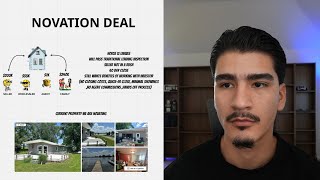
In this video, I'm going to be breaking down everything you need to know about novations. What contracts to sign, how to speak to agents, how to run the numbers on a deal, how to know if a deal's worth novating or not. Everything will be broken down. If this is the first time you're watching one of my videos, welcome. My name is Jay. I've been wholesaling real estate for the past 7 years. So if you like this type of content, like, comment, subscribe, and let's get right into the training. So in this picture that you're looking at right now, this is a traditional wholesale deal. I'm going to go pretty quick. If you need a full step-by-step breakdown on the traditional wholesale process, You shouldn't be learning about novations. You should be learning how it originally works. What is the normal process that most deals are going to go through? You can watch one of my other videos where I break this down super, super step by step. But quickly, the seller needs a property sold, right? He's going through a distressed situation. You can see it in his face. He's not going through the best time. Me, I'm wearing the sunglasses. I'm the cool guy between the transaction, between the seller getting rid of his property for a quick hassle-free process, and then the investor buying the property, fixing it up, making his money while he flips the house. And I'm in the middle connecting these two people, connecting the dots, and I get to split the difference between the price points. So I help the seller get rid of his property for $100,000, and I sell that property— the rights to purchase the property, because I'm not buying any houses— to the real estate investor, and he buys it for $120 grand. Therefore, the difference between the two numbers, if you can do simple math, is $20,000. And it's And as you can see, I'm pretty stoked. Then what does the investor do? He goes ahead and puts $50,000 into that property that he bought for $120,000. Now the property's worth $230,500. And then he hires this beautiful real estate agent to go ahead and sell that property for full market price to a family like this. Look how happy they look. Look at that little girl. She's ready to go ruin the house and paint on the walls. Now, why is this a traditional wholesale deal? Because the house is unlivable. Therefore, it won't pass an inspection from a traditional lender where they're lending to a family like this, right? A family like this doesn't have $125,000 liquid to buy this property cash, and then the credit score or whatever it needs, whatever they need to actually get, you know, approved by a hard money lender to fix and flip the property themselves. They don't want to do the work. They're normally working a corporate job. They just want a nice house to live in for their kids to grow up in, in a nice neighborhood, right? So the house is unlivable. They don't want to live in a house like that. They won't pass traditional lending inspection from the bank. That needs to be passed for somebody to purchase a property with a 30-year loan, which most of the time we don't use traditional lending as far as the buyer side, because most of these guys have cash. And I'm talking about the investors. They buy with cash or they buy with hard money lending. Then the seller needs to sell it to an investor for a specific array of reasons, right? They need to sell in 15 days, 30 days. They got a property that is unlivable. They got taxes, they got liens. And this is all the stuff that works with a normal traditional wholesale deal. And they're willing to sacrifice equity for speed. And I'll show you the difference between the kind of pointers and what a traditional wholesale deal is compared to a novation deal. Because there's a couple differences, I'm going to be breaking that down in this video. So seller needs to sell to an investor, he's willing to sacrifice equity for speed, he cannot afford the closing costs, and he wants a 30 days or less close because of whatever situation he's in, right? And let me show you this property that we're currently wholesaling in. By now I'm pretty sure we assigned this. I'll, I guess, put it in the comment section if we did already, which I'm pretty sure we did. And you can see no family is coming to live in this, right? This looks like a fucking trap house. The windows are boarded up, the door is broken in, all this stuff is dirty. There's probably foundational issues. Look at this. What normal human being is going to come live in this house? They're not, right? They see this and they think it's a piece of trash. They think some hoarder or some, I don't know, some homeless guys living here. They're not going to go to the bank and try to get approved for this. Therefore, we have to sell this to an investor, a traditional wholesale deal. And an investor looks at this and smiles from ear to ear because he sees opportunity, he sees potential, he sees, okay, I can buy this piece of shit house, put $50,000 into it, mark up the price, and be able to make a profit because that's what they normally do. So this is what a traditional wholesale deal looks like. If you, again, if you need the full step-by-step breakdown on how to do the normal traditional wholesale process. I have it in many of my other videos. Go check those out. Now, as far as an Ovation deal, right? We have the seller. You can see this guy, he's not going through that much of a situation. He's kind of a nerd. He's sitting there just plotting and scheming. He's there thinking about all his options that he has. He wants $200,000, right? And as you can see, this property, it actually kind of looks like this one, but in a better way. This property right here, looks closer to what the investor's gonna buy it for, what the investor's gonna make it look like, right? Therefore, a traditional investor, he's not gonna buy this property right here. Why would he buy it? There's no value to add. There's nothing to really fix. Granted, it could be a little bit of paint, maybe a countertop, maybe a toilet that needs to be fixed, but they're not gonna buy this property for, let's just say, $200,000 just to make a couple thousand dollars at closing. It doesn't make sense to them. They want something that has cushion, that has those margins, to make $20,000, $30,000, $40,000 in the span of a couple months instead of buying a property that's already fixed up, right? So in this case, we have this somewhat nice property that is livable and is able to get approved for a 30-year financing. So we can see the seller's a bit of a nerd. Now he wants $200,000 for the property, and that's somewhat what it's worth, right? Obviously we need to cash in, make sure that, hey, we have a cushion in the numbers to not only us make our profit for the agent to make a profit and for the deal to sell fast, right? Just because we're trying to sell this deal on the market, on the MLS, where most of everybody that's somewhat interested in buying a property in the area is going to look at it, right? We have to have some cushion in the numbers. And in this case, these are all the people that are involved, right? Our buyer is now not an investor. It is a family that's getting approved by a bank. And we have a real estate agent involved. Obviously they're going to get paid. You can do either a percentage, you can do a flat fee, Whatever it takes, whatever you have to do, whatever fits your needs, right? It depends on the deal. So we have the family that's actually purchasing the property. We have the agent that's getting his commission. Agent looks like a dork in here 'cause most are, most are idiots, I'm not gonna lie. And you can see the cool wholesaler. I'm still really cool. I still have my sunglasses. I'm still smiling 'cause I'm living life. And you got the nerdy-ass seller that wants more money for his property, which is understandable because they're not going through a tough situation. So let's go ahead and look at the breakdown on what is the difference between a regular wholesale deal and an Ovation deal. So in this case, the house is livable, right? I can go in there and live just fine as long as I'm not bougie and I want granite countertops, right? The house is livable. It will be able to pass inspection from a normal bank. Then the seller's not in a rush, right? He's not going through a situation where he's going through divorce. He's not going through a situation where the property's going to go into foreclosure, right? They're okay with doing a 60-day close. They don't need 30 days, 15 days, 10 days. Because they're in a rush because of their situation. They want more money for their property and they're willing to wait a little bit longer, but they still don't want to work with a real estate agent and they still want the benefits of working with an investor but not getting lowballed for that investor price that most investors want to purchase at. As I told you, they want that bigger cushion to make sense, right? In this case, no closing costs, a quicker close, not the quickest close, because if they want the quickest, the quickest close, they're going to have to sacrifice finances for that. So then they want minimal showings. Again, they don't want anything to do with an agent. And that's not because we necessarily push them that way or we try to force them to not work with an agent. That's something that we always bring up as an option, even when we're talking about a regular wholesale deal, because we don't want to push anyone to do something that's not beneficial for them. In this case, sellers will sell themselves to you to work with you for a reason. And it all falls in between these boundaries that I'm showing you right now. So again, they want no closing costs. They want a quicker close, not the quickest. They want minimal showings. They don't want a million showings of their property where they might be living in it. They might have a tenant that they care about living in it, and they don't want a bunch of random people that aren't qualified to go walk the property, take pictures of a bunch of personal and private stuff that people are living there with. So then they also don't want no agent commissions. They don't want the commissions. They don't want the closing costs. They don't want to worry about doing some fixes to the houses, the same stuff that people want when they're selling to an investor. And they also want a hands-off process, which all of these things that I'm showing you right now are going to go into the pitch, right? We have to show all the benefits. We have to show the value to let them know, hey, this is what it looks like to work with us. This is why you should work with us. So in this case, you can go back in the video, kind of compare and contrast both of them, but you'll see the difference on why this wouldn't work as a regular wholesale deal, because the seller doesn't want regular wholesale deal benefits. He doesn't want the quickest closing. As a normal real estate seller where he's going through a situation will want, right? Now, this is a property that we're currently novating. This is one that we actually assigned already. I know that for sure. And that was for a $30,800— I can't say fucking numbers— $30,800 profit. So this house right here, if you compare it to this shitbox that I showed you earlier, it is a day and night difference. In this case, look, the lawn is taken care of. The outside looks pretty. It looks livable. It looks like a damn near like an Airbnb. When you don't look at the inside. Obviously it still needs some work, but it is livable, right? All they gotta do is paint, new doors, new lighting fixtures. They don't— they maybe not— maybe don't want the nipple light in the middle of the living room. They obviously gotta get rid of all this stuff. They're probably gonna change this heater that they have right here, maybe fix a couple things on the outside if they choose so. But this house will pass inspection, right? Someone can get a 30-year loan on this property right here and live in it because it's in livable condition. So you can see the difference and kind of the benefits and how you can compare and contrast what a regular wholesale deal looks like versus a novation deal. Now let's talk about what you're going to hear from the seller to know if this will be a novation deal or not compared to a regular wholesale transaction. I feel like I'm repeating myself a lot, but I hope you guys are getting it. So you can see here's the nerdy seller again with the big-ass glasses. He's a dorky seller. And you got us with the cool sunglasses smiling because we know we're going to make money. Here's what you're going to hear on the phone. I can't buy— I can't have my house be on the market for 6 months. Again, going against what a regular realtor is going to offer. Realtors, even in this case, I'm going to tell you guys further along in the video how this realtor wanted to get paid after her not selling the property, right? Normally they like to sign these listing agreements, and the listing agreement is them agreeing— you on paper signing a contract saying you're agreeing with them to help for them to sell the property for you, right? A real estate listing agreement. And normally there, they try to push those limits on the dates for 6, 9, 12— even I've seen contracts for longer than a year for these agents to do their job when they should theoretically be doing it in the span of 30 to 60 days. But a lot of these agents will talk to these sellers and try to sell them a dream on what their property is actually worth, right? When a seller comes to a real estate agent and says, hey, I want $250,000 for the property, and the agent knows based off the comps, based off what's selling in the market and what the market is currently doing, that that property would never in a million years sell for $250,000. But because they want the listing, but because they know, hey, I don't lose anything by just listing the house and doing a couple showings, they're okay with selling the dream and wasting that seller's time. And that's why a lot of sellers want to work with wholesalers, want to work with investors because they don't want to get their time wasted by an idiot real estate agent. Now, not all of them are idiots, just most of them, right? I can't have my house be on the market for 6 months. I just explained that. I just bought the house 2 years ago, meaning they don't have that much equity in the property versus someone that bought a property 5 years ago, 10 years ago, where they have that room and that cushion, which if they want to sell fast, they're okay with taking a little bit less equity. But this person that bought the house maybe a year ago, 2 years ago, and just happens to want to sell it and it's not in the best condition, they're going to lose money if they sell it for the actual market price, right? They don't want to give away their house, meaning they don't want to sell to an investor because an investor is going to lowball the fuck out of them. They don't want to deal with repairs. Again, like normal sellers, they don't want to fix the property themselves. That's not what they do for a living. They don't want to deal with showings. Again, a realtor thing. They don't care who buys my house. So that's a main thing. And that's one way that where you can transition from a regular wholesale deal to a novation, right? Normally we're pitching them and we're coming off on the phone and part of the script is saying, hey, I'm the investor, I'm the one purchasing the house, when in reality we're just the middleman. But in this case, if they don't care about purchasing the house, about who's purchasing the house, that either be the investor or someone else, that's when you can maybe make the transition and say, hey, if you don't care about who's buying the house, I have the network, right? I have the relationships. I know most people in the market. I can probably find someone to get closer to that price point that you want to sell for. And that's kind of how you can transition to it, but I'll show you the full pitch that we normally do for all our deals later on in the video. They don't care who buys their house. They don't want to be involved. They don't want another lowball offer from a real estate investor or another wholesaler. They don't want to pay closing costs, as most sellers don't. And they want to sell in 60 to 90 days, right? They have more of a flexible timeline. They don't need to sell in under 30 days or 30 days, right? So that is what you're going to hear on the phone. And when you hear that, There should be a light bulb going off in your head saying, okay, this is more likely going to be a novation deal versus a regular wholesale transaction. Right? Once you hear that, it's time to underwrite the deal, right? And then in the beginning, through the discovery call, you don't necessarily have to bring up anything about novations. You can just go the regular route on how you would do with a regular wholesale transaction, get off the phone, set up the follow-up appointment where you're going to call them with the offer that they got approved for. But you actually call them with the intention of novating the deal, right? So you get off the call, you set up the call for the future, and then you underwrite the deal. When you're underwriting a novation deal, it's going to be completely different than underwriting a regular wholesale transaction. Why? Because a wholesale transaction needs a lot more repairs, needs a quicker close, needs to be severely under market value to sell quickly to an investor in that 30-day timeframe. Versus a novation deal, you have a little bit more room in the deal and it's going to be a more qualified seller because they they have a 30-year mortgage, therefore they can pay a little bit more. And the property quality is way higher because the property's livable. That's why you can get away with ARV times 0.9% of ARV minus your wholesale fee equals your MAO. Now I see a lot of you guys making this mistake. When you get your MAO, that's what you come up to in the offer call. That's the first number you throw out. You never want to show all your eggs in the basket. You never want to show everybody your cards. You never want to give the maximum because they're always going to want to negotiate. 99.9% of the time. So you want to have that cushion and offer maybe 75% of MAO, 80% of MAO. Meaning, let's say your MAO for a property is $200,000. You're not going to come into the call and say, hey, Mr. Seller, you got approved for $200,000. You're going to say, hey, Mr. Seller, you got approved for $165,750, right? From there, they're going to tell you fuck no, maybe yes, maybe no. If they say yes, great, you got an extra $30,000, $40,000 spread on your deal. And if they say no, okay, then you have room to negotiate back and forth with. Again, don't negotiate from your point of view. You always want to be on their side. Negotiate with the underwriters being against them and you being on the seller side, like good cop, bad cop. So that's the underwriting of the novation deal. Now, how you're going to pitch it— I always— everybody does this differently. This is what works for us, and we have a really high close rate from a pitch to contract rate. So it works for us. You can copy and paste it. Here's how you're going to pitch it. Again, we got the dork seller, and then we I got the cool wholesaler. Okay, you start the cash offer first as your anchor. An anchor meaning this is how you're going to hook them in at a low price point, kind of reset expectations, set the template, and then from there you can go up and then pitch the novation. So when you pitch the cash offer, they might say yes, which is going to be maybe 1% of the time. 99% of the time they're going to tell you fuck no. They're going to say, hey, I got other offers, maybe a little bit higher. I got other offers that are that low or even lower from a regular investor. So once that does not get accepted, you go on to your novation pitch and give it a name such as pre-marketing program. You can do a pre-marketing agreement. You can say our investor program or our, I don't know, referral program. Whatever you want to name it, you can name it whatever you want. Sometimes I don't even have a name for it. I just say, hey, we have this separate program where I actually, and then I just explain the process. And then be transparent. Let them know that you are going to market this property to retail buyers, although you will be covering all the repairs, the agent fees, and the title costs, right? The same benefits of working with a regular real estate agent for a regular, regular investor, actually, where you offer these benefits. You're going to be offering the exact same ones, but at a higher price point to where they can walk away with more money, except that you're pre-marketing the property to more people. You're having a little bit more showings. You need more flexibility. Flexibility on the walkthroughs, and yeah, more flexibility on the timeline. But you take all that risk, you take, you know, all the legwork. That's why you get paid a certain amount, right? So once you break that down, you hook them in with the original cash offer, you let them know about this program. Once they say no, you let them know how it works, you let them know if they're interested, if they care about who's actually buying the property. And once that offer gets accepted, accept it, because it most likely will, because you're— it's almost a no-brainer deal. This guy's going to do all the agent's work for me, is going to do everything that investor does, and I'm going to make more money. It's a no-brainer deal. You should have a pretty high close rate, especially because not a lot of people are doing novations. Everybody likes to talk about them, but nobody really knows how to do them the right way, and they never work well, right? So offer gets accepted, and then you get started on the marketing. Again, this is how you're going to run the numbers. Again, this is what you're going to hear on the phone to know if this is going to be a good novation or not. Underwrite the numbers, say this on the phone as your pitch. Again, it's not a step-by-step. I'm sure other people have videos on there. I'll probably post a couple of my videos of my novation pitches and how I've gotten these contracts, and then you can use those as reference. Now, this is the contract that we're using. I never show my contracts, but this time I will. So you can see right here, it's like a regular purchase and sale agreement. You can see this is actually— is this one signed? Boom, boom, boom, boom, boom, it is. So this one's actually— I'm pretty sure this is the one that I showed you guys for the one that we're currently no-bidding, which we already assigned. So I'm pretty sure it's for this one. If not, it might be a different one that we're doing. But yes, this is the agreement. Again, you can screenshot this. I'm gonna be— I'm not gonna break it down step by step. I'm not a lawyer. I'm not here to give you financial advice or any financial guarantee, but you can screenshot this and use a similar one. Obviously I have every personal information about the deal and the seller blocked off because some of you guys are weirdos. And yeah, you can use this one as your novation agreement. It's pretty much the same PSA except it has a couple clauses like this MLS and marketing agreement. You have the assignment and novation. Again, you have a longer option period just because it is going to take longer for these real estate agents to have the walkthroughs of the property. Get, um, get the buyers approved by the bank or pre-approved, whatever it takes. Paragraph 5 and 6 are the main details of the contract that will give you the rights to the property, as well as replacing or assigning the contract. So if you guys didn't know, novation— the actual definition of novation, I'll actually look it up just to be exact, but I know off the top of my head that it just means replacement of contract. So we're replacing the original purchase sale agreement with us, with a different one, and that's why we're able to sell it to a retail buyer. So you lock it up with this price and then you get started with the search. Now there is two routes. Okay, I'll tell you this route first. If you do not want to go with an agent, you can use direct MLS, which gives you the ability to list the property yourself as the homeowner. Now I only do this if there's not a lot of good agents in the market, and also if I'm going to make make less than $20,000 on a renovation. So normally average renovation fee is going to be between $25,000 and $40,000 per deal. Obviously when I have that much money on the line, I don't really want to risk it being the only guy on dispo. I'd rather have an agent by my side, especially since the agent is local and they probably know the market way more than me and you do. So if it doesn't fit that criteria, I'll just use direct MLS. On average, depending on the market, it's going to run you between maybe $50, maybe $100. Sometimes it is a little bit higher depending on which package you choose. Most work the same, most have the same benefits. Just pick which one works the best for you. But if you are going to go this route, I would also recommend you go out of your way and also try to find a buyer at the same time, just because this isn't going to do all the legwork for you, unlike an agent will. And that's why the agent's getting paid. So let's break this down. Dispo process, finding an agent. So you look for pending listings near your property, you call those agents and ask if they can list a property for you, AKA sign with you a listing agreement. And it's a bonus if she looks like this. Pitch: Hi Sophia, my name is Jay. I noticed you had a listing on 123 Main Street. I actually have a similar property just down the street that I'm going to be listing. I was hoping you could help. And normally you can see their track record on HAR.com of how many properties they have listed, how many properties they have pending, how many properties they sold. So if you can see that this fucking agent has listed 300 properties and they only sold 50, clearly this person is gonna waste your time. They don't have the best track record. Try to somebody— try with somebody that has at least like a 60-70% listing to actual sale ratio. In the case with this property that we assigned, I'm pretty sure just off the top of my head, she had like 300 listings, and out of those she sold like 270. So it was like a really good ratio. So we knew we could trust her in that specific area to sell our property for the highest price possible. So you need to vet them the same way that you would with a buyer. Let's say you get a buyer from Facebook. You want to vet these people because anybody and everybody can say, hey, I'm a real estate agent, I buy properties all the time, the same way that we do on the calls with these sellers. So you need to vet them very, very well. Ask if they have experience with novations. Prioritize agents who have listed as-is properties.. And you'll see in descriptions, I'll go ahead and pull up on Zillow something. Price, we could probably find one right here. This is for Missouri specifically. Which property of these looks as is? And you'll normally be able to tell from the description on a Zillow listing. So all these look pretty nice. Let's find one that's a little bit more relaxed. Um, why are all these super nice? Well, obviously they're going to put the nicest houses in the front. This one looks a little bit more as-is. Only one picture coming soon, no description. Shout out to this agent. Yeah, ridiculous. This is what I'm talking about. How are you going to post a coming soon? Look at the picture on this one. Does this one say as is? Be interested in hiring a real estate agent. So this is probably a for sale by owner. Yeah, what an idiot. Hey, that's a lead right there. Somebody can probably come on here and novate this deal themselves. I don't know about it being listed previously in the MLS. That's going to hurt it a little bit, but that's an opportunity right there. One of you guys call that guy and put it in the comment section if you got something out of it. That'd be pretty cool. I think I could probably just click on more keywords as is. I should have done that. Wasted like 45 seconds. This one, let's look at the description. Boom. Spacious home, blah, blah, blah, blah, blah. So normally you're going to see things like needs carpet window updates, Potential is undeniable. So you're gonna see potential, you're gonna see TLC, whether you're investor, build equity, as-is, these little like buzzwords, you're gonna see that with novation listings and with properties that are sold as-is. And you want agents that have experience doing that. So let me go back to the novations. You want to have strong communication with you. You want them to be consistent. You're putting damn near all your eggs on her basket or his his basket as the agent to help you sell this deal at a certain timeframe. So you want to be realistic with them and all be on the same page and make sure they're not bullshitting you, right? A lot of these agents, like I say, no offense if you are, but a lot of them are idiots. Like, it doesn't take long to get a real estate license. So most of these guys get their license and fucking feel like they kicked the moon upside down, feel like they hit it big when they don't even know what the fuck they're doing. They know the market like the back of their hand, they're experienced in that market, have multiple listings listings and have closed on over 50 properties, again, or the ratio that I gave you. Plus, if they have done novations with wholesalers before, that is a very big bonus because they know exactly what they're doing. They know how the process works. Here's one of our agents that we're currently working with. 321 listings, 24 for sale, 297— those are even better numbers than the ones I mentioned off the top of my head. That is a super high close rate. So that is why we hired them. Now, again, bonus if they look like that. Did someone just knock on the door? No? Okay, cool. Again, you don't want to go with an agent that does— oh, what am I doing? Yeah, again, I already told you the criteria to go with direct MLS. Next, the DISPO process, finding a retail buyer and closing. Once the agent has found a retail buyer, you assign the deal to him or her and make your $33,000 as the example that I gave you guys over here, which for this one, We didn't make $33,000, we made a little bit less. I think we only made $30,000, close to $31,000. $31,000 is still $31,000, ain't nobody gonna give it away. And if you watch till the end of it, end of the video, comment, "Jay, you're the GOAT." And if you want to get coached by me, you want to get your hand held, you want to close your first deal or scale your wholesale business, because we do both, here's a little breakdown of the program itself. Not the calls, not the group calls, not the one-on-one calls that we offer, which is where most of the value is because you're talking to me one-on-one. If you like watching videos like this, imagine me talking to you one-on-one 4 times a week. How closer would you be to your financial goals? Pretty close, but it's not a financial guarantee. You still got to do the work. We do inbound marketing. You could take a screenshot of it, you get what I mean. Here's some testimonials. Link is in the description. Click that, apply, and we'll get on a call. And if you don't want to go through that, you can DM me on Instagram. You should follow me on Instagram, it's @modestmendez. If you got any question, you got any concern, got a hate comment, interested in the program, DM me. I'll get back to you. I answer all my DMs. I hope you enjoyed this video. If it helped, comment, "Jay, you're the GOAT." Like, comment, subscribe, all that YouTube stuff. I'll see you guys in the next video. One take, baby. One take.