How to close your first wholesale deal in 2025
Jay Mendez walks through real estate wholesaling from start to finish: finding off-MLS properties in blue markets, calling sellers to understand motivation, underwriting using the 70% rule, and closing via assignment agreement. He emphasizes discipline, high-volume calling, and tracking metrics like conversations and offers to land your first deal in 30 days.
Chapters
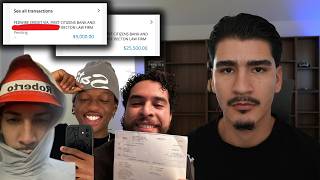
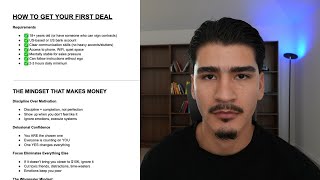
In this video, I'm going to be showing you how you're going to close your first or your next wholesale deal guaranteed. Now, the guarantee only stands if you watch the full video, you take notes, and then you take action as soon as you're done watching. Because this information I'm about to show you has changed my life completely. I got my first McLaren at the age of 20 years old. I've been paying for my parents' bills for the past 3 years. I just got my dream house, all from this information I'm about to show you, all from just connecting a seller that needs to sell a property to a real estate investor that needs to buy a property. Just being a middleman, no license, no degree, not a lot of money to start, and no experience needed. All of the information is here, so make sure you take action. Let's get right into it. Here are going to be the requirements that you need to actually do this. You need to be at least 18 years old or have somebody that's over the age of 18 to sign the agreements for you. You need to have a US bank account to collect the assignment fees. You need to have clear communication skills. That way people can understand what you're saying on the phone. You need to have access to a phone, laptop, Wi-Fi, and a quiet space preferably. That way you don't have family members screaming in the background where you're trying to negotiate a wholesale deal. You need to be mentally stable for sales pressure. These calls will not be the easiest. These are not conversations with your friends. These are conversations where you are making a heavy profit and solving a huge problem for people. You need to be mentally stable to do this. Now, you need to follow instructions without an ego. Just because I'm 21 years old and you're also 21 years old, or maybe you're older, doesn't mean you shouldn't take advice from me. I'm in a position where a lot of people want to be at, and I don't take that with a grain of salt. This information is going to completely change your life the same way I did, so pay attention and drop the ego. And you need to have at least a couple hours a day to make these calls and actually run the business on a serious level. If you treat this like a side hustle, it will be a side hustle result. So treat this as seriously as you can, and you're going to see the results that you should. The mindset that you need to actually make fucking money. Everybody likes to skip this part. Everybody thinks this part is not important, but this is the foundation on becoming the person that you need to be to actually have that bank account, to actually have that lifestyle, to actually be able to provide for your loved ones. Discipline over motivation. Discipline is not about perfection. It never is and never will be. It's about completion. It's about putting your feelings to the side. It's about putting all the determining factors that you believe are the reason you aren't successful and pushing them off to the side, not being a victim, and showing up how you know you're supposed to be, or how that future version of yourself is supposed to act. Taking daily wins, waking up on time, doing what you know you're supposed to do, making the calls, making the offers, running the numbers, tracking your business, showing up every single day as consistent as possible so you can become that next person that actually is successful compared to you now. Show up every day even when you don't feel like it. Ignore your emotions and execute the systems I'm going to show you. Delusional confidence— you are the chosen one. Everyone is counting on you. One yes will change everything. This business is a numbers game. One yes from one seller, one yes from one buyer will put $10,000, $15,000, $20,000 in your bank account and will completely change your life. Not only because of the $10,000 or whatever financial amount you make on that specific deal. It's about the conviction. It's about the confidence. It's about the win that you put under your belt to say, I've closed a wholesale deal. If I did it once, I can fucking do it again. And that's what a lot of you guys need. You need to honestly ignore the amount that you're gonna make on your first deal and just focus on getting that first one done. Focus on completion, not perfection. Completion to say, I did it. Not Jay, not somebody else that he posted, not one of his students, not somebody else's YouTube video. I myself did it. I took the information, I put in the work, I went through all the failures, and I closed my first deal. That is what should be focused on, on the first one specifically. The wholesaler mindset: an average deal is $15,000. Focus on getting that first deal out of the way, not the financial amount. Action beats perfection every single time. Every single failure is literally a learning lesson to become a better entrepreneur. Now, run towards uncomfortable situations. A lot of people love to stay in their comfort zone. A lot of people don't want to take the risk, don't want to make that first call, don't want to put themselves in a position where they're going to lose. If you don't lose, you will never fucking win. You need to get that through your head. Every single person that won, every single person that's hyper successful has 1,000 losses behind that win, but it looks like they won it overnight. It's never overnight. It's years and years of compounded failures that get you to win really, really big. Remember that, especially in the hard times when you don't want to do the work. It's the action ignoring your feelings that will get you closer to your goal and become that person that you know you're supposed to be. Let's talk about the value that you're providing in this business model, because if you're not providing value, you're not going to make a lot of money. The seller is going through a situation where he needs to sell his property fast, not for the most amount of money. They're going through divorce, inheritance, relocation, financial stress, whatever it may be. They need the property gone fast, and that is where we're solving a problem. So you sign a purchase agreement for, let's say, $100,000, right? The property is worth more than $100,000, but we got it at a price that's under market value so we can sell it for a profit. Then you, the wholesaler, the middleman, the guy without a license, the guy with no experience, with no money down, no credit needed, just signs a purchase and sale agreement and then is going to flip that purchase sale agreement, that contract, to a real estate investor for a profit. In this case, we're making a $20,000 profit. You assign it to the investor that has the money, that needs the deals, that's going to fix and flip that property and make profit on top of whatever he's buying it for. That's why he pays you that difference, because he doesn't have the time to go and find the deal himself. He focuses on what he does best. The same way the seller is only focused on the problem he has, you're only focused on the problem you're solving. This investor is only focused on the problem that he's solving— buying ugly houses, making them look pretty, and selling them to a family. Everybody has their own role. Make sure you maximize the potential, you maximize the skill set to become the best person for that role to provide as much value as possible. Now, why don't investors find their own deals? The same reason we don't grow our own food. They focus on their expertise, and time is money for them. They'd rather spend the $20,000 to acquire a deal as quick as possible so they can spend more time actually doing what they do best, which is flipping deals. Now that you understand the business model, let's go into market selection. Avoid California, New York, Connecticut, Massachusetts— these high-priced markets. These are doctors, these are lawyers, these are attorneys, these are people that know what the fuck they're doing, that are probably not going through a situation where they need to sell their house for a lower price than they bought it for, right? Higher price points mean more sophisticated sellers. License requirements are in some states, and you're swimming in sharks before you know— actually know how to swim. In these markets,. There's people spending millions of dollars in marketing where you're going to get beat out every single time. Target blue markets. Now, how do you know which one's red, which one's blue? Based off price point and based off PropStream. PropStream is $100 a month, as you can see it down there. In there, you're going to be able to see the color coding on the map. Focus on blue markets. That's what I've been doing for the past couple of years, and it works out great because it's not a lot of competition, and you're most of the time the only person that's calling and making offers. Light blue, between $100,000 and $150,000, but the sweet spot is right around $200,000 to $250,000 because that's where you're able to get the maximum spread on these deals. Now there's less competition, more opportunity, and the sellers are less educated about wholesaling, about real estate, about property values. So it's easier to get these properties under contract at a good price, and most of them are going through a situation where they need to sell their house fast. No-go states are Connecticut, Maryland, Massachusetts, Minnesota, where the license is required, and other states where there's too much fucking competition, like I mentioned before— California, New York, Arizona, some metro cities in Texas. Metro cities are things you want to avoid because that's where everybody and their mom is wholesaling. You don't want to go there unless you are actually experienced, right? The strategy is put yourself in a place where you win, not where it's the hardest. Don't go into the Shark Tank, go into the tank where Nemo's at, and all you got to do is slap them around to close a deal. Here's the only systems you're going to need to close that first deal. PropStream to run numbers, pull cash buyers, and pull your list of motivated sellers. If you don't want to use PropStream, you can use ListSource, a little bit more complicated to use, but it also works well. PropStream is $100 a month. The dialer is going to run you about $150 to $200 a month, but the dialer is for you to not waste your time sitting on your phone, typing out every single number, listening to voicemails, listening to the phone ring. You don't want to do that. You want to focus on actually talking to sellers, and the dialer makes that process so much easier. Instead of talking to maybe 20, 25 people a day, you're talking to 50 people a day, 100 people a day, 150 people a day, depending on how many hours you're actually putting in. Now, as far as the filters that we're going to pull in these lists to actually get motivated sellers, you want to go for high equity, meaning high equity, you have room in the deal to actually make a profit and the seller to walk away with some money at closing. Individual mixed trust ownership. That way you're not talking to corporations that own 50, 100 properties, right? Non-owner occupied, meaning we're not talking to a seller that currently lives in the property where he's going to be less likely to actually sell the house to a wholesaler. We're talking about somebody that bought a property or got inherited a property where it's a rental property, or maybe they just don't use the property and it's maybe 1,000 miles away. It's built between 1950 and 2005. It's 2-bed, 1-bath minimum because that's what investors are looking to buy. Nobody's buying a 1-bed, 1-bath or 0-bed, 1-bath. Non-HOA, people don't like to invest in HOA neighborhoods, and not listed in the MLS with a real estate agent. That is key because listed properties that are on the market normally are from sellers that aren't as motivated and want the top dollar. We don't want to talk to those people. We want to talk to the people that are going through a situation, understand that, and want the quickest solvent to their problem. Why these filters work, like I already mentioned, high equity room to negotiate, non-occupied, less emotional attachment, 5 years, likely has appreciation and equity into the property, but it might need some updates, aka value for the investor to come in. Flip the property and make his profit. Then not on the MLS, not looking for the highest price, aka actually motivated. Marketing that actually works. Now I'm not sitting here telling you cold calling is the only way to do this, but it is the way that has consistently worked. And every single huge company that's built with 50, 60 employees does cold calling as a form of marketing. It is one of the most consistent and cost-effective. Now warm calling versus cold calling— we're not cold calling random people because you're going to waste your time, people aren't motivated. But warm calling, we're targeting these people with those filters that seem to have motivation, that would have motivation. Therefore, you're not talking to 50, 100 people that are going to tell you fuck off. You're talking to maybe 20 people, 30 people, and then somebody that actually needs the problem solved. Now, what is important about actually running a business and not treating this like a side hustle is tracking your KPIs. What contacts you've made, how many conversations you've had, how many leads have been generated, what offers have you made, and how many contracts you've signed. If you you see that the numbers are making sense, double down on the strategy. If you see that something is off, maybe you're not making enough contacts, maybe that's a problem with your list, maybe that's a problem with your dialer, maybe that's a problem with the data that you're pulling. Conversations— if you see that not a lot of conversations are being had, that means a problem with maybe your introduction. Maybe you sound like shit on the phone and people don't want to talk to you. Leads generated— maybe you're not asking the right questions, maybe you're not qualifying the people the right way. Your offers made— maybe there's a huge drop-off from you having that first conversation and not building trust with these people. So therefore, they never want to get on a second call with you to listen out to your offer. Contract signed, that means you have a closing problem. That means you have a pre-objection handling problem. We're going to be talking about that in the scripts a little bit later in the video. Now, if you don't have a lot of money, but you have time, calling is going to be the best, it's going to be the most cost effective. But if you don't have time, maybe you're doing a 9 to 5 job, maybe you have another business, but you're trying to get into wholesale, running ads is going to be the best because you're not going to be sitting there for hours every single day cold calling people and getting rejected. You're gonna be talking to warm, motivated sellers every single time. If you want me to run the ads for you, click that second link down below, and I'm gonna be able to help you with that. But for most people, I will always recommend calling first because you get to experience what it's actually like to run the business in every single step of the way. Now, the discovery call framework, the foundation to building that trust with the seller, understanding their pain point, understand how to solve their problem, understand what they're running from and where they're running to, so you can have the right foundation to move forward with the business model. Now, it's gonna go something like this. Hey John, my name is Jay. I was reaching out about your property on Main Street, just seeing if you ever thought about selling it. Quick, simple, easy introduction to understand if they're interested, right? The key question to ask is what situation with the property, how long you've been owning it, what condition is it in, what you need to get out of it, when do you want to close the deal. But what the most important part about this conversation is, 80% of it should be about the motivation. What are they going through? What are they running from? Why don't they want the property anymore? How long have they been owning it? What problems have they been facing? How have they felt about the problems? Why are they thinking about selling it? Why for this price? Why haven't they reached out to a real estate agent? Why don't they fix the property themselves? Why don't they list it for sale by owner? Why don't they put another tenant? Like, literally understanding every single angle of why they're interested in selling their property, why haven't they done something about it, and why they're on the phone with you right there, right then, right? That is the most important part of the conversation. Don't talk about condition in the first place. Don't talk about price point in the first 5 minutes. That is the least important thing. The most important thing is the motivation. Once you get the motivation out of the way, then you can talk about timeline, then you can talk about financials, then you can talk about the condition of the property, And then you don't give the offer instantly because you don't know how to underwrite deals efficiently, especially if you're going into a new market, you just started doing it virtually. You need time to actually underwrite the deal and be confident in your numbers. So you're going to end the call with, hey, hey John, I got all the information that I needed. I'm going to go ahead and send this over to my finance team. They're going to run the numbers, come up with an offer, or come up with an unapproval on why we're not able to offer on the property. When is a good time for me to call you back? Is this number a good phone number to call you back? What time? Cool, I'll call you then. Right? Now you're giving yourself time to actually run the numbers on the property, look at the market conditions, go over all the notes that you took from the first conversation that you had, and then move forward accordingly. Running numbers like a pro, this is what most people fuck up in because they lock up deals too high and they're not able to sell it because the numbers don't make sense to a real estate investor. How to find comparable sales? Same neighborhood with similar size, age, and looks from the outside. Sold perfect world within the last 6 months, fully renovated condition, new countertops, new bathrooms, new fixtures, new lights, new windows, new the whole 9 yards, right? This is your ARV. Your ARV is your after repair value. This is what the investor is going to shoot for when he's done flipping the property and what he wants to sell the property for. So if your property is under $150,000 in average sale price, then the ARV is going to be 70% minus repairs minus your fee is your max offer. You can throw closing costs in there to be a little bit more conservative. Conservative, that's going to help you make more profit. In this example, your ARV is $200,000. The formula brings it down to $150,000 minus the $30,000 repairs brings it down to $120,000 minus your wholesale fee of $15,000 brings it down to $105,000. And your MAO is $105,000, your maximum allowable offer, what these people qualify for. Now, in a perfect world, you do not ever want to start your offer at the MAO because that literally just leaves you with a $15,000 assignment fee. Now, that's not that bad, but what you don't know is that buyers will always lowball the fuck out of you. Investors will always try to squeeze as much profit as possible away from your pocket. So you want to have a cushion. You want to offer around 70 to 80% of your MAO. So start the offer around $90,000, start your offer around $85,000. That way you have room to go up on negotiation and room to make sure that the buyer, even if he wants to negotiate down from the sales price of let's say $130,000, you're still making a good healthy profit. Repair estimates are between $15,000 and $25,000 for a light rehab. Medium rehab is $25,000 to $40,000. Heavy rehab is $40,000 to $60,000, but it also depends on the square footage. A property that's 3,000 square feet is not going to be the same rehab price as a property that's 1,500 square feet. Make sure you take that into consideration and use PropStream to find your comps. Now, I'm not going to sit here and lie to you and say that every single offer that I make goes under contract. I have a 47% conversion rate, which is not that bad, but it's also not that good. I'm just being realistic with you. As far as making the offer, it all starts with the discovery call. If you've got all the objections out of the way, If you understand that this person is motivated, if this person understands the pain points that they're going through, if they understand the goal and they understand how you're going to solve their problem, this is going to be 10 times easier. Every single thing here is simple, not easy, but you need to have confidence. You need to act like the investor. You need to come in with the conviction that you're able to actually close this deal and solve these people's problems. If you don't have that conviction, your offer is not going to be confident and they're not going to go under contract. These objections that are going to come up on that second call should have been handled on the first call, by asking the right questions and making sure you're not getting bullshitted on the first call or letting things slide, letting literally seeds plant that they are going to say themselves on the call, go and grow from that second call, right? They're going to say things like, oh, I've thought about it. Oh, I've gotten other offers and said no. If you just breeze over that, that's going to come up on that second call and you're not going to get that property under contract. Now, once you have that property under contract, it's time to find an investor. You can find an investor through Facebook groups, real estate investment groups, Craigslist, Zillow, Investorbase. And these vetting questions that are down here are gonna be mostly from people that come from Facebook because we don't really know if they're actual investors or just wholesalers acting like investors, right? These vetting questions are important for the people coming from Facebook to make sure that they don't try to snake you on a deal. Show me your past 3 deals. What is your typical buy box? How do you fund your deals? Are you cash? Are you hard money? Is it borrowed money? Can you close within 2 weeks? Can you put down EMD? Now the red flags are they won't show you the past deals, they're gonna ask for offshore peers, they wanna market the deal to other people, and they don't want to put down earnest money. If they don't want to do those things, do not send them the address, do not have them walk the property, because they will snake you on deals. I have experience from having deals lost because of not vetting people properly. Now the disco package, how you're actually going to present this deal to real estate investors to look professional and look like you know what the fuck you're talking about. Property photos, address, the specs, your asking price, the ARV and the profit potential, the repair estimates, comparable sales, property pictures already on there, your contact info and the closing date, what title company you're going to be using. These are all things that investors are going to ask you, might as well give it to to them upfront and not waste any time with the back and forth. Now, closing your first deal, the process: get the property under contract with the purchase sale agreement, get that signed through DocuSign, PandaDoc, whatever you want to use. With DocuSign, you can use a 30-day free trial. Finding a local title company, seeing if they work with assignment of contracts, they do blind HUDs, all the nine yards. Then sending the contract to the title company, marketing it to buyers with the disco package, getting an assignment agreement signed after the buyer walks the property, then collecting that earnest money to the title company, coordinate the closing, stay on top of everything with everybody in the transaction, the seller, the all the paperwork, the buyer, making sure everything is in by the timeline that you want it to be, and getting paid by closing either by wire or by check, however you want to do it. Now the timeline: property under contract, finding and vetting a buyer, buyer walks the property, assignment contract signed, earnest money collected, and the closing date is when you get paid. Now the closing date is normally going to be on the original closing date that you put on the purchase sale agreement, which Normally I tell you guys to put 30 days on every single option period, but sometimes you can do it closer if you file an addendum for the closing date to close sooner, right? Review and action items. Every single thing that we covered in here. The system behind the wholesale process, the market selection for maximum profitability, profitability, a lead generation, the data sources, discovery call framework, running the numbers, buyer acquisition, deal closing process. And here is your homework for the next 30 days. Choosing a market, using PropStream, pulling your first list, start talking to sellers, start getting better on the phones, start knowing how to ask the right questions and nurture these people on the phone, build trust, build the pain points, and actually pull motivation. Tracking your KPIs to see how your business is performing, getting your first deal under contract, and selling that contract to a real estate investor. Now, your first deal under contract, is it going to close? Maybe 50% of the time, but you're going to learn all these learning lessons through every single failure, right? It's not about being perfect, it's about getting completion and getting these daily wins of doing what you know you're supposed to do. Every single thing in the system has worked for me and it can work for you. The same way it worked for one of my students named David that joined our— my program about 14 days ago. He has a kid, he works a full-time job, he's only calling for maybe an hour, 30 minutes, 2 hours every single day, and he just closed his first deal for $10,500. If you want to do a similar result just like David or any other my other students, click that first link down below. I'll coach you one-on-one for the next 3 months and get that first deal closed no questions asked. If you're interested, click that first link down below. And we're back on YouTube, baby! This video wasn't the best, I'm not gonna lie to you guys, but we're back consistent, and I'll see you guys in the next video.