How To Get Your First Wholesale Deal In 20 Min
Jesus Gabriel Mendez teaches real estate wholesaling as a middleman business where you connect sellers with cash investors for a fee. You need a phone, laptop, and a list of 1,000-2,000 motivated sellers built from tools like PropStream, then make offers at 70-80% of property value and assign the contract to a buyer for profit.
Chapters
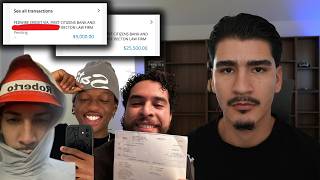
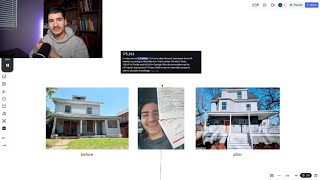
What's going on, boys and girls? In this video, we're going to be talking about the step-by-step blueprint on closing your first wholesale deal in the next 30 to 45 days, guaranteed. Now, the guarantee only lasts if you actually watch the full video, you take notes, and you take action after you're done watching. There's no point in watching video after video after video if you're not going to do anything with the information. Now, if this is the first time you're watching one of my videos, welcome. My name is Jay. I've been wholesaling real estate for the past 7 years, and I make content just like this to help you close your first wholesale deal or or scale your wholesale business. If you like this type of content, like, comment, subscribe, and let's get right into the video. 1.2 million homes are sold every single year off market, meaning they don't have a real estate agent involved. A seller is probably selling for cash or to a real estate investor or to a family member, and the property never goes on Zillow, so the public market never sees it. All of this stuff is happening underground where most people don't even see the opportunity. Me myself, I learned about this opportunity years ago, and that's how I've been profiting. As you can see, there's a picture of me in the middle holding two checks for one for $10,000 and one for $35,000, all by simply connecting the homeowner with an ugly property just like the one on the left side and a real estate investor that makes those ugly houses look like the one on the right side. Just by being the middleman, no real estate license, no college degree, no experience, and not a lot of money because we're never actually buying the properties. Now, does this actually work? That is a great question. Here are all the students that actually paid me to learn this information. These people came out of pocket, made an investment into my program, and got a result and closed deals. You can see here, you got Phillip with a $30,000 deal. You got this guy with a $5,000 deal. Amado closed over $10K. You got all these other ones. Tanya closed $52,000. You got Joey, $24,000. Those guys are doing like $50K to $70K a month. All these people paid me for this information that you're about to learn for free. What I want you to do is make this exercise in your head. Act as if you just paid me $10,000 for the video you're about to watch, and at the end of the video, you can comment down below and say if it was worth it. Let's move forward. You guys have heard of dropshipping, right? Buy low, sell high. Find some cheap product in China and then you're gonna sell it to a retail buyer in the US. You can market through TikTok, through Instagram, all of the above, right? The simple is you buy low, you sell high. You're the middleman online, right? With a mask. Nobody knows that's really you. Nobody knows that's not really your product. Nobody knows it comes from China. In this case, everything is based in the US and you ever actually buy the property, We're not over here buying properties. We're not over here paying cash, dropping hundreds of thousands of dollars, or getting approved by a hard money lender to buy these ugly houses. We are simply just the middleman with a piece of paper. We get low and sell high, but we never actually own the property. Therefore, we don't take that big of a risk, if anything at all, right? So think about dropshipping but for houses. Instead of finding some cheap product in China and then selling it to some 15-year-old girl, we are finding a cheap property in the US, and we are selling that cheap property in the US to a rich real estate investor who's looking for those ugly properties, aka those investment opportunities on a silver platter that they can buy, put money into, and make a profit. Now let's talk about the necessities. You don't need a degree, you don't need a real estate license, you don't need hundreds of thousands of dollars to start. All you need to know is you need to be able to speak clearly, right? No accents, no vocal retardations or whatever you call those things. You need a phone, you need a laptop, and you need Wi-Fi, right? You need to also understand 5th grade math, right? I'm not telling you, hey, you need to be a mathematician, but you need to learn 5th grade math, how to add, multiply, divide, and subtract, and not be a pussy, right? You need to not be scared to get told no. You need to not be scared to make a call. You need to not be scared to make a lowball offer. If you can check off all of these things, you are just fine. You got more than everybody else starting this business has, right? These 4 things are the basic necessities that you need for this business and just a little bit of grit, right? Now let's talk about these services that we offer, right? The service has to add value to somebody's life, otherwise we don't make money. In this case, we are offering homeowners a cash offer and we are offering homeowners a novation offer. I'm going to be breaking this down. A cash offer, pretty much we get these properties under contract and we sell that contract to a real estate investor for cash. He buys the property for cash, he pays everybody out, we get our cut of the deal. An Ovation Offer is a little bit different. It takes a little bit longer, but we normally make more profit because the investor is not the one buying it. It is a retail buyer that's buying it. Somebody with a family, some guy getting a 30-year mortgage on the property that's gonna go live there, right? So there's obviously different characteristics for the different offers and for the different services that we're offering to these sellers. And the cash offer, we know it is the real estate investor that's buying it. He wants to make a profit. It's a logical sale. As long as we can put forced appreciation— can't talk— forced appreciation into the property, meaning that the property is ugly and needs work, if we put money into the property, the value will appreciate and we'll be able to sell it for a profit. We're not doing this, the investor is doing this. The seller wants a fast closing, right? This property needs to sell fast according to what he needs, and they still want a simple process. So the cash offer, right, the homeowner that wants our service fits these 3 criteria, that's what he wants. The property is ugly, he wants to sell fast, and he wants a simple process. We give him a cash offer. If the homeowner has a property that's in nicer condition, is okay with waiting longer than the average 30 days for the property to sell, and still wants the same benefits as a cash offer, that is when we offer the Novation. Now you know the 2 services that we're offering. Let's move forward and break it down even a little bit simpler, right? Here is the homeowner. Now he's happy because he's getting rid of a headache, right? We're giving him $100,000 for his property. This is what it currently looks like, but we know that this property can look like this now and be worth this once the real estate investor buys it and makes his profit, right? In this case, we're putting it under contract for $100,000, and we're selling that contract for $120,000 to this rich guy right here. Look at him, he's happy as hell. He's rich as fuck. He's just looking to buy more houses. Now, you might be thinking, how do we make $20,000? Because the seller agreed to get $100,000. He gets paid the $100,000 out of the $120,000, and then we get to keep the difference between what he purchased it for, what the seller got, and obviously we get $20,000. Now, you might be asking, why does the investor buy from us? Why doesn't the investor go straight to the seller? The same way you don't go out to the forest, kill a cow, skin it, clean it, make sure there's no bacteria, and bring it back home to cook. You go to the grocery store for convenience. Why would you go out and do all that when you'd rather spend your time either working or not doing all that and just going to the grocery store and getting it for cheaper. It's more worth it for your time. The same way as a homeowner doesn't want to go with a real estate agent because he doesn't want to go through the headache, he wants convenience. The real estate investor, he doesn't want to go through the headache of finding another wholesaler, of making his own team, of doing his own marketing. He just focuses on what he does best, which is flipping properties. Therefore, he pays for the convenience. Now, it's a little bit inconvenient for us, but we make a profit for it. That's why we look for these sellers. That's why we look for the investors, and we get paid for connecting the dots. Now that that's clear, let's go ahead and go through the takeaways. Market to a motivated seller, somebody that's going through a situation, put the property under contract. Once we have that contract, we market to a rich real estate investor to buy the house, put him under contract, and that's when we get paid. Connect the seller and the buyer, the purchase contract and the assignment contract, put those together, you make a profit right in the middle. Let's move forward, let's move forward, let's move forward. Now You have the homeowner, right, the seller, the person that we're looking for to pitch this solution to their problem. They're either a tired landlord, they try to list their property on the market with a real estate agent and it didn't sell for whatever reason, they're past due on taxes, the house was inherited and it's a headache. Now they live outside of the state, maybe they're going through a divorce. Those are all pieces of motivation. These are all pain points that these people are going through. And that's what we are targeting because those are the people that are looking for convenience. They're procrastinators by choice. Therefore, they will always pick convenience over everything. And that's That's probably why they're in that situation in the first place. We're here to solve a problem for them and solve a problem for the investor, and that's why we get paid. They need to sell fast. They can't wait 30 to 90 days on the market with a real estate agent. They don't want to make repairs or clean up the property. They're trying to avoid commissions and closing costs because they probably don't have the money. They're dealing with a stressful situation—divorce, divorce, death, pre-foreclosure. The house is too rough for the MLS, aka the property condition is too ugly for a retail buyer to purchase it. He wants to keep it a private sale. He's looking for a simple and guaranteed solution, and he already tried listing it and it didn't sell. These are all pieces of motivation. This is all what we're looking for to add value in somebody's life. Because we're adding value, that's what we're making a profit. Moving forward, let's talk about the market, right? We know what we're doing. We know the offer that we're having, right? We know the value that we're providing. Let's talk about the market that we're going to market in, right? Where are we going to be wholesaling these deals? Where are we going to be finding these motivated sellers? Sellers? Where are we going to be flipping these contracts? Market comes first, and that's arguably one of the most important parts of the business, right? Most people will think, oh, let's go into these huge cities— California, New York, Florida, Texas— all these places where people are moving to, right? That's going to make the most sense. People are moving, people are looking for houses, people are moving out, people are moving in. No, that is where the most competition lies. And especially if you're a beginner, you don't know what you're doing over the phone, you don't know how to run numbers, you don't know how to talk to these sellers, you don't know how to negotiate deals, you don't know how to find buyers, you are literally jumping into a shark tank filled with sharks that are ready to rip your leg off. These people don't care. These are huge companies that are at the highest level possible, spending millions of dollars in marketing. You do not want to jump in these waters because you can't simply swim, right? So we're going to be avoiding Dallas, Houston, Austin, San Antonio, Arizona, California, Florida, South Carolina— all these places— not only because of legal laws where wholesaling isn't completely allowed, or maybe you need to get a real estate license, or there's a limit on how many deals you close single year. Um, the competition, right? There's huge wholesale companies in a lot of these markets that are spending millions of dollars in marketing where the people that you're trying to talk to have already been talked to 50 other times. We want to avoid places like this. We want to go where there's least resistance. We want to go where the guard is low and the gatekeepers are not present. So we want to avoid metro markets. In this case, I like to focus on the light blue parts of the map, the dark blue parts of the map, maybe a little bit of green. But anything after that, if you are a beginner, I do not recommend it. So now that is the market. We found your market. Now let's talk about data. How are you going to talk to these people, right? Where are you gonna get the data from? How are you gonna get the phone numbers? It's all right here. This is the test list, or I like to call it the prototype list, on where I test the market to see if it's worth going into and doubling down on as far as the marketing. First, we go for non-owner occupied properties. Where the homeowner doesn't have an emotional attachment. Logistically, it makes more sense to sell a property like that than one that you live in, right? At least 30% equity, meaning there's equity in the property, there's money to be made, and there's space in the deal to have a cushion and make a profit, right? At least $1,950 building up. We don't want to buy a property that's $1,850, $1,870, where it's going to be harder to find a buyer, and most people are going to be scared to take on that project. 2-bed, 1-bath minimum. Nobody's buying a property that has a 1-bed, 1-bath. Right? Under an acre, because we don't want to be out in butt-fuck nowhere. We want single-family properties, multi-family properties, or vacant land. It works the exact same way. Don't fall into the marketing that one's better than the other. They both work the same. It's the exact same process, right? Individual ownership, meaning a corporation doesn't own the property, because a corporation probably doesn't need to sell for a discount. They need to have owned the property for at least 5 years and have, um, all these factors. Now, as far as these factors, you can pull these lists from PropStream or from ListSource. Both of the— both of those are paid sources. Nothing is free in this world. If you want to start a business for free where you're going to make $10,000 to $30,000 at once, you're living in a dream, and that dream is not reality, right? To do it for free is to be ridiculous. These websites are paid, but it's worth it in my opinion. I've been paying for PropStream since I started this journey. God knows how much money they've made off of me, but that's besides the point. I made my money back. Now, the list, I want it to be between 1,000 and 2,000 people, not too big, not too small, just enough to get a grasp of the market to see if people are motivated and people have been called before, right? Have at least 500 to 700 contacts out of that list as far as our hit rate and how many people we talk to, which should bring you at least 10 to 15 leads. Out of those 10 to 15 leads, you should be able to get 1 to 2 contracts, and at least one of those you should be able to close for a $10,000 to $30,000 profit, right? That's as far as the data and who we're targeting. Let's talk about the actual marketing, right? As far as marketing, I like using a dialer. That is the reason, um, I recommend it to most people, not only because it's cheap— your cost per close is going to be under $1,000 as far as what you're going to spend to get a deal under contract and close, um, and it's the most beginner-friendly. And I think it's the best for you to close the learning curve from a beginner to an intermediate wholesaler, right? Most guys will tell you, go text, go send out mail campaigns, go run ads, and all these things where You don't even know how to speak to sellers. So you're doing all these things that are more— that are less beginner friendly when you have never closed a deal, when you've never talked to a seller, when you've never negotiated a deal, when you've never had to, you know, get a deal under contract and find a buyer in the next 48 hours. You've never done that before. So I want you to start with the beginner stuff to get you to understand it, get your reps in, get your first deal, and that's when you can move on to Google Ads, you can move on to Facebook Ads, not properties. I do not recommend that. Not anymore. They've burned a lot of money for me. I do not recommend it at all. So once you close your first couple of deals, that's when you can move on to Facebook ads and inbound marketing, which is going to be easier. But you need to have that baseline foundation of your knowledge, of your experience to move into that, in my opinion. Right. I don't want to jump. I don't want to put you in a crowd where you're going to get beat up. Now you're going to hit the phones until you have $15,000 to $20,000 saved up. You solidify your systems as far as acquisitions and dispositions. Those are the two parts of of the business, acquiring the contract, disposing of the contract. Then you're gonna hire out acquisitions, and then you're gonna introduce inbound marketing and start delegating accordingly. And that's how you're gonna scale your wholesale business past those $10,000 to $30,000 months into $50,000 to $100,000 a month. Now, how are you gonna make an offer, right? We know who we're targeting. We know what we're saying over the phone, which is simple. Hey, this is Jay. I was reaching out to see if you're interested in getting a cash offer for your property. If they say yes, you can run them through the whole script, which I have videos specifically for. I have videos specifically on the discovery call, which is the first conversation that you have with sellers. And I have calls specifically on seller calls, right? The offer calls where you're actually making the offer. Those videos are on my YouTube channel. You can go and check those out. Now, how you're going to make an offer, here is the rehab table on what rehabs normally are. You can also ask ChatGPT, which has worked for me. It's pretty accurate. Just say, hey, I have this property that I'm looking to buy. Here are the pictures of the property. Here's what I think needs to be repaired. Here's the area. Here's what this description from the seller was. What do you think my rehab is going to be? Then you plug that into your numbers, and that's where your MAO comes in. Your MAO is the maximum allowable offer that you can put this property under contract for, and I don't want you to start the offer with that. I want you to start with 70 to 80% of your MAO. That way you have that cushion and you have that wiggle room to actually negotiate when putting these deals under contract on the acquisition side. Once you have a seller that's interested in selling, once you have a seller that's agreed to the price, that's when you put them under contract. Again, I have all my agreements and other YouTube videos where I'm breaking down deals just like this, and you can copy and paste those. You can probably just ask a local attorney or a local title company for assignment and purchase sale agreements that work in your city. The ones that I've used and the ones that my students have, I've used for the past like 4 years and they work no problem in 99% of states, right? Now, when you're sending over that agreement, you want to use DocuSign. They offer a 30-day free trial. You want to get this signed through email, over the phone. Never send out the agreement without being on the phone with the seller because you want to be able to handle objections You want to clarify anything about the agreement, and you want to make sure they feel good about signing this. You don't want to force somebody to sign something that they don't understand, and you don't want to say contract, you want to say agreement, right? Always do it over the phone and pre-objection handle before sending anything out. I really emphasize this on my script videos for the discovery call and the offer call that are also on my YouTube video. So now that you have, uh, the property under contract with a DocuSign agreement, that's when you go and find a title company. Again, I have a video that literally says everything to do after you get a property under contract, but we're still going to go through it on this video. That one specifies a lot more though. So you're going to Google what title companies in that specific city or state that you got the property under contract for. You're going to ask them, hey, do you guys work with assignment of contracts? Do you guys work with buy and hunts? Do you guys work with wholesalers? If they say yes, you're going to ask for the title officer's email. You're going to send over a purchase sale agreement. And then that is when the title starts. Once you have title ready to go, they're ready to work through the file. That's when you start looking for a buyer., right? But before you find a buyer, you gotta have— you gotta be prepared, right? Most people will send out a jumble fuck of words with all the property information, this, that, that. It doesn't look professional. You don't look like you're experienced. You look like a beginner. So first, we're gonna build a DISPO package, right? Pictures, comparables of the property that actually back up our price that we're asking for, property details, the property, the profit that the investor's gonna make, the contact information for you, the title company information, when is the closing date, and access to the property. Is it on the lockbox? Do you have to ask the seller for a specific time? Are you going to go out and open up the property, right? Maybe if you're local, but if you're not, when is a good time for them to walk the property and do their inspection? I'm talking about the buyers, right? This is an example. Contact Phillip. This is a property that Phillip got under contract. As you can see, you have the front end of the pic of the property. You have the bed bath count. You have some comps in the area. You got the repair estimate. Again, it doesn't have to be perfect. We're not Tradesmen, we're not contractors, we're just wholesalers, right? As long as you're conservative with the numbers, you're not throwing out crazy shit or lowballing the rehab estimate, you're gonna be just fine. Don't sweat it too much. As you can see, then you have a picture link on the rest of the pictures of the inside and outside of the property. That way the investor can look at the pictures and say, yeah, this is something I'm interested in, when can I go look at the property, right? Now we're gonna talk about how you're gonna find buyers, right? You have Facebook, Craigslist, Zillow, realtor.com, PropStream, Investorbase. All of these are ways to find cash buyers, but not only do you have to find the cash buyers, you have to say the right thing on the phone. Otherwise, you're gonna get cooked, right? Do's and don'ts: talk to every single buyer on the phone, vet them on their past deals and future ones, get them to walk the property. Never negotiate without them walking the property. That is a big no-no. Proactively negotiate with them because their first offer is never their last offer. There can always go up $5,000 to $10,000 more than their initial offer on your wholesale Wholesale property, you always want to collect $3,000 to $5,000 worth of EMD. No option periods with buyers because option periods are for wholesalers like us. These are the inspection periods that we have on the purchase and sale agreements. No, they can't market it out to other people. We don't want any daisy-chainers. We want to talk to the direct cash buyer that's going to purchase the property and make the process simple, close out the deal, and get us paid. No, you will not substitute a deal. We don't want to do any sort of creative financing. They don't need the information about the seller. This is your contract, protect it with all your life. They don't need to know how much you have it under contract for. This is a big no-no. It doesn't matter. If it makes sense for them, it's a good investment opportunity for them, it doesn't matter what they got it under contract for because they don't need to count your pockets. Tell them to stop pocket watching. Nobody signs buying sight unseen. If it sounds too good to be true, it probably is. No, you will not take less CMD. And if they aren't willing to show you their past deals, they will not get your property. And I'm really, really, really trying to hone down on vetting these Facebook buyers. Everything else, PropStream, you can see if they're vetted before. Zillow, Realtor.com, you can see that they bought and sold properties before. The same thing with Investorbase. Both Facebook and Craigslist, there's a lot of wholesalers acting like real estate investors to where they might try to snake you on a deal. So I don't recommend that. Now, if you like content just like this, if this was worth your $10,000 investment, comment that down below. If you want to learn directly from me one-on-one to close your first first wholesale during the next 30 to 45 days, like all those people I mentioned in the beginning, as my students have, click that first link down below in the description. You can see all the videos in there. Click through, watch the video, book a call with my team, and then we'll see if we're a good fit for each other. If we are, let's close that first fucking deal. I'll see you inside. Hope you guys like the video. I'll see you guys on the next one.