The Perfect Cold Calling Script for Wholesalers
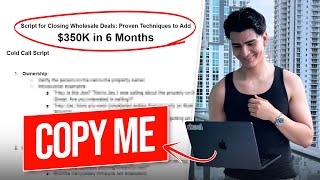
Jesus Gabriel Mendez shares the cold-calling script that generated over $350,000 in six months. Capture six data points on the first call: ownership, condition, tenants, timeline, motivation, and price. Then underwrite the deal, schedule follow-up, and present an offer with objection-handling tactics.
Chapters
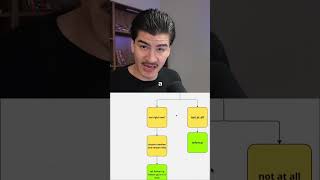
I've been in wholesale real estate for the past 6 years and I've gone through hundreds of scripts that promise you the dream of closing deals effortlessly by following a script word for word. The script that I'm about to show you has generated me over $350,000 in the past 6 months. Let me go ahead and show you. The script is broken down into parts, the cold call and follow-up. Now what makes the cold call script so effective is these 6 components: ownership, condition, tenants, timeline, motivation, and price. Since this is a cold call, we want to make sure we know who we're talking to. That's where ownership comes in. We want to make sure the person we're talking to is on the deed, is on the HUD, they have ownership and equity in this property. So we start off with, "Hey, is this Joe?" "Hey Joe, this is Jay. I was giving you a call about the property on Main Street. I wanted to see if you would be interested in selling it." Now different variations can go like, "Hey, is this Joe?" "Hey man, this is Jay. I was calling you about the property on Main Street. Just wanted to see if you ever thought about selling it." "Hey, is this Joe?" "Hey Joe, this is Jay. Have you ever thought about selling that property on Main Street?" "Hey Joe, this is Jay. I was calling to see if you'd be interested in getting an offer." offer on that property on Main Street. You can use any of those variables. They all work. They all get the same point across. The goal is to get the introduction out of the way of who you are and why you're calling in the first 8 seconds. From there, it can go two ways. They can either say, yes, I'm interested in selling, give me an offer, what would you offer on it? Or they can do the opposite. No, I'm not interested. Stop calling me. I've gotten multiple calls. If I wanted to sell it, I'd put a for sale sign on it. From there, if they do say no, we will go into A proactive role. We will not be negative. We will not be cussing them out. We will not return the same negative energy that they're giving us. And it's not negative. They just don't want to sell. Now, saying this after they tell me no has gotten me a lot more deals closed. Hey, do you know anybody else that might be interested in selling? Or do you have any other properties that you might be interested in selling? If they say no after that, cool, have a great day. Won't call you again. Once you get that yes, you can ask them an array of questions asking about the condition. Hey Joe, I've only driven from the outside of the property. Can you tell me what it looks like on the inside? Hey Joe, can you give me a small walkthrough as if you were walking through the front door and tell me about the condition. Hey Joe, I only know what it looks like from the outside. Can you tell me everything about the inside? Now, if they're motivated, they're going to tell you yes, and they're going to start describing the property. That's where you take notes. Now, if they tell you no, come look at it, you can tell them, hey Joe, I'm only the information gatherer. I don't go to properties, my contractors do. If we agree on a price and we both see a good fit for each other, then I'll go ahead and send out my contractors to get all the finalized numbers out and take a look at the property for themselves. But if they tell you yes, they continue with going through the walkthrough, take notes of the condition. We will use this as ammo when we're running our numbers. Running our numbers, doing the underwriting, whatever you want to call it. Now, when we're going into condition, we want to ask needle-moving questions. We don't want to ask any bullshit questions that will not get us further down the line towards closing or disqualifying Joe in this instance. So for condition, we will go against the big factors that will sway our underwriting process. Kitchen, bathrooms, foundation, electrical, plumbing, and the roof. Now that we know the big factors of the property, we will go ahead and get a judgment call directly from the seller. Hey Joe, just based off the condition of the property, what do you think it's worth? Now, another question that I like to ask following up that is, hey Joe, if I gave you $20,000, what would be the top 3 things you would fix in the property at the current moment? Now that we got condition out of the way, we will go ahead and move into vacancy status. Tenants. Joe, tell me this, Is anybody living in the property right now? If somebody's living there, you ask them, hey, are they on a month-to-month lease or are they on a yearly lease? That will let us know, hey, how quick can we close this? And is it going to be a struggle to get the tenants out of the way? Or is tenants going to be the thing that disqualifies the seller? Because if tenants are good, the seller's making money on the property, then there's no point for them to sell. We're not here to pressure anybody to sell their property when they're in a good situation. We're here to help people out of a bad situation. But timeline, thank you for that information, Joe. "Now how quick would you like to close?" Once we got that out of the way, we want to know how fast does the seller want to sell. You can tell them, "Hey Joe, is closing something you want to do in the next 30 days, 60 days, 90 days? You tell me." And the reason we give them that is because we're very flexible. We want to fit the solution to the problem according to their schedule. They are the seller. Obviously we want to push it for as soon as possible, but if the tenant's in the way and the seller's not as motivated, he's going to want to push it back a little further because he's Not as motivated. Then we will go into motivation. This is where we can use the past information that we've acquired from the call and go back and present it to them on why they're looking to sell. So you can do something like, I normally like to double down and ask questions about the points that they answered for me. So for ownership, hey Joe, you've owned the property for 15 years. What makes you wanna sell it now? For condition, hey Joe, I mean, it seems like it doesn't need much to fix. Why don't you just fix it yourself? For tenants, hey Joe, I mean, you're making money on the property any month. What makes you wanna sell? Timeline, I mean, Joe, you're looking to sell 60 days from now. What is going to change from today till then? That's where we're going to get the motivation and use that as leverage to get the best deal possible. Last but not least, price. Now we already kind of picked at it, ask them what the seller thinks the property's worth. Now depending on how long you've been in this market will depend on how good your intuition is. I know if I've been in the market for more than a month, I know if somebody's asking for $350,000 for a property that's only 1,200 square feet, it's going to be ridiculous and they're not really motivated. But when you're new into a market, you won't have the intuition to call that out right away. So you will ask him, got it, Joe. Now tell me, what are you looking to sell this property for? Or you can say, now Joe, what would you like to walk away with at closing 60 days from now? Now, because these are cold calls, 20 to 30% of people will ask you to give them a number first. Normally I don't want to give the offer first, so I will ask around it. But if I see that they're not budging, I will go ahead and look up the property's tax value and ask them, hey Joe, the property's tax value is around $27,000. Is that something you're looking to walk away with? Normally they're going to tell you, fuck no. And then they'll tell you the price that they're looking for. But if they say no to that number and still don't tell you what they want to walk away with, That's not a problem. You just let them know, hey Joe, completely understand. I'm not the one that runs the numbers. Let me go ahead and take all this information that I gathered. I'll send it over to my team. We'll go ahead and get an offer together. When is a good time for me to call you back tomorrow? Now if you're like me and you're on Central Standard Time and do your follow-up calls after you're done with your cold calls, for me it's around 5 PM, I'd tell them, hey Joe, when is a good time for me to call you back with this offer? After 5 PM, will that work for you? Now that you have the follow-up call booked, Go ahead and grab all the information that you gathered on the call and do your underwriting process. Write down the addresses for the comparable properties, write down your ARV, write down your rehab cost, and write down your MAO. Now, part 2 of the script, the follow-up call. Now you want to start off the call very high energy, asking them about their day, how everything is going, because we're going to bring that mood way down once we give them the offer. Now, at the start of the call, the emphasis is in avoiding all objections. By handling them at the start. So off the bat, we want to ask, "Hey Joe, is now a good time for us to talk about the offer on this property?" "Hey Joe, do you have a couple minutes to talk about the property?" "Hey Joe, do you have a couple minutes to discuss the offer that my team came up with?" "Hey Joe, is now a good time to talk about the property and the offer my team came up with?" We want to ask this out of the way because we don't want to go half through the pitch and then they have to go do something. We want to know that they're in a quiet space, they have zero distractions, and they have at least 10 to 15 minutes to talk to us about the offer. Next objection we want to handle is ownership and who has equitable opinion on the property. Is Joe the only owner? Does Joe's wife have a valid opinion on selling the property or not? How long has Joe and his wife been talking about it? Is his wife deceased and his new girlfriend also has a huge opinion on their relationship and every decision that they make? We want to get all the decision makers on the call. That way it's easier for us to handle objections towards the end, and we know that everybody's on the same page, so there's no confusion. Now, from my experience, I will tell you sellers lie all the time. So we want to double-check on condition, the main big factors that they told us on the first call, so we know we're still dealing with the same property, the same condition, and the same numbers that we ran based off the previous information that we got from the seller. Again, we also want to bring up motivation again. Why is he looking to sell? Joe, are you still looking to sell for the same reason? Boom, boom, boom, boom, boom. Got it. And you're still looking to sell in these 60 days? Boom, boom, boom, boom, boom. Great. Part 2, the follow-up. It is broken down in 8 different sections: time, condition, motivation, pivot, how we work, money, offer, close. Then we want to go ahead and double-check on time again before we pivot into the actual script. Now that we double-checked the time on how fast or how slow they want to close, we will go ahead and pivot into how we work. Now this is the basic, hey Joe, just want to let you know this is how our process works. We go ahead and agree on a price today. We get everything on paper. Tomorrow morning, we send everything to the title company. We get everything settled. We double check on title being clear. And then once we double check on how fast or how slow they want to close, we want to go ahead and pivot into how we work as a business. Now that we're here, I want to let you know how our process works. We do cash closings. The offer that we agree upon today and get on paper, that will be the net proceeds to you at closing. On average, we close on our properties between 13 to 15 days. If it takes a little bit longer than that, that's normally because the title company is backed up on files. Or the title isn't as clear as we wish, but that can normally be fixed very easily. Now we go ahead and get into the pitch. What I normally like to do is ask them to get a pen and paper, write down my name, write down my company name, and write down a random serial number that will dictate their offer number. Before I tell them the offer, I will go ahead and let them know, hey, the amount has already been moved to our closing account, and that is ready to go for this date of closing, for 60 days out, whatever the date is that they said they wanted to sell it. Now before we give them the offer, you want to let them know, hey, this is the first one that got approved this week. My team has been denying a lot of my offers recently. So that will put them on a pedestal of, oh shit, they approved my offer? How much is it? And that's when you drop the bomb. Hey Joe, my offer got approved at $66,550. Now if they say yes to the offer, you will go ahead and move forward and say, got it. Let me go ahead and get all this on paper. Can you text me over your email? And your first and last name. Cool. Let me go ahead and put you on hold for a couple minutes, and let me go ahead and send that over to your email. Once you get the DocuSign filled out, you will go ahead and tell them, got it. So this is a third grade English agreement. It's 3 pages. It's very simple. If you have any question about it, I'll stay on the phone just in case you need clarification. Now, if they say no, you say, completely understand. This is the first offer that got approved from my team. Let me go back to them and see if there's any details that I can get added to the information and see if I can get you a higher offer. How close can you come down to our number? And normally they will come down just a little bit. In a perfect world, we want them to come down a lot while we come up a little bit. We want to inch while they go down by feet. Now the goal with this is you're going to go back to your team, get more questions answered, and since you didn't give the full MAO as your offer, you're going to inch little by little as you come closer to your MAO. Now, if the seller wants more than your MAO, you go ahead and let them know, hey, my team is leaving the office right now. Let me go ahead and give you a call tomorrow. What time works for you? And that's when you let them know, hey, this is the highest I'm able to do. If you can't do that, no worries. I completely understand. The reason we're offering this is because this, this, this, this, this. Now, if they want to be delusional, whatever, move on to the next lead. If they do accept the offer, just follow through with the steps of DocuSign, Stay on the phone while you send the agreement, because if you don't stay on the phone, there will be less pressure to sign it. And when you go back to your team, make sure you're muted and listen in to what they're saying. A lot of times I've had sellers that told me they wanted $100,000, and then when I go ahead and put myself on hold, I go ahead and hear them say, "Hey, I mean, I'll take $70,000 for it. I'll take $73,000. I'll take $80,000. I'll take $85,000." And that'll let you know background knowledge that's in their head that they wouldn't say if they know you were listening. And you can use that for negotiation. Now that is the outline for the cold call script and the follow-up script. If you have any questions, leave them down below. I hope this helps. It's brought me a lot of results for myself, and I hope it brings a lot of results for you. Down below will be a link to a PDF that has the outline of the script. I don't want you following the script word for word because you're gonna sound weird. If you try to talk like me, you're not gonna sound natural. If I try to talk like you, I'm not gonna sound natural. I give you the bones, the skeleton. You dress the skeleton however you speak. The spacing, the tone, the jokes you make, that's all up to you. And I want you to be natural in the script. If you're able to freestyle once you get comfortable with the script, then you will be golden. If you like this video, go ahead and like, comment, subscribe. If you have any questions, like I said, put them down below. If you're interested in working with me one-on-one, down below will be a form for you to fill out. And if we're a good fit for each other, we'll go ahead and move forward. If not, no worries. Keep watching my content, and I wish you the best.