Jay's Claude Interview AI What Anthropic's AI Interview Reveals About Using Claude ✴️ EP 600

Jay shares his most memorable AI moment: ChatGPT perfectly explaining the proximity effect, making him feel understood. He uses Gemini Notebook's multimodal features to study for cloud certifications, but refuses to let AI handle high-stakes decisions because it lacks three-dimensional context. He wants Anthropic to add guardrails that catch critical thinking lapses.
Chapters
So Anthropic have recently made an announcement that they want to hear from the people who use their product Claude and use that to help guide AI. So we're going to dive right into this here. I'm going to start this interview and we'll see what we get. So the interview is going to be shared with Anthropic once it's done. You can choose to make your interview public if you want. And even if you choose not to, they may still read it and use it for research and improvement. So we're going to dive right into this today. Let's see. So we're Reasons for participating. Okay, all good. Okay, cool. So it looks like this is text-based. I thought it may be voice-based. I think that would have been slightly better, but let's dive right into it. In any case, we want to hear how AI is showing up in my life. Okay, don't share anything private like health details, personal information, or anything identifiable. Okay, cool. Good stuff. So now it's giving us a list of things should not include. Okay, am I ready to start? Yes. I'm probably going to voice prompt for most of this, however. Cool. So what's the last thing I used AI for? Oh, that's a great question. I'm not sure if I want to share that because it was something quite important. So I will go with searching for tools online that can aggregate Metrics from multiple social media platforms. That wasn't the very last one, but it was it was one I did. I looked up today. I think a friend asked me about that. So aggregating metrics across social media platforms—that sounds like a research task with a fairly specific role. Now something a bit more broader. Can you tell me about my most memorable moment with AI? Wow! These are some very insightful questions. My most memorable moment with AI—it would have to be when I first started using ChatGPT. In the early days. It was less than 24 hours or less than 48 hours after its release, and my brother told me about it. I asked it a few basic questions, but it wasn't until I asked it to explain the concept of the proximity effect that I really realized how amazing this tool was. To give you some context, at that time I'd already been a professional sound engineer for for about 4 or 5 years. And what really amazed me is the fact that it explained that concept in pretty much the exact same words I use to explain it. It was honestly like someone had asked me this question before and then saved the response via text and then just pasted it back to me. And that was the most memorable moment I've ever had with— well, we can call it AI, but more specifically, it was a large language model. Let's go with that. That's a striking detail. They came back to you in nearly your own words on something you'd spent years explaining to people yourself. What was it that— what was it about that that has stayed with you? For me, it was the way it constructed sentences. You know, I often say that I was speaking like large language models before large language models gained mass adoption. And it was honestly quite an eye-opener. Honestly, what made it really stay with me is just the feeling of being understood, even though of course it's not a person. And I do have a clear understanding of how these models work because I am an AI consultant. But that moment before I really dived into how the architecture of a large language model works, In that moment, I felt very much understood. Okay, so the feeling of being understood before you knew the mechanics, that's a distinct thing from the answer just being correct. You've told me about that first ChatGPT moment. Beyond that, is there another time AI made something better for you or for people around you? Another moment was when I discovered the product called Notebook LM, which I believe is now referred to as Gemini Notebook. It was created by Google, and this really sort of blew my mind because I realized how powerful a tool it could be for learning in particular. Now, I've always been a massive proponent in learning. I consider myself a learnaholic. But ultimately, its ability to very clearly represent, or as I like to say, represent information, was absolutely staggering for me, and it's something I've never forgotten. Hence why even till today it's one of my most favorite tools. Okay, let's, um, let's tighten this up. Yeah, represent or represent Yeah, let's clear that up. Cool. Good stuff. Okay. The way you distinguish we present from represent there is interesting. Can you tell me about a specific time you used it for something you were trying to learn and what, and what it actually did for you? Oh, amazing. Well, I used the Gemini notebook to study for the Cloud Certified Architect qualification, and it was exceptional. Thanks to Noble Kalem, I managed to understand these concepts on a deeper level by being exposed to how they would be used in real-world situations from multiple different angles and via a wide variety of modalities, including text, image, podcasts, and videos. So I was generating infographics, I was generating report cards, I was generating, you know, streams of text that I understood and that read like Like the sort of narratives I like to read. And that for me was an amazing way to create a strong emotional connection, because I've always been aware that the real key to any sort of long-term memory is not just information, but information combined with a strong emotion. Okay, great stuff. Cool. That's a clear account. Reshaping the same material into forms that actually stick emotionally for you. Okay. On the flip side, tell me about a time AI made something worse for you or for people around you. Interesting. What happened? Well, I'd have to say it was probably when I was trying to generate images of people during the early stages, and it kept having all these malformed fingers, and I spent a very long time trying to fix them. But it was very much hopeless. Now, thankfully, the technology is a lot better and fingers can be generated and rendered or diffused in high quality resolution with very few visual hallucinations or malformations. But ultimately, that was one of the main things that kind of made AI worse for me in the sense that I was working on a project and And trying to do that, having the hope that I could do that successfully, ended up wasting a lot of time. So I learned from that mistake. Okay, great stuff. Cool. So the harm there was mostly time lost chasing the tool, chasing something the tool couldn't do yet. We're a bit over halfway through. Is there anything you've decided not to use AI for or something you do use it for that makes you uneasy? That's, that's quite interesting. Something I've decided not to use AI for. I've decided not to use AI for critical thinking. And this was a decision I really made when I first encountered this technology. To be more specific, I've decided not to use AI for the highest forms of critical thinking and the most crucial mission-critical endeavors, particularly whenever it comes to any sort of action that can't be easily reversed. Now, the reason for this is simply because the model itself does not have access to the context that we have access to as humans, and by which I'm referring to The 3-dimensional world in which we exist. These models can only be trained on, you know, data, text, images, audio, video, things they can reproduce. But there is a limit in terms of the modalities they can understand. Therefore, there is a limit in terms of the sort of context that they can understand. And I've concluded that, you know, being a living, breathing human being who operates in the 3 dimensions of Reality means that there are certain aspects of my context that a large language model will simply be unable to understand. Okay, great stuff. That's a well-articulated line. I mean, I kind of hate it whenever a large language model, you know, like, you know, gives me any kind of praise just because, you know, they— you never know if it's real. You know, sometimes I'll— let's say I'll come up with a gem. Because I've been, you know, doing a lot of research and I've come to a crucial insight. But other times I'm just like, yeah, it's just fluff. But I do think I, uh, I think, yeah, I haven't articulated it like that before, but I think that was, that was fairly accurate in terms of how I saw it in my mind's eye, shall we say. Okay, cool. So tied to the modalities a model can and can't take in, and especially around irreversible actions, given what you've seen, is there anything about how the world works work, school, healthcare, government that you'd like AI to help change? Yeah, I'd like people to understand that AI is not a replacement for critical thought, but rather it should be one of the most crucial ways to prompt people to start thinking creatively, because it all now starts off with creative thought. Creative thought that can be used to create a system or workflow or an implementation of something that can run autonomously or with minimal effort while still encoding the mindset, the logic gates, and the guardrails required. And ultimately, that is done to achieve a specific outcome. So it comes down to those 3 things. Understanding that AI— well, I guess 4. Firstly, understanding that AI is not a replacement for critical thought. And then the 3 sort of key aspects of the cycle people need to remember are creative thought, systems implementation, and getting the desired outcome. So the shift you want is in how people relate to the tool, using it to prompt creative thought and then build systems rather than outsourcing the thinking. Conversely, is there anything you wouldn't want AI to change? Interesting. Excuse me. I wouldn't want AI to change the way children grow up in certain aspects. I believe it's important for human beings to prioritize the physical world in which we live, as this is partly one of the main things that makes us unique from other digital entities, at least for now. I'm also aware that whenever a child is growing up in the earliest stages, the sort of stimuli they're exposed to is very important and can often have long-lasting effects. On the rest of their life. But ultimately, you never know what particular, sometimes singular stimuli will have a very deep emotional effect on the child, and it could then result in something that they carry on with themselves for the rest of their lives. That wasn't the best. It could result in a— maybe not something, a condition That they condition, that they carry with themselves for the rest of their lives. Let's go with that. Thank you. That's a specific worry about early stimuli and the weight of the physical world in childhood. Given that, is there anything you'd want Anthropic to do, uh, or do differently? Hmm, given— interesting. Okay. Um, Is there anything I'd want Anthropic to do differently? I mean, besides give us more compute, cheaper tokens. But in all seriousness, what would I say? This is actually an interesting one. I think I may have to— I'm going to have to give this some thought. What would I want Anthropic to do differently? I don't want to pause the video here. I'm actually— perhaps I was just speaking my thoughts out loud because I do think it's important for there to be certain guardrails in terms of— I think Anthropic should make sure Claude actually sort of notices when people might be slipping in terms of critical thought. Right. And I think Claude should also provide more robust follow-up prompts. Right. In terms of, okay, You've asked me this prompt. I think this would be the next best prompt. And also, I think it would be good if there was a constant learning baked into the model. Actually, let me just get this down because I'm just yapping. I'll start dictating. It would be great if Claude could provide constant feedback, not in any way that's annoying or too intrusive, but just little bits of feedback and insights in terms of how we could improve the way we use AI. So one thing I've started doing with a wide variety of large language models I use is I first of all provide the prompt I want, and then I get the model to ask me a few questions, and then I get it to give me the prompt I should have asked. But not only does it give me the prompt I should have asked, it gives me The methodology in terms of the thought process I should have taken when I was actually constructing this prompt so I can reverse engineer that and adopt this new mindset and approach in future. That's a concrete ask. Feedback that teaches the methodology behind a better prompt, not just a better prompt itself, delivered lightly rather than intrusively. Thank you so much for sharing all of that with me. What you said about the feeling of being understood in that first proximity effect moment and about keeping the highest forms of critical thinking and irreversible decisions for yourself because a model can't reach your 3-dimensional context is really valuable. I appreciate your honesty about how much NotebookLM did for your learning and the line you draw around children's early exposure and the physical world. Before we wrap up, one final question: is there anything else about AI or its role in your life or society that you think is important for us to understand? Anything we didn't cover that you'd like to share? I'll end on this note. It's important for humanity to understand that we prompt these models so that they can prompt us to take more informed, data-driven decisions in the real world, not to blindly blindly follow them into the infinite abyss of language. I'm actually pleased to announce I've launched one of my first digital products, which is a 7-day prompting ebook. I've called it Perfecting Prompts, and it's essentially a 7-day crash course on how you can improve your prompting so that you can supercharge your productivity. So what I'm going to do is I'm going to leave the link to Perfecting Prompts below. I put in a lot of work into it, and in there I actually includes some frameworks that I teach to global corporations. Definitely check it out. Okay, good stuff. Not to blindly follow them into the infinite abyss of language. Cool. Good stuff. Yeah, this is something I always say. We prompt these models so they can prompt us to take more informed, data-driven decisions in the real world, not to blindly follow them into the infinite abyss of language. Good stuff. The infinite abyss of language. That's a memorable way to put the risk, and it sits well with everything else you've just said about keeping judgment. Okay, good stuff. So it said, thank you for the interview. Use your interview to understand how AI affects people's lives. Make sure you review your interview and decide whether to release it publicly. Okay, cool. Oh, I'm an interviewer. Okay, cool. We've got all this kind of stuff. Yeah, I haven't put in any names, any locations, any family details. I'm putting any contact details. I'm putting any financial details, non-public business information. Everything I put up on there is already public. People know I had a modestly successful music career in the past as producer, sound engineer, all that kind of stuff, and multi-instrumentalist. Okay, notebook LM. Yep, the fact that I use that for my Cloud Certified Architect qualification, I think that's pretty much public knowledge. I'm a learnerholic. Yeah, it's really important to go through this as well if you do end up doing this interview. With Anthropic because yeah, quite important to make sure you don't have any sensitive data or information out there. Cool. Okay. And brilliant stuff. So yeah, I think that's pretty much it. I'm happy to make this interview public and yeah, hopefully, yeah, if you guys see it, you'll know exactly who it was. In any case, if this is your first time here, my name has been Jay and this is the Everyday AI channel where we teach you how you can use AI in your daily life. And, uh, yeah, this has been amazing. This is going to be the 600th episode. I'd like to say a massive thank you to everyone who's been supporting the channel. You know, it's been, uh, a long, uh, I guess, year and a bit, almost 2 years now. But in any case, um, yeah, you know, I think, uh, technology is creativity in disguise, and I'm patiently waiting for humanity to realize just that. Thanks for watching. Here's to some more interesting AI tools that I hope help you all in your daily lives. Take care.
More from Jeremiah
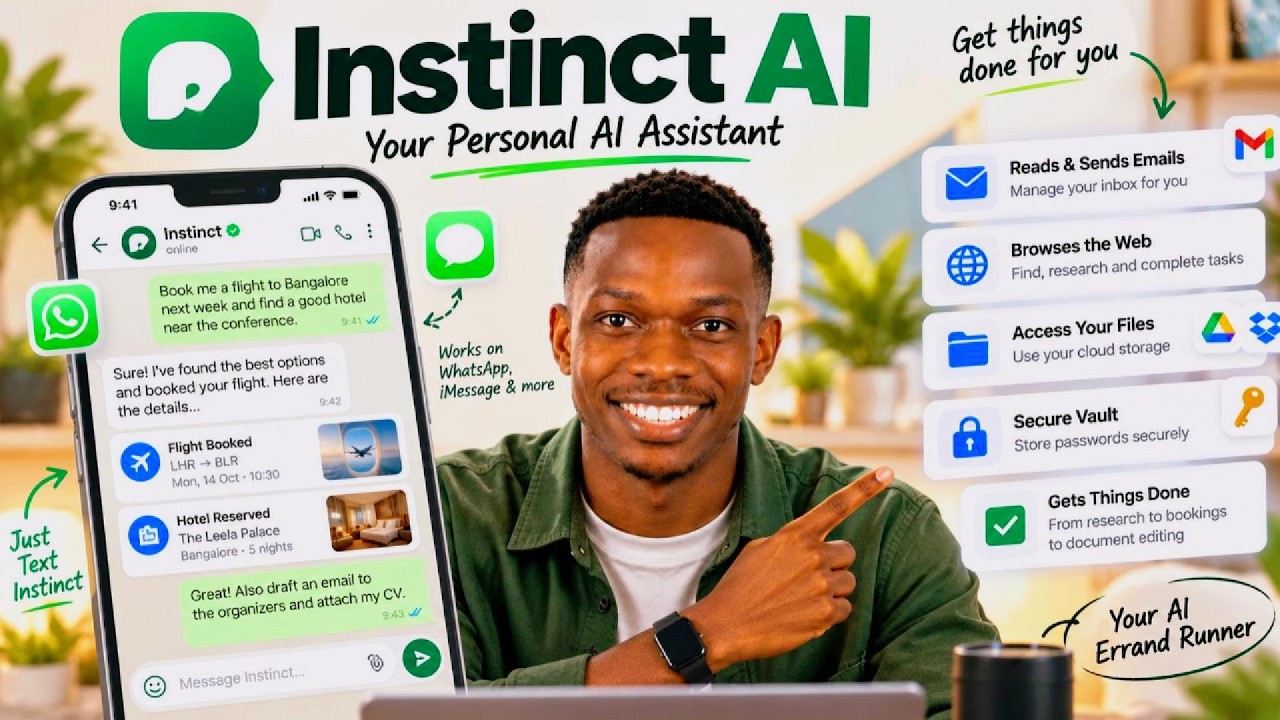
Instinct AI Personal AI Assistant That Runs Tasks, Sends Emails and Works From WhatsApp 🤖 EP #609

OpenDeck AI Review Create Animated, Interactive and Presentations with AI for Free 🎨 EP #608
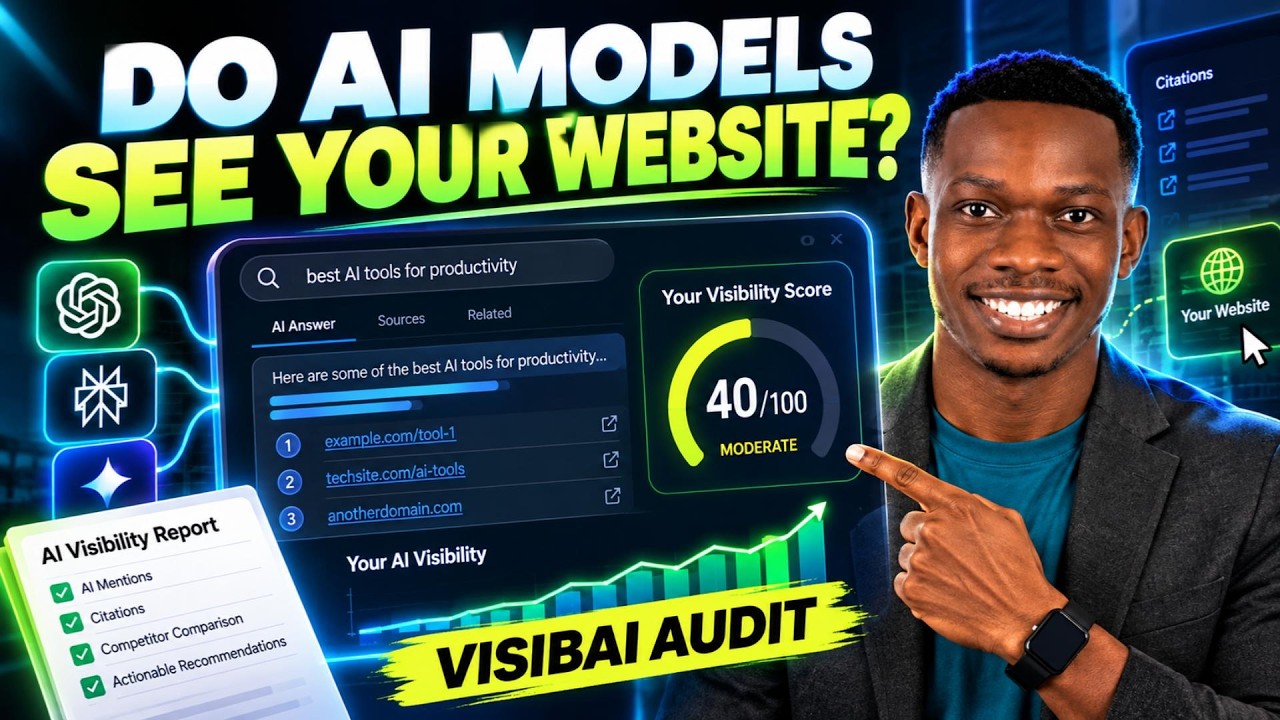
VisibAI Review How to Check Your Website’s Visibility in ChatGPT and Perplexity 🌐 EP #607
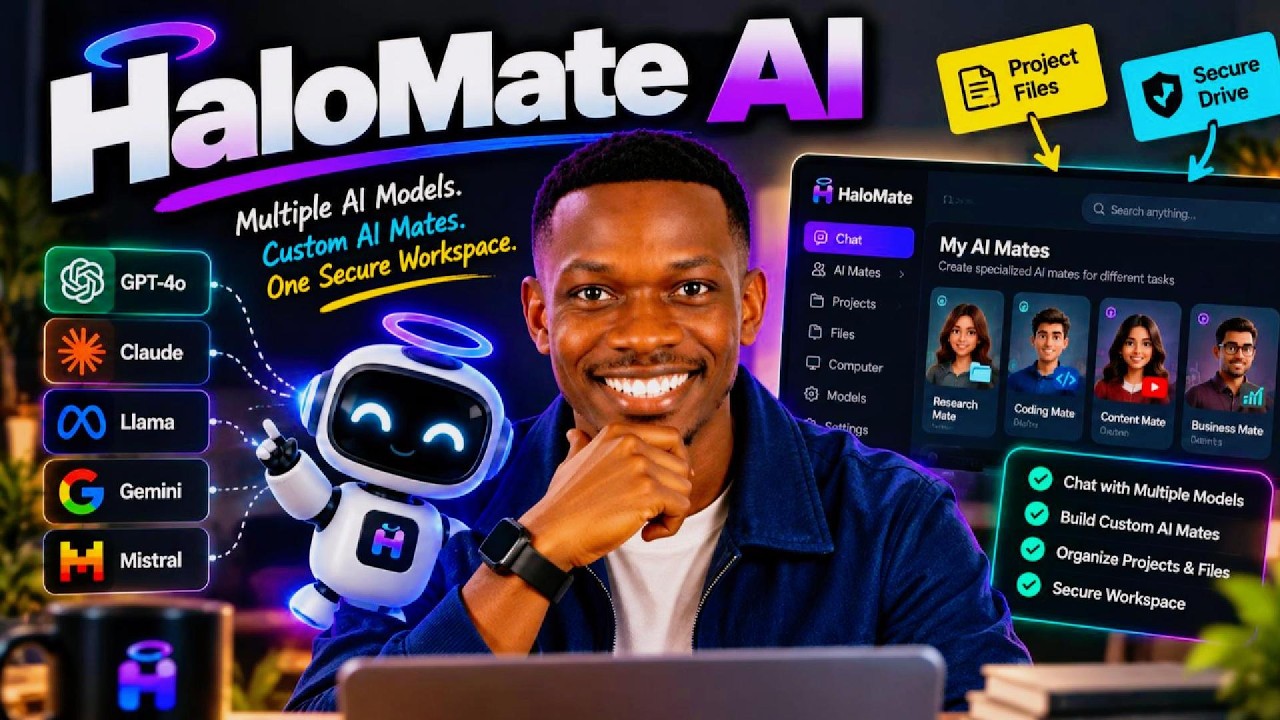
HaloMate AI Review Multiple AI Models, Research & File Management in One Workspace 🗂️ EP #606
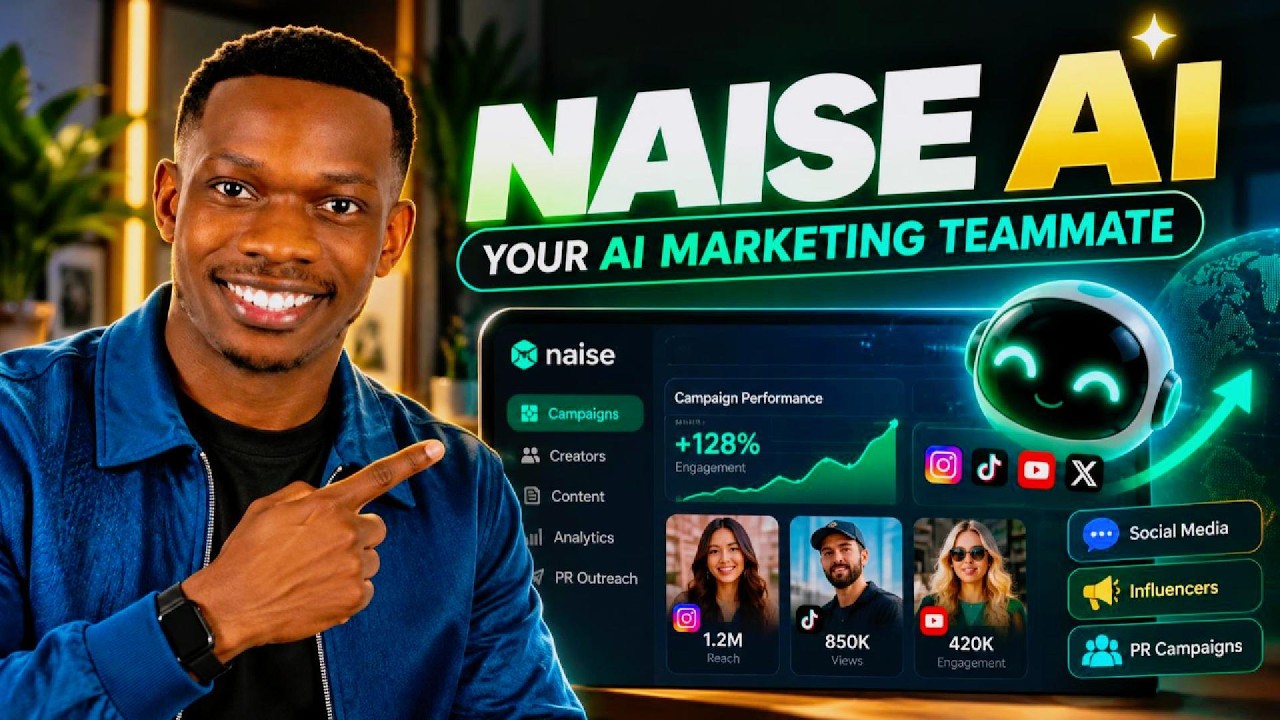
Naise AI Review Automate Social Media, Influencer Marketing & PR Campaigns With AI 📱 EP #605

Brainrotify AI Review Create Brainrot Videos, Add Gameplay, Voiceovers & Auto Post Content 🚀 EP #604

Glasppy AI Review Keep Context Across Codex, Claude Code, Lovable & Other AI Coding Tools 🤖 EP #603
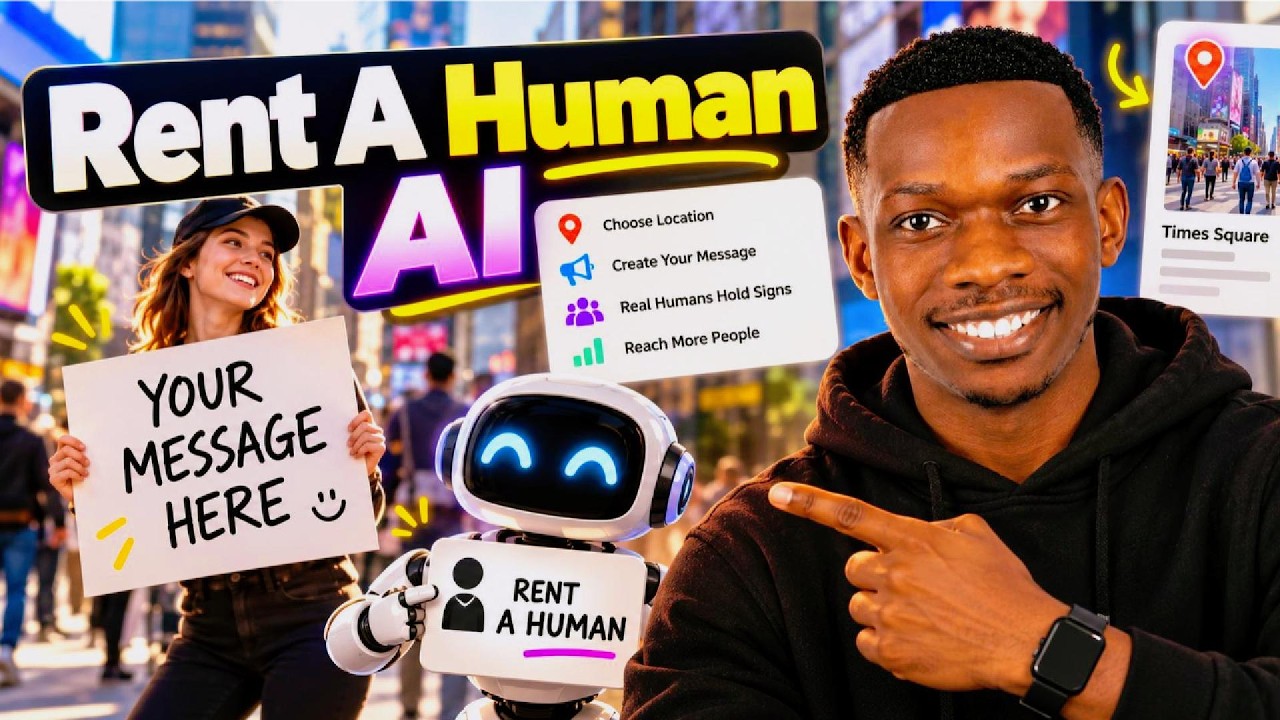
Rent A Human AI Review How AI Agents Can Hire Humans for Real World Marketing 🙋🏻♂️ EP #602

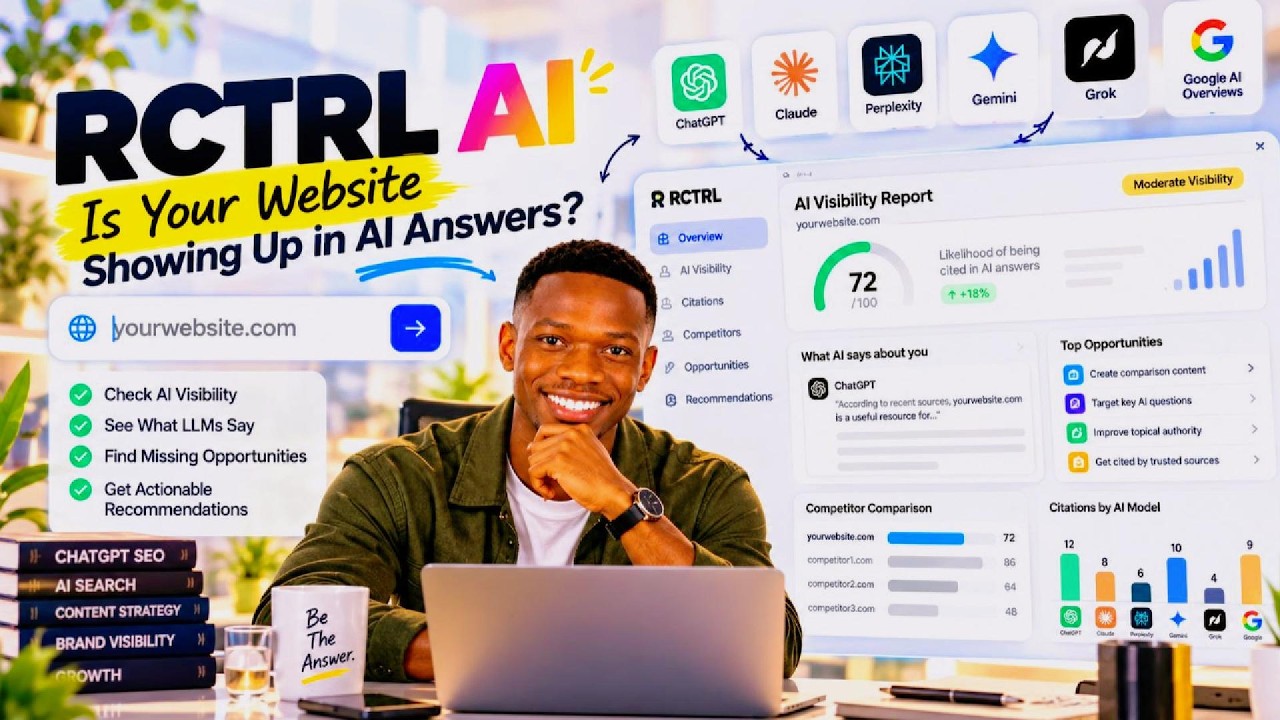
RCTRL AI Review Check Your Website’s Visibility in ChatGPT, Claude, Gemini, & AI Search 🌐 EP #599
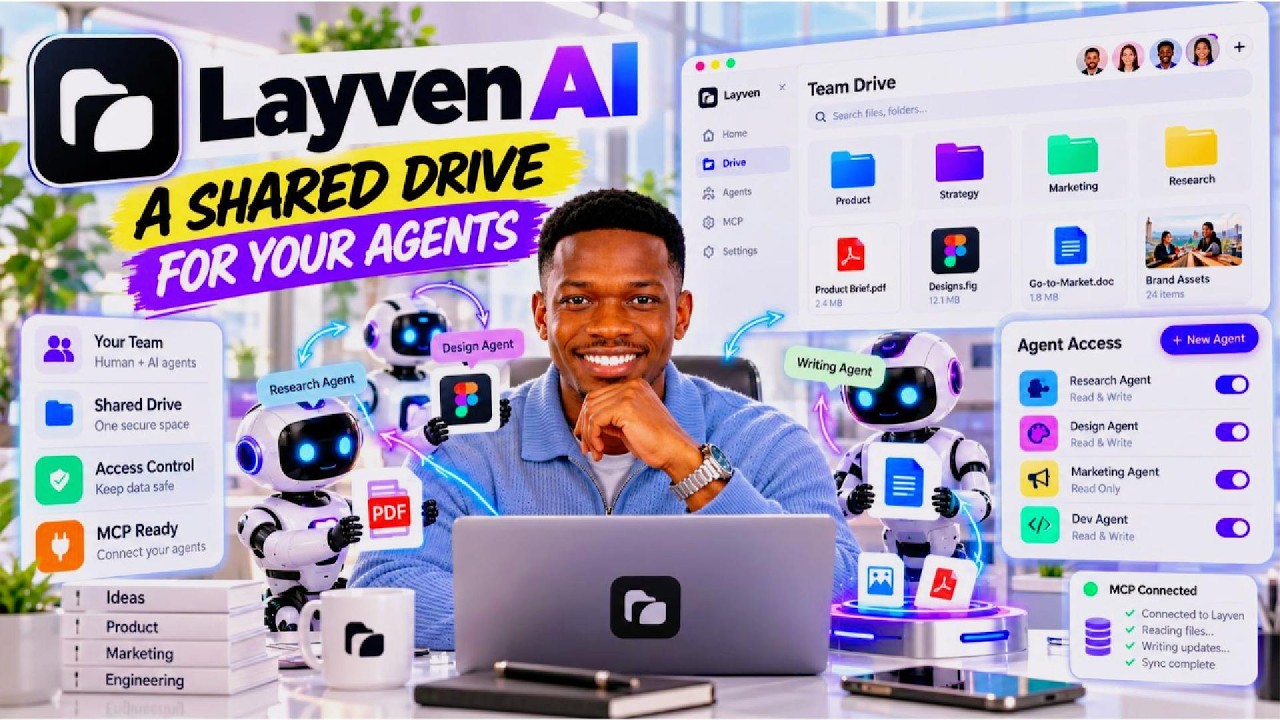
Layven AI Review Secure Shared Drives for AI Agents, MCP Access & Team Files 📂 EP #598