3/16/14: The Evil, The Foolish, The Wise

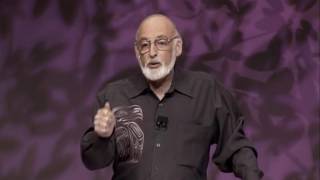
Dr. Henry Cloud divides people into three types based on how they respond to truth: the wise accept it, fools reject it, and the evil attack it. Leaders should coach the wise, set firm consequences for fools, and protect their organization from the evil.
Chapters
Now, I did tell you we were going to have a special guest, sort of, I told you during our Help My Family Is Weird series that I got to go and spend some time with Bill Hybels. And he had a guest there, Henry Cloud. And it was interesting because we had just talked about Henry Cloud's material in the Help My Family's Weird series. We talked about boundaries. Remember we talked about that quote that he shared with us there in that smaller group setting that love is unconditional, trust is earned. And in that session, he talked about a talk he had given at Summit a couple of years ago, and it was called the Foolish or excuse me, yes, the Foolish, the evil and the Wise. And he had talked about that and addressed it, and it was such a powerful talk. I immediately remember the talk. And so to give you a little taste of Leadership Summit, now, during summit, we put a big screen right here. Okay.
So.
And we create some kind of decorational consistencies with what they're doing. So it very much has that feel like you're in the room, great feel. We weren't able to do that this morning, but I do want you to be able to hear this talk. It is a fantastic talk by Dr. Henry Cloud and you are really going to enjoy it. So why don't you just take just a moment and give a warm river city Welcome to Dr. Henry Cloud.
In my work, which is mostly spent with CEOs and executive teams talking about all the things of leadership and, you know, always go into thinking, this is great, we're going to talk about vision, casting and being a change agent, aligning behaviors and cultures and all this sort of stuff. And I swear it happens every time. It is just not that long into the conversation before the topic turns to that guy, I got this guy.
Or.
This woman I don't know what to do with, the CEO will say or the leader will say, and I'll say, well, what's the deal? And we'll go into a process that they think, and innocently so, is so unique that they've got this person and these are people that lead sometimes very significant things. You know, CEOs of big public companies, tens of billions of revenues and tens of thousands of people, a lot of experience. And all the way down to smaller firms and churches, leaders with experience, but they think it's unique, but it's not. And once you understand that this guy that they're having problems with is not that unique, he. And you got the formula. I promise you, and you'll get your $0.05 back if this isn't true, if you can implement what we talk about here today, you can literally save years of time. But more than that, I'm going to start with kind of the end in mind here. More than that is this. Wherever you are, God has called you to be a steward over a vision, a steward over a vision for the specific reason of changing something in a community or a world or a family or a nation. And here's the big leadership question for this moment. Are you going to allow this guy to stop your vision or this woman that may report to you or be on a team or somewhere? And the topic today is what do you do with that kind of person that may be, as we will see, very, very gifted. Maybe the smartest cookie at the table may get great results, but there's some issue that is not changing with them that robs you of your joy, keeps you up at night, and also sometimes has the power to stop an entire organization, to stop, to stop an entire mission through either non performance or their divisiveness or just what they infect the system with or whatever the issue is. So in this session we're going to talk about a simple tool to begin to figure this out. Now I'm going to give you the orienting question and basically we could find a lot of words for this, but it's this. What does a person do when the truth comes to them? That's the diagnostic question. As you evaluate your people, what does a person do when reality comes to them? All systems of leadership will tell you that one of the biggest first tasks of the leader is to figure out what reality is and then to make that reality engageable and workable within what you're leading. But what do you do if you've got people that you're trying to give reality to and they're allergic to that reality? That's our question for today. Now, I'm not going to act like feedback is easy to receive. How many of you just love to get feedback, right? I mean, sometimes it's hard. I've been on the road a lot and I was getting fat again. You know, I lose my routine, I lose my structure. And so I read one of my stupid books and it says it drives me crazy. I see the same principle all the way through where your maturity is not strong enough to do something, add external structure. I go, okay, so I hire a trainer. I go, all right, I'm not getting this done on my own. So I get a trainer. So I go to the gym, I hire this woman. And she is tough and she's working on me, but I'm actually kind of proud of myself because I am doing. I'm doing all the workouts. You know, she's beating me up every day, and I'm in there and, you know, it's all going well, and I've been in it for a little while at this point, and one morning she's just beating me to death. And it dawned on me, and I looked up and I said, oh, no. I stopped. She said, what? I said, we forgot to take the before pictures. This is an awful waste. She looks at me and she says, oh, we still can. Feedback is not that easy to hear sometimes is what it is. But, you know, sometimes our feedback's not that great either. I remember one time when I was in graduate school, I had two German shepherds, and I lived in a small duplex, and the houses were close. And I was watching TV one afternoon, a golf tournament. There's a knock at the door. I go outside and there's a police officer at my door. And I said, yes. And he said, well, I gotta talk to you. We got a complaint. I said, what's the complaint? He says, cruelty to animals. I said, cruelty to animals? He said, yeah. Do you have two large dogs? And I said, yeah. He said, well, we got a complaint you're cruel to them. I said, these are the most pampered dogs in Southern California. I mean, I take them out to lunch at restaurants, I travel. I put them in the dog hotel. They got cable. I mean, come on. He says, well, it's what it says here. And I said, well, specifically, what does it say? And he says, well, you don't feed your dogs and you don't scoop their poop. I said, officer, You're going to have to pick one of those. He's looking at this. I said, if I ain't feeding them, there ain't no poop. Because it's kind of stupid, isn't it? Okay, so some feedback. It's our fault. But I'm going to assume for this session that you're giving good feedback and there's all sorts of guides on that. And in Necessary Endings, I've got a guide on that. You can find stuff out there. I'm going to assume you're good at it. But here's the problem. You make an assumption as a leader as well, and I know you do because I've worked with you. And here's the problem. You are probably at this level of leadership, you're kind and you're responsible. And when you're a kind person, a responsible person, what happens when somebody comes and gives you feedback and they show, you know, that report you wrote or that talk you gave or that meeting you led, you, you know, it kind of was not so here. You ought to change this. And what you probably do, which is why you got to where you are today, is you listen and you go, oh, really? Tell me how? And you take that feedback and you adjust and you're thankful for it and you get better. Now, the problem with you, because you're like that, you lead like that and you think other people are like you, well, that would be nice if we lived on Mars. But on planet Earth, not everyone is like you. And in fact, the Bible teaches very specifically. And all psychiatric research and all leadership research will also tell you that not everybody's the same. And therefore you cannot deal with every person you lead the same. And that's what nice, responsible leaders do. And that's where they make their mistake. You've got to diagnose who you're talking to and then deal with them appropriately so that you will not lose your mission or your joy. So what we're going to do is we're going to give you three categories of people. Now, I hate systems that put people into categories, but this is just true. I'm sorry. Actually, I didn't make it up. You know, it's right there in the pages of the Bible. But it's also documented by a lot of other research, which uses a little friendlier names, but let's use the ones the Bible uses. It says that some people are wise, some people are fools, and some people are just plain old bad. There's some bad people out there. And you know what? The larger your organization gets, the more likely you're to gather these. Now, sometimes if you begin something, you don't have them in the beginning because you start with friends and people, you know, and all this. But then people hire people and all that, and things just can get out of hand. But you're going to find these in the population, okay? Now, if you're not comfortable saying that there are groups of people like this, which is kind of not true anyway, because the reality is all of us have all of these parts. It's just some people kind of make a career out of one of them now. And we're going to camp out there for a second, okay? But let's get the easy one out of the way first. What is a wise person? The definition or the description of a Wise person is this. When the light comes to them, that person adjusts themselves to match the light. When the truth comes to them, they change something themselves or something to match reality. That's wisdom. What does the Bible say? Correct a wise person and he will be wiser still. So how do we get better? We have a character that listens to the light. Sort of like the story I told yesterday at the breakfast. I said, you know, there's a dog food company and sales are bad. And dog food company owner says, fire the marketing team, get new packaging. Sales still say bad, you know, the next quarter, fire them. Sales still are bad, Fire them. He does this for about a year. Finally, a little guy in the back raises his hand, says, sir says, yeah. He says, the dogs don't like it. You know what a wise person does at that point? We tweak the formula. But some people are so stuck. We'll get to them in a minute. But the wise ones tweak the formula. We listen to the truth. There's another quality of the wise person here, and this is one that I really love, is when you confront them, this is what you see. You get a smiley face. They thank you.
Thanks.
I appreciate that. We can still take the before pictures. That's good. I remember I was doing a retreat for a small group of pastors that go off once a year. They're from all over the country and they lead big things. And the first night I got them together and I said, so tell us what you want from this retreat. And the first one says, well, I'm in an awful place. I built this ministry with my best friend. We had been together since youth working days. Said he just split the church and left and started a new church right at the end of a building program. He said, I'm just, I don't know what I'm going to do. Turned to the next one. He said, my wife hasn't spoken to me for six months. I turned to the next. And he said, well, it's opposite for me. Things are growing and booming. I don't know what to do with all the success and growth and I need help in dealing with that. I turn to the next one. And he was sort of a young kind of up and comer that they had included because they wanted to build into his life. And I turned to him and I said, what's going on with you? And he said, man, I already got what I need. I said, what do you mean? He said, these guys are my heroes. I just found out they're as Screwed up as I am, so I can go home now. I said, well, tell us your story. And he told us his story.
And.
And after a little while, one of the older, wiser, experienced pastors interrupts him. He says, do you want some feedback? And I'll never forget this. That young pastor leaned forward and, you know, you see the physiologic, his pupils dilated, he leaned forward, he opens his facial muscles, shrinks, diagnosed stuff like this. And he says these words. He says, yeah, man, give me a gift. See, David said, a righteous man will strike me and it will be a blessing. And that's the description of the wise. So they thank you. So what do you do when you're leading a wise person? What are the leadership strategies? You talk to them. Talking helps, somebody's listening. So you coach them, you give them feedback, you resource them. Now, these are the easy ones, so I'm not going to spend a lot of time here, but let me give you the leadership kind of challenge with them. With the wise person, the challenge is this, to make sure that they are a match for what you need. You can have wise people that aren't gifted and they're not going to make it either in the things that you're wanting them to do. So they got to be a match. Bill talked about that earlier. They got to be in a place where you haven't outgrown them. Okay. And then you got to give them good feedback and coaching. And then the third one is, you have to keep them challenged appropriately. So I'm not going to spend more time on the wise ones because they're the ones that are easy. Now, let's get to the group we know and love, the fool. What's the description of the fool? A fool basically may be the smartest cookie at the table, they may be the brightest, and they may be the most gifted. And oftentimes, I'll tell you this, they are. And that's how they've gotten as far as they've gotten with this other character problem they have because they are so gifted and because of the results they can get and their charisma, and they really do produce a lot of times. But here's the problem with the wise person. When the light comes, they adjust themselves to the light. With the fool, when the light shows up, you know what they try to do? They adjust the light. It hurts their eyes. They're allergic to it, and they try to dim it, and they try to adjust the truth. See, this person changes themselves. The fool will try to change the Truth. There's a number of ways to do that, to excuse it, minimize it. Well, it wasn't that big of a problem, or it's not that big of a deal, or, or. No, you're overestimating that. Or they shoot the messenger. That would be you. Well, if you would just give me more responsibility. You ever heard that one? If you would just resource me more. If you. If you. If you. And whenever you hear feedback going to somebody and the first reflexive move is external, let that be a warning sign, because they're squinting at that point and what they're doing. I'll give you a list of them here. They deny that it's reality. They minimize. They externalize it. They shoot the messenger. And see this smiley face here? Not what you get. They're not happy to hear this. And a lot of times they. They get angry and they'll go have the meeting after the meeting and find somebody and kind of merge with them in a triangulation. And now you're the problem. And that's how splits begin to happen many, many times. It's how companies are divided, teams are divided, and sometimes churches as well. So you've got this behavior. Are you guys recognizing some people here? Okay, now, if you brought that person with you, you might want to have a little chat right now. Not yet. I haven't given you the tools yet. Okay. I remember I was in a meeting with the CEO and one of its VPs, and they had a big, big, big, big, big product launch, and it didn't go well. And part of it was because the advertising buy had not been done well at all. And it was because the marketing guy had not really gotten it all done well, timely and all that. And so the CEO was given a review. And he instantly says, well, you know, it's because the networks had promised us this time and they had sold. And the CEO says, well, you know, dealing with the networks is. That's under your watch. He said, yeah, but by the time. And then he goes into, you know, the production group, that was. That delayed. And this, that. And the other CEOs going, yeah, but you're in charge of the. And he kept saying this and saying this and saying this. And so finally I interrupted. I said to the CEO, what are you feeling right now? That's sort of a shrink thing to do, right? I try not to do that in business settings often, but I could see it in his face, and I thought it would lead to something. And it did. And this is what it led to. One of the Most important feelings that you can have as a leader. Hopelessness. I turned to the leader, to the CEO. I said, what are you feeling right now? He goes, I don't know, man. I'm kind of hopeless. I said, exactly. You know why? Because the problem's not in the room. It's very hard to solve a problem that's not in the room because every time you talk to a person like this, they do not own it, and the reality is right there. But they can't make real themselves part of the problem and own it and take it in. And when you get hopeless about that, that's one of the best things that you can ever do as a leader. Because you know what a nice, responsible leader does. A nice, responsible leader has hope. Has a nice, responsible leader has hope that a fool is going to one day start listening. Of course, you've had this conversation 63 times, but today's the day, and you've talked about this problem. You know, over here, if you talk about problems, you talk about problem A, and it goes away, and then B, and it goes away over here. It's like a, a, a, a, a, A. He'll send you to AA after all this, right? And see, that's the deal. You got to get hopeless. You know the definition of insanity? Continuing to do the same thing, expecting different results. So here's what the Bible says, and here's what all research would validate with the wise person. You talk to them. Why? Talking helps. Confront, rebuke, correct a wise person, and they will love you for it, and they will thank you for it, and they will get better. So talk to them. But then the Bible changes its tone or its advice, and it says, do not confront or correct a fool. It gets even better. It says, lest you incur insults upon yourself, that's to shoot the messenger. Do not confront a mocker, lest they hate you. And if you look through these verses, it's incredible. It describes reality like you've never seen it before. And it basically says, here's your strategy. Stop talking, stop it. You know why? They have stopped your vision. They stopped the plan. You're no longer in charge of your mission. Their allergy to reality has now gotten in charge. And it's your job as the leader to. To take stewardship over this and stop the insanity. So we stop talking and we have a different kind of a conversation, and we call them in and say, you know what, Joe? You know how we've talked about A and a and a and a and a, talking about problems and all these issues. You know what? I don't want to talk about problems anymore. I'm kind of done talking about problems. I want to talk about a new problem. I want to talk about the problem that talking about problems with you doesn't help. I want to have that conversation and you begin to get out of the weeds and you take it up to the pattern that I don't know how to give you feedback in a way that it changes anything. I'm hopeless. So let me tell you what I do when I'm hopeless. I've got. I've got to protect our vision. I've got to protect the next quarterly result, quarterly results. I've got to protect the culture of this team or whatever the problem is. And we're going to stop talking about the issues and we're going to talk about this issue that talking doesn't help and we're going to do something different. I'm going to have some limits here because I'm going to limit my exposure to this problem. And if that means that I can't have you be in charge of this project, I need to limit my exposure because I cannot lose another product launch or I cannot lose another ministry launch, or I cannot continue to have meetings with people that you've gone in and blown up at and they come crying into my office. I'm going to limit my exposure to that. What I want from you is I want to know how I can talk to you where what I talk about makes a difference. Can you please tell me how to do that? I really want to do it. And this is where you get soft and you get loving because it may be that they're foolish for shame reasons or fear reasons, that they give excuses and this, that and the other, because to own something makes them so bad. And if you can get to, you know, why is it hard for you? What do you feel when I correct you? And some of them will get honest and say, I just feel so bad. I was in a meeting not too long ago and saw a high level leader actually start to tear up. And he said, I don't know, I just feel like I've let everybody down. And that's when the team rallied around him and they connected for the first time and he could hear it. And so if you ask them what is it about this that's so hard? And if they say, well, because you and it's true, then fine, I won't do it like that anymore. How, how do you want it? People want feedback in different ways. You want Me to send flowers when I give it to you. What do you need? Let's find a way that it works. But then you go to a second question. Okay, I'm going to do that, Joe. But I want to know this. What will we do if I do it and then it doesn't happen? I want to plan so we know if we have this conversation again and I do what you want and nothing changes, what are we going to do then and there you get specific about what the consequences are going to be. Now they might say, well, can you show me that I'm doing it again? And see, now you got a listener. But if they don't, you got to have consequences. It may mean that they get moved out of the position or it may be, in some cases you give them a chance to go be successful somewhere else. There are extreme consequences, there are minor consequences. But here is the principle. Fools do not change with truth coming to them that they can get rid of. Fools change when truth comes to them that they must camp out in and feel when the pain of not changing becomes greater than the pain of changing. You know what I love about fools, besides being a recovering fool? There's great hope for fools. Jesus died for fools. All of us are foolish to some degree. And if we can lead them right instead of thinking they're listening and realizing they're not listening and lead them with consequences and structure, then fools can change. And you can redeem a career and a position and a giftedness if you do what leadership requires. But that takes guts. And sometimes these are the hardest calls that you ever made. So what have we seen? You got the strategy changing and the leadership change here or the leadership challenge here. I said earlier it was to match, remember, to match the giftedness and then to give the good feedback, then challenge them. Well with the fool, the leadership challenge is you've got to limit your exposure. You've got to make it clear about the consequences, you've got to give them a choice, and then you've got to follow through. And I say it like this. I usually have have leaders say to these people, you know what, what I need in that chair that you sit in, in that position, I need somebody that can hear what we need and can hear reality. And that's what I'm going to have in that position. I hope that's you. I want you to be in that chair. But that's what that chair is going to require. And you get to make the choice as what you're going to do. And then lastly, I Wish I didn't have to do this, talk about this category. Won't spend a lot of time on it. But if the strategy here is to resource people, because wise people, you know, I've told you about them, evil people need a different strategy. You know why? Because they have destruction in their hearts. They want to inflict pain.
And.
And I've seen this, and you've got to believe it. If you're an optimistic, loving person, it's so hard to get you to believe that there truly are bad people in the world. And sometimes when you try to give them truth. And I've seen it in board meetings. I've seen it at high levels of leadership. I have seen people stand up in a boardroom and turn and point their finger and say, I will bring this place down. Destruction is in their heart. And that's why the Bible says, where Paul writes to pastors, reject, reject a divisive person after a second warning, have nothing to do with them. And there are people, and there are people in churches sometimes that you can't talk to because they're evil. You can't fix them by giving them feedback. So we have a different strategy. And over here, it's lawyers, guns and money. Lawyers, guns and money. We go into protection mode. And you say, I'll only talk to you through my attorney. And you get ready because they're going to sue you. And you give funds to that. And sometimes you have to call the police. And I've seen it happen. That's just a little piece of advice for you leaders who are so loving that you cannot believe that anybody would be like that. They very well could be sitting in one of your pews, and the Bible promises that they are. So I'll leave you with this. God has called you to lead people, and sometimes it's not about the plan. There could be five good plans. It's about getting the people to be able to work the plan. And that's what leadership often comes down to. And in your army out there, you're going to have wise ones, fools and evil ones take the leadership challenge to not let somebody's character problem stop your mission that God has called you to. God bless you.
Wasn't that awesome? That's some wise counsel I did. You can just tell that Henry's not in Texas because you don't do the whole, we use, you know, lawyers, money and guns, okay? Because in Texas, they hear the guns. Like I told you, man, I'll take care of that right now. You know, I know you've Got your concealed and carry? Put it away right now. Okay. Listen to. Listen to Proverbs, chapter 9, verse 7 through 9. Whoever corrects a mocker or a fool invites insults. Whoever rebukes the wicked or the evil incurs abuse. Do not rebuke mockers or they will hate you. Rebuke the wise and they'll love you. Instruct the wise, they will be wiser still. Teach the righteous and they will add to their learning. That is just good biblical sense. But I. I know some of us resist the idea of classifying people, you know, because, like, oh, I don't want to write someone off as foolish or evil. Understand something. We got to sin nature, folks. Every one of us has the potential in our flesh to be foolish and even to be evil. That's what Jesus Christ came to redeem us, to save us from. But a wonderful gift is that simple question. For me, that big takeaway was just to look and say, how does a person reduce. Respond to the truth? When the truth is turned on, when the light is turned on, how do they respond? And I found that to be such a helpful thing, and I wanted to share that with you guys and also give you just a sample of the kind of stuff that happens at Leadership Summit. I want to encourage you to be a part of that because, man, I've had God say some powerful things. I've had some training that changed my leadership. I've had some things that affected my parenting. I've had just a great, great opportunity. So please take advantage of that. Next week, we're starting that new series talking about whatever happened to worship? And it's going to be such a practical series that you're like, well, that's about spiritual stuff. I know we're spiritual beings, and so much of our lives stems from what we worship. And so we're really going to break that down and we're going to see some very, very significant things that emerge. I believe that Willie's got a couple things for us before we go. God bless you guys. I hope you have an awesome week. I'll see you next week.