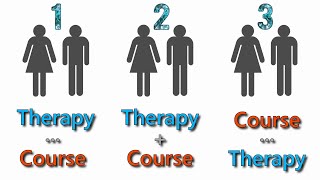
Jeremy Smith (video "When to start Counseling or Coaching (intro part 4)") recommends beginning counseling or coaching as soon as possible during recovery, arguing one-on-one work is essential for both the addict and the betrayed. He presents three couple case studies showing different sequencing (therapy-first, simultaneous course+therapy, course-first) and reports that couples who started course and therapy simultaneously progressed fastest. He advises a practical rhythm: each partner working the course 1–2 times per week over a 23-week interval, with therapy/coaching often every other week (weekly preferred if possible). He also points viewers to two articles and links to begin counseling/coaching and notes he can provide therapy in Nebraska and coaching remotely.
Questions this video answers
June 13, 2023
Couple two — started the course and therapy at the same time
A 23-week interval for each participant
One to two times per week
Every other week (with weekly preferred for faster results)
Chapters
The fourth category of how to engage is when to start counseling or coaching. The simplest answer to this is as soon as possible. Time and again, it's been shown that one on one therapy is absolutely essential for the best recovery outcomes, both for the addict and for the betrayed. That being said, I want to show you three case studies of couples who have done it differently. Couple one started with therapy with me first and then later added this course. Couple two started both at the same time. Couple three chose to do the course first and then add therapy later. All three experienced great outcomes, but the difference was how long it took to get there. While it's not a race, the less time you have to spend in the slog of the early recovery stress, the less your overall trauma and grief will be. So in a sense, quicker is better, but not at the cost of depth and thoroughness. Returning to our three case studies, the couple whose progress was quickest was actually couple two. The ones who started the course and therapy at the same time. They hit certain markers of growth in about half the time of the average couple. Next, quickest progress was made by couple one, who started therapy with me first and later added the course. The slowest couple who still achieved great outcomes but took the longest to get there was couple three, who did the full course first and then when complete, started therapy. As I mentioned in the last chapter about my role and how there's no perfect ideal timing, I want to again remind you that your pace is yours to choose based on a myriad of factors that you and your spouse alone know how to navigate. However, if it were up to me, based on the 16 years of personal experience and over a decade of professionally watching couples set their pace, I would strongly advise doing what couple two did, hitting the course and therapy or coaching hardcore in order to minimize the early slog of recovery. Once you decide to start coaching or counseling, the next question becomes how often. When I first started marriage recovery work, this course was not yet created so couples could only get comprehensive care by seeing me in person. Because of that, they often both came weekly or at minimum alternated weeks so that someone from the system was still making progress with me. Every week after this course went live, couples found that they could reduce the frequency and still make similar progress. Now my clients often do both parallel working on the course one to two times per week, then seeing me every other week. This seems to be kind of a happy medium that is sustainable for the long run. For the couples that have capacity, weekly is still an ideal option and tends to achieve faster results. This is exactly what couple two did and it's exactly why they reached most of the progress markers in half the time that most couples do. So in summary, I recommend starting counseling or coaching as soon as possible, each of you doing separately a 23 week interval while weekly working through the course content. Below this video you should find two articles about what is most helpful in the recovery journey. I encourage you to read them and take to heart what hundreds before you have come to realize was needed for a full recovery. You'll also find links to get started with counseling or coaching. If you live in Nebraska, I can provide counseling as a mental health therapist. Otherwise I can provide coaching to anyone anywhere as a certified life coach which allows me to do most of what I do as a therapist since a majority is recovery coaching anyway one way or another. Let's connect and discuss how counseling or coaching can help you accelerate your healing.