Your Recovery Questions Answered - August 2023

Jeremy Smith (creator/uploader) hosts an August 8, 2023 YouTube Q&A (Marriage Recovery Course) answering six subscriber questions about post‑betrayal recovery. Key points: love typically returns only after safety and trust are rebuilt; recovery commonly takes ~3–5 years (some couples 1–2 years with intensive, collaborative work); formal therapeutic disclosure (often including a polygraph) and a 3–6 month verification window help end detective/hypervigilant behaviors; betrayed spouses can and do become whole/confident again through solo, group, and professional work; betrayed partners should "trust the behavior" (not force trust) while the betrayer provides months of consistent trustworthy data; pornography sits on a spectrum of infidelity ("flesh line" marks physical contact) and can be considered a form of infidelity depending on motive/context; full recovery succeeds when both spouses and the marital system work in coordinated therapy.
Questions this video answers
August 8, 2023.
Approximately 3–5 years (with some couples reaching recovery in 1–2 years under intensive collaborative treatment).
Often a matter of a few weeks to a couple months; ideal timeline he cites is between 3–6 months.
He cites 12 years of professional work and 17 years in the recovery journey personally.
Chapters
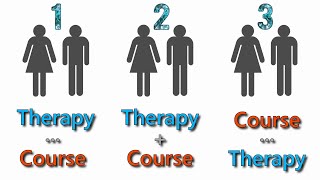
In this episode, we're going to talk about getting the love back, how to stop being a detective, becoming a fully confident woman again, rebuilding trust in marriage, discussing whether pornography should be considered infidelity. And lastly, discussing the role of the betrayed spouse in the healing of the marriage. Alright, let's do this. Welcome to this month's Q and A. I'm excited to cover six specific questions that were submitted by subscribers of the Marriage Recovery Course. The first question that was submitted was how do you get the love back? I just don't feel the same about him. Well, here's an off the cuff answer. The truth is you won't ever feel the same about him as you did before betrayal. That is part of an old system that has now graduated and gone. So in a lot of ways it's probably healthier to not pursue feeling the same as you did before betrayal, but instead pursuing something that is healthier, more rich, more full and honest, based on truth and trust. So how do you get the love back? Well, love is built on safety. So before one is going to feel love towards a spouse, it's important to rebuild that safety. That's a complex process and oftentimes it's assumed to take three to five years after betrayal for the recovery process to fully be considered complete. Sometimes I've seen the couples that do the marriage recovery course get that done in like a year to two years by working collaboratively with both husband and wife and the marriage system under my guidance. But how you get the love back is a process that takes all three. The husband doing his work, the wife doing her work, and then the system working together as a marriage to work on their work. It will take time, but that love does come back, but only after safety and trust have been re established. So if the goal is to get the love back, you're going to have to put that on hold and get the truth back and the safety back first. Our second question this month comes from a female subscriber and she asks when does the overwhelming need to be a detective to confirm the truth end? This is one of the common symptoms for women who have been betrayed and consistently lied to. There is a timeline of belief of what the marriage used to look like and who this person was. Only then to discover there's now a second timeline that's been running parallel underneath. So now everything is in question. So the short answer to this question is no sooner than formal therapeutic disclosure is complete. And oftentimes formal therapeutic disclosure includes a polygraph exam to verify the accuracy and completeness of the disclosure, it is specifically because there's been denial during this timeline that everything in this timeline is now questionable. So the truth timeline of what's been happening underneath, that often needs to be verified by a polygraph exam to settle once and for all, there is no more deception until the time comes that that deception is absolutely nailed, destroyed, and there's no more possibility of alternate narratives, of alternate timelines. There will always be a tendency to try to play detective. Sometimes in the PTSD world, they call that hyper vigilance, checking on, following up on, monitoring, all out of an attempt to control what your spouse is doing. Now, while that may seem like a negative judgment, really, that desire to control comes out of the fact that a person feels so out of control. If this was the narrative you believed, only to find out this narrative underneath was happening the whole time, There's a huge sense of out of control. So the natural response of the limbic system is try to regain control. That can really best be done through a formal therapeutic disclosure process, which really should only take a matter of a few weeks, maybe a couple months at most. Ideally, the timeline tends to last between three to six months. From the clients that I've worked with, the third question is submitted by a female subscriber that says, did you ever feel like a whole, fully confident woman again? Now, granted, this question is directed specifically at betrayed women, and it's a question that we're going to answer in our upcoming course called Conquering Betrayal. So look below this video, you should find a link to that, and that's where we're going to have women who have lived through betrayal trauma answer that specific question according to their story and how their marriage played out. So I cannot speak to that directly as a woman, but I can speak to what I've seen over 12 years of professionally helping women through the betrayal trauma recovery process. So I'll answer it from that lens. So did these women ever feel like whole, fully confident women again? To answer that question directly, yes, absolutely. And in a lot of ways, they felt more whole and complete after doing the betrayal trauma recovery work than they ever did before. In a lot of ways, we develop maladaptive coping mechanisms and unhealthy strategies for survival during childhood that then we continue into adulthood, get married, and then when the betrayal trauma hits, this event of betrayal usually triggers the work for us to finally go back and deal with all of our own maladaptive coping mechanisms, our own addictions, even as betrayed spouses, all of these things that we've ignored and avoided for A long time. So what's interesting is, yes, the women that I work with tend to feel after the three to five years, or in my case, the clients that I work with tends to be like maybe 2 to 3, they experience a sense of wholeness and completeness that they never knew during the first part of their life. But that takes a lot of hard work and a lot of time. And in the marriage recovery course, we teach about three different ways of approaching that. Solo work, group support work, and then professional therapy work. So all three of those things would be included to help a person get to that sense of whole, complete feeling again. So the answer is, I would say yes, absolutely, it is possible to feel whole and complete once more. This next question was submitted by a betrayed woman who wants to know, how can I rebuild my trust in him? And a second part of that question, what should he do to rebuild my trust? Now, I'm going to break this down into two separate questions. The first question is, how can I rebuild my trust in him? And the point blank answer is, you can't and you shouldn't try. For you, as a betrayed spouse trying to trust someone who has proven untrustworthy, that is a fool's errand and that is just a setup for more trauma and disaster. So if you feel responsible to rebuild your trust with your spouse, that's not going to work. That's going to be a recipe for disaster. Instead, it is fair to expect that there are things your spouse could do to rebuild trust for you. So they need to show that they are trustworthy. They need to have vulnerable honesty. They need many, many months of data points that show you they are working on their addiction, not just sobriety, but working on the underlying emotions, the psychological factors that led the addictive behavior and betrayal and infidelity. But as you watch the behaviors, then you will come to feel more trust and confidence in your spouse. That is not the same thing as forcing yourself prematurely to trust them, because you should. Rather, it's you trusting what you see right in front of you. One of the catchphrases we often use in the recovery realm is trust the behavior, not trust the words. So trust, usually. Again, like I've said before, three to five years is what is considered average. And it takes a long time to rebuild that trust. Now, when I work with both husband and wife and the marriage system together, what I notice is that trust rebuilds much faster because it's a collaborative approach where everyone's working together on the same goal and both parties are actually in lock step. During the trust building process. So there are things that your spouse can do to build your trust. It is not fair of you to expect yourself to automatically trust your spouse. You cannot force that trust. It must be earned. The fifth question that's submitted was actually submitted by a male, and he asked, should pornography be equated with infidelity? This is a hot topic issue for a lot of people, especially in religious circuits. There is sometimes a strong divider put between viewing pornography and masturbation that usually accompanies that and having sexual contact or emotional affairs outside of the marriage. So I want to teach you this idea. This is called the flesh line. So if we're going to think of a spectrum of fantasy, to ogling, to actually taking action of viewing pornography, to masturbation, to chatting with women online, this is a series of more and more progressively intense behaviors that lead to actual crossing what now we call the flesh line. At least I call it the flesh line. The idea that once you get out of the digital realm, the texting, the videos, the chatting, and actually meet with a human being and have physical contact with them, even if it's not sexual, we have crossed the physical, the flesh line. This flesh line now does have different psychological and emotional and marriage implications. On the other hand, there is also a trauma that occurs for the spouse that is the same for them all. It is a sense of infidelity. No matter what this spectrum of behavior may be, the consequence of that infidelity does change. The consequence of fantasy is not the same consequence as sex outside of marriage. However, the psychological experience of betrayal is very much the same between all of them. So, in short, should pornography be considered infidelity? If this is going to be viewed from a biblical perspective, Even the idea of lusting after another woman is described as infidelity in the Bible. So with that framework, I would say absolutely, yes, it's a form of infidelity. If, on the other hand, that term infidelity is being used as a weapon to verify and legitimize divorce, then there's a motive behind the term infidelity that I would want to explore with both spouses as to why they're using that term infidelity, and how they're using it. Is it healthy or is it a manipulation tool? I didn't think about the Bible reference that divorce was granted as a concession. But on the other hand, the work needed to rebuild trust takes both parties. So, in short, I would say pornography is a form of infidelity. Your motive for why you're using the Term infidelity is probably, in my opinion, more important than what term you actually pick. The last question that was submitted was also submitted via mail, and it's a long one. So I'm going to read through this and then do my best to validate and add some extra perspective on some of the topics listed. This question was also submitted by someone who leads men's groups. So they've watched multiple men attempt the recovery journey, trying to become sober from pornography, but also at the same time trying to repair their marriage. So he's got an interesting perspective on watching generations of men try this. So let's have a look at his statement, which opens up then some questions I would like to explore. I've observed that if a guy is working hard in the recovery process, but his betrayed spouse is not getting support and working her own issues, the guy's recovery process is going to be held back. They continue to trigger each other. Trust is not being rebuilt, but is on a roller coaster of ups and downs. It seems the wife has to work on herself or her relationship with her husband is not going to be fully restored. In short, I want to testify. Absolutely. 12 years of doing this professionally and 17 years of being in the recovery journey. Myself, as a systems guy, I have always noticed that if the betrayed spouse is not working on their own individual issues, some of them triggered or activated by the betrayal, but mostly on their own issues of their wounds, their traumas, their predisposition for certain maladaptive coping behaviors. But the addict is working on his porn addiction or her affair in this process. If only one spouse is working on their stuff, the marriage will not flourish. There will be no forward motion. And if you start thinking of it as like, percentages, think of it as three different clients. Him working on his, in this case, him working on his pornography addiction, her working on her betrayal, trauma, and then the system working together on how they navigate conflict, trust, rebuilding healthy boundaries, better communication. These are issues that take both spouses showing up in a healthy way. That cannot be done if both spouses are not working on themselves to become healthy individuals. So now as we look at percentages, that's like 33% here, 33% here, and 33% here. So if we're going to divide our attentions early on in the recovery journey, this is not where the attention needs to belong. This is where the attention needs to belong. Which means then if only one spouse is doing the work, we're now scoring a 33% success rate. That is a failing grade. Now, let's say Both spouses are actually doing their own work. This is good. We've now reached 33% plus 33%, which gives us 66%. Congratulations. That's a passing grade, but it's also a D in my book. That's not good enough, but D is still passing. Couples may stay married, they may get better, but they're not flourishing. What I like to see is him working on his addiction, her working on her betrayal, and then together, they're working on their marriage system, all three coordinated under one therapist. So it works together in unison, in lockstep, so that all three clients, him, her, them, are making similar progress at the same time. And when it all clicks together, they reach an A.33 +33 +33 gives us 99. Let's throw in that extra 0.3 for each one of them. Now we're up to about 100%. So this is what I would say is absolutely true in the recovery process, that it takes both spouses giving 100% of effort to work on themselves, not the marriage. Then as they both get individually healthy and working a year, two years through this process with the help of a therapist and a group and their solo work, then they start working on the system's work as well. Then they experience the flourishing and the safety and the bonding that was in a lot of ways, kind of like the Garden of Eden of knowing and being known, the intimacy and connection that finally they're experiencing after doing solo work and systems work. Thank you all for submitting these questions. These were great. So look for another Q and A in September. So thanks for watching this August one. If you look below this video, you should find notes about how to submit questions during the month of August that then I plan to answer in September. You can do that through the form that's going to be linked below. You can also email me directly@jeremyarriagerecoverycourse.com or be sure to, like, subscribe and follow this channel so you get notifications of Future Q&As, future trainings, future live events that we DO posted on YouTube or other recordings that I share just to help the community. All right, look forward to seeing you next month in the next Q and A.