It's Ok to Ask-Religion vs Gospel

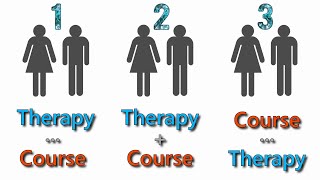
A recorded interview (YouTube) between Michaela Helevang and counselor Jeremy Smith exploring religion versus the gospel through personal testimony, pastoral/counseling insight, and scripture. They contrast religion (man-made rules, cultural systems, potential for power abuse) with the gospel (relationship with Jesus, grace, radical inclusivity), discuss why people are drawn to religion (safety, belonging), describe how systems can blend gospel and religion leading to abuse, and offer practical steps for disentangling them (solitude with God, compassionate self-work, read the four Gospels, discern leaders' motives). The conversation also addresses grief from spiritual betrayal, stages of spiritual growth, and healthy leadership (fruit over form).
Chapters
My name is Michaela Helevang and I was born and raised in what most people outside the group call the two by two system within the group, most people call it the way or the truth. And we left last May shortly after the revelations of the extensive child sex abuse within the group came to light. After having been born and raised in it for my whole life, which was a really difficult process. So today I am interviewing Jeremy Smith and Jeremy and I have a really interesting background of how we know each other. So my husband Brandon and I put, try to put a lot of emphasis on mental health and emotional health and well being. And about eight years ago we sought out Jeremy as a Christian therapist. And looking back on that time, that was actually the beginning of a lot of our questioning and deconstruction, I would say. But we saw Jeremy for a number of years independently. And one day we were out in the front of our house and Jeremy and his wife just strolled right on by and was like, hi, hi Jeremy. And they had moved almost basically into our backyard, into the house pretty close, right behind us. And so we just started running into them more frequently and developed a friendship and eventually had to have the conversation, are we going to pursue this friendship or are we going to keep this relationship professional with our families? And I thank God every day we chose friendship. And when all of this happened last year with our group that we loved, we loved the group, we loved the community. Jeremy and Sarah showed up in big ways for our family and we saw the love of God through them and they have helped us so much. And so Jeremy and I just had this, have had some. We've all had great conversations, great spiritual conversations. And, and today we're talking about religion versus the gospel. And that seemed to me to be one of the first questions I had to deal with. And it felt like Jeremy and his wife Sarah helped us a lot with that question. And so I thought it would be a great beginning interview to talk with Jeremy about his experience as well with religion and the gospel. So Jeremy, you want to talk a little bit about yourself?
You bet. That was a very kind intro. Thank you. I am Jeremy Smith. I was born and raised not inside the two by two ministry the way I was born into a family that was very moral. So we attended church and we. They picked a Baptist church. So my background is actually in the Protestant denominational evangelical religious community. So started Southern Baptist and then went to Germany for a year as an exchange student and didn't attend church at all because what I saw over there was dead Church buildings with very minimal spiritual life. So compared to what I was used to, I was like, I don't want to go to this because this feels dead. So then came back to America, went to college in Kearney, Nebraska and went to a Presbyterian church during that time. So experienced some Southern Baptist culture, experienced dead religion in Germany and then experienced Presbyterianism experience in Kearney. Had some great things that I learned there, grew there, but a very different culture. Then I moved to Lincoln. Oh, I'm sorry. During college. Then I went to Japan and I lived in Japan for a year as an exchange student. So while in Japan I got to study and be a part of firsthand experience. Shinto religion, Buddhist religion, and then just a hint of Tao religion because they're very close to Korea. I think Taoism comes from Korea. So in this we had three different Asian religions and I could very clearly see there's a lot of overlap in religious practices regardless of whether it's Christianity, Shinto, Buddhist, Tao. And then when I came back, I still kept going to a church though there was an Amer, an English speaking church in Japan that did bilingual. So I could listen to Japanese and listen to English and still get the gospel taught to me in a culture that is 0.1% Christianity, that is primarily Buddhist and Shinto. Yeah, it is crazy. So you talk about God's crazy story. In my life I was never in a two by two or anything that exclusive. But I did get to taste and experience lots of different religions along the way. And when I came back to America then as an adult I started attending a charismatic church. So again, a very different culture than Baptist, than Presbyterian, now Charismatic and eventually I moved to a non denominational church. So it's like I've experienced the whole gamut here. When I became a counselor then I had all that experience in my background I could connect and relate with a lot of different folks and realize there's a lot of church pain in all of them. It doesn't matter what denomination it is. The gospel gets lost in the system. The gospel gets lost in the rules and the regulations and the way the Baptists do it, the way the Presbyterians do it, the way the Charismatics do it, the way the non denominationals do it. And just realizing like, oh my gosh, this is awful, but thank goodness I have a good church. Lo and behold, some things shook out and I realized what looks good on the surface isn't always what's good behind the curtain. So I have been through some horrible church abuse and that's Partially what makes me able to connect with people who've been through spiritual abuse, religious abuse, that are exiting hostile religious environments, to realize like, this isn't the gospel. These are people that are broken, that are using others in a system of power. So I was able to very much connect with you during your series of shocks and processing posts last summer when the news came out for the two by twos. Like, I get it, I've been there. Not that particular story, but that same principle across all genres. So yes, I am a counselor in Lincoln, Nebraska. I love doing therapy. I help couples post addiction and betrayal and try to recover their marriage. But the interesting thing is that all comes down to systems understanding the system of one person inside the other person inside and how they system together. And once you start learning that, so many couples realize, oh my gosh, I can apply these same principles to my church system. And then the eyes are open, they're like, oh my gosh, not healthy. So I love doing what I do. It hurts. So I have a lot of church hurt with my story, but that enables me to show up with empathy and compassion for those that also have church hurt. So I hope that's enough of an intro, but also some framework to realize when I talk about religion and the gospel, I'm not just talking about one denomination.
Right.
I'm talking about like world religions.
And it's amazing that given our extremely different backgrounds, we relate on so much. Right. And that God feels the hurt of all of it, no matter what it is. Yeah. So how we've kind of set up today is we created some questions that we felt like we needed to address for ourselves and are continuing and will always, probably, hopefully be continuing to address for ourselves that we're going to discuss today, today and hopefully will. Will help others. So our first question is, what is your definition of religion and the gospel and why do we need to separate them? So I defined religion for myself as a set of constructs, man made constructs and beliefs that I believe start out intending to point people to the gospel, but may or may not actually do that. And the focus ends up often being on form and on doctrine and on fitting in. Whereas the gospel is the pure and simple hope and promise of Jesus and who he is and what he has done for us and how that changes everything for us and it changes us completely. And the focus on the gospel is on a relationship with him. And in my opinion, why we need to separate the two is because religion will always fail us, always. And we know that from what we have been taught and what we have learned, that the gospel brings light and hope and love and truth and release from bondage and release from chains. And yet what we are seeing from what we know to be the gospel this year, we see extensive child sex abuse, sexual abuse, spiritual abuse, and a minimal willingness to acknowledge it or even address it. And so we're forced to see this huge discrepancy in the fruit of what we know to be true about the pure gospel and the fruit of what we are seeing today. And that discrepancy is incredibly painful. Like when what we have known and what we have loved and what has meant everything to us is. Is not what we thought it was. And also then we're. This discrepancy is so painful about what we know to be true about the gospel. And it creates this incongruence inside. And for myself, the word that I think of is. Is integrity. Like, it felt like a loss of internal integrity. And the root word of integrity is integer, which means whole. Right. And I no longer felt whole. Like something had broken inside of me because this reality of what I knew to be true no longer matched my lived experience. And I had to acknowledge that somehow. And so the beginning of acknowledging that, to me, where we could still keep the truth and the love and the faith and what we knew to be true about the gospel while also accepting the reality of what has happened and these horrible pains that people have experienced and these horrible things that people have gone through that allow us to hear the voices of those that have been hurt. We have to learn to separate religion from the gospel. And to me, addressing that spirituality and the gospel are different from religion was for me the key to spiritual growth and maturity and my relationship with God and my relationship with others.
Whoa, mic drop moment. Holy cow. Oh, my gosh. Michaela, that's like, one of the best explanations I've ever heard.
Oh, thanks, Jeremy.
What do you got? Good. Well, no. No. How to follow that up. That's so dang good.
That's not true.
I guess I wanna. I wanna start with acknowledging what's happening inside of me right now because I realize I'm feeling a bit of anxiety.
Yeah.
In I have not lived in a. I'm gonna hope thing. Is this okay? A cult like group occult defined by excessive isolation and. Yeah. Disconnecting from others and keeping control of power information. Like, from a psychological standpoint as a counselor, I can say that's cult like thinking. I've never been in that. So I'm worried in some ways that anything I say might not be sensitive to what those who have experienced that very isolating culture might receive. So I'm going to answer as honestly as I can. So please forgive me any viewers that if this doesn't come across empathetically or kind like, I just want to acknowledge I have some anxiety about saying something that will hurt more than help because I don't know what it's like. I do know what spiritual abuse is like, I do know what church abuse is like, but I don't know what the two by twos have experienced. So with that in mind, I would, because of my background, experience and teaching world religions for a couple years as an educator, that I have the understanding that religion is a set of man made rules. It is entirely the check boxes that we use to feel safe, to feel accepted, to feel right and good. And out of curiosity, yesterday I even threw into chat GPT instructions. Hey, pull up for me. What is religion like? Actually give me some, some research, some data. I want to know what the data says. And it was really interesting. The very first thing it says, scanning all the Internet, all the psychological articles, it said religion is a system of beliefs, practices and moral codes used to guide relationships. I'm just thinking, wow, that's, that's really what religion boils down to. And it's not that religion itself is inherently bad. It is a set of things that guide our practices. But the irony is I see Jesus coming and presenting the gospel literally good news. And the whole point of the good news is you can have relationship with God without following rules and guidelines. It's not a checklist of performance. It is instead a relationship through grace, through a gift of him, reestablishing relationship with God or us with God through Him. There is no set of approved moral codes, specific religious practices and sacred texts and belief systems that will get you in right relationship with God. None of them. Not Presbyterian, Charismatic, not any of the ones. These are sets of religions that help people feel safe and accepted in their cultural norms. But what gets lost is the message of the simplicity of the gospel. And all of them, any of them have that commonality of the human tendency to take control and power for ourselves by writing our own rules to make us feel better.
Amen.
So it's kind of awkward in that I don't want to hurt anybody in this interview, but I just see that over and over and over. And as a counselor, specifically dealing with couples from all different like genres of faith, that's the one thing they all have in common. It's a set of beliefs, practices, and moral codes that they have confused with the gospel. That gotcha. Like what? What resonated there? Yes.
Yep. Where they intertwined in our minds when religion is used for the gospel, they become very intertwined and embedded with one another. But in order to grow, we have to learn to pull those apart so that we can figure out the differences.
That sounds like a very difficult thing to do.
Yes, yes, yes, yes.
Which side? Comment? We're all in process. I'm still in process. I have learned how to separate those after years of pain. Is what pain that drove me to actually start questioning? Is this man, is this message the actual gospel, or are they preaching a gospel when their life doesn't line up with it? If so, I have got to separate the two of those if I'm going to actually hear the real gospel. So it does require more time in the Bible, less time listening to people. But there are people who have good intentions and they're trying to help. And if they're mature, in my opinion, they're the ones that say, I am not perfect. I am not. I'm not the model of this. Here's what I learned. Here's what I'm still working on. That humility and brokenness as a leader is part of what tells me they get the difference between their religious system and the gospel.
Right, Right. So you made some interesting points that I feel like kind of go into the next question of why do you think people are attracted to religion?
That's a great question. Personally, I'm just going to jump to it. Safety. I think it's a form of safety. I feel safe when there's a set of rules that I know I've checked off.
So a safety. Safety that may or may not be real.
Exactly.
Yeah.
Like, well, I feel safe. You give me a list of rules, I'll hit the target, and then I feel safe. Theoretically, I feel safe because I did what you told me to. But the irony is, as a counselor, as a mental health counselor, I recognize that the nervous system can feel and sense what is unspoken.
That is integrity. Incongruence that I talked about earlier. Right. Where something inside says, this might not be what I thought it was. This isn't what I know to be true about God. And you can't ignore that. You can try, but.
But the thing is, any system will most often encourage you to dislodge any hints of questioning, like you said, that sense of integrity, lack of integrity, and instead follow rules because we know this is right. And it's not just Two by twos, it's all of these have a tendency, because we're a man, we're fallen. We have a tendency to push the system as right, ignore your red flags because we are confident. And the higher we are in our confidence, the more likelihood that there's a lack of integrity because we're not willing to look at the incongruences in our behavior.
We lose ourselves at the cost of the higher system.
Yes.
And, and my, my answer to that was essentially that it fulfills a very natural, normal and even good desire for us to connect with one another, to feel a sense of belonging, to have a community, to have fellowship. And what better way to do that than in the name of God? Right? But the problem is that that cost of fitting in can be laying aside what we know to be true about him and about ourselves. So I think once again the, the intentions of religion are good and the intentions of wanting to belong to religion are good. But it can be so easily misused and abused because it's done in the name of God. Okay, so many people say that we aren't a religion, we are the way of God. How do we respond to that? How do we talk about that? What are your, what are your thoughts on this idea?
That's really hard.
It's so hard. It's so hard.
It's a form of psychological distortion where the self imposed narratives are so thick and strong and firmly held that no matter what you say or no matter what you do, it's nearly impossible to get through. It takes crisis to break anybody's narrative. That is, I'm looking at notes over here that is that rigid. So a belief like that is so rigid and exclusive it's nearly impossible to get through it without a crisis. And sometimes it is psychology, the way it works that the brain has so put in these mechanisms of protection that I can't let go of this exclusive thought. So try. If the goal is responding, if the goal is helping, I'm going to ask you just to take a deep breath, take a step back and let go and realize you can't, you can't respond to that in a way that will guaranteed have the affected result you or the effect you want it to have.
Right? Right. Someone on the connected and Concerned Friends app, which is kind of that, that social media app where a lot of people are joining and having really great conversations, mostly you know, that are related to the, the two by two system. Someone said, asking the question, did Jesus come to show us the way, Is it something external to him or is he and he alone the way. And that was such a great question to me. And I also love that it's posed as a question because I've thought a lot about how so often in the Bible, when people ask Jesus a question, yes, he answered them by asking more questions.
Yes, yes.
And I just love the point of that, that he is trying to get them to think for themselves by pointing out the things they need to address within themselves. And I've tried to do that more this year in conversations with others because first of all, I want to know more about their viewpoint. I want to know about, more about their perspective. It isn't just necessarily to change people's minds, but I think the, the benefit of it then is they can ask some questions for themselves. And I want people to do that for me as well. It requires this introspection that religion tells us not to do. Right?
Bingo.
Yes. And, and then along those lines, I love how Diane Langberg, right, I love all of her, her books, her videos, everything she says, God saves souls, not religions. And like, at the end of the day, this isn't about systems. This not. This isn't about groups of people. This isn't about anything external to Jesus. This is about our souls. And that's what we are saving. That's what we are pursuing. Okay, Is it possible for churches or spiritual groups to have a blend of both gospel and religion at the same time? What are the qualities of a spiritual group that points to the gospel of the spirituality and what might be some red flags or things to avoid?
I was thinking about this one, and this is so hard. And I know we've wrestled with even language on this question because we don't want to wound and hurt anybody watching and viewing by a different form of rigid thinking.
Right?
So as I thought about this one, I would, I would with confidence say, yes, almost 100%. I would think of this as a spectrum. Is it possible for churches to churches or spiritual groups to have a blend of both gospel and religion the same, the same time? And I would say absolutely 100. Yes. Let's think of a spectrum. On this end of the spectrum. It's 100 religion with no gospel at all or just a hint of mentioning Jesus. So it's like my religion plus a touch of Jesus on top. That's how we operate on this end of the spectrum, with a lot of religion and a very little bit of gospel moving across the spectrum. I would say then like 99, 1% moves to 50. 50. There are organizations that are Very much spiritual in nature. And they do point to the gospel. But there's an. An awful lot of religion, an awful lot of rigid rules, expectations, norms. Like one guy joked years ago, he said, he calls it the Jesus plus plan of salvation. It's like, yeah, we're going to offer you Jesus, he's one and only way. But once you accept that, then you got to do all these other things too. So go ahead. Thought.
Well, I was just going to say in not just offering the gospel and what they say, right, because there can be a religious group that says all the, all the, all the right things about the gospel, but do they live it out in their spiritual practices and how they interact with people within the group? That's what's the gospel. Not about what, not what they preach about, necessarily.
Bingo. Where's the rubber? Hit the road. What do you see behind this, behind the curtain? So on the spectrum, we got 991, we got 50, 50 that can go all the way. Over here there are religious organizations that are 99 spot on with living out the gospel. But the moment there's even a hint, a little bit of, but we got to do this. But if you don't do this, then somehow you're not saved or you're not good enough. Like, the thing is, as humans, I'm going to venture a guess this side of heaven being broken and yet beloved. I think humans are going to exist somewhere on the spectrum of 99 to 1 or however that worked out. But I have, my gut tells me never this side of eternity will we ever cross into 100. They got it spot on. I don't think humans can do that. I don't think we as broken people, all in journey, in process, all in a process of growing spiritually. I don't think we're ever going to get an organization because organizations are made of people. I don't think people ever 100% totally spot on with the gospel all the time. So I like the way we finally ended up wording this question, and I feel good now being able to say with confidence, absolutely, yes. Churches and spiritual groups, in my opinion, will have a blend of both. On a spectrum, yes.
It's how much.
And from what I'm gathering, like I should say, I'm not gonna talk with two B2s. Generally speaking, cults at large tend to operate down here. And what's ironic is addiction recovery groups tend to operate up here because they're not so much interested in the religious platitudes. The recovery groups from addictions from betrayal, from trauma, from all these maladapties of life. The 12 step programs, even they're focused on applying the gospel, not just talking about it.
This is, I feel like a perfect time to talk about the upside down kingdom that we talked about.
Go for it.
Right. Where the life of Jesus flipped. What we know to be true about power and who God loves and who God views upside down on its head. Where the people that have had the most difficulties in life, that have experienced those crises that might be who we think are really messed up people.
Huh.
Maybe. Has it figured out the most? Yeah. I love how you talk about. It's all on a spectrum. This isn't black and white, but it requires discernment within that spectrum. Right. And I think groups that are the healthiest focus on right. Relationships. What is going on behind that curtain? Right. Relationships with God and with one another. Right. And I love how Tim Mackey says. I love Tim Mackey says that the, the biggest indicator of the health of our relationship with God is the health of our relationship with one another.
Mic drop.
So good. How is the gospel lived out in those relationships? And that points out. Points to how healthy it is. I mean, you had mentioned earlier too, that looking for leaders within different, different groups that I think what's healthy to me is if they can say we don't have all the answers. We are not the key to heaven. We make mistakes. We love and welcome all, and we love and welcome questions. Right. These are. These are important things that need to be said and lived out. And complete faith and trust on anything other than God alone will fail us. And we're destined to then have that constricted and restrained spiritual maturity.
Since you dropped spiritual maturity, I'll dovetail with Tim Mackey. I love the way he says that. One of my favorite guys, parallel Tim Mackey is Peter Scazzero. And Peter Scazzero's whole platform, after he went through his crisis moment as a church leader, he stepped back and realized, like, oh my gosh, I've totally destroyed this church. Because he realized, I thought I was spiritually mature, but I was entirely emotionally immature. And as he stepped back and did therapy and did recovery work and he did all this breaking down of his ego, he realized humans cannot be more spiritually mature than they are emotionally mature. So what's interesting, when I'm looking for a community of church people, I'm not even so interested in what their theological beliefs are now as much as I'm interested in what's their emotional maturity. Can they Engage their internal emotions? Can they process and be compassionate, empathetic, curious, open, without judgment of self? Because if that's happening inside, how do you suppose they're going to treat others on the outside?
Amen. And being emotionally mature allows room for growth and change questions. And that, that if you don't have that creates this extremely unhealthy and abusive environment.
Right, Exactly.
So what. How did Jesus navigate religion in his day? What do you think he would say about churches today? This was possibly the best question for me to address.
Go for it.
Like it just, it, it required some deep diving that was really good for me. I feel like to learn about because I, and anyone can correct me if I'm wrong, but I feel like almost every time Jesus interacted with religion or religiosity or, or anything in that realm, he was pointing out the hypocrisy of it. That's it. Right. And, and excuse me if I'm going to, I'm going to read a passage from the message version because I, when I think of this question, all I could think about was the woman at the well. And I love this passage. So like I said, this is the message version says, believe me, woman, the time is coming when you Samaritans will worship the Father. Neither here at this mountain nor there in Jerusalem. The time is coming when what you're called will not matter. And where you go to worship will not matter. It's who you are and the way you live that count before God. Your worship must engage your spirit in the pursuit of truth. That's the kind of people the Father is out looking for. Those who are simply and honestly themselves before him in their worship. Those who worship him must do it out of their being, their spirits, their true selves in adoration. Isn't that beautiful?
That is so beautiful.
And I believe like this statement and the life of Jesus was radically inclusive. There is no room for religion at all in that level of inclusivity. And so then that goes into the next question. What do you think he would say about churches today? I think he would be mortified.
Huh.
Why not just in two by twos, but just religion in general, the exclusivity, the we think we've got it better than everybody else. We're figured out even if we aren't the only way, we are the best way, right?
Bingo.
Yeah.
Be it the best way because we're Baptist, the best way because we're Presbyterian, the best way because we're charismatic, the best way because we're Lutheran. It's like all of them feel like they smack of the same exclusivity. We got it right thing.
Right. And I also have loved this past year thinking about the veil. Right. When Jesus said, it is finished, the veil was ripped. To me, God is saying, never again will your access to me or your relationship to me be determined by a.
Man.
My soul and him, and that's it. Nobody else can determine that.
When you say man, can you clarify? I want to understand this.
Yeah. Any man, any man, any person.
Any intermediary whatsoever. Any layer of anything between you and God.
Layer of anything. Right. You agree?
Absolutely.
Yeah.
I did have one kind of hiccup when I read that question, thinking, well, I don't know if this is actually like. Well, actually, Becca, I do know. It's funny that we talk about how did Jesus navigate religion? In a way, he was black and white, right?
He was black and white in his inclusivity.
Yes. Like, there is no way you're going to exclude people.
Right.
That's black and white. Which is kind of ironic considering we're worried about like two by twos having such a black and white culture. It's like, but you divided the black and white on things that Jesus didn't.
Right.
He's dividing black and white. But what did he divide on?
Right.
I love you all on that regard. There's black and white. But the, the, the hiccup I had when I thought about answering that is the fact that he still honored and respected some of the religious tradition. And that is so hard to process. Even when I think about the fact he did go to Mass. He did go. Well, he didn't go to Mass. I was Catholics. He did go to the, the Sunday services, etc, he did honor the Sabbath. He did have the Friday night meal. He did have the breaking of the Sabbath like he did the traditions he would like in the, in the Chosen episode, I think season three, episode four or five, something like he raised the girl from the dead. And then the, the religious folks were saying, you need to go wash yourself in the river because you have touched. We have to follow the laws. And Jesus kind of smiled and took a deep breath. Remember, took a breath, step back. Didn't respond to it. He just, okay, all right, boys, let's go to the river.
And I think what I enjoy thinking about what Jesus did participate in. He was willing to participate in or engage when it didn't come between the relationship.
Oh, yeah, right there. So he'd follow the traditions. He loved traditions. I think it was rich, it was cultural. But Notice it was cultural, it wasn't salvation.
Right? Right.
And that's where we start blending religion and the gospel. And then we get all confabulated. And that blend is where abuse happens.
Do you want to explain that a little bit more how abuse happens in that blend?
When a system of people with power start using the willingness of people to accept their message as the gospel when it is not, that's when the power of choice and awareness is given from the community to the power holders in the system. That system then will by nature take advantage of the assumption that what we're saying is the gospel when it is not. And the community members then follow along, assuming what they're saying has authority and power because it's the gospel when it isn't. That intersection of giving away the power, taking the power means where they intersect is the misuse of power. So I will call that abuse. Abuse of power.
Very good explanation. All right. How do you think people can work to separate religion from the gospel? Especially just going off of our last statement, if they have been told they are one and the same their entire lives?
I want you to go first on this one because you know the community better. I think large when I think about this question, which could, I think, distort my answer from what I think your community needs to hear. So I'd prefer if you go first.
Okay. So the only way I know how to answer this is my own personal experience this year. Right. And to me, the answer to this question was to be alone with God, to remove voices of everyone else and everything else. Because in this whole power imbalance with religion, we in religion in general has a tendency to tell us what to think, why to think, how to think, tell us everything.
Which means if they're telling you what to think, you're not thinking.
Exactly. Because I am inherently wrong and bad, infallible and all of those things. And that happens often without us even realizing this has happened. So we don't learn how to think, and we don't learn to trust ourselves and our bodies. And what God is telling to us as individuals, we outsource it to others.
Right. Well said.
In the name of God. Because we think that that's how God works and that's how the gospel works, when in reality, once again, God saves souls, not religions. And so I had to learn that this is such an individual thing between me and God alone. There is no veil there. It has been ripped. It is done. And I had to sit alone in that and to try to differentiate what is his voice. And how do I hear it and what is it saying to me? And that allowed me true rest for the first time in my life and a peace and comfort that I had never experienced before, where I could bring. I'm gonna start crying. For the first time in my life I could ask any question to him. And I felt like he was saying, it's okay, just keep asking. And I remember having the conversation with you and you said, it's okay, just keep wrestling. And those things were never okay in my experience before. And to be able to ask those questions, to sit in those questions and not feel fear or condemnation or shame was desperately what I needed this year. And being alone allows us to limit those external voices and expectations of what we should be doing and what. How we should be thinking and how we should be feeling and how we should be living the doctrine. Right? And then that allows us to have that discernment that we've talked about, that. That I can start to see what is man's set of beliefs, what is religion, and what is the true gospel. And in order to once again keep the love for the gospel while acknowledging the hurts and pains that we have experienced and that others have experienced, I had to be alone.
I get goosebumps. Thank you for that vulnerability. And I have a joke to follow up with. Such tender vulnerability.
Of course you do.
I do that. I started laughing partway through you. You said something there and you dropped like seven shoulds in a row. But it's a reminder, like shoulds are a form of shaming. It's psychological and emotional shame, which that shame is not a part of the gospel. It doesn't exist in Jesus world. Shame exists in religions where you perform, and if you don't perform, shame on you. You should have done it this way. But that is not the heart of God that I know. And that is not Jesus's model. He doesn't should all over people. So I'm sorry, Michaela, commentary for your group.
That was, I think of your. Your. How you taught it to me was you're shoulding all over yourself. So I catch myself and then I'll tell myself, you're shutting all over yourself.
I hope that's helpful to somebody.
It is, yes. Okay, so what's your answer for this?
Here's what came to mind when I thought about it first. Kindness for self, compassion for what you've been through. Curiosity is the big one that says, I'm willing to be curious about what I believe, why I believe it, and I'm not going to be Judgmental, so non judgmental. I'm not going to judge myself for the fact that this is what I believe because this is what I was taught. This is where I'm at in my journey from 99% to 1%. Like be kind, gracious, curious, compassionate, non judgmental. To realize from an emotional standpoint, you've got to set that tone before you can learn something new. Because we're trying to balance the heart and the head. Because the heart needs the compassion to just be seen, heard and understood, to be in connection with Jesus. So that way you can learn something different about Jesus. But if all you're doing is learning, learning, learning, your heart is not involved. And even if you learn something different, what's gospel versus religion? But your heart hasn't caught up yet. You're not going to experience the freedom of what the gospel is intended to do.
It's a relationship.
So you got to have the heart and the knowledge. So I talked about the heart and you said you got to be alone and with him. So you're working on the heart. I would also pitch in here. If you want to actually separate religion from the gospel, you might need to know the gospel.
Yes.
So how do you get to know the gospel? Well, I even asked Chat GPT that and of course it was just so. So I'm a researcher. If you can't tell, it was so concise. It said very simply, the gospel is the canonical four Bibles of the first New Testament books. And it's like, well that was pretty concise. It's like that is the point, isn't it? Matthew, Mark, Luke and John, duh. It's like these are things that I've just known forever that I forget. It's really that simple. If you want to know the gospel, go spend time reading the gospel. Don't listen to someone else talk about it, go read it.
Right?
Go. I think of like the FBI when the. My understanding is when FBI is training people to spot counterfeit money, they don't spend their time studying the counterfeit money.
Right.
They spend their time going into every minute detail of what a true currency looks like, smells like, just like all little details. So that way the moment they see a false one, it just pops.
That's so good.
So it's like two things. How do I answer the question? How do you think you can separate it? One, deal with the heart. Be kind, compassionate, curious, non judgmental, gracious with yourself to get the knowledge by actually studying the real deal, the gospel, the four books of the Bible, Matthew, Mark, Luke and John just read them over and over and over. Not to understand religion, understand who Jesus is.
Amen. To learn about the character of God.
Bingo.
Yeah. Do you want to take a moment here and talk a little bit about grief?
I'd be happy to do that.
I feel like this might be a good time, you know, when we talk about being alone and dealing with your heart and, and loving your heart and yourself and taking care of yourself to set the stage.
What makes you think grief is an important topic for this video? In this audience?
Grief is what we feel when we lost. We've lost something. And boy, have we lost something. Whether it was even ever there or not, I guess is a question.
But you did lose something.
Yeah, we, what we thought we had. Yeah, exactly what we thought was true. And we lost, we lost so much. We lost our, our innocence. We lost our belief system. Many of us have lost. Our community feels like we're, we're free falling in many ways. And one of the things early on that, that I know that you said that validated my hurt so much was you said in different research that it has been found that spiritual hurt is almost as painful, if not more painful than even like an affair because that betrayal is your, to your soul and it is really deep. And that, that really validated the pain that we were feeling.
Good. You keep saying the word loss. And I want to highlight that's where we start to grieve. Well, means you recognize there's a loss. Now I can go teacher for a moment here if that's okay. Just like as a counselor, I do this a lot. And I'm a teacher by nature. I was an 11 year educator before I became a counselor, so my brain thinks that way. So I want to highlight the word loss. Here's a narrative of what you think you have in life. This is what I think is true. The moment you find out it's not, you lose something. You lost all these things you just listed. And there's other psychological implications we could go into later, but you're gonna lose a lot of things. When that loss occurs, our brains go through a cycle, a five stage process of grief. First comes denial. It's the, oh, I think of a shock where you just, you just can't even believe this is true. Like, no, this is not even real. I just don't know what to think. I go numb, I go paralyzed. So stage one, when loss occurs is shock. Then once we come out of the shock, the second stage is bargaining where I start coming up with possible ways I can negotiate this, maybe, like, keep some control, stay connected. But maybe I want to tolerate, but maybe I can't tolerate all these different ways of bargaining our way out of the loss to minimize the impact of the loss. We finally realize there is going to be impact. But if I can minimize that impact, all the better. What happens next? The third one, I put on this hand for a reason. This is the middle finger. So I'm mad. This stage is anger. Literally, it's called anger. So shock, bargaining, anger. The anger stage is realizing I lost something that I valued. This is never going to be the same again, and I'm really stinking mad about it. But the irony is that is a required stage in the grief process. You have to be angry in order to embrace the fact it's true. I'm not just shocked, numbed out. I'm not bargaining. I realize my bargain ain't gonna work. Dang it. I'm pissed off because I just lost something really valuable to me and maybe many things valuable to me, and it hurt. The fourth stage, if people can continue working through them, the fourth stage is. It's officially by Kubler Roth, labeled as depression. I would prefer to call it mourning, lament, sorrow, anything that finally says, okay, it's going to happen. The anger is not serving me anymore. I do feel angry that I lost it. But if I'm going to move over here eventually to acceptance, I've got to go through a lament process, a mourning process, AKA the grieving process. And I like it on this hand because watch what happens as you start to mourn and lament. It's almost as if you're going down into the valley, the dark, deep valley of the shadow of death. That's a Bible reference. But the idea is, like, as I'm walking down in this lament, who's going to meet me down there in the valley of the shadow of death, of this stuff that used to be. Who's going to meet me there? Fill in the blank, class. God will meet me down there. Jesus is down there. So now that you've met Jesus down in the valley, you don't meet him up here on the top. You meet him down here. As you lament and lament, mourn, go through the sorrow, and eventually come up on the other side. Thumbs up. You're going to be okay. I'm going to be okay. It doesn't mean that I'm happy. It doesn't mean that I'm glad about the loss. It just means I'm okay now. It's a part of my story. So these are called the five stages of grief. Shock, bargaining, anger, lament, acceptance, start a new narrative.
And we may go through those several times, right?
Many, many, many, many times. Because every new thing you think about that you lost. Here we go again. Every new implication later, oh, shoot, there's another loss. Oh, shoot, there's another loss. Okay, sorry, that was real educational. What do you want to highlight for your.
Oh, it's not linear, it's not pretty, it's messy. But God is with us through it all. Right. And to have love and compassion for yourself through that process, because this is a loss, this is grief, this is real, this hurts, and God meets us there. Yep.
Good.
Okay. One of the core beliefs of the fellowship is that this is Jesus's ministry he established on the earth. Jesus's disciples are often referred to as the first workers or like our ministers. What are your thoughts on what a ministry is and what does it mean to minister? Is there a role for church leadership? I feel like in my digging that after the resurrection of Jesus, there was no specific instruction on form, Right. His desire was that the pure living gospel would be spread to the entire world. It doesn't matter how, that everyone would have a living relationship with God. Right?
The.
The radically inclusive Jesus. That's what he wanted. And so to me, the. The form of a ministry tells us nothing about the character of God. Nothing at all. Right? But the fruit of that ministry can tell us so much about the character of God. And I've loved. I've switched how I've read the Bible and how I've looked at life lessons in general, where I used to think about things. What does this tell me about me?
Oops.
Yep. What do I need to do? What is this telling me about me? Whereas now I'm reading it, what does it tell me about the character of God? And once I know that, kind of like your story about the money, once I know the real thing now I can better understand everything else. And so to me, to minister means any way anybody can minister. If it is helping others get to know the character of God, that's what to minister means to me. And so fruit over form every time, right? Ministry is really fast.
Go back. Say it again. What'd you say?
Fruit over form. Every time. The form of a ministry doesn't matter. The fruit of it does. So I love. I've loved hearing that the. The ground at the foot of the cross is all level. Right?
We're.
We are all level. And I know I don't know so much about other religions, but I know in my previous fellowship, ministers were often referred to as having a higher calling. And I think I've heard that in other religions as well. And I understand where that's coming from. But the danger of saying that someone has a higher calling now implies that they are closer to God. Yep, they. And I'm going to use that outsource word again. We then have a tendency to outsource our convictions, our thoughts, our beliefs to that person. We deem to have a higher calling and call it following God, when in reality we have put that veil, backed up, and handed our, our own form of service over to someone with a higher calling. So we have different callings, we have different gifts, but we should all be ministers. We are all called to minister in the form of teaching others more about the character of God.
Love it. And I'm thinking like, you know the language of the two by twos, where I don't. So I. I just get the sense even that term minister is a loaded term.
Yeah. Worker is our term for our ministers. Yeah.
I don't know where I picked it up, Michaela, but somewhere along my spiritual journey, someone taught me, like, the term ministry. To minister to someone is a another word of saying service. So when I think of that word, ministry, it means I'm serving. And the whole point of the gospel is that everybody's serving one another. So the first workers, like that doesn't sound like anything biblical that I'm aware of. Ministry is that everyone should minister to one another. So even what you and I are doing right now is a form of serving other people. So we are minister, like the language that I've learned, ministering to people, watching the video. And then when we think about someone called a minister already sets up that power differential that is inherent to religious systems, where instead of serving God, I'm now serving the man.
Right.
I'm serving the woman. Like, I've set up those layers of distance between God and me. So what does it mean to minister? Just serving people. So is there a role for church leadership? Absolutely. If there's an organization, if there is a group of people, you need to have people that are gifted administers. And then this, I guess to me that hearkens the idea like Jesus talked about us being a body of Christ, which means, I think later than Paul was talking about that there are those with the gift of administration, serving those with the gift of teaching, admonition. Those are the gift of giving. It's like there's all these different gifts in the body of Christ. So we are naturally more suited to play a certain role in the body of Christ. Some of those roles being leaders. But here's the catch. What's their motive? Is the motive leading for power, Serving their own ego, Making sure that they feel valuable and worthy themselves by needing that position of authority? Or are they taking a position of leadership to serve the community and what's in the best interest of the community and the people? Which means teaching the Gospel is the best way of leveling the playing field. That's how you best serve as a leader who happens to also have responsibility for structuring the gatherings of what we do, how we organize it, but all with the heart motive that I'm here to serve and I don't have it. All right. And there's a difference between the Gospel and our organizational practices. And I'm going to be a leader who ministers to people to make sure they get that difference and that they don't blend the two.
Right.
That sounds like a healthy leader to me.
I think the danger in many organizations, including the two by twos, is they might start out with a great intention.
Yep.
And great motives.
Yep.
But if the system is set up such that it creates that religion and gospel intertwining and that put that potential for abuse of power and no accountability and like that, now we have a problem where the motives get construed and intertwined and. Yeah, problems.
There is a phrase that someone told me a few years ago that I really like and they use it in a totally different context, but it perfectly applies here. And I'm going to put some extra words for clarity here in the phrase. It's. I'll give you the three words and then I'll put the extra words for each one. Movement, ministry, monument. And here's the content. A movement of the Holy Spirit that people respond to grassroots. The community is following the movement of the Holy Spirit and what he's leading them to do. Once that movement creates enough mass, people want to create structure in it. So it graduates to a ministry of serving other people. And that ministry then has rules and guidelines and structures to make sure the ministry keeps doing what the movement initially was doing under the Holy Spirit. But now the ministry is rigid because it's got structures and rules in a way that the movement wasn't rigid then. Eventually, once that ministry exists long enough ministry that now we have all of our identity and our system is growing. Eventually that system becomes so self aggrandizing that now it becomes a monument to who we are and what we did. And the movement is totally lost.
That's good.
Movement, ministry, monument.
What are we serving?
And the irony is the Holy Spirit will move constantly. He's constantly moving. And they're like, even. Even in our community. I remember there was a season where he was very much moving through one church in town and we could see it and feel it. And then all of a sudden that got laced with pride and arrogance. And it's like all of a sudden the Spirit took his hand off of that church and that ministry, Kovkov. And now I see him moving in other places in town that were stagnant. But now all of a sudden there's like a rebel revival happening in other church communities.
Well, because once again, he works through individuals, not systems. Yes. Yeah, yeah. So that little three part thing reminded me a little bit of your. What you've taught me about faith, the different kind of phases of faith. Do you mind talking about that real quick?
Absolutely. There's a guy by the name of Ken Wilbur who was a philosopher, and he. After studying people and the way people worked through their spirituality, meaning the way that they understand the unseeable, everything that relates to God, the, the heavenlies, afterlife, present life, how to engage anything spiritual in nature, he recognized that there's four stages that people tend to work through. Stage number one, he said, is what he calls cleanup. Where they understand spirituality to be nothing more than looking good, following the rules, doing the check boxes. This is what it means to be spiritual. This is what it means to be religious, to be a churchgoer, to follow my rules like I look good, I follow the check boxes. It's just cleaning up the exterior. He also noted then as people spend enough time there, they realize there's got to be more to life than this and spirituality can't be justice. And eventually, if they have the impetus and the desire and the growth, they move into a stage called growing up. Growing up phase is where people start to realize I've got to work on my emotional and mental health as well as just my exterior appearances. So I'm moving from outside to inside, and I start realizing I've got a lot more going on here. And like, God wants my heart, not just my behavior. Then as they grow up, they start waking up to realize, oh my gosh, now that I'm starting to be emotionally mature and spiritual, emotionally psychologically mature, I'm starting to see the people around me. And I wake up to the fact that this is a whole system that's been doing things and I've got people that God loves right around me that I have missed. And I've been caught up and focused on my appearance, on myself. Now I'm starting to wake up to the fact there's a whole lot more going on here that I missed and I can't wait to start showing up. That's the four stage in the world in a way that is emotionally, mentally and spiritually mature and humble now, waking up to just how messed up the world is, but yet how beloved we are. Once that wake up occurs, then people are like, okay, now that I'm woken up, now what do I do? Now I go back and I show up in the lives of everybody around me, of my community, and I show up in a way that doesn't promote exteriors. I show up in a way that doesn't promote just my personal internal world. I don't show up in a way that's just advocating for social injustices. That's the waking up. I show up in a way that can do all of them and realize we are whole beings and I can love you as Jesus loved you unconditionally and help you move down your spiritual journey even when we have totally different beliefs.
That's beautiful. I so relate to that and I guess for myself want to point out the grief and joy that is intertwined in that process because through that whole waking up and seeing the world around you, I mean, it is amazing. It is incredible. I see how I describe it is there are bits in heaven of every day that is amazing. And yet I have grief for what I have missed. And I have even some shame for what I have missed. And that's where the, the learning to love and accept where you're at with both of those feelings going on at the same time and loving yourself through that, because God does.
I wonder if this might be a good moment to let viewers know. If you can add the links on there. I'm in the next few weeks, I'm going to be releasing an article on those four stages of grief or those four stages of spiritual growth. I do have another one on the four five stages of grief and an article on the religion versus Gospel. So if they want to like read it, that's coming out too. You can send those links.
That would be great. Yeah. Anything else that you, that we missed or you think you can think of that you want to add to our discussion.
This is a journey. We're all on journey. Nobody has it entirely figured out. And if you start sensing and smelling someone presenting themselves as though they do. That's probably an indication that they're stuck up here in the first stage or maybe second stage. But the more confident and closed off someone is to the idea that they don't have it all figured out, the more I see a red flag there. But if people can, with humility but confidence, say, here's what I've come to learn. Here's where I'm at today. I know this might change, but this is what I've come to see because of my experience and my studies. I'm pretty confident about these things, but I'm open to change if there's something new. Like that's a tone of humble confidence that would say, yeah, maybe listen to those guys, explore that some more because they're on journey just like you are, just like Michaela is, just like I am. Like, we're all on journey and it's good to have community. You can't do this alone.
Thank you so much for helping me helping this community.
You're welcome.
It's really one thing that, that has been so good about our friendship with Jeremy and Sarah was when we met eight years ago, having to face this question that someone that I didn't think could have the spirit of God because he was outside of the two by two system was teaching me so much about God and about myself. And that in and of itself was huge growth for me.
I can't believe you guys actually like stuck with me, knowing what I'm learning about the two by two is. Holy cow.
Yep, it was a lot of miracles to push through that.
So do you have any last thoughts or encouragements for the viewers?
Just that.
That.
That God is true even when everything seems to be crumbling around us. And that was why. Why this topic was so important to me was to. To try to pull those apart so that we can hold on to what's true.
I suddenly had another thought. Can I throw in one more thought? If God is true and all these things are crumbling around you, I want to enter, I want to word drop deconstruction amidst the evangelical churches that I am very familiar with. Deconstruction is almost like a cuss word. It is a taboo thing you should not do because so often what they perceive is people are deconstructing their faith and they never construct it again. And they become like either unchurched or they stop going to church at all, stop reading the Bible or they lose their faith completely. And I want to pitch this idea, like, if God is true, can you deconstruct him?
No, you can't.
Exactly. I would say no. But if the system has taught you things that are untrue, can you deconstruct those and should you? Exactly. So what I would like to maybe encourage people. I mean, I don't think this is necessary for two by twos, but for those that are outside of the two by twos, that are going through a deconstruction process, remember what it is you're deconstructing. Because if you deconstruct and if you got nothing left, that means your entire faith was built on what?
Yep. The wrong thing.
Yes. But if you deconstruct and find out, oh, my gosh, everything I believed was this system, this religion, all these rules, all these, like, structures.
It became the monument.
It was the monument. But the thing is, if you deconstruct that, you got nothing left. That means you were off on the wrong direction the entire time. But God is still true. And the gospel is not what that monument taught you. It was. Right. So feel free to deconstruct people. But just remember, if you're feeling shaken in the process, that means what you constructed to begin with was outside of the gospel. It wasn't the actual gospel.
That's really good.
I hope that's not too jarring.
No, that's. That's perfect. Thank you so much, Jeremy. Really appreciate it.
You are welcome. Thank you for doing this.