How To Help Youth - FF 10/22/25

Jeremy Smith, a former teacher and counselor, argues that adults' own emotional maturity is the main barrier to helping teens. He presents research showing men average emotional age 8-10 and girls 10-12, and teaches that spiritual maturity depends on emotional maturity first. The session includes testimonies from families who changed through counseling and practical resources.
So about five years ago, I met Jerry Smith and started meeting with him and having conversations with him about just life and what was going on. And I said, all right, I started talking to him. Life was good, nothing wrong, bad was happening. And I said, I started talking to him and I go, after two weeks, I go, man, I'm really messed up. And he said, he said. He goes. And I said a couple of things as I was processing through. I said, I'm really unhealthy is actually what I said. And he goes, the most healthy people are the ones that realize they're unhealthy. And that just took this huge burden off and that created this journey of exploring and asking questions and processing and putting in a lot of work to go on this journey of what it looks like to become healthy. And it affects everything around you as you get healthy. So I'm excited because some of the wisdom that Jeremy shared with me, I thought, I just think is invaluable. I've tried getting him up here for a couple years and it just didn't work out, schedule and all that. Because I think what he has to share is worth every minute of your time. And I'm excited for tonight to interact with this and for you to be challenged and have just your own thinking and how we go about it. So I'm going to pray that we'll give it over to Jeremy. God, thank you for tonight. God, we know that you put the people in the room that you want to be here for a reason and a purpose, and we're grateful for that. So, God, as we just enter tonight, I pray that you that Satan would be a part of tonight, that you would just bind him away, that you would allow us to not think about work, not think about family, not think about issues going on in our lives, but that we just be able to be here 100% and just fully focused for the next, next little while. God, thanks for this church. Thanks that we, this church, values the people in it so much and that we just get a night to do something like this. So, God, thank you. In Jesus name, amen. All right, give it up for Jeremy Smith. And if you want more dessert, we got plenty.
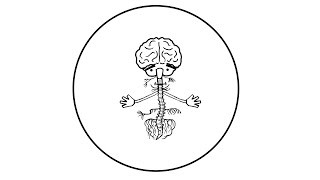
There will be times during this we'll do like a timeout for processing and talking. So when those times come, feel free get some more dessert to avoid the conversations at the table of processing. Yes, I've been. I'm Jeremy Smith. I was a teacher first for a decade with a whole bunch of middle school and high schoolers. So I'M used to all my corny jokes being laughed at, so that felt really good. You guys laughed at my corny jokes. So thank you very much for welcoming me here. I'm excited to share what God has put on my heart to share with you guys. I couldn't think of a great title for tonight, so I thought of how to help youth. As I was talking with Lucas, the conversation basically was, come talk about anything. I'm like, that's pretty broad. What are we going to talk about? And the goal then became very clear, like, you guys help youth. So let me see if I got this right. Maybe I'm wrong. Maybe I'm right. Oh, yeah, by the way, that's me. Teacher, counselor, and coach. So in that order. Became a counselor later and then a life coach. If you want to know more. Smithcounseling.org, marriage recovery course is my online platform where I teach and give away curriculum. But we're not here to talk about that. We're here to talk about why you are here. So these are the topics we're going to go through. Why are you here? Four aspects of humanity. This makes no sense right now, but it will, I promise. Emotionally healthy spirituality, then average emotional age, and then we'll close up with some solutions. So that's what we're covering. Let's get to the point of why we're here. Is there anybody here that doesn't want to help youth? Great. I'm in the right room. This is awesome. So if you want to help youth, I had this song. I used to be again, middle school, high school teacher. So my brain's always going to music. I'm thinking, Whitney Houston, I believe the children are our future. Teach them well and let them lead the way. Does anybody have any idea what I'm singing right now? Okay. There's like, half of you. The rest are like, that's weird. So I'm thinking we're here to help youth. Right? How do you do that? Well, that's what I want to help with tonight, if you'll let me. Lucas and I talked about what the hook line could be for this. So I've got. These are my notes down here. Here's the hook line for tonight. The biggest limiter to leading your teen or helping teens is your own emotional maturity. So that's the hook. That's what I'm going to get. We're going to start here, go through all of those topics and come back to that. So the biggest limiter to leading your teenage child to helping Teens, hear to aiding your elementary age student work through their junk is your own emotional maturity. In 1994, there was a song that was written that's kind of like the kickoff into this presentation. And it was way more prophetic than the author intended. Maybe some of you know the prophet Coolio from the 90s, and he wrote a very interesting song called Fantastic Voyage. I don't recommend you listen to it, but it is a very prophetic song in that he said, let's go on this voyage together. So I'm going to take you on a 30 minute voyage together. And there's one line in there that is the kicker that reminds me of that hook. You can't help me. If you can help yourself. You better make a left and the pin drops. Okay. That's a brilliant line. Only decades later did I realize he's got a lot of truth to that. So the prophet Coolio pointed out, you can't help me if you can't help yourself. And that's kind of the intro to tonight. You can't help youth if you're not emotionally healthy enough to help them. So let's figure out how to do that. First up, interactive. I love this. Four aspects of humanity. So I do need you to be interactive. Can we stand for a second? Or maybe we should sit? I mean, are we okay to stand for just a moment? Great. Okay, stand up. Four aspects of humanity. So humanity has, I think, four key aspects to its existence. There is a physical element. So everybody take your hands and slap your thighs. We are physical, say physical. We are also emotional. So put your hands over your heart and say emotional. We are also, as humans, mental. So put your hands up here. Mental. Some people like to say psychological, but that starts to sound a little bit psychobabble, so it doesn't matter. Mental or psychological. And then lastly, we are spiritual. Put your hands up. Praise the Lord. Say spiritual. Say praise the Lord. Oh, you guys are great. Okay, from the top we got physical, emotional, mental, spiritual. Woo. Great job. Have a seat. You did awesome on that one. Now here's why I teach you that right out of the gate. If you want to help youth, we need to clarify, are you trying to help them physically? Are you trying to help them emotionally, mentally or spiritually? So even right off the bat, I want to give you this framework. If you want to help them physically, you take them to a doctor, a dentist, pt, orthodontics, all these things. You're helping their bodies mature. If you want to help them emotionally, you have to deal with emotions and we're going to get back to that one because that's the limiting factor for how well you can help them Next, mentally. This is kind of neat in that basically, as we grow up, we're learning more complex ways of understanding the world. So we grow up mentally to make sense of the world, but that's separate than emotions Spiritually. Then we're here in a church trying to help them also grow up spiritually. So I'm guessing, I'm going to make my guess and you guys talk at your table for like 30 seconds. I'm guessing of these four, maybe you all are invested in the spiritual and the mental. Maybe talk at your table. 30 seconds, go. Which of these four do you work on? Thank you. All the way back up here in three, two, one. Thank you. That's my teacher coming out. Did you catch that? So by show of hands, there's no right answer. I'm just curious by show of hands, how many think you guys are focused on primarily helping them physically, emotionally? Some. Good, good, good. Mentally, spiritually. And some of you didn't vote, so you don't know why you're here. Got it. Okay. So now that you have the four key aspects of humanity, now it gets a little bit deeper, and each stage we're going to get a little bit deeper in a good way. So spiritually, mentally, emotionally, physically. Here we go. Let's transition to emotionally healthy spirituality. So notice how it took two of those four and linked them together. Most of the hands went up on the spiritually mature section. Great. Now how many of you by show of hands, know Peter Scazzero? Heard of Peter Scazzero? A few. Excellent. Good for you guys. I'd say like 1 5th you5th that know Peter Scazzero. Know where I'm going with this? Because his statement says you are no more spiritually mature than you are emotionally mature. Which means of those four, I just showed you the top one and the second one are inextricably linked. So if you want to help the kids grow spiritually, you need to be integrating emotional health. Now, let me tell you about Peter's story. I did some deep dive research before tonight. So when he became a Christian, I'm guessing around college age, he was really on passionate. He was really on fire. Passionate. Wanted to start a church. Five years later, he got into seminary. Five years after that he graduated and joined a church. So he was only 10 years old spiritually as he was the pastor of that church. Within eight years, he drove that church to the ground to the point where it was almost dead. In addition to that, his wife was saying, if this doesn't change, this is a sick church. If this doesn't change, I may leave. Crisis moment. He went to counseling finally, even though he thought counseling was stupid. At eight years into pastoring, he started to do counseling, but his goal was, I want to save my church. Notice what did he miss? The emotional. Two years into counseling, things were still going poorly. And his wife finally said, that's it. I'm done. I'm not going to your church anymore. It is so unhealthy. It is so bad. I'm not going to your chur. So here the head pastor, his wife says, it's so sick, I'm not coming. In addition to that, she said, you might as well get ready, because I'm probably filing. So now he's got a major crisis. And that's when he finally crumbled and said, okay, counselor, what am I missing? And it became very obvious. You haven't learned how to deal with your emotions yet. You're an adult, you're a pastor, you're pretty sophisticated psychologically, pretty sophisticated spiritually, pretty sophisticated physically, but you're a child emotionally. That was crushing for a man who was highly successful in the world's eyes to realize. I may have developed and grown up psychologically so I can think sophisticated thoughts and teach. I may have gone to seminary, so I have spiritual knowledge, but what I'm completely lacking is emotional maturity. As a result, then, his pastoring, his leading, his teaching was all that of a child in a grown man's body talking about information that came out of the Bible did not resonate. And his wife knew that, his church knew that, felt that, but he wasn't receptive to their feedback. So now we're left thinking, what do we do with the fact that emotionally healthy spirituality requires that you deal with the underlying stuff under the surface? I like this picture because he went to counseling for that 20%. On top of the stuff that you can see, the stuff that you know, helping with the church, all that. His book Emotionally Healthy Spirituality, says most people deal with the top 20%, but they ignore the 80% that's under the water. It took a major crisis for Peter Kazaro to even do that, and he was a head pastor. I want you guys to follow the same path because there's stuff you will discover on this fantastic voyage that will blow your mind, stuff that you can't imagine now that you can only experience later when you start exploring below the waterline. So Recommendation for number one for tonight. Get this book and read it. I'm going to leave it on screen. Take a picture right now. If you want to take a picture, write it down, your paper or whatever. But notice the tagline. It's impossible to be spiritually mature while remaining emotionally immature. So if you all want to help the youth become spiritually mature, what do you got to focus on? Not trying to be smart, just trying to point out, do you see the correlation? And then secondly, this is his devotional. So this isn't just a regular devotional so you learn about God. This is a devotional that helps you actually experience God from an emotional lens. Because as you experience him emotionally, you're going to understand his heart for you, not just his knowledge for you. So I'm going to pause here for a moment. I want you guys to talk to your table. What are you getting from this section? Take your pictures now. One minute again. One minute. Go to your tables and talk. All right, go and start bringing your attention back up here. I apologize. I know everybody wants to talk and I want you to talk more. So we are planning some time at the end for some people to talk and share stories and you guys to chat. I do need to keep moving to honor the time, but I also want to give you resources. So the teacher in me said, I am not leaving here tonight without you guys having lots of things you could do. Congratulations. You got one, two. Two things you could do right out of the gate. Next slide. Get ready. There's the techie in me. I want you to go watch his video. This is Peter scazzero doing a 25 minute video explaining the foundation of his principle emotionally healthy spirituality. It's basically him saying, oh, fudge. Where'd my little QR code go? It disappeared. I had a QR code down there below at the bottom. Well, it's gone. Go to YouTube and type in emotionally healthy spirituality course. Those four words. Type it in. Emotionally Healthy Spirituality Course. This is his first session and he gives it away for free. It's on YouTube. 25 minutes. I put the picture up here because I wanted you to see the guy so you know who you're looking for. So you don't get some imitation person telling you about what he's already teaching. Let's just get it from the horse's mouth. So that's the guy. Go watch his video. 25 minutes. So that's three resources I've given you so far. Book, devotional video. Now let's go even deeper. If there are Four aspects to humanity, physical, emotional, mental and spiritual. And the spiritual and emotional are inextricably linked. You can't be more spiritually mature than you are emotionally mature. It really starts to bring into focus how important it is to be emotionally mature. So I'm going to give you all a reality check. And you're probably not going to like it, but yeah, Alan's already plugging his ears. I'm going to give you a reality check. And this is based on statistics. This is not opinion. This is me for 20 years in the recovery, which I'll disclose now. Discovery from pornography addiction to emotional, mental and spiritual health. I'm in recovery. I'm working that process, that journey. I'm 20 years into that, 20 years of personally doing that, as well as 16 of those being professionally coaching other people on doing the journey. Well, here's the statistical norms. Those of us that do the work peel back all the layers, recognize that we may be sophisticated psychologically, very grown up, have all these brilliant ways of engaging the world, but then we discover, oh my gosh, emotionally, underneath of all of this, the average emotional age of the American male and American female is. Drumroll, Anybody? Drumroll. Thank you very much. 8 to 10 for men, 10 to 12 for girls. So congratulations, women, you win. Yay. And some of you are probably like, that is such malarkey. You have no idea what you're talking about. That's so dumb. I have no idea what you mean. Here's the deal. That's the facts, that's the stats. I'm going to show you why in the next few minutes. But again, the phrase is the average emotional age. Notice that's not physical age, that's not psychological age, that's not spiritual age. That's emotional. Meaning that most men in the pool that I've got, which started with Lincoln, became Nebraska, and now with coaching, it's across the nation. Once we peel back all those layers of sophisticated psychology, underneath of all of it, the guys are, take a guess how old. 8 to 10. That means emotionally they're processing the world and their challenges about as well as an 8 to 10 year old. Not all the time, but on the really deep ones for the women, same thing, they come to me. In trauma, we work through all their junk. We peel back all the layers of sophistication of society and realize underneath of all that my traumatic parts that are stuck are what age 10 to 12. So when we experience emotions that are triggering prior trauma, we act like kids. Exactly, we act like kids. So let's Go a little deeper. So you see why I'm not just blowing smoke. And, like, this is not just stats, but here's why. And there's empathy and grace and compassion. Because all of us start here, all of us to go on this journey. I want you to think about a person, kind of the green head thing, that as you go through life, your brain develops neural networks. Those neural networks help you navigate the world. You've got to develop them. So if I touch the red hot stove. Oh, that hurts. I'm not going to do that again. Oh, if I punch a kid on the playground, I get to go to the principal's office. That didn't feel good. So I'm not going to do that again. The brain is constantly learning things to do and not do to navigate life. That's normal. God made it this way. What happens, though, is if in one of those moments, the emotions of that event are so overwhelming that my brain can't even process. It literally goes, don't know what to do. That. Go stick it over here in the freezer. Lock it away. Okay, now I go on with life. Don't open that door. I don't know what's over there. I don't want to think about it. Don't talk about it. I'm fine. I'm fine. You doing. Don't open that door. But later, down the road, guess what? Some emotion comes up that feels an awful lot like. And out comes all of the puke and the venom and the pain and the anxiety and the fear. And I act just like a child. The picture here shows the fact that your brain develops different neural networks at different age. So some of those neural networks are going to be fairly professional, fairly adult. Like, others are going to be very. What they call firefighters. In internal family systems, they call this firefighters. Basically, if there's a problem, I'm going to fix it. So these two parts are constantly trying to make sure that you function well in the world. They're helpful. Very helpful. Problem, though, is they want to make darn well sure you don't open that freezer and feel what this little kid was feeling. And again, what's the average age of those children? Inside. There we go. You're getting this. So these parts of us. And that's the language I want you to write down. Parts of me. Go ahead and get your pencils, pens. Parts of me. There's parts of me that are stuck. Little children. There are parts of me that are very much sophisticated adults and those that know how to manage problems and Keep this all under control. So if you want to help youth, when you look at them, you need to recognize are you engaging a monolithic human being or perhaps you're engaging a complex human being with lots of. What's the P word? You guys are used to working with teenagers that pee in the toilet? I'm not talking that pee. I'm talking what's the P word? They have lots of what? Wow, I did a bad job. Parts. Everybody say parts. Parts. They have parts. So there may be a moment. One of the parts of this teenager shows up very sophisticated in your youth group. But there may be a moment when a certain emotion triggers and suddenly you see this switch in their eyes, a switch in the personality. And now they're withdrawn, they're shut off, they're aggressive, or they're just totally shut down. They're not even present because what happened in that moment? Were they living out of their more teenage parts or child parts? Take a moment, talk to your table with that concept. Go. For those of you that are interested to understand this idea of parts a little bit better, just go do some research on internal family systems. That's the word, internal family systems. It's the idea, like families have many people in them. So is your brain many neural networks that act just like a complex family dynamic. So just like families can be messy, your inside world can be messy. That's what I'm here to do. I'm here to help you with that tonight. I'm introducing to it. I can help you that professionally. Call me up later now if you still think I'm full of malarkey. And you got this, you're good, you're emotionally mature. Oh, everything's great. Let me introduce you to the Dunning Kruger effect. So here's a chart. Dunning Kruger effect. This chart makes no sense whatsoever right now, but let me tell you a little story and I'm going to read it off my printout because it is hilarious. So sit back, relax, and enjoy the story. In 1995, MacArthur Wheeler robbed two banks in broad daylight without a mask or any form of a disguise. He believed that the lemon juice he put on his face would make him invisible to the security cameras. Having seen this in a series on television where they used lemons on paper to make invisible ink. When he was arrested that same day in the evening, he was genuinely shocked and exclaimed to the police, but I wore the lemon juice. Wheeler's case of utter incompetence, combined with his extreme confidence intrigued social psychologists named Dunning and Kruger. They conducted studies on various groups of people and compared their self assessment with their actual performance. So in 1999, they released the results. This was the original chart. And what they found out was everybody in every situation, no matter what the skill set was, no matter what the topic was, everybody overrated themselves versus how they actually performed on that skill set. Less for one group, the absolute masters. So people that knew nothing about a topic rated themselves extremely high. Those that knew something about a topic were like, yeah, I'm pretty good at it, but still way higher than they were actually performing. Those that were decently good were like, I think I'm this good. And they overshot it a little bit. And only those that were experts in the field actually got close. And it was just slightly underestimating themselves because they knew more than they thought they did. So this is a chart that doesn't make a lot of sense when you first look at it. So let's transition it to a different type of a chart. This has now been reformatted, republished in ways that people like a little bit better. This is the same information. Notice that the slope here is pointed down, as in, like, these three groups, like this. For those of you in math, check this out. What's the derivation of these two points? It's negative. I used to be a physics teacher. Like, okay, am I losing you? Okay, all right, forget the math. All right, let's just go with this. This point is really high. The people who have no competence whatsoever rank themselves extremely high, thinking, I know this already. Those that knew just a little bit, they said, oh, maybe this is harder than I thought, but I'm still pretty good at it. Those that were average then said, I think I'm really starting to understand this, but hot dang, this is harder than I ever expected. And only those that were experts out here said, I feel like I'm actually in tune with the subject matter. I get this. I'm pretty good, but I'm not that great. This is human nature. We do this all the time. If you want to watch a video that explains this more, grab your cameras. Here's the fourth. I think I'm at my fourth. Fourth resource. Fourth resource. Grab your cameras. Snap that QR code. That'll pull up a video for you to watch. Sprouts.com. ever heard of that? Sprouts.com, it's an educational platform. It is a fantastic video. And they go even further. Do I have time? I'm bordering on time limit. It's a great story, but go watch the video. What's happening then? I'll give you three examples. Those on the right hand side are the most confident. So in a public debate, they're going to look like the winner, but in fact, they're the dumbest. The person in the middle is a little bit more cautious and shy, like I know a little bit more. But they don't look as confident because they're down here in the valley. They're going to look like in the debate, they're going to look like the loser. And the expert who's way over here, he knows way more than either of these two. He's going to look like the runner up. Which means that in our culture and human nature, we tend to favor the fools. Take a moment, talk to your table about this concept. Go. I know it'd be great to have more time to talk. I would love that. I just want to get you as much as I can tonight. And then I hope Lucas will follow up and take these concepts and keep working them over the next few months years and integrating them. So bear with me one final comment on this and then we're going to make it very personal and applicable. So the summary takeaway from the Dunning Kruger effect is this. Here's what they summarized it as. Our lack of competence blinds us to our utter lack of competence. It's a lot of words. Let me say it again. Our lack of competence blinds us to the fact that we're competent. Now, here's why this is important, why I interweaved it tonight. If that's true for competence in a field of knowledge, would it be perhaps the same thing for our understanding of emotions? So I'm getting sensitive and soft here. I want you to recognize this is the same problem that is consistent across all human behavior, not just in the areas they tested, but when I'm talking about becoming emotionally healthy. If you self assess, what is statistically show is likely? Don't answer that, Just think about it. So when people come to me, they think, oh, I'm doing pretty darn well. Yep. Hey, Dunning Kruger, how are you doing? Let's have a conversation. Let's go on a fantastic journey together and discover, oh, you weren't so emotionally healthy. Now, I don't say this with criticism. I say this because I had to walk the journey. My journey started 20 years ago. I was 27 at the time, and all hell broke loose in my life. And that was the crisis that I had, kind of like Scazzaro had, that started me on a journey. And the deeper into the journey I got, the more I discovered. Oh, I thought I was pretty good. I thought I conquered this porn thing. Oh, man. But I didn't conquer the emotional thing. How deep does that go? Oh, my gosh, Are you kidding me? How long is this journey going to last? When is this going to be over? It just kept getting longer and deeper and I was like, oh, my goodness gracious. But now, knowing what I've learned on the journey and the people that do it with me, we all kind of have the same theme once we get about to here. I'm never going back. No matter how hard this is, I'm never going back to being the ignorant fool at the top of what some charts call Mount Stupid. Mount Stupid. I'm not going to be the ignorant fool on the top of Mount Stupid anymore. But that does mean opening up Pandora's box to go find all the little frozen parts of me that are stuck in the past. So what the heck does any of this have to do with helping youth? Well, everything. Because if you really, truly want to help them, you recognize that there's times when you need to help them with their physical. Sometimes you need to help them with their emotional, sometimes you help them with their psychological, sometimes you help them with the spiritual. And is this true for just youth or is this anybody? So I hope you realize that what I'm presenting tonight is not just about youth. It's about you showing up in the world in a way that is mature enough to be able to recognize we're all on a journey. I hope. Some of us may be stuck over here in the Ignorant Fool. Some of us have started it. But it is a beautiful journey. And the prophet Coolio laid that out very clearly in 1994. Come along and join me on this fantastic voyage. Because you can't help me if you can help yourself. You better make a left. I'm sorry. Left. Thank you. Somebody's laughing. I appreciate that. So it's a very prophetic phrase. You can't help them if you're stuck back up here, at least not emotionally. Can you help them psychologically? Absolutely. You old grown ups. Can you help them spiritually? Yeah, totally. The Scazer will say only as much as you're emotionally mature. So we're putting this all together and it's just this great big invitation to start the journey. To go on a journey figuring out what's in my freezer, what's stuck back here in my past. Those parts are causing me to still act like a child.
Whoo.
Okay, that's Heavy stuff, but I hope you're hearing my heart in this. My heart in this is. If there's a chance I'm going to tear up. Here it comes. If there's a chance that Lucas or God or someone would give me an opportunity to invite someone on the journey, it will change your life in ways you can't even imagine right now. And it's harder than you can imagine, but it is worth more than you can imagine. So I just want to use every chance God gives me to invite you on that journey and experience something that I don't know where it'll go, but I do know that the end is worth it. And when you come up here and join us in the master's category, you'll look back and say, I too, will come back and help anyone I can get on the journey to emotional health. So before I give you solutions, take a moment talk at your table while I wipe my tears clean. Go. All right. Thank you, guys. I know it's kind of a rush. Tender moment. I apologize. Take your tender moments more later. Absolutely. I do want to wrap up so I can honor my time to give them to Lucas what he wants to do to wrap us up for the evening. So I am a guy who likes to, as a teacher, give tools. Not just point out problems, but give tools. So I think you have four resources at this point. Is that right? Great. I've given you four. Get ready. Here come at least three more. Tool number one, listen to others who've done the journey. Some are at the beginning of the journey. Some are at the middle. Some are like way out here at the end, 20 plus years. Go listen to those volunteers. And I think we've got some volunteers tonight. According to Lucas. He tells me they're going to share some of their experience on the journey and what it's done for them. So find others that have done this journey of emotional health because it causes them to be spiritually mature as well as emotionally mature. And then you're more of a whole person, not just physically mature and mentally mature, but all four of them being mature. That's the journey. Find people who've done it. Talk to them. I also recommend two more books. The first one is the Emotionally healthy Spirituality. That one I already referenced earlier. That's the one with the iceberg. Peter Scazzero. That's his whole platform. The second, second, and third books on this list, though, these are the ones that will get you moving towards emotional health. Specifically, the try Softer is by a gal named Andi. Kolber. A N D I I think is her first name. A N D Andy Kolber. K O H L B E R Colber Andi Culber. She wrote this book a few years ago. It's just a beautiful summary of all the different tools that we have as mental health counselors to help people listen to their body, listen to their emotions, create safety in order to attune and regulate. So that's a good one. Try softer. The third one up there you may or may not be interested in. It's a faith based approach to the internal family systems that I taught you about. Think about that head with all those parts. It was founded by somebody 25, 30 years ago who was an atheist. But the irony was everything that he discovered in his theory and practice lines up perfectly with biblical principles. If you want to put the two together, go read the book Altogether you. That gal's name is Jenna Remmersma. J E N N A Remmersma. R E M M E R S M A Interesting name. Remmersma. Jenna Remmersma. So those three books, so now I think we're up to four. Plus the volunteers, plus the tri software and the altogether you. That's seven resources you're leaving with. Here come a couple more. Free webinar. Yes, free. So if you like the way that I'm teaching, I'm doing this online next Thursday morning and we're going to be talking about and you can sign up right there. Just click on that link. All you gotta click on the link folks. Click, click, you're in. It's a free webinar that's going to teach you how to start doing the opening of the closet or freezer in a way that is safe, healthy and therapeutic. You've got to understand the whole process of how this parts thing works. You're going to learn all about it and I'm going to teach you the process of what it looks like to actually rewire your brain. Not just let the protectors out here in the front make you look psychologically mature, spiritually mature. All of these things that are the masks that hide the rest of you that stuck back here. So this webinar is going to teach you how we rewire the brain to make all of this come together to heal those little kids, to help you feel whole and feel complete. So next week, Thursday morning, get the QR code, click on the link, put in your email, boom, you're in. I'll even give you three free lessons that I have in a course I'm Releasing specifically on this process. Just like the Deep Dive. I'll give you those for free. Just sign up for the webinar and you'll get the link to that. Then lastly, last one, I'm sending number eight because eight is great. Here we go. I was a poet and didn't know it. That's awesome. Kind of like coolio. Yeah. Somebody over here laughed and found that funny. Thank you. Thank you. Professional care. If you want to actually do this with me, I would be honored to walk the journey with you. You can go to smithcounseling.org if you do, it's a webpage. You scroll down, and there's a button right there that says apply here or start here. I think it is. You click on the button, select Jeremy, and then you fill in some information, and we can get started doing counseling. If you want to skip all that rigmarole, just use the QR code, and boom, you can fill out the information, ready to roll. So you got lots of options. Professional care is number eight. I'm happy to do that if you want. And again, the point of all this is you can't provide to youth something you don't have. And if you don't have emotional maturity, you can't offer it to them. That doesn't mean there's something wrong with you. It just means God and me and a whole bunch of other people are cheering you on to get started on the journey, so you have that to offer them in the future. So thank you for letting me talk. I hope you're taking a few good things away. I'm stopping just in time to be able to pass it over to Lucas. I appreciate you inviting me. Thank you very much. Are you comfortable with questions at some point? If you moderate. Cool.
So, man, so much. Here's one thing I appreciate about Jeremy. One, he doesn't need more clients. Like, he didn't come here to sell his business and stuff. Jeremy, the tears were real up here for him, okay? Like, he believes and loves and wants to see everybody get emotionally healthy and see life change happen. That's why he does what he does. The reason he can do that is because he's experienced it. So he's not just like, I've read this in a book. Someone can pay me a lot of money. I can just tell him what to do. There's tons of counselors out there that that's what they do. They're just like, I can tell people what to do, but they're a mess. Jeremy is not okay. Speaking from experience so if you have, you know, if you have questions about counselors in town, you can ask me. Me and a couple other pastors have met with a bunch of different pastors to just interview them so that we can recommend different. Different counselors to students or to the adults or parents or whatever. But anyways, he does this because he's passionate and because he believes that people can jump on that journey and get healthy. And I tell you what, I think people are fearful of jumping on that journey because when we're left with solitude, we're left with our thoughts, and that can be scary. It's like, well, what do I do with those thoughts? And God created us to be relational and part of. And sometimes we need someone in a relationship that can ask the right question questions, because you can't do that on.
Your own very well.
It's hard. It's hard to figure that out on your own. So people like Jeremy can come in. He's gone through himself, so it's not just words. But then he knows kind of how to tackle in there and ask the right questions and help us process it in a healthy way. But it's a journey and it's a battle, and you got to buy in and put in the work. But I promise you, it is so much better. It is hard. You'll feel like you're in the valley of the shadow of death long time. But guess what? You start coming out, and it is incredible, and it is worth it. Anyways. I'm not trying to sell a business, but it's worth it. Past that, one of the things he mentioned was listening to other people that have gone through this and have experienced it. So I'm going to have Alan and Melissa come up and just share a little bit of their journey and what it looks like just to be healthy in the benefits that they've experienced as individuals and as a family.
All right, my name is Alan.
Can you hear me? Fine? Yes. All right.
So I was only told to, you know, speak for about a minute here. I don't know how you put a journey into one minute. So I'm going to do my best. And then, you know, afterwards or anything, and you want to talk or if you want to go out for coffee or something, I'd be glad to share more later as well. One of the things that I'm kind of gathering from all this is just like, why am I here tonight? And for me personally, it's just something deeper. A deeper relationship with God, a deeper relationship with my kids, deeper relationship with my Wife. But how can I be able to lead my children if I've never been there myself? If I want my kids to be emotionally healthy, I have to be willing to grow myself. And for my wife and me, that meant going to counseling, reading books, learning new tools, practicing ways of communicating. We use them in our marriage, and we model them with our kids. That impact has been incredible. And not to go too far in that, but it really just gave the kids opportunities to see, like, dads doing something different here. And this is something safe. And as they feel safe, they're more willing to open up. So with all that, we're really starting to see the fruits with it. It's not something that just happens overnight. One of the things somebody asked me last week was, when did I start seeing something shift? It's really hard to actually pinpoint because there wasn't one single thing that I did that just all of a sudden, just voila. For me, the biggest thing that I've noticed was just my willingness. Willingness to learn, to be open, to stay curious and sometimes just keep showing up. Like I said, this isn't a quick fix. But constantly showing up, that's when I saw growth happen.
That's it.
I think it might be a little longer.
I have my sticky notes, and Jeremy has his notes, so I know that's too Right. Okay. So Lucas asked us for the benefits of being strategic and purposeful about getting healthy. So the benefits, it has really changed our family culture. I would say one that kind of felt confusing, unsafe, fragmented. It didn't feel like we were all on the same page together all the time. It's changed it to now the kids know open, honest communication. And so that's kind of our tagline. Open, honest, clear communication. That's what is expected from the parents to the kids and the kids to the parents. And when we sat our kids down, it's like, this is what we're going for. One of the kids said, but you're going to do it too, right? Like, they want to be here. Mom and dad are going to be open, honest, and clear about communicating with them. You're going to follow through. So the other thing that has changed in our home is that now when we don't do those open, honest, clear communication, when we hurt each other, that repair is expected. I can expect safe repair. I can expect that my parents are going to come to me and say, I hurt you. I can see I hurt you. You know, can we talk about it? And then, you know, we've been seeing Jeremy. So he's given us tools on how to make those repairs safe, how to have those conversations. And we've even had to take like script and just be like, okay, you follow that script and I follow this script so that we're just not literally communicating into the air and no one understands. So even just the tools of having a script, that's been a huge thing for us. Strategies on how to do it. I started, and I'm never telling Jeremy, why do I have to talk to you most like the counselor, but why can't I listen to my family? Or why can't I listen to my friends? Or he's like, who taught you how to ride a bike? Your friends? And I was like, well, no, who taught you how to ride a bike? Someone already knew. And so for me, I had to find someone who was already emotionally mature, someone was already spiritually mature, and I had to learn from that person. So I'm not saying that my family or my friends weren't necessarily that, but just I needed someone who's qualified in that and to help me through that process. So I need someone to teach me to ride my bike. So I had to decide that for myself. And one of the strategies for me is just making intentional time every day. Okay, if I'm going to make my physical health important, I'm going to make my spiritual, I'm going to get my devotions done, I'm going to get my exercise in, I'm going to start making time for my mental health and my emotional health. So I just started adding in, you know, little bits, little stip tips, little drinks of podcast books, making time for my counseling appointments. Something that Alan and I started doing was, well, we stopped state counselors. So that helped our family culture because Alan's hearing his same words and his guns and equipment is, I'm hearing mine. We're coming home, you know that I heard that. And then we're using it together. It's like just a powerhouse team situation because now we're both learning those concepts. We practice on each other, you know, in a private study. So that's been great to have a counselor for both, the same one for both of us. And then the last one is, one of the strategies that we use is we started doing check ins as a couple where we would say, you know, how is the week going? How are you feeling emotionally? And then I have to tell Alan how I'm doing emotionally. He has to tell me how he's feeling emotionally. How did I, what did I do to damage the relationship? This Week. Just, you know, what did I appreciate about what you helped with this week or how did you benefit their relationship this week? So it's given us just tools to know how to just change our fitness culture around us.
Super cool.
I love that.
Yeah. We're people in process. Right. And we, we need people to help us process and go through it. And, and again, we're not just saying, hey, just go and do this mental work like God.
Yeah.
Is I, I tell Jeremy this a lot of times. It's a spiritual experience for me. Many times when I go in there. So he is a believer. He loves Jesus. We're not taking the Bible out of it or anything like that, just so you're aware, but it's powerful. I want to spend the last couple minutes just if you have any questions from things you've heard tonight, and I'm going to put you on the spot too, but I'll stay up here with you and help you if you don't need help. But yeah, any questions or clarity that you need. For instance, I'll give you one. The table I was at. What's the difference between mental and emotional?
Meredith. Wow. Difference between. Difference between mental and emotional. Emotional is about the feelings. And there's a whole palette of feelings, words, and to feel them in your body is an awareness of the physical experience of the emotion. The psychology is making sense of the world. I have concepts, I can talk about it. I have boxes to put things in. I can explain this to you. I've got all the thoughts of the world and how to explain my experience. But that's different than feeling in your body. What the emotions in your nervous system. Experience. Sounds like a lot of psychobabble. I can take you deeper later. Is that enough? That's awesome.
Another question was, is there a test out there that I can take to tell me where I'm at emotionally?
Well, yes, there is. Thanks for asking. Lucas. Emotionally healthy spirituality. He's actually got an inventory that he put together specifically for that question. And it'll tell you whether you're a child, an adolescent, a young adult, or grown up.
So I forgot that that was in the book.
Yes, it is.
There might be a reason that I forgot the.
The book. Oh, that's Lucas's. I don't want to talk about that.
We were talking at our table, like if the average is 8 to 10, that means someone could be like a 4 year old. That would be terrible. So let's not take the test and deal with our issues. All right, next question. Any other questions? Or clarity.
Actually, since you brought that up, can I speak for that one? Actually, they say 8 to 10 average. And the thing is, there are so many millions of people that are 8 to 10 that even a few outliers way up here doesn't even skew the average. So that's actually what statistics are showing.
I think that makes me feel better. Yeah. Any other questions or clarity? Nobody. You're nervous. That's their freeze moment too. They gotta deal with it. That's awesome. Jeremy will stick around for a few minutes. If you. If you do have questions or anything else, feel free to go ask him. You know, if. If you can't afford the book, I will buy it for you. It's. It's worth a read. It's worth discussing with somebody too. It's really good. But I'll just close our night and just. Again, thanks for coming in for. Thanks for tonight. Thanks for the challenge. Lord, I know we're just touching the surface and scratching the surface of just this whole concept of emotionally healthy spirituality, Lord, but I think there's something there. God, we were created in your image. And when we look at your image, we get a glimpse of that, of Jesus when he walked on earth, Lord, and he was emotional and he was physical, and he was obviously spiritual and relational. All these concepts, we see Jesus, who is the image of you and God. So we know that those are important parts of us that we need to deal with and look into. And, God, we know with your strength, with your holy spirit, that we can do that. We can enter that journey. And God, we know that you are God that's in the business of changing lives. And you've put people in our lives to help us do that. So, God, thanks for that. Lord, I pray that we leave here encouraged and challenged, and, Lord, that someone in here might take that next step to start dealing with those things. Because you're a gracious God and you long to see us just be as healthy as we can be, Lord, to make the biggest difference and be the greatest light in this world for you.
So thanks for that.
In Jesus name, amen. Awesome. Thanks so much for coming. Grab more dessert on your way out, please. We got plenty. And we will hopefully see all your students next week.