
How This Busy Executive Finally Broke Free From 53 Years of Yo-Yo Dieting & Lost 67lbs
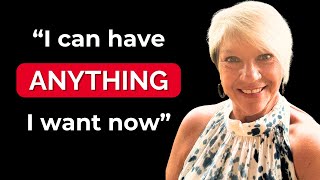
In this interview, Jessica Lawson, founder of the Bariatric Success Academy, talks with Kathy, a 67‑year‑old executive who underwent sleeve gastrectomy and joined Jessica’s coaching program for six to seven months. Kathy recounts a 40‑year history of yo‑yo dieting, the emotional toll of food‑related FOMO (“food noise”), and the decision to have surgery driven by a desire to stay healthy for her husband, mother, and grandson. She describes her pre‑program life of fast‑food convenience, low energy, and lack of structure, then details how the program’s education, community, and accountability shifted her mindset from “motivation‑driven dieting” to an identity‑based, sustainable lifestyle. Key concepts that stuck with her include the mantra “your surgeon removed part of your stomach, not your responsibility,” prioritizing protein, and treating knowledge as actionable. She shares practical strategies for maintaining habits while traveling and managing a demanding business schedule, emphasizing meal prep, portable protein, and flexible eating. Kathy highlights the program’s value, stating the fee is justified by immeasurable results, and encourages others to invest in themselves regardless of age. She proudly notes losing 66‑68 lb, regaining physical abilities (crossing legs, lifting a towel), increased energy, confidence in her business, and a lasting sense of self‑worth. The interview serves as a testimonial aimed at inspiring prospective clients to break the all‑or‑nothing diet cycle and adopt a sustainable, identity‑focused health approach.
Chapters
What concepts or nuggets from the program do you feel like have stuck with you most?
Your surgeon removed part of your stomach, not your responsibility. Being in this program, I have learned things that I didn't know in all the 40 years before this. That definitely has made a difference. My biggest issue was FOMO, fear of missing out. If I pass that fast food place, this is my chance. It was just really interesting to me to come to that realization. That's just food noise. I was being bullied by that food noise. I don't feel like I used to where, "Oh my God, if I don't get that now, I'm never going to get it again." How many times Sunday night laying in bed and telling ourselves, "Monday morning, this is it." That would have then set me into a spiral of, "Oh my God, now I got to starve myself for 3 days to get back to where I was." Diets, you limited yourself and you think, "Oh, I can't wait till I'm off this diet. I can't wait to—" eat one of those things again. It's not sustainable. Limiting yourself is, is just not a sustainable process. I can have anything I want. It's just the amount that I eat, but it's also the choice of, "I need to make sure that I get that protein in first, then I can have a spoonful of that." And I don't feel deprived. I don't feel like I need that motivation, that self-talk anymore. This is just where I am.
How do you feel about your relationship with food right now versus 6 months ago?
I definitely feel like that is where my energy and nutrition come from, not my satisfaction. I feel like what I'm doing on a day-to-day basis now is sustainable. Is this what people that don't have a weight problem always felt like?
Remind me, how much weight exactly have you lost?
Is it 66 pounds or 67, 68? I'm in the high my 60s.
What are you most proud of?
That I can cross my legs, that I can wrap a bath towel around me. Isn't that a great feeling?
What would you tell to someone who might be thinking about this type of investment?
The most important thing as far as the coaching program— fee is only an issue in the absence of value. The value that I have gotten from this program is immeasurable. I'm 67 years old. It is never too late to put yourself first. It is never too late to invest in yourself. Don't be afraid to go out on a limb because that's where the fruit is. You are important. You are worth to do this for yourself.
Hi everyone. I'm Jessica Lawson, founder of the Bariatric Success Academy. And today I'm joined by Kathy, who's been working with me in the program for, oh, now what, 6 or 7 months now? Yes. And she's had one of the most profound transformations that I've witnessed. As a coach and what really makes her story powerful is just, you've been dealing with these challenges for such a long time. I remember during one of our first conversations since you were like 14 years old, right? And it's not just about losing weight, but you've completely transformed your identity and relationship with food, but also you're a busy business leader. You've proven that even with the craziest schedules, sustainable health is possible. So first off, thanks so much for being willing to share your journey. I know your story is really just going to inspire a lot of folks, uh, who are ready to stop the diet cycle and create lasting transformation too. Yes. Awesome. So can you tell us a bit about yourself and maybe what your weight loss or relationship with food journey kind of has looked like throughout your whole life?
Well, I'm 67 years old. I had surgery last year at 66, but since the time I was 14, you know, it was a yo-yo back and forth. I was— I think I was a Weight Watcher at 14 years old and just done a lot of different diets throughout the years, a lot of different programs, you know, Weight Watchers, Medical Weight Loss. And I have had success on a number of them, but it's, it's never been sustainable. And I think, you know, 3 years ago I was approved and ready to do the surgery. And at that point in my life, it just wasn't the right timing. And I thought, oh, you know, I'm not going to be that drastic. I don't need to go through that. I am going to— I can do this on my own. And 3 years later, you know, I'm in the same boat. So that's what prompted the surgery. Uh, as well as, you know, my husband's health was declining and I felt like I needed to stay strong and stay healthy, uh, to make sure that I could help him if I needed. Um, my 89-year-old mother lives with me and, um, thought at some point, you know, she might need some care. And so that was why I made that decision. And, um, So I had that surgery in October and fortunately had— my husband passed away in December. So dealing with, you know, trying to change my habits and in this weight loss journey and then dealing with grief on top of it was a heavy load for a while. And This program absolutely helped me understand the importance of putting me first and knowing that it was something that I was going to have to take hold of and take responsibility for. And it's been a great journey.
Awesome. I appreciate all of that. And so what was your life like maybe in the months before joining the program? Because you hadn't had your surgery yet either, right? So can you kind of describe like, what did a day in the life look like? What were your eating habits like?
You know, all of that. Oh, um, I was not a prep person, so I was a, you know, go by the seat of your pants kind of. You know, food meals, a lot of fast food. You know, I'm busy at work and it was always a scenario where if, you know, it was quick to run through McDonald's, quick to run through Panera or any other place, and I could eat in the car, you know, get to my meetings, get my things done, come home and I'd have a meal at 6 o'clock at night and I was on the couch until, you know, I w— it was time to go to bed. There was no energy. And all the things that I knew I should do— I'll go outside and go for a walk, you know, go get on the treadmill, take a class, you know, don't eat all those carbs, you know, that was just You know, that was just what my life was.
Okay. And then what made you finally decide that you were at a point where enough was enough?
You mean with the surgery?
With the— yeah, really just kind of with deciding to take hold of your life in general.
Well, I think the, um, knowing that I probably, at my age, I wanted to have another 20 years. And I did not. I still wanted to travel. I'm an active traveler. I still wanted to be able to work and continue to have my practice. And if I didn't feel good and if I wasn't healthy, I was no good to myself or the people around me. And that, that was really what jumpstarted that decision.
Right. Gotcha. And so how did you first discover me and what made you decide to reach out?
Um, you were on Instagram. That's where I saw you. Um, and it was just scrolling, just random. And I wasn't looking for anything at that point, but once I saw you and saw the program and saw the things that, you know, you would post. It reminded me that throughout my working life, I've had coaches through my business and it's always gotten me to, you know, be that much more successful in my own practice. And so I knew then, okay, then this makes sense, Kathy. You know, you, you need to hire a coach too. And although the program that I went through for my surgery, the sleeve surgery, was a great program, was very supportive, you know, once every 2 weeks, once every 3 weeks, there was somebody I was having a video call or an office meeting with. But I knew that wasn't enough. I knew that I needed more. And then it was a point of searching out who's the right person. And I knew I wanted a woman. And I knew when I looked at your program compared to other programs, the education, the motivation, the support, the follow-up, all the things that, you know, you do on a day-to-day basis, even just with, you know, your, your Instagram posts, it was consistent. And that I think was the key that I was looking for is the consistency, um, of someone that I knew that I could relate to and that would stick with me.
Racha, you're quiet. And I know something that you mentioned during our last coaching call, uh, was that you'll take screenshots of my posts sometimes. I do. I'm curious. What is it about, I mean, guess now that you know me, right? Mm-hmm. Like know me very well. Mm-hmm. What is it about my approach that feels different compared to maybe someone else that might be out there? Granted, you might not know exactly what's all out there, but yeah, I'm curious in your perspective.
Jessica, you're real. And, you know, but I— and I don't, you know, mean it in a flip way, but you are very relatable. And I just knew that I could— I just— I could relate to you. I could relate to your experience. I could relate to what you're doing. You know, even though, you know, there's a big age gap, I still felt like we were on the same path together. Yeah, totally.
I appreciate that. And what were your expectations when you first joined the program?
I think just the support, you know, the ongoing support, you know, whether it was You know, the, your group calls, um, our, you know, one-on-one coaching calls, um, being able to use my app. Um, you know, all, all everything that's part of it. Oh, the cookbook. Oh my God. That's, you need to publish that thing.
Yeah. Maybe one day.
For sure.
So now that you're kind of talking a little bit about like the program structure, can you, yes. Kind of walk through the program structure and what it's been like for you, because it's been a little bit different for you. And like, what has been the most valuable part of the program for you too?
Um, I think the— what I enjoy is the camaraderie, um, with all the people that are— that's in the group. You know, you have, you have women in this group, and maybe there's and a man in there somewhere. I don't remember, but from, from all over the world, you know, and we are, we are, you know, we're all in this together. We're all trying to make sure we get our vitamins in, make sure we get, you know, some, some good workouts in, make sure we get our protein in. We're all in the same position. And the support of that, the fact that you offer the opportunity for us to connect with each other is important. Yeah.
I, I think if anything, it shows that the problems you have are not an isolated experience. Right. Mm-hmm. Right? Like these problems are The all-or-nothing mentality, emotional eating, food noise, they're incredibly universal experience in the bariatric space. It's just that on the internet, no one likes to talk about the bad things or what's going wrong. Everyone likes to talk about how much weight they're losing, how quickly, you know, the latest protein shake recipe. Mm-hmm. All of these things don't, that don't actually make or break in the, in the long run, right? Versus the things that are tougher to talk about too.
Right. Right. I mean, even, you know, food noise. I never even thought about the food noise before. I mean, my biggest issue was, you know, FOMO, fear of missing out. Well, if I, if I pass that fast food place, you know, I'm never going to— this is my chance to get in there and have a bite of that. Or, you know, and it was just really interesting to me to come to that realization that, um, that that's just food noise. And I was being bullied by that food noise. Yeah.
I remember the first time you said that analogy and I never heard anyone articulate it that way, but it was, it was just very comical. Yeah. And yeah. And so what concepts or nuggets from the program do you feel like have stuck with you most?
Oh my God. I love— there are a couple of them that I love and I have them written down there on my desk. They're in my office. They're, you know, on my phone. Your surgeon removed part of your stomach, not your responsibility. And, and I think that is the most profound thing. And knowledge without action is just entertainment. So the education that you provide that we can all go back to in our modules and listen to them over again and read them through and, you know, digest them again, that is very powerful to be able to have that to go back to.
Totally. And let's talk too about the FOMO, right? So I think in our last coaching call or so, you mentioned the FOMO around food is pretty much gone. So yeah. Like, what does that feel like?
Um, it's, it is, uh, it feels pretty darn good and it's, um, because I don't have the worry that if I have this, you know, have a glass of wine, I have some cheese and crackers, you know, I'll have, you know, a couple of, you know, a couple of chips. I don't feel again like I used to where, oh my God, if I don't get that now, I'm never going to get it again. Uh, and, and now I can have, I can have anything I want. And it's interesting where, you know, I'll go to a party or, you know, had a big whole big weekend thing at, at, you know, families with family this weekend. It's like, oh, well, can you eat that? You know, I don't know if you can have this, Kathy. It's like, I can, I can eat anything I want. It's just, you know, the amount that I eat, but it's also the choice of You know, I need to make sure that I get that protein in first and then I can, you know, have a spoonful of that or a spoonful of that. And I don't feel deprived. I feel like what I'm doing on a day-to-day basis now is sustainable. It's like, is this what, you know, people that don't have a weight problem always felt like? You know, it's really interesting.
Yeah, totally. And something you said recently to me that really stuck with me too, that I think I would love for you to kind of explain, cuz I think to anyone hearing this that isn't in the know with how we think about things would be like, what? So what you said was that you've moved from needing motivation Mm-hmm. To this now just being who you are. Yeah. Can you explain that shift and why you feel like you no longer need motivation the same way that you might have in the past?
Well, I think that, um, so, so this weekend, for example, um, having, um, more carbs. Than, you know, Trainerize had listed for me. Yeah. Not enough protein. So, and, and that would've then set me into a spiral of, oh my God, now I gotta starve myself for 3 days to get back to where I was. Or, you know, what can I get to trigger that motivation to get me to, to get up the next morning and start, you know, like it's a brand new day. Like, how many times have we started, you know, Sunday night laying in bed and telling ourselves that, "Okay, Monday morning, this is it. We're going to do it Monday morning." Well, I don't feel like I need that motivation, that self-talk anymore because I ate that. I did it. That's okay. Now, but that's not what my next day is like, and it's not because I had to, you know, psych myself up to, to get back to where I was. It just, this is just where, this is where I am. Yep. Totally.
And that makes sense, but yeah, that totally makes sense. And, and tell me about putting yourself first. I think that's something that a lot of women in particular, moms, you know, people struggle with. Yeah. And I, I remember during one of our coaching calls, you mentioned like this, this weight loss journey this time was really one of the first times that you felt like you've made yourself important enough. Yeah. In that. So, so what changed for you and, and how do you feel like you now put yourself first on a daily basis?
Well, I know that, um, Even in the beginning, like we had talked, you know, in our very first phone calls, I mean, everything was about making sure that I was there for Phil, to take care of my husband or to take care of my mother or to make sure I could still be there for my clients. And I remember you telling me after Phil passed away, okay, so you need a new— who's the new? Okay, well then it's my grandson. I want to be able to keep up with my 6-year-old grandson. And, and you said, put his picture on your phone. So every time you open up your phone, you can look at him. And I thought, as many times as I've looked at my phone, I think, why isn't my picture there? Shouldn't I be the one? Shouldn't I be important enough? And, and that's kind of where that— it's like I ran through the whole vocabulary from A to Z of everybody that I could take care of. Other than me. Mm-hmm. Yeah. And, and then it was, you know what, I need to, and the reality is, you know, for all, you know, the people out there, the reality is if you're not good with you and you're not taking care of you and you're not happy with you, you can't be happy with anybody else. It has to start with you. Yeah. And, and I, and I think that it's like, oh yeah, it should be me that I'm looking at, at that picture on the phone, you know, that I, I am worth it. And, um, and that's, you know, really how, how it got to that point where I think so many things started to click for me.
Yeah. Tell me more about I want to talk about your month-long trip.
Oh my gosh. Yeah. Well, it was 5 weeks. I went to Southeast Asia for 5 weeks and, um, um, this is, uh, it was interesting. Um, before I, before I went, I thought, okay, so what can I pack? Um, food-wise, well, you know, really can't pack anything food-wise and, you know, you The meals you have in this group, you know, pretty much you're eating 3 times a day and you can have a glass of wine at least twice a day as part of the whole, what you've paid for, for this trip. And I thought, okay, so now I'm perusing through these menus trying to find, you know, the most protein forward. In Vietnam, that's not easy. So most protein forward meals and The good thing is you're active, you're moving, which was nice because the energy was there. And of all places, in a Cambodia grocery store, I found 30-gram protein bites that we sell here in the US. So I thought, oh my God, I think I bought 8 of them. Yeah. Just to make sure that I would have that protein bite when I needed it. You could still travel. And that's, I think, what I learned on that trip is, um, and I, in what, over 5 weeks now, um, I think, what did I say? I was 2 pounds up over 5 weeks. Uh, and within a week and a half, I'd lost 6 pounds after I was back. Yeah. Um, yeah. Yeah. Coming back to getting, getting back to the protein and, and the things that I needed. But it, it just assured me that I can do all those things and I can try that there isn't any limitation. It's, it is what I put in my mouth and I can find the, the protein that I need, the nourishment that I need to provide the energy anywhere I go.
That's great. Yeah. Cause I think a lot of people think, you know, traveling is a huge barrier, right?
That, and that was me. That was absolutely me. And, you know, it's like, there were, I mean, it's like, oh no, I'm not going to, I'll, I'll, I'll diet 2 weeks before I go, you know, and lose 10 pounds 2 weeks before I go. And as soon as I get to where I'm going, it's all, you know, no-holds-barred. And, you know, I'm going to eat whatever I want to eat because it's there. Well, that doesn't change. I can still eat whatever I want to eat. I can still taste all those things and have all those things and enjoy all those things. It's, it's just not at the level that I did before because my body doesn't need it.
Hmm. Okay. That's a very interesting thing to say in regards of my body doesn't need it. Yeah.
Yep.
I think something that a lot of folks that just kind of go through the basic bariatric program with their doctors really focus on is like, you know, how much protein I should be eating and, and all the numbers. Yeah. Versus. Listening to their body. Like, how do you feel— how do you feel about your relationship with food right now versus like maybe 6 or 7 months ago?
Uh, I, I definitely feel like that is where my energy and nutrition come from. Um, not my, um, satisfaction. Okay. So yeah, I don't feel like it's that I need to have that from an emotional standpoint that, you know, I don't feel good, I'm depressed, I'm lonely, I'm grieving and whatever. Okay, let's grab that bag of chips. I don't feel that way anymore. And, and and maybe I'll feel that way another time. Maybe that'll, you know, maybe this is temporary. But what I do know is even learning what I've learned so far about this, you know, being in this program and going through this surgery, I have learned things that I didn't know in all the 40 years before this. And that definitely has made a difference. And I feel like that is the sustainable part of what my life can be like. Mm.
Okay. And I wanna talk a little bit about your experience, you know, just being a badass businesswoman, right? Like you're super busy. Yeah. How do you maintain your habits with such a demanding schedule?
I love to cook, so that's a bonus. And I love the cookbooks and I love— and I'm good at prep. And so those are things that are definitely, you know, a bonus for me. And I like all kinds of food. So there isn't anything to me that I limit myself to as far as, you know, only being able to you know, just, "I'm only eating chicken," or, "I'm only eating turkey or fish," or whatever. But I think the— my day-to-day, I will add, you know, a protein shake or, you know, a quick 30 grams sometimes on those busy days. But my mornings, you know, I have my lunch prepped. I take at least 3 meals with me to go to the office just in case I'm stuck there. Yeah. And I don't have any options. So I've always got 3 with me and then I've got a drawer full of, you know, little, you know, beef jerky or stupid stuff like that sometimes. But these emergency. Yeah, emergency things. So, so that, that definitely helps. And, and, you know, when I'm— it's easy to do, you know, in 20 minutes I can have, you know, a piece of fish thawed and on the table. And, you know, it makes life easy. Yeah.
And so we also haven't even talked about like how much weight you've lost. No, I think we're like 20 minutes into this, right? Yeah. So that also kind of goes to show the weight's not the most important thing. Like, yes, obviously it's important. Mm-hmm. But like, what are you most proud of?
That I can cross my legs. That I can wrap a bath towel around me. Isn't that a great feeling?
That's my God. I remember the first time I did that. And it closes all the way?
Yes. And it closes all the way. Yeah. But I think, you know, that, and I thought about this earlier today too. I thought, you know, how, how long it was my entire life, you know, I'd come home. You know, we'd have dinner and I'd be on the couch the rest of the night. I would be lucky if I got up and did a load of laundry. And I come home now and I'm in the yard. I am, you know, painting something in the house or I'm organizing a closet or that energy. And I'm, and I am a non-caffeine drinker. So it's not from caffeine. Right. And so it's— the energy is probably the most enjoyable part of what my life is like now.
Amazing. And how has this transformation affected your confidence in other areas of your life?
Well, it does highlight me as you know, as an advisor to my clients. So I think when they see success, they feel success. And that's been, you know, that's been a good part in my business. I am more connected in my business. I have more time to devote to my business, more energy. And it's been It's been great.
Awesome. And remind me, how much weight exactly have you lost since October?
Is it 66 pounds or 67, 68? Somewhere in there.
I'm in the high 60s. Gotcha. That's awesome. Um, what would you say to someone who might have never put themselves first, who might have never hired a coach before, who might be scared about spending money on themselves, right? Because it's not cheap. So what would you tell someone else who might be thinking about this type of investment?
I think the most important thing as far as the coaching program goes is, and, and for you too, Fee is only an issue in the absence of value. That is something that, you know, as, as an advisor, I've talked to my clients about, um, you know, my whole career. Fee is only an issue in the absence of value. And the value that I have gotten from this program, um, is immeasurable. And, um, and I hope that, you know, anybody that sees this, um, because everybody's journey is different and I hope that, you know, they take the chance and, and try it and they will certainly not be disappointed.
Awesome. And what do you feel like your biggest takeaway from the program has been?
Well, it has gotten me to learn that the lifestyle that I have brought myself to, that you have helped me get to, is a sustainable lifestyle.
That's huge. And you don't feel like you're on a diet, do you?
No, no, because I can have anything I want. Yes, you can.
Mm-hmm. That's amazing.
And I deserve to have anything I want. I, you know, you think about other diets and you think of how you limited yourself and you think of, oh, I can't wait till I'm off this diet. I can't wait to eat one of those things again or have one of those. It's like that is just not That's not in the lifestyle and, and it's not sustainable. You know, that is limiting yourself is, is just not a sustainable process.
Yep. Totally. And is there anything else about your transformation that you want people to know?
Well, I said earlier, I said I'm, you know, and now I'm 67 years old, and it is never too late. It is never too late to put yourself first. It is never too late to invest in yourself. And, um, you know, you hear everybody say that, well, if I can do it, you know, anybody can do it. But, um, it, it is true. It is true. That's why you hear people say it, probably. But, right? See? But, um, take the chance, you know. Um, don't be afraid to go out on a limb because that's where the fruit is. Yeah. And, you know, that, um, it— you are important and you are worth taking a chance to do this for yourself.
Yeah, totally. And I think it's also, I think what I, I really love about your story too is, is for you at the end, this, this was kind of life or death, right? Like, yeah. So you had a really strong why in regards of, and I think that's where I see the best transformations or the most powerful and long-lasting ones is when you do have a really strong why. Uh, and so first off, like, Kathy, thank you so much for sharing your journey today. I think I've absolutely enjoyed having you as a client, and you've proven that, like, real transformation happens through identity change. Absolutely. Not just another diet. Set of boundaries and you're doing all this while, you know, running a business too. So shukran lah, prioritizing yourself is possible even with this, the most demanding schedule. So yeah, you know, for those that are watching who are really tired of the all or nothing cycle and ready to make themselves a priority, like Kathy's story shows what's possible with the right support. So thanks so much for watching and remember, like, you're worth it. Absolutely. Awesome.
More from Jessica

Why You Lose Control With Food The Second You Get Home From Work After Bariatric Surgery




Why You Keep Reaching for Food After Bariatric Surgery, Even When You Know You Shouldn’t #bariatric

Why Food Takes Over When You Get Home From Work After Bariatric Surgery #bariatricsurgery




What no one tells you about regain after Bariatric Surgery #bariatricsurgery #bariatric

She Spent $15K on Bariatric Surgery and Still Couldn't Stop the Food Noise (Until This)